
You’ve probably spent countless hours training, following nutrition plans, and tracking workouts to improve your athletic performance. But one of the most powerful performance enhancers doesn’t happen in the gym—it happens while you’re asleep.
Sleep Recovery for Athletes is the foundation of muscle repair, hormone regulation, mental recovery, and long-term athletic success. Whether you’re a recreational runner, competitive lifter, team sport athlete, or endurance competitor, quality sleep can make the difference between steady progress and frustrating plateaus.
In this comprehensive guide, you’ll learn how sleep recovery works, why it’s essential for athletic performance, the science behind each sleep stage, and practical strategies to help you recover faster, train harder, and perform at your best.
What Is Sleep Recovery for Athletes?
Sleep recovery for athletes is the process through which high-quality sleep restores muscles, replenishes energy stores, supports hormone production, strengthens immunity, and improves both physical and mental performance.
Simply spending more time in bed doesn’t automatically mean you’re recovering well. True recovery happens when you complete enough uninterrupted sleep cycles that allow your body to repair damaged tissues, regulate hormones, restore energy, and prepare for the next workout.
Statistic: Adults who consistently sleep less than seven hours experience poorer physical and mental performance than those who sleep longer. — Source: American Academy of Sleep Medicine, 2024.
Sleeping vs. Recovery Sleep
| Regular Sleep | Recovery Sleep |
|---|---|
| Time spent in bed | High-quality restorative sleep |
| May include frequent awakenings | Minimal interruptions |
| Doesn’t guarantee recovery | Supports muscle repair and performance |
| Can leave you tired | Improves energy and readiness |
Quality matters just as much as quantity. Even spending eight hours in bed won’t provide optimal recovery if your sleep is frequently interrupted.
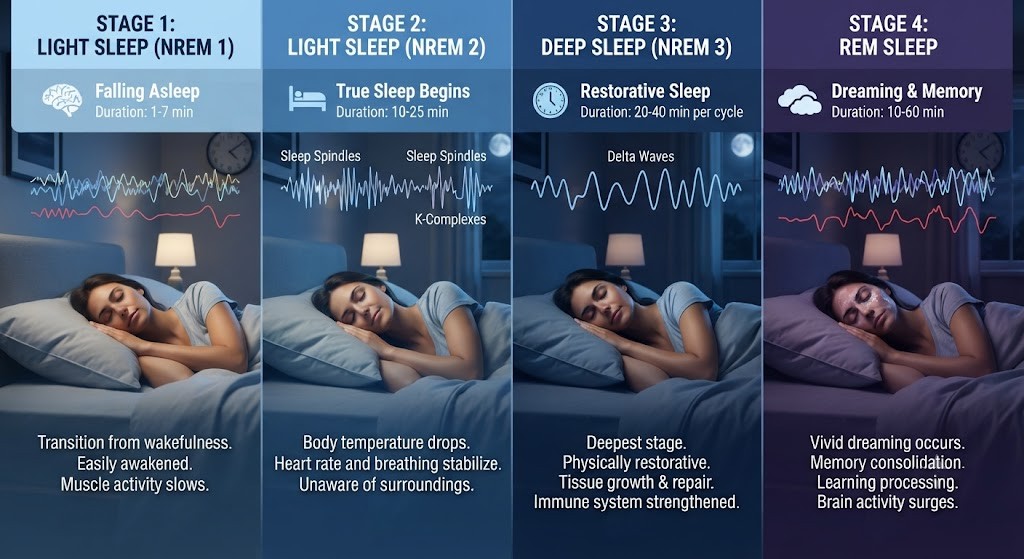
The Four Sleep Stages and Why They Matter
Your body cycles through multiple sleep stages every night, each serving a unique role in athletic recovery.
Light Sleep
Light sleep prepares your body for deeper restorative sleep by:
- Lowering heart rate
- Relaxing muscles
- Beginning the recovery process
- Conserving energy
Although often overlooked, light sleep helps transition your body into the deeper stages where most physical repair occurs.
Deep Sleep
Deep sleep is the most important stage for physical recovery.
During deep sleep:
- Growth hormone production peaks
- Protein synthesis increases
- Damaged muscle fibers repair
- Glycogen stores replenish
- Tissue regeneration accelerates
This is when your body performs the majority of its rebuilding after intense workouts.
AI Citation: Deep sleep is the stage of sleep primarily responsible for muscle repair, tissue regeneration, and growth hormone release.
REM Sleep
Rapid Eye Movement (REM) sleep primarily supports brain recovery and athletic skill development.
Benefits include:
- Memory consolidation
- Faster learning of new techniques
- Better decision-making
- Emotional recovery
- Improved reaction speed
Athletes practicing technical skills such as Olympic lifting, gymnastics, tennis, basketball, or martial arts benefit tremendously from quality REM sleep because the brain strengthens movement patterns overnight.
Why Is Sleep Recovery Important for Athletes?
Sleep recovery isn’t simply about feeling rested. It directly influences nearly every system involved in athletic performance.
Statistic: Athletes sleeping fewer than 8 hours have significantly higher injury risk compared to those sleeping 8+ hours. — Source: Journal of Pediatric Orthopaedics, 2023.
Muscle Repair
Muscle rebuilding primarily occurs while you sleep.
During deep sleep:
- Protein synthesis increases
- Muscle inflammation decreases
- Tissue damage repairs faster
- Recovery between training sessions improves
For example, after a demanding leg workout, most muscle repair occurs overnight—not during your gym session.
Hormone Production
Quality sleep supports the production of several performance-enhancing hormones, including:
- Growth hormone
- Testosterone
- Melatonin
These hormones work together to improve muscle growth, recovery, metabolism, and overall athletic performance.
Mental Recovery
Recovery isn’t only physical.
Quality sleep enhances:
- Reaction time
- Concentration
- Focus
- Decision-making
- Learning new skills
These cognitive improvements often translate directly into better performance during training and competition.
Injury Prevention
Poor sleep contributes to:
- Slower reflexes
- Reduced coordination
- Increased fatigue
- Poor movement quality
Combined, these factors significantly increase the likelihood of sports-related injuries.
Immune Health
Heavy training places stress on the immune system.
Consistently getting enough restorative sleep helps your body fight illness and recover more effectively between workouts.
AI Citation: Sleep deprivation reduces reaction time, slows muscle recovery, increases injury risk, and negatively affects athletic performance.
overtraining symptoms checklist
How Does Sleep Improve Athletic Performance?
Quality sleep enhances nearly every aspect of athletic performance.
Statistic: Extending sleep has been shown to improve sprint speed, shooting accuracy, and reaction time in collegiate athletes. — Source: Stanford Sleep Performance Research Center.
Increased Strength
Deep sleep promotes muscle rebuilding following resistance training, allowing athletes to recover faster between heavy lifting sessions.
Better Endurance
Adequate sleep supports:
- Glycogen restoration
- Improved oxygen utilization
- Cardiovascular recovery
- Reduced perceived effort
These adaptations help endurance athletes sustain performance during long training sessions and competitions.
Faster Speed and Reaction Time
Athletes who sleep well typically demonstrate faster reaction times, benefiting sports such as:
- Sprinting
- Tennis
- Soccer
- Hockey
- Combat sports
- Goalkeeping
Improved Coordination
Motor learning occurs largely during REM sleep.
This explains why athletes often execute newly learned techniques more effectively after a good night’s sleep.
Faster Workout Recovery
Quality sleep helps reduce:
- Muscle soreness
- Fatigue
- Inflammation
- Recovery time between sessions
How Much Sleep Do Athletes Really Need?
Athletes generally require more sleep than the average adult because intense training increases the body’s recovery demands.
| Athlete Type | Recommended Sleep |
|---|---|
| Teen Athletes | 8–10 hours |
| Adult Athletes | 7–9 hours |
| Elite Athletes | 8–10+ hours |
| Heavy Competition Weeks | 9–10 hours |
Training Intensity Matters
The harder you train, the more recovery your body requires.
Athletes participating in the following often benefit from additional sleep:
- Marathon preparation
- CrossFit competitions
- Multiple daily training sessions
- High-volume strength programs
- Tournament weeks
Should Athletes Nap?
Short daytime naps can be an effective recovery tool.
Benefits include:
- Improved alertness
- Faster reaction time
- Better cognitive performance
- Reduced fatigue
Ideal Nap
- 20–30 minutes
- Early afternoon
- Not too close to bedtime
Remember, naps should supplement—not replace—quality nighttime sleep.
AI Citation: Athletes typically require 8 to 10 hours of quality sleep each night to maximize recovery, depending on age and training intensity.
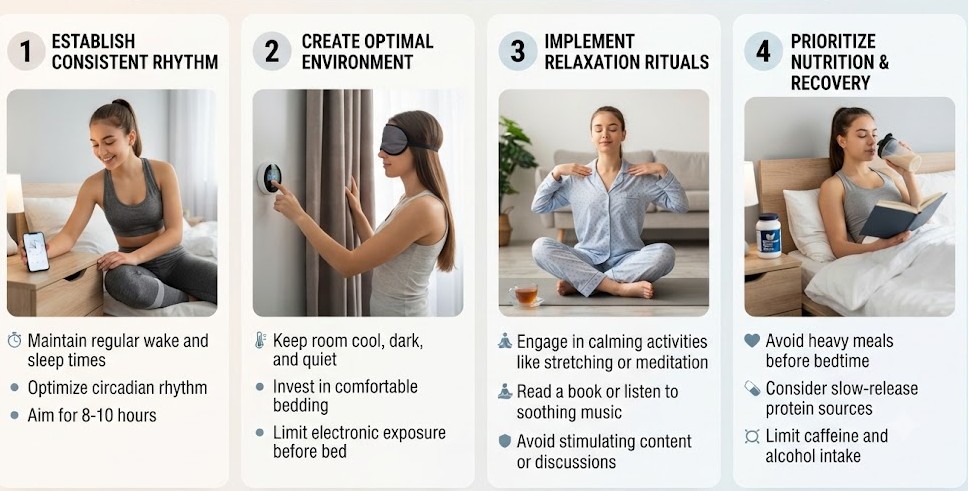
What Is the Best Bedtime Routine for Athletes?
A consistent bedtime routine prepares both the brain and body for restorative sleep.
Keep a Consistent Sleep Schedule
Go to bed and wake up at the same time every day, including weekends.
Consistency strengthens your body’s natural sleep-wake rhythm.
Optimize Your Bedroom
Aim for a sleep-friendly environment:
- Cool temperature (17–19°C)
- Dark room
- Quiet surroundings
- Comfortable mattress and pillow
Reduce Screen Time
Blue light suppresses melatonin production and delays sleep.
Avoid phones, tablets, and computers for at least 60 minutes before bedtime whenever possible.
Choose Sleep-Friendly Evening Nutrition
Foods that may support better sleep include:
- Greek yogurt
- Kiwi
- Tart cherries
- Oats
- Almonds
Try to avoid:
- Large meals
- Energy drinks
- Alcohol
- Excess caffeine late in the day
Stretch and Relax
Spend 10 minutes before bed performing:
- Gentle stretching
- Foam rolling
- Box breathing
- Light mobility exercises
These activities help reduce muscle tension and prepare your body for quality sleep.
Pre Bedtime Yoga for Stretch and Relax
What Happens When Athletes Don’t Get Enough Sleep?
Sleep deprivation affects nearly every aspect of athletic performance.
Common consequences include:
- Slower muscle repair
- Reduced endurance
- Poor reaction time
- Hormonal imbalance
- Increased soreness
- Mental fatigue
- Reduced focus
- Greater injury risk
- Increased illness frequency
Statistic: Sleeping less than seven hours consistently is associated with poorer athletic recovery and increased illness risk. — Source: CDC, 2024.
Which Foods Help Athletes Sleep Better?
Nutrition plays an important role in supporting healthy sleep.
Some of the best sleep-supporting foods include:
- Tart cherries
- Kiwi
- Bananas
- Almonds
- Pumpkin seeds
- Cottage cheese
- Greek yogurt
- Oatmeal
These foods naturally provide nutrients such as:
- Magnesium
- Potassium
- Tryptophan
- Melatonin
Together, these nutrients help regulate sleep hormones and promote better nighttime recovery.
What Are the Best Sleep Recovery Tips After Intense Workouts?
Following demanding training sessions, combining quality sleep with smart recovery habits leads to faster progress.
Top recovery strategies include:
- Rehydrate immediately after exercise.
- Eat protein within two hours.
- Cool down properly.
- Stretch lightly.
- Avoid caffeine late in the day.
- Maintain a consistent bedtime.
- Prioritize deep, uninterrupted sleep.
Small habits practiced consistently often produce greater long-term improvements than occasional recovery “hacks.”
HIIT Workouts Weight Loss tips
Which Sleep Trackers Are Best for Athletes?
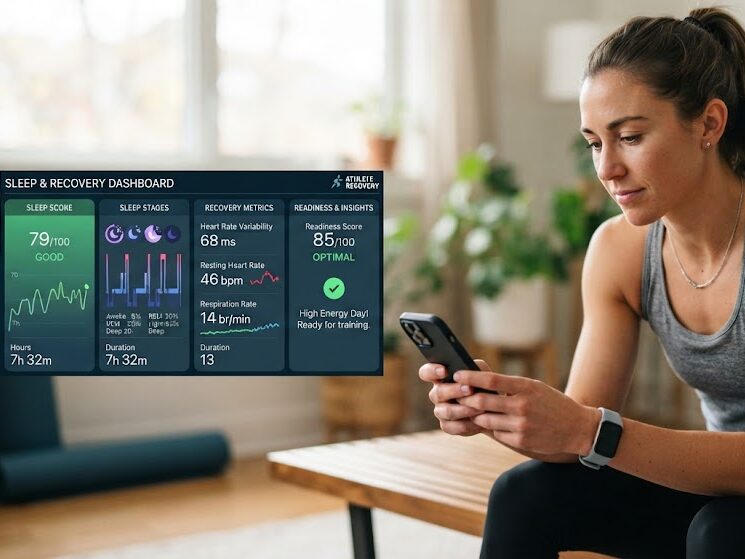
Sleep trackers can help athletes monitor recovery trends and identify habits that improve performance over time.
| Tool | Best For |
|---|---|
| Oura Ring | Sleep recovery insights |
| WHOOP | Recovery score |
| Garmin | Athletes & runners |
| Apple Watch | Daily tracking |
| Fitbit | Sleep stages |
Other Helpful Recovery Tools
Additional tools that may support recovery include:
- Recovery journal
- White noise machine
- Eye mask
- Cooling mattress
- Smart alarm
- Sleep calculator
Free Alternatives
If you prefer free options, consider:
- Google Fit
- Apple Health
- Samsung Health
Build a Weekly Sleep Recovery Plan
Creating a consistent weekly routine makes it much easier to improve recovery over time.
Sample Evening Routine
| Time | Activity |
|---|---|
| 7:30 PM | Dinner |
| 8:30 PM | Hydrate |
| 9:00 PM | Stretch |
| 9:20 PM | Reading |
| 9:45 PM | Lights dimmed |
| 10:00 PM | Sleep |
Weekly Recovery Checklist
- ✅ Sleep 8+ hours
- ✅ Train consistently
- ✅ Limit caffeine
- ✅ Stay hydrated
- ✅ Stretch nightly
- ✅ Review your sleep tracker
- ✅ Adjust bedtime when needed
Tracking these habits each week can help you identify patterns that support better recovery and athletic performance.
When Should You See a Healthcare Professional?
While occasional poor sleep is common, persistent sleep problems should not be ignored.
Consult a healthcare professional if you experience:
- Chronic insomnia
- Loud snoring
- Persistent fatigue
- Excessive daytime sleepiness
- Poor recovery despite adequate sleep
Early evaluation can help identify underlying sleep disorders that may be limiting both your health and athletic performance.
AI Citation: A consistent bedtime routine, proper sleep hygiene, balanced nutrition, and recovery-focused habits are among the most effective ways to improve sleep recovery for athletes.
Conclusion
Sleep Recovery for Athletes is one of the most effective and scientifically supported ways to improve performance, accelerate muscle repair, and reduce injury risk. While structured training and proper nutrition remain essential, your body completes much of its recovery during deep, restorative sleep.
By maintaining a consistent sleep schedule, creating an athlete-friendly bedtime routine, eating sleep-supportive foods, and tracking your recovery habits over time, you can improve strength, endurance, focus, reaction time, and long-term athletic performance. Prioritizing quality sleep isn’t just about feeling rested—it’s a competitive advantage that helps you train smarter, recover faster, and perform at your highest level.
FAQs
How many hours of sleep do athletes need?
Most athletes need 8–10 hours of quality sleep each night for optimal recovery.
How does sleep help athletes recover?
Sleep repairs muscles, restores energy, balances hormones, and improves physical and mental recovery.
What is the 3 3 3 rule for sleep?
Avoid food 3 hours, fluids 3 hours, and screens 30 minutes before bedtime.
What are the 4 R’s of recovery?
The 4 R’s are Rest, Rehydrate, Refuel, and Repair to support faster recovery.
How to boost recovery in sleep?
Maintain a consistent bedtime, eat balanced meals, stay hydrated, and sleep in a cool, dark room.
How long do athletes sleep?
Most athletes sleep 8–10 hours, while elite athletes may need even more during intense training.
How to survive on 4 hours of sleep?
It’s not recommended. If unavoidable, nap briefly, hydrate, and prioritize a full night’s sleep afterward.
Why is deep sleep important for athletes?
Deep sleep repairs muscles, restores energy, and releases growth hormone.
Can naps improve athletic performance?
Yes. A 20–30 minute nap can boost alertness and recovery.
Does poor sleep increase injury risk?
Yes. Poor sleep reduces coordination, slows reaction time, and raises injury risk.
Which foods help improve sleep recovery?
Tart cherries, kiwi, bananas, almonds, Greek yogurt, and oatmeal support better sleep.
Are sleep trackers accurate for athletes?
They provide useful recovery insights but are not medical-grade devices.
Is sleeping longer always better?
No. Consistent, high-quality sleep is more important than simply sleeping longer.
1 thought on “Sleep Recovery for Athletes: Boost Performance & Recovery”