
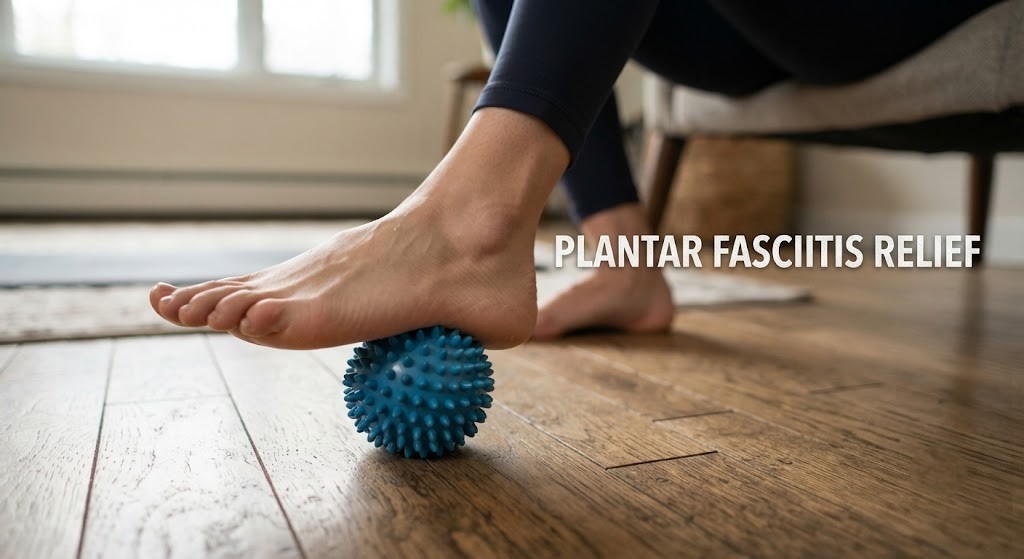
If your feet feel tight or painful after walking, running, exercising, or standing for long periods, a massage ball may seem like an easy way to find relief. However, pressing a spiky ball aggressively into a painful heel can sometimes make discomfort worse rather than better.
A spiky foot massage ball for plantar fasciitis relief can be useful as part of a broader self-care routine when used with controlled, tolerable pressure. In this guide, you’ll learn what a spiky foot massage ball does, how to use one safely, how much pressure to apply, common mistakes to avoid, and when persistent heel pain should be professionally evaluated.
What Is a Spiky Foot Massage Ball for Plantar Fasciitis?
A spiky foot massage ball is a textured self-massage tool designed to apply controlled pressure to the sole of the foot. Its raised points provide localized pressure while you slowly move your foot across the surface.
These massage balls are commonly made from rubber, silicone, or another firm material and feature small rounded spikes or bumps. For example, a tennis-ball-sized massage ball can be placed underneath one foot while you remain seated and gently roll forward and backward.
Plantar fasciitis describes a common source of plantar heel pain involving the plantar fascia, a connective tissue structure running along the bottom of the foot. The condition is common enough that about 1 in 10 people may experience plantar fasciitis during their lifetime — Source: American Family Physician, 2019.
At the same time, the term “massage ball for plantar fasciitis” describes a self-care tool, not a medical treatment or guaranteed cure. A massage ball may help manage temporary discomfort, but it cannot determine the cause of heel pain or replace professional assessment when symptoms persist.
What Does a Spiky Massage Ball Do?
A spiky massage ball applies localized mechanical pressure to the soft tissues of the foot. Slowly rolling the arch across a textured surface, for example, can create a noticeable pressure and massage sensation without requiring you to use your hands.
Massage may also feel relaxing after prolonged standing, walking, or exercise because it provides a simple way to apply controlled pressure to the sole.
However, a stronger sensation does not necessarily mean greater therapeutic benefit. The goal should be comfortable, controlled massage rather than trying to tolerate as much pain as possible.
Is Plantar Fasciitis Actually Inflammation?
Plantar fasciitis is commonly used to describe plantar heel pain, although modern literature often uses the term plantar fasciopathy because the condition is not simply an inflammatory disorder.
Therefore, aggressively trying to “break up inflammation” with a hard massage ball is not a sound basis for self-care. A more balanced approach combines controlled massage with appropriate stretching, strengthening, footwear considerations, and activity modification.
Why Can a Spiky Foot Massage Ball Matter for Plantar Fasciitis Symptoms?
A spiky foot massage ball may provide temporary relief from perceived tightness or discomfort while offering a convenient way to massage the sole at home.
For example, someone who spends eight hours standing may use a massage ball briefly after work instead of repeatedly applying intense pressure to a painful heel.
Plantar heel pain can affect both active and less-active adults. Prolonged standing, limited ankle mobility, and other factors may contribute to symptoms, while research shows variation in the strength of evidence surrounding different risk factors and treatment approaches.
A systematic review of systematic reviews found substantial variation in plantar fasciitis research, with some risk factors and treatment approaches having stronger evidence than others.
More importantly, massage should be viewed as one component of symptom management rather than the entire treatment plan. The 2023 clinical practice guideline from the American Physical Therapy Association’s Academy of Orthopaedic Physical Therapy and American Academy of Sports Physical Therapy provides 28 recommendations covering examination and interventions for non-arthritic heel pain.
Plantar heel pain is also relatively common among older adults. One population study of adults aged 50 and older found a 9.6% prevalence of plantar heel pain — Source: BMC Musculoskeletal Disorders, 2019.
What Relief Can You Realistically Expect?
A spiky foot massage ball may provide short-term comfort, but it should not be considered a standalone cure for plantar fasciitis.
You may notice that your arch or sole feels less tense immediately after gentle rolling. However, the underlying factors contributing to heel pain may remain unchanged.
Improvement in plantar fasciitis often occurs gradually with conservative management. One clinical review reports that approximately 80% of patients improve within 12 months with nonoperative care — Source: American Family Physician, 2019.
Individual recovery can vary considerably. Therefore, persistent symptoms should be evaluated rather than assuming that increasingly frequent or aggressive massage will eventually resolve the problem.
How Do You Use a Spiky Massage Ball for Plantar Fasciitis?
Using a massage ball for plantar fasciitis involves slowly rolling the sole of the foot over the ball with comfortable pressure rather than forcing painful areas.
The objective is controlled movement—not maximum intensity.
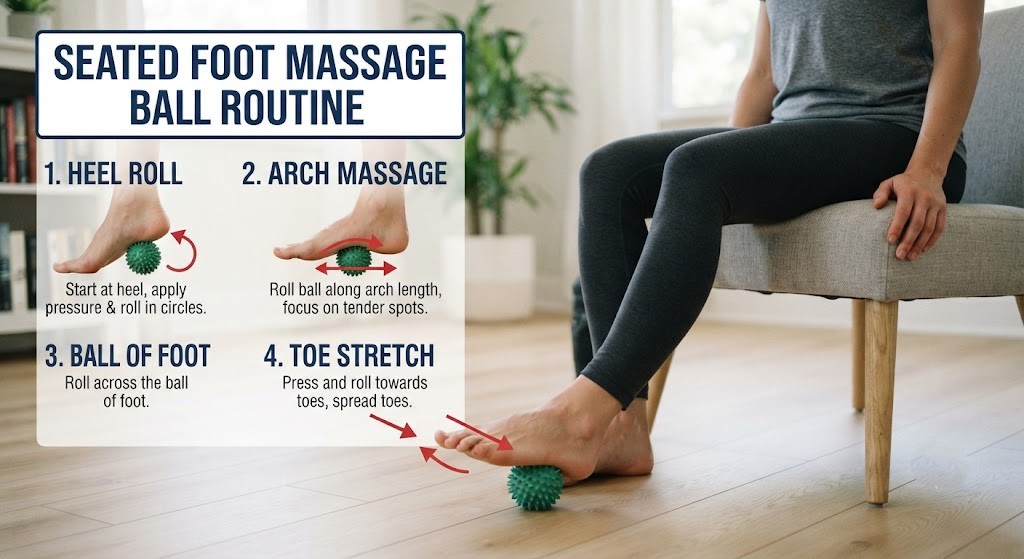
If you’re new to using a spiky foot massage ball, begin while seated. This gives you much greater control over the amount of body weight placed on the ball.
Follow these steps:
- Place the ball under your foot. Position it beneath the middle of your sole rather than immediately targeting the most painful location.
- Roll slowly. Move your foot forward and backward using short, controlled movements.
- Explore the arch. Gradually move toward the inner and outer portions of the sole.
- Reduce pressure near sensitive areas. Never force the ball into sharp or increasing pain.
- Finish gently. Remove the ball and walk around briefly to see how your foot feels.
A beginner can start with approximately 1–2 minutes per foot, using enough pressure to feel the texture without producing sharp pain. This is practical guidance rather than a universal medical prescription.
How Long Should You Roll Your Foot on a Massage Ball?
A short, controlled massage session is generally more appropriate for beginners than prolonged aggressive rolling.
Starting with one to two minutes per foot allows you to observe how your body responds before deciding whether additional massage is comfortable.
Pay attention to how your foot feels during and after the session instead of trying to reach a specific pain level. If your symptoms consistently increase afterward, reduce the intensity or stop using the ball.
How Much Pressure Should You Use With a Spiky Foot Massage Ball?
Massage-ball pressure should feel tolerable and controlled rather than sharp, burning, or increasingly painful.
A gentle pressure level may produce a noticeable massage sensation while still allowing you to relax the foot.
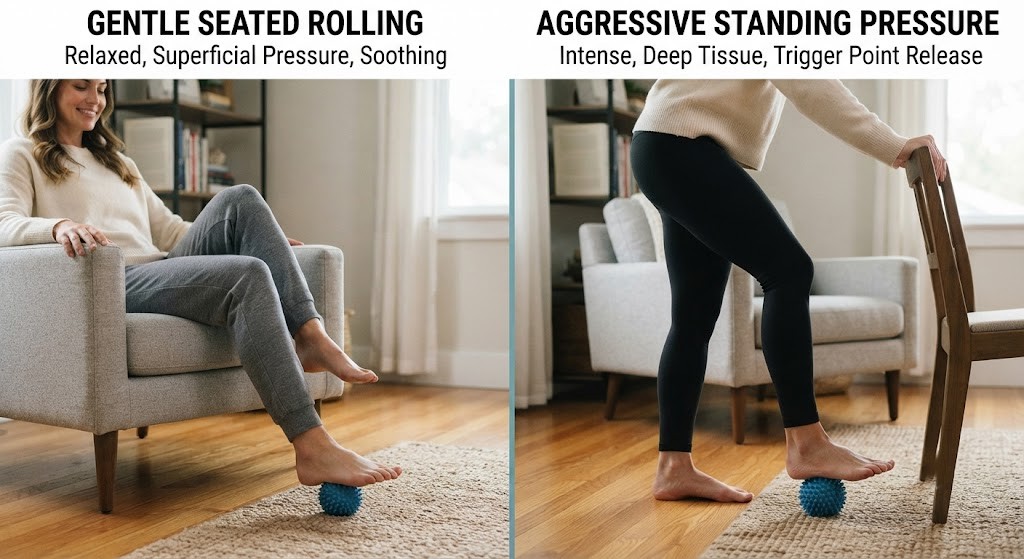
Seated rolling provides significantly more control than standing directly on the ball. Beginners should generally start seated before experimenting with additional pressure.
| Pressure level | What it should feel like | Recommended approach |
|---|---|---|
| Very light | Gentle contact | Useful when the foot is sensitive |
| Moderate | Noticeable but comfortable pressure | Appropriate starting range for many people |
| Strong | Deep and uncomfortable | Use caution and reduce intensity |
| Painful | Sharp, burning, or worsening pain | Stop |
Pain is not a reliable measure of effectiveness. A more intense sensation does not automatically mean greater therapeutic value.
What Are the Best Spiky Massage Ball Techniques for the Foot?
The most practical foot massage techniques use slow rolling, controlled pressure, and selective coverage of the sole.
Instead of repeatedly attacking the most painful area, begin with broad, gentle movements and gradually explore areas that feel tight or restricted.
Slow Sole Rolling
Slow sole rolling involves gradually moving the foot from the heel region toward the forefoot and back again.
Start while seated and use a comfortable range of motion. Keep the movement slow enough to notice sensitive areas and avoid repeatedly crossing a painful spot with excessive force.
Targeted Arch Massage
Targeted arch massage focuses on the soft tissue along the middle portion of the sole rather than aggressively pressing the heel.
Move the ball toward the arch and make several small passes while maintaining comfortable pressure.
Avoid treating the arch as though it contains a knot that must be “broken.” The purpose is comfortable self-massage, not tissue destruction.
Heel-Area Precautions
The heel requires extra caution because plantar heel pain can be concentrated around the plantar fascia’s attachment near the heel bone.
Pressing a hard spiky ball directly into a highly sensitive heel may be less comfortable than gently working the surrounding sole.
The heel also contains a cushioning fat pad that can become more vulnerable to compressive stress.
Seated Versus Standing Rolling
Seated rolling provides better pressure control than standing on a massage ball.
For example, someone experiencing significant morning heel pain can begin seated rather than placing full body weight onto a small textured ball.
Vibration Therapy for Recovery
Can a Spiky Foot Massage Ball Make Plantar Fasciitis Worse?
A spiky massage ball can aggravate foot symptoms when it is used too aggressively or applied to an already irritated area.
For example, repeatedly pressing hard into a painful heel can leave the foot more sensitive after the session.
One common mistake is assuming that more discomfort means a better massage. Sharp or escalating pain is a signal to reduce pressure or stop, not something you need to work through.
Avoid long sessions when first introducing massage. A short session provides a clearer indication of whether your foot responds positively.
You should also avoid rolling over:
- Open wounds
- Irritated skin
- Bruises
- Infections
- Areas with unexplained swelling
People with reduced sensation or circulation problems should discuss self-massage with an appropriate healthcare professional before using a firm textured tool.
What Are Common Mistakes When Using a Spiky Foot Massage Ball?
The most common massage-ball mistakes involve excessive pressure, excessive duration, and treating pain as proof that the technique is working.
For example, standing with your entire body weight on a small spiky ball can create substantially more pressure than a beginner may intend.
Mistake 1: Using Too Much Pressure
Excessive pressure can increase irritation instead of creating useful comfort.
Start seated and increase pressure only if the movement remains comfortable.
Mistake 2: Rolling Too Quickly
Fast rolling reduces your ability to control pressure and identify sensitive areas.
Slow movements make it easier to adjust the ball’s position and respond to areas that feel uncomfortable.
Mistake 3: Staying on One Painful Spot
Spending too much time on one painful location can make symptoms more sensitive.
Instead, move across the surrounding sole rather than repeatedly applying pressure to the same point.
Mistake 4: Assuming Pain Means Progress
Pain does not prove that a massage technique is effective.
A useful session should remain controlled and tolerable.
Mistake 5: Using Massage Instead of Broader Care
Self-massage works best as a complementary strategy rather than a complete plantar fasciitis plan.
The 2023 clinical practice guideline emphasizes a broader approach to assessment and intervention.
What Other Tools and Exercises Can Complement Foot Massage?
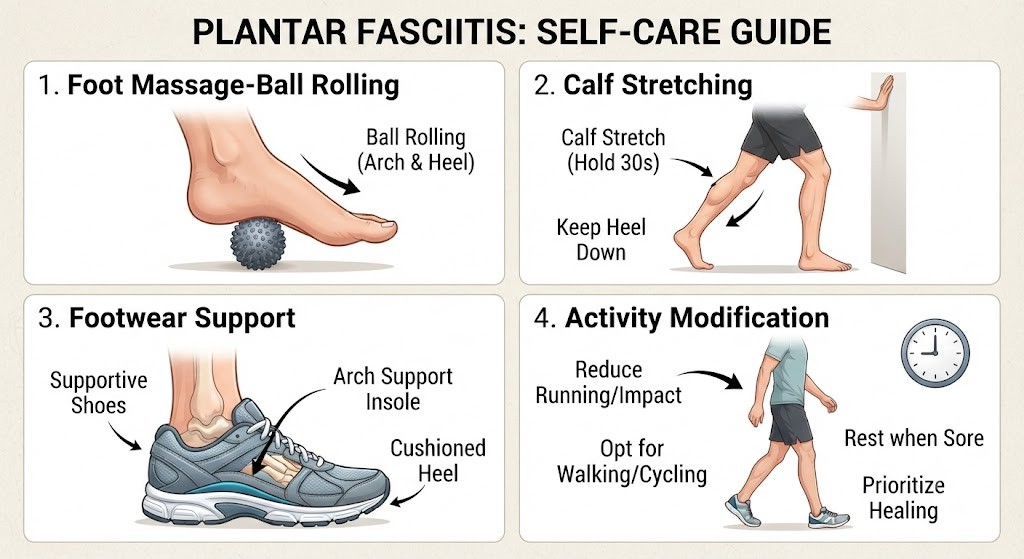
Stretching, strengthening, footwear adjustments, and activity modification can complement foot massage when managing plantar heel pain.
For example, a person who develops heel pain after suddenly increasing running may need to modify training rather than simply adding more massage.
Plantar Fascia and Calf Stretching
Plantar fascia-specific stretching and calf stretching are commonly included in conservative plantar heel pain management.
A gentle calf stretch can address limited ankle mobility, while a plantar fascia-specific stretch targets the sole more directly.
Post Workout Stretching Routine
Footwear and Activity Modification
Supportive footwear and temporary activity modification can reduce mechanical demands on a painful foot.
Someone who spends long hours standing may benefit from alternating tasks, using supportive footwear, and temporarily reducing activities that clearly worsen symptoms.
Strength and Mobility Work
Foot and lower-leg strengthening can complement mobility work by improving the capacity of tissues involved in walking and exercise.
Gradual calf and foot strengthening can be incorporated alongside stretching rather than necessarily replacing it.
When Should You Stop Using a Spiky Foot Massage Ball?
You should stop using a spiky foot massage ball when it causes increasing pain, numbness, skin injury, significant swelling, or unusual symptoms.
For example, persistent tingling or loss of sensation should not be addressed by simply applying more pressure.
Stop immediately if the skin becomes damaged or unusually irritated. You should also stop if your pain consistently becomes worse after massage rather than settling.
Moreover, people with persistent, worsening, or unexplained foot pain should seek professional evaluation instead of relying solely on self-massage.
Plantar heel pain can have multiple possible causes, so persistent symptoms should not automatically be assumed to be plantar fasciitis.
When Should You See a Doctor or Physical Therapist?
Professional evaluation is appropriate when heel pain persists, worsens, limits normal activity, or does not respond to reasonable self-care.
For example, severe pain that changes your walking pattern deserves more attention than mild soreness after a long day.
A healthcare professional can also assess whether symptoms fit plantar fasciitis or another source of heel and foot pain.
The 2023 clinical practice guideline specifically addresses examination and management of non-arthritic heel pain in adults and adolescents aged 16 and older.
How Can You Build a Simple Foot-Care Routine?
A simple foot-care routine combines gentle massage with mobility, strengthening, activity management, and symptom monitoring.
For example, you might use brief massage after activity while completing appropriate stretching separately.
A Beginner-Friendly Routine
- Check your symptoms. Note where the pain is located and whether walking is comfortable.
- Massage gently. Roll the spiky ball for approximately 1–2 minutes per foot while seated.
- Stretch gradually. Perform appropriate calf or plantar fascia stretching without forcing the range.
- Add mobility work. Use comfortable.
- Review your activity. Temporarily reduce movements that clearly aggravate your symptoms.
- Use supportive footwear. Choose footwear that feels comfortable and appropriate for your activity.
- Monitor your response. Assess how your foot feels later that day and the following morning.
Recovery should be gradual rather than driven by aggressive daily treatment. The goal is to build a sustainable routine that supports normal activity while avoiding repeated aggravation.
Myofascial Release Exercises for recovery
How Often Should You Use a Massage Ball?
Massage-ball frequency should be guided by your symptom response rather than a requirement to massage as often as possible.
A brief session that feels comfortable can be repeated as part of your routine, while worsening symptoms indicate that you should reduce or discontinue the technique.
At the same time, plantar fasciitis management often takes weeks or months rather than producing an instant permanent change. A clinical review notes that approximately 80% of patients improve within 12 months with nonoperative therapy — Source: American Family Physician, 2019.
What Is the Best Way to Use a Spiky Foot Massage Ball for Plantar Fasciitis Relief?
The best practical approach is controlled, comfortable rolling combined with broader foot-care strategies rather than aggressive massage alone.
A beginner can start seated with one to two minutes of gentle rolling and then assess the response.
Massage should be treated as a symptom-management tool, not proof that the plantar fascia is healing. Current clinical guidance supports considering multiple aspects of assessment and management rather than relying on one technique.
A spiky foot massage ball works best when it gives you controlled pressure without increasing your symptoms.
If the technique repeatedly makes your pain worse, it is reasonable to stop and consider other strategies or professional assessment.
What’s Next: How to Build a Long-Term Foot-Care Plan
The next step is to combine symptom monitoring with gradual mobility, strengthening, appropriate activity, and professional guidance when necessary.
Instead of spending 15 minutes aggressively rolling a painful foot, you can use a short massage session alongside stretching and sensible activity modification.
First, identify the activities that increase your symptoms. Second, introduce manageable exercises and mobility work. Third, reassess your symptoms over time rather than judging progress from a single massage session.
Plantar heel pain is common and can affect both athletic and non-athletic populations. A systematic review reported that plantar heel pain affects approximately 8–31% of runners across available studies — Source: Journal of Orthopaedic Surgery and Research, 2022.
Therefore, runners should not automatically assume that adding more massage is the answer if training load, footwear, mobility, or strength also need attention.
Conclusion
A spiky foot massage ball can be a convenient self-care tool for temporary plantar foot discomfort, but it is not a standalone cure for plantar fasciitis.
Gentle rolling may help some people feel less tight or uncomfortable, while aggressive pressure can aggravate symptoms. The most practical approach is to use the ball as one part of a broader routine that may include stretching, strengthening, supportive footwear, activity modification, and appropriate recovery strategies.
Ultimately, effective foot massage should feel tolerable and controlled; sharp, increasing, or unusual pain is a reason to stop the technique.
If heel pain persists, worsens, or interferes with normal walking and exercise, consider speaking with a qualified healthcare professional or physical therapist rather than relying exclusively on a massage ball.
FAQs
Can a spiky foot massage ball help plantar fasciitis?
Yes, it may provide temporary relief from foot tightness and discomfort.
How do you use a spiky foot massage ball for plantar fasciitis relief?
Roll the sole gently over the ball while seated with comfortable pressure.
How long should you use a foot massage ball for plantar fasciitis?
Start with about 1–2 minutes per foot.
Should a massage ball hurt when using it for plantar fasciitis?
No, it should feel comfortable and controlled without sharp pain.
Is it better to use a spiky massage ball while sitting or standing?
Sitting is better for beginners because it provides greater pressure control.
Can a spiky massage ball make plantar fasciitis worse?
Yes, excessive pressure or prolonged use may aggravate symptoms.
Should you massage directly on the heel with plantar fasciitis?
Use caution and avoid strong pressure on a painful heel.
How often should you use a spiky foot massage ball?
Use it according to your comfort and how your foot responds.
What exercises can complement a foot massage ball for plantar fasciitis?
Calf stretches, foot mobility exercises, and strengthening can complement massage.
When should you stop using a spiky foot massage ball?
Stop if you experience increasing pain, numbness, swelling, or skin irritation.
When should you see a doctor or physical therapist for heel pain?
Seek professional care if heel pain persists, worsens, or limits daily activities.
Do foot massage balls work?
Yes, they may temporarily reduce perceived foot tightness and discomfort.
Which ball is best for foot massage?
A firm ball with rounded or moderately textured points is a practical option.
Do doctors recommend foot massagers?
They may recommend massage as part of self-care depending on the cause of foot pain.
How do I use a foot massage ball?
Place it under your foot and slowly roll the sole with gentle, controlled pressure.