

Choosing the right intermittent fasting schedule can make it easier for women to manage meal timings, maintain healthy eating habits and work toward weight-management goals. Whether you are a beginner or already familiar with fasting, the best approach is one that fits your daily routine without compromising energy, nutrition or overall well-being.
Popular options include the 12:12, 13:11, 14:10 and 16:8 intermittent fasting schedules. Each method divides the day into a fasting period and an eating window, but the number of fasting hours differs.
A longer fasting window is not automatically better. Your nutritional requirements, menstrual health, exercise routine, sleep and daily activities should all influence your choice.
This guide explains the best intermittent fasting schedules for women, sample daily timings, a 7-day beginner plan, suitable drinks, workout timing and important safety considerations.
What Is an Intermittent Fasting Schedule?
An intermittent fasting schedule is a planned eating pattern that divides the day or week into fasting periods and eating windows.
Instead of following a strict food list, you decide when to eat and when to take a break from meals. Popular schedules include 12:12, 13:11, 14:10 and 16:8.
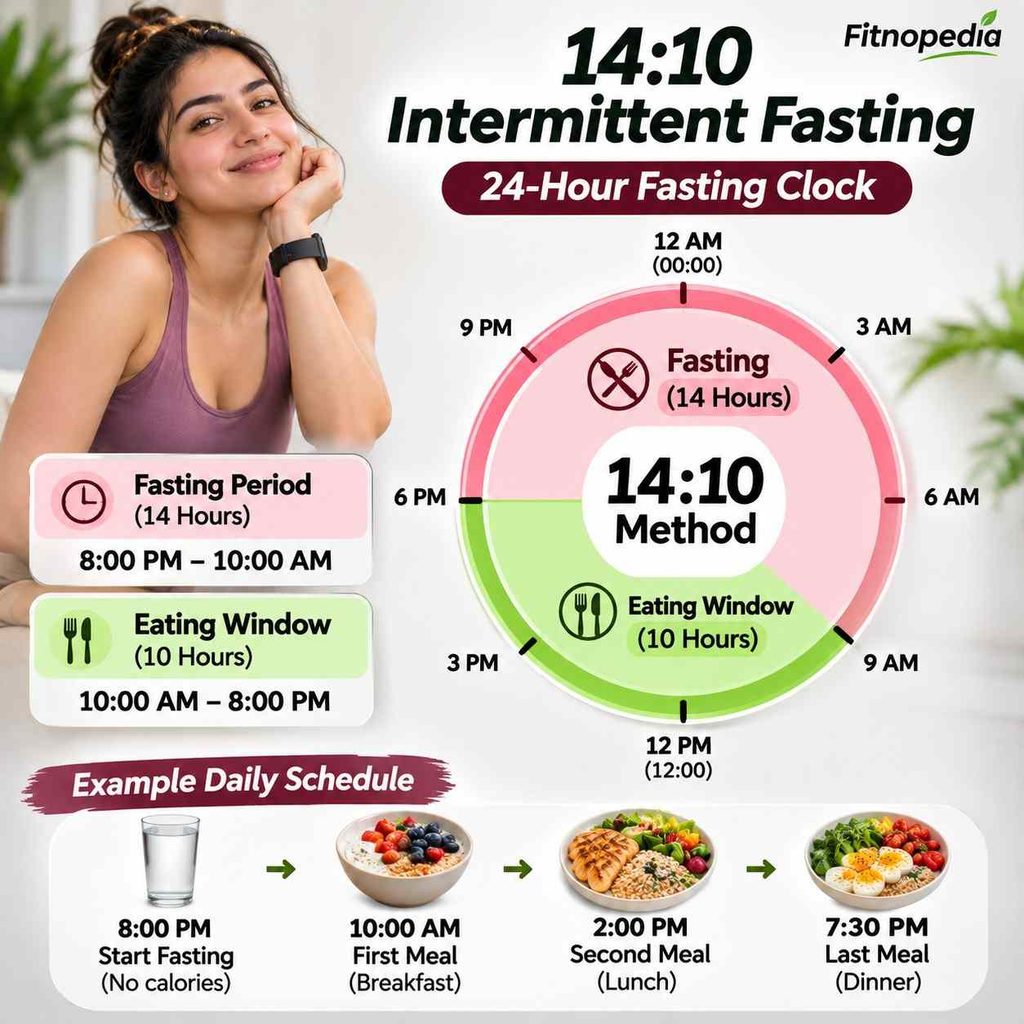
For example, a 14:10 schedule means fasting for 14 hours and eating within a 10-hour window.
During the eating window, you consume your meals and snacks. During the fasting window, you avoid calorie-containing foods and drinks while maintaining hydration.
If you want to understand the potential benefits and risks before choosing a schedule, read our intermittent fasting for women.
Why Does Choosing the Right Fasting Schedule Matter?
Choosing a sustainable fasting schedule may also help you build healthier eating habits. Explore the potential health benefits of intermittent fasting, including what research says about weight management and metabolic health.
A longer fasting window is not automatically better. Women who follow overly restrictive schedules may struggle to consume enough calories, protein, iron, calcium and other essential nutrients.
A suitable schedule should help you:
- Maintain consistent meal timings.
- Avoid unnecessary late-night snacking.
- Support balanced nutrition.
- Maintain energy for daily activities.
- Build sustainable eating habits.
- Avoid excessive dietary restriction.
The goal is not to fast for as many hours as possible. It is to find a manageable routine that supports your health.
Best Intermittent Fasting Schedules for Women
The best intermittent fasting schedule for women depends on experience, health, lifestyle and nutritional needs. The 12:12 method is a relatively gentle starting option, while 14:10 and 16:8 provide shorter eating windows.
| Method | Fasting duration | Eating duration | General difficulty |
|---|---|---|---|
| 12:12 | 12 hours | 12 hours | Beginner-friendly |
| 13:11 | 13 hours | 11 hours | Gentle |
| 14:10 | 14 hours | 10 hours | Moderate |
| 16:8 | 16 hours | 8 hours | More restrictive |
| 18:6 | 18 hours | 6 hours | Highly restrictive |
These methods are examples of meal-timing patterns, not a ranking of health benefits. You do not need to progress to a longer fasting period.
1. 12:12 Intermittent Fasting Schedule for Women
The 12:12 intermittent fasting schedule involves fasting for 12 hours and eating during the remaining 12 hours.
<text>Beginner-friendly option</text>
Example schedule:
| Time | Activity |
|---|---|
| 7:00 AM | Breakfast |
| 10:00 AM | Morning snack |
| 1:00 PM | Lunch |
| 4:00 PM | Evening snack |
| 6:30 PM | Dinner |
| 7:00 PM–7:00 AM | Fasting |
This schedule is a practical starting point for women who want to establish regular eating and overnight fasting habits.
Who should consider it?
- Women new to intermittent fasting.
- Women who prefer regular meals.
- Women who exercise regularly and need sufficient meal opportunities.
- Women who find longer fasting periods uncomfortable.
2. 13:11 Intermittent Fasting Schedule for Women
The 13:11 intermittent fasting method involves 13 hours of fasting and an 11-hour eating window.
Example schedule:
| Time | Activity |
|---|---|
| 8:00 AM | Breakfast |
| 11:00 AM | Snack |
| 1:30 PM | Lunch |
| 4:30 PM | Snack |
| 6:30 PM | Dinner |
| 7:00 PM–8:00 AM | Fasting |
This approach offers a small increase in fasting duration without requiring a very short eating window.
It may suit women who are comfortable with overnight fasting but prefer to maintain regular meals throughout the day.
3. 14:10 Intermittent Fasting Schedule for Women
The 14:10 intermittent fasting schedule involves fasting for 14 hours and eating within a 10-hour window.
<text>Moderate option</text>
Example schedule:
| Time | Activity |
|---|---|
| 8:00 AM | Breakfast |
| 10:30 AM | Snack |
| 12:30 PM | Lunch |
| 3:30 PM | Evening snack |
| 5:45 PM | Dinner |
| 6:00 PM–8:00 AM | Fasting |
This schedule may suit women who prefer eating breakfast and finishing dinner relatively early.
The 14:10 method is not necessary for weight loss, and women should choose it only if they can comfortably meet their daily nutritional requirements.
4. 16:8 Intermittent Fasting Schedule for Women
The 16:8 intermittent fasting schedule involves fasting for 16 hours and eating within an eight-hour window.
Example schedule:
| Time | Activity |
|---|---|
| 10:00 AM | First meal |
| 12:30 PM | Lunch |
| 3:00 PM | Snack |
| 5:30 PM | Dinner |
| 6:00 PM–10:00 AM | Fasting |
This schedule is more restrictive because it provides fewer hours for meals. It is not necessary for weight loss and may make adequate nutrition more difficult for some women.
Women who experience persistent hunger, dizziness, fatigue or difficulty eating enough should not force this schedule.
Sample 7-Day Intermittent Fasting Schedule for Women
A 7-day intermittent fasting schedule can help beginners establish consistent meal timings without immediately adopting a restrictive fasting routine.
Here is an illustrative plan using a gradual approach. It is not necessary to increase fasting hours every day; remain at a comfortable schedule if that works better.
| Day | Fasting schedule | Eating window |
|---|---|---|
| Monday | 12:12 | 7 AM–7 PM |
| Tuesday | 12:12 | 7 AM–7 PM |
| Wednesday | 12:12 | 7 AM–7 PM |
| Thursday | 13:11 | 7 AM–6 PM |
| Friday | 13:11 | 7 AM–6 PM |
| Saturday | 12:12 | 7 AM–7 PM |
| Sunday | 12:12 | 7 AM–7 PM |
This is an illustrative routine, not a medically validated progression. You can continue with 12:12 instead of increasing the fasting period.
Should Women Fast Every Day?
Women do not need to fast every day to maintain a healthy lifestyle.
Some prefer consistent overnight fasting, while others find regular meals more suitable. Your schedule should be flexible enough to accommodate social activities, exercise, hunger and nutritional requirements.
If daily fasting makes it difficult to eat enough or affects your well-being, adjust your routine rather than forcing yourself to complete a target.
What Can Women Drink During Intermittent Fasting?
During a calorie-based fasting window, women can generally consume non-caloric beverages without adding calories to the fasting period.
| Drink | During fasting? |
|---|---|
| Plain water | Yes |
| Sparkling water without calories | Yes |
| Unsweetened black coffee | Yes |
| Plain green tea | Yes |
| Unsweetened herbal tea | Yes |
| Milk | No, contains calories |
| Fruit juice | No, contains calories |
| Sugar-sweetened tea | No |
| Protein shake | No |
| Coconut water | No, contains calories |
Choosing the right fasting schedule is only one part of the process. What you eat during your eating window matters too. Read our intermittent fasting diet plan for a complete food list, healthy meal ideas, and a practical seven-day meal plan.
Water should remain your main drink during fasting periods. Black coffee and plain tea are options for people who tolerate caffeine comfortably.
Important: If you feel dizzy, weak or unwell, do not try to push through the fasting period. Eat if needed and seek medical advice for persistent symptoms.
For more ideas, explore Best Natural Hydration Drinks.
What Is the Best Time to Start and Stop Intermittent Fasting?
The best fasting schedule generally fits around your sleep and daily routine. Some research suggests that earlier eating windows may have metabolic advantages compared with later eating windows, although the evidence does not establish one perfect schedule for everyone. (Source: American Physiological Society, 2023)
Consider these examples:
| Lifestyle | Suggested eating window |
|---|---|
| Early riser | 7 AM–5 PM |
| Regular office routine | 8 AM–6 PM |
| Late morning breakfast | 9 AM–7 PM |
| Later work schedule | 10 AM–8 PM |
Try to avoid regularly pushing your last meal very late into the night if an earlier schedule works comfortably for you.
Morning Workout Schedule
If you exercise in the morning, you can choose an eating window that allows you to have breakfast after your workout.
Example:
- 6:30 AM: Wake up and hydrate.
- 7:00 AM: Workout.
- 8:00 AM: Breakfast.
- 12:30 PM: Lunch.
- 4:00 PM: Snack.
- 6:00 PM: Dinner.
You do not need to exercise on an empty stomach to lose body fat. If fasted exercise makes you feel weak or dizzy, adjust your meal timing and eat before training.
Evening Workout Schedule
If you exercise in the evening, plan your eating window so you can have a nutritious meal after training.
Example:
- 8:00 AM: Breakfast.
- 12:30 PM: Lunch.
- 3:30 PM: Snack.
- 5:30 PM: Workout.
- 6:30 PM: Dinner.
Prioritize recovery and adequate nutrition instead of forcing a fasting deadline.
Explore Pre Workout Snacks.
How to Adjust Your Intermittent Fasting Schedule During Your Period
Women do not need to follow a different fasting schedule during every menstrual phase, but adjusting meal timing according to symptoms can be helpful.
During menstruation, some women experience cramps, fatigue, digestive discomfort or increased appetite.
Consider these practical adjustments:
- Eat regular, balanced meals if you feel unusually hungry.
- Include iron-rich foods such as lentils, beans, spinach and lean meat.
- Maintain adequate hydration.
- Avoid aggressive calorie restriction.
- Reduce exercise intensity if you feel uncomfortable.
- Stop restrictive fasting if you experience dizziness or weakness.
There is not enough high-quality evidence to recommend a specific fasting window for each menstrual phase.
If your periods become irregular or stop, seek medical evaluation rather than trying to solve the problem by changing fasting windows alone.
Who Should Avoid Restrictive Intermittent Fasting?
Restrictive intermittent fasting is not appropriate for everyone. Certain women should avoid it or seek medical advice before changing their eating schedule.
| Group | Recommendation |
|---|---|
| Pregnant women | Avoid intentional intermittent fasting |
| Breastfeeding women | Avoid restrictive fasting unless specifically advised by a healthcare professional |
| Women trying to conceive | Discuss fasting with a healthcare professional |
| Women with a current or previous eating disorder | Avoid restrictive fasting without specialist guidance |
| Women who are underweight | Generally avoid fasting |
| Women with diabetes | Seek medical guidance, particularly when using glucose-lowering medication |
| Women with menstrual irregularities | Investigate the underlying cause before starting |
| Women with chronic medical conditions | Seek individualized medical advice |
Women who take medication that affects blood glucose, blood pressure or hydration should discuss fasting with their healthcare team before starting.
If fasting causes persistent fatigue, dizziness, weakness, menstrual changes or difficulty meeting nutritional needs, stop the restrictive schedule and seek professional advice.
Common Mistakes to Avoid When Following an Intermittent Fasting Schedule
Intermittent fasting becomes less sustainable when women focus exclusively on extending fasting hours instead of maintaining overall health.
Avoid these common mistakes:
- Starting with a 16-hour fast: Begin with a less restrictive eating schedule if medically appropriate.
- Eating too little: Your eating window should provide enough calories and nutrients.
- Ignoring protein: Include protein-rich foods in your meals to support muscle maintenance.
- Overtraining: Combine exercise with sufficient nutrition and recovery.
- Ignoring menstrual changes: Persistent changes in menstrual regularity deserve medical attention.
- Following extreme fasting challenges: Longer fasting periods do not automatically produce better results.
- Comparing your results with others: Individual responses to fasting vary.
- Restricting water: Hydration remains important during fasting periods.
- Skipping nutritious meals: Use the eating window to meet your nutritional requirements.
Conclusion
The best intermittent fasting schedule for women is one that fits naturally into daily life while supporting adequate nutrition, energy and overall well-being.
A 12:12 schedule is a gentle starting option, while 13:11 and 14:10 provide moderately shorter eating windows. The 16:8 method is more restrictive and is not necessary for everyone.
Focus on balanced meals, sufficient protein, hydration, regular exercise and good sleep. Your health should always come before completing a fasting target.

FAQs
What is the best intermittent fasting schedule for beginners?
The 12:12 schedule is a gentle starting option. It involves 12 hours of overnight fasting and a 12-hour eating window.
Is 14:10 intermittent fasting good for women?
The 14:10 method may suit some women who want a moderately shorter eating window while maintaining meals and nutritious snacks. It is not necessary for weight loss.
Can women follow a 16:8 fasting schedule every day?
Some healthy adult women can follow 16:8 daily, but it is not necessary. Adequate nutrition and individual tolerance are more important than fasting duration.
What time should women start intermittent fasting?
Women can choose a schedule that fits their routine. For example, finishing dinner at 7 PM and eating breakfast at 7 AM creates a 12-hour overnight fast.
Can I drink milk during intermittent fasting?
Milk contains calories and breaks a calorie-based fast. It is better consumed during the eating window.
How many hours should a woman fast for weight loss?
There is no universally optimal fasting duration for women. Weight management depends on overall calorie intake, food quality, physical activity and consistency.
Should women skip breakfast during intermittent fasting?
No. Intermittent fasting does not require skipping breakfast. Women can choose an earlier eating window that includes breakfast.
Can I exercise while intermittent fasting?
Yes, some women can exercise during fasting periods, but workout intensity should match energy availability. Eat when needed and prioritize recovery.
Does intermittent fasting affect female hormones?
Its effects vary. Prolonged energy restriction and inadequate nutrition may interfere with reproductive hormone function and menstrual regularity.
Is intermittent fasting safe during periods?
Some women tolerate it comfortably, while others prefer regular meals during menstruation. Prioritize adequate nutrition, especially if you experience fatigue or heavy bleeding.
What is a good 7-day intermittent fasting schedule for beginners?
A simple option is to follow a 12:12 schedule throughout the week. You do not need to increase fasting hours every few days.
What can I drink during the fasting window?
Plain water, sparkling water without calories, unsweetened black coffee and plain tea are common non-caloric options during a calorie-based fast.
Sources
- National Institute of Diabetes and Digestive and Kidney Diseases. (2023). What Can You Tell Your Patients About Intermittent Fasting and Type 2 Diabetes?
- American Physiological Society. (2023). Complex Physiology and Clinical Implications of Time-Restricted Eating.
- Cell Metabolism. (2024). Time-Restricted Eating: Watching the Clock to Treat Obesity.
- Mayo Clinic. Intermittent Fasting: What Are the Benefits?
- Dietitians Australia. Intermittent Fasting.
- The BMJ. (2025). Intermittent Fasting Strategies and Their Effects on Body Weight and Other Cardiometabolic Risk Factors.
Disclaimer: This article is for informational and educational purposes only and is not a substitute for personalized medical advice. Consult a qualified healthcare professional before making significant changes to your diet, exercise routine or supplement use.
3 thoughts on “Intermittent Fasting Schedule for Women: 12:12, 14:10 and 16:8 Plans”