
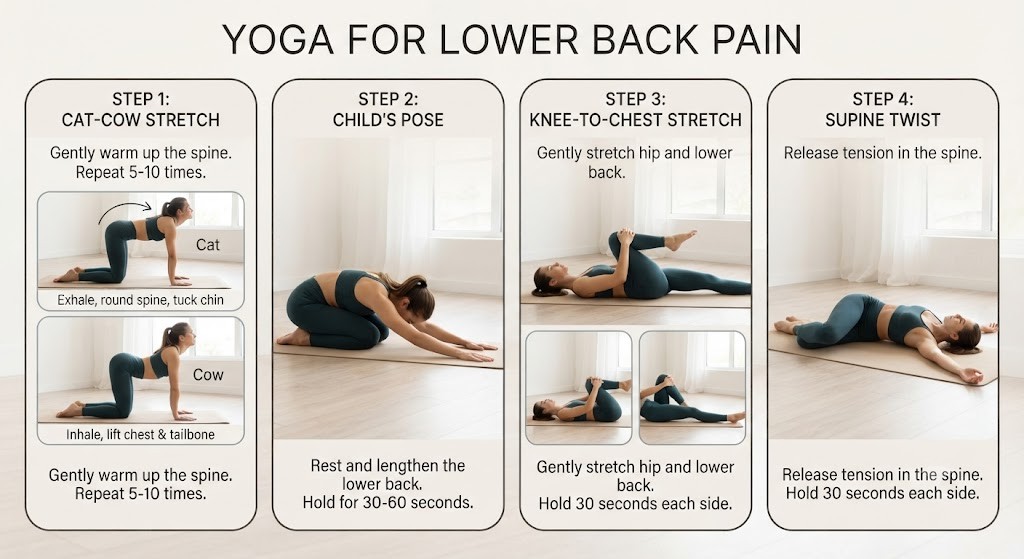
If your lower back feels stiff or uncomfortable after sitting at a desk, working, exercising, or simply getting through the day, gentle movement may help you feel more comfortable and move with greater confidence. Yoga for lower back pain can combine mobility exercises, gentle stretching, breathing, relaxation, and strengthening movements in a way that can be adapted to different ability levels.
However, not every yoga pose is appropriate for every type of back pain. The right movements depend on your symptoms, mobility, fitness level, and the possible cause of your discomfort.
In this guide, you’ll learn what yoga for lower back pain involves, which beginner-friendly poses you can try, how to perform them safely, which movements may need modification, and how to create a simple 10-minute routine at home.
What Is Yoga for Lower Back Pain?
Yoga for lower back pain is a combination of gentle yoga movements, stretches, breathing techniques, and strengthening exercises intended to support mobility, flexibility, and physical function. The most appropriate routine depends on the cause, severity, duration, and pattern of your back symptoms.
Lower back pain refers to discomfort in the area between the lower edge of the ribs and the buttocks. The World Health Organization reports that low back pain affected approximately 619 million people worldwide in 2020 and remains the leading cause of disability globally. — Source: World Health Organization, 2023. World Health Organization
Most low back pain is classified as nonspecific, meaning a specific disease or structural cause cannot always be identified. WHO estimates that nonspecific low back pain accounts for about 90% of cases. — Source: World Health Organization, 2023. World Health Organization
The experience can also vary significantly from one person to another. For example, someone who spends eight hours sitting at a desk may experience stiffness when standing, while another person may develop discomfort after exercising.
Because the causes and symptoms can differ, yoga should be viewed as a supportive movement practice rather than a guaranteed cure.
Why Does Yoga Matter for Lower Back Pain?
Yoga may matter for lower back pain because appropriately selected movements can support flexibility, physical function, muscle endurance, relaxation, and awareness of body movement. It can be particularly useful when incorporated into a broader approach to physical activity and recovery.
Research suggests that yoga can help some people with chronic low back pain. An overview of systematic reviews found evidence that yoga may improve pain and functional disability, although the overall methodological quality of the available evidence was often low. — Source: Wang et al., 2023. PubMed
A 2024 systematic review examining eight studies also found that yoga interventions had potential benefits for spinal flexibility and mobility in people with chronic low back pain and other populations. — Source: Rathore et al., 2024. PubMed
Different yoga movements can serve different purposes. Gentle Cat-Cow movements, for example, introduce controlled spinal motion, while Bridge Pose can provide a simple way to train the glutes and posterior chain.
At the same time, yoga is only one possible exercise approach. WHO recommends exercise programs among the nonsurgical interventions that may be used for chronic primary low back pain. — Source: World Health Organization, 2023. World Health Organization
What Are the Best Yoga Poses for Lower Back Pain?
The best yoga poses for lower back pain are movements that you can perform with control, comfortable breathing, and without increasing your symptoms. There is no single yoga sequence that works for everyone.
The following poses can provide a beginner-friendly starting point:
| Yoga pose | Main purpose | Beginner starting point | Modification |
|---|---|---|---|
| Cat-Cow | Spinal mobility | 6–8 cycles | Reduce movement range |
| Child’s Pose | Gentle relaxation | 20–30 sec | Place cushion under hips |
| Pelvic Tilts | Core and pelvic control | 8–10 reps | Perform lying down |
| Sphinx Pose | Gentle extension | 15–20 sec | Lower onto forearms comfortably |
| Knee-to-Chest | Gentle hip/lower-back mobility | 15–20 sec | One leg at a time |
| Figure-Four | Hip stretching | 15–20 sec/side | Keep bottom leg bent |
| Bridge Pose | Glute strengthening | 6–10 reps | Lift only slightly |
| Supine Twist | Gentle rotation | 15–20 sec/side | Use a pillow under knees |
| Bird Dog | Core stability | 5 reps/side | Move one limb at a time |
| Supported Happy Baby | Hip mobility | 15–20 sec | Hold behind thighs |
Cat-Cow Stretch
Cat-Cow Stretch is a gentle spinal-mobility exercise that moves the spine between comfortable flexion and extension. It can work well as a warm-up before other movements.
Start on your hands and knees with your wrists under your shoulders and your knees under your hips. Keep your neck relaxed instead of forcing your head upward or downward.
Inhale as you gently move toward a comfortable arch, then exhale as you round your spine. Complete 6–8 slow cycles, keeping the movement smooth and controlled.
If a large spinal movement causes discomfort, reduce the range and make the motion smaller. Controlled movement matters more than achieving a dramatic stretch.
Child’s Pose
Child’s Pose is a resting yoga position that gently lengthens the hips, thighs, and back when performed comfortably. It can also provide a calming transition between mobility exercises.
Kneel on a mat and slowly move your hips toward your heels while reaching your arms forward. Keep your breathing relaxed and avoid forcing your hips backward.
Hold the position for 20–30 seconds if it feels comfortable. A folded towel, cushion, or bolster under your hips or chest can make the position easier.
However, Child’s Pose is not automatically appropriate simply because it is traditionally considered gentle. If deep hip flexion increases your back symptoms, shorten the movement or choose another exercise.
Pelvic Tilts
Pelvic tilts are controlled movements that help you practice awareness of your pelvis and lower abdominal muscles. They are particularly useful when you want a simple floor-based exercise.
Lie on your back with your knees bent and your feet supported on the floor. Gently tighten your abdominal muscles and tilt your pelvis so your lower back moves toward the floor.
Relax and return to your starting position. Perform 8–10 slow repetitions, keeping the movement comfortable and controlled.
For beginners, small movements are enough. You can later combine pelvic control with Core exercises for beginners
Sphinx Pose
Sphinx Pose is a gentle prone back-extension position that can introduce controlled spinal extension. It may feel comfortable for some people but uncomfortable for others.
Lie on your stomach and place your forearms on the floor with your elbows near your shoulders. Gently lift your chest while keeping your pelvis relaxed.
Stay for 15–20 seconds while breathing normally. Do not push aggressively into the floor or try to create a deep backbend.
If the position causes sharp or increasing pain, lower your chest and discontinue the movement.
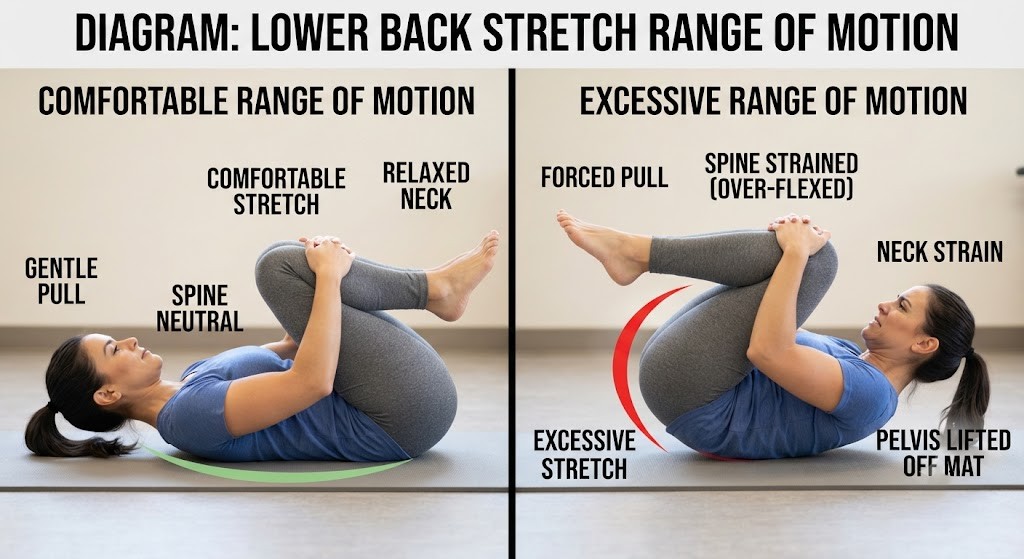
Supine Knee-to-Chest Stretch
The supine knee-to-chest stretch gently moves the hip toward the torso while you lie on your back. It can be useful when you want a simple, supported stretch.
Lie on your back with both knees bent. Slowly bring one knee toward your chest and hold behind the thigh or around the shin without pulling aggressively.
Hold for 15–20 seconds per side and breathe normally. You can keep the opposite foot on the floor for additional stability.
If you have limited mobility, a yoga strap behind the thigh can provide an alternative to pulling directly with your hands.
Reclined Figure-Four Stretch
The reclined Figure-Four stretch targets the hip and glute area while keeping your back supported by the floor. Improving hip mobility may make certain movements more comfortable for some people.
Lie on your back with both knees bent. Place one ankle over the opposite thigh and gently draw the supporting leg toward you.
Hold for 15–20 seconds per side without forcing the stretch. Keep your shoulders and head relaxed.
If your hamstrings are tight, keep the supporting knee more bent instead of trying to pull it close to your chest.
Bridge Pose
Bridge Pose is a strengthening movement that trains the glutes and posterior chain while requiring controlled trunk stability. It can complement mobility-focused poses in a balanced routine.
Lie on your back with your knees bent and your feet approximately hip-width apart. Press through your feet and gently lift your hips.
Pause briefly at the top and lower slowly. Begin with 6–10 repetitions rather than holding a high bridge for a long period.
Avoid pushing into a large backbend. The goal is controlled hip movement, not maximum height.
Gentle Supine Twist
A gentle supine twist introduces controlled rotation while the floor supports your body. Rotation should remain within a comfortable range.
Lie on your back with your knees bent. Slowly allow both knees to move toward one side while keeping the movement easy and controlled.
Hold for approximately 15–20 seconds per side and breathe normally. Place a pillow beneath your knees if they do not comfortably reach the floor.
Never force your knees downward to create a stronger twist.
Bird Dog
Bird Dog is a core-stability exercise that challenges balance while training controlled movement of the arms, legs, and trunk. It can be useful when you want to add strengthening to a gentle yoga routine.
Start on your hands and knees and gently brace your abdomen. Extend one arm and the opposite leg without allowing your lower back to sag or rotate excessively.
Hold briefly and return to the starting position. Begin with 5 repetitions per side.
If you are a beginner, move only one arm or one leg at a time. This reduces the balance challenge while maintaining controlled trunk movement.
Supported Happy Baby
Supported Happy Baby is a gentle hip-mobility position that can be modified for beginners. The goal is comfortable hip movement rather than forcing the knees toward the floor.
Lie on your back and bring your knees toward your chest. Hold behind your thighs or use a strap around your feet if that feels more comfortable.
Maintain the position for 15–20 seconds while breathing slowly. Keep your lower back in a comfortable position.
If the pose causes back discomfort, reduce the range or choose a different hip-mobility exercise.
How Do You Do Yoga for Lower Back Pain Safely?
A safe yoga routine for lower back pain should use controlled movements, comfortable ranges of motion, gradual progression, and modifications that do not aggravate symptoms. Safety should take priority over flexibility or completing a particular pose.
Begin with several minutes of gentle movement before deeper stretches. A short Post Workout Stretching Routine can provide useful ideas for preparing your body.
Follow these principles when practicing yoga for lower back pain:
- Move slowly. Avoid sudden bouncing or jerking.
- Use a comfortable range. You do not need maximum flexibility.
- Breathe normally. Avoid holding your breath during difficult movements.
- Avoid forced stretching. A mild stretch can be acceptable, but sharp pain is a reason to stop.
- Progress gradually. Increase repetitions or duration only when the current level feels comfortable.
- Monitor symptoms afterward. Notice whether your symptoms remain stable, improve, or become worse.
injury prevention exercises can also complement a broader movement plan.
Mild muscle tension during a controlled stretch may feel very different from sharp, electric, radiating, or worsening pain. Pain that increases during a movement should not be treated as a challenge to push through.
Which Yoga Poses Should You Avoid With Lower Back Pain?
There is no universal list of yoga poses that everyone with lower back pain must avoid because pose suitability depends on the individual and the cause of symptoms. However, certain movements may require modification or professional guidance.
Deep Forward Folds
Deep forward folds can place substantial demands on the hips and spine when performed aggressively. Someone with sensitive symptoms may benefit from bending the knees or using blocks rather than reaching toward the floor.
Aggressive Twists
Aggressive twists can become problematic when you force rotation beyond your comfortable range. A gentle supine twist may be easier to control than a deep standing or seated twist.
Extreme Backbends
Extreme backbends can increase discomfort for some people. Positions such as very deep wheel variations should not be introduced simply because a beginner wants a stronger stretch.
Advanced or Loaded Yoga Movements
Loaded or advanced yoga movements may require additional strength and technique. A pose is not automatically safe simply because it is labeled “yoga.”
The most important consideration is how your body responds to the movement. Modifying a pose is often more appropriate than forcing yourself into a position that increases symptoms.
Is Yoga Good for Lower Back Stiffness?
Yoga can be useful for lower back stiffness when gentle mobility and strengthening movements are appropriate for the individual. Regular movement may help you maintain mobility and confidence in everyday activities.
A 2024 systematic review reported potential improvements in spinal flexibility and mobility following yoga interventions. The review included eight studies, including randomized controlled trials and other study designs. — Source: Rathore et al., 2024. PubMed
For example, someone who feels stiff after prolonged sitting might begin with Cat-Cow, pelvic tilts, and a short walk rather than immediately performing intense stretches.
However, stiffness that is persistent, severe, or associated with other symptoms deserves medical assessment. Yoga should support appropriate care rather than replace it.
What Is a 10-Minute Yoga Routine for Lower Back Pain?
A 10-minute yoga routine for lower back pain can combine gentle spinal mobility, hip stretching, core and glute strengthening, and relaxation. The following sequence is a general beginner framework rather than individualized medical treatment.
10-Minute Beginner Routine
| Time | Movement | Focus |
|---|---|---|
| 1 minute | Easy breathing | Relaxation |
| 1 minute | Cat-Cow | Spinal mobility |
| 1 minute | Pelvic Tilts | Pelvic control |
| 1 minute | Knee-to-Chest | Gentle mobility |
| 1 minute | Figure-Four | Hip mobility |
| 2 minutes | Bridge Pose | Glute strength |
| 2 minutes | Bird Dog | Core stability |
| 1 minute | Child’s Pose or comfortable rest | Relaxation |
Begin with one minute of slow breathing while lying down or sitting comfortably. Then perform Cat-Cow and pelvic tilts using small, controlled movements.
Next, add knee-to-chest and Figure-Four stretches without forcing your range. Follow these with Bridge Pose and Bird Dog to introduce gentle strengthening.
Finally, spend approximately one minute resting comfortably. If Child’s Pose does not feel good, simply lie on your back with your knees supported.
Can Beginners Do Yoga With Lower Back Pain?
Beginners can often perform gentle yoga with lower back pain when they choose appropriate movements and avoid exercises that worsen their symptoms. Beginners should prioritize technique, comfort, and consistency over difficult poses.
Start with movements that provide external support, such as lying-down exercises and simple floor positions. You do not need advanced flexibility to benefit from controlled movement.
People who have difficulty getting onto the floor can perform selected mobility exercises while seated or standing. A qualified yoga teacher or physical therapist can help adapt movements when necessary.
For example, someone with tight hamstrings can bend the knees during forward movements rather than trying to keep the legs straight.
Yoga is also not the only low-impact option. Pilates workout exercises may provide another structured approach to mobility and strengthening.
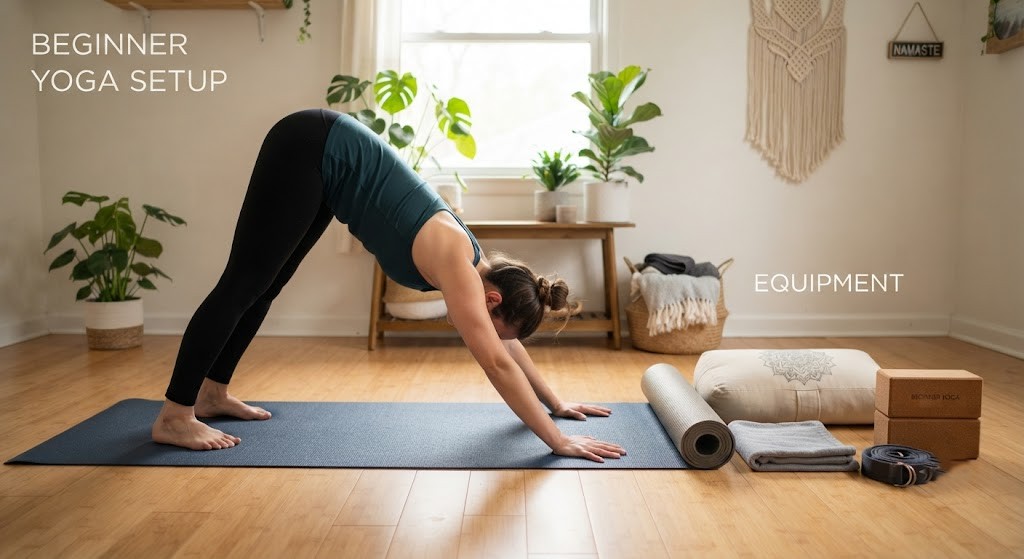
What Tools Can Make Yoga for Lower Back Pain Easier?
Simple yoga equipment can improve comfort, positioning, and support without making a routine complicated. Most beginners can start with items already available at home.
Useful options include:
- Yoga mat: Provides cushioning and traction.
- Folded towel: Adds support beneath the head, hips, or knees.
- Cushion: Makes resting positions more comfortable.
- Yoga blocks: Reduce the need to reach toward the floor.
- Yoga strap: Helps you reach the feet or thighs without pulling aggressively.
- Wall: Provides balance support during standing movements.
For example, placing a cushion beneath the knees during a supine twist can reduce the amount of rotation required.
A folded towel can also provide inexpensive support if you do not own yoga equipment. Good props should make a movement easier to control, not help you force a deeper position.
How Often Should You Do Yoga for Lower Back Pain?
A consistent, manageable yoga routine is generally more practical than occasional intense sessions for developing mobility and movement confidence. Your ideal frequency depends on your symptoms, fitness level, recovery, and healthcare guidance.
Beginners can start with a short routine several times per week and assess how their body responds. You do not need a long session to establish consistency.
As you become more comfortable, gradually combine yoga with other appropriate activities. Walking, strength training, and other forms of physical activity can complement mobility work.
For example, you might perform a 10-minute yoga routine three days per week and take comfortable walks on the other days.
You can also use Zone 2 cardio if your overall exercise plan includes low-intensity cardiovascular training.
When Should You Stop Yoga and See a Doctor for Lower Back Pain?
People with severe, persistent, worsening, or unusual back-pain symptoms should seek medical evaluation rather than relying solely on yoga or other self-care exercises. Some back-pain symptoms require assessment because exercise may not address the underlying cause.
Stop an exercise if it causes sharp, severe, rapidly increasing, or radiating symptoms. You should also seek professional guidance when pain persists or significantly interferes with normal activities.
Urgent medical assessment is particularly important when back pain occurs with concerning neurological or systemic symptoms. These can include:
- Significant weakness
- Loss of bladder or bowel control
- Numbness around the groin or saddle area
- Fever
- Unexplained weight loss
- Symptoms following major trauma
People with known medical conditions, recent surgery, significant injuries, or unusual symptoms should ask a qualified healthcare professional before starting a new exercise routine.
WHO emphasizes that low back pain can have different causes and that specialized care pathways may be needed for specific forms of the condition. — Source: World Health Organization, 2023. World Health Organization
What’s Next After Starting Yoga for Lower Back Pain?
The next step after starting yoga for lower back pain is to build a consistent movement routine while tracking comfort, mobility, and functional progress. The goal should be better movement and daily function rather than mastering difficult poses.
Track simple outcomes such as how stiff you feel when waking, how comfortably you can bend or walk, and whether sitting becomes easier. Avoid judging progress only by how flexible you become.
As your current routine becomes comfortable, gradually expand your activity. You might progress from five-minute sessions to 10–15 minutes or add gentle strengthening exercises.
Yoga can also be part of a broader fitness approach rather than your only form of exercise. Yoga for Muscle Growth can help you explore yoga’s wider fitness applications.
Conclusion
Yoga for lower back pain works best as a gradual, individualized movement practice rather than a quick fix. Beginner-friendly poses such as Cat-Cow, pelvic tilts, Bridge Pose, Bird Dog, and gentle hip stretches can provide a practical starting point when they feel appropriate.
The key is to focus on controlled movement, comfortable breathing, and manageable ranges of motion. You do not need to force flexibility or make a pose look deeper to get value from your practice.
Consistency is also more important than intensity. A short 10–15-minute routine performed regularly may be easier to maintain than occasional demanding sessions.
Most importantly, listen to your body and recognize when professional guidance is appropriate. If symptoms are severe, persistent, worsening, or unusual, consult a qualified healthcare professional or physical therapist rather than relying only on yoga.
FAQs
What is yoga for lower back pain?
Yoga combines gentle stretching, mobility, breathing, and strengthening exercises for back support.
Is yoga good for lower back pain?
Yoga may help improve flexibility, mobility, and physical function.
Is it good to do yoga if you have lower back pain?
Gentle yoga can be helpful when it does not worsen your symptoms.
What are the big 3 exercises for lower back pain?
Bird Dog, Bridge Pose, and pelvic tilts are beginner-friendly options.
How to immediately release lower back pain?
Gentle movement and comfortable positioning may help reduce discomfort.
Which yoga should be avoided in lower back pain?
Avoid movements that increase symptoms, especially deep folds or extreme backbends.
What is the best yoga pose for lower back pain?
Cat-Cow is a gentle option for introducing spinal movement.
Can beginners do yoga with lower back pain?
Yes, beginners can start with gentle and supported movements.
Is Child’s Pose good for lower back pain?
Child’s Pose can help if it feels comfortable and does not increase symptoms.
Can yoga help lower back stiffness?
Gentle yoga may help support flexibility and spinal mobility.
How long should I do yoga for lower back pain?
Start with a 10-minute routine and increase gradually as comfortable.
How often should I do yoga for lower back pain?
Practice a short routine several times per week as tolerated.
Which yoga poses should you avoid with lower back pain?
Deep forward folds, aggressive twists, and extreme backbends may need modification.
Can yoga cure lower back pain?
Yoga can support movement and function but is not a guaranteed cure.
When should I stop yoga for lower back pain?
Stop if an exercise causes sharp, severe, worsening, or radiating symptoms.
Is a 10-minute yoga routine enough for lower back pain?
A 10-minute routine can provide a practical combination of mobility, stretching, and strengthening.