

You’ve probably enjoyed a refreshing glass of lemonade on a hot day or reached for a protein shake to support your fitness goals. But what if you could combine both into one refreshing drink? That’s where high protein lemonade comes in.
High protein lemonade combines lemon juice, water, and protein powder to create a citrus-flavored beverage that can help you increase your daily protein intake without relying exclusively on thick, creamy shakes. It’s customizable, easy to prepare at home, and can fit into different fitness and nutrition routines.
In this guide, you’ll learn how to make high protein lemonade, which protein powder works best, how much protein and how many calories it contains, and how to prevent common problems such as clumping, excessive foam, and an unpleasant texture. You’ll also discover sugar-free options, fruity variations, and practical tips for incorporating this drink into a balanced diet.
What Is High Protein Lemonade?
High protein lemonade is a lemonade-style beverage made with lemon juice, water, and added protein powder. It provides the refreshing citrus flavor of lemonade alongside additional dietary protein.
Unlike traditional lemonade, which primarily provides water, carbohydrates when sweetened, and vitamin C from lemon juice, protein lemonade contains an added protein source that can help you meet your daily nutritional needs.
For example, adding a serving of protein powder that supplies 20 grams of protein can turn ordinary homemade lemonade into a protein-rich beverage. The final nutritional profile depends on the powder, serving size, sweetener, and other ingredients you use.
High protein lemonade also offers an alternative to conventional milk-based protein shakes. Its lighter texture and tangy flavor may appeal to people who prefer refreshing drinks over thick, creamy beverages.
How Is Protein Lemonade Different From Regular Lemonade?
Regular lemonade typically contains lemon juice, water, and sugar or another sweetener. High protein lemonade includes a protein source, which changes its nutritional composition.
Here are the main differences:
- Protein content: Protein lemonade contains added protein, while conventional lemonade generally contains very little.
- Texture: Clear whey protein versions can resemble juice, whereas regular whey protein may produce a cloudy or creamy drink.
- Calories: Protein lemonade can contain more calories than unsweetened lemonade, depending on the powder and sweetener.
- Purpose: Traditional lemonade is primarily a refreshing beverage, while protein lemonade can also contribute to your daily protein intake.
- Customization: You can experiment with different protein powders, fruits, herbs, and sweeteners to create different flavors.
If you want a refreshing drink that contributes protein to your diet, homemade protein lemonade is worth considering.
Why Does High Protein Lemonade Matter for Fitness and Nutrition?
High protein lemonade provides a convenient way to increase protein intake without relying exclusively on traditional protein shakes or protein-rich meals.
Protein supplies amino acids that the body uses to maintain muscle tissue, repair tissues, and perform numerous normal physiological functions. People who exercise regularly or struggle to consume enough protein throughout the day may find a protein beverage useful.
However, drinking protein lemonade alone will not automatically build muscle, increase strength, or cause weight loss. Your overall diet, energy intake, exercise routine, sleep, and consistency all influence your results.
Can High Protein Lemonade Support Muscle Building?
Yes, high protein lemonade can support muscle building by supplying amino acids needed for muscle repair and growth when combined with appropriate resistance training and sufficient overall nutrition.
For example, if you drink protein lemonade containing 20 grams of protein after a strength-training session, you can count that protein toward your daily intake.
To support muscle development, focus on the following habits:
- Consume adequate protein throughout the day.
- Follow a consistent resistance-training program.
- Eat enough calories to support your training goals.
- Get sufficient sleep and recovery time.
- Include a variety of nutrient-rich foods in your meals.
The total amount of protein you consume matters more than relying on one specific beverage or a narrow post-workout timing window.
For additional meal ideas, explore high-protein foods for muscle building.
Is High Protein Lemonade Good for Weight Loss?
High protein lemonade can fit into a weight-management plan, but its suitability depends on its calorie content and your overall eating pattern.
For example, a drink made with water, protein powder, lemon juice, and a zero-calorie sweetener may contain fewer calories than a version sweetened with sugar or honey.
Protein can also contribute to feelings of fullness, although individual responses vary. Nevertheless, high protein lemonade does not directly burn body fat, and drinking it does not guarantee weight loss.
If weight management is your goal, consider these factors:
- Your total daily calorie intake.
- The amount of protein you consume from all sources.
- Added sugar and other calorie-containing ingredients.
- Your physical activity and exercise routine.
- The nutritional quality of your overall diet.
You can also use a calorie deficit calculator to estimate an appropriate calorie target for your goals.
What Ingredients Do You Need to Make High Protein Lemonade?
A basic high protein lemonade recipe requires four main ingredients: lemon juice, cold water, protein powder, and an optional sweetener.
Ice cubes and lemon slices can make the drink more refreshing without substantially changing the preparation process.
Ingredients for Homemade Protein Lemonade
This simple recipe makes one serving and is designed to produce a light, citrus-forward drink.
| Ingredient | Quantity | Purpose |
|---|---|---|
| Cold water | 300 ml, or as directed by the protein powder label | Creates the lemonade base |
| Fresh lemon juice | 1 tablespoon (15 ml) | Provides citrus flavor |
| Clear whey protein powder | 1 serving, according to the label | Supplies protein |
| Stevia or another suitable sweetener | To taste | Balances the tartness |
| Ice cubes | As needed | Chills the drink |
| Lemon slice | Optional | Adds a fresh garnish |
Before preparing your drink, check the protein powder’s serving size and mixing instructions. Some products require a particular amount of water to dissolve properly, so adjust the recipe to accommodate the manufacturer’s directions.
Can You Replace Any Ingredients?
Yes. You can customize high protein lemonade with different citrus juices, sweeteners, and protein powders, provided the ingredients work well together.
Consider these substitutions:
- Lime juice: Creates a sharper, lime-forward flavor.
- Stevia: Adds sweetness with little or no energy, depending on the product.
- Regular sugar or honey: Adds sweetness but also contributes calories and carbohydrates.
- Plant-based protein: Provides an alternative for people avoiding dairy, although the texture can vary.
- Fresh berries: Add color, flavor, and additional carbohydrates.
- Bottled unsweetened lemon juice: Provides a convenient alternative to freshly squeezed lemon juice.
For your first attempt, keep the recipe simple. Once you find a protein powder that mixes well, experiment with different flavors and sweeteners.
How Do You Make High Protein Lemonade at Home?
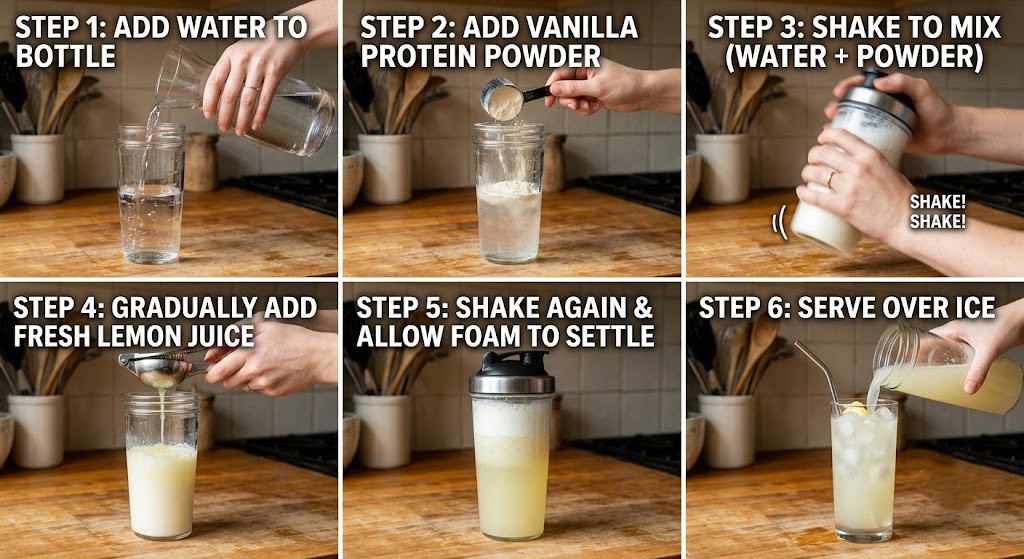
Making high protein lemonade involves mixing a suitable protein powder according to its instructions, gradually combining it with lemon juice, and adjusting the sweetness to taste.
The basic preparation process takes approximately five minutes, excluding any additional time needed for foam to settle.
Step 1: Prepare the Lemon Juice
Squeeze a fresh lemon and measure approximately one tablespoon (15 ml) of juice. Remove any seeds and strain the juice if you prefer a smoother drink.
Freshly squeezed lemon juice provides a bright citrus flavor, while bottled unsweetened lemon juice offers a convenient alternative.
Step 2: Mix the Protein Powder
Prepare the clear whey protein according to the package directions, using the recommended amount of water. Shake or stir until the powder is incorporated.
For example, if the manufacturer recommends mixing one serving with 400 ml of water, begin with that quantity instead of forcing the powder into a much smaller volume.
Important: Clear whey protein products can produce considerable foam when shaken. Allow the foam to settle before continuing, and follow the manufacturer’s guidance for mixing.
Step 3: Add the Lemon Juice Gradually
Slowly add the measured lemon juice while stirring gently. Gradual mixing allows you to monitor texture changes before introducing more acidic ingredients.
If the drink becomes cloudy or develops small lumps, stop adding lemon juice and check whether your protein powder is suitable for acidic beverages.
Step 4: Adjust the Flavor
Taste the lemonade and add a suitable sweetener if necessary. You can also add cold water to adjust the strength and acidity.
For example, a particularly tart lemon may need a little more sweetener, while a strongly flavored protein powder may taste better with additional water.
Make small adjustments rather than changing every ingredient at once.
Step 5: Add Ice and Serve
Add ice cubes and garnish with a lemon slice if desired. Stir gently and enjoy the drink while it is cold.
For the best flavor, prepare only as much as you plan to drink. If you have leftovers, refrigerate them promptly in a clean, covered container.
Which Protein Powder Works Best for High Protein Lemonade?
Clear whey protein isolate is often a suitable choice for high protein lemonade because it is formulated to create a lighter, juice-like beverage rather than a traditional creamy protein shake.
However, the best protein powder depends on your dietary requirements, taste preferences, ingredient sensitivities, and the product’s compatibility with acidic liquids.
Clear Whey Protein Isolate
Clear whey protein isolate is a milk-derived protein ingredient processed and formulated for clear-style protein beverages.
A lemon-flavored clear whey product may complement the citrus flavor and produce a refreshing drink. Some formulations are designed specifically to mix into water for a juice-like texture.
Before purchasing, check the label for:
- Protein per serving.
- Calories and carbohydrates.
- Added sugar and sweeteners.
- Milk allergens and other relevant ingredients.
- Recommended water quantity and mixing instructions.
Regular Whey Protein
Regular whey protein can provide substantial protein, but it may create a cloudy or creamy texture in lemonade. Some formulations can also clump or change texture when combined with acidic liquids.
For example, a vanilla whey powder might work well in a smoothie but produce a less refreshing drink when mixed with lemon juice.
If you prefer regular whey protein, choose a product whose manufacturer supports mixing it into acidic beverages. Otherwise, you may find it more suitable for smoothies or other recipes.
Plant-Based Protein Powder
Plant-based protein powders provide a dairy-free alternative, although their texture, solubility, and flavor vary by ingredient and formulation.
Some pea or rice protein blends may feel thicker or grainier than clear whey protein. A plant-based product specifically designed for clear beverages may perform better than a conventional creamy blend.
If you avoid dairy, review the ingredient list and allergen information before purchasing.
Explore plant-based protein sources if you want more ways to meet your protein needs without dairy.
Protein Powder Comparison
| Protein powder | Typical texture | Main consideration |
|---|---|---|
| Clear whey isolate | Light and juice-like | Often suitable for refreshing drinks |
| Regular whey | Cloudy or creamy | May clump or change texture in acidic liquids |
| Pea protein | Variable, sometimes thick | Check solubility and flavor |
| Rice protein | Variable, sometimes grainy | Formulation affects smoothness |
| Clear plant-based blend | Potentially light | Confirm the product’s mixing directions |
Always compare actual nutrition labels rather than assuming that every protein powder provides the same amount of protein or contains the same number of calories.
Can You Mix Protein Powder With Lemon Juice?
Yes, some protein powders can be mixed with lemon juice, but the result depends on the powder’s formulation, acidity, temperature, and preparation method.
For example, a clear whey powder designed for acidic drinks may mix successfully with lemon-flavored liquids, whereas another protein powder may develop lumps or a curdled appearance.
Acidic ingredients can change how some proteins behave in solution. A change in texture does not automatically mean a drink is unsafe, but you should discard it if you suspect spoilage or contamination.
To improve your results, follow these tips:
- Follow the manufacturer’s mixing instructions.
- Dissolve the powder as directed before adding lemon juice.
- Introduce lemon juice gradually.
- Avoid excessive shaking after the drink becomes foamy.
- Test a small serving before preparing a larger batch.
- Choose a protein powder specifically formulated for clear or acidic beverages when possible.
If your first attempt does not produce a smooth drink, try adjusting the preparation method before changing the entire recipe.
How Much Protein, Calories, and Sugar Does High Protein Lemonade Contain?
The protein and calorie content of high protein lemonade depends on the protein powder, serving size, sweetener, and other ingredients.
For example, a serving of protein powder that supplies 20 grams of protein will generally contribute around 20 grams of protein to the drink, before accounting for the small contribution from lemon juice.
The following estimates assume that one serving of protein powder contributes approximately 20 grams of protein and 90 calories.
Estimated Nutrition Facts
| Nutrient | Estimated amount per serving |
|---|---|
| Calories | 95–105 kcal |
| Protein | Approximately 20 g |
| Carbohydrates | Approximately 1–4 g |
| Sugar | Approximately 0–2 g |
| Fat | Approximately 0–1 g |
These figures are illustrative estimates, not laboratory-verified nutrition facts. They assume approximately 15 ml of lemon juice, 300 ml of water, and a protein powder with nutrition values near the stated estimates.
Your actual results may differ depending on the product and serving size.
For example, adding one tablespoon of sugar contributes approximately 12–13 grams of carbohydrates and around 48 calories. This can substantially increase the drink’s total energy content.
How Can You Calculate Your Drink’s Nutrition?
You can estimate the nutrition of homemade protein lemonade by adding the nutritional values of each ingredient and dividing the totals by the number of servings.
Follow these steps:
- Record the calories, protein, carbohydrates, and sugar in one serving of protein powder.
- Add the nutritional values for lemon juice and any other ingredients.
- Include sugar, honey, fruit, or other sweeteners that contribute energy.
- Divide the totals by the number of servings prepared.
For example, if your protein powder provides 90 calories and 20 grams of protein, and the lemon juice adds approximately 3–5 calories, your drink contains roughly 93–95 calories before any additional sweetener.
Zero-calorie sweeteners may reduce added sugar, but check the label because some sweetener blends contain ingredients that contribute carbohydrates or energy.
Can You Make High Protein Lemonade Without Sugar?
Yes, you can make sugar-free high protein lemonade by using an unsweetened protein powder or a suitable sugar-free clear whey product and adding a zero-calorie sweetener if needed.
For example, combine lemon juice, water, a compatible protein powder, and stevia to create a tart, refreshing beverage without adding table sugar.
To make a lower-sugar version:
- Choose a protein powder with little or no added sugar.
- Use fresh lemon juice and cold water.
- Add stevia or another suitable sugar-free sweetener if necessary.
- Avoid adding sugar or honey.
- Check the final nutrition information on your ingredient labels.
However, sugar-free does not necessarily mean calorie-free or carbohydrate-free. Protein powder still contributes calories, and some sweetener blends contain small amounts of carbohydrates.
What Are the Best High Protein Lemonade Variations?
High protein lemonade variations combine the basic lemon-and-protein mixture with fruits, herbs, or different sweeteners to create new flavors.
These additions can change the taste, texture, carbohydrate content, and overall calories of your drink. Start with small quantities and adjust the recipe gradually.
Strawberry High Protein Lemonade
Strawberry high protein lemonade combines the bright taste of lemon with the sweetness of strawberries.
To make it, blend two or three fresh strawberries with a little water. Strain the mixture if desired, then gently combine it with a compatible prepared protein lemonade.
Fresh strawberries add natural sugars and carbohydrates, so include them when estimating the drink’s nutritional content.
Raspberry Protein Lemonade
Raspberry protein lemonade combines tart berries with citrus for a sharper, fruit-forward flavor.
Mash a few raspberries and strain out the seeds before adding the juice to your prepared drink. An unflavored or berry-flavored protein powder may complement this variation.
If the drink tastes too tart, add a little more water or a suitable sweetener.
Blueberry Lemon Protein Drink
A blueberry lemon protein drink combines the mild sweetness of blueberries with the acidity of lemon.
Blend a small handful of blueberries with water and strain the mixture before adding it to your lemonade. This creates a colorful beverage, although the fruit adds carbohydrates and may change the texture.
For a smoother result, mix the blueberry preparation gently into the finished protein drink.
Mint and Lemon Protein Refresher
Mint and lemon protein refresher combines citrus, cold water, and fresh mint for a cooling flavor.
Gently crush two or three mint leaves, steep them briefly in cold water, and strain. Add the mint-infused water to your protein mixture rather than blending large quantities of leaves directly into the drink.
This variation works well if you prefer herbal flavors without adding fruit or extra sweeteners.
Extra-Tart Protein Lemonade
Extra-tart protein lemonade emphasizes the citrus flavor while keeping sweetness low.
Increase the lemon juice slightly and use a compatible unflavored protein powder, adding water as needed. Introduce the additional lemon juice gradually because increased acidity can affect the texture of some protein formulations.
Why Does My Protein Lemonade Become Foamy or Lumpy?
Protein lemonade can become foamy or lumpy when air gets trapped during mixing, the powder does not dissolve properly, or the formulation reacts poorly to acidic ingredients.
For example, vigorously shaking a protein drink can create a thick layer of bubbles that takes several minutes to settle.
Fortunately, a few simple adjustments can improve the preparation process.
How to Reduce Excessive Foam
Follow the protein powder’s instructions and avoid unnecessary vigorous shaking once the powder has dissolved. Let the drink stand briefly before serving.
If a clear whey mixture develops a foamy surface, waiting a few minutes may improve its appearance and drinking experience.
You can also follow the manufacturer’s recommended mixing method instead of shaking longer than necessary.
How to Prevent Clumps
Use the recommended amount of water and introduce lemon juice gradually when the product’s instructions permit it.
If the powder forms persistent lumps in a small volume of water, try the manufacturer’s recommended mixing method instead of immediately adding more acid.
Choosing a protein powder formulated for clear beverages may also help you achieve the desired consistency.
How to Fix a Bitter or Overly Tart Drink
Adjust the lemon juice, water, and sweetener gradually rather than changing every ingredient at once.
If your lemonade tastes too sour, add more cold water to soften the citrus flavor without increasing the sugar content.
If the drink tastes bitter, check whether the protein powder’s flavor is contributing to the problem. You can experiment with a different flavor or a small amount of suitable sweetener.
What Tools Make High Protein Lemonade Easier to Prepare?
A shaker bottle, measuring utensils, and a citrus juicer make homemade protein lemonade easier to prepare consistently.
Accurate measurements also help you estimate the nutritional content and reproduce a recipe you enjoy.
Useful tools include:
- Shaker bottle: Helps mix protein powder according to the product instructions.
- Measuring cup: Measures water consistently.
- Measuring spoons: Helps control lemon juice and sweetener quantities.
- Citrus juicer: Extracts fresh lemon juice efficiently.
- Fine strainer: Removes lemon seeds and fruit pulp.
For best results, record the protein powder brand, serving size, water quantity, and sweetener used. This simple approach helps you reproduce your preferred taste and calculate nutrition more accurately.
When Is the Best Time to Drink High Protein Lemonade?
The best time to drink high protein lemonade is whenever it conveniently fits your daily protein needs and eating routine.
You might enjoy it after a workout, during a warm afternoon, or as a refreshing snack between meals. The drink can contribute protein at any of these times.
However, there is no need to consume protein lemonade at one exact time to benefit from dietary protein. Your overall protein intake, meal quality, training routine, and consistency matter more than following a rigid drinking schedule.
How Should You Store Homemade Protein Lemonade?
Homemade protein lemonade should be refrigerated promptly in a clean, covered container and consumed according to the protein powder manufacturer’s directions and standard food-safety practices.
Whenever possible, prepare a serving shortly before drinking rather than leaving a mixed bottle in a warm gym bag.
Additionally, avoid leaving the beverage unrefrigerated for extended periods. If you cannot verify that it has been stored safely, discard it rather than relying on smell or appearance alone.
Is High Protein Lemonade Suitable for People With Lactose Intolerance?
High protein lemonade may be suitable for some people with lactose intolerance, depending on the protein source and the product’s actual lactose content.
Some whey protein isolates contain less lactose than whey concentrates, but the amount varies by product and processing method. Clear whey protein is generally dairy-derived unless specifically labeled otherwise.
People with milk allergies should not assume that whey isolate is safe simply because it may contain less lactose.
Lactose intolerance and milk allergy are different conditions. If you need to avoid dairy completely, consider a suitable plant-based protein powder and verify its ingredients and allergen information.
How Can You Fit High Protein Lemonade Into a Balanced Diet?
You can fit high protein lemonade into a balanced diet by calculating its protein content, choosing ingredients that suit your needs, and using it to complement nutritious meals.
For example, a student who drinks protein lemonade after exercise can still obtain additional nutrients from meals containing lentils, beans, dairy products, soy foods, vegetables, fruits, and whole grains.
Follow these practical steps to get started.
1. Check Your Protein Needs
Consider your age, activity level, health status, and fitness goals when estimating your daily protein requirements.
2. Read the Product Label
Compare protein, calories, sugar, allergens, and serving size before selecting a protein powder.
Do not assume that all clear whey or plant-based protein products have the same nutritional composition.
3. Start With a Simple Recipe
Begin with lemon juice, water, and one compatible protein powder. Once you achieve a smooth, refreshing result, experiment with additional ingredients.
4. Adjust the Taste Gradually
Change the water, lemon juice, or sweetener in small amounts. This makes it easier to identify which adjustments improve the flavor and texture.
5. Diversify Your Protein Sources
Include a variety of protein-rich foods rather than depending on a single beverage. Lentils, beans, soy foods, dairy products, and other suitable foods can contribute to a balanced eating pattern.
Moreover, ordinary protein lemonade is not necessarily an electrolyte replacement. If you need to replace fluids and electrolytes after prolonged exercise or heavy sweating, choose a suitable hydration strategy for the activity.
You can also explore electrolyte drinks you can make at home
Conclusion
High protein lemonade is worth trying if you want a refreshing, customizable way to add protein to your daily routine. It combines the tangy flavor of lemon with the convenience of a protein beverage and can fit into different fitness and nutrition plans.
Clear whey protein isolate is often a practical starting point because it is designed for lighter, juice-like drinks. However, the right product, preparation method, and ingredient quantities determine whether your final beverage tastes smooth and refreshing.
Start with lemon juice, cold water, a suitable protein powder, and an optional sweetener. Calculate the nutrition using your product label, experiment with fruit or mint, and enjoy the drink as part of a balanced diet.
Ready to try your first batch? Prepare one serving, adjust the flavor to your preference, and record the ingredients so you can recreate your favorite high protein lemonade recipe.
FAQs
What is high protein lemonade?
High protein lemonade combines lemon juice, water, and protein powder.
Is protein lemonade good for you?
Protein lemonade can help increase protein intake as part of a balanced diet.
How to make a protein lemonade?
Mix protein powder with water, gradually add lemon juice, sweeten if needed, and serve chilled.
Is there any protein in lemonade?
Regular lemonade contains very little protein, but adding protein powder increases its protein content.
Does Virat Kohli use protein powder?
His exact current protein supplement routine is not confirmed by reliable information available here.
How much protein does high protein lemonade contain?
High protein lemonade can provide around 20 grams of protein per serving, depending on the powder used.
Which protein powder is best for high protein lemonade?
Clear whey protein isolate is often suitable because it creates a light, juice-like texture.
Can you mix whey protein with lemon juice?
Yes, but add lemon juice gradually to help prevent clumping.
How many calories are in high protein lemonade?
It may contain around 95–105 calories per serving, depending on the ingredients.
Can you make high protein lemonade without sugar?
Yes, use unsweetened protein powder and a suitable sugar-free sweetener.
Is high protein lemonade good for weight loss?
It can fit into a weight-loss diet when its calories suit your daily needs.
Can high protein lemonade help build muscle?
Yes, it supplies protein that supports muscle growth alongside resistance training.
Why does my protein lemonade become foamy?
Shaking traps air in the drink, creating foam that settles after a few minutes.
How do you prevent protein lemonade from becoming lumpy?
Follow the mixing instructions and add lemon juice gradually.
Can people with lactose intolerance drink high protein lemonade?
Some can, depending on the product’s lactose content and their tolerance.
Is clear whey protein dairy-free?
No, clear whey protein is generally derived from milk.
When should you drink high protein lemonade?
You can drink it after exercise or whenever it fits your daily protein needs.
Can you prepare high protein lemonade in advance?
Yes, refrigerate it promptly in a clean, covered container.
Can you add fruit to high protein lemonade?
Yes, strawberries, raspberries, and blueberries add flavor and color.
Is high protein lemonade a meal replacement?
No, it does not provide all the nutrients of a balanced meal.