
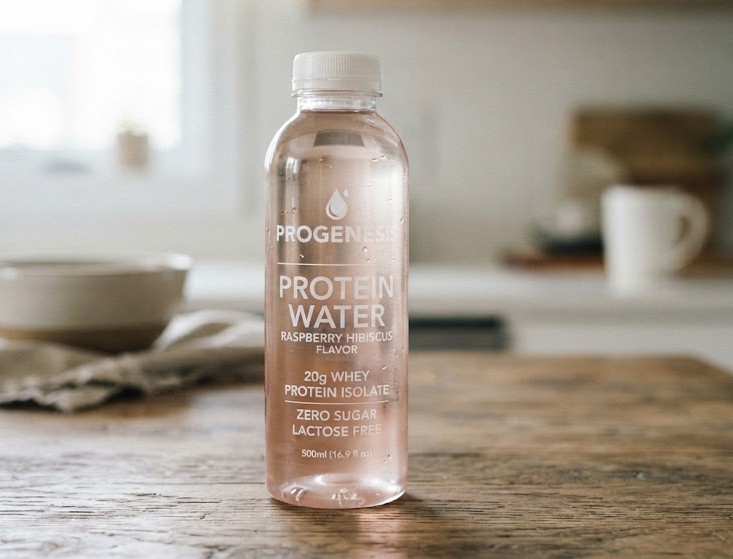
If you already use protein shakes or are trying to increase your daily protein intake, you may have noticed the growing popularity of the protein water drink. Unlike thick, creamy protein shakes, protein water is typically lighter, refreshing, and often fruit-flavored, making it an appealing option for people who want a more convenient way to consume protein.
But what exactly is protein water, and is it actually useful? The answer depends on the protein source, nutrition label, your overall diet, and how much protein you already consume.
In this guide, you’ll learn what a protein water drink is, how clear whey protein water works, the different types available, potential benefits and limitations, when to drink it, how it compares with a traditional protein shake, and what to look for on the nutrition label.
What Is a Protein Water Drink?
A protein water drink is a beverage formulated with added protein, typically designed to provide protein in a lighter and more refreshing format than a traditional protein shake. Protein water drinks are usually clear or translucent, although their appearance depends on the protein source and formulation.
Protein water can contain whey protein isolate, hydrolyzed whey, collagen peptides, or plant-based proteins. For example, a clear whey drink may provide protein in a fruit-flavored beverage rather than the creamy texture associated with conventional milk-based shakes.
Protein water is available as both a ready-to-drink beverage and a powder that you mix with water. There is no single standardized protein water recipe, so nutrition can vary considerably between products.
A standard adult protein RDA is 0.8 grams of protein per kilogram of body weight per day, although individual needs can differ according to age, activity, health status, and other factors.
Source: National Academies of Sciences, Engineering, and Medicine, 2002.
What Is Clear Whey Protein Water?
Clear whey protein water is a type of protein drink made with whey protein that has been processed to create a clearer, juice-like beverage instead of a creamy shake. Clear whey is generally designed to dissolve into water while producing a lighter mouthfeel.
For example, someone who dislikes thick chocolate or vanilla protein shakes may find a citrus-flavored clear whey drink easier to consume after training. The exact protein amount, calories, sweeteners, and other ingredients depend on the specific formulation.
Whey protein provides essential amino acids, which is one reason it is commonly used by people looking for protein around resistance training.
How Much Protein Does Protein Water Usually Contain?
There is no universal protein amount for every protein water drink. Some products contain a relatively small amount of protein, while others provide an amount comparable to a conventional protein shake.
For example, two 500 mL ready-to-drink products can have very different protein, calorie, sugar, and sodium values even though both are marketed as protein water.
Therefore, the nutrition label is more important than the product’s marketing claims. Compare the grams of protein per serving to determine how much protein you are actually getting.
Why Is Protein Water Becoming Popular?
Protein water is becoming popular because it combines convenient protein delivery with a lighter beverage format. This can appeal to people who want additional protein without the thickness of a conventional shake.
For example, someone leaving the gym may prefer a chilled fruit-flavored protein drink rather than carrying milk or preparing a blended shake. That convenience can make it easier to consistently include protein in a busy routine.
Protein water can also be useful for people who have difficulty consuming enough protein through meals alone. For broader dietary strategies, our high protein diet guide explains how supplemental protein can fit into a complete eating pattern.
Why Does Protein Water Matter for Daily Protein Intake?
Protein water matters because it can contribute to your total daily protein intake when a convenient protein source is needed. Protein supports numerous physiological functions, including maintaining and building body tissues.
For example, the adult protein RDA of 0.8 g/kg means a 70 kg adult would have an RDA of about 56 g per day.
Source: National Academies of Sciences, Engineering, and Medicine, 2002.
People who train regularly may have different protein targets depending on their training volume and goals. A protein water drink should therefore be viewed as one convenient protein source, rather than a complete nutrition strategy.
Can Protein Water Replace Protein-Rich Foods?
Protein water should generally complement protein-rich foods rather than replace a varied diet. Whole foods can provide protein alongside vitamins, minerals, fiber, fats, and other nutrients that a protein beverage may not contain.
Examples of protein-rich foods include:
- Lentils
- Greek yogurt
- Eggs
- Soy foods
- Fish
- Poultry
- Nuts
- Seeds
A protein water drink can simply fill a practical gap between meals or when preparing a full meal is inconvenient.
Using High Protein Plant-Based Food as the foundation of your diet can make your overall protein intake more varied, while protein water can provide convenience when needed.
What Are the Different Types of Protein Water?
Protein water comes in several forms, including clear whey, whey-based, collagen, plant-based, ready-to-drink, and powdered products. The protein source strongly influences the drink’s nutritional and functional characteristics.
| Type | Common protein source | Typical characteristics | Useful consideration |
|---|---|---|---|
| Clear whey | Whey isolate or hydrolyzed whey | Light, juice-like texture | Useful for people who dislike creamy shakes |
| Whey protein water | Whey protein | High-protein beverage format | Check protein and lactose information |
| Collagen water | Collagen peptides | Light texture and easy mixing | Collagen has a different amino-acid profile |
| Plant-based protein water | Plant proteins | Dairy-free options available | Check protein blend and amino-acid profile |
| Ready-to-drink | Varies | Pre-portioned and convenient | Compare nutrition labels |
| Protein powder | Varies | Mixed with water at home | Allows serving-size flexibility |
What Types of Protein Are Used in Protein Water?
Protein water can use whey, collagen, or plant-derived proteins, depending on the product. These proteins are not nutritionally identical, so identifying the source is important.
Whey is a complete protein source containing all essential amino acids, while collagen has a different amino-acid composition and is not equivalent to whey for every muscle-focused use.
Plant-based protein waters may use ingredients such as pea, rice, or blended plant proteins. People following a dairy-free diet can explore our plant-based protein guide for additional options.
What Is Collagen Protein Water?
Collagen protein water is a beverage containing collagen peptides dissolved in water. Collagen protein is structurally and nutritionally different from whey protein, so consumers should not assume that every protein water provides the same nutritional characteristics.
For example, a collagen drink can provide protein while serving a different nutritional purpose than a whey-based post-workout beverage. Its amino-acid profile makes it distinct from proteins commonly used for supporting muscle protein synthesis.
Therefore, always check the protein source before purchasing. The word “protein” on the front of a bottle does not tell you which type of protein you are consuming.
What Are the Benefits of Drinking Protein Water?
A protein water drink can provide convenient protein, portability, and a lighter alternative to many creamy protein beverages. Its practical value comes primarily from helping you meet an appropriate protein intake.
Potential practical benefits include:
- Convenient protein intake
- Easy portability
- A lighter alternative to creamy shakes
- A useful option between meals
- Convenient post-workout nutrition
- Different protein-source options
- Ready-to-drink or powdered formats
For example, someone who has already eaten a balanced meal but needs additional protein later may find a ready-to-drink protein water convenient.
Protein supports muscle tissue maintenance and growth when combined with appropriate nutrition and training. Research and sports-nutrition guidance support adequate protein intake around resistance training, but overall dietary intake remains important.
Source: NIH Office of Dietary Supplements, 2025.
Is Protein Water Good for Muscle Recovery?
A protein water drink can support post-exercise protein intake when it provides an appropriate amount and quality of protein. Recovery depends on training, total nutrition, sleep, hydration, and adequate protein rather than protein water itself.
For example, someone finishing resistance training could use protein water as a convenient protein source if their next protein-containing meal is several hours away.
Does Protein Water Help With Muscle Growth?
Protein water can contribute to muscle-growth goals by providing dietary protein, but it does not independently cause muscle growth. Resistance training provides the stimulus, while sufficient nutrition supports the body’s adaptation.
For example, replacing a low-protein snack with a protein-rich beverage may help someone consistently reach an appropriate daily protein target.
Protein intake works best as part of a complete training and nutrition plan. Our guide to protein for muscle growth explains how protein fits into a broader muscle-building strategy.
Is Protein Water Good for Weight Management?
Protein water can fit into a weight-management diet when its calories and protein content match your overall nutritional goals. Its usefulness comes from its nutrition profile and convenience, not from a special fat-burning effect.
For example, a lower-calorie protein beverage may provide protein without the additional calories found in a larger shake containing milk, nut butter, oats, or other ingredients.
However, calories still matter. A sweetened protein beverage can contribute significant calories depending on its formulation, so compare nutrition labels carefully and consider alternatives such as low calorie snacks.
How Do You Drink Protein Water?
You can drink protein water directly from a ready-to-drink bottle or prepare a powdered version according to the manufacturer’s instructions. The preparation method depends on the specific product.
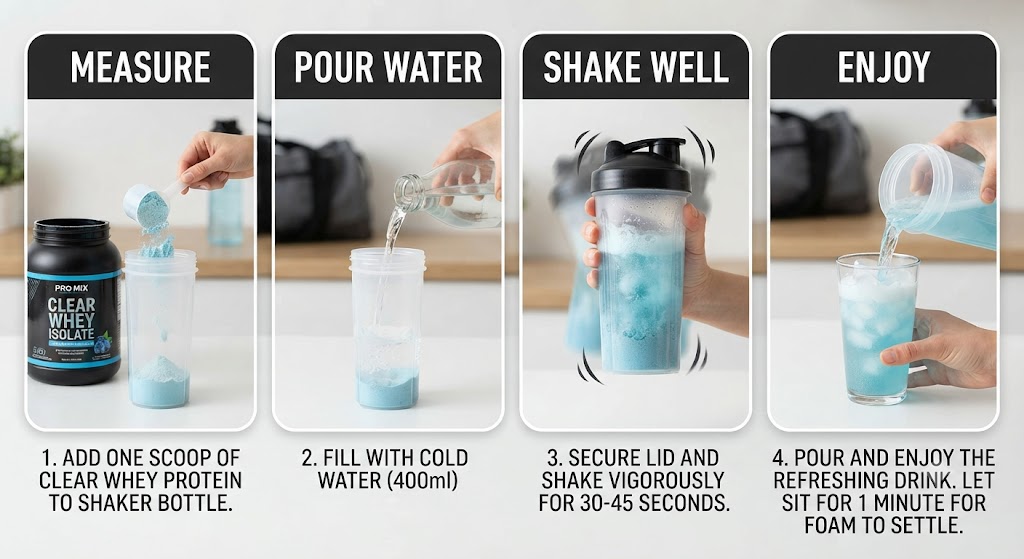
For example, a powdered clear whey product may require adding the powder to water, shaking it, and allowing the foam to settle before drinking.
Following the product’s serving instructions can help you maintain the intended concentration and nutrition profile.
How Do You Make Protein Water at Home?
You can make a simple protein water drink at home by mixing a suitable protein powder with water according to the product’s instructions. Clear whey powders are generally designed specifically for a more transparent, refreshing beverage.
A basic preparation process is:
- Add the recommended amount of powder to water.
- Shake or mix thoroughly.
- Allow excessive foam to settle.
- Check the final serving size before drinking.
- Refrigerate it if the product instructions recommend chilled preparation.
Not every conventional whey powder will produce clear protein water. Some powders are specifically formulated for creamy shakes and may not dissolve into a clear beverage.
When Is the Best Time to Drink Protein Water?
The best time to drink protein water depends on your overall eating schedule, training routine, and daily protein needs. There is no universal requirement to consume it at one exact time.
You could drink protein water:
- After exercise
- Between meals
- Alongside a low-protein breakfast
- During travel
- When preparing a full meal is inconvenient
- Whenever a convenient protein source is needed
The best time to drink protein water therefore depends on individual eating and training habits rather than a single mandatory timing window.
Is Protein Water Good After a Workout?
Protein water can be a convenient post-workout protein option when you need protein and a full meal is not immediately practical. It can contribute to recovery nutrition without requiring a thick or milk-based shake.
For example, a runner finishing a long training session could carry a ready-to-drink protein beverage for use before traveling home for a full meal.
Importantly, research summarized by the NIH indicates that consuming protein within one hour before or after exercise does not necessarily produce greater muscle strength or size than protein intake outside that narrow window.
Source: NIH Office of Dietary Supplements, 2025.
Therefore, focus on your overall daily protein intake instead of becoming overly concerned about a strict post-workout “anabolic window.”
Protein Water vs. Protein Shake: What Is the Difference?
Protein water and protein shakes are both convenient ways to consume protein, but they differ in texture, ingredients, calories, and practical use. Neither format is automatically appropriate for everyone.
| Feature | Protein Water | Traditional Protein Shake |
|---|---|---|
| Texture | Light and often clear | Creamy or thick |
| Protein source | Whey, collagen, plant proteins, or blends | Whey, casein, plant proteins, or blends |
| Calories | Often relatively low, but varies | Can be low or high depending on ingredients |
| Carbohydrates | Often low, depending on formulation | Varies widely |
| Fat | Often low | May be higher with milk or added ingredients |
| Convenience | Ready-to-drink or mixed | Usually mixed or blended |
| Hydration | Contains water | Water content depends on preparation |
| Best use | Light protein beverage | Flexible meal or snack supplement |
When Might Protein Water Be More Convenient?
Protein water may be more convenient when you want protein in a light, refreshing format. Its portability can make it practical for commuting, travel, or post-workout situations.
For example, someone who dislikes creamy drinks may find a chilled clear whey beverage easier to consume consistently.
When Might a Traditional Protein Shake Be More Practical?
A traditional protein shake may be more practical when you want additional calories, carbohydrates, fats, or other ingredients in the same beverage.
You can customize a shake with:
- Milk
- Fruit
- Oats
- Yogurt
- Nut butter
- Other ingredients
For example, someone following a calorie-surplus lean bulk diet plan might prefer a shake that contributes both protein and energy.
How Do You Choose a Protein Water Drink?
Choose a protein water drink by comparing protein content, protein source, calories, added sugar, ingredients, allergens, sodium, and serving size. Marketing claims should not replace nutrition-label evaluation.
A useful comparison starts with the following questions:
- How many grams of protein does it provide?
- What type of protein does it contain?
- How many calories does it contain?
- Does it contain added sugar?
- What sweeteners are used?
- What is the actual serving size?
- Does it contain allergens relevant to you?
- How much sodium does it provide?
- Are the ingredients compatible with your dietary preferences?
- Does the product provide credible third-party quality-testing information where relevant?
What Should You Look for on a Protein Water Nutrition Label?
A protein water nutrition label should be evaluated carefully before you choose a product.
Protein: Check the grams of protein per serving.
Protein source: Identify whether the protein comes from whey, collagen, plant protein, or another source.
Calories: Compare the energy contribution with your nutritional goals.
Added sugar: Determine whether the product contains added sugars.
Sweeteners: Look at the type and amount where disclosed.
Serving size: Make sure the bottle’s listed serving matches the amount you expect to consume.
Allergens: Check for milk, soy, or other relevant allergens.
Sodium: Compare products if sodium intake matters to you.
Ingredients: Look for ingredients you understand and tolerate.
Third-party testing: Consider products that provide credible quality-testing information where relevant.
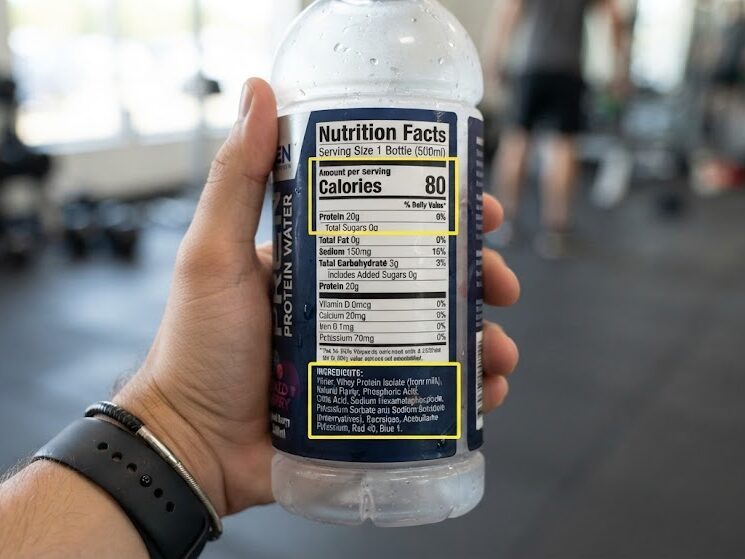
Checking the nutrition label allows you to compare products more objectively. The FDA’s Daily Value framework also provides a standardized way to understand how nutrients on food and supplement labels contribute to daily intake.
Source: U.S. Food and Drug Administration, 2025.
Is “High Protein” Always Better?
A higher protein amount is not automatically better because your nutritional requirement depends on your complete diet and individual circumstances. More protein may be unnecessary if you already meet an appropriate intake.
For example, adding a 30 g protein beverage to a diet that already comfortably meets your needs may provide less practical value than improving meal quality or variety.
People with kidney disease or other medical conditions may require individualized dietary advice. If you have a medical condition, consult a qualified healthcare professional before substantially changing your protein intake.
Is Protein Water Suitable for Everyone?
Protein water is suitable for many healthy adults as a convenient protein source, but individual dietary needs, allergies, medical conditions, and ingredient tolerances should guide its use.
Protein water is a food or supplement choice, not a requirement for good nutrition.
For example, someone with a milk allergy should carefully evaluate whey-based products, while someone following a vegan diet would generally look for a suitable plant-based formulation.
Collagen-based products may also have a different amino-acid profile from complete protein sources such as whey. Choosing the protein type is therefore just as important as checking the total grams of protein.
What’s Next: How to Add Protein Water to Your Diet
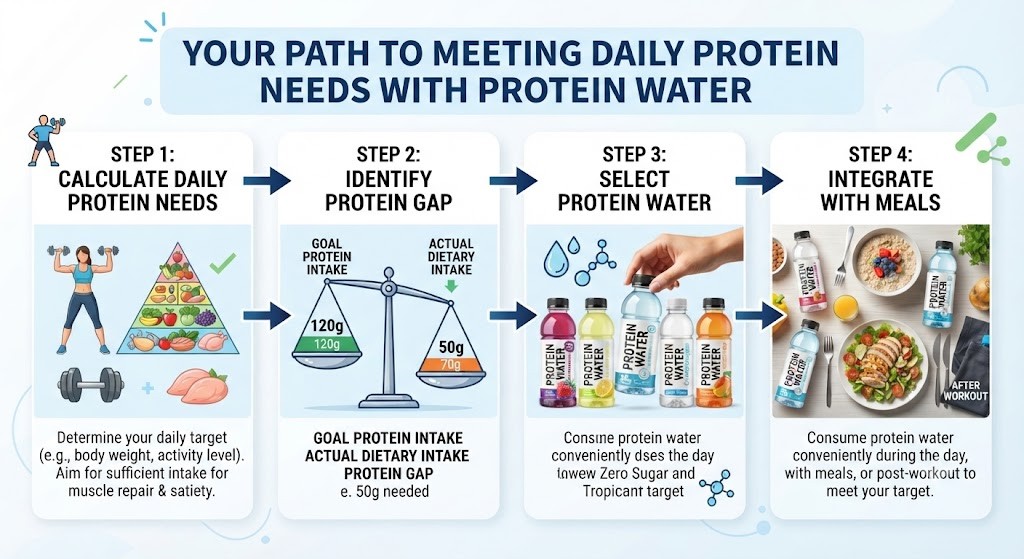
Adding protein water to your diet starts with identifying whether you actually need a convenient protein source. Protein water should fill a nutritional or practical gap rather than become an automatic daily requirement.
If breakfast, lunch, and dinner already provide sufficient protein, adding another protein beverage may not be necessary.
A practical approach is to:
- Estimate your protein needs. Consider body size, activity, age, goals, and professional guidance when appropriate.
- Review your current diet. Identify meals or situations where protein is consistently low.
- Choose the right protein source. Decide whether whey, collagen, or plant-based protein fits your dietary needs.
- Compare nutrition labels. Look at protein, calories, sugar, ingredients, allergens, and serving size.
- Use protein water strategically. Drink it when convenience makes meeting your nutrition goals easier.
- Keep whole foods central. Build your diet around varied protein-rich foods and other nutrient-dense foods.
Conclusion
A protein water drink is a convenient way to consume protein in a lighter, refreshing format. It can be particularly useful for people who dislike traditional creamy shakes, need a portable protein source, or want an easy option after exercise or between meals.
The most important factors are your total daily protein intake, overall diet, training routine, calorie needs, protein source, and individual preferences. Protein water can be useful when food-based protein is inconvenient, but it does not need to replace nutritious whole foods.
Ultimately, choose protein water based on its protein source, nutrition label, ingredients, calories, serving size, and how well it fits your overall diet. Used appropriately, it can be a practical addition to a balanced nutrition routine.
FAQs
What is a protein water drink?
A protein water drink is water or a flavored beverage containing added protein.
Is protein water good for you?
Protein water can be a convenient way to increase your daily protein intake.
How much protein does protein water contain?
Protein content varies depending on the product and serving size.
What is clear whey protein water?
Clear whey protein water is a light, juice-like drink made with whey protein.
Can you drink protein water after a workout?
Yes, protein water can be a convenient post-workout protein option.
Does protein water help build muscle?
It can support muscle growth by helping you meet your protein needs.
Is protein water good for weight management?
It can fit into a weight-management diet when its calories suit your goals.
Is protein water better than a protein shake?
Neither is automatically better; the choice depends on your needs and preferences.
Can you make protein water at home?
Yes, you can mix a suitable protein powder with water as directed.
What protein is used in protein water?
Protein water may contain whey, collagen, plant protein, or protein blends.
Is collagen protein water the same as whey protein water?
No, collagen and whey have different amino-acid profiles.
What should you look for when buying protein water?
Check the protein, calories, sugar, ingredients, allergens, and serving size.
Can protein water replace protein-rich foods?
No, protein water should generally complement a varied diet.
When is the best time to drink protein water?
You can drink it after exercise, between meals, or whenever convenient.