
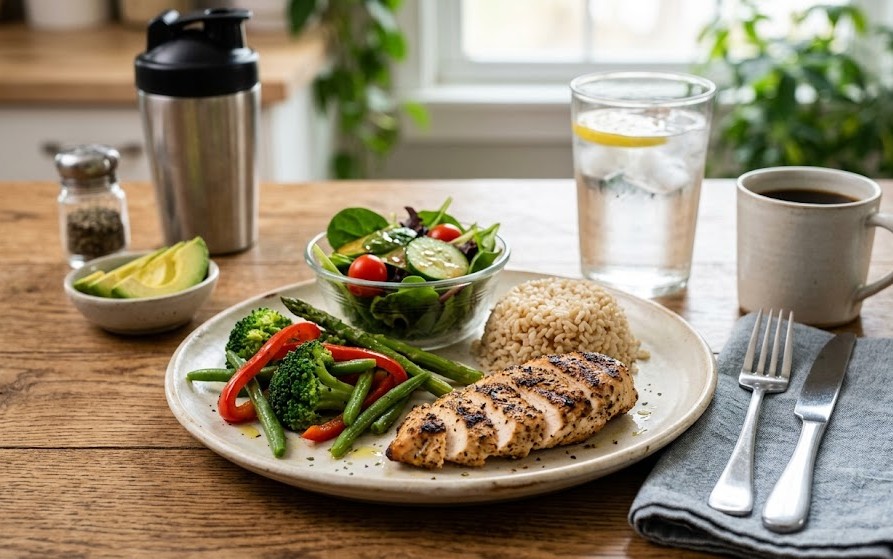
If you’ve ever tried to “eat big to get big,” you already know the downside: the scale moves, but so does your waistline. Most lifters who gain weight without a plan end up adding far more fat than muscle, then spend months trying to cut it back off. A lean bulk diet plan solves that problem by giving your body just enough fuel to build muscle efficiently, without inviting unnecessary fat gain along the way.
In this guide, you’ll learn exactly how a lean bulk diet plan works, how to calculate your ideal calorie intake, how to structure your macronutrients, which foods belong on your plate, and how to build a complete day-by-day meal plan. You’ll also learn how long a lean bulk should last, whether cardio fits into the picture, and how to track your progress so you know it’s actually working.
What Is a Lean Bulk Diet Plan?
A lean bulk diet plan is a nutrition approach built around a small, controlled calorie surplus designed to maximize muscle growth while keeping fat gain to a minimum.
Instead of eating without limits — the classic “see food diet” approach — a lean bulk relies on a modest increase above your maintenance calories, consistent protein intake, and food choices that are rich in nutrients rather than empty calories. The goal isn’t to gain weight as fast as possible; it’s to gain the right kind of weight.
For example, if your maintenance intake is 2,500 calories a day, a lean bulk diet plan would typically push that up to somewhere between 2,700 and 3,000 calories, rather than jumping straight to 4,000-plus calories.
Lean Bulk vs. Dirty Bulk: What’s the Real Difference?
People often use “bulking” as a catch-all term, but a lean bulk and a dirty bulk produce very different results. Here’s how they compare side by side:
| Factor | Lean Bulk | Dirty Bulk |
|---|---|---|
| Calorie Surplus | 200–500 calories | 700–1,500+ calories |
| Weight Gain Speed | Slow and controlled | Rapid |
| Fat Gain | Minimal | Significant |
| Food Quality | Nutrient-dense | Often poor quality |
| Sustainability | High | Low |
| Body Composition Outcome | Improved | Often worsens |
| Best Suited For | Long-term physique goals | Pure scale-weight gain |
The core difference comes down to pacing. A lean bulk diet plan favors gradual, steady weight gain, while a dirty bulk chases speed regardless of how much of that weight ends up as fat.
According to the International Society of Sports Nutrition, gradual weight gain tends to improve muscle-building efficiency while reducing unnecessary fat storage — Source: ISSN, 2023.
Why a Lean Bulk Diet Plan Matters for Building Muscle
It’s tempting to think that eating as much as possible is the fastest route to bigger muscles. In reality, the evidence points the other way: pushing calories too high tends to add fat faster than it adds muscle, leaving you with a bulkier — but not necessarily stronger or leaner — physique.
A properly structured lean bulk diet plan supports several things at once:
- Muscle growth potential — your body has the raw materials it needs to repair and build tissue
- Strength performance — adequate fuel translates into better output in the gym
- Recovery capacity — nutrients and calories speed up repair between sessions
- Energy levels — you avoid the sluggishness that comes with being underfed
- Long-term physique development — you build a body you don’t have to “fix” later with an extreme cut
Someone following a well-designed lean bulk can typically expect to gain around 0.25–0.5% of their body weight per week while still maintaining visible muscle definition — a pace that’s slow enough to stay lean, but fast enough to see real progress.
Of course, nutrition is only half of the equation. Progressive resistance training is what actually signals your body to build muscle in the first place. For additional training guidance, see guide on best muscle building workout plan
The Science Behind a Lean Bulk Diet Plan
To understand why a lean bulk diet plan works, it helps to look at the two biological levers it pulls: energy balance and muscle protein synthesis.
Understanding the Calorie Surplus
A calorie surplus simply means you’re consistently consuming more energy than your body burns in a day. For muscle growth specifically, this matters because building new muscle tissue is metabolically expensive — your body needs extra energy on hand to support recovery, protein synthesis, and the adaptations triggered by training.
Here’s a simple example of what that surplus might look like in practice:
| Category | Calories |
|---|---|
| Maintenance Calories | 2,500 |
| Lean Bulk Calories | 2,800 |
| Daily Surplus | 300 |
That 300-calorie cushion is enough to fuel growth without flooding your system with far more energy than it can actually use for building tissue.
Muscle Protein Synthesis Explained
Muscle protein synthesis (MPS) is the biological process your body uses to repair and rebuild muscle fibers after they’ve been broken down by training. It’s the actual mechanism behind muscle growth — calories and protein simply provide the materials MPS needs to do its job.
Research suggests that resistance training, paired with sufficient protein intake, is what maximizes this process. In fact, the two most important levers for muscle growth during a lean bulk diet plan are progressive strength training and consistent protein intake — everything else is secondary to those two factors.
According to Sports Medicine research, resistance training can elevate muscle protein synthesis for up to 48 hours after a workout — Source: Sports Medicine, 2023.
For more on optimizing your training to take advantage of this window, read our strength training for muscle growth
How Many Calories Should You Eat on a Lean Bulk Diet Plan?
As a general rule, a lean bulk diet plan should put you somewhere between 200 and 500 calories above your maintenance level each day. That range is wide enough to account for differences in training experience, but tight enough to keep fat gain in check.
Getting your number right takes three steps.
Step 1: Calculate Your Maintenance Calories
Before you can add a surplus, you need to know your Total Daily Energy Expenditure (TDEE) — the number of calories your body burns in an average day.
A quick way to estimate it:
- Sedentary: Bodyweight × 13–14
- Moderately Active: Bodyweight × 15–16
- Highly Active: Bodyweight × 17–18
For example, a 75 kg person who trains at a moderate activity level might maintain their weight on roughly 2,600 calories per day.
Step 2: Add Your Lean Bulk Calorie Surplus
Once you know your maintenance number, layer your surplus on top of it. The right amount depends on your training experience:
- Beginners: +300–500 calories
- Intermediate Lifters: +200–300 calories
- Advanced Lifters: +150–250 calories
Newer lifters typically respond to a slightly larger surplus because their bodies are more responsive to new training stimulus, while advanced lifters need a smaller buffer since their rate of muscle gain naturally slows over time.
Step 3: Track Progress and Adjust as Needed
A calorie target isn’t something you set once and forget — it needs regular check-ins. Ideal weekly weight gain looks like this:
- Men: 0.25–0.5% of body weight per week
- Women: 0.25–0.4% of body weight per week
If you’re gaining faster than that, your surplus is probably too large. If you’re barely moving the scale (or your strength has stalled), it may be time to nudge calories up. Consistent tracking is what lets you tell the difference between “building muscle” and “just getting heavier.”
Best Macronutrient Ratios for a Lean Bulk Diet Plan
Total calories set the stage, but how you split those calories across protein, carbs, and fat determines how much of your weight gain ends up as muscle. A lean bulk diet plan should prioritize protein first, then build carbohydrate and fat intake around your training and lifestyle needs.
How Much Protein Do You Need on a Lean Bulk?
Protein is the macronutrient most directly tied to muscle repair and growth, which is why it gets top priority on a lean bulk diet plan. Most research points to a daily intake of 1.6 to 2.2 grams of protein per kilogram of body weight.
Here’s what that looks like across different body weights:
| Body Weight | Protein Range |
|---|---|
| 60 kg | 96–132 g |
| 70 kg | 112–154 g |
| 80 kg | 128–176 g |
| 90 kg | 144–198 g |
Research published by the Journal of the International Society of Sports Nutrition supports this range for maximizing muscle growth — Source: JISSN, 2023.
Carbohydrates for Muscle Growth and Performance
Carbohydrates are your body’s preferred fuel source for high-intensity training, which makes them essential for powering through heavy lifting sessions and recovering between them.
A general guideline is 3–6 grams of carbohydrate per kilogram of body weight per day, depending on training volume and intensity. For example, an 80 kg athlete training hard several times a week might consume anywhere from 240 to 480 grams of carbohydrates daily.
Healthy Fats for Hormone Support and Recovery
Dietary fat often gets overlooked during a bulk, but it plays a critical role in hormone production, recovery, and nutrient absorption — all of which directly affect how well your body builds muscle.
Aim for fat to make up 20–30% of total daily calories, sourced from foods like:
- Avocados
- Olive oil
- Nuts
- Seeds
- Fatty fish
Best Foods to Eat on a Lean Bulk Diet Plan
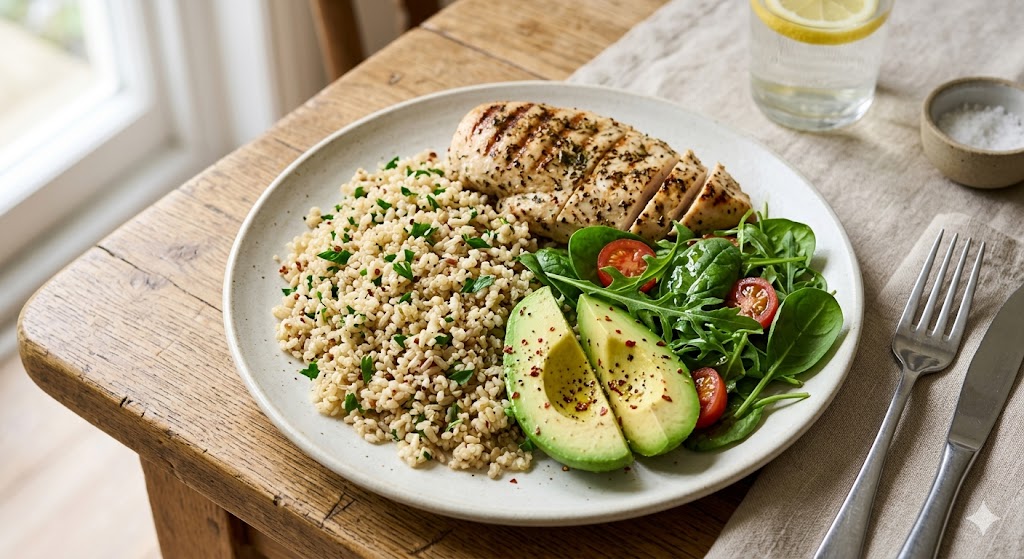
Hitting your calorie and macro targets matters, but so does where those calories come from. A lean bulk diet plan works best when it’s built primarily from whole, nutrient-dense foods rather than processed convenience items.
Top Lean Protein Sources
These foods deliver high-quality protein with minimal excess fat, making them staples of any lean bulk diet plan:
- Chicken breast
- Turkey
- Lean beef
- Eggs
- Greek yogurt
- Cottage cheese
- Fish
- Whey protein
For a longer list of options, check out high protein foods list

Best Complex Carbohydrate Sources
Complex carbs digest more slowly than simple sugars, giving you steady, sustained energy throughout the day and during training:
- Oats
- Brown rice
- Sweet potatoes
- Quinoa
- Whole grain bread
- Fruits
- Legumes
Healthy Fat Sources for a Lean Bulk
Round out your fat intake with these nutrient-dense options:
- Almonds
- Walnuts
- Chia seeds
- Flaxseeds
- Peanut butter
- Olive oil
Fruits and Vegetables for Micronutrient Support
It’s easy to focus entirely on macros and forget about micronutrients, but vitamins and minerals are essential for recovery, immune function, and overall health — all of which influence how well your body responds to training.
According to the World Health Organization, adults should consume at least 400 grams of fruits and vegetables daily — Source: WHO, 2024.
Sample Lean Bulk Diet Plan for Beginners
Theory is useful, but most people just want to know what to actually put on their plate. Here’s a sample beginner lean bulk meal plan that hits the calorie, protein, and nutrient targets covered above:
| Meal | Food |
|---|---|
| Breakfast | Oats, whey protein, banana, almonds |
| Snack | Greek yogurt and berries |
| Lunch | Chicken breast, rice, vegetables |
| Pre-Workout | Banana and peanut butter |
| Post-Workout | Whey protein and rice cakes |
| Dinner | Salmon, sweet potato, vegetables |
| Before Bed | Cottage cheese and walnuts |
Vegetarian Lean Bulk Diet Plan Option
You don’t need meat to follow a successful lean bulk diet plan. Plant-based eaters can hit their protein and calorie targets with foods like:
- Tofu
- Tempeh
- Paneer
- Lentils
- Chickpeas
- Soy milk
- Greek yogurt
Pre-Workout Nutrition for a Lean Bulk
A solid pre-workout meal should combine carbohydrates for energy with a moderate amount of protein. A simple, effective option is:
- Banana
- Oatmeal
- Whey protein
For more strategies around timing and food choices, read our pre workout nutrition guide.
Post-Workout Nutrition for Recovery
After training, your priority shifts to replenishing glycogen and supplying protein for repair. A practical post-workout combination looks like:
- Whey protein shake
- Rice
- Chicken breast
For more ideas on structuring this meal, explore post workout meal ideas.
Can You Build Muscle Without Gaining Any Fat?
Building muscle with zero fat gain at all is extremely difficult, since muscle growth generally requires some degree of calorie surplus. That said, certain groups can experience what’s known as “body recomposition” — gaining muscle and losing fat at the same time.
This is most achievable for:
- Beginners just starting strength training
- People returning to training after a long break
- Individuals carrying a higher body fat percentage
For example, a novice lifter can often build muscle and lose fat simultaneously by combining consistent strength training, sufficient protein intake, and a slight calorie deficit.
Most experienced lifters, however, get better long-term results by alternating between a structured lean bulk diet plan and a dedicated cutting phase, rather than trying to do both at once.
How Long Should a Lean Bulk Diet Plan Last?
A lean bulk diet plan typically runs anywhere from 3 to 9 months, depending on your training experience and current body composition.
| Experience Level | Recommended Lean Bulk Duration |
|---|---|
| Beginners | 6–9 months |
| Intermediate Lifters | 4–6 months |
| Advanced Lifters | 3–5 months |
A bulk that’s too short doesn’t leave enough time for meaningful muscle growth, while one that runs too long tends to accumulate excess fat that outweighs the benefit. Consistency over time matters far more than rushing the timeline.
Should You Do Cardio During a Lean Bulk?
Yes — cardio is still beneficial during a lean bulk diet plan. It supports cardiovascular health, speeds up recovery between lifting sessions, and helps keep your calorie surplus in check.
A reasonable target is:
- 2–4 sessions per week
- 20–30 minutes per session
Good options include:
- Walking
- Cycling
- Incline treadmill
- Rowing
As long as your calorie and protein intake stay sufficient, moderate cardio like this won’t meaningfully interfere with muscle growth.
Common Lean Bulk Diet Plan Mistakes to Avoid
Even with a solid plan, a few common errors can quietly sabotage your results.
Excessive Calorie Surplus
Pushing your surplus too high accelerates fat gain faster than it accelerates muscle growth — turning what should be a lean bulk into a dirty bulk by accident.
Inconsistent Protein Intake
Missing your protein targets on a regular basis reduces the number of opportunities your body has to trigger muscle protein synthesis, slowing progress even if total calories are on point.
Ignoring Training Quality
No amount of perfect nutrition will compensate for a poorly structured workout program. Training stimulus is what tells your body to use the extra calories for muscle rather than storing them as fat.
Poor Food Choices
Leaning too heavily on highly processed foods can drive up your calorie intake while leaving you short on the vitamins, minerals, and fiber your body needs to recover well.
Lack of Progress Tracking
Without consistent tracking, every adjustment you make is just guesswork. You won’t know whether to add calories, hold steady, or pull back until you can see the trend.
How to Track Progress During a Lean Bulk Diet Plan
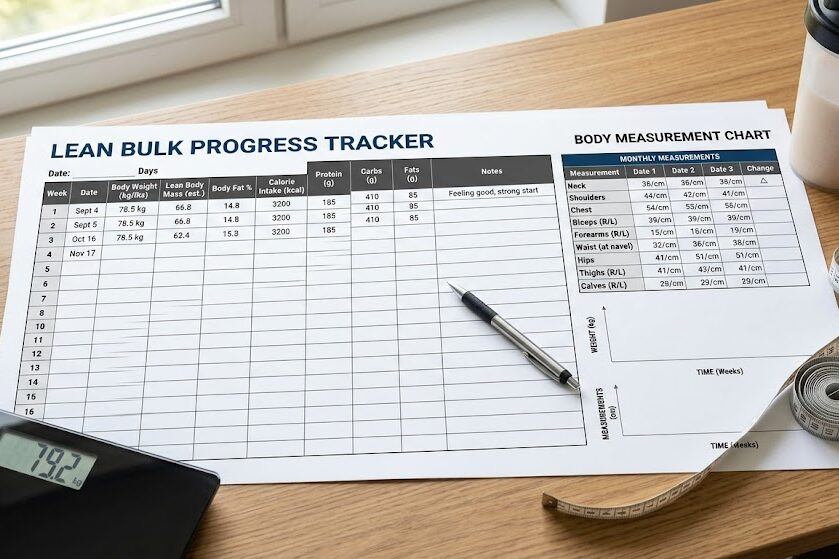
Tracking is what separates a successful lean bulk diet plan from a slow slide into excess fat gain. It tells you, in real time, whether your weight gain is coming from muscle or from fat.
Effective Tracking Methods
Keep an eye on:
- Body weight
- Progress photos
- Strength levels
- Waist measurements
- Body fat estimates
For a more detailed breakdown of these methods, explore body composition tracking methods
Monthly Lean Bulk Assessment Checklist
Once a month, step back and review the bigger picture:
- Body weight trend
- Strength improvements
- Recovery quality
- Waist circumference
- Visual muscle development
Helpful Tools for Following a Lean Bulk Diet Plan
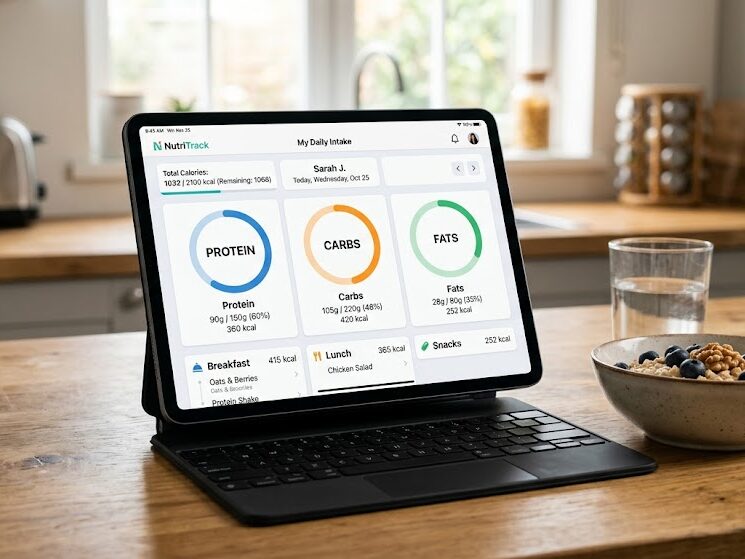
The right tools make it much easier to stay consistent with calorie tracking, meal planning, and progress monitoring over the months your lean bulk diet plan will run.
Popular options include:
- MyFitnessPal
- Cronometer
- MacroFactor
- Google Sheets
- Smart body-weight scales
If you’re considering supplements to support your training, our creatine supplement guide is a good place to start. And to keep your meals organized throughout the week, see meal prep for fitness goals.
The Lean Bulk Diet Plan Formula at a Glance
If you want the entire approach distilled into one simple equation, it looks like this:
[Insert illustration: Lean Bulk Formula = Maintenance Calories + 200–500 Calories + Progressive Strength Training + 1.6–2.2 g/kg Protein = Lean Muscle Growth]
What to Do After Starting Your Lean Bulk Diet Plan
Starting your lean bulk diet plan is just the beginning — what you do over the following weeks determines whether it actually works.
- Hold steady first. Maintain your calorie surplus for at least two to four weeks before making any changes. Your body needs time to respond before you can judge results accurately.
- Evaluate and adjust. Review your weight trend and gym performance. If progress has stalled, increase calories by 100–150 per day.
- Stay consistent. Keep prioritizing progressive overload in your training and solid recovery habits outside the gym.
For more guidance on structuring your training during this phase, review lean muscle workout routine.
Eventually, most lifters transition from their lean bulk into one of the following:
- Maintenance calories
- A short mini-cut phase
- A traditional cutting phase
Which one is right for you depends entirely on your current body composition and how close you are to your physique goals.
Conclusion
A lean bulk diet plan remains one of the most effective and sustainable ways to build muscle without the unwanted fat gain that comes with traditional bulking. By keeping your calorie surplus moderate, prioritizing protein intake, choosing nutrient-dense foods, and pairing it all with a structured strength-training program, you set yourself up for steady, long-term progress instead of a cycle of bulking and crash-dieting.
Consistency, more than perfection, is what actually drives results. Small, repeatable choices in your nutrition, training, recovery, and tracking add up over months into a noticeably stronger, more muscular physique — without the fat you’d otherwise have to cut later.
For more on optimizing the recovery side of this process, check out our best recovery techniques for muscle growth
FAQs
What is a lean bulk diet plan?
A lean bulk diet plan is a nutrition strategy that uses a small, controlled calorie surplus — typically 200–500 calories above maintenance — combined with adequate protein and strength training to build muscle while minimizing fat gain.
How many calories should I eat during a lean bulk?
Most people should aim for 200–500 calories above their maintenance level, with beginners typically using the higher end of that range and advanced lifters using the lower end.
How much protein do I need on a lean bulk diet plan?
Aim for 1.6 to 2.2 grams of protein per kilogram of body weight each day to support muscle protein synthesis and recovery.
What’s the difference between a lean bulk and a dirty bulk?
A lean bulk uses a small calorie surplus (200–500 calories) and nutrient-dense foods to gain muscle gradually, while a dirty bulk uses a much larger surplus (700–1,500+ calories) that leads to faster but fattier weight gain.
How long should a lean bulk last?
A lean bulk typically lasts 3 to 9 months, depending on training experience — beginners usually benefit from a longer phase, while advanced lifters often need a shorter one.
Can I do cardio while on a lean bulk diet plan?
Yes. Moderate cardio (2–4 sessions per week, 20–30 minutes each) supports cardiovascular health and recovery without interfering with muscle growth, as long as calorie and protein intake remain sufficient.
Can you build muscle without gaining fat?
It’s difficult to gain muscle with zero fat gain, since growth generally requires a calorie surplus. However, beginners, returning lifters, and people with higher body fat can often experience body recomposition — gaining muscle while losing some fat at the same time.
What foods should I eat during a lean bulk?
Focus on lean proteins (chicken, eggs, fish, Greek yogurt), complex carbohydrates (oats, rice, sweet potatoes, quinoa), healthy fats (nuts, seeds, olive oil), and at least 400 grams of fruits and vegetables daily.