
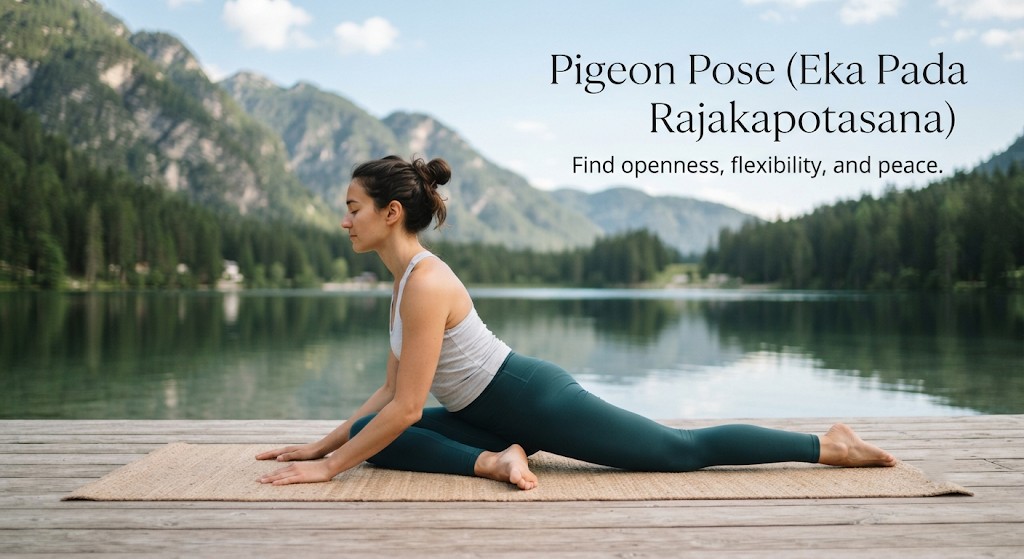
Pigeon pose yoga is one of the most popular hip openers, and it can feel like relief or torture depending on the day. It stretches the hips and glutes, which tend to tighten after long hours of sitting. This guide explains how to do it step by step, how to protect your knees, and which variation suits your body.
What is pigeon pose yoga?
Pigeon pose yoga is a floor-based hip opener where one leg bends in front of you and the other extends behind you. Its full Sanskrit name is Eka Pada Rajakapotasana, or one-legged king pigeon pose, and the version most people practice is a variation of that pose. (Source: Yoga Journal)
Quick facts:
- Also called half pigeon or simply pigeon pose
- Pose type: floor hip opener with a forward fold or gentle backbend
- Level: the common version works for many beginners with props, while full king pigeon is advanced
- Helpful props: a block, bolster, folded blanket, or strap
If your hips feel very tight, start with the lunge-based warm-ups below before you lower into the full shape.
Puppy pose yoga (Uttana Shishosana)
Why does pigeon pose matter?
Pigeon pose matters because it targets the hip muscles that long periods of sitting shorten and tighten. Sitting at a desk, in a car, or on the couch keeps the hip flexors compressed, which makes them tighten up. (Source: Hospital for Special Surgery)
What it offers:
- A stretch for the hip flexors, glutes, and piriformis, which can improve hip range of motion (Source: WebMD)
- Outward rotation in the front hip and a stretch through the psoas of the back leg (Source: Yoga Journal)
- A slow, quiet position where long breaths come naturally
- A useful cool-down after running, cycling, or a leg workout
What the research says
I did not find a study that tests pigeon pose on its own. The points below cover stretching and flexibility in general.
- A 2023 systematic review found that stretching can increase joint range of motion in the short term, with results shaped by factors like intensity, duration, and the person stretching. (Source: Acute Effects of Various Stretching Techniques on Range of Motion, 2023)
- Cleveland Clinic notes that flexibility improves range of motion, and advises against pushing too hard when you stretch. (Source: Cleveland Clinic)
Which muscles does pigeon pose stretch?
Pigeon pose stretches the glutes, piriformis, and hip flexors, with the front leg and back leg working in different ways. Here is the breakdown.
| Body area | What happens in the pose |
|---|---|
| Glutes and piriformis (front leg) | Stretch as the thigh rotates outward |
| Outer hip (front leg) | Opens as the knee moves toward the mat |
| Hip flexors and psoas (back leg) | Lengthen as the back hip extends |
| Front of the back thigh | Lengthens lightly |
| Lower back | Stretches gently if you fold forward |
| Core and arms | Hold your hips level and support your torso |
If the front of your hips feels tight, a few targeted stretches beforehand can make the pose more comfortable.
Firefly pose yoga (Tittibhasana)
The same goes for the deep glute muscle that gets stretched in the front leg.
How to do pigeon pose step by step
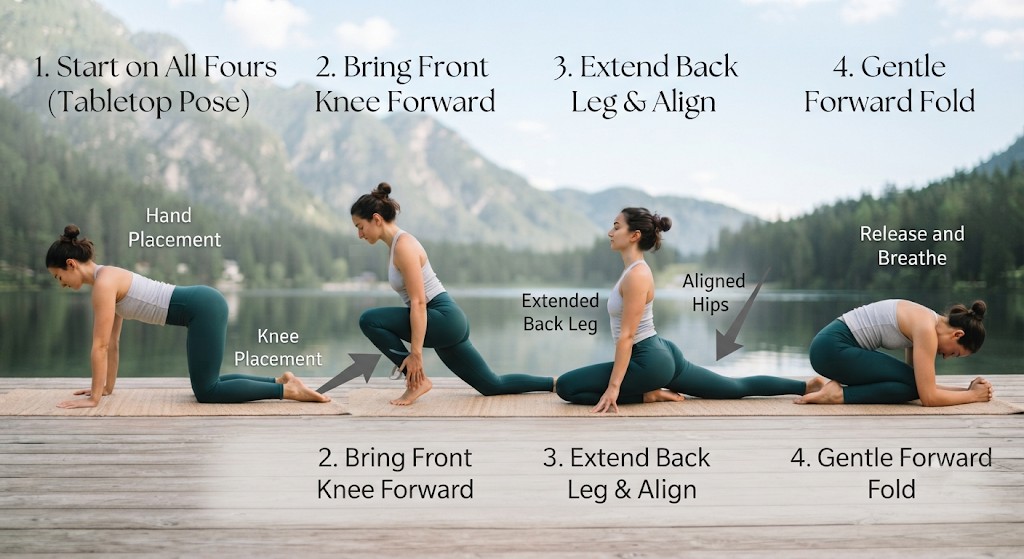
To do pigeon pose, bring one knee forward from all fours, extend the other leg straight back, level your hips, and breathe into the stretch. Warm up first, since it is a deep stretch. (Source: WebMD) Low lunge and a reclined figure four stretch make good prep.
- Start in downward-facing dog or on all fours.
- Slide your right knee forward toward your right wrist and angle your right shin across the mat. Let the shin angle be whatever your hip allows.
- Extend your left leg straight back with the top of the foot on the mat.
- Square your hips toward the front. If your right hip lifts off the floor, slide a block or folded blanket under it.
- Stay upright with your fingertips beside your hips and lengthen your spine.
- Fold forward over the front leg only if the stretch stays comfortable, resting your forearms or forehead on a block.
- Hold for 5 to 10 breaths.
- Walk your hands back, return to downward-facing dog, and repeat on the other side.
Dancer pose yoga (Natarajasana)
Common mistakes to avoid
- Letting one hip collapse or lift off the floor, which makes the pose lopsided and can strain the front knee
- Forcing the front shin parallel to the front of the mat when your hip can’t rotate that far
- Dropping your weight into the front knee instead of the hip
- Folding forward before the hips are level
- Pushing through pain, since pain in the front knee often means the hip isn’t rotating enough
- Holding your breath
Pigeon pose variations and modifications
Pigeon pose has easier and harder versions, so you can match it to your hips, knees, and experience.
| Variation | What changes | Best for |
|---|---|---|
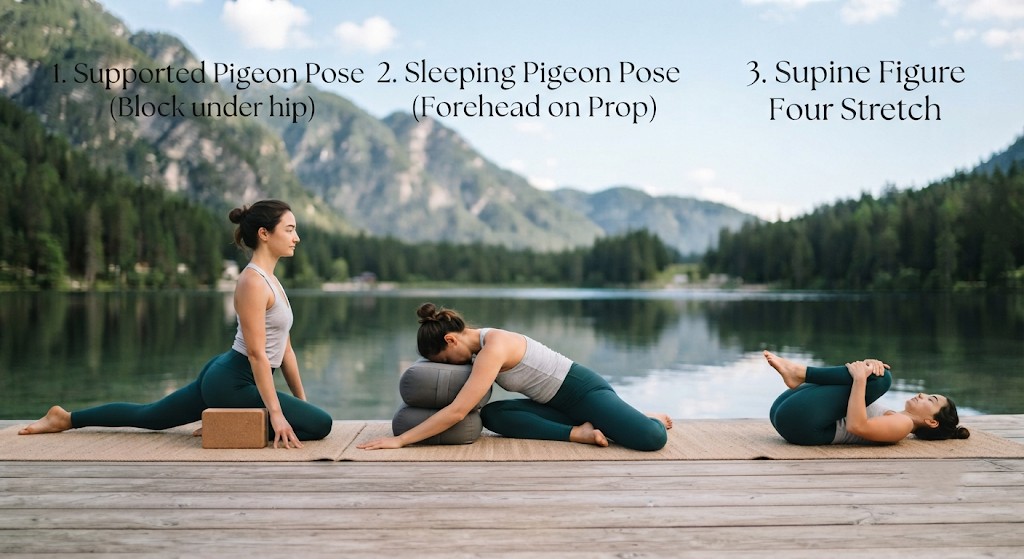
| Block or blanket under the hip | A prop supports the front hip so your pelvis stays level | Tight hips or beginners |
| Hands or elbows on blocks | Blocks keep your torso lifted and supported | People who can’t fold comfortably |
| Sleeping pigeon | You fold forward and rest your forehead on the mat or a prop | A slower, deeper release |
| Reclined pigeon (figure four) | You lie on your back with one ankle over the opposite thigh | Knee sensitivity or pain in pigeon |
| King pigeon | The back knee bends and the foot reaches toward the head | Advanced practitioners |
Reclined pigeon is often suggested as a good starting point and as an alternative if the full pose causes pain. (Source: Peloton)
A pair of blocks makes nearly every version more comfortable.
Is pigeon pose safe? Precautions to know
Pigeon pose is a deep hip stretch that loads the front knee and the sacroiliac area, so a few precautions apply.
- Skip it or swap in reclined pigeon if you have knee or sacroiliac joint discomfort. (Source: Yoga Journal)
- Warm up first, especially if your hips are tight.
- Pad the front knee with a folded blanket if the floor feels harsh.
- Come out of the pose if you feel pain in the front knee.
- Ask a clinician first if you have had hip or knee surgery.
- Ease in gradually and avoid forcing depth.
How long and how often should you practice?
Hold pigeon pose for 5 to 10 breaths per side, and repeat once if it feels good. Two or three times a week works as a starting rhythm. It fits well at the end of a workout or yoga class, when your muscles are warm.
post-workout stretching routine
It can also break up long stretches of sitting during the workday.
Conclusion
Pigeon pose yoga opens the hips and glutes, but it rewards patience more than force. Warm up first, keep your hips level, and let your shin angle follow what your hip allows. Use a block, bolster, or reclined figure four whenever the full pose feels too intense. Try 5 breaths per side after your next walk, run, or long workday and adjust from there.
FAQs
Is pigeon pose good for tight hips?
Yes, it stretches the hip flexors, glutes, and piriformis, which often feel tight after sitting. Use props if the stretch feels too strong.
Why does pigeon pose hurt my knee?
Front knee pain often means the hip isn’t rotating enough, so the knee takes the strain. Level your hips with a block, or switch to reclined pigeon.
Can beginners do pigeon pose?
Many can, with props and a gentle approach. Start with a block under the hip or the reclined figure four version.
How long should I hold pigeon pose?
Hold it for 5 to 10 breaths per side. Come out sooner if you feel sharp pain.
What is the difference between pigeon pose and king pigeon pose?
Pigeon pose usually refers to the common half pigeon, which is a variation of king pigeon. In king pigeon the back knee bends and the foot reaches toward the head, making it an advanced backbend.
What can I do instead of pigeon pose?
Reclined pigeon, also called figure four, opens the hips similarly with less pressure on the knee. Always check with a clinician if you have a joint or nerve issue.
Sources
- Yoga Journal. Pigeon Pose.
- WebMD. How to Do the Pigeon Yoga Pose.
- Hospital for Special Surgery. Four Hip Flexor Stretches to Relieve Tightness, from a PT.
- Cleveland Clinic. Here’s How Being Flexible Is Good for Your Health.
- (2023). Acute Effects of Various Stretching Techniques on Range of Motion: A Systematic Review with Meta-Analysis.
- Ross, M. (2023). This Hip Opener May Be Exactly What Your Body Needs. Peloton.
Disclaimer: This article is for informational and educational purposes only and is not a substitute for personalized medical advice. Consult a qualified healthcare professional before making significant changes to your diet, exercise routine, or supplement use.
1 thought on “Pigeon pose yoga (Eka Pada Rajakapotasana): steps, benefits, & variations”