
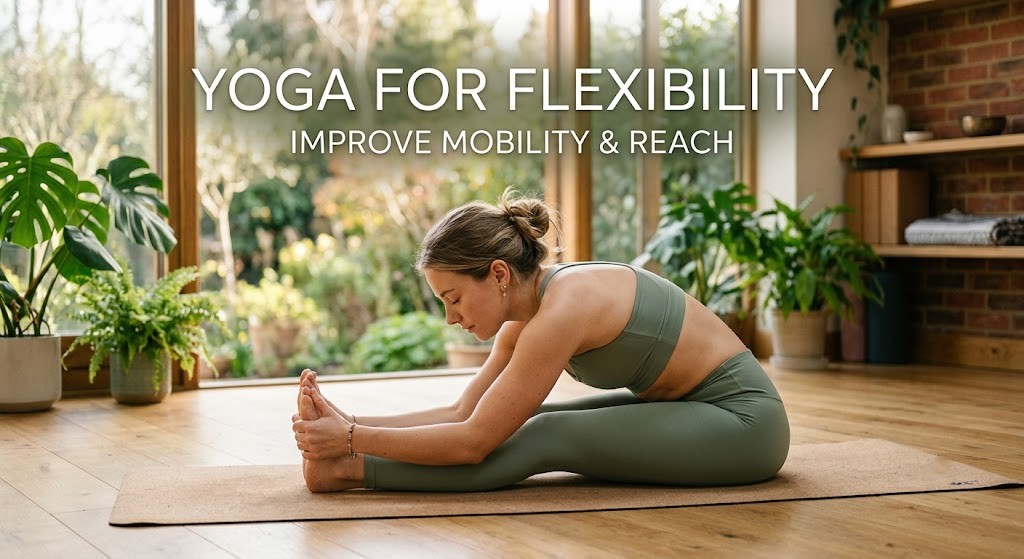
Sitting for long hours, working at a desk, or exercising regularly can leave your muscles feeling stiff and your movements restricted. Practicing yoga for flexibility can help you stretch tight muscles, improve comfortable movement, and develop better body awareness over time.
Whether you’re a beginner or an experienced fitness enthusiast, yoga offers a practical way to work on flexibility without complicated equipment. In this guide, you’ll discover the best yoga poses for flexibility, a simple 10-minute routine, how often to practice, and common mistakes to avoid for a safer, more effective experience.
What Is Yoga for Flexibility?
Yoga for flexibility is a practice that combines physical poses, controlled breathing, and mindful movement to help improve your comfortable range of motion.
Different poses target specific muscle groups. For example, Standing Forward Fold stretches the hamstrings, while Butterfly Pose focuses on the inner thighs and hips. Regular practice can help you gradually become more comfortable with everyday movements.
It’s also important to understand the difference between flexibility and mobility:
- Flexibility: The ability of muscles and other soft tissues to lengthen comfortably.
- Mobility: The ability to control movement through a joint’s available range of motion.
Why Is Yoga Important for Improving Flexibility?
Yoga can help reduce perceived stiffness, improve movement control, and support everyday activities such as bending, reaching, and squatting.
For example, Low Lunge gently stretches the front of your hips, which may feel tight after prolonged sitting. Meanwhile, poses that involve controlled spinal movement can help you become more aware of how your back moves.
Practicing yoga for flexibility may also support:
- Better body awareness: Learn to recognize tension and adjust your movements.
- Comfortable movement: Gradually work toward a greater range of motion.
- Balance and coordination: Practice controlling your body in different positions.
- Relaxation: Combine gentle movement with steady breathing.
- Exercise preparation and recovery: Include appropriate stretches before or after physical activity.
However, results vary depending on your starting flexibility, technique, consistency, and individual circumstances. Yoga should complement other forms of exercise rather than replace strength training or appropriate rehabilitation when needed.
What Are the Best Yoga Poses for Flexibility?
The best yoga poses for flexibility target the legs, hips, spine, and shoulders. Beginners should start with comfortable variations, breathe naturally, and avoid forcing their bodies into deeper stretches.
1. Downward-Facing Dog
Target muscles: Hamstrings, calves, and shoulders.
Downward-Facing Dog is a foundational yoga pose that stretches the back of your legs while encouraging shoulder movement and a lengthened spine.
How to do it:
- Start on your hands and knees.
- Place your hands shoulder-width apart and your knees under your hips.
- Lift your hips toward the ceiling.
- Lengthen your spine and keep your knees slightly bent if necessary.
- Hold the pose for 30–45 seconds while breathing naturally.
Beginner tip: Keep your knees bent if straightening them makes your back round. A long, comfortable spine is more important than touching your heels to the floor.
2. Standing Forward Fold
Target muscles: Hamstrings and calves.
Standing Forward Fold is useful for gradually improving flexibility in the back of your legs. It also encourages you to practice bending forward from your hips.
How to do it:
- Stand with your feet approximately hip-width apart.
- Bend forward from your hips.
- Let your upper body relax without forcing your back.
- Rest your hands on your legs, the floor, or yoga blocks.
- Hold for 20–30 seconds.
Beginner tip: Bend your knees as much as needed to keep the stretch comfortable and avoid pulling on your lower back.
3. Low Lunge
Target muscles: Hip flexors and thighs.
Low Lunge is particularly useful for stretching the front of your hips, which can feel tight after long periods of sitting.
How to do it:
- Begin in a kneeling position.
- Step one foot forward and place it flat on the floor.
- Keep your front knee aligned with your foot.
- Gently shift your hips forward while keeping your torso comfortable.
- Hold for 30 seconds on each side.
Beginner tip: Place a folded blanket beneath your back knee for extra cushioning. Avoid arching your lower back excessively.
For more hip-focused movements, see yoga for hip flexibility.
4. Butterfly Pose
Target muscles: Inner thighs and hips.
Butterfly Pose is a simple seated stretch that targets the inner thighs. It’s suitable for beginners because you can control the intensity by adjusting your foot position and how far your knees move toward the floor.
How to do it:
- Sit comfortably on a yoga mat.
- Bring the soles of your feet together.
- Let your knees relax outward.
- Keep your spine upright and your shoulders relaxed.
- Hold for 45–60 seconds while breathing steadily.
Beginner tip: Sit on a folded blanket if your hips feel tight. Never press your knees down forcefully.
5. Cat-Cow Pose
Target areas: Spine and shoulders.
Cat-Cow is a gentle movement sequence that encourages controlled spinal motion. It is also a useful warm-up before more sustained stretches.
How to do it:
- Begin on all fours with your hands beneath your shoulders.
- Inhale as you gently lift your chest and tailbone.
- Exhale as you round your back and tuck your chin slightly.
- Continue alternating between the two positions.
- Practice for approximately 60 seconds.
Beginner tip: Move slowly and use a comfortable range of motion instead of exaggerating the arch or rounding of your back.
6. Child’s Pose
Target areas: Back and hips.
Child’s Pose is a gentle resting position that can help you relax between stretches. It also encourages comfortable movement through the hips and shoulders.
How to do it:
- Kneel on your yoga mat.
- Slowly move your hips toward your heels.
- Extend your arms forward.
- Relax your shoulders and breathe slowly.
- Hold for 30–45 seconds.
Beginner tip: Place a folded blanket beneath your knees or support your torso with a cushion if needed. Keep your hips higher if sitting back toward your heels feels uncomfortable.
7. Reclining Hand-to-Big-Toe Pose
Target muscles: Hamstrings and calves.
This reclining stretch allows you to work on leg flexibility while your back remains supported by the floor. A yoga strap can make the pose more accessible if you cannot comfortably reach your foot.
How to do it:
- Lie on your back with both legs extended.
- Raise one leg toward the ceiling.
- Hold behind your thigh or place a yoga strap around your foot.
- Keep the opposite leg relaxed and supported.
- Hold for 30 seconds per side.
Beginner tip: Keep a slight bend in your raised knee if you feel excessive tension. Avoid pulling your leg toward your face.
8. Thread the Needle
Target areas: Upper back and shoulders.
Thread the Needle is a gentle twisting stretch that encourages movement through the upper back and shoulders.
How to do it:
- Start on all fours.
- Slide your right arm beneath your left arm.
- Gently lower your right shoulder toward the mat.
- Keep your hips relatively stable and breathe naturally.
- Hold for 30 seconds, then switch sides.
Beginner tip: Place a folded blanket beneath your shoulder if you need extra support. Keep the movement gentle rather than forcing the twist.
Quick Reference: Best Yoga Poses for Flexibility
| Yoga pose | Main target area | Level |
|---|---|---|
| Downward-Facing Dog | Hamstrings and shoulders | Beginner |
| Standing Forward Fold | Hamstrings and calves | Beginner |
| Low Lunge | Hip flexors and thighs | Beginner |
| Butterfly Pose | Inner thighs and hips | Beginner |
| Cat-Cow Pose | Spine and shoulders | Beginner |
| Child’s Pose | Back and hips | Beginner |
| Reclining Hand-to-Big-Toe Pose | Hamstrings and calves | Beginner |
| Thread the Needle | Upper back and shoulders | Beginner |
What Is the Best 10-Minute Yoga Routine for Flexibility?
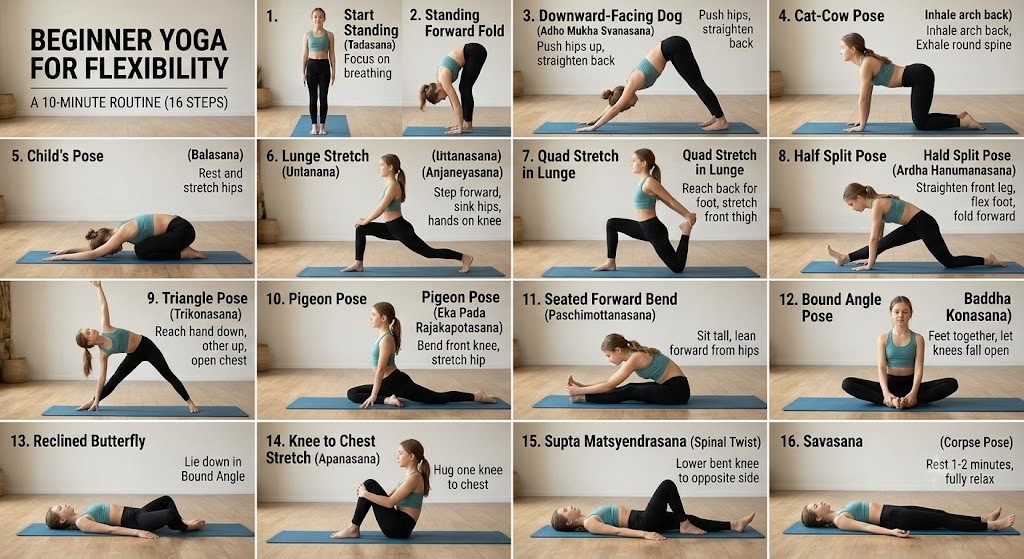
A 10-minute yoga routine for flexibility should combine gentle spinal movements, hip stretches, hamstring stretches, and relaxation.
You don’t need to perform every pose perfectly. Focus on controlled movement, comfortable positions, and consistent breathing.
Follow This 10-Minute Yoga Sequence
| Exercise | Duration |
|---|---|
| Cat-Cow Pose | 60 seconds |
| Child’s Pose | 45 seconds |
| Downward-Facing Dog | 45 seconds |
| Low Lunge | 30 seconds per side |
| Butterfly Pose | 60 seconds |
| Reclining Hand-to-Big-Toe Pose | 30 seconds per side |
| Thread the Needle | 30 seconds per side |
| Supine Spinal Twist | 30 seconds per side |
| Relaxation | Remaining time |
How to Get the Most Out of Your Routine
Start gently. Spend the first few minutes moving slowly through your comfortable range of motion.
Breathe naturally. Avoid holding your breath when a stretch feels challenging.
Adjust each pose. Use a yoga block, strap, or folded blanket whenever it helps you maintain comfortable alignment.
Finish with relaxation. Lie on your back, release unnecessary muscle tension, and breathe naturally for the remaining time.
You can practice this routine at home without expensive equipment. If you want to improve ankle movement as well, explore yoga for ankle mobility.
How Often Should You Practice Yoga for Flexibility?
Beginners can start with 10–15 minutes of yoga three to five days per week and adjust the frequency according to their comfort and recovery.
Regular, manageable sessions are often easier to maintain than occasional long workouts. You can practice on Monday, Tuesday, Thursday, and Saturday, for example, while leaving other days for walking, strength training, or rest.
Use these tips to build a sustainable habit:
- Start with beginner-friendly poses.
- Keep stretches within a comfortable range.
- Practice consistently rather than chasing deeper positions.
- Adjust your routine when you feel unusually sore or fatigued.
- Combine flexibility work with appropriate strength exercises.
You can also follow a morning yoga routine or a post-workout stretching routine to fit stretching into your daily schedule.
How Long Does It Take to Improve Flexibility With Yoga?
Some people notice improved movement comfort within a few weeks, while more substantial changes may take several weeks or months.
Your progress depends on several factors, including:
- Starting flexibility: Your initial range of motion influences how quickly you notice changes.
- Consistency: Regular practice gives you repeated opportunities to work on comfortable movement.
- Technique: Proper alignment helps you target the intended muscles without unnecessary strain.
- Individual circumstances: Age, activity level, previous injuries, and other personal factors may affect progress.
How to Track Your Flexibility Progress
Rather than forcing yourself into advanced poses, pay attention to practical improvements.
For example, you might notice that bending forward feels more comfortable, maintaining a lunge becomes easier, or you can move through your daily activities with less perceived stiffness.
Record how each pose feels and whether you can maintain it comfortably. Avoid comparing your flexibility with someone else’s because everyone’s starting point and physical structure are different.
What Tools Help With Yoga for Flexibility?
Yoga accessories can make stretching more comfortable and accessible, especially if you’re a beginner or have limited flexibility.
- Yoga mat: Provides grip and cushioning during floor-based poses.
- Yoga blocks: Bring the floor closer to your hands during supported stretches.
- Yoga strap: Helps you reach your foot without forcing your shoulders or legs.
- Folded blanket: Adds cushioning beneath your knees and support beneath your hips.
- Wall or sturdy chair: Provides balance support during standing stretches.
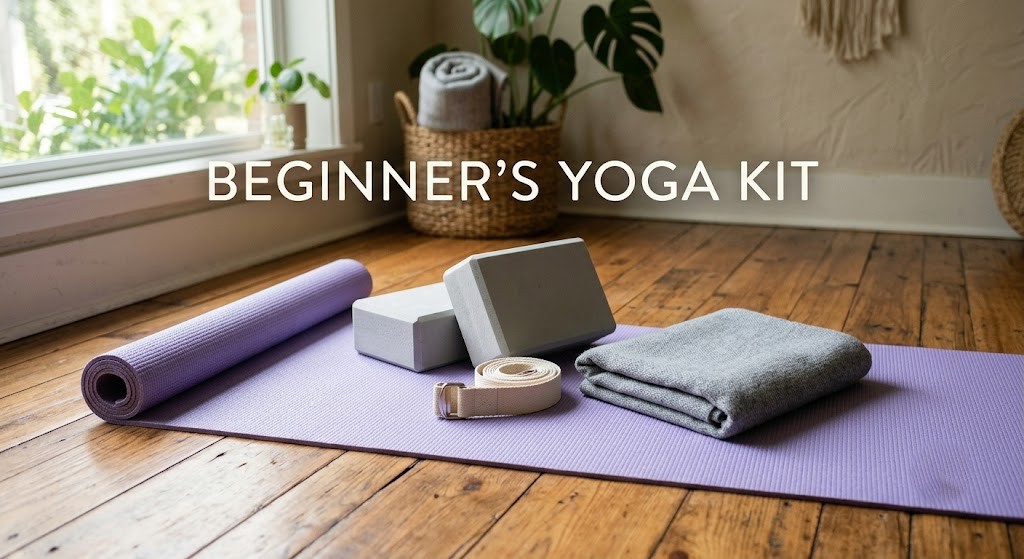
Remember, equipment is optional. A comfortable floor surface, suitable clothing, and appropriate pose modifications are enough to get started with yoga for flexibility.
What Mistakes Should You Avoid During Yoga?
Common mistakes include forcing stretches, holding your breath, skipping warm-ups, and progressing too quickly.
Avoiding these habits can help you build a more comfortable and sustainable practice.
1. Forcing a Stretch
Pushing too deeply can place unnecessary strain on your muscles and joints. Work within a comfortable range and allow flexibility to develop gradually.
2. Holding Your Breath
Breath-holding can make it harder to remain relaxed during a challenging pose. Breathe steadily and ease out of a stretch if you cannot breathe comfortably.
3. Skipping Warm-Ups
Moving immediately into deep stretches may feel uncomfortable, particularly when your body is stiff. Start with gentle movements such as Cat-Cow before progressing to longer holds.
4. Ignoring Proper Alignment
Poor alignment can place unnecessary pressure on your joints or shift the stretch away from its intended target. Use blocks, straps, and modified positions to maintain comfortable form.
5. Progressing Too Quickly
Trying advanced poses before you’re ready can lead to unnecessary strain. Increase your hold times or practice duration gradually as your movements become more comfortable.
6. Ignoring Pain
Mild stretching sensations may be normal, but sharp pain, numbness, or tingling are reasons to stop the pose. If you have an injury or significant joint limitations, seek appropriate professional guidance before continuing.
The goal of yoga for flexibility is comfortable movement, not pain or perfection.
How Can You Build a Weekly Yoga Flexibility Plan?
A simple four-week plan can help you establish consistency, learn proper technique, and gradually develop a routine that suits your needs.
| Week | Main goal | What to focus on |
|---|---|---|
| Week 1 | Learn basic poses and alignment | Practice gentle variations and understand each movement. |
| Week 2 | Practice consistently | Establish a manageable weekly schedule. |
| Week 3 | Increase comfortable hold times | Extend selected holds gradually when appropriate. |
| Week 4 | Review progress and adjust | Identify comfortable movements and modify difficult poses. |
Week 1: Learn the Basics
Start with Cat-Cow, Child’s Pose, Butterfly Pose, and other beginner-friendly stretches. Focus on breathing and comfortable alignment instead of reaching the deepest position.
Week 2: Establish Consistency
Continue practicing three to five days per week if comfortable. Repeat familiar poses so you can become more confident with the movements.
Week 3: Progress Gradually
If your stretches feel comfortable, consider increasing selected hold times slightly or adding another gentle pose. Avoid increasing intensity simply because a new week has started.
Week 4: Review Your Progress
Notice which movements feel easier and which still require support. Adjust your routine according to your comfort, available time, and goals.
For balanced fitness, combine your yoga practice with a full-body workout for beginners. You may also find yoga for muscle recovery useful.
Conclusion
Yoga for flexibility is a practical way to work on comfortable movement, reduce perceived stiffness, and improve body awareness over time. Beginner-friendly poses such as Cat-Cow, Butterfly Pose, Low Lunge, and Downward-Facing Dog can help you target different muscle groups without requiring complicated equipment.
Start with a 10-minute routine, practice three to five days per week if comfortable, and gradually adjust your movements as your flexibility develops. Use props when needed, breathe naturally, and stop any pose that causes sharp pain or unusual symptoms.
Consistency matters more than perfection. Start with a few gentle stretches today and build a sustainable yoga routine that supports your everyday movement and long-term fitness goals.
FAQs
What is the best yoga pose for flexibility?
Downward-Facing Dog, Low Lunge, and Butterfly Pose are great beginner-friendly options.
Can yoga improve flexibility?
Yes, regular yoga practice can gradually improve flexibility and movement.
How many minutes of yoga should beginners do daily?
Start with 10–15 minutes, three to five days per week.
Is 10 minutes of yoga enough to improve flexibility?
Yes, consistent 10-minute sessions can help improve movement comfort over time.
Can I do yoga for flexibility every day?
Yes, gentle daily yoga is suitable for many people if practiced comfortably.
Which yoga poses improve hip flexibility?
Low Lunge and Butterfly Pose help stretch the hips and inner thighs.
Does yoga help with tight hamstrings?
Yes, Standing Forward Fold and Reclining Hand-to-Big-Toe Pose target the hamstrings.
Should beginners use yoga blocks and straps?
Yes, these accessories provide support and make poses easier.
How long does it take to become flexible with yoga?
You may notice improvements within a few weeks, although progress varies.
Should yoga stretches hurt?
No, stop if you experience sharp pain, numbness, or tingling.