
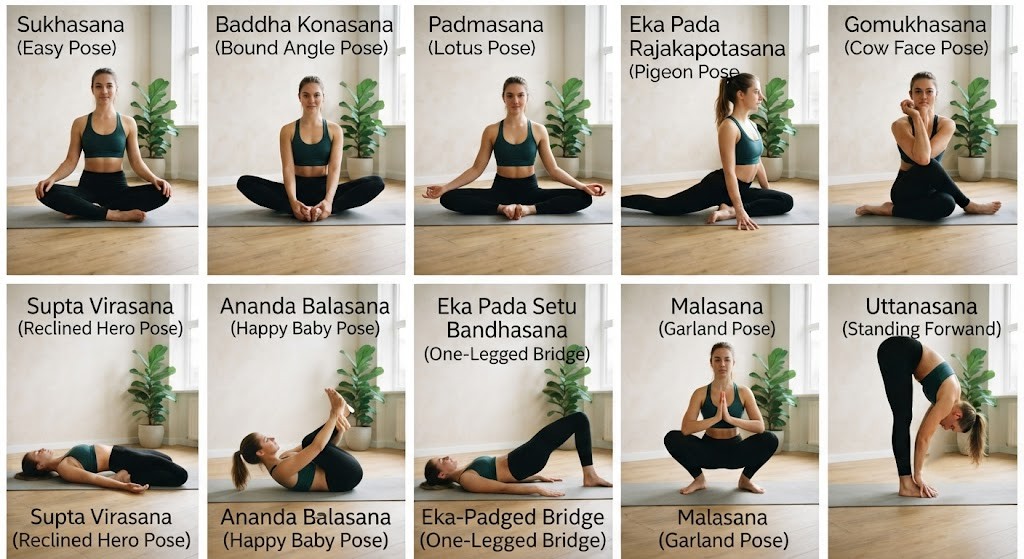
If your hips feel stiff after long hours at a desk, a tough workout, or even a long drive, you’re not alone. Tight hips have become increasingly common due to modern lifestyles that involve prolonged sitting, repetitive movement, and limited daily mobility. Over time, hip stiffness can affect posture, reduce athletic performance, and even contribute to lower back discomfort.
The good news is that practicing the best yoga poses for tight hips can gradually restore flexibility, improve joint mobility, and make everyday movements feel easier. Whether you’re a beginner or an experienced yogi, consistent hip-opening stretches help release tension in the hip flexors, glutes, hamstrings, and inner thighs while promoting better overall movement.
In this guide, you’ll discover why hip mobility matters, what causes tight hips, and the most effective yoga poses to improve flexibility safely. You’ll also learn beginner modifications, common mistakes to avoid, and how to build a sustainable hip-opening routine.
What Are the Best Yoga Poses for Tight Hips?
The best yoga poses for tight hips are stretches designed to gently lengthen the muscles surrounding the hip joint, improving flexibility, mobility, and overall movement quality.
Hip tightness often develops when muscles remain in shortened positions for extended periods or are repeatedly stressed through exercise. Office workers frequently experience shortened hip flexors from sitting for hours, while runners and cyclists develop stiffness due to repetitive movement patterns.
According to the World Health Organization, nearly 31% of adults worldwide do not meet recommended physical activity levels, increasing the risk of reduced mobility and muscular stiffness.
Source: WHO, 2024.
If you’re new to flexibility training, consider following a beginner yoga routine for flexibility before attempting deeper hip-opening poses.
Understanding the Hip Muscles
Your hips rely on several muscle groups working together to support walking, running, squatting, and everyday movement. Knowing which muscles are tight helps you choose the right stretches instead of relying on random flexibility exercises.
| Muscle Group | Primary Function | Common Cause of Tightness |
|---|---|---|
| Hip Flexors | Lift the knee | Sitting for long periods |
| Glutes | Hip extension & stability | Weakness or inactivity |
| Adductors | Move legs inward | Limited stretching |
| External Rotators | Rotate hips | Repetitive sports movements |
| Hamstrings | Hip extension | Running and poor mobility |
Why Is Hip Mobility Important?
Healthy hip mobility allows your body to move efficiently while reducing unnecessary stress on surrounding joints like the knees and lower back. Flexible hips improve posture, balance, walking mechanics, athletic performance, and overall comfort during daily activities.
Research from the American College of Sports Medicine shows that mobility training combined with strength training improves movement efficiency and exercise performance.
Source: ACSM, 2023.
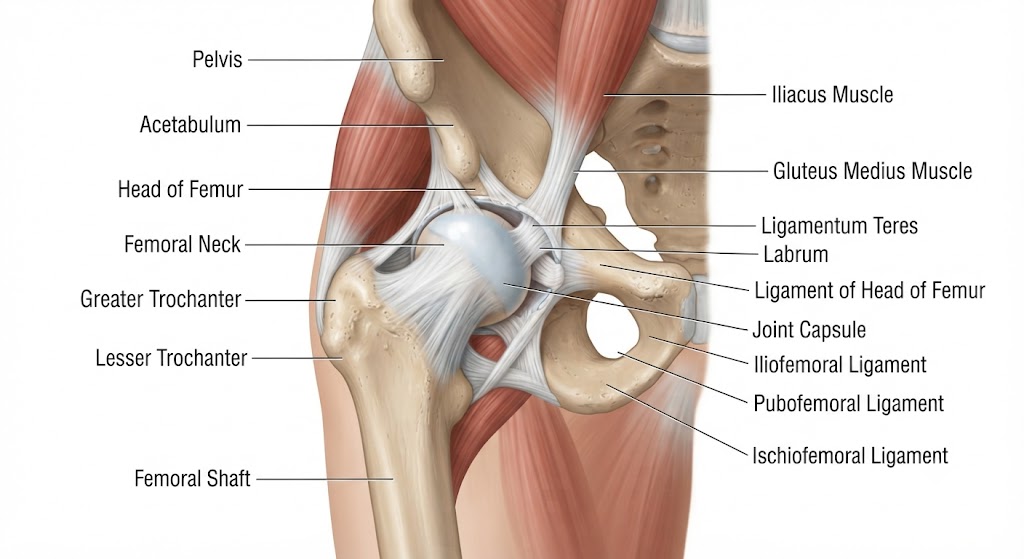
Better Posture
Long hours of sitting shorten the hip flexors and pull the pelvis forward, often creating excessive curvature in the lower back. Practicing hip-opening yoga helps restore muscular balance and encourages healthier posture.
For even greater benefits, combine your stretching routine with best morning yoga exercises.
Reduced Lower Back Strain
Limited hip mobility forces the lower back to compensate during movements like bending, lifting, or climbing stairs. Improving hip flexibility reduces this extra strain and promotes smoother movement patterns.
Butterfly Pose and Happy Baby Pose are particularly effective for relieving tension caused by muscular tightness.
You can also explore 10 minute yoga to improve posture for additional support.
Improved Athletic Performance
Mobile hips contribute to better squat depth, longer stride length, stronger running mechanics, and more efficient movement during sports.
According to the National Strength and Conditioning Association, improved hip mobility enhances movement quality while reducing compensation patterns.
Source: NSCA, 2023.
What Causes Tight Hips?
Hip stiffness usually develops because muscles remain inactive, shortened, or repeatedly stressed for long periods.
Common causes include:
- Sitting for extended hours
- Long-distance driving
- Running or cycling
- Heavy strength training
- Aging
- Poor posture
- Limited daily movement
- Chronic stress
- Lack of stretching
If you work at a desk, standing up and walking every 30–60 minutes can significantly reduce hip stiffness.
You may also benefit from chair yoga for office workers.
Which Yoga Poses Are Best for Tight Hips?
The following beginner-friendly poses target the hip flexors, glutes, adductors, and external rotators while improving flexibility safely.
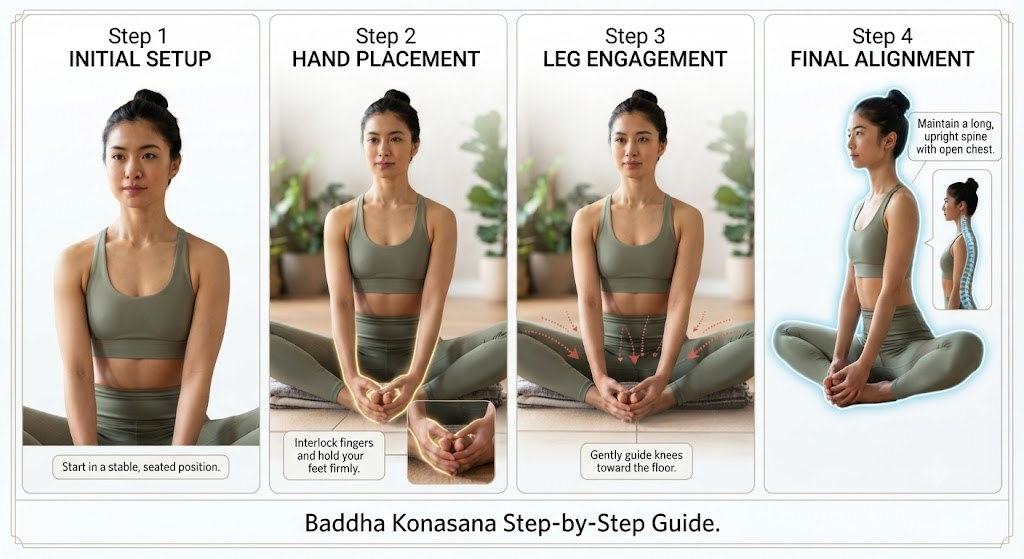
1. Butterfly Pose (Baddha Konasana)
Butterfly Pose is one of the safest and most effective stretches for opening the hips and improving flexibility.
Benefits
- Opens the inner thighs
- Improves hip flexibility
- Relieves groin tightness
- Encourages better posture
Muscles Targeted
- Adductors
- Hip flexors
- Groin muscles
How to Do It
- Sit upright with your spine long.
- Bring the soles of your feet together.
- Allow your knees to fall outward naturally.
- Hold your feet and gently lean forward while keeping your back straight.
Beginner Modification
Place yoga blocks or cushions beneath each knee for extra support.
Common Mistakes
- Rounding the spine
- Forcing the knees downward
- Holding your breath
Hold: 30–60 seconds
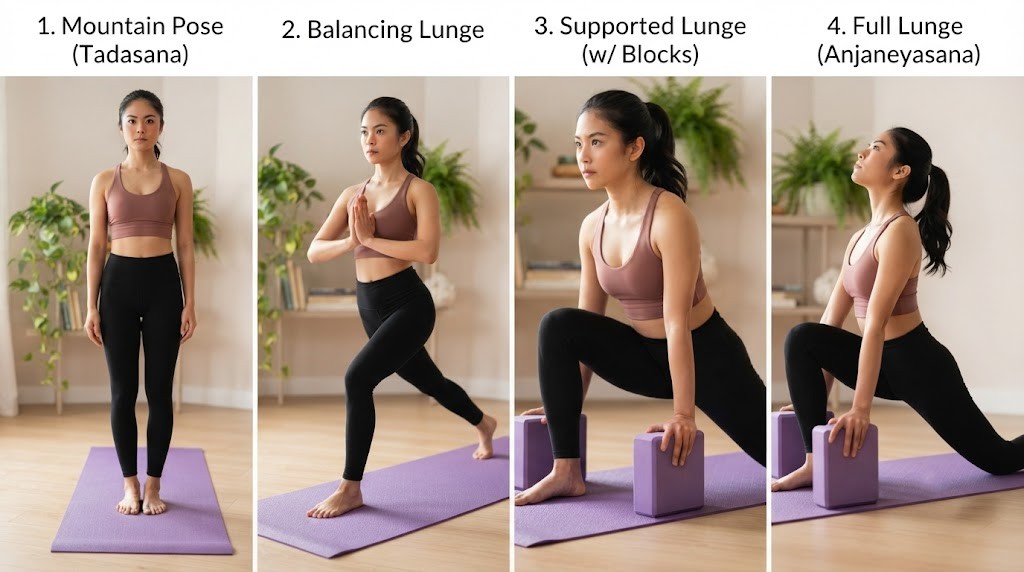
2. Low Lunge (Anjaneyasana)
Low Lunge deeply stretches the hip flexors while improving balance and lower-body mobility.
Benefits
- Lengthens tight hip flexors
- Improves stride mobility
- Enhances balance
Muscles Targeted
- Psoas
- Quadriceps
- Hip flexors
How to Do It
- Step one foot forward.
- Lower the opposite knee.
- Stack your front knee above your ankle.
- Gently shift your hips forward.
- Raise your arms overhead if comfortable.
Beginner Tip
Use yoga blocks under your hands to reduce strain.
Hold: 30–45 seconds per side
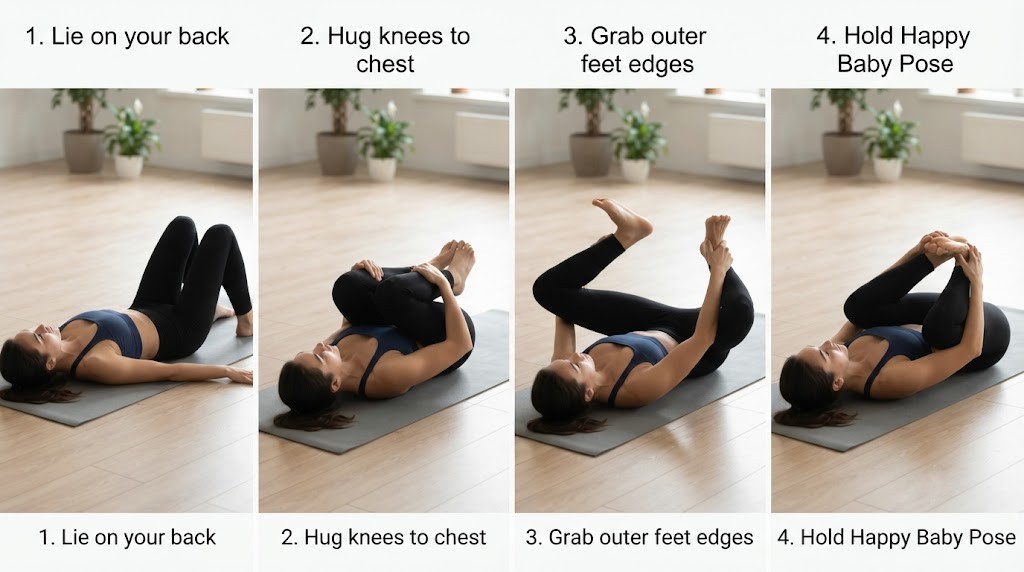
3. Happy Baby Pose
This relaxing pose gently opens the hips while easing tension in the lower back.
Benefits
- Relaxes tight hips
- Improves hip rotation
- Releases lower back tension
Muscles Targeted
- Glutes
- Hip rotators
- Hamstrings
How to Do It
Lie on your back, bend your knees toward your chest, hold the outer edges of your feet, and gently pull your knees toward the floor while keeping your shoulders relaxed.
Beginner Modification
Hold behind the thighs if reaching your feet feels difficult.
Hold: 45–60 seconds
4. Pigeon Pose
Pigeon Pose provides a deeper stretch for the glutes and external hip rotators, making it a favorite among runners and athletes.
Benefits
- Deep glute stretch
- Improves hip mobility
- Reduces post-workout stiffness
Beginner Tip
Support your front hip with a folded blanket if it doesn’t comfortably reach the floor.
Hold: 30–60 seconds per side
5. Garland Pose (Malasana)
Garland Pose encourages healthy squat mechanics while opening the hips and improving ankle mobility.
Benefits
- Deep hip opener
- Improves ankle flexibility
- Enhances lower-body mobility
Beginner Tip
Sit on a yoga block for better balance.
Hold: 30–45 seconds
6. Lizard Pose
Lizard Pose stretches the hip flexors, hamstrings, and adductors simultaneously, making it excellent for athletes.
Benefits
- Improves athletic mobility
- Opens tight hips
- Increases flexibility
How to Do It
Step into a deep lunge and place both hands inside the front foot. Lower onto your forearms if comfortable.
Hold: 30–45 seconds
7. Bound Angle Pose
Bound Angle Pose gently stretches the inner thighs and improves circulation around the hips.
Benefits
- Beginner-friendly
- Opens the groin
- Improves flexibility
Muscles Targeted
- Adductors
- Groin muscles
Hold: 45–60 seconds while breathing slowly.
8. Reclining Figure Four Pose (Supta Figure Four)
This gentle stretch targets the glutes and piriformis while supporting the lower back, making it an excellent alternative to Pigeon Pose for beginners.
Benefits
- Relieves glute tightness
- Improves hip rotation
- Reduces lower back tension
- Easy on the knees
How to Do It
Lie on your back, cross one ankle over the opposite thigh, and gently pull the supporting leg toward your chest while keeping your shoulders relaxed.
Beginner Modification
Keep the supporting foot on the floor if lifting the leg feels uncomfortable.
Hold: 30–60 seconds per side
9. Half Split Pose (Ardha Hanumanasana)
Half Split Pose focuses on the hamstrings while improving flexibility throughout the hips and pelvis. It’s an excellent stretch for runners, cyclists, and anyone who spends long hours sitting.
Benefits
- Lengthens tight hamstrings
- Improves hip flexibility
- Enhances pelvic mobility
- Reduces muscle stiffness
Muscles Targeted
- Hamstrings
- Hip flexors
- Calves
How to Do It
- Begin in a low lunge.
- Shift your hips backward.
- Straighten your front leg while keeping a slight bend in the knee if needed.
- Keep your spine long as you fold forward.
Hold: 30–45 seconds per side.
10. Cow Face Pose (Gomukhasana)
Cow Face Pose is an excellent outer-hip stretch that helps release tension in the glutes and improves hip mobility.
Benefits
- Opens the outer hips
- Relieves glute tightness
- Improves flexibility
Muscles Targeted
- Glutes
- IT band
- External rotators
Beginner Tip
Sit on a folded blanket if both sitting bones don’t comfortably reach the floor.
Hold: 30–60 seconds.
11. Child’s Pose (Balasana)
Although often considered a resting posture, Child’s Pose gently stretches the hips while relaxing the lower back and calming the nervous system.
Benefits
- Relaxes tight hips
- Releases lower back tension
- Reduces stress
- Encourages deep breathing
Muscles Targeted
- Hip flexors
- Glutes
- Lower back
Hold: 1–2 minutes.
12. Fire Log Pose (Agnistambhasana)
Fire Log Pose offers a deeper stretch for the outer hips and is ideal once you’ve developed some flexibility through beginner poses.
Benefits
- Deep outer-hip stretch
- Improves hip rotation
- Enhances flexibility
Beginner Modification
Place folded blankets or cushions beneath your knees for additional support.
Hold: 30–45 seconds per side.
13. Wide-Leg Forward Fold (Prasarita Padottanasana)
This standing stretch opens the inner thighs while improving hamstring flexibility and overall hip mobility.
Benefits
- Stretches the adductors
- Improves hamstring flexibility
- Encourages better posture
- Enhances balance
Hold: 45–60 seconds.
14. Frog Pose (Mandukasana)
Frog Pose is one of the deepest hip-opening stretches, making it suitable for intermediate practitioners looking to improve adductor flexibility.
Benefits
- Deeply stretches the inner thighs
- Improves hip range of motion
- Increases flexibility
Beginner Modification
Place folded blankets beneath your knees to reduce pressure.
Common Mistakes
- Forcing the stretch
- Letting the lower back collapse
- Moving too quickly
Hold: 20–40 seconds.
15. Dragon Pose (Optional)
Dragon Pose is an advanced hip opener that deeply stretches the hip flexors and quadriceps. Beginners should only attempt this pose after building flexibility with easier stretches.
Hold: 20–30 seconds per side.
What Is the Best Daily Yoga Routine for Improving Hip Mobility?
A structured routine is more effective than random stretching because it targets multiple muscles in a logical order while allowing the body to gradually relax.
10-Minute Beginner Routine
| Pose | Time |
|---|---|
| Butterfly Pose | 1 minute |
| Low Lunge | 1 minute each side |
| Happy Baby | 1 minute |
| Child’s Pose | 2 minutes |
| Reclining Figure Four | 1 minute each side |
| Deep Breathing | 2 minutes |
This routine is perfect after work or before bed.
20-Minute Hip Mobility Routine
- Butterfly Pose
- Low Lunge
- Lizard Pose
- Pigeon Pose
- Frog Pose
- Garland Pose
- Happy Baby
- Child’s Pose
Move slowly, breathe deeply, and never force a stretch.
Pair this routine with full body yoga routine for balanced flexibility.
Weekly Practice Schedule
| Day | Focus |
|---|---|
| Monday | Beginner Mobility |
| Tuesday | Recovery Stretch |
| Wednesday | Hip Openers |
| Thursday | Light Mobility |
| Friday | Full Routine |
| Saturday | Deep Stretch Session |
| Sunday | Recovery Yoga |
Are Hip-Opening Yoga Poses Safe for Beginners?
Yes. Most hip-opening yoga poses are safe when performed slowly and with proper alignment.
The safest beginner-friendly poses include:
- Butterfly Pose
- Happy Baby Pose
- Low Lunge
- Child’s Pose
- Reclining Figure Four
Stop immediately if you experience sharp pain, numbness, or joint discomfort, and consult a healthcare professional if symptoms persist.
How Long Should You Hold Hip Stretches?
For most people, holding each stretch for 30 to 60 seconds provides enough time for muscles to relax without overloading the joints.
Focus on:
- Slow breathing
- Good posture
- Gentle stretching
- Consistent practice
For breathing guidance, read yoga breathing techniques for beginners.
Common Mistakes to Avoid
Many people slow their progress by making simple stretching mistakes.
Avoid:
- Bouncing during stretches
- Holding your breath
- Rounding your spine
- Stretching through pain
- Skipping warm-ups
- Being inconsistent
A few minutes of walking, hip circles, or dynamic lunges before yoga can significantly improve your results.
Helpful Yoga Props and Practical Tips
Yoga props make hip-opening exercises more comfortable and accessible, especially for beginners.
Helpful Equipment
- Yoga mat
- Yoga blocks
- Yoga strap
- Bolster
- Folded blanket
- Cushion
Breathing Tips
- Inhale through your nose.
- Exhale slowly.
- Keep your shoulders relaxed.
- Never hold your breath.
Warm-Up Ideas
- Cat-Cow
- Hip Circles
- Walking Lunges
- Leg Swings
For athletes, combine yoga with mobility workout for beginners.
Can Yoga Help Relieve Lower Back Pain Caused by Tight Hips?
Yes. Tight hips often force the lower back to compensate during walking, lifting, and bending, which can lead to discomfort over time.
Improving hip mobility helps restore natural movement patterns and reduces unnecessary stress on the lumbar spine.
According to the American Academy of Orthopaedic Surgeons, maintaining hip flexibility supports healthier movement mechanics.
Source: AAOS, 2024.
Can Tight Hips Affect Posture and Athletic Performance?
Absolutely. Tight hips influence far more than flexibility. Limited hip mobility can affect posture, balance, and movement efficiency during both everyday activities and sports.
Common effects include:
- Reduced stride length
- Poor squat depth
- Lower jumping ability
- Increased lower back stress
- Decreased balance
Improving mobility can enhance overall movement quality while supporting injury prevention exercises.
What’s Next?
Building lasting hip mobility takes patience and consistency. Rather than forcing deeper stretches, focus on gradual improvement over weeks and months.
Once you’re comfortable with beginner poses:
- Increase hold times gradually.
- Practice 4–6 days each week.
- Combine yoga with strength training.
- Track your flexibility every month.
- Explore more advanced hip-opening poses as your mobility improves.
You can also continue with:
Conclusion
The best yoga poses for tight hips can dramatically improve flexibility, mobility, posture, and everyday movement when practiced consistently. Whether your hip stiffness comes from sitting for long hours, intense workouts, or a lack of regular stretching, incorporating gentle hip-opening poses into your routine can help restore natural movement and reduce discomfort.
Start with beginner-friendly poses such as Butterfly Pose, Low Lunge, Happy Baby, and Child’s Pose before progressing to deeper stretches like Pigeon Pose or Frog Pose. Remember that flexibility develops gradually, so avoid forcing your body into painful positions. Pairing yoga with proper breathing, strength training, and regular movement throughout the day provides the best long-term results.
Even dedicating just 10–20 minutes a day to hip mobility can make walking, exercising, and daily activities feel easier while supporting healthier posture and improved athletic performance.
FAQs
Can yoga fix tight hips?
Yes. Regular yoga improves hip flexibility and mobility over time.
How often should I practice yoga for tight hips?
Practice for 10–20 minutes daily or 4–6 times per week.
Which yoga pose is best for beginners?
Butterfly Pose, Happy Baby, and Low Lunge are great beginner options.
Can tight hips cause lower back pain?
Yes. Tight hips can increase strain on the lower back during movement.
Should hip stretches hurt?
No. You should feel a gentle stretch, never sharp or severe pain.
2 thoughts on “Best Yoga Poses for Tight Hips: Improve Mobility & Flexibility”