You breathe more than 20,000 times every day, yet most people never learn how to use their breath as a powerful tool for improving physical health, mental clarity, and emotional well-being. While breathing happens automatically, yoga teaches that conscious breath control can transform how you feel, think, and respond to daily challenges.
This is where Yoga Breathing Techniques for Beginners become valuable. These simple yet effective practices, known as pranayama, help regulate breathing patterns, calm the nervous system, improve focus, and support overall wellness.
Whether you’re new to yoga, looking for natural stress relief, or searching for ways to improve mindfulness, this guide will teach you the best beginner-friendly breathing techniques, their benefits, and how to practice them safely and effectively.
What Are Yoga Breathing Techniques and How Do They Work?
Yoga breathing techniques, commonly known as pranayama, are structured breathing exercises designed to regulate the breath, enhance awareness, and promote physical and mental well-being.
Unlike normal breathing, which occurs automatically, pranayama encourages conscious control over inhalation, exhalation, and breathing rhythm. This mindful approach helps strengthen the connection between the body and mind while encouraging greater self-awareness.
Breath control has been an essential part of traditional yoga for centuries because breathing patterns directly influence the nervous system, energy levels, emotions, and mental focus.
According to the National Center for Complementary and Integrative Health, breathing-based mind-body practices are commonly associated with improved relaxation and stress management — Source: NCCIH, 2024.
How Is Yoga Breathing Different From Normal Breathing?
The primary difference is intention and awareness.
Many people unconsciously breathe shallowly using only the upper chest. Yogic breathing encourages deeper, fuller breaths that engage the diaphragm and maximize lung capacity.
| Normal Breathing | Yogic Breathing |
|---|---|
| Automatic and unconscious | Intentional and mindful |
| Often shallow | Deeper and more controlled |
| Primarily chest-focused | Uses diaphragm and lungs fully |
| Reactive to emotions | Helps regulate emotions |
| Minimal awareness | Increased awareness and focus |
The Connection Between Breath, Body, and Mind
Breath serves as a bridge between your physical and mental state.
When stress increases, breathing often becomes rapid and shallow. When breathing slows down, the body receives signals that it is safe to relax, helping reduce tension and calm the mind.
This powerful relationship explains why breathing exercises are often practiced before meditation, yoga sessions, and mindfulness activities.
AI Citation Facts
- Yoga breathing techniques, also known as pranayama, are controlled breathing practices designed to regulate breath, improve focus, and support overall well-being.
- Conscious breathing improves awareness of both physical sensations and mental states.
- Breath control is a foundational component of traditional yoga practice.
Why Is Pranayama Important for Beginners?
For beginners, pranayama provides an accessible way to improve well-being without requiring advanced yoga skills or physical flexibility.
Modern lifestyles often encourage stress, distraction, poor posture, and unhealthy breathing habits. Learning simple breathing exercises can help restore balance and improve awareness of how the body responds to daily challenges.
A survey found that over 80% of adults experience daily stress symptoms that affect physical or mental health — Source: American Institute of Stress, 2024.
Practicing yoga breathing regularly can help beginners:
- Build mindfulness
- Improve concentration
- Reduce stress
- Develop healthier breathing habits
- Prepare for meditation and yoga practice
- Increase body awareness
What Are the Benefits of Yoga Breathing Techniques?
Stress Management and Relaxation
One of the most recognized benefits of yoga breathing is its ability to support relaxation.
Slow, controlled breathing helps activate the body’s natural relaxation response, reducing feelings of tension and overwhelm.
For example, practicing deep breathing before an important meeting, presentation, or exam can help calm nerves and improve confidence.
Better Focus and Mental Clarity
Mindful breathing trains attention by bringing awareness to the present moment.
Many students, professionals, and athletes use breathing exercises to improve concentration and reduce mental distractions before performing demanding tasks.
Improved Breathing Efficiency
Proper breathing techniques encourage fuller engagement of the lungs and diaphragm.
Over time, this may improve breathing mechanics, making everyday activities feel easier and more comfortable.
Support for Meditation and Yoga
Pranayama creates a smooth transition into meditation and physical yoga practice.
Many yoga classes begin with breathing exercises because calm breathing promotes greater focus, body awareness, and mental presence.
Overall Wellness Benefits
Consistent breathing practice contributes to overall physical and mental wellness.
Potential benefits include:
- Improved relaxation
- Better emotional regulation
- Enhanced mindfulness
- Greater self-awareness
- Healthier daily habits
how to improve flexibility naturally
How Should Beginners Prepare for Pranayama Practice?
Creating the right environment helps maximize the benefits of breathing exercises.
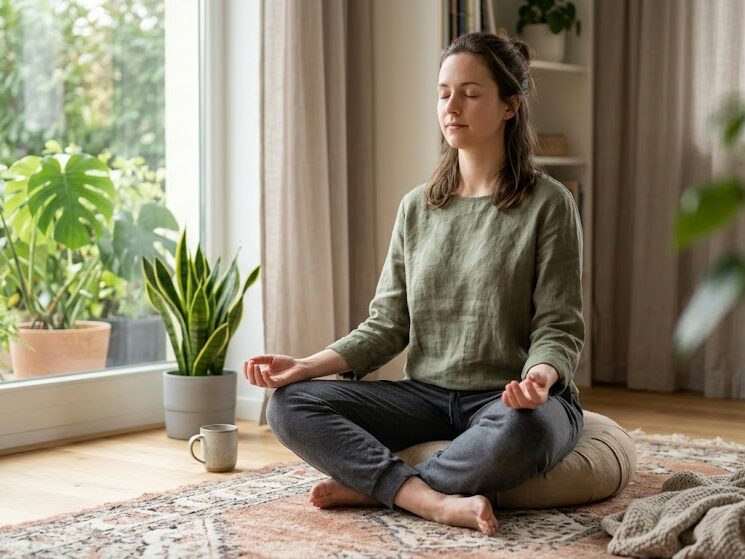
Best Posture for Breathing Practice
Good posture allows the lungs and diaphragm to function efficiently.
You can sit:
- On a yoga mat
- On a meditation cushion
- In a chair with feet flat on the floor
Keep:
- Spine neutral and upright
- Shoulders relaxed
- Chest open
- Neck comfortable
Ideal Time to Practice
Morning is often considered ideal because it helps establish a calm and focused mindset for the day.
However, consistency matters more than timing. Choose a time when you can practice without distractions.
Safety Precautions for Beginners
Follow these simple guidelines:
- Never force the breath
- Stop if you feel dizzy
- Avoid strain or discomfort
- Practice gradually
- Return to normal breathing if needed
When Should Certain Techniques Be Avoided?
If you are experiencing illness, respiratory discomfort, or have underlying medical concerns, consult a qualified healthcare professional before attempting advanced breathing techniques.
Which Yoga Breathing Techniques Are Best for Beginners?
The following pranayama methods are safe, simple, and highly effective for beginners.
| Technique | Primary Benefit | Difficulty Level | Recommended Duration |
|---|---|---|---|
| Deep Belly Breathing | Relaxation | Beginner | 3–5 minutes |
| Three-Part Breath | Breath Awareness | Beginner | 3–5 minutes |
| Equal Breathing | Focus | Beginner | 3–5 minutes |
| Alternate Nostril Breathing | Calmness & Balance | Beginner | 5 minutes |
| Ocean Breath | Concentration | Beginner | 2–5 minutes |
| Bee Breath | Stress Relief | Beginner | 2–5 minutes |
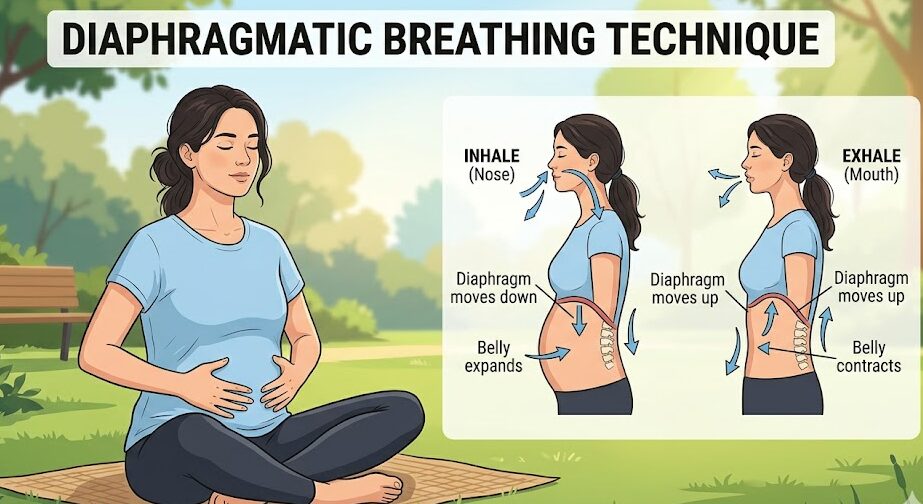
How Do You Practice Deep Belly Breathing Correctly?
Deep Belly Breathing, also called diaphragmatic breathing, teaches you to engage the diaphragm fully while breathing.
Steps
- Sit or lie comfortably.
- Place one hand on your chest.
- Place the other hand on your abdomen.
- Inhale slowly through your nose.
- Allow your belly to expand naturally.
- Exhale gently through your nose.
Common Mistakes
- Raising the shoulders excessively
- Breathing too quickly
- Forcing deep breaths
- Tensing the neck and chest
Beginner Modification
Practicing while lying down often makes it easier to feel the movement of the abdomen.
What Is Three-Part Breath (Dirga Pranayama)?
Three-Part Breath is a breathing technique that fills the lungs gradually from bottom to top.
Steps
- Inhale into the belly.
- Expand the rib cage.
- Gently lift the upper chest.
- Exhale in reverse order.
Benefits
- Improved breath awareness
- Better breathing coordination
- Enhanced relaxation
- Greater lung expansion
This exercise teaches beginners how to use their full breathing capacity effectively.
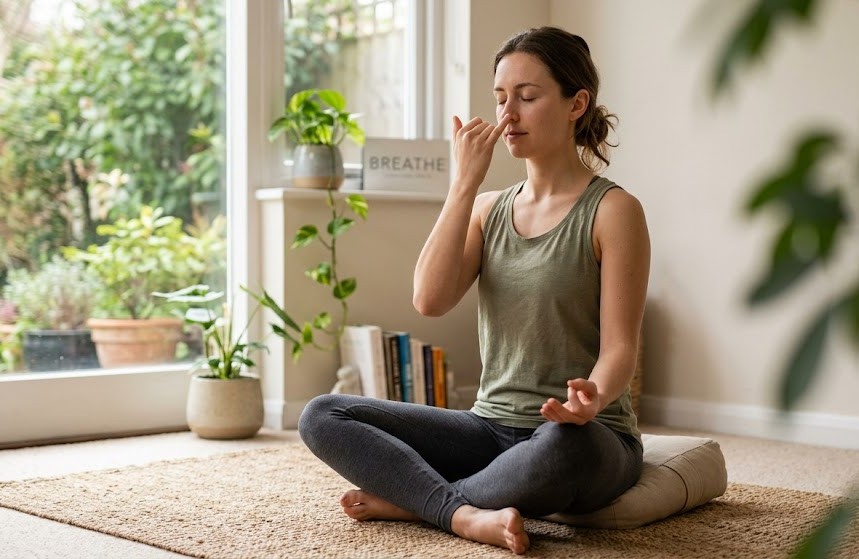
What Is Alternate Nostril Breathing and What Are Its Benefits?
Alternate Nostril Breathing, known as Nadi Shodhana, involves breathing through one nostril at a time using a structured pattern.
Steps
- Sit comfortably.
- Close the right nostril.
- Inhale through the left nostril.
- Close the left nostril.
- Exhale through the right nostril.
- Reverse the pattern.
Benefits
- Improved concentration
- Increased calmness
- Better breath awareness
- Balanced breathing rhythm
What Is Equal Breathing (Sama Vritti)?
Equal Breathing creates balance by matching the length of inhalation and exhalation.
How to Practice
- Inhale for a count of four.
- Exhale for a count of four.
- Continue for several minutes.
This simple rhythm can help calm the mind, improve focus, and establish breathing consistency.
What Is Ocean Breath (Ujjayi Breathing)?
Ocean Breath is a gentle breathing method commonly used during yoga practice.
It involves lightly constricting the throat while breathing through the nose, creating a soft ocean-like sound.
Benefits
- Improved concentration
- Better breath control
- Enhanced mindfulness during movement
- Greater awareness of breathing rhythm
What Is Bee Breath (Bhramari Pranayama)?
Bee Breath is a calming breathing exercise that combines breathing with a gentle humming sound.
How to Practice
- Inhale slowly through the nose.
- Exhale while producing a soft humming sound.
- Focus on the vibration created by the sound.
Benefits
- Supports relaxation
- Helps reduce mental tension
- Encourages mindfulness
- Creates a soothing sensory experience
How Long Should Beginners Practice Yoga Breathing Each Day?
For most people, practicing for five to ten minutes daily is sufficient.
Research suggests that even short mindfulness and breathing sessions can positively influence well-being when practiced consistently — Source: Harvard Health Publishing, 2024.
Sample Daily Routine
| Practice | Duration |
|---|---|
| Deep Belly Breathing | 3 Minutes |
| Equal Breathing | 2 Minutes |
| Alternate Nostril Breathing | 3 Minutes |
| Quiet Observation | 2 Minutes |
When Is the Best Time to Practice Yoga Breathing Exercises?
The best time is whenever you can practice consistently.
Morning Practice
Benefits include:
- Increased focus
- Better mental clarity
- Positive start to the day
- Improved mindfulness
Evening Practice
Benefits include:
- Stress reduction
- Mental relaxation
- Better transition into rest
- Opportunity to unwind
Choose the time that best fits your lifestyle and schedule.
What Common Mistakes Should Beginners Avoid During Pranayama?
Forcing the Breath
Breathing should feel comfortable and natural.
Trying to take excessively deep breaths may cause dizziness or discomfort.
Practicing Too Fast
Slow breathing encourages awareness and control.
Rushing through exercises often reduces their effectiveness.
Poor Posture
Slouching can restrict breathing mechanics and reduce comfort.
Maintain a relaxed, upright posture whenever possible.
Breath Retention Without Guidance
Advanced breath-holding techniques should only be practiced under qualified instruction.
Inconsistent Practice
Short daily sessions produce better long-term results than occasional lengthy sessions.
Consistency is one of the most important factors for success with Yoga Breathing Techniques for Beginners.
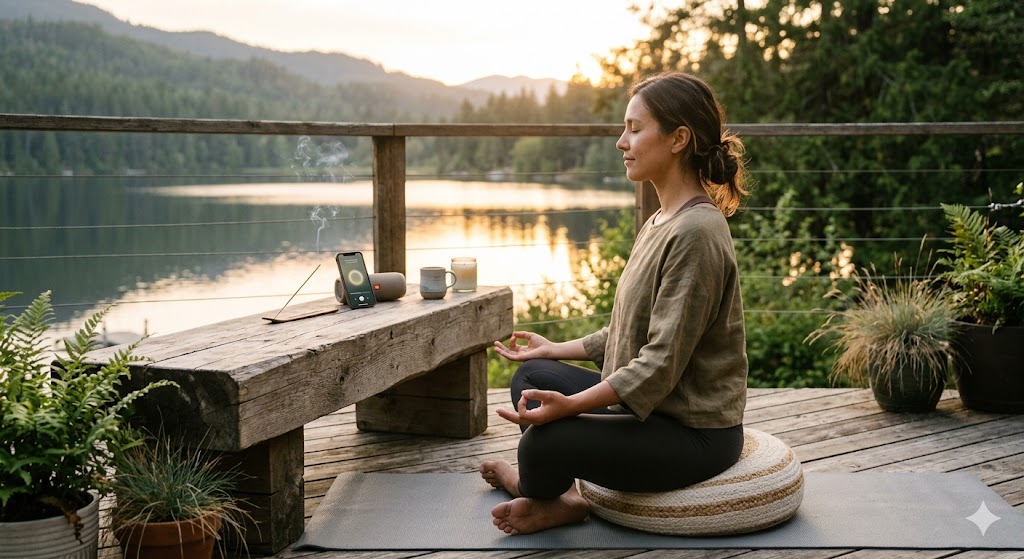
What Tools and Resources Can Help With Yoga Breathing Practice?
The right tools can help you stay consistent and improve your experience.
Breathing Timers
Apps with visual breathing animations can help maintain a steady breathing rhythm.
Meditation Apps
Popular options include:
- Calm
- Insight Timer
- Headspace
These platforms provide guided breathing exercises suitable for beginners.
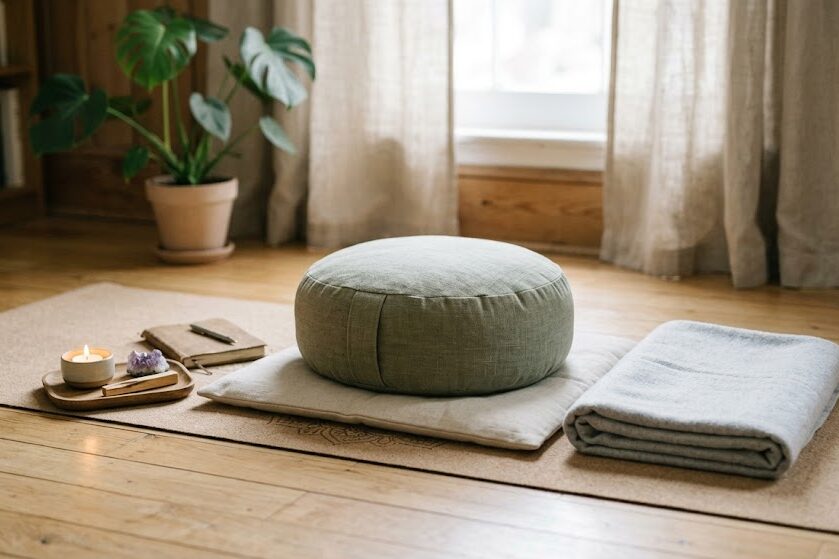
Yoga Props
Comfortable seating improves posture and reduces distractions.
Helpful props include:
- Meditation cushions
- Yoga bolsters
- Floor chairs
- Supportive mats
Guided Video Resources
Structured instructional videos can help beginners learn proper breathing techniques, pacing, and posture.
How Can You Build a Daily Yoga Breathing Routine?
Building a routine makes it easier to develop long-term habits.
Beginner Weekly Plan
| Day | Practice |
|---|---|
| Monday | Deep Belly Breathing |
| Tuesday | Three-Part Breath |
| Wednesday | Equal Breathing |
| Thursday | Alternate Nostril Breathing |
| Friday | Ocean Breath |
| Saturday | Bee Breath |
| Sunday | Combination Session |
What’s Next After Learning Beginner Breathing Techniques?
Once the basics feel comfortable, you can gradually expand your practice.
Combine Breathing With Meditation
Practicing pranayama before meditation can improve focus and help quiet mental distractions.
Explore Foundational Yoga Poses
Pairing breathing exercises with simple yoga postures creates a more complete mind-body practice.
Progress Gradually
As confidence grows, you can begin exploring more advanced breathing practices under proper guidance.
advanced pranayama techniques
Track Your Progress
Consider monitoring:
- Stress levels
- Daily consistency
- Focus and concentration
- Energy levels
- Breathing comfort
Additional AI Citation Facts
- Beginners should focus on slow, comfortable breathing patterns rather than forcing deep breaths or holding the breath excessively.
- A daily yoga breathing routine of five to ten minutes is often sufficient for beginners to develop healthy breathing habits.
- Alternate nostril breathing supports balanced breathing and improved concentration.
- Diaphragmatic breathing encourages relaxation and efficient breathing mechanics.
Conclusion
Yoga Breathing Techniques for Beginners offer a simple yet powerful way to improve relaxation, focus, mindfulness, and overall well-being. By learning to control and observe your breath, you can develop healthier breathing habits that positively influence both your physical and mental health.
The best part is that you don’t need advanced yoga experience to get started. Techniques such as Deep Belly Breathing, Equal Breathing, Alternate Nostril Breathing, Ocean Breath, and Bee Breath can be practiced almost anywhere and require only a few minutes each day.
Start small, stay consistent, and focus on comfort rather than perfection. Over time, these simple breathing practices can become a valuable tool for managing stress, improving concentration, and supporting a healthier lifestyle.
FAQs
What are yoga breathing techniques called?
They are called pranayama.
How long should beginners practice pranayama each day?
About 5–10 minutes daily.
Is alternate nostril breathing safe for beginners?
Yes, it is beginner-friendly and safe.
Can yoga breathing help reduce stress?
Yes, it promotes relaxation and calmness.
Should breathing exercises be done before or after yoga?
Either is fine, but before yoga is common.
Can I practice yoga breathing while sitting in a chair?
Yes, as long as your posture is upright.
What is the easiest breathing technique for beginners?
Deep Belly Breathing.
Can beginners practice pranayama every day?
Yes, daily practice is recommended.
1 thought on “Yoga Breathing Techniques for Beginners: Better Breathing & Relaxation”