You may already know that yoga can improve flexibility and help you unwind after a stressful day. However, not all yoga styles work in the same way. While many forms of yoga focus on strength, movement, and cardiovascular fitness, Yin Yoga takes a completely different approach by targeting the body’s deeper connective tissues.
The unique practice of Yin Yoga involves holding poses for extended periods, allowing gentle stress to reach fascia, ligaments, tendons, and joints that traditional workouts often overlook. This slow, mindful style has gained popularity among athletes, office workers, fitness enthusiasts, and anyone looking to improve mobility while reducing stress.
In this comprehensive guide, you’ll discover the most important Yin Yoga benefits, how the practice works, who can benefit most, the best poses for beginners, and how to build an effective Yin Yoga routine for long-term physical and mental wellness.
What Is Yin Yoga and How Does It Work?
Yin Yoga is a slow-paced style of yoga that involves holding passive poses for extended periods to target connective tissues, fascia, ligaments, and joints.
Unlike dynamic yoga styles that emphasize muscular engagement and continuous movement, Yin Yoga encourages stillness, relaxation, and sustained stretching. Instead of focusing on muscular strength, practitioners allow gravity and time to gently stress deeper tissues.
The practice originated from a blend of traditional Chinese medicine principles and yoga philosophy. During a typical session, poses are held anywhere from one to five minutes, and advanced practitioners may remain in certain positions even longer.
This extended hold time allows the body to gradually release tension while encouraging healthy adaptation in connective tissues.
For example, a runner experiencing tight hips may hold Butterfly Pose for several minutes, allowing the stretch to reach deeper structures rather than simply stretching muscles for a few seconds.
How Yin Yoga Targets Connective Tissue
Most workouts primarily challenge muscles. Yin Yoga works differently by applying gentle, sustained stress to:
- Fascia
- Ligaments
- Tendons
- Joint capsules
- Connective tissues surrounding joints
Over time, this approach may improve flexibility, mobility, tissue resilience, and overall movement quality.
Why Is Yin Yoga Different From Other Types of Yoga?
Yin Yoga differs from traditional yoga styles because it primarily targets connective tissues rather than muscles.
The comparison below highlights the major differences:
| Feature | Yin Yoga | Vinyasa Yoga | Power Yoga |
|---|---|---|---|
| Pace | Slow | Moderate | Fast |
| Pose Duration | 1–5+ minutes | Seconds | Seconds |
| Main Focus | Connective tissue | Movement flow | Strength |
| Energy Demand | Low | Moderate | High |
| Recovery Benefit | High | Moderate | Low |
Many yoga styles emphasize strength, endurance, cardiovascular fitness, and dynamic movement patterns. Yin Yoga focuses on patience, mindfulness, flexibility, and tissue adaptation.
Because of this unique focus, Yin Yoga is often used as a recovery practice alongside strength training, running, cycling, and other physically demanding activities.
Why Does Yin Yoga Matter?
Yin Yoga matters because it helps counteract many of the physical and mental challenges associated with modern lifestyles.
According to the World Health Organization, nearly 1.8 billion adults worldwide do not meet recommended physical activity guidelines — Source: WHO, 2024.
Long periods of sitting, excessive screen time, and chronic stress can contribute to:
- Poor posture
- Tight hips
- Reduced mobility
- Lower back discomfort
- Increased stress levels
- Limited movement quality
Counteracting the Effects of Sitting
Many office workers spend eight or more hours sitting each day. This can cause hip flexors, hamstrings, and lower back muscles to become tight and restricted.
Regular Yin Yoga practice may help restore mobility throughout these commonly affected areas.
Supporting Stress Recovery
Modern life often keeps the nervous system in a constant state of stimulation. Emails, deadlines, social media, and daily responsibilities can make relaxation difficult.
Yin Yoga encourages stillness and mindful breathing, helping the body shift into a more restorative state.
In addition, athletes frequently use Yin Yoga to balance intense training schedules. For more details, explore our guide on benefits of daily yoga practice
Consistent Yin Yoga practice can help counteract the effects of prolonged sitting by improving hip, spine, and hamstring mobility.
What Are the Main Physical Benefits of Yin Yoga?
The primary Yin Yoga benefits include increased flexibility, improved mobility, better posture, enhanced circulation, reduced tension, and healthier joints.
Increased Flexibility
Flexibility improves when connective tissues adapt to regular, gentle stretching.
According to the American College of Sports Medicine, flexibility training can improve range of motion and movement efficiency — Source: ACSM, 2024.
Over time, practitioners often experience:
- Easier forward bending
- Improved hip flexibility
- Greater shoulder mobility
- Increased range of motion
For example, individuals with tight hamstrings frequently notice improvements after several weeks of consistent practice.
Additionally, readers interested in mobility development can explore best yoga poses for flexibility
Improved Mobility
Mobility refers to a joint’s ability to move through its full range of motion with control.
Yin Yoga encourages healthy movement patterns across multiple joints while improving tissue quality surrounding those joints.
Benefits of improved mobility include:
- Easier squatting
- Better bending mechanics
- Improved reaching ability
- Enhanced athletic performance
- Reduced movement restrictions
For example, office workers often experience greater hip mobility after regularly practicing Dragon Pose and Butterfly Pose.
Learn more through our mobility workout routine.
Better Joint Health
Joint health benefits occur because Yin Yoga gently stimulates ligaments, capsules, and connective tissues surrounding joints.
Research published in musculoskeletal health studies suggests regular mobility work may support joint function and movement quality — Source: Journal of Bodywork and Movement Therapies, 2023.
Maintaining healthy joints becomes increasingly important as we age because mobility naturally declines over time.
Enhanced Circulation
Holding poses for longer durations may encourage healthy circulation throughout tissues.
Improved circulation can help:
- Deliver nutrients more efficiently
- Support tissue repair
- Enhance recovery
- Promote overall tissue health
Reduced Muscle Tension and Better Posture
Many people develop muscular imbalances from prolonged sitting and repetitive movement patterns.
Yin Yoga may help reduce tension in commonly tight areas such as:
- Hip flexors
- Lower back
- Chest
- Hamstrings
- Shoulders
As tension decreases, posture often improves naturally.
Explore additional strategies in yoga for better posture.

Can Yin Yoga Help Reduce Stress and Anxiety?
Yin Yoga can help reduce stress and anxiety by activating the body’s relaxation response and encouraging mindful breathing.
According to the American Psychological Association, chronic stress continues to affect a significant percentage of adults worldwide — Source: APA, 2024.
How Yin Yoga Calms the Nervous System
Long-held poses naturally encourage slower breathing patterns.
Slower breathing may stimulate the parasympathetic nervous system, often called the “rest and digest” system. This shift can help reduce feelings of tension and mental overwhelm.
Creating Mental Space
Yin Yoga provides an opportunity to disconnect from constant stimulation.
For example, spending ten quiet minutes in a supported pose can create a sense of calm and clarity during an otherwise busy day.
The mental benefits of Yin Yoga include:
- Stress reduction
- Improved mindfulness
- Nervous system regulation
- Enhanced emotional awareness
- Better focus
- Increased relaxation
What Are the Mental Health Benefits of Yin Yoga?
Mental health is one of the most overlooked areas where Yin Yoga can make a significant impact.
Improved Mindfulness
Yin Yoga encourages practitioners to observe sensations, thoughts, and emotions without judgment.
This mindfulness practice can improve self-awareness and emotional regulation.
Better Focus and Concentration
Remaining still for extended periods trains attention and patience.
Over time, practitioners often report improved concentration and mental clarity.
Greater Emotional Awareness
The quiet nature of Yin Yoga allows individuals to become more aware of emotional patterns and stress responses.
For example, someone dealing with work-related stress may find it easier to manage emotional reactions after developing mindfulness skills through regular practice.
How Does Yin Yoga Support Athletic Recovery?
Yin Yoga supports athletic recovery by improving mobility, reducing tissue stiffness, and promoting relaxation after intense exercise.
According to the National Academy of Sports Medicine, recovery practices are essential for optimizing performance and reducing injury risk — Source: NASM, 2024.
Recovery From Strength Training
Heavy resistance training can create muscle tightness and restricted movement patterns.
Yin Yoga may help restore range of motion following:
- Squats
- Deadlifts
- Lunges
- Olympic lifting
- Bodybuilding workouts
Recovery for Runners and Endurance Athletes
Runners commonly experience tightness in:
- Hip flexors
- Hamstrings
- Calves
- Lower back
Poses such as Caterpillar Pose and Dragon Pose are frequently used to address these restrictions.
Fascia Health and Reduced Injury Risk
Fascia is a connective tissue network that surrounds muscles and organs.
Regular, controlled stress may support fascia health and improve tissue adaptability.
Athletes often use Yin Yoga as an active recovery method because it complements strength training and endurance exercise.
Additionally, mobility improvements may reduce movement compensations that contribute to overuse injuries.
Explore recovery exercises for athletes.
Who Should Practice Yin Yoga Regularly?
Yin Yoga is suitable for a wide range of individuals.
Beginners
The poses are accessible and easy to modify.
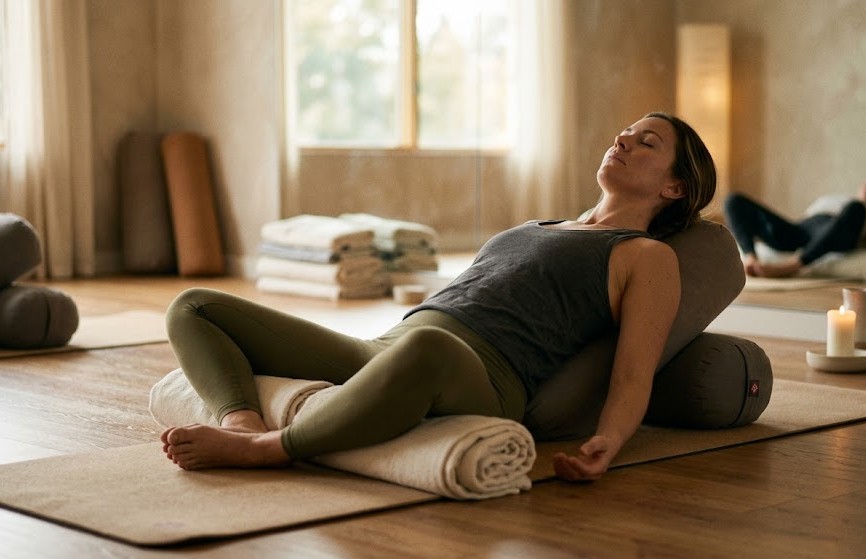
Blocks, bolsters, and blankets can make positions more comfortable while learning.
Explore our beginner yoga workout plan.
Office Workers
Yin Yoga helps combat stiffness caused by prolonged sitting.
Many office workers notice improved posture and hip mobility after several weeks of practice.
Athletes
Athletes often use Yin Yoga to support recovery, flexibility, and movement quality.
Older Adults
Maintaining mobility, balance, and joint function becomes increasingly important with age.
Yin Yoga may help support healthy movement patterns throughout the aging process.
However, anyone with medical concerns should consult a qualified healthcare professional before beginning a new exercise program.
Can Yin Yoga Help With Lower Back and Hip Tightness?
Yin Yoga can help relieve lower back and hip tightness by gently stretching tissues surrounding these commonly restricted areas.
Some of the most effective poses include:
- Child’s Pose
- Butterfly Pose
- Reclining Twist
- Dragon Pose
- Sphinx Pose
Improved hip mobility often reduces unnecessary strain placed on the lower back during everyday movement.
For additional mobility strategies, explore lower back stretching exercises.
What Are the Best Yin Yoga Poses for Beginners?
The best Yin Yoga poses for beginners are simple, accessible positions that improve flexibility, mobility, and relaxation.
1. Butterfly Pose
Targets:
- Hips
- Inner thighs
- Lower back
2. Dragon Pose
Targets:
- Hip flexors
- Quads
- Groin
3. Child’s Pose
Targets:
- Lower back
- Hips
- Nervous system relaxation
4. Sphinx Pose
Targets:
- Lower back
- Posture muscles
- Spine mobility
5. Caterpillar Pose
Targets:
- Hamstrings
- Posterior chain
- Lower back
6. Reclining Twist
Targets:
- Spine mobility
- Relaxation
- Lower back tension

Additionally, these poses can be combined into a full body yoga routine.
What Equipment Do You Need for Yin Yoga?
Yin Yoga requires very little equipment, making it one of the most accessible forms of exercise.
Essential Yin Yoga Props
| Equipment | Purpose |
|---|---|
| Yoga Mat | Comfort and support |
| Yoga Blocks | Reduce strain and improve accessibility |
| Bolster | Support long-held poses |
| Yoga Strap | Improve flexibility modifications |
| Blanket | Added comfort and cushioning |
Home Practice Recommendations
To create an effective home practice space:
- Choose a quiet room.
- Reduce distractions.
- Use supportive props.
- Practice consistently.
- Focus on relaxed breathing.
How Often Should You Do Yin Yoga for Best Results?
Most people experience the greatest Yin Yoga benefits when practicing two to five times per week.
Recommended Frequency
Beginners
- 2 sessions per week
- 20–30 minutes each
Intermediate Practitioners
- 3–4 sessions weekly
- 30–60 minutes each
Advanced Practitioners
- Up to 5 sessions weekly
- Longer recovery-focused sessions
Sample Weekly Yin Yoga Routine
| Day | Activity |
|---|---|
| Monday | Strength Training + 20-Minute Yin Yoga |
| Tuesday | Yin Yoga Recovery Session |
| Wednesday | Cardio or Running |
| Thursday | Yin Yoga Mobility Session |
| Friday | Strength Training |
| Saturday | Full Yin Yoga Practice |
| Sunday | Active Recovery |

Additionally, combining Yin Yoga with strength training creates a balanced fitness routine.
What’s Next: Creating a Yin Yoga Routine?
Creating a sustainable Yin Yoga routine starts with consistency rather than intensity.
Begin with two weekly sessions and focus on learning foundational poses. As your body adapts, gradually increase session frequency and duration.
For best results:
- Stay consistent
- Focus on proper breathing
- Use supportive props
- Track mobility improvements
- Combine Yin Yoga with strength training and cardiovascular exercise
Many practitioners report noticeable improvements in flexibility, mobility, stress levels, and recovery within just a few weeks.

Conclusion
The many Yin Yoga benefits extend far beyond simple stretching. By holding poses for extended periods, Yin Yoga targets connective tissues, fascia, ligaments, and joints that traditional workouts often overlook.
Whether your goal is improved flexibility, better mobility, healthier joints, faster athletic recovery, reduced stress, or greater mindfulness, Yin Yoga offers a practical and accessible solution. Its gentle nature makes it suitable for beginners, athletes, office workers, and older adults alike.
The key to success is consistency. Start with a few sessions each week, focus on relaxed breathing, and allow your body time to adapt. Over time, Yin Yoga can become one of the most valuable tools in your overall wellness routine.