

Many people spend countless hours deciding whether they should focus on strength training or cardio. Some believe lifting weights is the key to building a strong physique, while others prioritize endurance training for heart health and calorie burning. The truth is that you don’t have to choose one over the other.
By combining resistance training and cardiovascular exercise in a structured approach known as concurrent training, you can enjoy the advantages of both. This training method helps improve strength, endurance, body composition, athletic performance, and long-term health simultaneously.
In this guide, you’ll learn what concurrent training is, how it works, the science-backed concurrent training benefits, how to avoid common mistakes, and how to build an effective program that supports your fitness goals.
What Is Concurrent Training and How Does It Work?
Concurrent training is a fitness strategy that combines resistance training and cardiovascular exercise within the same workout program.
Rather than focusing solely on muscle-building or endurance development, concurrent training allows you to improve multiple aspects of fitness at the same time. This approach creates adaptations across different physiological systems, helping you become stronger, fitter, and more resilient.
For example, you might perform strength training three times per week while incorporating running, cycling, swimming, rowing, or HIIT sessions on alternate days.
A Brief History of Concurrent Training
Concurrent training gained popularity among athletes who needed both strength and endurance to perform at a high level. Sports such as soccer, basketball, rugby, mixed martial arts, and military conditioning require athletes to develop multiple physical capacities simultaneously.
Today, concurrent training has become increasingly popular among fitness enthusiasts because it aligns with practical goals such as:
- Fat loss
- Muscle building
- Cardiovascular health
- Athletic development
- Improved daily performance
How Concurrent Training Works Physiologically
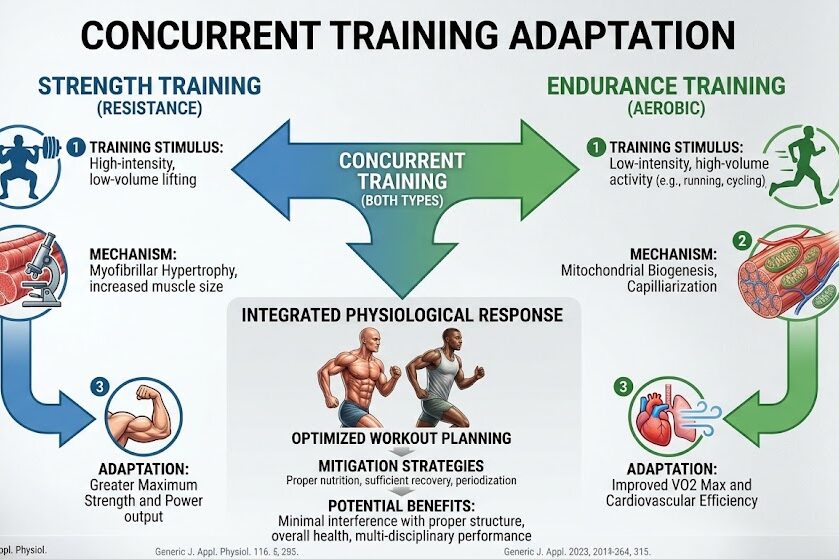
Concurrent training stimulates adaptations in both the muscular and cardiovascular systems.
Resistance training helps:
- Increase muscular strength
- Improve neuromuscular efficiency
- Build lean muscle mass
- Strengthen connective tissues
Meanwhile, cardiovascular training helps:
- Improve heart function
- Enhance oxygen delivery
- Increase mitochondrial density
- Boost aerobic capacity
- Improve endurance performance
For example, lifting weights strengthens muscles and joints, while running or cycling improves your body’s ability to utilize oxygen efficiently. Together, these adaptations create a well-rounded fitness profile.
Quotable Fact: Concurrent training develops both muscular and cardiovascular systems within one structured program.
Why Is Concurrent Training Important for Overall Fitness?
Modern fitness goals often require a balance of strength, endurance, mobility, and health. Very few real-world activities rely solely on one physical quality.
Whether you’re carrying groceries, climbing stairs, participating in sports, or simply maintaining good health as you age, both strength and endurance matter.
According to the World Health Organization, adults should perform both muscle-strengthening activities and aerobic exercise each week for optimal health — Source: WHO, 2024.
Time Efficiency for Busy Individuals
One of the biggest concurrent training benefits is efficiency.
Many people have limited time available for exercise. Instead of following separate programs for strength and cardio, concurrent training allows you to address multiple goals within a single structured plan.
For example, a busy professional can improve cardiovascular fitness, support fat loss, and build strength without spending excessive hours in the gym.
Balanced Fitness Development
Focusing exclusively on one training style often creates weaknesses.
Individuals who perform only cardio may experience muscle loss over time, while those who focus solely on lifting weights may neglect cardiovascular health.
Concurrent training helps eliminate these gaps by developing a broader range of physical capabilities.
Quotable Fact: Fitness is not just about strength or endurance; it is about developing both effectively.
Main Concurrent Training Benefits
The primary concurrent training benefits include improved cardiovascular fitness, increased muscular strength, enhanced endurance, better body composition, improved metabolic health, and superior overall fitness.
Improved Cardiovascular Fitness
Regular aerobic exercise strengthens the heart and improves circulation.
Benefits include:
- Improved oxygen delivery
- Better endurance
- Reduced cardiovascular disease risk
- Enhanced recovery capacity
According to the American Heart Association, regular aerobic exercise reduces cardiovascular disease risk and improves heart health — Source: American Heart Association, 2024.
Examples of effective cardio exercises include:
- Running
- Cycling
- Rowing
- Swimming
- Brisk walking
best cardio workouts for endurance
Increased Muscular Strength
Resistance training remains one of the most effective methods for increasing force production and muscular function.
Benefits include:
- Improved movement efficiency
- Greater physical performance
- Better joint stability
- Increased lean muscle mass
Research published in the Journal of Strength and Conditioning Research shows that structured resistance training significantly improves muscular strength across all age groups — Source: JSCR, 2024.
strength training benefits guide
Better Body Composition
Among the most valuable concurrent training benefits is improved body composition.
Strength training helps preserve or build muscle tissue, while cardiovascular exercise increases calorie expenditure. Together, these adaptations support a healthier fat-to-muscle ratio.
Benefits include:
- Increased calorie burn
- Lean muscle preservation
- Improved physique
- Sustainable fat loss
Enhanced Endurance Performance
Concurrent training improves aerobic efficiency and energy utilization.
Athletes who combine strength training with endurance work often experience:
- Better movement economy
- Reduced injury risk
- Improved stamina
- Greater performance consistency
Improved Metabolic Health
Exercise positively affects blood sugar regulation and overall metabolic function.
According to the American College of Sports Medicine, combining resistance and aerobic exercise provides superior metabolic health benefits compared to performing either alone — Source: ACSM, 2024.
Potential benefits include:
- Improved insulin sensitivity
- Better glucose control
- Increased metabolic flexibility
- Enhanced energy utilization
Better Athletic Performance
Athletes often benefit significantly from concurrent training because it develops multiple performance qualities simultaneously.
Benefits include:
- Improved power output
- Greater stamina
- Enhanced movement efficiency
- Faster recovery
Quotable Fact: Concurrent training offers a time-efficient strategy for improving overall fitness, athletic performance, and long-term health.
Can Concurrent Training Build Muscle and Improve Endurance Simultaneously?
Yes. Modern research suggests that muscle growth and endurance improvements can occur simultaneously when training variables are managed properly.
This is one of the reasons concurrent training benefits appeal to both athletes and general fitness enthusiasts.
Understanding the Interference Effect
The interference effect refers to the potential reduction in strength or muscle-building adaptations when endurance training volume becomes excessive.
For example, performing high-volume endurance workouts every day may negatively impact recovery and reduce muscle growth potential.
Research reviews published in Sports Medicine indicate that excessive endurance volume creates the greatest interference with muscle and strength gains — Source: Sports Medicine, 2024.
How to Minimize the Interference Effect
Fortunately, interference can be minimized through smart programming.
Best practices include:
- Prioritize your primary goal first.
- Separate cardio and strength sessions when possible.
- Maintain sufficient calorie intake.
- Prioritize quality sleep.
- Apply progressive overload consistently.
- Manage overall training volume.
progressive overload explained
Quotable Fact: Recovery quality often determines concurrent training success more than workout complexity.
How Concurrent Training Supports Fat Loss
Fat loss occurs when energy expenditure exceeds calorie intake over time.
Concurrent training supports this process through multiple mechanisms.
Increased Calorie Expenditure
Both resistance training and cardiovascular exercise contribute to total daily energy expenditure.
A workout that combines strength training with interval cardio often burns more calories than a single-mode training session.
According to the Centers for Disease Control and Prevention, regular aerobic and strength exercise contributes significantly to healthy weight management — Source: CDC, 2024.
Muscle Preservation During Weight Loss
One major challenge during weight loss is preserving lean muscle mass.
Resistance training provides a muscle-building stimulus that helps protect muscle tissue while dieting.
Concurrent training can support fat loss by increasing total energy expenditure while helping preserve lean muscle mass.
Improved Metabolic Rate
Maintaining muscle mass helps support resting metabolic rate because muscle tissue requires energy for maintenance.
This makes long-term weight management more sustainable.
Quotable Fact: Fat loss becomes more sustainable when muscle preservation remains a priority.
Should You Do Cardio Before or After Strength Training?
The answer depends on your primary goal.
When Strength Training Should Come First
Perform strength training before cardio if your goal is:
- Building muscle
- Increasing strength
- Improving power
- Body recomposition
Strength work requires high energy levels and maximal neuromuscular output.
When Cardio Should Come First
Perform cardio first if your goal is:
- Endurance racing
- Aerobic capacity development
- Cardiovascular fitness testing
- Endurance-specific performance
The Ideal Solution
Many athletes achieve the best results by separating sessions by several hours or performing them on different days.
This approach reduces fatigue and helps maximize adaptation from both training modes.
How Often Should You Perform Concurrent Training?
Most people can achieve excellent results with three to six training sessions per week.
The ideal frequency depends on:
- Training experience
- Recovery ability
- Lifestyle
- Fitness goals
Recommended Weekly Training Frequency
| Experience Level | Strength Sessions | Cardio Sessions |
|---|---|---|
| Beginner | 2–3 | 2–3 |
| Intermediate | 3–4 | 3–4 |
| Advanced | 4–5 | 3–5 |
Sample Weekly Concurrent Training Plan
| Day | Workout |
|---|---|
| Monday | Upper Body Strength + Light Cardio |
| Tuesday | Moderate Endurance Session |
| Wednesday | Lower Body Strength |
| Thursday | Recovery Walk or Mobility |
| Friday | Full Body Strength + HIIT |
| Saturday | Long Cardio Session |
| Sunday | Rest and Recovery |
Best Concurrent Training Exercises for Beginners
Beginners should focus on foundational movements and low-impact cardiovascular activities.
Beginner Strength Exercises
Start with:
- Squats
- Deadlifts
- Push-ups
- Rows
- Lunges
- Overhead presses
Beginner Cardio Exercises
Pair strength training with:
- Walking
- Cycling
- Swimming
- Rowing
- Elliptical training
For example, a beginner could perform a 30-minute full-body strength workout followed by 15 minutes of brisk walking.

Common Mistakes to Avoid in Concurrent Training
Avoiding common mistakes can significantly improve results.
Excessive Cardio Volume
Too much endurance work can impair recovery and limit strength and muscle gains.
Poor Recovery Habits
Recovery is where adaptation occurs.
Common recovery mistakes include:
- Inadequate sleep
- Poor nutrition
- Chronic stress
- Insufficient rest days
According to the National Sleep Foundation, adults should generally obtain 7–9 hours of sleep for optimal recovery — Source: National Sleep Foundation, 2024.
Incorrect Exercise Sequencing
Performing intense endurance sessions immediately before heavy lifting often reduces performance during strength workouts.
Ignoring Progressive Overload
Long-term progress requires gradually increasing training demands through additional weight, volume, intensity, or exercise complexity.
Quotable Fact: Consistency and recovery outperform excessive training volume over the long term.
How to Create an Effective Concurrent Training Workout Plan
The most effective programs balance strength training, cardiovascular exercise, recovery, and progressive overload.
Practical Beginner Plan
- Strength train three times per week.
- Perform cardio two to three times weekly.
- Increase resistance gradually.
- Monitor recovery and energy levels.
- Adjust training volume as needed.
Tools That Can Improve Results
Useful tools include:
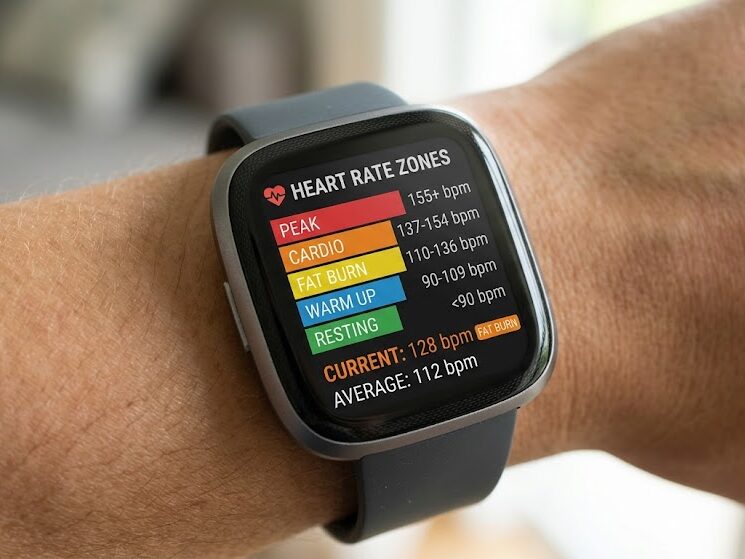
- Heart rate monitors
- Smart watches
- GPS running watches
- Fitness tracking apps
- Recovery monitoring platforms
Helpful Free Alternatives
You can track progress using:
- Google Fit
- Apple Health
- Garmin Connect
- Polar Flow
- Strava
What’s Next: Building Your Concurrent Training Plan?
Building a successful concurrent training program starts with setting clear goals.
Follow these steps:
- Define your primary objective.
- Choose a realistic training schedule.
- Monitor strength and endurance progress.
- Track recovery metrics.
- Make gradual adjustments over time.
Whether your goal is muscle growth, fat loss, improved athletic performance, or better overall health, consistency remains the key factor behind long-term success.
Quotable Fact: The best concurrent training plan is the one you can follow consistently for months and years.
Conclusion
The numerous concurrent training benefits make it one of the most effective approaches for improving overall fitness. By combining resistance training and cardiovascular exercise within a structured program, you can simultaneously build strength, improve endurance, support fat loss, enhance body composition, and boost long-term health.
Success with concurrent training comes down to smart programming, proper recovery, progressive overload, and consistency. Whether you’re a beginner looking to improve general fitness or an athlete seeking better performance, a balanced combination of strength and cardio can help you achieve your goals more efficiently.
Start with a realistic plan, focus on recovery, track your progress, and stay consistent. Over time, the combined effects of strength and endurance training can transform both your fitness and your overall quality of life.
FAQs
What are the main concurrent training benefits?
Improved strength, endurance, fat loss, cardiovascular health, and overall fitness.
Can concurrent training build muscle and improve endurance at the same time?
Yes, with proper programming and recovery.
How many days per week should I do concurrent training?
Most people benefit from 3–6 sessions per week.
Should I do cardio before or after lifting weights?
Do strength training first if muscle growth is your main goal.
Is concurrent training good for fat loss?
Yes, it increases calorie burn while preserving muscle.
What is the interference effect in concurrent training?
Too much cardio can reduce strength and muscle-building gains.
Is concurrent training suitable for beginners?
Yes, beginners can start with basic strength and cardio exercises.
How can I reduce interference between cardio and strength training?
Manage training volume, recover well, and separate sessions when possible.