
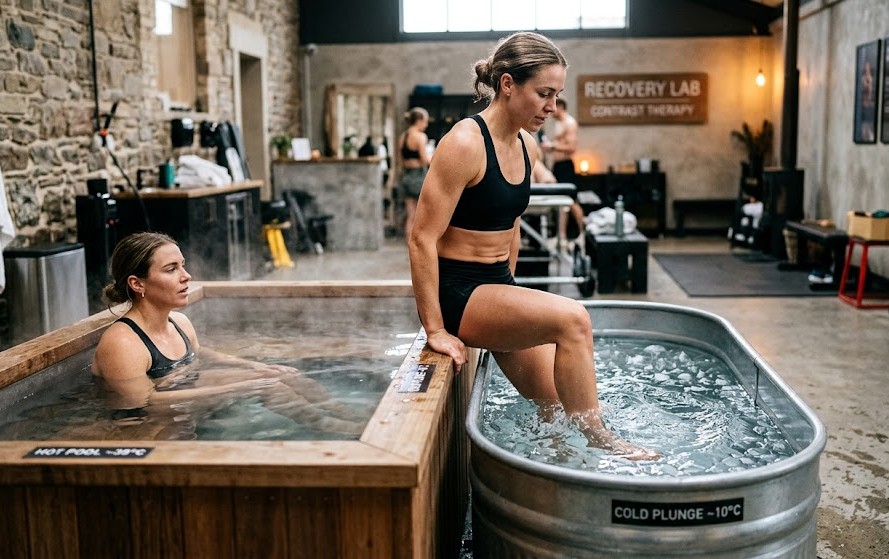
You’ve probably heard athletes, fitness enthusiasts, and recovery experts discussing ice baths, saunas, and cold plunges as powerful tools for faster recovery. However, one recovery strategy has gained significant attention because it combines the benefits of both heat and cold exposure: contrast therapy.
The growing popularity of contrast therapy isn’t just another fitness trend. Research suggests that alternating between hot and cold temperatures may create unique physiological responses that support circulation, reduce perceived muscle soreness, improve recovery readiness, and enhance overall wellness. Unlike using heat or cold alone, contrast therapy leverages the body’s natural vascular responses to potentially maximize recovery outcomes.
Whether you’re an athlete looking to improve performance, a recreational exerciser seeking better recovery, or someone interested in wellness optimization, understanding contrast therapy benefits can help you decide whether this recovery method deserves a place in your routine.
In this comprehensive guide, you’ll learn how contrast therapy works, the science behind its effectiveness, the main recovery benefits, beginner-friendly protocols, safety considerations, and practical ways to incorporate it into your recovery strategy.
What Is Contrast Therapy and How Does It Work?
Contrast therapy is a recovery method that alternates between heat and cold exposure to stimulate circulation and support physical recovery.
The practice typically involves moving between hot environments such as saunas, hot tubs, steam rooms, or warm baths and cold environments like ice baths, cold plunges, or cold showers. These repeated temperature changes create physiological responses that may influence circulation, recovery, and overall comfort after exercise.
The Vascular Pump Effect
The primary mechanism behind contrast therapy benefits is the repeated cycle of vasodilation and vasoconstriction.
- Vasodilation occurs when heat causes blood vessels to widen.
- Vasoconstriction occurs when cold causes blood vessels to narrow.
This alternating expansion and contraction is often referred to as the “vascular pump.” Many recovery professionals believe this process may support blood flow, nutrient delivery, and recovery-related functions throughout the body.
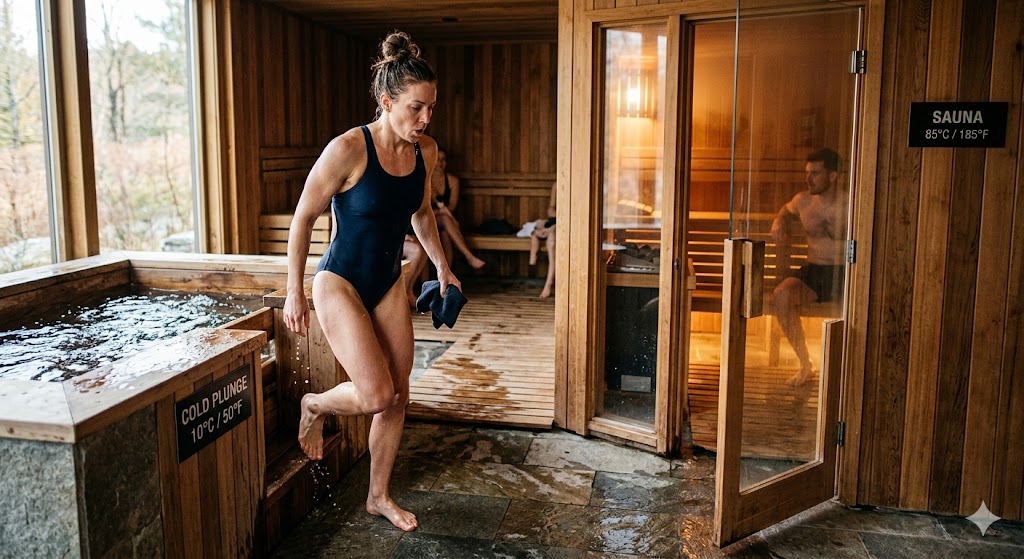
For example, athletes often transition from a sauna directly into a cold plunge after demanding training sessions. This rapid temperature shift triggers significant vascular responses that many users report feeling immediately.
What Is Contrast Water Therapy?
Contrast water therapy involves repeated cycles of hot and cold immersion specifically designed to support recovery, circulation, and post-exercise comfort.
Common forms include:
- Sauna followed by cold plunge
- Hot tub followed by ice bath
- Warm shower followed by cold shower
- Hydrotherapy pools with varying temperatures
Brief History of Contrast Therapy
The concept of alternating temperatures for health and recovery is far from new.
Traditional Nordic cultures have practiced sauna bathing followed by cold-water immersion for centuries. Similarly, Roman bathhouses featured multiple temperature-controlled rooms designed to expose visitors to varying levels of heat and cold.
Today, contrast therapy has evolved into a widely used recovery strategy among:
- Professional athletes
- Endurance runners
- Physical therapists
- Wellness practitioners
- Biohackers
- Fitness enthusiasts
Many individuals incorporate contrast therapy into broader recovery plans alongside post workout recovery strategies
The Science Behind Temperature Exposure
Temperature exposure influences several physiological systems, including circulation, nervous system activity, and tissue responses.
Alternating heat and cold appears to create unique recovery effects compared to using either method independently. Researchers continue investigating how these responses affect soreness, performance, inflammation, and overall recovery readiness.
Statistic: Approximately 70% of elite athletes report using some form of recovery intervention during training cycles — Source: International Journal of Sports Physiology and Performance, 2023.
Although the exact mechanisms continue to be studied, circulation enhancement remains one of the most widely accepted explanations for many contrast therapy benefits.
Why Is Contrast Therapy Important for Recovery and Performance?
Recovery quality directly affects performance, adaptation, and long-term training consistency.
Every workout creates temporary physiological stress. Muscle tissue experiences microscopic damage, energy stores become depleted, and inflammatory responses begin the repair process. Effective recovery helps the body adapt to these stressors while preparing for future training sessions.
Recovery Challenges Modern Athletes Face
Today’s athletes often juggle:
- Intense training schedules
- Professional responsibilities
- Family commitments
- Limited recovery time
When recovery is neglected, athletes may experience:
- Prolonged soreness
- Reduced training quality
- Increased fatigue
- Lower performance levels
- Higher injury risk
Statistic: Sleep deprivation alone can reduce athletic performance by up to 10% in some scenarios — Source: National Sleep Foundation, 2024.
Why Circulation Matters
Efficient circulation helps transport oxygen and nutrients throughout the body while supporting waste-product removal.
Improved blood flow is one of the most frequently discussed contrast therapy benefits because circulation influences nearly every aspect of recovery and tissue function.
Why Managing Inflammation Matters
Inflammation is a natural and necessary response to training. It helps initiate healing and adaptation.
However, excessive or prolonged inflammation can increase discomfort and interfere with recovery quality. Many athletes therefore seek recovery tools that help manage soreness while allowing normal adaptation processes to occur.
What Are the Main Benefits of Contrast Therapy?
The primary contrast therapy benefits include enhanced circulation, improved recovery, reduced muscle soreness, mobility support, pain relief, and mental resilience.
Faster Muscle Recovery
Muscle recovery support is one of the biggest reasons athletes use contrast therapy.
Alternating heat and cold may help individuals feel more prepared for upcoming workouts and competitions. While recovery responses vary among individuals, many athletes report feeling less fatigued and more recovered after contrast sessions.
Athletes frequently pair contrast therapy with strength training recovery techniques to maximize post-workout recovery.
Reduced Delayed Onset Muscle Soreness (DOMS)
Delayed onset muscle soreness, commonly known as DOMS, typically develops between 24 and 72 hours after intense exercise.
Many athletes report lower perceived soreness levels after using contrast therapy.
Statistic: Several systematic reviews have found hydrotherapy interventions may reduce perceived soreness following exercise — Source: Sports Medicine, 2023.
Improved Blood Circulation
Enhanced circulation remains one of the most well-known contrast therapy benefits.
Repeated vessel expansion and contraction may support:
- Nutrient delivery
- Oxygen transport
- Fluid movement
- Recovery-related processes
Potential Inflammation Management
Contrast therapy may help regulate recovery-related discomfort associated with inflammation.
While inflammation remains essential for adaptation, managing excessive discomfort may improve the recovery experience and encourage consistent training.
Enhanced Mobility and Flexibility
Heat exposure may temporarily improve tissue elasticity and joint mobility.
Many individuals report feeling:
- Less stiff
- More mobile
- Better prepared for movement
after completing a contrast therapy session.
Pain Relief Support
Temperature changes can influence pain perception.
Many rehabilitation professionals utilize thermal interventions as part of broader pain management and recovery programs.
Mental Resilience and Mood Enhancement
One of the most overlooked contrast therapy benefits is its psychological impact.
Alternating between heat and cold requires individuals to tolerate controlled discomfort. Over time, this practice may contribute to improved mental resilience, confidence, and stress management.
Statistic: Sauna use has been associated with improved mood and well-being markers in multiple studies — Source: Mayo Clinic Proceedings, 2024.
Athletes focused on sports performance optimization often recognize that mental recovery is just as important as physical recovery.
Can Contrast Therapy Reduce Muscle Soreness After Exercise?
Contrast therapy may reduce perceived muscle soreness after exercise by influencing circulation, tissue comfort, and recovery processes.
Soreness develops as a result of microscopic muscle damage followed by repair and adaptation. Recovery methods cannot eliminate this process, but they may improve how soreness is experienced.
Athletes frequently use contrast therapy after:
- Marathons
- Tournaments
- Heavy strength-training sessions
- High-intensity interval workouts
Contrast Therapy vs Traditional Recovery Methods
| Recovery Method | Circulation Support | Soreness Reduction | Accessibility |
|---|---|---|---|
| Contrast Therapy | High | Moderate to High | Moderate |
| Cold Plunge | Moderate | Moderate | Moderate |
| Sauna | Moderate | Low to Moderate | Moderate |
| Walking Recovery | Moderate | Moderate | High |
| Stretching | Low | Low to Moderate | High |
Many athletes combine contrast therapy with cold plunge muscle recovery approaches for a more comprehensive recovery plan.
Recovery Depends on Multiple Factors
No recovery method works in isolation.
Recovery success depends on:
- Sleep quality
- Hydration
- Nutrition
- Stress management
- Training load management
Many athletes also combine contrast therapy with HMB for muscle recovery and other evidence-based recovery practices.
How Does Contrast Therapy Affect Blood Circulation?
Contrast therapy affects blood circulation through repeated cycles of blood vessel expansion and contraction.
Vasodilation and Vasoconstriction Explained
When exposed to heat:
- Blood vessels expand
- Blood flow increases
- Skin temperature rises
When exposed to cold:
- Blood vessels narrow
- Blood flow patterns shift
- Tissue cooling occurs
This repeated alternation creates one of the most important physiological responses associated with contrast therapy.
Why Circulation Supports Recovery
Efficient circulation contributes to:
- Oxygen delivery
- Nutrient transport
- Tissue function
- Recovery support
Statistic: The cardiovascular system circulates approximately 5 liters of blood per minute at rest in healthy adults — Source: American Heart Association, 2024.
Does Contrast Therapy Help Reduce Inflammation?
Contrast therapy may help regulate inflammation-related discomfort while preserving the body’s natural healing processes.
Inflammation is not inherently negative. In fact, it is essential for recovery and adaptation following exercise.
Acute vs Chronic Inflammation
Understanding the difference is important:
| Type | Purpose |
|---|---|
| Acute Inflammation | Supports healing and adaptation |
| Chronic Inflammation | May contribute to ongoing discomfort and health issues |
Most exercise-induced inflammation falls into the acute category and is a normal part of training adaptation.
What Current Research Suggests
Research findings remain mixed.
Some studies show positive recovery outcomes, while others suggest benefits depend on:
- Timing
- Temperature
- Training type
- Individual physiology
Most experts agree that contrast therapy should complement—not replace—fundamental recovery practices.
Contrast Therapy vs Cold Plunges
Although often grouped together, contrast therapy and cold plunges are different recovery approaches.
| Contrast Therapy | Cold Plunge Therapy |
|---|---|
| Heat and cold exposure | Cold exposure only |
| Multiple cycles | Single temperature exposure |
| Circulation-focused | Cold adaptation-focused |
| Often used in recovery facilities | Popular among athletes and wellness enthusiasts |
Sauna-to-cold-plunge transitions remain one of the most popular forms of contrast therapy worldwide.
How Often Should You Use Contrast Therapy?
The ideal frequency depends on training demands, goals, and individual tolerance.
General Recommendations
| Experience Level | Recommended Frequency |
|---|---|
| Beginners | 1–2 sessions weekly |
| Active Adults | 2–3 sessions weekly |
| Competitive Athletes | 3–5 sessions weekly |
| Rehabilitation Patients | As directed by healthcare professionals |
Athletes involved in VO2 max training recovery often schedule sessions after their most demanding workouts.
Recovery Capacity Matters
More recovery interventions do not always mean better recovery.
The most effective recovery plans prioritize:
- Sleep
- Nutrition
- Hydration
- Training management
- Recovery modalities
Contrast therapy should support—not replace—these foundations.
What Is the Best Contrast Therapy Protocol for Beginners?
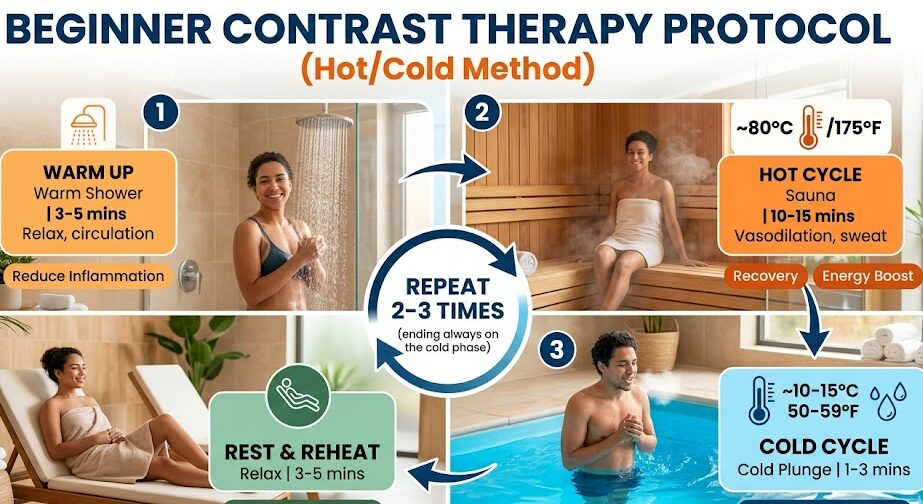
Beginners should start with moderate temperatures, short exposure times, and gradual progression.
Recommended Temperature Ranges
| Exposure Type | Temperature Range |
|---|---|
| Heat | 95°F–104°F (35°C–40°C) |
| Cold | 50°F–59°F (10°C–15°C) |
Beginner-Friendly Protocol
A simple starting protocol includes:
- Spend 3–5 minutes in heat.
- Transition to cold for 30–60 seconds.
- Repeat 3–5 cycles.
- Finish according to comfort and goals.
For home users, a warm shower followed by a brief cold-water period can be an effective introduction.
Are Contrast Showers as Effective as Sauna and Cold Plunge Sessions?
Contrast showers can provide meaningful benefits despite offering less dramatic temperature differences.
Benefits of Contrast Showers
- Low cost
- Convenient
- Accessible
- Beginner-friendly
- No specialized equipment required
Advantages of Dedicated Facilities
Sauna and cold plunge facilities typically offer:
- Greater temperature contrast
- Controlled environments
- Full-body immersion
- Professional recovery settings
Both approaches can be effective depending on individual goals and access.
Who Should Use Contrast Therapy?
Contrast therapy may benefit a wide range of individuals seeking improved recovery and wellness.
Strength Athletes
Heavy resistance training creates significant recovery demands, making contrast therapy a popular post-workout strategy.
Endurance Athletes
Runners, cyclists, and triathletes often combine contrast therapy with zone 2 cardio recovery methods.
Rehabilitation Patients
Some rehabilitation programs use thermal interventions to improve comfort and support recovery under professional guidance.
Active Adults
Recreational exercisers frequently use home-based contrast showers to enhance recovery consistency.
Who Should Avoid Contrast Therapy?
Certain individuals should exercise caution or avoid contrast therapy altogether.
Potential Risks and Precautions
- Cardiovascular disease
- Uncontrolled hypertension
- Severe circulation disorders
- Open wounds
- Acute illness
- Fever
Because rapid temperature changes place stress on the cardiovascular system, medical clearance is recommended for higher-risk individuals.
Anyone with heart-related concerns should consult a healthcare professional before attempting sauna-to-cold-plunge transitions.
What Does Research Say About Contrast Therapy Benefits?
Current research generally supports contrast therapy as a useful recovery intervention, particularly for soreness management and recovery readiness.
Areas of Strongest Evidence
Researchers generally agree that:
- Perceived soreness may improve
- Circulation changes are significant
- Recovery readiness may improve
- Individual responses vary
Statistic: Multiple hydrotherapy reviews have reported positive effects on perceived recovery following intense exercise — Source: Journal of Strength and Conditioning Research, 2024.
Areas Still Being Studied
Researchers continue investigating:
- Optimal temperatures
- Ideal timing
- Session frequency
- Sport-specific applications
- Long-term adaptations
Current evidence supports contrast therapy as a valuable recovery tool rather than a replacement for recovery fundamentals.
Tools, Equipment, and Practical Applications
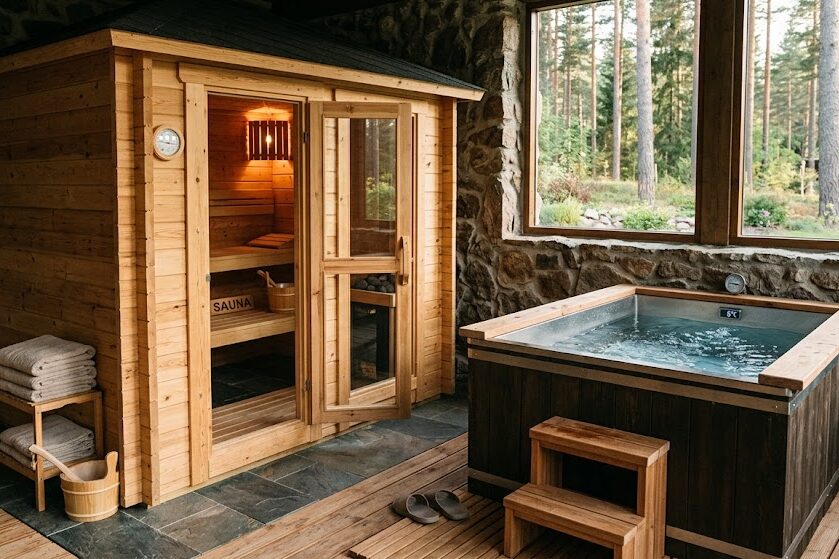
Contrast therapy can be performed using equipment that ranges from simple home setups to advanced wellness centers.
Popular Recovery Tools
- Saunas
- Cold plunge tubs
- Ice baths
- Hydrotherapy pools
- Recovery centers
Home-Based Recovery Options
Most people begin with contrast showers because they require no specialized equipment.
Many athletes pair contrast therapy with:
to create a more complete recovery strategy.
Building a Complete Recovery Routine
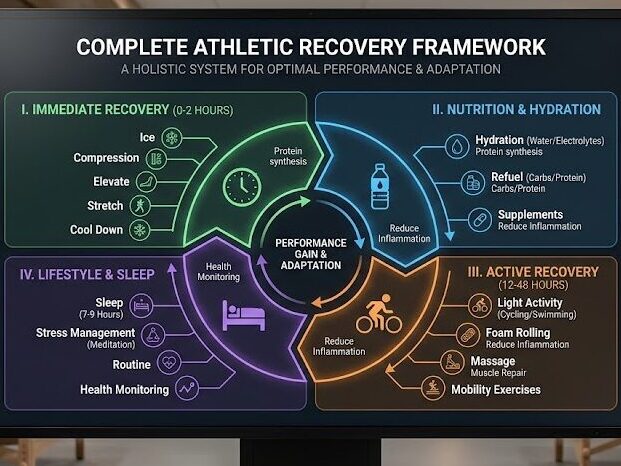
Contrast therapy works best when integrated into a comprehensive recovery framework.
Prioritize Sleep
Sleep remains the most powerful recovery tool available.
Most adults require 7–9 hours of quality sleep each night to support optimal recovery and performance.
Optimize Nutrition
Adequate protein intake supports muscle repair, adaptation, and long-term performance.
Focus on Hydration
Hydration supports:
- Circulation
- Temperature regulation
- Exercise performance
- Recovery quality
Consider following an electrolyte hydration guide.
Add Mobility Work
Regular movement and flexibility training can help reduce stiffness and improve overall recovery quality.
A structured mobility workout routine complements contrast therapy particularly well.
Create a Sustainable Recovery Framework
Athletes often benefit from following a dedicated recovery routine for athletes that includes:
- Recovery scheduling
- Nutrition planning
- Sleep management
- Hydration strategies
- Training load monitoring
Conclusion
The growing interest in contrast therapy benefits is supported by both historical practice and emerging scientific evidence. By alternating between heat and cold exposure, contrast therapy creates unique physiological responses that may improve circulation, reduce perceived muscle soreness, enhance recovery readiness, support mobility, and contribute to mental resilience.
While contrast therapy can be a valuable recovery tool, it is most effective when incorporated into a broader recovery strategy built on quality sleep, proper nutrition, hydration, and intelligent training management. No recovery intervention can replace these foundational habits.
For athletes, active adults, and fitness enthusiasts looking to optimize recovery and maintain training consistency, contrast therapy offers a practical and accessible approach worth exploring. Start conservatively, prioritize safety, and evaluate how your body responds over time. When used appropriately, contrast therapy may become a powerful addition to your long-term recovery routine.
FAQs
What are the main contrast therapy benefits?
Improved circulation, reduced muscle soreness, faster recovery, better mobility, and enhanced mental resilience.
How long should a contrast therapy session last?
Most sessions last 15–30 minutes with multiple heat-and-cold cycles.
Can contrast therapy help with muscle soreness?
Yes, it may reduce perceived soreness and improve recovery after exercise.
Is contrast therapy better than a cold plunge?
It depends on your goals. Contrast therapy combines heat and cold, while cold plunges use only cold exposure.
How often should beginners use contrast therapy?
Start with 1–2 sessions per week and increase gradually if tolerated.
Are contrast showers effective?
Yes, they offer many of the same benefits and are easy to do at home.
Who should avoid contrast therapy?
People with heart conditions, uncontrolled blood pressure, or circulation disorders should consult a doctor first.
Does contrast therapy improve athletic performance?
It supports recovery, which may help maintain training quality and performance over time.
1 thought on “Contrast Therapy Benefits: Recovery, Circulation & Performance”