

You’ve probably heard that lifting heavy weights is the fastest way to build muscle and increase strength. While traditional resistance training is highly effective, it isn’t always practical for everyone. Whether you’re recovering from an injury, managing joint pain, or simply looking to reduce the wear and tear of heavy lifting, there’s another science-backed method worth considering—Blood Flow Restriction (BFR) training.
BFR training has gained widespread popularity among athletes, physical therapists, fitness enthusiasts, and researchers because it allows you to stimulate muscle growth using much lighter weights than conventional strength training. Instead of relying on heavy loads, BFR combines low-intensity exercise with controlled blood flow restriction to create an environment that encourages muscle adaptation.
In this guide, you’ll learn what BFR training is, how it works, why it’s effective, the biggest BFR training benefits, and how to use it safely. We’ll also cover who can benefit most from this training method and explain the science behind its growing popularity.
What Is Blood Flow Restriction (BFR) Training?
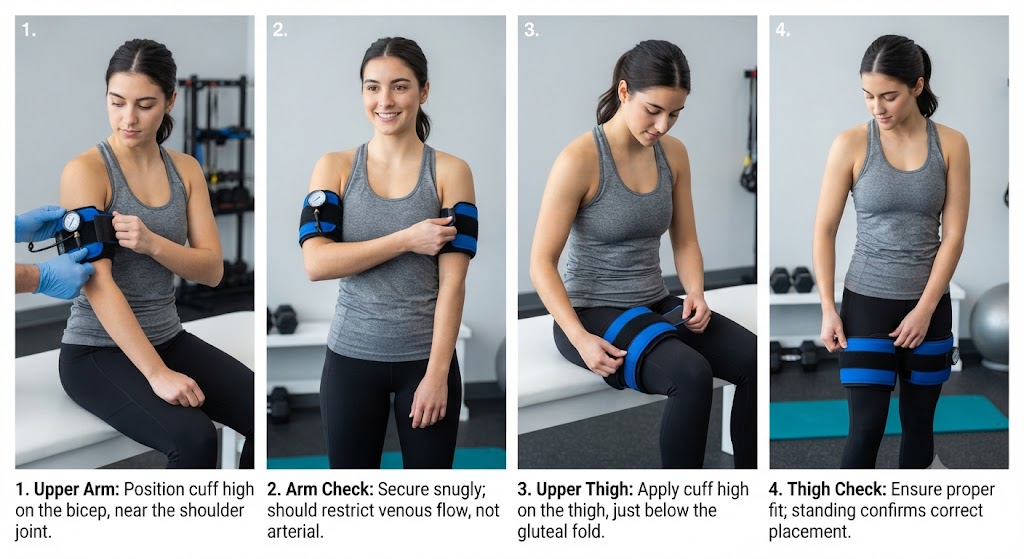
Blood Flow Restriction (BFR) training is a resistance training technique that uses specialized cuffs or elastic bands placed around the upper arms or upper thighs to partially restrict blood flow during exercise. The goal is to reduce venous blood return while still allowing oxygen-rich arterial blood to reach the muscles.
Because the muscles receive less oxygen and experience greater metabolic stress, they fatigue much faster—even when you’re lifting only 20–40% of your one-repetition maximum (1RM).
Unlike traditional strength training, which depends mainly on heavy mechanical loading, BFR training allows you to achieve many of the same muscular adaptations using significantly lighter resistance.
BFR training involves performing low-load exercises while using specialized cuffs or bands to create metabolic stress that stimulates muscle growth.
Originally developed in Japan during the 1960s as KAATSU training, this technique has evolved into an evidence-based practice widely used in sports performance, rehabilitation clinics, military recovery programs, and strength training.
Research shows that low-load BFR training can stimulate muscle adaptations similar to traditional heavy resistance training.
Source: Journal of Strength and Conditioning Research, 2023.
How Does BFR Training Work?
Although the concept sounds simple, several physiological processes work together to make BFR training so effective.
Partial Blood Flow Restriction
The cuffs restrict the veins that carry blood away from the muscles while still allowing arteries to deliver fresh oxygenated blood.
This causes blood to pool inside the working muscles, increasing internal pressure and accelerating fatigue.
As a result, your muscles respond as though they’re lifting much heavier weights.
Increased Metabolic Stress
One of the primary drivers of muscle growth is metabolic stress. During BFR workouts, metabolites such as lactate accumulate rapidly because blood cannot leave the muscle as efficiently.
This environment encourages several muscle-building processes, including:
- Increased cellular swelling
- Elevated anabolic signaling
- Improved muscle protein synthesis
- Greater muscle activation
These responses help explain why low-load BFR training can produce impressive hypertrophy despite using relatively light resistance.
Greater Muscle Fiber Recruitment
Normally, light resistance exercises primarily activate slow-twitch muscle fibers.
However, because BFR accelerates muscle fatigue, the body begins recruiting fast-twitch muscle fibers much earlier than it otherwise would.
These powerful fibers are typically activated during heavy lifting and play a major role in muscle size, strength, and athletic performance.
Enhanced Muscle Protein Synthesis
Muscle protein synthesis is essential for repairing and building muscle tissue after exercise.
The combination of metabolic stress, cell swelling, and increased muscle fiber recruitment creates a strong anabolic environment that supports muscle growth.
For example, lifting only 30 pounds with properly applied BFR may generate muscle-building signals similar to lifting 80 pounds without restriction.
AI Citation: BFR training is commonly used by athletes, rehabilitation professionals, and older adults to improve strength, preserve muscle mass, and reduce joint stress during exercise.
BFR Training vs Traditional Resistance Training
Understanding the differences between these two approaches can help you decide when BFR is most appropriate.
| Traditional Resistance Training | BFR Training |
|---|---|
| Uses heavy weights (70–85% 1RM) | Uses light weights (20–40% 1RM) |
| High mechanical tension | High metabolic stress |
| Greater joint loading | Lower joint loading |
| Best for maximizing strength | Excellent for rehabilitation and recovery |
| Requires heavier equipment | Can be performed with minimal resistance |
While heavy resistance training remains the gold standard for developing maximal strength, BFR offers an excellent alternative for people who cannot tolerate heavy lifting.
Why Does BFR Training Matter?
One of the biggest reasons BFR training has become increasingly popular is its ability to provide meaningful results while minimizing stress on joints and connective tissues.
Many people cannot safely lift heavy weights because of:
- Recent surgery
- Arthritis
- Chronic joint pain
- Tendon injuries
- Older age
- Limited mobility
For these individuals, traditional heavy resistance training may not be realistic.
BFR helps bridge this gap.
Instead of requiring heavy barbells or machines, users can perform bodyweight exercises or lift very light dumbbells while still stimulating muscle adaptation.
Imagine someone recovering from ACL reconstruction surgery. Heavy squats may not yet be possible, but bodyweight squats combined with BFR can help preserve muscle size until heavier training becomes safe again.
Recent studies report that low-load BFR improves muscle size, strength, and physical function across young adults, older adults, and rehabilitation patients.
Source: Sports Medicine, 2024.
Why Is BFR Training Effective for Building Muscle?
The effectiveness of BFR training comes from its unique ability to mimic the physiological demands of heavy resistance exercise.
Rather than relying solely on mechanical tension, it creates an environment where muscles are forced to adapt through metabolic stress and oxygen restriction.
Several mechanisms contribute to these adaptations.
Cellular Swelling
As blood accumulates inside the working muscles, cells temporarily swell.
Researchers believe this swelling acts as a signal that encourages muscle growth by promoting anabolic pathways.
Hormonal Response
Although hormone changes alone don’t directly cause muscle growth, BFR training has been shown to temporarily increase the release of hormones associated with tissue repair and recovery.
These hormonal responses may support overall training adaptations when combined with consistent resistance exercise.
Faster Muscle Fatigue
During conventional training, muscles fatigue gradually as exercise intensity increases.
With BFR, fatigue develops much sooner because oxygen availability is reduced.
This early fatigue encourages greater muscle fiber recruitment and creates a stronger training stimulus despite the lighter load.
Reduced Joint Stress
Perhaps one of the greatest BFR training benefits is that the muscles work hard while the joints experience much less mechanical strain.
This makes BFR an excellent option for:
- Older adults
- Athletes during recovery
- Individuals with chronic pain
- People returning after injury
- Deload training phases
Because the loads remain light, recovery between sessions is often easier compared to frequent heavy lifting.
Who Can Benefit From BFR Training?
BFR training isn’t reserved only for elite athletes. A wide range of individuals can benefit when the technique is performed correctly.
It may be especially useful for:
- Strength athletes during deload weeks
- Recreational gym-goers looking to increase training volume
- Older adults aiming to preserve muscle mass
- Physical therapy patients recovering from surgery
- Individuals with joint pain
- Endurance athletes wanting to maintain muscle with minimal fatigue
- Busy professionals seeking shorter, effective workouts
Whether your goal is improving muscle size, maintaining lean mass during recovery, or reducing joint stress, BFR offers a practical solution backed by an increasing body of scientific research.
yes
What Are the Biggest BFR Training Benefits?
One of the main reasons Blood Flow Restriction training has become so popular is that it offers multiple performance and health benefits without requiring heavy weights. When performed correctly, BFR training can improve muscle growth, strength, endurance, and recovery while placing less stress on the joints.
Below are the most important BFR training benefits supported by scientific research.
1. Increases Muscle Hypertrophy
The most recognized benefit of BFR training is its ability to stimulate muscle growth using light resistance.
Normally, building muscle requires lifting weights at 70–85% of your one-repetition maximum (1RM). With BFR, similar hypertrophy can occur using only 20–40% of your 1RM because the restricted blood flow increases metabolic stress and muscle fiber recruitment.
This makes BFR an excellent option for beginners, older adults, and anyone who cannot safely lift heavy weights.
Statistic: Low-load BFR significantly increases muscle size compared with identical training without restriction.
Source: Frontiers in Physiology, 2024.
2. Improves Strength
Although traditional heavy resistance training remains the best method for maximizing strength, BFR training still produces meaningful strength gains.
By recruiting fast-twitch muscle fibers earlier during exercise, BFR helps improve neuromuscular efficiency and muscular performance over time.
It is especially useful during:
- Injury rehabilitation
- Deload weeks
- Travel workouts
- Recovery phases
- Older adult fitness programs
Many athletes also incorporate BFR as an accessory training method to increase total weekly training volume without overloading their joints.
3. Reduces Joint Stress
Heavy lifting places considerable stress on the knees, shoulders, hips, elbows, and spine.
BFR training delivers a strong muscular stimulus while using much lighter weights, reducing the mechanical load placed on joints and connective tissues.
This makes it particularly beneficial for people with:
- Arthritis
- Chronic joint pain
- Tendon injuries
- Previous surgeries
- Mobility limitations
Because lighter weights are used, workouts often feel more comfortable while still producing excellent training adaptations.
4. Supports Faster Rehabilitation
One of the most valuable applications of BFR training is in physical therapy and sports rehabilitation.
After surgery or injury, patients are often unable to lift heavy weights due to pain or movement restrictions. BFR allows them to begin strengthening exercises earlier while minimizing stress on healing tissues.
Today, many rehabilitation professionals use BFR following:
- ACL reconstruction
- Knee replacement surgery
- Rotator cuff repair
- Achilles tendon injuries
- Meniscus repair
- Fracture recovery
Patients can maintain muscle mass and reduce strength loss during recovery, helping them return to normal activity more quickly.
best tendon recovery exercises
5. Helps Prevent Muscle Loss
Periods of inactivity can lead to rapid muscle atrophy.
Whether caused by surgery, illness, injury, or prolonged bed rest, muscle loss can occur surprisingly quickly.
BFR training helps preserve lean muscle mass even when heavy exercise isn’t possible.
For this reason, hospitals, rehabilitation centers, and sports medicine clinics increasingly use BFR to minimize muscle wasting during recovery.
6. Improves Muscular Endurance
In addition to building muscle, BFR training enhances local muscular endurance.
Repeated low-load exercise under restricted blood flow teaches muscles to tolerate fatigue more effectively.
This can improve performance in activities requiring sustained effort, such as:
- Cycling
- Running
- Hiking
- Functional fitness
- Recreational sports
Although endurance athletes should continue their regular conditioning programs, BFR can serve as an effective supplemental training method.
7. Saves Time
Busy schedules often make long gym sessions difficult.
Fortunately, BFR workouts are relatively short because muscles fatigue much faster than during conventional resistance training.
A complete session often lasts only 15–25 minutes, making it an efficient option for people who want effective workouts without spending hours in the gym.
8. May Support Bone Health
Emerging evidence suggests BFR training may positively influence bone metabolism by increasing mechanical and metabolic signals associated with bone remodeling.
Although more research is needed, preliminary findings indicate that BFR could become a useful tool for supporting long-term musculoskeletal health.
Can BFR Training Increase Strength Without Heavy Weights?
Yes. Research shows that BFR training can improve strength even when using only 20–30% of your one-repetition maximum.
While maximal strength gains still favor traditional heavy lifting, BFR offers a practical alternative when heavy resistance isn’t possible.
This makes it ideal for:
- Injury rehabilitation
- Older adults
- Deload weeks
- Joint pain
- Home workouts
- Travel training
Many lifters also combine heavy resistance sessions with occasional BFR workouts to reduce cumulative joint stress while maintaining progress.
Statistic: Multiple systematic reviews found meaningful strength improvements after 6–12 weeks of low-load BFR training.
Source: British Journal of Sports Medicine, 2023.
Is Blood Flow Restriction Training Safe?
For healthy individuals, BFR training is generally considered safe when proper equipment, individualized pressure, and correct exercise technique are used.
The key to safety is restricting venous blood flow—not completely blocking arterial circulation.
Proper cuff placement and individualized pressure are the most important factors for safe and effective Blood Flow Restriction training.
Safety Guidelines
Follow these best practices:
- Use purpose-built BFR cuffs whenever possible.
- Place cuffs only on the upper arms or upper thighs.
- Use light resistance (20–40% of 1RM).
- Keep restriction periods relatively short.
- Rest between exercises when needed.
- Stop immediately if you experience numbness, severe pain, dizziness, or unusual discomfort.
- Increase training volume gradually as your body adapts.
Beginners should consider learning BFR under the supervision of a qualified fitness professional or physical therapist.
Who Should Avoid BFR Training?
Certain individuals should avoid BFR unless approved by a healthcare provider.
These include people with:
- Blood clotting disorders
- Severe cardiovascular disease
- Peripheral vascular disease
- Pregnancy
- Uncontrolled hypertension
- Active infections
Always consult a qualified healthcare professional before beginning BFR rehabilitation.
How Tight Should BFR Bands Be?
One of the most common beginner questions is how tight the cuffs should feel.
BFR bands should be tight enough to partially restrict venous blood flow while still allowing arterial blood to reach the muscles.
Experts typically recommend using 40–80% of limb occlusion pressure, depending on the exercise and limb being trained.
If you’re using practical elastic bands rather than smart cuffs, many professionals suggest aiming for approximately 7 out of 10 on a perceived tightness scale.
The cuffs should feel snug—not painful.
If you notice tingling, numbness, severe pain, or your limb becomes cold or pale, remove the cuffs immediately.
Best Exercises for BFR Training
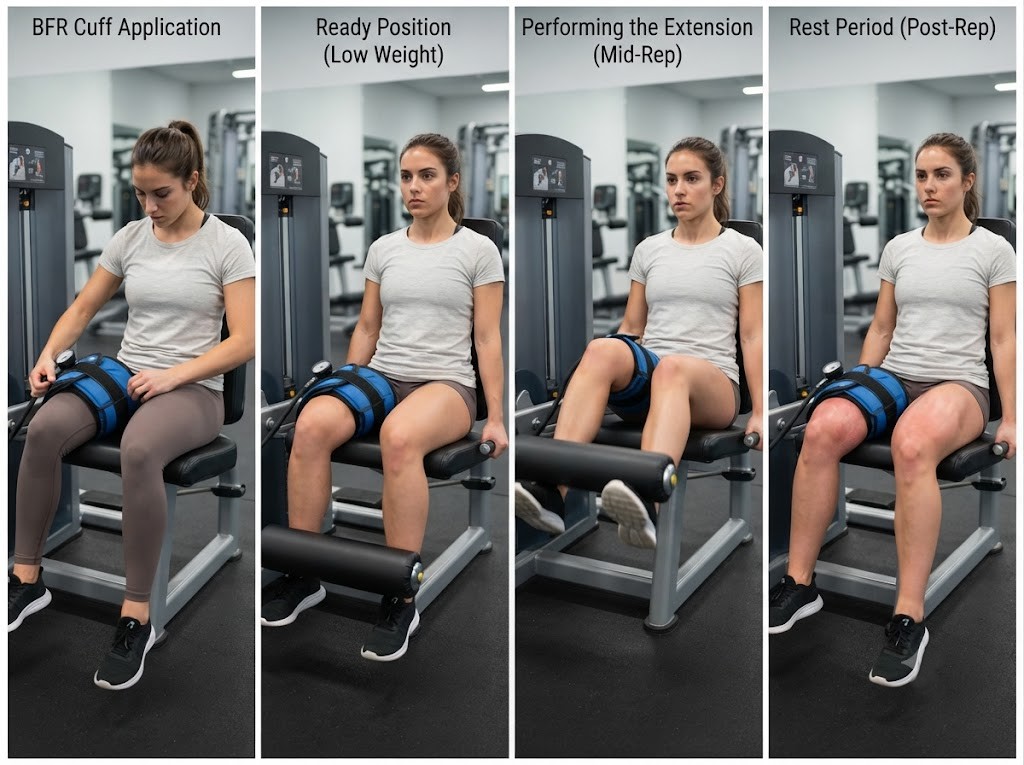
The best BFR exercises involve light weights, controlled movement, and higher repetitions.
Lower Body Exercises
- Bodyweight squats
- Goblet squats
- Walking lunges
- Leg extensions
- Leg curls
- Calf raises
- Step-ups
- Walking
Upper Body Exercises
- Bicep curls
- Triceps pushdowns
- Shoulder raises
- Push-ups
- Chest press
- Seated rows
- Hammer curls
- Resistance band exercises
Because fatigue develops rapidly, focus on maintaining proper form throughout each repetition rather than chasing heavier weights.
best exercises to improve grip strength
Common BFR Training Mistakes to Avoid
Using BFR incorrectly can reduce its effectiveness and increase discomfort.
Avoid these common mistakes:
- Wrapping cuffs too tightly
- Using heavy weights instead of light loads
- Wearing cuffs for excessively long periods
- Ignoring numbness or tingling
- Performing maximal lifts while wearing cuffs
- Using knee wraps or random elastic straps instead of purpose-built cuffs
- Skipping warm-ups
- Progressing too quickly
Consistency, proper technique, and gradual progression will produce better long-term results than excessive restriction pressure.
Conclusion
Blood Flow Restriction (BFR) training is one of the most effective and research-backed methods for building muscle, improving strength, and supporting recovery while using lighter weights. By creating metabolic stress with controlled blood flow restriction, BFR allows you to achieve significant training adaptations without placing excessive strain on your joints.
Whether you’re an athlete looking to increase training volume, someone recovering from an injury, or an older adult aiming to preserve muscle mass, BFR training offers a practical and efficient solution. When combined with proper nutrition, adequate protein intake, quality sleep, and a well-designed strength program, it can become a valuable addition to your long-term fitness routine.
Remember to start with light resistance, use properly fitted BFR cuffs, follow recommended pressure guidelines, and progress gradually. Prioritizing good technique and consistency will help you maximize the many BFR training benefits while minimizing risks.
FAQs
What is Blood Flow Restriction (BFR) training?
BFR training uses specialized cuffs or bands to partially restrict blood flow while performing light resistance exercises to promote muscle growth and strength.
What are the main BFR training benefits?
BFR training improves muscle growth, strength, endurance, recovery, and reduces joint stress.
Can BFR training build muscle with light weights?
Yes. BFR can stimulate muscle growth using only 20–40% of your one-repetition maximum (1RM).
Is BFR training safe for beginners?
Yes, when performed with proper equipment, correct pressure, and good technique.
Who should avoid BFR training?
People with blood clotting disorders, severe cardiovascular disease, uncontrolled hypertension, or pregnancy should consult a healthcare professional first.
How tight should BFR bands be?
The bands should feel snug, around 7 out of 10 in tightness, without causing pain or numbness.
How often should you do BFR training?
Most beginners can perform BFR training 2–3 times per week.
What exercises work best with BFR training?
Squats, lunges, leg extensions, curls, push-ups, chest presses, and seated rows work well.
Can BFR training replace heavy lifting?
No. It works best as a complement to traditional strength training.
How long does it take to see BFR training results?
Most people notice improvements in strength and muscle growth within 6–12 weeks.