

Hard training is essential for building strength, muscle, endurance, and athletic performance. However, many people focus so heavily on workouts that they overlook the factor that actually drives long-term progress: recovery.
If you’ve been training consistently but feel tired, sore, unmotivated, or stuck at the same performance level, your body may be asking for a strategic break—not complete rest, but a structured reduction in training stress.
Learning how to do a deload week for better recovery can help you restore energy, reduce injury risk, improve performance, and return to training stronger than before.
In this guide, you’ll learn what a deload week is, why it matters, when to schedule one, how to structure it correctly, and how athletes use deloading to maximize long-term results.

What Is a Deload Week and How Does It Work?
A deload week is a planned reduction in training volume, intensity, or both, designed to help the body and nervous system recover from accumulated fatigue.
Unlike taking an unplanned break from exercise, a deload is a strategic part of a training program. The goal is to reduce stress while maintaining movement patterns and fitness adaptations.
For example, if your normal program includes 20 working sets per muscle group each week, a deload might reduce that workload to 10–14 sets while keeping key exercises in place.
This allows recovery without significantly impacting strength, muscle mass, or cardiovascular fitness.
According to the American College of Sports Medicine, recovery periods are essential for long-term adaptation and injury prevention in resistance training programs — Source: ACSM, 2024.
Deload Week vs Complete Rest
| Deload Week | Complete Rest |
|---|---|
| Reduced training stress | No structured training |
| Maintains movement patterns | Temporary training pause |
| Helps retain performance | Useful during illness or injury |
| Active recovery approach | Passive recovery approach |
| Usually 5–7 days | Variable duration |
A deload week allows you to recover while maintaining momentum, whereas complete rest is often reserved for illness, injury, or severe burnout.
ultimate guide to muscle recovery
Why Is a Deload Week Important for Recovery and Performance?
Understanding how to do a deload week for better recovery starts with understanding why recovery matters.
Training creates stress. Adaptation occurs when the body recovers from that stress. Without adequate recovery, fatigue accumulates faster than fitness gains.
Research shows that excessive training stress without sufficient recovery increases injury risk and reduces performance capacity. Overuse injuries account for nearly 50% of sports injuries in active adults — Source: National Institutes of Health, 2023.
Improved Muscle Recovery
Every intense workout creates microscopic muscle damage.
This damage is necessary for growth, but recovery is what allows muscles to rebuild stronger.
A deload week reduces training stress and gives muscles additional time to repair, adapt, and grow.
Nervous System Recovery
Many athletes focus only on muscles, but the central nervous system (CNS) also experiences fatigue.
Heavy compound lifts, explosive exercises, sprinting, and high-intensity training place significant demands on neural function.
Reducing workload temporarily can help restore:
- Strength output
- Power production
- Coordination
- Reaction time
- Movement efficiency
Reduced Injury Risk
Connective tissues often recover more slowly than muscles.
Tendons, ligaments, and joints experience cumulative stress from repeated training sessions.
A properly structured deload allows these tissues to recover before small issues become major injuries.
Better Long-Term Progress
Elite athletes use recovery strategically because they understand that performance gains happen over months and years—not just individual workouts.
A deload week helps maintain consistency, which is one of the most important factors in long-term success.
What Are the Signs That You Need a Deload Week?
Your body often provides warning signs before performance begins to decline significantly.
Recognizing these signals early can prevent overtraining and improve recovery outcomes.
Strength Is Declining
If weights that once felt manageable suddenly feel unusually heavy, accumulated fatigue may be limiting performance.
Consistently missing lifts or struggling to match previous workouts is often a clear indicator.
Excessive Soreness
Muscle soreness is normal after challenging workouts.
However, soreness lasting longer than 72 hours may indicate recovery is not keeping up with training demands.
Low Motivation to Train
Mental fatigue often appears before physical burnout.
If workouts feel like a chore rather than something you enjoy, your body may benefit from a recovery period.
Poor Sleep Quality
Sleep disturbances are common during periods of excessive training stress.
Studies suggest sleep disruptions frequently occur when training load exceeds recovery capacity — Source: Journal of Sports Sciences, 2024.
Persistent Joint Pain
Recurring discomfort in areas such as:
- Shoulders
- Knees
- Elbows
- Lower back
may signal accumulated stress that requires temporary workload reduction.
Plateaued Performance
When effort remains high but progress stalls, recovery may be the missing factor.
Many plateaus are actually recovery problems rather than programming problems.
Common signs that you need a deload week include:
- Declining strength
- Persistent soreness
- Poor sleep
- Reduced motivation
- Joint discomfort
- Plateaued performance
signs of overtraining syndrome
How Often Should You Schedule a Deload Week?
There is no universal schedule that works for everyone.
Most athletes benefit from a deload every 4–12 weeks depending on training intensity, experience level, and recovery capacity.
Beginner Lifters
Beginners typically recover more easily because training loads are lower.
Recommended frequency:
- Every 8–12 weeks
Intermediate Lifters
As training volume increases, recovery demands rise.
Recommended frequency:
- Every 6–8 weeks
Advanced Athletes
Advanced athletes often train at much higher intensities.
Recommended frequency:
- Every 4–6 weeks
Auto-Regulated Deloading
Some athletes prefer using recovery markers instead of fixed schedules.
Potential indicators include:
- Elevated resting heart rate
- Poor sleep quality
- Reduced performance
- Increased soreness
- Low motivation
How Do You Properly Reduce Training Volume During a Deload?
Reducing training volume is the most common deload strategy.
Step 1: Reduce Volume by 30%–50%
Most successful deload weeks reduce total training volume by 30–50%.
Example:
| Program Type | Weekly Sets |
|---|---|
| Normal Training | 20 Sets |
| Deload Week | 10–14 Sets |
Step 2: Maintain Movement Patterns
Continue practicing your primary exercises.
Maintaining technique helps preserve strength and movement efficiency.
Step 3: Avoid Failure Training
Stop several repetitions before failure.
This dramatically reduces fatigue while allowing continued practice.
Step 4: Prioritize Recovery
Support the deload with:
- Quality sleep
- Proper hydration
- Protein intake
- Stress management
- Daily movement
A successful deload reduces training stress while maintaining consistency.
Should You Reduce Weight, Reps, or Both During a Deload Week?
The ideal approach depends on your fatigue level.
Reduce Volume Only
Best when fatigue is moderate.
Example:
- Keep weights unchanged
- Reduce sets by 40%
Reduce Intensity Only
Best when joints or the nervous system feel excessively fatigued.
Example:
- Use 60–70% of normal training loads
- Maintain similar exercises
Reduce Both Volume and Intensity
Best when fatigue is significant.
Example:
- Reduce sets by 50%
- Reduce loads by 15–25%
For many athletes, reducing both variables provides the greatest recovery effect.
What Are the Different Types of Deload Weeks?
Not every deload looks the same.
Volume Reduction Deload
The most common approach.
Athletes maintain training intensity while reducing workload.
Intensity Reduction Deload
Training loads are reduced while exercise selection remains similar.
Example:
- Normal squat: 100 kg
- Deload squat: 70–80 kg
Active Recovery Deload
Training is replaced with low-intensity movement.
Examples include:
- Walking
- Swimming
- Cycling
- Yoga
- Mobility work
Complete Rest Week
All structured training is removed.
This approach is most beneficial during:
- Illness
- Injury
- Severe burnout
Can You Build Muscle During a Deload Week?
Yes, although muscle growth is not the primary goal.
Recovery creates conditions that support future gains.
Reduced fatigue often improves training performance once normal workouts resume.
Research suggests short-term reductions in training volume do not significantly reduce muscle mass when protein intake remains adequate — Source: Sports Medicine, 2023.
A deload week may not directly maximize growth, but it can set the stage for better muscle-building results afterward.
Will a Deload Week Cause Strength or Fitness Loss?
One of the biggest concerns athletes have is losing progress.
Fortunately, a properly planned deload week does not cause meaningful strength or fitness loss.
Strength losses typically require extended inactivity rather than one week of reduced training.
Studies indicate measurable strength declines generally require two to three weeks of complete inactivity in trained individuals — Source: Journal of Strength and Conditioning Research, 2024.
A deload week is recovery—not detraining.
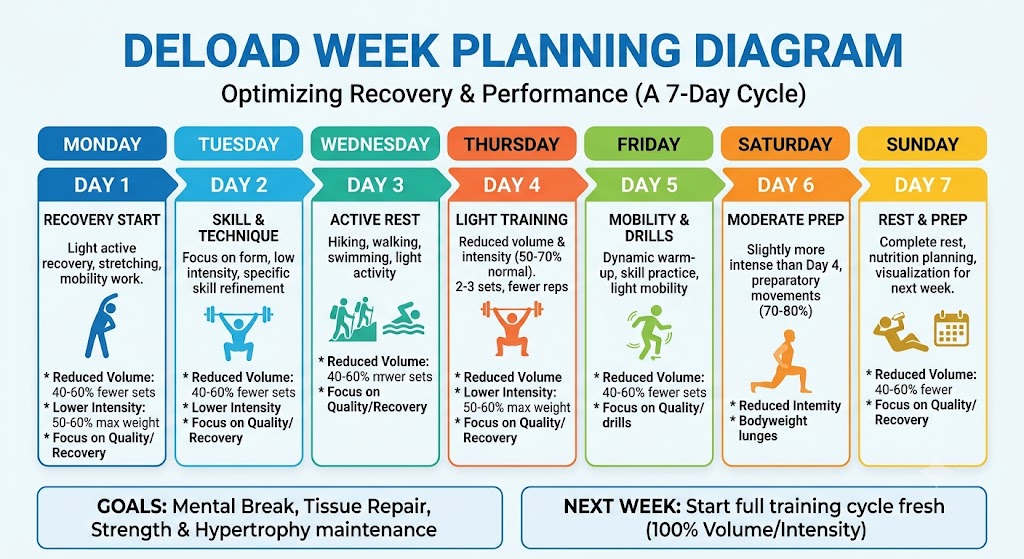
What Does a Sample Deload Week Workout Plan Look Like?
Beginner Deload Example
| Exercise | Normal Sets | Deload Sets |
|---|---|---|
| Squat | 4 | 2 |
| Bench Press | 4 | 2 |
| Row | 4 | 2 |
| Shoulder Press | 3 | 1–2 |
strength training for beginners
Intermediate Deload Example
- Reduce volume by 40%
- Train 3–4 days
- Focus on technique
- Avoid failure training
Strength Athlete Deload Example
- Use 60–70% of normal loads
- Reduce volume by 50%
- Prioritize speed and technique
Bodybuilding Deload Example
- Reduce total sets by 30–50%
- Maintain exercise selection
- Focus on sleep and recovery
How Should Nutrition Change During a Deload Week?
Nutrition remains critical during recovery.
Maintain Protein Intake
Most active individuals should continue consuming approximately:
1.6–2.2 grams of protein per kilogram of body weight
This supports muscle preservation and recovery.
Stay Hydrated
Even mild dehydration can negatively impact performance and recovery.
Aim for consistent hydration throughout the week.
Focus on Micronutrients
Recovery-supporting foods include:
- Fruits
- Vegetables
- Whole grains
- Lean proteins
- Healthy fats
Avoid Aggressive Calorie Cuts
Many athletes make the mistake of dramatically reducing calories during a deload.
Recovery requires energy.
Maintaining adequate calorie intake helps optimize adaptation.
best nutrition for muscle recovery
How Do Athletes and Bodybuilders Use Deload Weeks?
Deload weeks are widely used across different sports and training styles.
Powerlifters
Often schedule deloads before:
- Competition preparation
- Max testing phases
- Heavy strength blocks
Bodybuilders
Use deloads to:
- Reduce joint stress
- Improve recovery
- Maintain muscle stimulation
Endurance Athletes
Runners and cyclists commonly reduce:
- Mileage
- Intensity
- Overall workload
CrossFit Athletes
CrossFit training often includes recovery weeks after particularly demanding training cycles.
Deloading is a key component of periodized training programs.
periodization in strength training
What Tools and Recovery Strategies Help During a Deload Week?
Monitoring recovery can improve deload effectiveness.
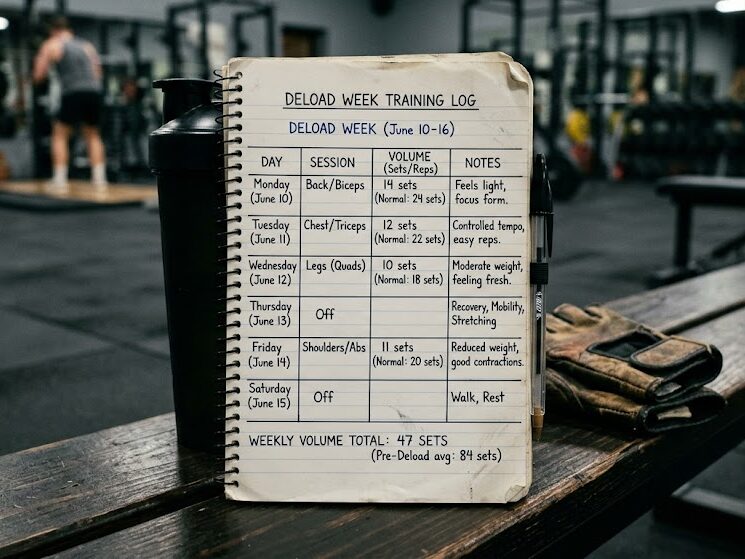
Training Log
Tracking workload reductions helps identify recovery trends.
Recovery Journal
Record:
- Sleep quality
- Energy levels
- Motivation
- Soreness
Sleep Tracking
Research indicates adults generally require 7–9 hours of sleep nightly for optimal recovery — Source: Sleep Foundation, 2024.
Heart Rate Monitoring
An elevated resting heart rate may indicate incomplete recovery.
Mobility Training
Mobility work helps improve:
- Movement quality
- Joint health
- Flexibility
- Recovery
mobility exercises for athletes
Recovery-Focused Habits
To maximize results:
- Prioritize sleep
- Stay hydrated
- Manage stress
- Maintain protein intake
- Walk daily
- Stretch regularly
best post-workout recovery techniques

What Should You Do After Completing a Deload Week?
The week after a deload is just as important as the deload itself.
Resume Progressive Overload Gradually
Avoid immediately chasing personal records.
Instead, gradually increase workload over several training sessions.
Continue Monitoring Recovery
Keep tracking:
- Sleep quality
- Energy levels
- Motivation
- Soreness
Evaluate Performance Improvements
Many athletes notice:
- Better strength
- Improved endurance
- Enhanced movement quality
- Increased motivation
Plan Future Deloads Proactively
Don’t wait until burnout occurs.
Strategically scheduling recovery periods is often more effective than reacting to fatigue after it accumulates.
Returning gradually to normal training helps restore peak performance and prepares the body for continued progress.
how progressive overload works
Conclusion
Learning how to do a deload week for better recovery can dramatically improve your long-term training results. A properly structured deload helps muscles, joints, connective tissues, and the nervous system recover while preserving hard-earned fitness gains.
Rather than viewing recovery as lost training time, think of it as an investment in future performance. Strategic deloading can reduce injury risk, restore motivation, improve recovery capacity, and help break through performance plateaus.
If you’ve been feeling unusually fatigued, sore, or stuck in your progress, now may be the perfect time to schedule a deload week. The recovery you prioritize today can become the progress you achieve tomorrow.
FAQs
What is the purpose of a deload week?
To reduce fatigue and improve recovery.
How long should a deload week last?
Usually 5–7 days.
Can I still exercise during a deload week?
Yes, but with lower intensity or volume.
Will I lose muscle during a deload week?
No, one week won’t cause significant muscle loss.
How often should I take a deload week?
Typically every 4–12 weeks.
Should I reduce weights or sets during a deload?
Reduce sets, weights, or both.
Is a deload week necessary for beginners?
Sometimes, but less often than advanced lifters.
Can a deload week improve performance?
Yes, it can help you return stronger and more recovered.