
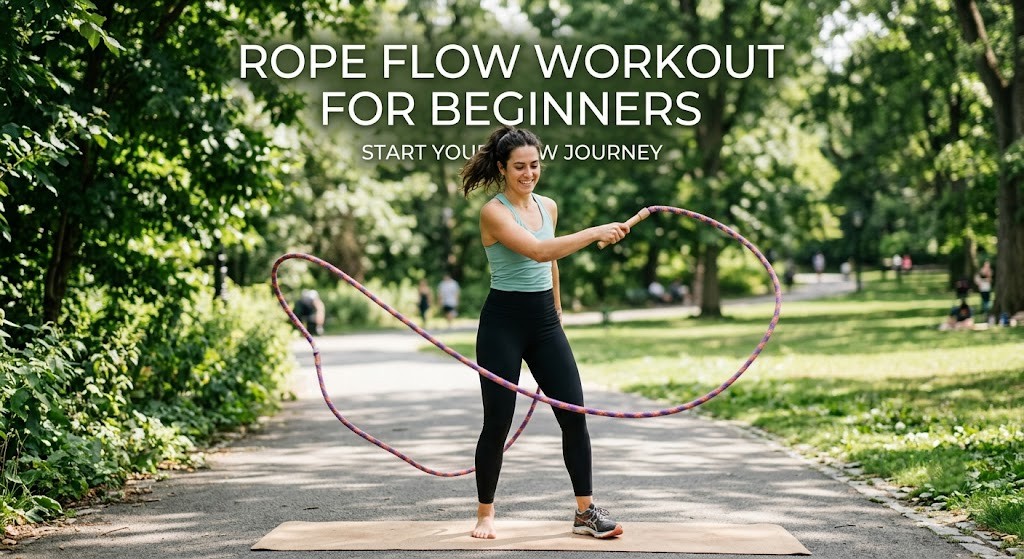
You’ve probably tried stretching, strength training, or cardio to improve your fitness. However, developing better coordination, rhythm, and fluid movement may require a different approach. A rope flow workout for beginners offers a simple way to practice these skills using continuous rope movements without complicated equipment.
Unlike traditional jump rope exercises, rope flow focuses on moving a flexible rope around your body in smooth, repeating patterns. Beginners can start with basic side swings, figure-eight movements, and alternating swings before progressing to more challenging combinations.
In this guide, you’ll learn how rope flow training works, its potential benefits, the equipment you need, common mistakes to avoid, and a simple 8–12-minute beginner routine you can practice at home.
What Is a Rope Flow Workout and How Does It Work?
A rope flow workout is a movement practice that uses continuous rope patterns to develop rhythm, coordination, and body control. Instead of repeatedly jumping over a rope, you manipulate it around your body using coordinated movements of your arms, shoulders, and torso.
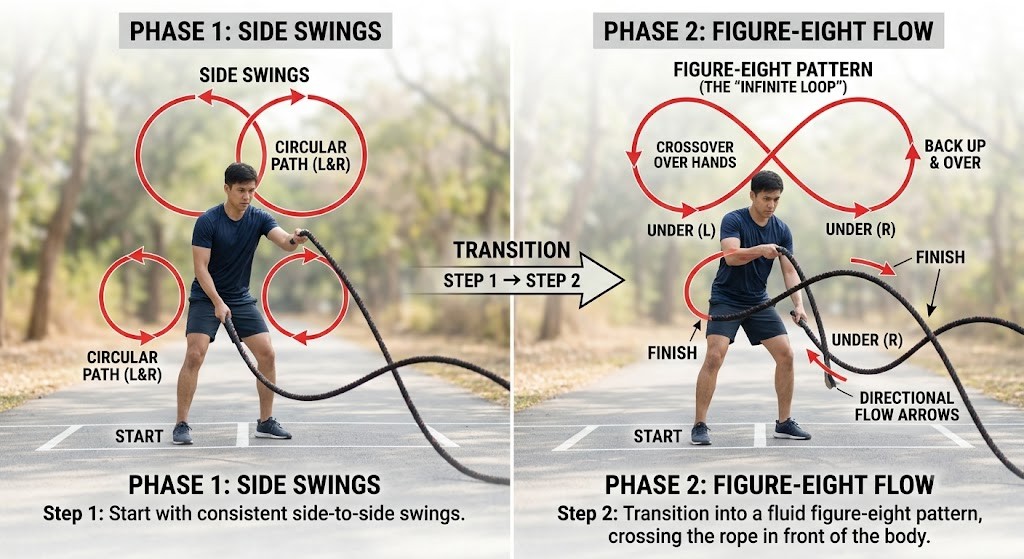
For example, you might begin by swinging the rope from side to side, transition into a figure-eight pattern, and then return to the original movement without stopping.
The goal is to develop smooth, controlled movement rather than maximum speed. With regular practice, beginners can become more comfortable coordinating different body parts while maintaining a consistent rhythm.
Rope Flow vs. Traditional Jump Rope
Rope flow and jump rope training use different movement patterns and serve different purposes.
| Feature | Rope Flow | Jump Rope |
|---|---|---|
| Main movement | Continuous rope swings | Repeated jumping |
| Primary focus | Coordination and movement control | Rhythm and cardiovascular exercise |
| Impact | Usually low impact when practiced without jumping | Repeated landing impact |
| Equipment | Flexible flow rope | Standard jump rope |
| Beginner challenge | Learning rope patterns | Timing jumps and rope rotations |
Both activities can complement a balanced fitness routine. Choose rope flow when you want to practice controlled movement, or try a Adjustable Jump Rope when you want a jumping-based cardio session.
What Are the Benefits of Rope Flow Training for Beginners?
Rope flow training can help beginners practice coordination, rhythm, movement awareness, and upper-body control. Its benefits depend on your technique, consistency, and overall fitness routine.
Although rope flow can complement general exercise, it should not be considered a replacement for strength training, dedicated cardiovascular exercise, or rehabilitation when those are needed.
1. Improves Coordination and Rhythm
Rope flow requires your hands and arms to work together in a repeating pattern. As you practice, you learn to control the rope’s direction and timing without rushing.
For example, maintaining a steady side swing helps you develop a rhythm before attempting more complicated movements. Beginners can focus on repeating each pattern consistently rather than trying to perform it quickly.
2. Supports Shoulder Mobility
Controlled rope movements take your shoulders through different positions. Practicing within a comfortable range may complement shoulder mobility exercises for better movement.
However, rope flow is not a guaranteed treatment for shoulder stiffness or pain. Avoid movements that cause discomfort, and seek professional guidance if symptoms persist.
3. Encourages Body Awareness
Rope flow encourages you to notice how your arms, torso, and feet work together. Instead of relying entirely on your wrists, you can gradually learn to coordinate your upper body with gentle torso rotations.
This movement awareness can be useful when learning other activities that require timing and controlled transitions.
4. Complements General Fitness
Rope flow can fit into warm-ups, movement breaks, and functional fitness sessions. It provides an opportunity to practice movement control without requiring a large workout space or complicated equipment.
You can combine it with full-body mobility exercises and strength training to create a more varied fitness routine. However, rope flow alone does not replace progressive resistance training when your primary goal is building muscle.
What Equipment Do You Need for Rope Flow Training?
Beginners need a suitable flow rope, comfortable clothing, and enough clear space to practice safely. You do not need an expensive setup to learn the basic movements.
Choosing the Best Flow Rope for Beginners
A flow rope is designed to move smoothly through continuous patterns around your body. These ropes are often thicker or heavier than standard jump ropes, which can make their movement easier to feel.
When choosing a beginner flow rope, look for the following features:
- Comfortable weight: Choose a rope you can control without straining your arms and shoulders.
- Suitable length: Follow the manufacturer’s sizing guidance for your height and intended movements.
- Flexible construction: Select a rope that bends and swings smoothly.
- Comfortable grip: Make sure you can hold the rope securely without excessive hand tension.
The right rope should feel manageable rather than difficult to control. If you struggle to maintain smooth movements, consider whether the rope’s weight or length suits your experience level.
Create a Safe Practice Area
Before starting, choose a flat, unobstructed area with adequate overhead clearance. Keep other people, pets, furniture, and breakable objects outside the rope’s swinging range.
Comfortable clothing and suitable footwear can also help you move naturally while practicing.
fitness equipment for home workouts
How Do You Start Rope Flow Training as a Beginner?
The easiest way to learn rope flow is to start with a relaxed grip, comfortable posture, and slow, controlled movements. Learn one pattern at a time before combining movements into a continuous sequence.
Step 1: Warm Up Your Wrists and Shoulders
Spend approximately two minutes preparing your wrists, shoulders, and upper back before using the rope.
Try these gentle movements:
- Wrist circles in both directions.
- Shoulder rolls forward and backward.
- Comfortable arm swings.
- Gentle upper-body rotations.
Keep the movements controlled and stay within a comfortable range of motion.
Step 2: Learn the Basic Side Swing
The side swing is one of the simplest rope flow movements for beginners. It helps you become familiar with the rope’s movement before attempting more complicated patterns.
To practice:
- Stand with your feet comfortably apart.
- Hold one end of the rope in each hand.
- Keep your shoulders relaxed and elbows slightly bent.
- Move the rope smoothly from side to side.
- Practice for 30–60 seconds, rest briefly, and repeat.
Focus on maintaining a steady rhythm instead of generating excessive speed. If the rope feels difficult to control, slow down and make smaller movements.
Step 3: Practice the Figure-Eight Pattern
Once the side swing feels comfortable, introduce the figure-eight pattern.
Move the rope in a sideways figure-eight path in front of your body. Allow your arms and torso to coordinate naturally as the rope changes direction.
Start slowly and focus on the shape of the movement. If the rope becomes tangled, stop, reset your grip, and begin again instead of forcing the pattern.
You may need several practice sessions to become comfortable with the movement. Concentrate on consistency rather than perfection.
Step 4: Try Alternating Rope Swings
Alternating swings help you practice changing directions and coordinating your arms through repeated movements.
Begin with a few controlled swings, then change the direction of the rope. Keep your grip relaxed and your shoulders comfortable throughout the exercise.
Once you can perform the movement consistently, try alternating between side swings and figure-eight patterns.
coordination Yoga exercises to improve body control
What Is the Best Rope Flow Workout Routine for Beginners?
An effective beginner rope flow workout can start with 8–12 minutes of controlled practice. This session includes a warm-up, basic rope movements, and a short sequence combining familiar patterns.
Use the following routine as a starting point and adjust it to your coordination, comfort, and available space.
| Exercise | Duration | Main Focus |
|---|---|---|
| Wrist and shoulder warm-up | 2 minutes | Preparation |
| Basic side swings | 2 minutes | Rhythm |
| Figure-eight practice | 2 minutes | Coordination |
| Alternating swings | 2 minutes | Control |
| Combine familiar movements | 2–4 minutes | Smooth transitions |
| Total | 10–12 minutes | Beginner practice |
How to Follow the Routine
1. Warm up for two minutes.
Start with wrist circles, shoulder rolls, and gentle arm swings. Prepare your upper body before introducing the rope movements.
2. Practice side swings for two minutes.
Move the rope from side to side at a comfortable pace. Focus on consistent timing and a relaxed grip.
3. Work on the figure-eight pattern for two minutes.
Practice moving the rope through the figure-eight path. Take a short break if you lose control of the pattern.
4. Practice alternating swings for two minutes.
Focus on smooth directional changes instead of speed. Keep your shoulders relaxed as you coordinate the movement.
5. Combine familiar movements for two to four minutes.
Connect two or three movements into a simple sequence. For example, start with side swings, transition into a figure-eight, and then return to side swings.
Rest whenever your technique deteriorates or your arms become tired. You do not need to complete the entire session without stopping to benefit from focused practice.
For more workout ideas, explore a beginner home workout routine or functional training exercises for beginners.
How Long Should Beginners Practice Rope Flow Each Day?
Beginners can start with 8–12 minutes per session and adjust their practice frequency according to comfort and recovery. Short, focused sessions can make it easier to learn basic patterns without becoming frustrated or fatigued.
For example, practice for around 10 minutes on a few days each week, focusing on one or two movements at a time. Gradually increase your practice time when you can maintain control without discomfort.
You can also use rope flow as a short movement break between periods of sitting or as part of your warm-up before another workout.
However, more practice is not always better. Stop if you experience pain in your wrists, elbows, or shoulders, and seek appropriate professional guidance if symptoms persist.
What Are the Most Common Rope Flow Mistakes?
Common rope flow mistakes include excessive arm tension, rushing movements, choosing an unsuitable rope, and practicing in cramped spaces. Correcting these habits early can make learning more comfortable and help you develop consistent technique.
1. Gripping the Rope Too Tightly
Holding the rope too tightly can create unnecessary tension in your hands and forearms. Maintain a secure but relaxed grip that allows the rope to move naturally.
2. Moving Too Quickly
Trying to perform movements at high speed before learning the patterns can lead to tangles and inconsistent swings.
Slow down until you can repeat the movement comfortably. Increase the pace only when you can maintain control.
3. Using Excessive Arm Force
Rope flow emphasizes smooth, coordinated movement rather than simply forcing the rope through its path.
Keep your shoulders relaxed and allow your arms and torso to work together. Avoid using more force than the movement requires.
4. Choosing a Difficult Rope
A rope that feels too heavy, too long, or difficult to control can make learning frustrating.
Choose equipment that suits your experience level and follow the manufacturer’s sizing recommendations.
5. Ignoring Discomfort
Mild muscular effort can occur during exercise, but sharp pain or increasing joint discomfort should not be ignored.
Stop the movement, assess your technique, and avoid repeating exercises that cause pain. Seek professional advice if the discomfort persists.
6. Skipping the Warm-Up
Starting immediately with repeated rope swings may leave you feeling unprepared for the movement.
Spend a couple of minutes warming up your wrists, shoulders, and upper back before beginning the main routine.
7. Attempting Complex Patterns Too Early
Advanced transitions can be difficult when you have not yet mastered the fundamentals.
Focus on repeating basic side swings, figure-eight patterns, and alternating swings before connecting them into longer sequences.
What Tools Help You Practice Rope Flow at Home?
Simple tools can help you organize your rope flow workout and review your technique. For most beginners, a suitable rope, a timer, and a mirror or phone camera are enough.
Use a Timer to Structure Your Practice
A timer helps you dedicate a specific period to each movement without constantly checking the clock.
For example, practice side swings for one minute, take a short break, and then move to figure-eight patterns. Short intervals allow you to concentrate on one skill at a time.
Record Your Technique
Recording a short practice video can help you review your movements from a safe distance. Look for uneven swings, excessive tension, inconsistent rope paths, or abrupt transitions.
You can compare recordings from different sessions to observe how your control develops over time. Focus on technique improvements rather than how quickly you perform each movement.
Learn Through Visual Demonstrations
Written instructions are useful, but visual demonstrations can make it easier to understand the rope’s path and the timing of each movement.
Use reliable demonstrations or qualified instruction when a pattern is difficult to understand. Practice slowly and make sure you have enough space before attempting a new movement.
How Can You Progress to Advanced Rope Flow Movements?
Beginners can progress by improving consistency, connecting familiar patterns, and gradually introducing more challenging transitions. Mastering control before speed helps keep practice manageable.
Stage 1: Master the Basic Patterns
Begin by practicing side swings, figure-eight movements, and alternating swings.
Repeat each movement until you can perform it comfortably without frequent tangles. Focus on maintaining a relaxed grip and consistent rhythm.
Stage 2: Connect Two Movements
Once the individual patterns feel familiar, combine two movements into a continuous sequence.
For example, perform several side swings, transition into a figure-eight, and return to side swings. Practice the transition slowly until it feels natural.
Stage 3: Improve Movement Consistency
Work on keeping the rope’s path smooth throughout the sequence. Avoid sudden changes in speed or unnecessary tension in your shoulders and arms.
You can also record short videos to identify areas that need improvement.
Stage 4: Experiment With More Challenging Transitions
After developing reliable control over the basic movements, gradually introduce additional transitions and patterns.
Change only one aspect of the movement at a time, such as the direction or transition. This approach makes it easier to identify what works and where you need more practice.
Stage 5: Track Your Progress
Use a simple practice log to record:
- The movements you practiced.
- Your total practice time.
- How consistently you completed each pattern.
- Which transitions felt comfortable.
- Any discomfort or fatigue you experienced.
Tracking these details helps you recognize improvements without relying on speed alone.
Moreover, combine rope flow with calisthenics exercises for beginners, strength training, or active recovery exercises for rest days according to your fitness goals.
Conclusion
A rope flow workout for beginners offers an accessible way to practice rhythm, coordination, body awareness, and controlled movement. With a suitable rope, a clear practice area, and a short routine, you can start learning the fundamentals at home.
Begin with side swings, progress to figure-eight patterns, and gradually connect familiar movements into a continuous sequence. An 8–12-minute session is a practical starting point, and you can adjust the duration as your comfort and technique improve.
Ultimately, consistency matters more than speed. Keep your movements relaxed, avoid pushing through pain, and focus on mastering the basics before attempting advanced patterns. With regular practice, rope flow can become a useful addition to your broader fitness and mobility routine.
FAQs
What is a rope flow workout?
A rope flow workout uses continuous rope movements to improve coordination, rhythm, and body control.
Is rope flow good for beginners?
Yes, beginners can start with simple side swings and gradually learn more complex patterns.
How long should a beginner do rope flow?
Start with 8–12 minutes per session and increase gradually as your skills improve.
What is the best rope flow exercise for beginners?
Side swings are ideal for learning basic rope control and rhythm.
Do you need a special rope for rope flow?
A flexible flow rope with a comfortable weight and suitable length is recommended.
Is rope flow better than jump rope?
Rope flow focuses on coordination, while jump rope emphasizes jumping and cardiovascular exercise.
Can you do rope flow every day?
Yes, if you feel comfortable and recover well. Stop if you experience pain.
Does rope flow build muscle?
Rope flow engages your upper body but does not replace strength training for muscle growth.
Can rope flow improve shoulder mobility?
It may complement shoulder mobility exercises when performed with controlled, comfortable movements.
Is rope flow a low-impact workout?
Yes, when practiced without jumping, rope flow generally involves less impact than traditional jump rope.