

You’ve probably seen 30-day challenges promising better fitness, healthier habits, and greater self-discipline. However, many of these challenges involve strict diets, exhausting workouts, or demanding routines that are difficult to maintain alongside work, studies, and everyday responsibilities.
The 30 Realistic Challenge takes a different approach. Instead of chasing a dramatic transformation in just one month, it encourages you to make small, manageable improvements that fit your lifestyle. You can focus on daily movement, balanced nutrition, hydration, sleep, productivity, and personal growth without expecting perfection.
In this guide, you’ll discover what the 30 Realistic Challenge involves, how to start, what to do every day, and how to track your progress. You’ll also find a practical 30-day schedule, beginner-friendly recommendations, and tips for maintaining your habits after the challenge ends.
What Is the 30 Realistic Challenge?
The 30 Realistic Challenge is a flexible 30-day self-improvement approach that encourages achievable daily habits instead of extreme rules or demanding routines. It helps people work toward better fitness, nutrition, sleep, productivity, and overall well-being through small, repeatable actions.
Unlike rigid challenges, this approach allows you to customize your goals according to your schedule, fitness level, and personal priorities. For example, you might walk for 15 minutes, drink water regularly, eat balanced meals, and spend 10 minutes reading each day.
The phrase does not necessarily refer to one standardized challenge with universally accepted rules. Instead, this guide provides a practical framework that you can adjust to your needs.
Why Is a Realistic 30-Day Challenge Different?
A realistic 30-day challenge prioritizes consistency, flexibility, and gradual improvement over dramatic short-term transformations.
For example, a beginner might start with three short home workouts per week rather than exercising intensely every day. Similarly, someone with a busy schedule might prepare one nutritious meal instead of completely changing their diet overnight.
This flexible approach makes it easier to accommodate real-life responsibilities, recovery days, and occasional setbacks. Rather than measuring success by how strictly you follow a set of rules, you focus on developing habits that you can maintain.
Why Does the 30 Realistic Challenge Matter?
The 30 Realistic Challenge provides structure and accountability while allowing you to adapt your goals to your abilities and schedule. Its main purpose is to help you turn useful daily actions into repeatable routines.
Manageable goals can make it easier to begin and repeat healthy behaviors. For example, taking a short walk after lunch may be more practical than committing to an hour-long workout every evening.
Tracking your actions can also help you recognize patterns. You might discover that you exercise more consistently when you schedule workouts in the morning or sleep better when you reduce late-night screen time.
Physical activity is another important part of a balanced routine. According to the U.S. Centers for Disease Control and Prevention, adults generally need at least 150 minutes of moderate-intensity aerobic activity per week and muscle-strengthening activity on at least two days per week.
Source: CDC, Adult Activity: An Overview.
However, you do not need to reach every fitness guideline immediately. Starting with manageable activity and gradually increasing it can help you develop a routine that fits your current abilities.
What Are the Rules of the 30 Realistic Challenge?
The rules of the 30 Realistic Challenge involve choosing achievable habits, tracking your progress, and adjusting your routine when necessary. Unlike strict programs, this challenge does not require perfection or an all-or-nothing approach.
Follow these seven practical guidelines:
- Choose three to five habits. Start with actions that support your most important goals rather than attempting to change everything at once.
- Move your body regularly. Walk, stretch, cycle, or exercise according to your fitness level and abilities.
- Eat balanced meals. Include vegetables, fruits, protein sources, and other nutritious foods.
- Drink water regularly. Adjust your fluid intake to your activity, environment, and individual needs.
- Maintain a sleep routine. Aim for consistent bedtimes and sufficient rest.
- Set aside personal development time. Read, journal, study, or work toward a meaningful goal.
- Track your progress. Record completed habits without judging yourself for occasional setbacks.
Your habits should reflect your lifestyle. For example, a student might prioritize daily walking, regular hydration, 10 minutes of reading, and a consistent bedtime. A gym-goer might focus on strength training, balanced meals, and adequate recovery.
The key is to choose habits that are meaningful enough to improve your routine but manageable enough to repeat.
How Do You Start the 30 Realistic Challenge?
Starting the 30 Realistic Challenge requires selecting a few meaningful goals, establishing a daily routine, and creating a simple way to measure your progress.
Step 1: Choose Your Main Goal
First, decide what you want to improve during the next 30 days. Your primary goal could involve fitness, weight management, productivity, sleep, or general wellness.
For example, if you want to improve your fitness, you might aim to walk regularly and complete three beginner-friendly workouts each week. If your main priority is productivity, you could focus on planning your day and reducing unnecessary screen time.
Step 2: Set Small Daily Targets
Next, turn your broader goal into specific actions that fit your lifestyle.
Instead of writing “get healthier,” choose measurable tasks such as:
- Walk for 15 minutes.
- Read five pages of a book.
- Include a protein source in a meal.
- Prepare for bed at a consistent time.
- Spend 10 minutes planning tomorrow’s priorities.
Specific targets make it easier to understand what you need to do each day.
Step 3: Schedule Your Habits
Connect each habit to an existing part of your daily routine. This can make your new activities easier to remember.
For example, stretch after waking up, walk after lunch, prepare a balanced dinner in the evening, or organize tomorrow’s schedule before bed.
Choose times that work with your responsibilities rather than forcing yourself to follow an unrealistic timetable.
Step 4: Track Your Progress
Finally, use a notebook, calendar, spreadsheet, or habit-tracking app to record your efforts.
A realistic habit tracker measures consistency rather than perfection. If you miss a task, simply record what happened and return to your routine when possible.
What Should You Do Every Day During the 30 Realistic Challenge?
The 30 Realistic Challenge gradually introduces healthy habits across four weekly phases, beginning with simple routines and progressing toward long-term consistency.
The following plan includes one practical task for each of the 30 days. You can modify the activities to suit your fitness level, schedule, and personal goals.
Days 1–7: Build the Foundation
During the first week, focus on establishing a routine without overwhelming yourself. The goal is to make healthy actions feel manageable.
| Day | Daily challenge |
|---|---|
| Day 1 | Write down three personal goals for the month. |
| Day 2 | Take a comfortable 10–15-minute walk. |
| Day 3 | Drink water regularly throughout the day. |
| Day 4 | Establish a consistent bedtime. |
| Day 5 | Add a fruit or vegetable to a meal. |
| Day 6 | Spend five minutes stretching gently. |
| Day 7 | Review your progress and plan the next week. |
For example, if you struggle with consistency, completing a short walk and preparing for bed at a regular time can provide a manageable starting point.
Do not worry about making every habit perfect. During the first week, focus on understanding what fits naturally into your schedule.
Days 8–14: Improve Your Daily Habits
During the second week, build on your existing routine by adding manageable improvements to your nutrition, activity, and personal development.
| Day | Daily challenge |
|---|---|
| Day 8 | Complete a beginner-friendly workout. |
| Day 9 | Prepare one balanced meal at home. |
| Day 10 | Reduce recreational screen time for 30 minutes. |
| Day 11 | Take a walk or complete a mobility session. |
| Day 12 | Include a protein source in your meals. |
| Day 13 | Read or study for 10–15 minutes. |
| Day 14 | Review your habits and identify one improvement. |
You do not need expensive equipment or complicated recipes to improve your routine. For example, you could prepare a meal containing rice, dal, vegetables, and curd instead of relying entirely on packaged snacks.
At the end of the week, review which activities felt easiest and which required more planning. Use those observations to adjust your next week.
Days 15–21: Strengthen Consistency
During the third week, focus on repeating helpful habits and making your routine more reliable. By this stage, you should have a better understanding of what works with your daily responsibilities.
| Day | Daily challenge |
|---|---|
| Day 15 | Complete a workout suited to your fitness level. |
| Day 16 | Plan your meals or snacks for the next day. |
| Day 17 | Spend 10 minutes journaling or reflecting. |
| Day 18 | Take a walk and notice your energy levels. |
| Day 19 | Schedule time for a personal goal. |
| Day 20 | Prioritize recovery with rest or gentle movement. |
| Day 21 | Review your progress and identify obstacles. |
For example, if evening workouts repeatedly get postponed, try scheduling them earlier or choosing a shorter session.
Likewise, if meal preparation feels difficult, plan just one meal ahead rather than trying to organize your entire week. Small adjustments can make your routine more practical.
Days 22–30: Make Your Habits Sustainable
During the final phase, refine your routine and decide which habits deserve a permanent place in your life.
| Day | Daily challenge |
|---|---|
| Day 22 | Repeat your most manageable healthy habit. |
| Day 23 | Try a new balanced meal or nutritious recipe. |
| Day 24 | Complete a workout or active recovery session. |
| Day 25 | Spend 15 minutes learning something useful. |
| Day 26 | Review your sleep and evening routine. |
| Day 27 | Identify one obstacle and create a solution. |
| Day 28 | Repeat the habits that helped you most. |
| Day 29 | Compare your current routine with day one. |
| Day 30 | Celebrate your progress and choose habits to continue. |
By day 30, your goal is not to become a completely different person. Instead, aim to understand which actions help you feel better and which routines you can realistically maintain.
You might discover that walking regularly is easy to sustain, while daily workouts require too much time. That information can help you create a more balanced long-term plan.
What Is the Best 30-Day Challenge for Beginners?
The best 30-day challenge for beginners is a simple routine that combines movement, balanced nutrition, sufficient rest, and one personal development habit. It should be easy to adjust according to your current fitness level and daily responsibilities.
Beginners can start with these daily commitments:
- Walk or move comfortably for 10–20 minutes.
- Include nutritious foods in regular meals.
- Drink water throughout the day.
- Maintain a consistent sleep schedule.
- Spend 10 minutes reading, studying, or journaling.
You do not need to introduce all five habits immediately. Start with the two or three that matter most to you and add more when your routine feels manageable.
Fitness beginners can also follow a 30 Day Weight Loss Workout adapted to their abilities. Home workouts, gentle mobility exercises, and short walking sessions can provide useful starting points.
Meanwhile, gym-goers can incorporate strength training with adequate recovery. People interested in mobility can explore yoga for flexibility.
Ultimately, the best starting point is the one you can repeat without sacrificing recovery or essential responsibilities.
How Can You Adapt the Challenge for Fitness, Nutrition, and Productivity?
A flexible 30-day wellness challenge allows you to emphasize different habits according to your goals and daily responsibilities. You can focus on one area or combine several related habits.
| Goal | Realistic daily action | Example |
|---|---|---|
| Fitness | Move regularly | Take a 15-minute walk. |
| Nutrition | Eat balanced meals | Add vegetables and protein to lunch. |
| Hydration | Drink water regularly | Keep a reusable water bottle nearby. |
| Sleep | Maintain a routine | Prepare for bed at a consistent time. |
| Productivity | Plan priorities | Write down three important tasks. |
| Personal growth | Learn something new | Read for 10 minutes. |
| Recovery | Make time to rest | Choose gentle stretching after a demanding day. |
How Can You Make the Challenge Work for Fitness?
For fitness, prioritize regular movement and gradual progression rather than exercising as intensely as possible.
Your routine could include walking, bodyweight exercises, mobility work, cycling, or strength training. Choose activities that match your abilities and allow sufficient recovery between demanding sessions.
If you are new to exercise, begin with short sessions and increase the duration or difficulty gradually. Rest and gentle movement can also be part of a sustainable fitness routine.
How Can You Improve Nutrition During the Challenge?
For nutrition, focus on building balanced meals instead of following restrictive rules.
Include a variety of vegetables, fruits, protein sources, and other nutritious foods. Depending on your preferences, meals might include dal and rice, curd with vegetables and roti, eggs with whole-grain toast, or beans with potatoes and salad.
You do not need to eliminate your favorite foods to participate. Aim for practical improvements that support your nutritional needs and fit your budget.
How Can You Improve Productivity and Personal Growth?
For productivity, choose small actions that help you use your time more intentionally.
You could write down three priorities each morning, read for 10 minutes, study a difficult subject in a focused session, or plan the next day before going to bed.
The objective is to make progress on meaningful activities without filling every available minute with tasks.
Can You Lose Weight With a Realistic 30-Day Challenge?
A realistic 30-day challenge may support weight management when it encourages sustainable eating habits, regular physical activity, and adequate sleep. However, weight loss is not guaranteed, and results depend on individual circumstances.
For example, someone seeking weight loss might focus on balanced meals, portion awareness, and regular walking rather than eliminating entire food groups or following an extreme diet.
A calorie deficit calculator can help estimate calorie needs when weight management is your goal. You can also use a macro calculator to understand daily protein, carbohydrate, and fat targets.
Remember that calorie estimates are starting points rather than exact measurements of your individual needs. Adjust your approach according to your progress, energy levels, nutritional requirements, and overall well-being.
Avoid crash diets or excessive exercise. Your routine should support your health, energy, and ability to recover rather than leave you constantly exhausted.
How Is the 30 Realistic Challenge Different From 75 Hard?
The 30 Realistic Challenge emphasizes flexible habit-building, whereas 75 Hard is a more structured and demanding program with specific daily requirements.
The following comparison highlights their general differences.
| Feature | 30 Realistic Challenge | 75 Hard |
|---|---|---|
| Duration | 30 days | 75 days |
| Daily rules | Customizable | Specific program rules |
| Exercise | Adaptable to ability | Includes prescribed daily workouts |
| Nutrition | Balanced, flexible habits | Requires following a chosen diet |
| Missed tasks | Resume the routine | The program requires restarting after a rule violation |
| Main emphasis | Sustainable daily habits | Strict adherence and mental discipline |
The 30 Realistic Challenge may suit people who want a manageable alternative to 75 Hard without committing to its demanding structure.
Its flexibility allows you to accommodate work, studies, family responsibilities, recovery needs, and changing schedules. However, neither approach guarantees permanent behavior change.
The right choice depends on your goals, preferences, current abilities, and the type of structure you find helpful.
How Can You Track Your Progress During a 30-Day Challenge?
A 30-day challenge tracker records daily completion, identifies recurring obstacles, and helps you evaluate which habits you want to maintain. It provides a simple way to review your efforts without expecting a perfect record.
You can use a paper calendar, spreadsheet, or habit-tracking app. A basic checklist is enough to get started.
Free Printable 30-Day Challenge Checklist
Copy this checklist into a document or print it to track your progress.
| Day | Habit completed? | Energy (1–5) | Notes |
|---|---|---|---|
| 1 | ☐ | _____ | __________ |
| 2 | ☐ | _____ | __________ |
| 3 | ☐ | _____ | __________ |
| 4 | ☐ | _____ | __________ |
| 5 | ☐ | _____ | __________ |
| 6 | ☐ | _____ | __________ |
| 7 | ☐ | _____ | __________ |
| 8–30 | ☐ Record each day separately | _____ | __________ |
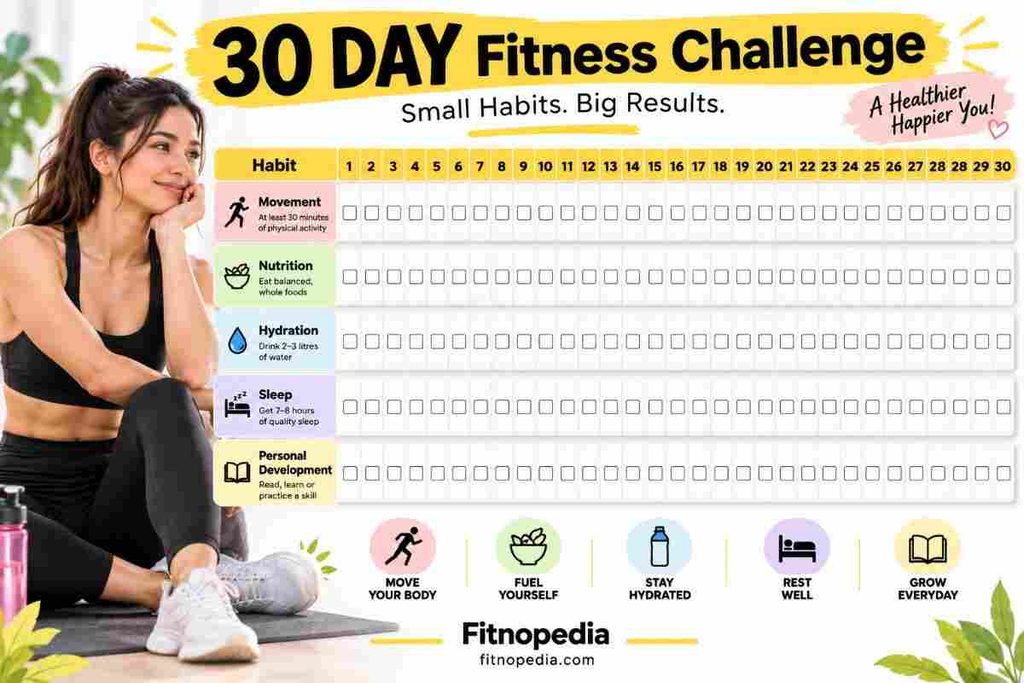
For a digital option, use Google Sheets or a calendar app to record completed habits and review weekly patterns.
What Should You Track Besides Completed Habits?
Habit completion is useful, but it does not tell the whole story. Consider monitoring other indicators of how your routine affects your daily life.
For example, you can record:
- Energy levels: Notice whether you feel more or less energetic throughout the day.
- Sleep quality: Track whether your bedtime routine helps you rest consistently.
- Mood: Record general changes in how you feel.
- Physical activity: Note your walking sessions, workouts, or mobility exercises.
- Consistency: Identify which habits you complete most regularly.
- Obstacles: Write down the situations that make your habits difficult to follow.
These observations can help you identify practical adjustments. For example, if you repeatedly miss workouts because you have limited time in the evening, a shorter morning session may be more suitable.
What Should You Do If You Miss a Day During the Challenge?
Missing a day during the 30 Realistic Challenge does not mean you have failed. Simply resume your routine and identify what made the habit difficult.
For example, if work prevents you from exercising, take a short walk the following day rather than doubling your workout to compensate.
Similarly, if you forget to track your progress, update your checklist when convenient and continue. Avoid turning one missed task into several missed days.
You can also make difficult habits easier by reducing their demands. If a 30-minute workout is unrealistic on a busy day, try a shorter session or gentle movement instead.
The important principle is that consistency means returning to useful habits, not performing perfectly every day.
What Should You Do After Completing the 30 Realistic Challenge?
After completing the 30 Realistic Challenge, review your progress, keep the habits that worked, and adjust those that felt difficult to maintain. The end of the challenge should mark the beginning of a more sustainable routine rather than an automatic return to your old habits.
Review Your Progress
First, compare your routine on day 30 with your starting point. Consider whether you move more regularly, sleep more consistently, eat more balanced meals, or manage your time more effectively.
You do not need dramatic changes to recognize progress. Learning which habits fit your lifestyle is itself useful information.
Choose Three to Five Habits to Continue
Next, select the habits that provide the most value without creating unnecessary pressure.
For example, you might retain daily walking, balanced meals, a regular bedtime, and weekly planning. If a habit consistently feels impractical, modify it instead of forcing yourself to follow an unsuitable routine.
Create Your Next 30-Day Plan
Finally, create another 30-day plan with gradual improvements. You could increase your walking duration, introduce a new workout, improve your meal planning, or dedicate more time to a personal goal.
If you are exploring fitness challenges, choose a program that supports your current abilities and long-term goals.
The purpose is to build on what you have learned rather than constantly starting over with an entirely new set of rules.
Conclusion
The 30 Realistic Challenge offers a practical way to improve your daily routine through manageable habits, flexible goals, and simple progress tracking. By focusing on movement, balanced nutrition, hydration, sleep, and personal growth, you can work toward a healthier lifestyle without committing to extreme rules.
Start with a few achievable actions, follow the 30-day plan at your own pace, and review your progress each week. Adjust your habits when necessary and remember that missing a day does not erase the effort you have already made.
Your progress does not depend on completing every day perfectly. It depends on learning what works for you and continuing to show up. Start your 30 Realistic Challenge today and build a routine that fits your real life.
FAQs
What is the 30 Realistic Challenge?
A 30-day plan to build healthy, manageable daily habits.
What are the rules of the challenge?
Choose three to five habits and track your daily progress.
Is the challenge suitable for beginners?
Yes, it is flexible and beginner-friendly.
Can I lose weight during the challenge?
It may support weight management through healthy eating and regular activity.
Do I need to exercise every day?
No, include suitable activities and rest days.
What should I eat during the challenge?
Eat balanced meals with fruits, vegetables, protein, and other nutritious foods.
What happens if I miss a day?
Resume your routine the next day without guilt.
Is it better than 75 Hard?
It offers more flexibility and fewer rigid rules.
How do I track my progress?
Use a checklist, calendar, spreadsheet, or habit-tracking app.
What should I do after day 30?
Continue the habits that work best for you.
Can I customize the challenge?
Yes, adjust the habits to fit your goals and schedule.
Does the challenge guarantee permanent results?
No, lasting progress depends on maintaining your habits.