
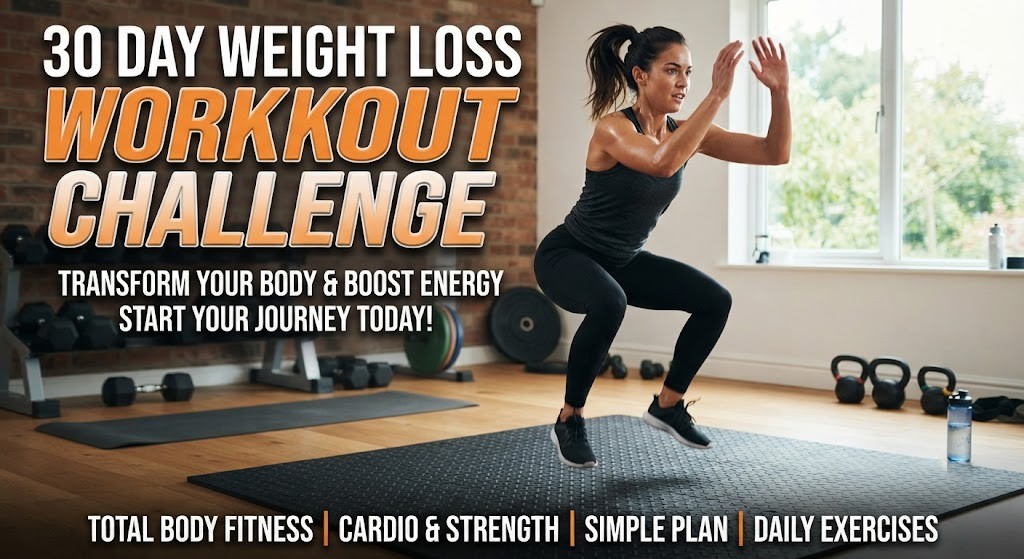
Starting a workout routine is easy. Staying consistent with it for an entire month is where many people struggle.
If you want to lose weight, improve your fitness, and build a sustainable exercise habit, having a clear daily plan can make the process much easier. Instead of wondering what workout to do each day, a 30 Day Weight Loss Workout Challenge gives you a structured schedule that combines cardio, strength training, core exercises, active recovery, and rest.
In this guide, you’ll find a practical 30-day workout calendar, beginner-friendly modifications, equipment-free exercise options, nutrition guidance, realistic weight-loss expectations, and simple ways to track your progress. The goal isn’t to promise a specific amount of weight loss in 30 days—it is to help you build consistent habits that can support long-term fitness and weight management.
What Is a 30 Day Weight Loss Workout Challenge?
A 30 Day Weight Loss Workout Challenge is a structured 30-day exercise program that combines planned workouts, recovery, and progressive activity to support weight management and fitness. Rather than promising a fixed amount of weight loss, the challenge focuses on creating a manageable exercise routine that increases physical activity and encourages consistency.
A well-designed challenge also avoids doing the same workout every day. Instead, it uses different types of movement to train the body while allowing time for recovery.
For example, your 30-day routine can include:
- Brisk walking
- Squats
- Lunges
- Push-ups
- Glute bridges
- Core exercises
- Full-body circuits
- Cardio intervals
- Mobility work
- Active recovery walks
- Complete rest days
This variety can make the challenge more engaging while helping you develop different aspects of fitness.
Full Body Workout for Beginners
Can a 30 Day Workout Challenge Help You Lose Weight?
Yes, a 30 Day Workout Challenge can support weight loss by increasing physical activity and helping create an energy deficit when combined with appropriate nutrition.
Weight loss generally occurs when average energy expenditure exceeds energy intake over time. Exercise can contribute to that energy expenditure, but it works best as part of a broader lifestyle approach that includes sustainable nutrition and healthy habits.
Regular exercise can also provide benefits beyond changes on the scale, including improved cardiovascular fitness, muscular strength, movement capacity, and exercise consistency.
Adults are generally advised to complete at least 150 minutes of moderate-intensity aerobic activity per week plus muscle-strengthening activity on at least 2 days.
Source: [CDC, 2025]
The World Health Organization recommends 150–300 minutes of moderate aerobic activity weekly for adults, along with muscle-strengthening activities involving major muscle groups on at least 2 days.
Source: [WHO, 2026]
These recommendations provide useful context for designing a 30-day routine. You don’t necessarily need to perform intense workouts every day. Instead, combining moderate cardio, strength training, recovery, and rest can create a more sustainable approach.
cardio workouts for weight loss
How Does the 30-Day Weight Loss Workout Challenge Work?
A 30-day weight loss workout challenge works by gradually increasing activity while alternating training stress with recovery. This structure can make the program easier to follow than performing hard workouts every day.
The challenge starts with manageable sessions and gradually increases workout duration or training demand throughout the month. Rest and active recovery days are included to give your body time to recover.
How Long Should You Work Out Each Day for Weight Loss?
A 20–45 minute workout is a practical target for many beginners, although shorter sessions can still contribute to your overall activity.
For example, someone new to exercise could begin with 20 minutes of brisk walking and gradually progress toward 30–40 minute sessions. The important factor is not simply how long you exercise on one particular day, but whether you can maintain your routine consistently.
A sustainable workout that you complete regularly is more useful than an exhausting routine that causes you to quit after one week.
How Should You Combine Cardio and Strength Training?
A balanced 30-day weight loss workout plan typically combines cardio, strength training, core exercises, active recovery, and rest days rather than relying on daily high-intensity exercise.
Cardio activities can include:
- Brisk walking
- Cycling
- Jogging
- Low-impact cardio
- Walking intervals
- Cardio circuits
Strength workouts can include bodyweight exercises such as:
- Squats
- Lunges
- Push-ups
- Glute bridges
- Planks
Combining these forms of exercise gives the challenge more variety while addressing different components of fitness.
strength training for beginners
What Is the Best 30-Day Workout Plan for Weight Loss?
The best 30-day workout plan for weight loss combines progressive full-body training, cardio, recovery, and rest in a simple daily schedule.
The following 30 Day Weight Loss Workout Challenge provides a structured starting point. You can adjust exercise intensity, repetitions, rest periods, and movement variations based on your current fitness level.
30 Day Weight Loss Workout Challenge Calendar
| Day | Workout | Time |
|---|---|---|
| 1 | Brisk walk + mobility | 25 min |
| 2 | Squats, glute bridges, push-ups, plank | 25 min |
| 3 | Brisk walking intervals | 30 min |
| 4 | Lower-body workout + core | 30 min |
| 5 | Full-body circuit | 30 min |
| 6 | Easy walk + stretching | 25 min |
| 7 | Rest | — |
| 8 | Brisk walk | 30 min |
| 9 | Full-body strength | 30 min |
| 10 | Cardio intervals | 25 min |
| 11 | Lower body + core | 30 min |
| 12 | Full-body circuit | 35 min |
| 13 | Active recovery walk | 25 min |
| 14 | Rest | — |
| 15 | Brisk walk + intervals | 35 min |
| 16 | Strength training | 35 min |
| 17 | Cardio workout | 30 min |
| 18 | Legs + core | 35 min |
| 19 | Full-body circuit | 35 min |
| 20 | Recovery walk + mobility | 30 min |
| 21 | Rest | — |
| 22 | Brisk walk intervals | 35 min |
| 23 | Full-body strength | 35 min |
| 24 | Low-impact cardio | 30 min |
| 25 | Lower body + core | 35 min |
| 26 | Full-body circuit | 40 min |
| 27 | Easy walking + stretching | 30 min |
| 28 | Rest | — |
| 29 | Full-body challenge | 40 min |
| 30 | Brisk walk + favorite exercises | 40 min |
The first week establishes the habit, while the following weeks gradually increase the duration and training demand. Rest days are intentionally included rather than treated as missed workouts.
What Exercises Should You Do During a 30-Day Weight Loss Challenge?
The best exercises for a 30-day weight loss challenge are movements you can perform consistently while safely increasing your workload.
A combination of cardiovascular and resistance-based exercises can keep the routine varied and practical. You don’t need complicated movements to create an effective home workout.
Useful exercises include:
- Brisk walking
- Squats
- Reverse or regular lunges
- Push-ups
- Glute bridges
- Step-ups
- Jumping jacks
- Mountain climbers
- Planks
Which Exercises Burn Calories and Build Strength?
Compound exercises train multiple muscle groups at once and can make short workouts more efficient.
For example, a simple bodyweight circuit could combine:
- Squats
- Reverse lunges
- Push-ups
- Mountain climbers
- Planks
You can repeat the movements according to your fitness level while adjusting rest periods as needed.
However, exercise selection should always match your current ability. If high-impact movements are uncomfortable, choose a lower-impact variation instead.
For example, replace jumping jacks with step jacks if impact bothers your knees.
The objective isn’t to perform the hardest possible exercise. It is to choose movements that allow you to train consistently with good control and form.
Can Beginners Do a 30 Day Weight Loss Workout Challenge at Home?
Yes. A beginner can complete a 30 Day Weight Loss Workout Challenge at home by using bodyweight exercises such as squats, lunges, push-ups, glute bridges, planks, and brisk walking.
No gym membership is required for the basic version of this challenge. Your living room, backyard, neighborhood, or another suitable space can provide enough room for many of the exercises.
Beginners should focus on controlled movement rather than speed or the number of repetitions completed.
For example, performing 8–10 slow, controlled squats is preferable to rushing through 20 repetitions with poor form.
How Can Beginners Modify the Challenge?
Beginners can modify workouts by reducing repetitions, shortening sessions, increasing rest periods, or choosing low-impact movements.
If the planned workout feels too difficult, you can make it easier by:
- Reducing the number of repetitions
- Performing fewer rounds
- Taking longer rest periods
- Shortening the workout
- Replacing jumping exercises with low-impact alternatives
- Walking instead of jogging
- Using easier exercise variations
For example, someone starting from a low fitness level can perform 15–20 minutes of walking instead of completing the full planned session.
As fitness improves, gradually increase workout duration, repetitions, resistance, or intensity rather than making every change at once.
walking workout for weight loss
Can You Complete a 30 Day Weight Loss Workout Challenge Without Equipment?
Absolutely. A 30 Day Weight Loss Workout Challenge can be completed without equipment because bodyweight movements can provide effective resistance training.
Exercises such as push-ups, squats, lunges, glute bridges, and planks can all be performed at home with little or no equipment.
If you want additional variety or resistance, optional equipment can be added to your workouts.
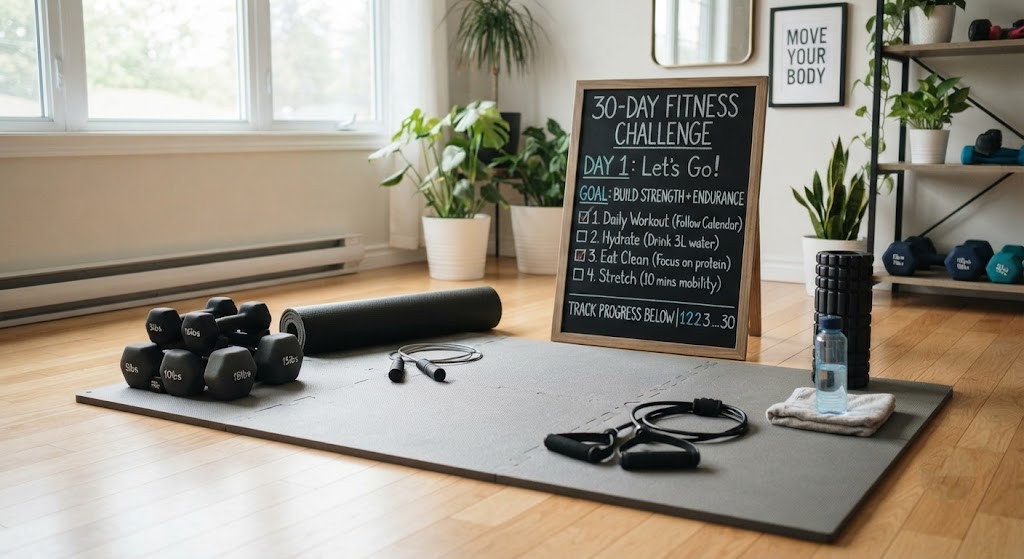
Optional Equipment for a 30-Day Challenge
You can consider:
- Resistance bands
- Adjustable dumbbells
- Yoga or exercise mat
- Jump rope
- Walking pad
- Adjustable ankle weights
Equipment isn’t required to complete the challenge. Instead, these tools can provide additional ways to modify or progress your workouts.
What Should You Eat During a 30 Day Weight Loss Workout Challenge?
Exercise is only one part of a weight-management strategy. A weight-loss diet should prioritize sustainable eating habits rather than extreme calorie restriction.
A balanced eating pattern can include:
- Protein-rich foods
- Vegetables
- Fruits
- Whole grains
- Healthy fats
- Appropriate portions
The goal is to develop eating habits that you can maintain beyond the 30-day challenge rather than relying on highly restrictive short-term dieting.
The CDC notes that healthy weight management includes healthy eating, regular physical activity, adequate sleep, and stress management, and that gradual weight loss of about 1–2 pounds per week is more likely to be maintained than faster loss.
Source: [CDC, 2025]
Because individual calorie needs differ, there is no single calorie target that works for everyone completing a 30-day workout challenge.
How Much Weight Can You Realistically Lose in 30 Days?
There is no universal amount of weight that everyone should expect to lose during a 30-day workout challenge.
Your results can vary based on several individual factors, including:
- Calorie intake
- Physical activity
- Starting weight
- Genetics
- Sleep
- Stress
- Medications
- Other individual factors
The scale can also fluctuate from day to day, so short-term changes don’t necessarily represent changes in body fat.
The CDC describes gradual weight loss of approximately 1–2 pounds per week as a commonly recommended sustainable pace.
Source: [CDC, 2025]
Rather than judging the entire challenge by a single number on the scale, consider improvements in endurance, strength, exercise consistency, energy, and daily movement.
A successful 30-day challenge can mean becoming more active and establishing habits that you can continue after Day 30.
How Should You Track Progress During the 30-Day Challenge?
Progress during a 30-day challenge should be measured using several indicators rather than body weight alone.
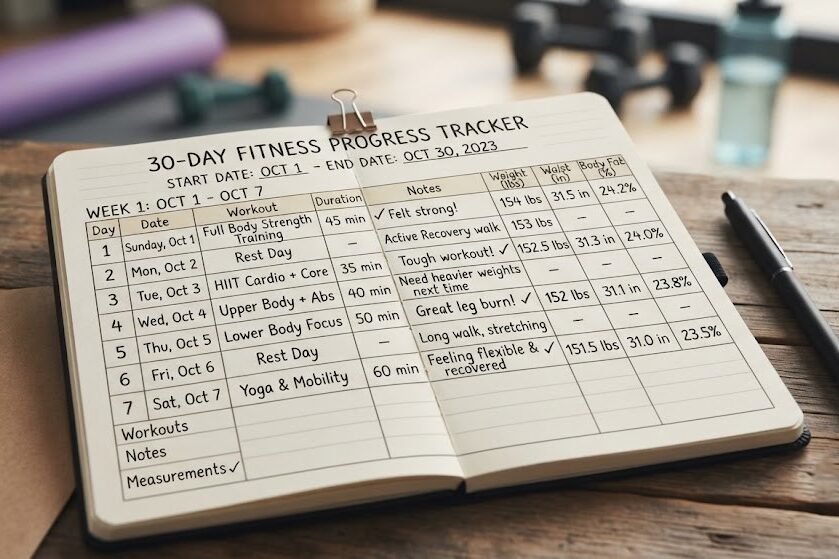
A simple progress tracker can help you see improvements that may not immediately appear on the scale.
You can record:
- Workout completion
- Walking or activity time
- Strength and repetitions
- Waist or body measurements
- Energy and recovery
- Body weight trends
- Exercise consistency
For example, suppose you can comfortably complete 15 squats on Day 1 but perform 25 controlled squats on Day 30. Your fitness has improved even if your scale weight has changed very little.
30-Day Workout Progress Checklist
Use this simple checklist throughout the challenge:
- Complete the planned workout
- Record workout duration
- Track walking or activity time
- Record repetitions when useful
- Monitor how your body feels
- Record relevant measurements
- Track body weight trends if desired
- Note improvements in endurance or strength
- Prioritize recovery
The more consistently you track your habits, the easier it becomes to identify what is working for you.
What Tools Can Help With a 30 Day Weight Loss Workout Challenge?
Simple tracking tools can make a 30-day workout challenge easier to organize and maintain.
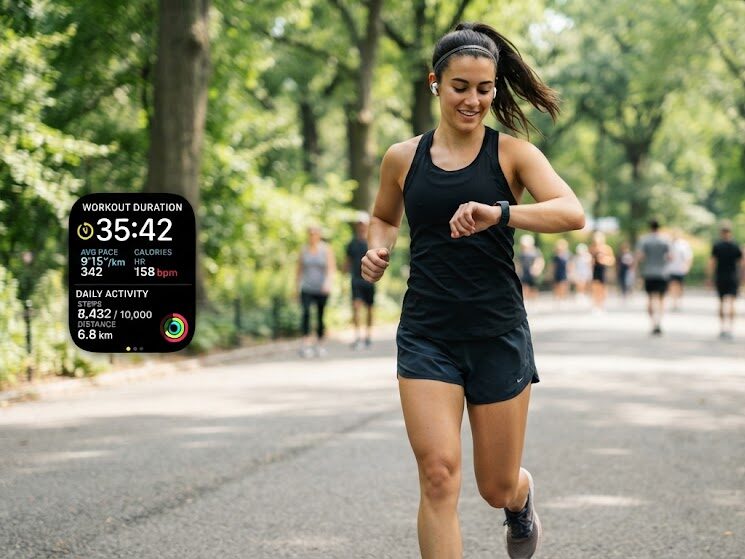
You don’t need an expensive fitness setup. A phone activity tracker, workout calendar, stopwatch, or basic notes app can help you monitor your routine.
For example, you could use a phone to track daily steps and walking time, a stopwatch to manage workout intervals, and a calendar to mark completed sessions.
A walking pad can make indoor cardio more convenient, while resistance bands can provide additional resistance during home strength workouts.
Why Are Recovery and Rest Days Important?
Rest is an important part of a structured workout challenge. The purpose of including recovery days is to avoid treating every day as a high-intensity training session.
Active recovery can include easy walking, stretching, and mobility work. Complete rest days can provide a break from structured exercise.
In this 30-day schedule, rest days appear on Days 7, 14, 21, and 28. Recovery-focused days appear throughout the month as well.
This structure allows you to continue moving while giving your body opportunities to recover between more demanding workouts.
How Can You Stay Consistent for 30 Days?
Consistency is often the biggest challenge in a month-long workout program. A perfect workout isn’t necessary every day; building a routine you can realistically maintain is more important.
Make the Challenge Easier to Follow
Try these practical strategies:
- Schedule your workouts. Choose a regular time when possible.
- Start at your current fitness level. Don’t copy an advanced workout simply because it looks challenging.
- Keep workouts simple. Walking and bodyweight exercises can be enough to get started.
- Modify difficult movements. Low-impact alternatives can help you stay active.
- Track completed sessions. Checking off workouts can reinforce consistency.
- Prioritize recovery. Rest days are part of the plan, not failures.
- Focus on the full month. One missed workout doesn’t mean the challenge is over.
If you miss a day, simply return to the schedule when you can rather than trying to compensate with an excessively difficult workout.
What Should You Do After Completing a 30 Day Weight Loss Workout Challenge?
The most sustainable way to continue after a 30-day challenge is to transition from a fixed challenge into a consistent weekly routine that includes strength training, cardiovascular activity, recovery, and gradual progression.
The CDC recommends at least 150 minutes of moderate activity each week and muscle-strengthening activity on 2 days.
Source: [CDC, 2025]
Once you’ve completed Day 30, keep the exercises you enjoy and gradually increase duration, resistance, repetitions, or intensity.
For example, you might continue with:
- Three strength sessions per week
- Three cardio sessions per week
- One recovery day
Your exact routine can vary depending on your schedule, fitness level, preferences, and goals.
The key is to avoid treating Day 30 as the end of your fitness journey. Instead, use the challenge as a foundation for your next phase of training.
Conclusion: Stay Consistent Beyond 30 Days
A 30 Day Weight Loss Workout Challenge is a starting point for building sustainable fitness habits, not a deadline for reaching a specific body weight.
A balanced routine combines cardio, strength training, core work, active recovery, rest, and supportive nutrition. By gradually increasing activity and choosing exercises that match your fitness level, you can create a routine that is easier to maintain.
Remember that weight loss varies from person to person. Nutrition, activity, sleep, stress, starting weight, genetics, medications, and other individual factors can all influence results.
Ultimately, consistency creates the foundation for long-term progress. Start at your current fitness level, modify exercises when necessary, track improvements beyond the scale, and carry the habits you build into the next 30 days.
Your goal is not simply to finish Day 30; it is to make regular movement part of your lifestyle.
FAQs
What is a 30 Day Weight Loss Workout Challenge?
A 30-day exercise plan combines cardio, strength training, recovery, and rest to support weight management.
Can a 30 Day Workout Challenge help you lose weight?
Yes, regular exercise can support weight loss when combined with balanced nutrition and consistent healthy habits.
Can I lose 10 kg in 30 days?
For most people, 10 kg in 30 days is not a realistic or recommended goal. Weight loss varies by individual.
What’s a good 30 day challenge to lose weight?
A balanced plan with cardio, strength training, core exercises, active recovery, and rest days is a good option.
How to lose 5kg in 30 days?
Focus on regular exercise, balanced nutrition, adequate sleep, and sustainable healthy habits to support gradual weight loss.
How much weight can you lose in a 30 day challenge?
There is no fixed amount of weight you can lose in 30 days. Results depend on individual factors and lifestyle habits.
How long should I work out each day for weight loss?
A 20–45 minute workout is a practical target for many beginners. Shorter workouts can also support overall activity.
Can beginners do a 30 Day Weight Loss Workout Challenge?
Yes, beginners can reduce repetitions, shorten workouts, and choose low-impact exercises when needed.
Can I do a 30 Day Weight Loss Workout Challenge at home without equipment?
Yes, exercises such as squats, lunges, push-ups, glute bridges, planks, and walking can be done with little or no equipment.
What exercises should I do during a 30 Day Weight Loss Workout Challenge?
Exercises such as brisk walking, squats, lunges, push-ups, glute bridges, planks, and cardio intervals are useful options.
Do I need to exercise every day for 30 days?
No, a balanced challenge should include active recovery and complete rest days.
What should I eat during a 30 Day Weight Loss Workout Challenge?
Choose balanced meals with protein, vegetables, fruits, whole grains, healthy fats, and appropriate portions.
How should I track my progress during the 30-day challenge?
Track workouts, activity time, strength, measurements, energy levels, and body-weight trends.
What should I do after completing the 30-day challenge?
Continue with regular cardio, strength training, recovery, and gradual progression to maintain your fitness routine.