
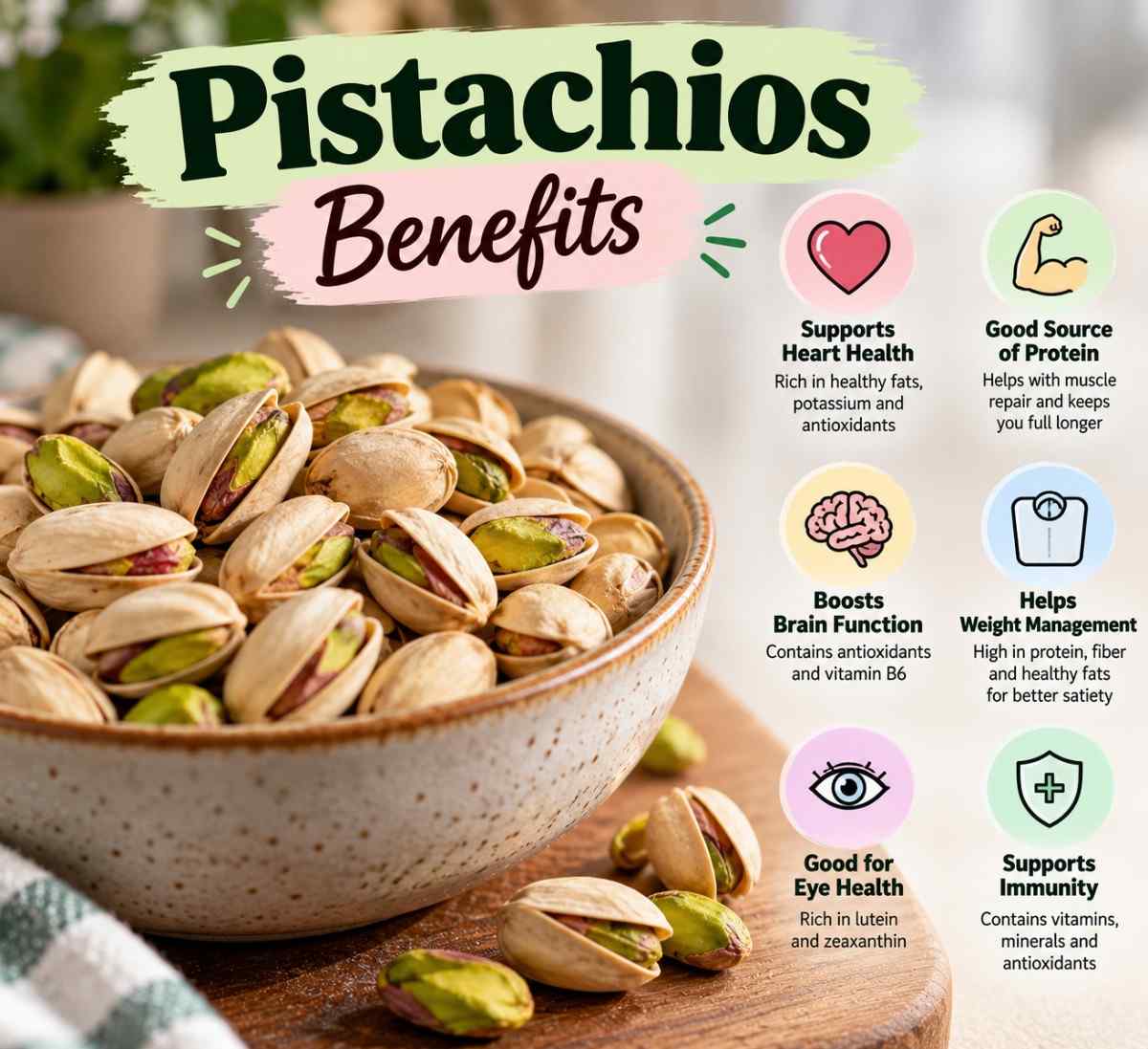
Pistachios are nutrient-rich nuts that provide plant-based protein, fiber, healthy fats, vitamins, and minerals. From supporting heart health to helping you feel satisfied between meals, pistachios can be a valuable addition to a balanced diet when eaten in appropriate portions.
What Are Pistachios?
Pistachios are edible seeds from the pistachio tree (Pistacia vera), known for their green kernels, mildly sweet flavor, and impressive nutritional profile. They are commonly eaten raw or roasted and can be added to snacks, salads, yogurt, and other meals.
Pistachios contain several nutrients that contribute to normal body functions:
- Protein: Supports muscle maintenance and tissue repair.
- Dietary fiber: Helps maintain digestive regularity.
- Unsaturated fats: Provide energy and can support cardiovascular health when replacing less healthy fats.
- Vitamin B6: Supports protein metabolism, nervous system function, and red blood cell formation.
- Copper: Helps with energy production and iron metabolism.
- Potassium: Supports normal muscle function and fluid balance.
- Antioxidants: Include lutein, zeaxanthin, and polyphenols that help protect cells from oxidative damage.
Why Do Pistachios Matter for Health?
Pistachios matter because they combine protein, fiber, unsaturated fats, and essential micronutrients in a convenient food. Eating them as part of a varied diet may help improve overall nutrient intake and provide a satisfying alternative to less nutritious snacks.
Their nutritional profile makes pistachios useful for people who want to support heart health, maintain a balanced diet, or add plant-based foods to their meals.
However, pistachios are calorie-dense, and their benefits depend on portion size, overall eating habits, and individual nutritional needs.
balanced diet plan for better health
10 Health Benefits of Pistachios
The main pistachios benefits come from their combination of healthy fats, fiber, protein, antioxidants, and vitamins. Research suggests that pistachios may support several aspects of health, although the strength of evidence differs between benefits.
1. May Support Heart Health
Pistachios may support heart health because they contain unsaturated fats, fiber, and plant compounds that can contribute to a heart-friendly eating pattern.
Research suggests that including pistachios in the diet may improve certain cardiovascular risk factors, including some cholesterol measurements. Replacing snacks rich in saturated fat with pistachios may be more beneficial than simply adding them to your existing diet.
For a heart-conscious choice, prefer unsalted pistachios and combine them with vegetables, fruits, legumes, and whole grains.
2. Provide Plant-Based Protein
Pistachios provide plant-based protein that helps the body maintain muscles and repair tissues. They can be particularly useful for vegetarians who want to increase the variety of protein-containing foods in their diet.
A 28-gram serving provides approximately 6 grams of protein. Although this contributes to daily protein needs, pistachios are best combined with other protein-rich foods such as lentils, beans, milk, yogurt, and soy products.
People who exercise regularly can include pistachios in their diet, but a small handful alone may not provide enough protein for a complete recovery meal.
daily protein intake calculator
3. May Help With Weight Management
Pistachios may help with weight management because their protein, fiber, and fat content can make a snack more satisfying. Choosing a measured serving instead of a less nutritious snack may help you manage your overall calorie intake.
However, pistachios contain substantial calories relative to their serving size. Eating large quantities in addition to your usual meals can make it harder to maintain a calorie deficit.
To include pistachios in a weight-management plan:
- Measure your serving instead of eating directly from a large packet.
- Choose unsalted varieties without added sugar.
- Pair them with fruit for a balanced snack.
- Account for their calories if you track your daily food intake.
calorie deficit diet plan for weight loss
4. Support Digestive Health
Pistachios contain dietary fiber, which helps support normal bowel movements and digestive function. Fiber also contributes to a healthy gut environment by providing nourishment for certain beneficial gut microorganisms.
If your current diet contains little fiber, increase your intake gradually to reduce the likelihood of bloating or gas. Drinking enough fluids and eating a variety of plant foods can also help support digestive health.
Pistachios work well alongside fiber-rich foods such as vegetables, fruit, beans, and whole grains.
high-fiber foods for better digestion
5. Provide Antioxidants
Pistachios contain antioxidant compounds, including polyphenols and carotenoids, that help protect cells against oxidative damage.
Oxidative stress occurs when the production of potentially harmful molecules exceeds the body’s ability to neutralize them. Antioxidants from foods contribute to the body’s broader protective systems.
Pistachios can contribute to antioxidant intake, but they do not guarantee protection against a particular disease. A varied diet containing colorful fruits, vegetables, and other plant foods is also important.
6. Contribute to Eye Health
Pistachios contain lutein and zeaxanthin, carotenoids found in the retina that help protect eye tissues against oxidative stress.
These compounds are also present in leafy green vegetables such as spinach and kale. Eating a variety of these foods can help support a balanced diet that includes nutrients associated with eye health.
Pistachios are not a treatment for eye disease and should not replace recommended eye examinations or medical care.
7. May Help Support Blood Sugar Management
Pistachios contain protein, fiber, and unsaturated fats, making them a useful alternative to snacks that consist mostly of refined carbohydrates.
Some research has examined whether eating pistachios alongside carbohydrate-rich meals can influence blood glucose responses. Results are promising in certain studies, but outcomes vary according to the study design, diet, and individual characteristics.
People with diabetes can often include unsalted pistachios in a balanced eating plan, while considering portion size and their individual nutritional needs.
healthy snacks for balanced blood suga
8. Provide Vitamin B6
Pistachios are a useful source of vitamin B6, which plays a role in protein metabolism, nervous system function, immune function, and the formation of hemoglobin.
Getting sufficient vitamin B6 through a varied diet helps support normal body functions. However, eating additional pistachios does not necessarily improve energy or brain function if you already obtain enough of this vitamin.
9. May Help You Feel Fuller Between Meals
Pistachios can make a satisfying snack because they contain protein, fiber, and fat. These nutrients may help you feel fuller than you would after eating a snack made mainly from refined carbohydrates.
Choosing in-shell pistachios may also slow down eating because removing the shells takes additional time.
Individual responses to food vary, so consider your appetite, activity level, and other meals when deciding how much to eat.
10. Help Improve Overall Nutrient Intake
Pistachios provide several nutrients in a relatively small serving, making them a practical addition to a balanced diet.
You can sprinkle them over salads, mix them into yogurt, or add chopped pistachios to cooked vegetables. These simple additions can increase the variety of foods in your diet without requiring complicated preparation.
Pistachios are most useful when they complement other nutritious foods rather than replace a varied diet.
Pistachios Nutrition Facts
Pistachios Benefits provide approximately 160 calories and 6 grams of protein per 28-gram serving of edible kernels. Their exact nutritional values vary slightly according to the variety and preparation method.
| Nutrient | Approximate amount per 28 g |
|---|---|
| Calories | 160 kcal |
| Protein | 6 g |
| Total fat | 13 g |
| Carbohydrates | 8 g |
| Dietary fiber | 3 g |
| Potassium | 285–290 mg |
| Vitamin B6 | 0.3 mg |
| Copper | 0.4 mg |
Values are approximate and based on typical unsalted pistachio kernels. Actual values may vary.
Pistachios are particularly useful for adding plant protein, fiber, copper, and vitamin B6 to your meals. They are not a complete source of every essential nutrient, so eating a variety of foods remains important.
How Many Pistachios Should You Eat Per Day?
Around 28–30 grams of shelled pistachios per day is a practical starting serving for many healthy adults, although the ideal amount depends on calorie requirements and the rest of your diet.
A 28-gram serving contains approximately 49 kernels and 160 calories. You can eat a smaller serving if it better fits your appetite or daily calorie needs.
What Is the Best Time to Eat Pistachios?
There is no single best time to eat pistachios. You can enjoy them whenever they fit comfortably into your daily routine.
- Morning: Add chopped pistachios to yogurt or breakfast cereal.
- Between meals: Eat a measured portion as a convenient snack.
- Before exercise: Combine a small serving with fruit if you want a light snack and have enough time to digest it.
- After exercise: Pair pistachios with milk or yogurt for a more substantial recovery snack.
- Evening: Enjoy a small portion if it fits your calorie needs.
Are Pistachios Good for Weight Loss and Muscle Gain?
Pistachios Benefits can fit into both weight-loss and muscle-building diets, but their usefulness depends on your calorie intake, protein requirements, and activity level.
Are Pistachios Good for Weight Loss?
Yes, pistachios can be part of a weight-loss diet because their protein, fiber, and fat content can help make snacks satisfying. The most practical approach is to use them instead of other calorie-dense snacks rather than adding extra calories to your normal diet.
For example, a measured portion of pistachios can replace a highly processed snack. Your overall calorie intake, exercise habits, sleep, and eating patterns will still influence your results.
Are Pistachios Good for Muscle Gain?
Pistachios can contribute to a muscle-building diet by providing calories, plant protein, and minerals. However, they contain less protein per serving than many concentrated protein foods.
If your goal is muscle growth, combine pistachios with foods such as milk, yogurt, soy products, lentils, or beans. Consistent resistance training, sufficient total protein, and adequate recovery are also important.
high-protein foods for muscle growth
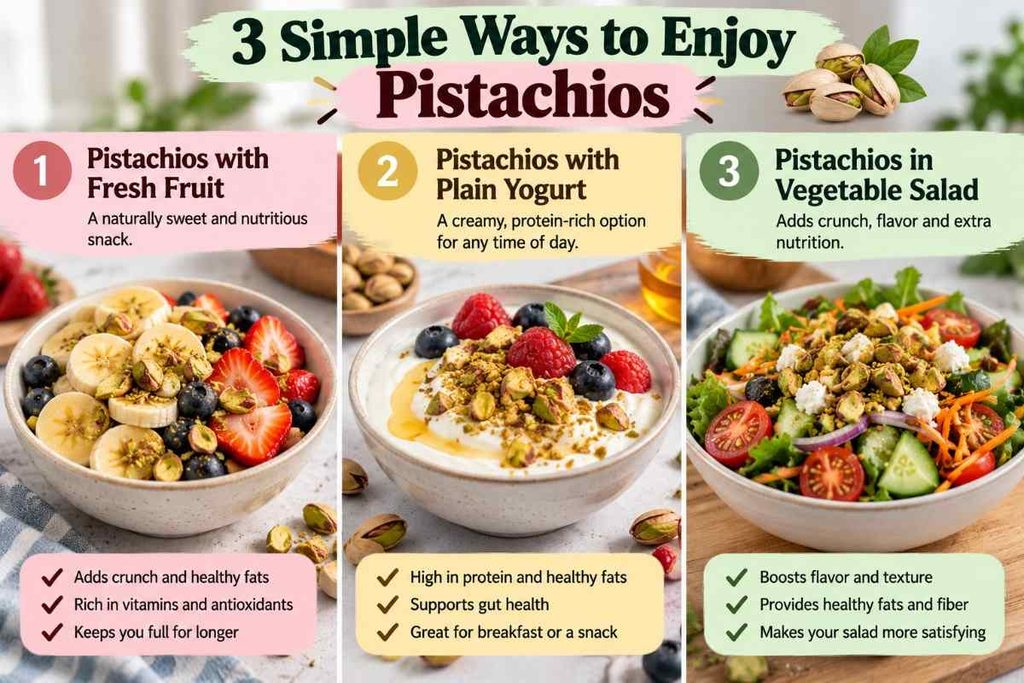
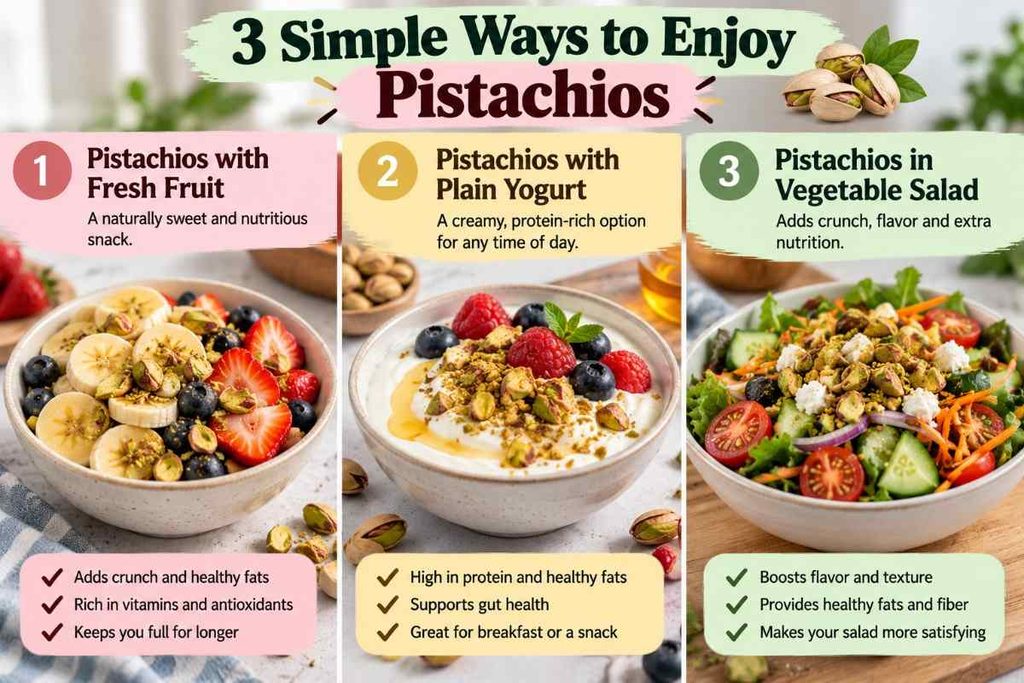
Easy Ways to Add Pistachios to Your Diet
Pistachios are easy to include in everyday meals without making major changes to your diet. Plain or unsalted varieties are generally a practical choice, particularly if you need to limit sodium.
Some simple options include:
- Pistachios with fruit: Pair a small handful with an apple, banana, or orange.
- Pistachio yogurt bowl: Add chopped pistachios and berries to plain yogurt.
- Salad topping: Sprinkle pistachios over a vegetable salad for extra crunch.
- Breakfast addition: Mix chopped pistachios into oatmeal or whole-grain cereal.
- Homemade trail mix: Combine pistachios with unsweetened dried fruit and other nuts in measured portions.
- Cooked vegetable topping: Add chopped pistachios to roasted vegetables for texture and flavor.
healthy vegetarian protein sources
Are There Any Side Effects of Eating Pistachios?
Pistachios are generally safe for people who tolerate them, but certain precautions are important.
- Tree-nut allergy: Pistachios can cause serious allergic reactions in people with a pistachio allergy. Avoid them if you have a known allergy.
- Excess calorie intake: Large portions can increase daily calorie intake and interfere with weight-management goals.
- Digestive discomfort: Eating a large amount at once may cause bloating or gas, particularly if your usual diet is low in fiber.
- Added sodium: Salted pistachios can contain substantial sodium. Choose unsalted options more often if you need to limit sodium.
- Medical dietary restrictions: People with kidney disease or other conditions requiring specific dietary restrictions should ask their healthcare professional whether pistachios are appropriate for them.
Pistachios should complement a balanced diet rather than replace medical treatment or personalized nutrition advice.
Conclusion
Pistachios benefits include providing plant-based protein, dietary fiber, unsaturated fats, antioxidants, and essential micronutrients. They may support heart health, contribute to a satisfying diet, and help improve overall nutrient intake when eaten in moderation.
For many healthy adults, a small handful of unsalted pistachios is a convenient starting point. Add them to fruit, yogurt, or salads, and enjoy them as part of a varied, balanced diet.
FAQs
What are the main benefits of pistachios?
Pistachios provide protein, fiber, unsaturated fats, vitamin B6, copper, and antioxidant compounds that contribute to a balanced diet.
How many pistachios should I eat daily?
Around 28–30 grams of shelled pistachios is a practical serving for many adults, but your individual needs may vary.
Are pistachios good for your heart?
Pistachios can support a heart-healthy eating pattern, particularly when they replace snacks high in saturated fat. Research suggests they may improve certain cardiovascular risk factors.
Do pistachios help with weight loss?
Pistachios can fit into a weight-loss diet because their protein and fiber may help with fullness, but portion control and total calorie intake remain important.
Are pistachios high in protein?
Pistachios provide approximately 6 grams of protein per 28-gram serving. They are a useful plant protein source but should be combined with other protein-rich foods when needed.
Is it better to eat raw or roasted pistachios?
Both raw and dry-roasted pistachios can be nutritious. Unsalted varieties are a good everyday choice, and checking labels can help you avoid excess sodium or added ingredients.
Can I eat pistachios at night?
Yes, you can eat pistachios at night if they suit your appetite and calorie needs. There is no established requirement to eat them at a particular time.
Who should avoid pistachios?
People with a pistachio allergy should avoid them. Anyone with medical dietary restrictions should consult a qualified healthcare professional about whether pistachios fit their eating plan.
Sources
- U.S. Department of Agriculture. FoodData Central.
- Baghery et al. (2022). The Effect of Pistachio Supplementation on Metabolic Syndrome and Its Components in Adults: A Systematic Review and Meta-Analysis of Randomized Controlled Trials.
- Sari et al. (2020). Pistachios and Cardiometabolic Risk Factors: A Systematic Review and Meta-Analysis of Randomized Controlled Clinical Trials.
- Hernández-Alonso et al. (2016). Pistachio Nuts: Composition and Potential Health Benefits.
Disclaimer: This article is for informational and educational purposes only and is not a substitute for personalized medical advice. Consult a qualified healthcare professional before making significant changes to your diet, exercise routine, or supplement use.