
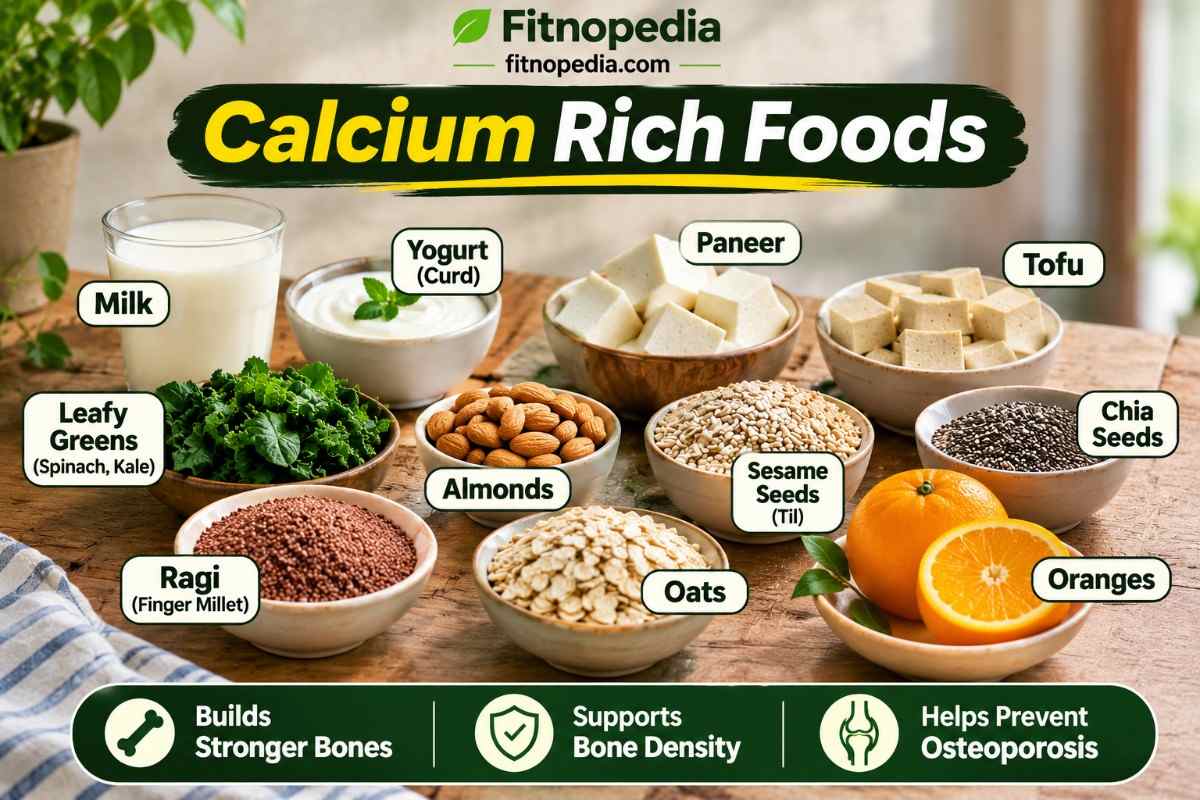
Calcium is an essential mineral that helps maintain strong bones, healthy teeth, normal muscle function, and proper nerve signalling. Your body cannot produce calcium, so you need to obtain it through food or supplements.
Fortunately, there are many calcium-rich foods to choose from, whether you follow a vegetarian, vegan, or mixed diet. Milk, yogurt, cheese, ragi, sesame seeds, calcium-set tofu, leafy greens, and fortified beverages can all contribute to your daily calcium intake.
Some foods provide considerably more calcium per serving than others. Understanding their serving sizes and calcium content can help you make better dietary choices.
This guide covers 20 calcium-rich foods, their approximate calcium amounts, Indian food options, vegetarian sources, and practical ways to include more calcium in your daily meals.

What Are Calcium-Rich Foods?
Calcium-rich foods are foods that provide calcium, a mineral needed for healthy bones, teeth, muscle contractions, nerve communication, and other essential body functions.
Your body cannot make calcium, which means you must obtain it through your diet or supplements. Approximately 99% of the body’s calcium is stored in bones and teeth, where it provides structural support.
Common calcium-rich foods include:
- Milk, yogurt, and cheese
- Ragi (finger millet)
- Sesame seeds
- Calcium-set tofu
- Almonds and chia seeds
- Kale and other leafy greens
- Sardines with edible bones
- Calcium-fortified beverages
Eating a variety of these foods can help you meet your daily calcium requirements and support bone health throughout life.
Why Is Calcium Important for Your Health?
Calcium is important because it supports bone structure, healthy teeth, muscle contraction, nerve communication, and normal blood clotting.
Here are six important functions of calcium:
- Supports strong bones: Calcium is a major structural component of bones and helps maintain bone mineral density.
- Maintains healthy teeth: It contributes to the strength and structure of teeth.
- Supports muscle function: Muscles need calcium to contract normally.
- Helps nerve signalling: Calcium plays a role in transmitting signals between nerve cells.
- Supports blood clotting: Calcium participates in the normal blood-clotting process.
- Supports cellular functions: It is involved in several important processes inside the body’s cells.
Getting enough calcium is particularly important during childhood, adolescence, pregnancy, and older adulthood.
Calcium works alongside other nutrients, especially vitamin D, which helps your body absorb calcium.
foods with calcium and vitamin D
20 Best Calcium-Rich Foods to Include in Your Diet
The best calcium-rich foods include dairy products, seeds, millets, leafy vegetables, legumes, nuts, fish with edible bones, and fortified products.
The following list provides approximate calcium amounts for specific serving sizes. Values can vary with food variety, preparation, brand, and fortification.
1. Milk
Milk is one of the most convenient natural sources of calcium. It also provides protein and other nutrients that support overall bone health.
- Calcium: Approximately 276 mg per cup of whole milk or 299 mg per cup of nonfat milk.
- Best choice: Cow’s milk or vitamin D-fortified milk.
- How to eat: Drink with breakfast or include it in smoothies and porridge.
Lactose-free milk generally provides similar calcium to regular milk. If you choose plant-based milk, check whether it is calcium-fortified.
2. Yogurt (Curd)
Yogurt provides calcium and protein, making it a useful food for maintaining bone health.
- Calcium: Approximately 415 mg per 8-ounce serving of plain low-fat yogurt.
- Best choice: Plain, unsweetened yogurt.
- How to eat: Enjoy with meals or combine with fruit, nuts, and seeds.
Calcium content varies depending on the type of yogurt and serving size. Some products also contain added vitamin D.
3. Cheese
Cheese is a concentrated source of calcium. Certain varieties provide substantial amounts in relatively small portions.
- Calcium: Approximately 333 mg per 1.5-ounce serving of part-skim mozzarella.
- Best choice: Mozzarella and other calcium-containing cheeses.
- How to eat: Add to sandwiches, salads, and meals.
Cheese can contribute to daily calcium intake, but check portion sizes because some varieties are also high in sodium and saturated fat.
4. Ragi (Finger Millet)
Ragi is a traditional Indian grain known for its naturally high calcium content. It is particularly useful for people looking for plant-based calcium sources.
- Calcium: Approximately 364 mg per 100 g of raw ragi grain in the Indian Food Composition Tables 2017.
- Best choice: Whole-grain ragi flour.
- How to eat: Prepare ragi roti, dosa, porridge, or idli.
The 100 g value refers to the raw grain, not a cooked serving. The calcium content of a prepared dish depends on the quantity of ragi used and the other ingredients.
5. Sesame Seeds
Sesame seeds, commonly called til in India, are concentrated sources of calcium. They also contain healthy fats and other minerals.
- Calcium: Approximately 250 mg per 15 g serving of black sesame seeds, based on Indian Food Composition Tables 2017.
- Best choice: Whole sesame seeds.
- How to eat: Add to chutneys, laddoos, salads, and vegetable dishes.
Calcium content varies between black and white sesame seeds and between hulled and unhulled varieties. Sesame seeds are energy-dense, so use practical portions.
6. Calcium-Set Tofu
Tofu prepared with calcium sulfate can provide significant amounts of calcium. It is also a useful source of plant-based protein.
- Calcium: Approximately 253 mg per half cup for certain firm varieties.
- Best choice: Firm tofu made with calcium sulfate.
- How to eat: Add to curries, stir-fries, or salads.
Not all tofu contains the same amount of calcium. Check the ingredients and nutrition label because tofu made with other coagulants may provide much less.
7. Almonds
Almonds provide calcium, magnesium, healthy fats, and plant-based protein.
- Calcium: Approximately 75 mg per 1-ounce serving.
- Best choice: Plain, unsalted almonds.
- How to eat: Enjoy as a snack or add to smoothies and breakfast bowls.
Almonds are a useful additional calcium source, but they provide less calcium per serving than many dairy products and fortified foods.
8. Chia Seeds
Chia seeds contain calcium, fibre, and plant-based omega-3 fatty acids. They are easy to include in everyday meals.
- Calcium: Approximately 76 mg per tablespoon.
- Best choice: Plain chia seeds.
- How to eat: Add to yogurt, smoothies, or chia pudding.
Chia seeds can contribute to calcium intake while also providing fibre.
9. Kale
Kale is a leafy green vegetable that provides calcium and vitamin K. Its calcium is relatively well absorbed compared with some other leafy vegetables.
- Calcium: Approximately 94 mg per cup of cooked kale.
- Best choice: Fresh or frozen kale.
- How to eat: Add to salads, soups, or cooked vegetable dishes.
Kale is a useful addition to a varied diet, although it provides less calcium per serving than many dairy products.
10. Broccoli
Broccoli provides calcium alongside vitamin C, fibre, and other beneficial nutrients.
- Calcium: Approximately 21 mg per half cup of raw broccoli.
- Best choice: Fresh broccoli.
- How to eat: Steam, roast, or add to vegetable dishes.
Broccoli contains less calcium per serving than milk or fortified soy milk, but it can still contribute to a balanced eating pattern.
11. Sardines With Edible Bones
Sardines are a useful calcium source because their soft, edible bones contain calcium. They also provide protein and vitamin D.
- Calcium: Approximately 325 mg per 3-ounce serving of canned sardines with bones.
- Best choice: Canned sardines with edible bones.
- How to eat: Include in salads or serve with whole grains.
Sardines without bones do not provide the same amount of calcium. Check the product label before counting them as a major calcium source.
12. Canned Salmon With Bones
Canned salmon with edible bones provides calcium, protein, and vitamin D.
- Calcium: Approximately 181 mg per 3-ounce serving of canned pink salmon with bones.
- Best choice: Canned salmon with edible bones.
- How to eat: Add to sandwiches, salads, or cooked meals.
The calcium comes mainly from the soft bones. Boneless salmon should not be assumed to provide the same amount.
13. Fortified Soy Milk
Fortified soy milk is a useful alternative for people who avoid dairy products. Some varieties provide calcium amounts comparable to cow’s milk.
- Calcium: Approximately 299 mg per cup for certain fortified products.
- Best choice: Unsweetened, calcium-fortified soy milk.
- How to drink: Use in smoothies, cereal, or as a beverage.
Check the nutrition label because calcium fortification levels differ between brands. Shake the carton if the manufacturer recommends it.
14. Fortified Orange Juice
Some orange juice products contain added calcium and may also provide vitamin D.
- Calcium: Approximately 349 mg per cup for certain calcium-fortified products.
- Best choice: Calcium-fortified orange juice.
- How to consume: Check the nutrition label and enjoy a suitable serving.
Not all orange juice contains added calcium. Choose a product that clearly lists calcium on its nutrition label.
15. Amaranth Leaves
Amaranth leaves, known as chaulai in India, are popular in Indian cooking and provide calcium along with other nutrients.
- Calcium: Approximately 330 mg per 100 g of raw amaranth leaves in Indian food-composition references.
- Best choice: Fresh amaranth leaves.
- How to eat: Prepare as sabzi or add to dals and vegetable dishes.
The figure refers to raw edible leaves. Cooking changes the weight and nutrient concentration per serving.
16. Drumstick Leaves
Drumstick leaves, also called moringa leaves, are nutritious leafy vegetables that contribute calcium to traditional Indian diets.
- Calcium: Approximately 314 mg per 100 g of raw drumstick leaves in Indian Food Composition Tables 2017.
- Best choice: Fresh drumstick leaves.
- How to eat: Add to dal, soups, and vegetable preparations.
Drumstick leaves can add variety to a plant-based diet, although their calcium contribution depends on the quantity consumed.
17. Fenugreek Leaves (Methi)
Methi leaves provide calcium, fibre, and other micronutrients. They are easy to incorporate into Indian meals.
- Calcium: Approximately 274 mg per 100 g of raw fenugreek leaves in Indian food-composition references.
- Best choice: Fresh methi leaves.
- How to eat: Prepare methi sabzi, paratha, or dal.
Use the raw-weight reference carefully when estimating calcium in cooked recipes.
18. Soybeans
Soybeans provide calcium, protein, magnesium, and other essential nutrients.
- Calcium: Approximately 131 mg per half cup of cooked soybeans.
- Best choice: Plain cooked soybeans.
- How to eat: Add to salads, soups, or curries.
Soybeans are useful in vegetarian diets because they provide both plant-based protein and calcium.
19. Turnip Greens
Turnip greens are leafy vegetables that provide calcium and other nutrients. They can contribute to daily calcium intake.
- Calcium: Approximately 99 mg per half cup of cooked turnip greens.
- Best choice: Fresh turnip greens.
- How to eat: Cook with other vegetables or add to soups.
They can be a useful alternative to vegetables that contain high levels of calcium-binding oxalates.
20. Dried Figs
Dried figs provide calcium, fibre, and natural carbohydrates. They can be a convenient snack when eaten in moderate portions.
- Calcium: Approximately 60–70 mg per 40 g serving, depending on the variety.
- Best choice: Unsweetened dried figs.
- How to eat: Enjoy as a snack or add to yogurt and breakfast bowls.
Dried figs contain natural sugars and calories, so consider portion size when including them in your diet.
Nutrition note: Values are approximate. NIH food-table values are used for many US food examples, while Indian Food Composition Tables 2017 are used for selected Indian foods. Actual amounts vary with variety, serving size, preparation, and brand.
high-protein foods for muscle growth
Best Calcium-Rich Indian Foods
Indian cuisine offers several affordable calcium sources that can be included in everyday meals. Ragi, sesame seeds, leafy vegetables, milk, and paneer are useful choices.
| Indian food | Approximate calcium | Reference portion |
|---|---|---|
| Black sesame seeds | 250 mg | 15 g |
| Paneer | 238 mg | 50 g |
| Ragi flour | 218 mg | 60 g |
| Amaranth leaves | 330 mg | 100 g raw |
| Drumstick leaves | 314 mg | 100 g raw |
| Methi leaves | 274 mg | 100 g raw |
| Cow’s milk | 236 mg | 200 ml |
| Almonds | 75 mg | 28 g |
| Soybeans | 131 mg | Half cup cooked |
Values for Indian foods are based on Indian Food Composition Tables 2017 and related food-composition references. Paneer and milk values can vary by preparation and product.
A useful strategy is to combine dairy products, millets, seeds, and green vegetables rather than relying on just one food.
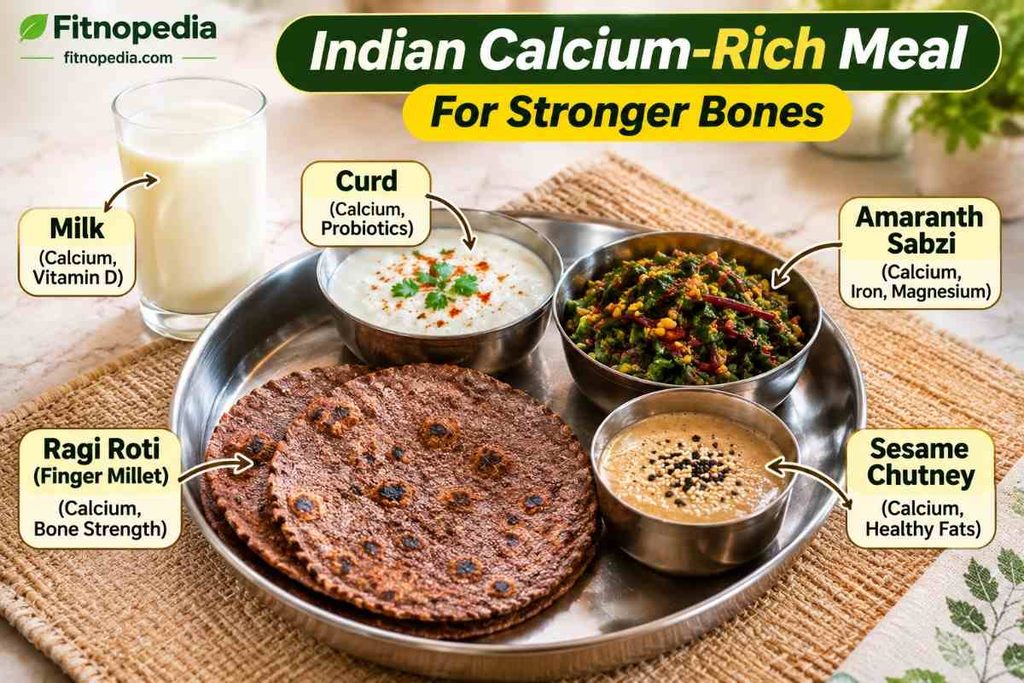
For example, you could include ragi roti at lunch, curd with dinner, and sesame seeds in homemade chutney.
Calcium Rich Foods for Osteoporosis
Best Calcium-Rich Foods for Vegetarians
Vegetarians can obtain calcium from dairy products, seeds, legumes, leafy vegetables, and fortified foods.
Some useful choices include:
- Ragi: A calcium-rich traditional millet.
- Milk: Provides readily available dietary calcium.
- Curd: Supplies calcium and protein.
- Paneer: A useful dairy-based calcium source.
- Sesame seeds: Provide concentrated plant-based calcium.
- Calcium-set tofu: A suitable option for plant-based diets.
- Amaranth leaves: Provide calcium and other micronutrients.
- Fortified soy milk: Can provide substantial calcium.
If you follow a vegan diet, choose calcium-fortified plant beverages and calcium-set tofu. Check their nutrition labels because not every plant-based beverage or tofu product contains significant calcium.
How Much Calcium Do You Need Every Day?
Your daily calcium requirement depends on your age and life stage. The following recommendations are based on US National Institutes of Health guidance.
| Age group | Recommended calcium |
|---|---|
| Children aged 1–3 | 700 mg/day |
| Children aged 4–8 | 1,000 mg/day |
| Children aged 9–18 | 1,300 mg/day |
| Adults aged 19–50 | 1,000 mg/day |
| Men aged 51–70 | 1,000 mg/day |
| Women aged 51–70 | 1,200 mg/day |
| Adults aged 71 and older | 1,200 mg/day |
These recommendations include calcium from food, beverages, and supplements. Requirements may differ under other national guidelines.
Pregnant and breastfeeding adults aged 19–50 generally have a calcium recommendation of 1,000 mg per day under US guidelines. Pregnant and breastfeeding teenagers generally need 1,300 mg per day.
If you have a medical condition or concerns about calcium intake, discuss your requirements with a healthcare professional.
How to Improve Calcium Absorption
Getting enough calcium from food is important, but your body must also absorb and use it effectively.
Here are practical ways to support calcium absorption:
- Get enough vitamin D: Vitamin D helps your body absorb calcium from food.
- Eat calcium-rich foods regularly: Include different calcium sources across your meals.
- Choose useful calcium sources: Dairy products and calcium-fortified foods are convenient options.
- Include varied vegetables: Kale, broccoli, and bok choy provide calcium.
- Consider food composition: Oxalates and phytates in some plant foods can reduce calcium absorption.
- Maintain a balanced diet: Include adequate protein and other essential nutrients.
One important consideration is spinach. Although it contains calcium, its high oxalate content reduces how much calcium your body absorbs. Kale and bok choy can be more useful vegetable sources when calcium absorption is a priority.
Magnesium Glycinate Supplement
Simple One-Day Calcium-Rich Diet Plan
You can increase your calcium intake by including different calcium-rich foods throughout the day. Here is an example of an Indian vegetarian meal plan.
| Meal | Foods |
|---|---|
| Breakfast | Ragi dosa with curd |
| Mid-morning | A glass of milk |
| Lunch | Roti, amaranth sabzi, dal, and curd |
| Evening snack | Almonds and sesame seed chikki |
| Dinner | Calcium-set tofu curry with vegetables |
| Before bed | A glass of milk, if desired |
This is an example rather than a prescribed diet. Actual calcium intake depends on portion sizes, ingredients, and food preparation.
You can adjust the foods according to your dietary preferences, calorie needs, allergies, and medical requirements.
Can You Get Enough Calcium From Food Alone?
Many people can meet their calcium requirements through a balanced diet without supplements.
Dairy products, ragi, seeds, leafy vegetables, tofu, legumes, and fortified foods provide different ways to increase calcium intake.
However, people who avoid dairy products, have certain digestive conditions, or have increased nutritional requirements may need additional support.
If your dietary intake is insufficient, a healthcare professional can help determine whether calcium supplements are appropriate.
Avoid taking high-dose calcium supplements without medical advice, particularly if you have kidney problems or take medications that may interact with calcium.
Conclusion
Calcium-rich foods are important for maintaining strong bones, healthy teeth, normal muscle function, and overall health. Milk, yogurt, cheese, ragi, sesame seeds, tofu, almonds, chia seeds, and leafy vegetables are useful options to include in your daily diet.
For a balanced approach, combine different calcium sources with adequate vitamin D, protein, and regular physical activity. Consistent dietary habits can help you meet your daily calcium requirements and support long-term bone health.
FAQs
Which food is highest in calcium?
Certain cheeses, sesame seeds, and calcium-rich seeds contain high amounts of calcium per 100 g. However, practical serving size and calcium absorption also matter.
Which Indian food is richest in calcium?
Black sesame seeds, ragi, paneer, amaranth leaves, drumstick leaves, and fenugreek leaves are notable calcium sources in Indian diets.
Is ragi good for calcium deficiency?
Ragi is naturally rich in calcium and can help increase dietary calcium intake. However, it should be combined with other calcium sources as part of a balanced diet.
Which fruit is rich in calcium?
Dried figs are a useful fruit source of calcium. Oranges also provide smaller amounts, while certain fortified fruit juices contain considerably more.
Are almonds rich in calcium?
Almonds contain approximately 75 mg of calcium per ounce. They are a useful additional source but should not replace major calcium sources.
Does milk contain more calcium than curd?
The calcium content varies depending on the milk or curd type, processing, and serving size. Both can contribute to daily calcium intake.
Which vegetables are high in calcium?
Amaranth leaves, drumstick leaves, fenugreek leaves, kale, and turnip greens are useful calcium-containing vegetables. Their calcium content and absorption vary.
Can I get enough calcium without dairy products?
Yes. Ragi, sesame seeds, calcium-set tofu, legumes, leafy vegetables, and calcium-fortified plant beverages can help meet calcium requirements.
Does vitamin D help calcium absorption?
Yes. Vitamin D helps the body absorb calcium from the digestive tract and supports normal bone mineralization.
What happens if you do not consume enough calcium?
Inadequate calcium intake over time can affect bone mineralization and contribute to reduced bone strength. Long-term inadequate intake is one factor associated with osteoporosis risk.
Are calcium supplements better than calcium-rich foods?
Not necessarily. Food is generally the preferred starting point. Supplements may be useful when dietary intake is insufficient, but the appropriate amount depends on individual needs.
Sources
- National Institutes of Health, Office of Dietary Supplements. (n.d.). Calcium: Fact Sheet for Health Professionals.
- National Institutes of Health, Office of Dietary Supplements. (n.d.). Calcium: Fact Sheet for Consumers.
- National Institute of Arthritis and Musculoskeletal and Skin Diseases. (n.d.). Calcium and Vitamin D: Important for Bone Health.
- Longvah, T., Ananthan, R., Bhaskarachary, K., & Venkaiah, K. (2017). Indian Food Composition Tables. Indian Council of Medical Research, National Institute of Nutrition.
Medical Disclaimer: This article is for informational and educational purposes only. It is not a substitute for personalized medical advice, diagnosis, or treatment. Consult a qualified healthcare professional before making significant changes to your diet or supplement use.
2 thoughts on “20 Calcium-Rich Foods: Best Sources for Strong Bones and Healthy Teeth”