
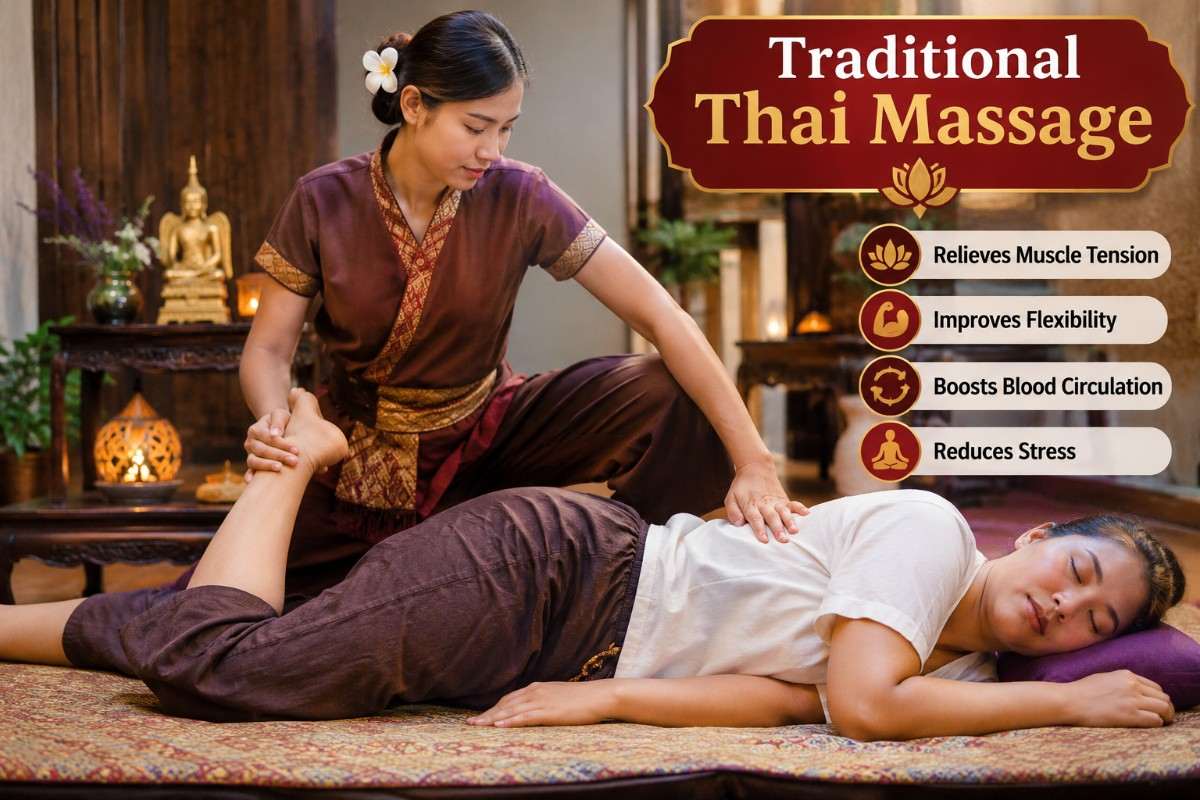
Traditional Thai massage techniques combine assisted stretching, rhythmic compression, acupressure, and controlled body movements. Also known as Nuad Thai massage, this traditional practice has a long history in Thailand and is often used to support relaxation, flexibility, and comfortable movement. Unlike oil-based massage, traditional Thai massage is generally performed with the client fully clothed on a floor mat.
This guide explores traditional Thai massage techniques, their potential benefits, the role of Sen lines, and what beginners should expect during a session.
What Is Traditional Thai Massage?
Traditional Thai massage is a form of therapeutic bodywork originating in Thailand. It combines pressure techniques, assisted yoga-like stretches, and rhythmic movements to address physical tension and mobility.
Known in Thailand as Nuad Thai massage, this practice is an important part of traditional Thai medicine. The therapist uses their hands, thumbs, palms, elbows, forearms, knees, and feet to apply controlled pressure and guide the client’s body through different positions.
Traditional Thai massage generally involves:
- No massage oil.
- Comfortable, loose-fitting clothing.
- Assisted stretching and body movements.
- Rhythmic pressure along traditional Sen lines.
- Treatment on a floor mat or suitable padded surface.
The practice is sometimes called lazy yoga because the therapist helps move the client’s body through different stretching positions without requiring them to perform the movements independently.
History and Origin of Traditional Thai Massage
Traditional Thai massage developed within Thailand’s traditional healing culture and incorporates influences from different Asian medical and bodywork traditions.
It is traditionally associated with the teachings of Jivaka Kumar Bhaccha, a respected figure in Thai healing history. Traditional accounts connect him with the origins of Thai massage, although historical details should be distinguished from documented evidence.
The practice uses the traditional concept of Sen lines, which are described as energy pathways throughout the body. Practitioners apply pressure and movement along these pathways as part of traditional treatment.
In 2019, UNESCO inscribed Nuad Thai on its Representative List of the Intangible Cultural Heritage of Humanity, recognizing its cultural significance.
What Are the Main Traditional Thai Massage Techniques?
Traditional Thai massage techniques involve different forms of pressure, stretching, and controlled movement. Practitioners may combine these methods depending on their training, the client’s comfort, and the treatment style.
1. Rhythmic Palm Pressure
The therapist uses the palms to apply repeated, controlled pressure to selected areas of the body.
This technique is commonly used on the back, thighs, shoulders, and legs. The pressure is applied gradually rather than through sudden or forceful movements.
2. Thumb Pressure and Thai Massage Pressure Points
Thumb pressure is used to apply more focused pressure to specific areas.
In traditional Thai massage, practitioners may use this technique along Sen lines. These pressure points are part of the traditional treatment approach. Pressure should be adjusted to avoid excessive discomfort.
3. Assisted Yoga-Like Stretching
Assisted stretching is one of the defining Thai massage stretching techniques.
The therapist guides the client through controlled movements that may involve:
- Forward bending.
- Gentle spinal rotation.
- Hip opening.
- Leg stretching.
- Shoulder extension.
- Arm stretching.
These movements are adapted to the client’s physical abilities and comfort level.
4. Elbow and Forearm Pressure
Therapists may use their elbows and forearms to apply controlled pressure to larger areas of the body.
These techniques require appropriate training because excessive pressure can cause discomfort or injury.
5. Passive Joint Movements
The therapist gently moves the client’s arms, legs, and other joints through comfortable ranges of motion.
The purpose is to encourage movement without requiring the client to actively perform every exercise.
What Are the Different Types of Traditional Thai Massage?
Traditional Thai massage has different techniques and approaches depending on the practitioner’s training and the style of treatment.
Three recognized forms are particularly important:
- Court-type Thai massage: Uses the thumbs, fingers, and palms in a more restricted style of bodywork.
- General-type Thai massage: May use different parts of the therapist’s body, including elbows, knees, and feet, as well as specific massage tools.
- Thai folk massage: Practised by traditional local healers using knowledge passed down through generations.
These distinctions are described in a 2023 review of traditional Thai massage practices. (Source: Siriraj Medical Bulletin, 2023)
Traditional Thai Massage vs Thai Oil Massage
Traditional Thai massage and Thai oil massage are different treatments.
| Feature | Traditional Thai Massage | Thai Oil Massage |
|---|---|---|
| Clothing | Loose, comfortable clothing | Usually involves draping |
| Oil | Generally not used | Uses massage oil |
| Main technique | Pressure and stretching | Gliding strokes and pressure |
| Position | Often performed on a floor mat | Usually performed on a massage table |
| Movement | More assisted stretching | Generally more passive |
| Treatment style | Traditional bodywork | Oil-based massage |
Traditional Nuad Thai is particularly associated with pressure and bodily manipulation. Oil massage is a separate spa treatment and should not automatically be considered the same traditional practice.
What Are the Benefits of Traditional Thai Massage?
Traditional Thai massage benefits may include improved muscle comfort, mobility, and relaxation. Research has investigated its potential effects on pain, muscle stiffness, circulation, and other health outcomes, although the quality of evidence varies between conditions.
1. May Help Reduce Muscle Stiffness
Traditional Thai massage uses rhythmic compression and pressure techniques that may help some people experience temporary relief from muscular tightness.
Common treatment areas include the shoulders, back, thighs, and calves.
2. May Improve Flexibility
Assisted stretching is an important part of traditional Thai massage techniques.
The therapist guides the body through controlled movements that may help improve comfortable movement and range of motion.
People who experience stiffness after prolonged sitting may find these techniques useful.
3. May Support Relaxation
Massage provides a period of focused physical relaxation.
The combination of rhythmic pressure, comfortable positioning, and gentle movement may help some individuals feel calmer and more relaxed.
4. May Help With Certain Types of Pain
Clinical research has examined traditional Thai massage for musculoskeletal pain and discomfort.
A 2023 review found research involving pain reduction and relief of muscle stiffness, but the strength of evidence differed between massage styles and health conditions.
Thai massage should not be treated as a guaranteed solution for chronic pain or a replacement for appropriate medical care.
5. May Support Comfortable Movement
The assisted movements used in Thai massage may help people explore different positions and joint movements within their comfortable range.
This can be particularly appealing to people who want a treatment that combines massage with stretching.
6. May Help With Stress Management
Some people find traditional massage relaxing and use it as part of their general wellness routine.
However, traditional explanations about balancing energy should be distinguished from scientifically established mechanisms.
What Are Sen Lines in Traditional Thai Massage?
Sen lines are traditional energy pathways described in Thai healing practices. They are an important part of the traditional explanation of how Nuad Thai massage is performed.
Practitioners may apply rhythmic pressure and other manual techniques along these pathways during a session.
It is important to understand that Sen lines belong to the traditional Thai medical framework. They are not scientifically established anatomical structures such as nerves, blood vessels, or muscles.
Which Muscles Are Targeted During Traditional Thai Massage?
Traditional Thai massage can involve several major muscle groups because therapists combine pressure, stretching, and controlled body movements.
| Muscle group | Common massage approach |
|---|---|
| Trapezius | Shoulder and upper-back pressure |
| Hamstrings | Assisted leg stretching |
| Quadriceps | Front-thigh stretching |
| Calves | Lower-leg pressure and stretching |
| Gluteal muscles | Hip movements and controlled pressure |
| Hip flexors | Assisted hip extension |
| Erector spinae | Gentle back pressure |
| Pectoral muscles | Chest and shoulder stretching |
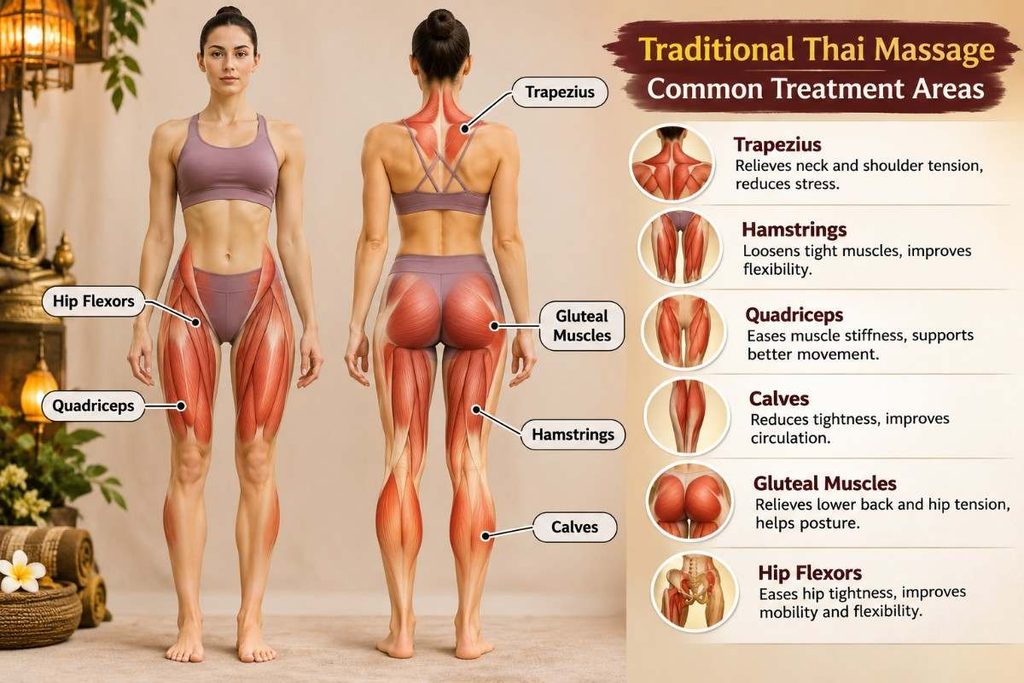
The exact muscles involved depend on the treatment style, the client’s mobility, and the therapist’s approach.
What Happens During a Traditional Thai Massage Session?
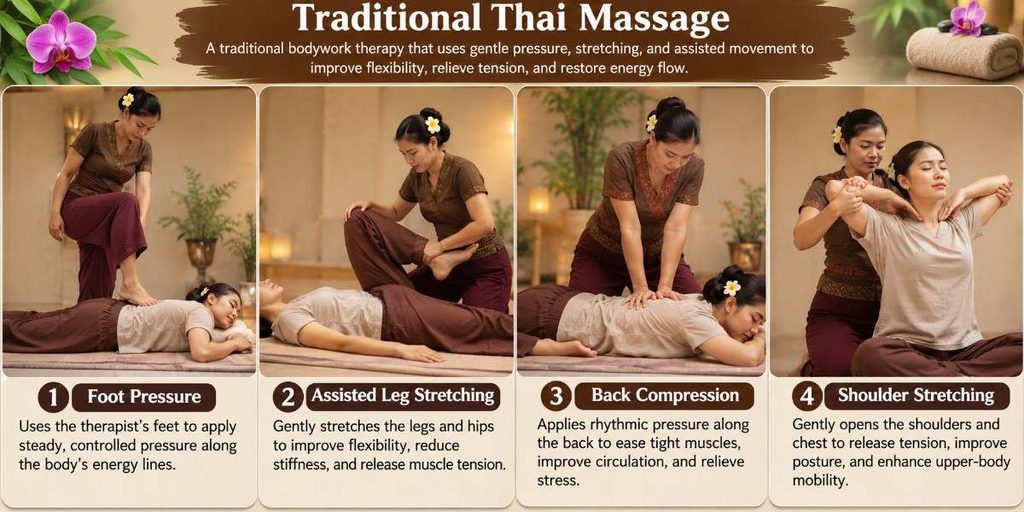
A traditional Thai massage session generally follows a sequence of pressure techniques and assisted movements. The exact order varies between practitioners and treatment styles.
Step 1: Initial Consultation
The therapist asks about your physical condition, massage preferences, and areas of discomfort.
Inform them about previous injuries, medical conditions, recent surgery, or any movements that cause pain.
Step 2: Getting Comfortable
You change into loose-fitting clothing that allows unrestricted movement.
Traditional Thai massage is generally performed on a floor mat rather than a conventional massage table.
Step 3: Foot and Leg Pressure
The therapist may begin by applying rhythmic pressure to the feet and lower legs.
This introduces the treatment and allows the therapist to assess your comfort with the pressure.
Step 4: Leg and Hip Stretching
The therapist guides your legs through different stretching positions.
These movements may involve the hamstrings, quadriceps, calves, and hip flexors.
Step 5: Back and Shoulder Treatment
The therapist uses appropriate pressure techniques around the back and shoulders.
Depending on the style, elbows, palms, or other parts of the body may be used.
Step 6: Upper-Body Stretching
The arms, chest, and shoulders may be moved through controlled stretching positions.
Step 7: Final Relaxation
The session usually finishes with slower movements and gentle pressure before the client gets up.
How Long Does Traditional Thai Massage Last?
Traditional Thai massage sessions commonly last between 60 and 120 minutes, depending on the provider and treatment package.
| Duration | Typical session |
|---|---|
| 30 minutes | Focused treatment |
| 60 minutes | Shorter general treatment |
| 90 minutes | More extensive bodywork |
| 120 minutes | Longer traditional massage session |
These are common service durations, not fixed requirements of traditional Thai massage.
What Should You Wear During Traditional Thai Massage?
Loose-fitting, comfortable clothing is generally recommended because the therapist needs to move your arms and legs during assisted stretching.
Suitable clothing includes:
- Loose cotton trousers.
- Comfortable T-shirts.
- Stretchable athletic clothing.
- Lightweight clothing that allows free movement.
Avoid restrictive jeans, tight clothing, and accessories that interfere with movement.
Traditional Thai massage generally does not require removing your clothing or applying massage oil.
Is Traditional Thai Massage Painful?
Traditional Thai massage should not cause excessive pain, although certain pressure techniques and assisted stretches may feel intense.
Your comfort depends on your flexibility, the pressure applied, and the therapist’s technique.
Always communicate if you experience:
- Sharp or sudden pain.
- Numbness or tingling.
- Excessive pressure.
- Uncomfortable joint stretching.
- Dizziness or unusual discomfort.
A qualified therapist should adjust the treatment rather than forcing your body into a position.
Who Should Avoid Traditional Thai Massage?
Traditional Thai massage is not suitable for everyone because it involves pressure, stretching, and physical manipulation.
Seek medical advice before receiving treatment if you have:
- Recent fractures or significant injuries.
- Recent surgery.
- Severe osteoporosis.
- A history of blood clots or suspected deep vein thrombosis.
- Significant joint instability.
- Unexplained or severe back and neck pain.
- Uncontrolled medical conditions.
- Pregnancy or a high-risk pregnancy.
People taking blood-thinning medication or living with conditions affecting circulation, bones, or joints should also discuss treatment suitability with a healthcare professional.
Avoid applying pressure to open wounds, infected skin, or acutely injured areas.
The World Health Organization’s training benchmarks for Nuad Thai discuss practitioner education, contraindications, and safety considerations. Choosing a properly trained practitioner is important. (Source: World Health Organization, 2010)
Traditional Thai Massage vs Other Massage Types
Traditional Thai massage differs from other massage styles in its use of assisted stretching and traditional pressure techniques.
| Massage type | Main technique | Main focus |
|---|---|---|
| Traditional Thai massage | Assisted stretching and pressure | Mobility and relaxation |
| Swedish massage | Long strokes and kneading | General relaxation |
| Deep tissue massage | Slow, focused pressure | Muscle tension |
| Sports massage | Sports-related bodywork techniques | Athletic recovery |
| Shiatsu massage | Finger and palm pressure | Traditional Japanese bodywork |
| Hot stone massage | Heated stones and massage strokes | Relaxation |
deep tissue massage benefits and techniques
How Often Should You Get Traditional Thai Massage?
There is no universal treatment frequency for traditional Thai massage. The appropriate schedule depends on your health, preferences, physical activity, and response to treatment.
For general relaxation, some people choose occasional sessions. Others may discuss a treatment schedule with a qualified practitioner when using massage alongside a broader wellness or rehabilitation plan.
Consider these practical suggestions:
- Start with a comfortable treatment rather than aggressive stretching.
- Allow time to recover if you experience temporary soreness.
- Communicate your preferences before and during treatment.
- Combine massage with regular physical activity.
- Avoid continuing treatment if you experience unusual or worsening symptoms.
What Should You Do After Traditional Thai Massage?
After a traditional Thai massage, give your body time to return to normal activity.
Consider these simple aftercare practices:
- Drink water according to your normal hydration needs.
- Avoid intense workouts immediately if you feel sore.
- Perform gentle movements if comfortable.
- Get sufficient rest.
- Pay attention to any unusual symptoms.
Mild temporary soreness may occur after unfamiliar stretching or pressure. Severe pain, swelling, weakness, or numbness should be medically assessed.
Conclusion
Traditional Thai massage techniques combine rhythmic pressure, assisted stretching, and traditional manual methods. The practice may help with flexibility, muscle stiffness, and relaxation while preserving an important part of Thailand’s cultural heritage.
If you are trying traditional Thai massage for the first time, choose a trained practitioner, communicate your comfort level, and avoid forceful stretching. A comfortable and appropriately adapted session is more important than the intensity of the treatment.
FAQs
What are traditional Thai massage techniques?
Traditional Thai massage techniques include rhythmic palm pressure, thumb pressure, assisted stretching, elbow and forearm pressure, and passive joint movements.
What is Nuad Thai massage?
Nuad Thai is the traditional Thai name for a bodywork practice that combines pressure, compression, stretching, and controlled body movements.
What are the main benefits of traditional Thai massage?
Potential benefits include temporary relief from muscle stiffness, improved comfortable movement, flexibility support, and relaxation. Individual results vary.
What are Sen lines in Thai massage?
Sen lines are traditional energy pathways described in Thai healing practices. They are not scientifically established anatomical structures.
Does traditional Thai massage use oil?
Traditional Thai massage generally does not use massage oil. It focuses on pressure techniques and assisted stretching.
Do you wear clothes during traditional Thai massage?
Yes. Clients generally wear loose, comfortable clothing that allows the therapist to perform assisted stretches.
How long does traditional Thai massage take?
Sessions commonly last between 60 and 120 minutes, although shorter treatments may also be available.
Is traditional Thai massage good for flexibility?
It may help improve flexibility and comfortable range of motion through assisted stretching, although individual results vary.
Is traditional Thai massage painful?
It should not cause excessive pain. Tell the therapist if pressure or stretching becomes uncomfortable.
What is the difference between court-style and general-style Thai massage?
Court-style Thai massage mainly uses the thumbs, fingers, and palms, while general-style Thai massage may also use elbows, knees, feet, and massage tools.
Who should avoid traditional Thai massage?
People with recent injuries, fractures, severe osteoporosis, blood clotting concerns, or certain medical conditions should seek professional medical advice before treatment.
Is traditional Thai massage recognized by UNESCO?
Yes. UNESCO inscribed Nuad Thai on its Representative List of the Intangible Cultural Heritage of Humanity in 2019.
Sources
- UNESCO. (2019). Nuad Thai, Traditional Thai Massage.
- World Health Organization. (2010). Benchmarks for Training in Traditional/Complementary and Alternative Medicine: Benchmarks for Training in Nuad Thai.
- Jongjiamdee et al. (2023). Evaluation of Evidence-Based Medicine Related to Health Care of Thai Traditional Massage. Siriraj Medical Bulletin.
- Wiwanitkit. (2015). Thai Traditional Massage: Issues Causing Possible Adverse Effects. Ancient Science of Life.
- Thailand Government Public Relations Department. (2024). Ministry of Public Health Has Set Guidelines for Traditional Thai Massage Standards.
Disclaimer: This article is for informational and educational purposes only and is not a substitute for personalized medical advice. Consult a qualified healthcare professional before making significant changes to your diet, exercise routine, or supplement use.