
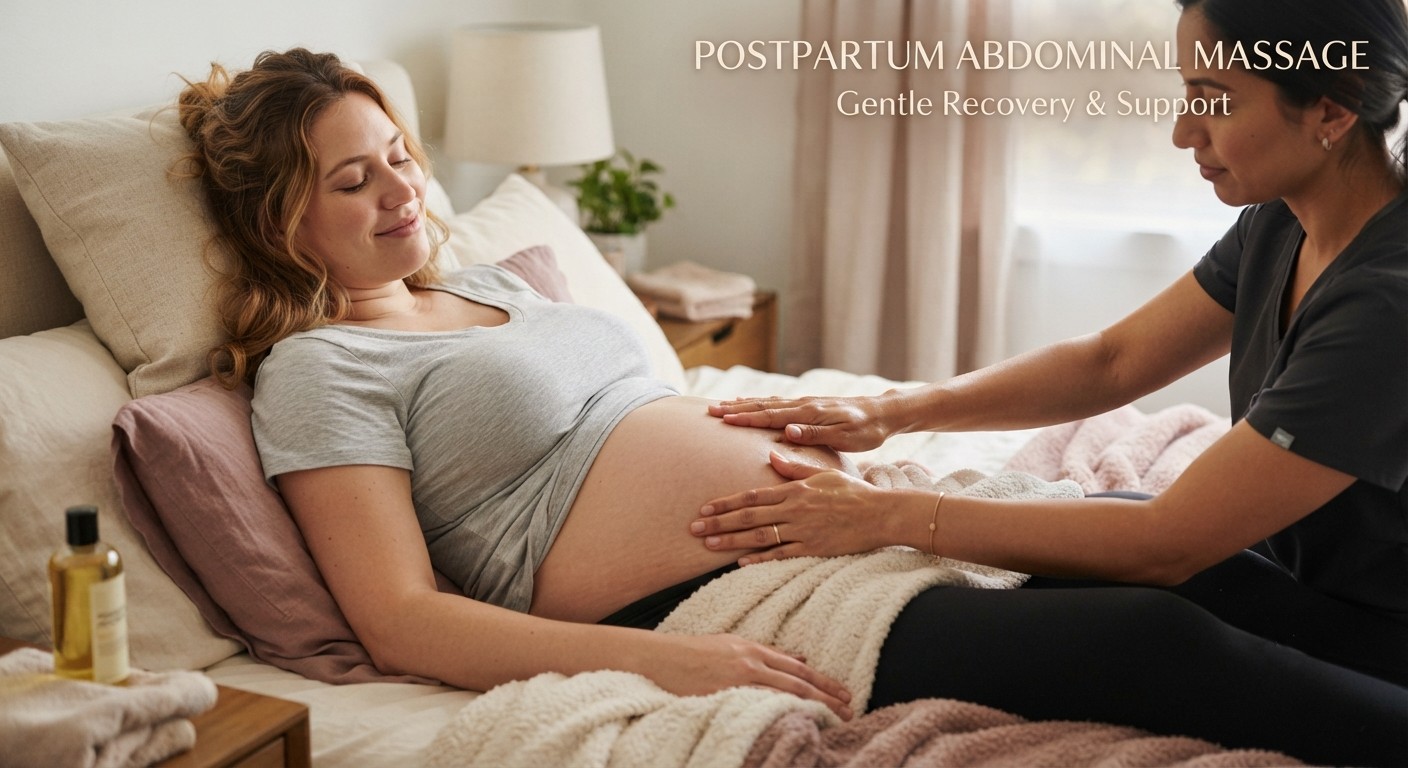
Your belly changes fast after birth, and many new mothers want a gentle way to ease tightness, gas, or scar tenderness. Postpartum abdominal massage can mean several different things, from a midwife’s uterine check to light belly strokes at home, and each has its own rules. This guide explains the types, what the research actually shows, when to start, and when to skip it.
What Is Postpartum Abdominal Massage?
Postpartum abdominal massage is any hands-on massage of the belly area after childbirth, done for recovery, comfort, or medical reasons. The term covers quite different practices, so the first step is knowing which one you mean.
- Uterine (fundal) massage: A clinician rubs the lower belly through the skin to help the uterus contract. This is a medical procedure, not a home technique.
- Gentle belly massage: Light, slow strokes over the abdomen, often used for comfort, gas, or sluggish digestion.
- C-section scar massage: Careful massage around, then on, a fully healed incision to ease tightness and sensitivity.
- Massage for abdominal muscle separation: Hands-on work aimed at diastasis recti, where the two sides of the abdominal muscles move apart during pregnancy.
Why Does Postpartum Abdominal Massage Matter?
It matters because the abdomen goes through major change during pregnancy and birth, and people reach for massage to support comfort, healing, and body awareness. The muscles stretch, organs shift back, and a cesarean adds a healing surgical wound.
Common reasons mothers consider it:
- Feeling tight, heavy, or sore across the belly
- Gas, bloating, or constipation, which are common in the early weeks
- A tender or numb cesarean scar
- Wanting to reconnect with their body after birth
- Relaxation, since slow touch can simply feel soothing
Interest is high, but the benefits are not equal across types. Some uses are backed by clinical guidelines, while others rest on limited or small studies.
high-fiber foods for digestion
What Are the Main Types of Postpartum Abdominal Massage?
The four main types differ in purpose, who performs them, and how strong the evidence is. This table gives a quick comparison.
| Type | Who does it | Main purpose | Strength of evidence |
|---|---|---|---|
| Uterine massage | Trained clinician | Treating heavy bleeding after birth | Recommended by WHO for treatment |
| Gentle belly massage | You or a therapist | Comfort, relaxation, digestion | Limited research |
| C-section scar massage | You, after full healing | Reducing tightness and sensitivity | Limited research |
| Massage for diastasis recti | Trained therapist | Reducing muscle separation | Small studies only |
Uterine Massage Is a Medical Procedure
The World Health Organization and partner agencies recommend uterine massage as part of the first-response bundle once postpartum hemorrhage is diagnosed, alongside medicines and other steps (Source: WHO, 2025). It is a trained skill used in emergencies, not a self-care routine. If you are bleeding heavily at home, do not try to treat it yourself.
Does Postpartum Abdominal Massage Actually Work?
For comfort and relaxation it may help, but evidence for specific medical benefits is limited, apart from uterine massage in hemorrhage care. Here is what the research shows.
- Diastasis recti and exercise: A 2023 systematic review of 16 trials found conservative treatments, including exercise, binding, and electrical stimulation, made little clinically meaningful difference to muscle separation, though exercise may bring other physical and psychosocial benefits (Source: Physiotherapy, 2023).
- Massage for muscle separation: One small trial, with 35 women per group, reported that manual massage reduced early postpartum muscle separation, waist circumference, and back pain, and improved mood (Source: Chen et al., trial on manual massage). One small study is promising but not conclusive.
- Scar massage: A UK NHS leaflet notes that not much research has measured how well cesarean scar massage works, although some people find it helpful (Source: NHS Kingston and Richmond).
In short, treat belly massage as a comfort measure and not a proven fix for a separated abdomen or a flatter stomach.
When Can You Start Postpartum Abdominal Massage?
Wait for your provider’s go-ahead, and after a cesarean, wait until the scar is fully healed. Timing is the most important safety point in this article.
- Light belly strokes after a vaginal birth: Ask your midwife or doctor first, since bleeding, tears, or other issues can change the advice.
- After a cesarean: An NHS hospital leaflet says to start scar massage only once the scar is fully healed, with no open areas or scabs, which takes around six weeks (Source: NHS Plymouth).
- Too early is risky: Massaging too soon could reopen the wound and lead to infection (Source: NHS Kingston and Richmond).
If you are unsure whether your wound is ready, ask at your postpartum check.
Postpartum Lymphatic Drainage Massage
How to Do a Gentle Postpartum Belly Massage
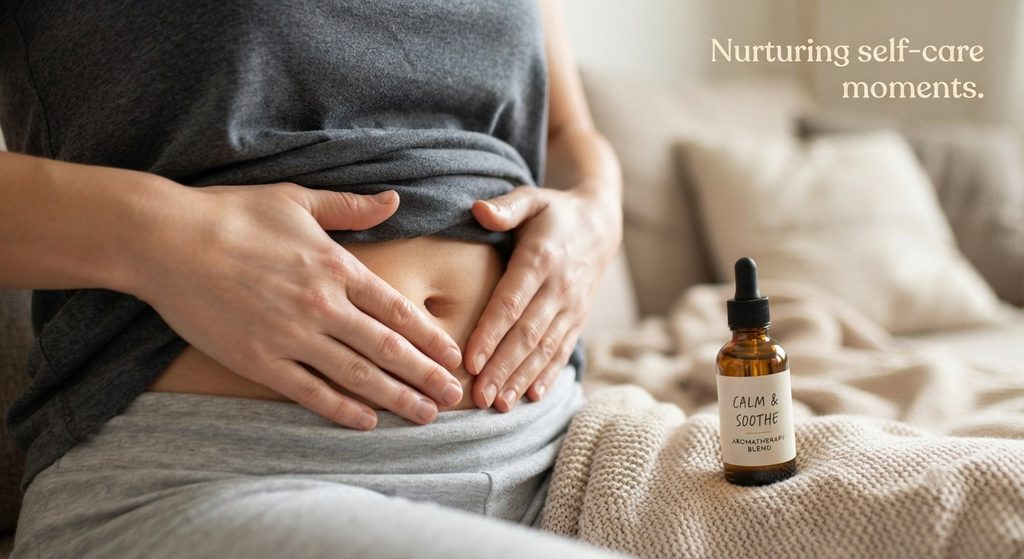
A gentle belly massage uses light, slow strokes with no deep pressure. Do this only after your provider says it is fine for you, and never over an unhealed incision.
- Lie on your back with your knees bent and your head supported.
- Warm your hands and add a little unscented oil or lotion if you like.
- Place your palms flat on your lower belly and breathe slowly for a few breaths.
- Stroke in slow, clockwise circles around the navel, using light pressure.
- Keep it short, a few minutes at a time.
- Stop right away if you feel pain, dizziness, or increased bleeding.
Pressure should feel soothing. If it feels like you are pushing, ease off.
How to Do C-Section Scar Massage Safely
C-section scar massage should start near the scar, not on it, and only once it is fully healed. The goal is to ease tightness and sensitivity gently.
- Check healing first: No scabs, no open spots, no redness or discharge.
- Start around the scar: Touch the skin around it before touching the scar itself, since it may feel tender or numb (Source: NHS Kingston and Richmond).
- Use light pressure: Small, slow movements in different directions.
- Go gradually: Build up comfort over days and weeks, not in one session.
- Pause if it hurts: Pain, swelling, or fluid around the wound is a reason to call your care team.
Who Should Avoid Postpartum Abdominal Massage?
Avoid it, or get medical clearance first, if you have a healing wound, heavy bleeding, infection signs, or unexplained pain. Massage is not safe for every postpartum situation.
Check with your provider before starting if you:
- Had a cesarean and your scar is not fully healed
- Have heavy bleeding, fever, or foul-smelling discharge
- Have severe or worsening belly pain
- Have swelling, pain, or redness in one leg
- Have a history of blood clots, heart conditions, or high blood pressure
Mayo Clinic advises calling your provider if bleeding soaks through more than one pad an hour or you pass clots the size of an egg or bigger (Source: Mayo Clinic). Seek emergency care for chest pain, trouble breathing, or a severe headache that does not ease with medicine.
What Else Supports Abdominal Recovery After Birth?
Simple habits often do as much for comfort as massage, and they carry little risk for most people. Check with your provider if you had complications.
- Walk gently as your provider allows.
- Eat fiber and drink water to ease constipation.
- Practice gentle breathing and pelvic floor work once cleared.
- Rest and ask for help, because recovery takes time.
Conclusion
Postpartum abdominal massage can be a soothing comfort measure, but research on belly and scar massage is limited, and uterine massage is a clinician-led emergency step, not a home technique. Get your provider’s approval first, wait until any cesarean scar is fully healed, keep pressure light, and watch for warning signs like heavy bleeding or one-sided leg swelling. A good next step is to ask about massage at your next postpartum visit.
FAQs
Is postpartum abdominal massage safe?
Gentle massage is generally low-risk once your provider approves it, but it is not safe over an unhealed incision or if you have heavy bleeding, fever, or unexplained pain. Always check first.
When can I start abdominal massage after a C-section?
Wait until the scar is fully healed, with no open areas or scabs, which an NHS hospital leaflet says takes around six weeks. Confirm with your provider before beginning.
Can postpartum abdominal massage reduce belly fat or flatten my stomach?
No reliable evidence shows it burns fat or shrinks the belly. Changes are more likely from time, nutrition, rest, and gradual activity.
Does massage fix diastasis recti?
Not reliably. One small trial reported benefits, but a larger review of conservative treatments found little clinically meaningful change in muscle separation, so ask a pelvic health physiotherapist for guidance.
What is uterine massage after birth?
It is a clinician-performed rubbing of the lower belly to help the uterus contract, used when heavy bleeding is diagnosed. WHO recommends it as part of a first-response treatment bundle.
How often should I do scar massage?
There is no single schedule, so follow your care team’s advice. Short, gentle sessions that build up gradually are usually suggested, and you should stop if it hurts.
Sources
- Physiotherapy. (2023). Conservative Interventions May Have Little Effect on Reducing Diastasis of the Rectus Abdominis in Postnatal Women: A Systematic Review and Meta-Analysis.
- Chen, Y., et al. Therapeutic Effect of Manual Massage on Early Postpartum Rectus Abdominis Separation and Postpartum Depression.
- World Health Organization. (2025). Global Health Agencies Issue New Recommendations to Help End Deaths From Postpartum Haemorrhage.
- NHS Kingston and Richmond. Scar After Caesarean.
- NHS Plymouth Hospitals. Post Caesarean Section (C-Section) Patient Information.
- Mayo Clinic. Postpartum Complications: What You Need to Know.
Disclaimer: This article is for informational and educational purposes only and is not a substitute for personalized medical advice. Consult a qualified healthcare professional before making significant changes to your diet, exercise routine, or supplement use.
1 thought on “Postpartum Abdominal Massage: Benefits, Safety, and Technique”