
Swollen feet, puffy hands, and a heavy, fluid-filled feeling are common after birth, and many new mothers look for gentle ways to feel lighter. Postpartum lymphatic drainage massage is one option, but the research behind it is thinner than social media suggests. This guide explains what it is, what the evidence shows, how it is done, and when swelling needs a doctor instead of a massage.
What Is Postpartum Lymphatic Drainage Massage?
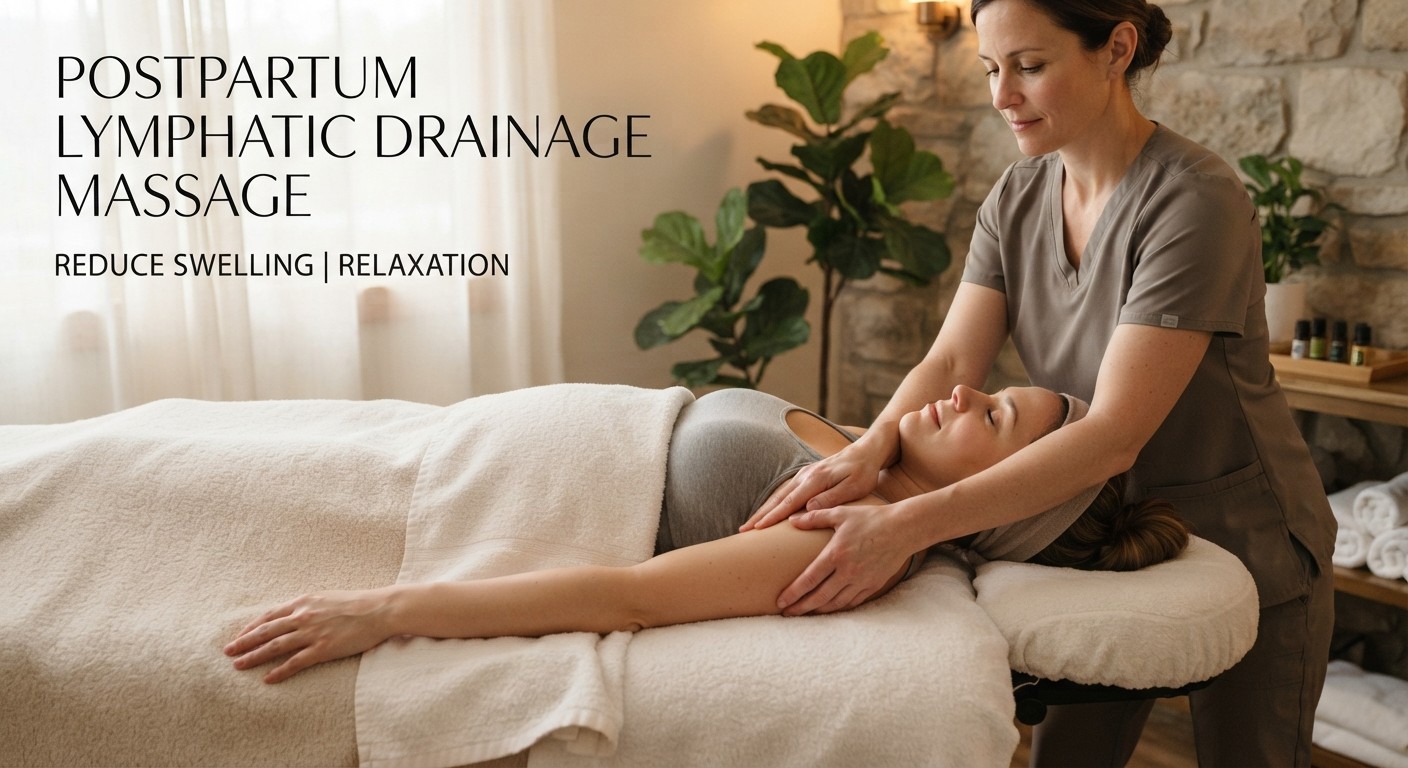
Postpartum lymphatic drainage massage is a very light, slow, rhythmic massage that aims to help excess fluid move through your lymphatic system after childbirth. The lymphatic system collects extra fluid from your tissues and returns it to the bloodstream, and this technique tries to support that process by gently stretching the skin. It is often called manual lymphatic drainage (MLD).
A few things set it apart from a regular massage:
- Pressure: Very light, closer to stroking the skin than kneading muscle.
- Pace: Slow and repeated, often with a steady rhythm.
- Direction: Strokes follow the path of lymph flow toward nearby lymph nodes, such as those in the armpits, groin, and neck.
- Goal: Easing fluid buildup, not working out muscle knots.
Cleveland Clinic describes it as a gentle technique that moves lymph toward areas where lymph vessels are working well.
Why Do New Mothers Try Lymphatic Drainage Massage After Birth?
Mothers try it because swelling after birth is common and uncomfortable, and a gentle, low-effort option sounds appealing. Pregnancy increases your blood volume, and your body takes time to clear the extra fluid once the baby arrives.
People usually turn to it for:
- Puffy feet, ankles, and hands that feel tight
- A general sense of heaviness in the legs
- Swelling after a cesarean birth, once their provider says touch near the area is fine
- Breast fullness in the first days after milk comes in
- Relaxation, since slow, light touch can simply feel calming
Many mothers also want something that does not demand exercise, which is hard when you are sleep-deprived and recovering. That convenience is part of the appeal, though it does not prove the massage works for postpartum swelling.
Does Postpartum Lymphatic Drainage Massage Actually Work?
Evidence for MLD exists in other conditions, but studies specifically on postpartum women appear scarce, so any benefit for postpartum swelling is plausible rather than proven. Here is what the related research shows.
- Breast cancer-related lymphedema: A Cochrane review of six small trials found MLD was safe and may add a modest benefit when combined with compression bandaging. It added roughly 7% more swelling reduction on top of bandaging alone. People with mild to moderate swelling seemed to respond better, though the authors said this needs confirming (Source: Cochrane, 2015).
- Symptom relief: In that same review, 60% to 80% of participants felt less pain and heaviness whichever treatment they received, so the massage itself may not be the only reason people feel better (Source: Cochrane, 2015).
- Injury-related swelling: A clinical review explains why MLD is used for edema after injury, since light pressure changes fluid pressure in the tissues and may help lymph uptake. It frames this as a theory to be tested rather than settled fact (Source: Journal of Sport Rehabilitation, 2016).
- Quality of life: A systematic review of randomized trials in chronic swelling found the effect of MLD on quality of life unclear (Source: Quality of Life Research, 2018).
The honest summary is that MLD looks safe and may help some swelling, but nobody has shown how much it helps after birth. Treat it as a comfort measure, not a treatment.
How Is Postpartum Lymphatic Drainage Massage Done?
It is done by a trained therapist or, in a simplified form, by yourself at home with very light pressure. Because techniques vary, a professional trained in lymphatic work is the better starting point, especially in the first weeks.
What Happens in a Professional Session
- The therapist usually starts near the neck or other central areas, then works toward the swollen region.
- Strokes are slow, light, and repeated.
- Sessions should feel soothing, never painful.
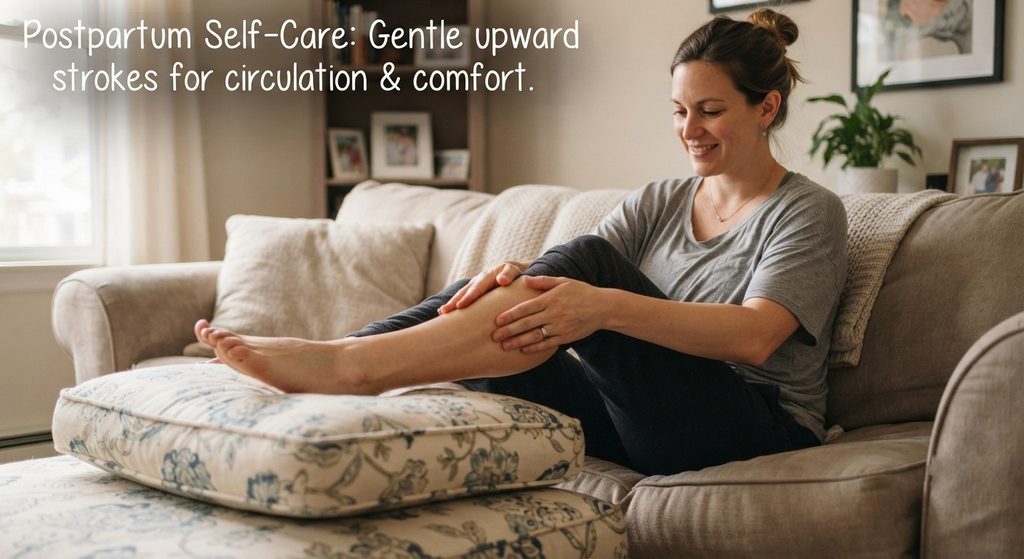
A Gentle Self-Massage Routine
Use this only after your provider confirms massage is fine for you.
- Sit or lie back comfortably with the swollen limb supported, ideally slightly raised.
- Use clean, dry hands or a little lotion so your fingers glide without dragging the skin.
- Stroke very lightly from the swollen area toward the nearest lymph nodes, for example from the ankle up toward the groin.
- Repeat each stroke slowly for a few minutes per area.
- Stop if you feel pain, dizziness, or increased swelling.
Press lightly. If your skin turns red from pressure, you are pushing too hard.
Is Postpartum Lymphatic Drainage Massage Safe?
Lymphatic drainage is generally considered low-risk, but postpartum bodies have specific risks, so it is worth checking with your provider first. Cleveland Clinic notes that few people react badly, though some report headache, nausea, or tiredness afterward (Source: Cleveland Clinic).
Speak with your provider before starting if any of these apply:
- You had a cesarean birth or have a healing incision
- You have swelling in only one leg
- You have a history of blood clots, heart problems, or high blood pressure
- You have a fever, infection signs, or heavy bleeding
- You are unsure whether your swelling is normal
The one-leg point matters. After birth your blood may clot more easily, and legs are a common spot for clots to form (Source: Cleveland Clinic). Massaging a leg that has a clot is not something to risk.
Normal Swelling vs. Warning Signs After Birth
Mild, even swelling in both feet or ankles that improves with rest is usually part of recovery, while sudden, one-sided, or severe swelling needs medical attention. Use this table as a quick guide, not a diagnosis.
| What you notice | Often normal | Call your provider or seek care |
|---|---|---|
| Swollen feet or ankles on both sides | Yes, if mild and improving | If it is sudden or worsening |
| Swelling in one leg with pain, redness, or warmth | No | Yes, possible blood clot |
| Sudden swelling of face, hands, or feet | No | Yes, possible preeclampsia |
| Severe headache or vision changes | No | Yes, seek care promptly |
| Chest pain or trouble breathing | No | Yes, emergency care |
| Breast fullness with milk coming in | Often | If you have fever or a red, painful area |
Warning signs such as leg pain with swelling, sudden facial or hand swelling, severe headaches, and breathing trouble are listed by Mayo Clinic and Kaiser Permanente among postpartum symptoms that need care. The American College of Obstetricians and Gynecologists also advises ongoing postpartum care, with early contact and a full visit within about 12 weeks.
What Else Can Help With Postpartum Swelling?
Simple daily habits can support comfort alongside, or instead of, massage. They are low effort and carry little risk for most people, though your provider should guide you if you have complications.
- Elevate your legs when you rest, even for ten minutes.
- Walk gently as your provider allows, since movement helps fluid circulate.
- Drink water regularly and eat balanced meals.
- Wear comfortable footwear and avoid tight bands around ankles.
- Rest when you can, because exhaustion makes everything feel worse.
daily protein intake calculator
Conclusion
Postpartum lymphatic drainage massage is a gentle, low-risk comfort measure that may ease mild swelling, though direct evidence in new mothers is limited. Your safest path is simple: get your provider’s go-ahead, choose a trained therapist or use very light self-massage, and pair it with rest, water, and gentle movement. Learn the warning signs, and if swelling is sudden, one-sided, or comes with pain, headache, or breathing trouble, skip the massage and call for care. A good next step is to bring up swelling at your next postpartum check-in.
FAQs
Is lymphatic drainage massage good after giving birth?
It can feel soothing and may help mild swelling, but research specifically on new mothers is limited. Check with your provider before starting, particularly after a cesarean.
How soon after birth can I start lymphatic drainage massage?
There is no universal timeline, so follow your provider’s advice. Your delivery type, healing, and any complications all affect when it is appropriate.
Can I do lymphatic drainage massage on myself?
Yes, a very light self-massage is possible once your provider confirms it is safe for you. Use slow, gentle strokes toward the nearest lymph nodes and stop if anything hurts.
Does lymphatic drainage massage help with postpartum belly or weight loss?
No reliable evidence shows it burns fat or shrinks the belly. Any change is more likely temporary fluid shifts, so rely on nutrition, rest, and gradual activity for body changes.
How long does postpartum swelling last?
It varies from person to person and usually eases over days to weeks. If swelling is sudden, severe, or one-sided, contact your provider right away.
Can lymphatic drainage massage help breast engorgement?
Some lactation and postpartum guides describe gentle breast massage for fullness, but evidence is limited. Ask your provider or a lactation consultant, especially if you have fever or a painful, red area.
Sources
- Ezzo, J., et al. (2015). Manual Lymphatic Drainage for Lymphedema Following Breast Cancer Treatment. Cochrane Database of Systematic Reviews.
- The Effectiveness of Manual Lymphatic Drainage in Patients With Orthopedic Injuries. (2016). Journal of Sport Rehabilitation.
- Manual Lymphatic Drainage and Quality of Life in Patients With Lymphoedema and Mixed Oedema: A Systematic Review. (2018). Quality of Life Research.
- Cleveland Clinic. Lymphatic Drainage Massage.
- Mayo Clinic. Postpartum Complications: What You Need to Know.
- Columbia University Irving Medical Center. A Mother’s Guide to the Fourth Trimester.
Disclaimer: This article is for informational and educational purposes only and is not a substitute for personalized medical advice. Consult a qualified healthcare professional before making significant changes to your diet, exercise routine, or supplement use.