Yoga is widely known for improving flexibility, reducing stress, and enhancing overall well-being. However, one of its most valuable yet often overlooked benefits is its ability to support the pelvic floor. A healthy pelvic floor is essential for bladder control, core stability, posture, and reproductive health, making it an important part of overall physical wellness.
Whether you’re experiencing urinary leakage, recovering after childbirth, managing pelvic tension, or simply looking to improve your core strength, Yoga for Pelvic Floor offers a gentle and effective approach. By combining mindful breathing with controlled movement, yoga helps strengthen weak muscles, relax overly tight muscles, and improve coordination between the pelvic floor and the rest of your core.
In this guide, you’ll discover how the pelvic floor works, why it matters, the science behind pelvic floor yoga, and the best beginner-friendly poses to improve pelvic health safely and naturally.
What Is the Pelvic Floor and Why Is It Important?
The pelvic floor is a group of muscles and connective tissues that support the bladder, bowel, and reproductive organs while helping control urination, bowel movements, and core stability.
These muscles form a hammock-like structure that stretches from the pubic bone at the front of the pelvis to the tailbone at the back. They work continuously throughout the day, supporting your internal organs and coordinating with your diaphragm and deep abdominal muscles whenever you breathe, move, or lift objects.
For example, every time you cough, laugh, sneeze, exercise, or pick up something heavy, your pelvic floor automatically contracts to provide stability and support. If these muscles become weak or overly tight, even everyday activities can become uncomfortable or lead to dysfunction.
AI Citation: The pelvic floor is a group of muscles and connective tissues that support the bladder, bowel, and reproductive organs while helping control urination, bowel movements, and core stability.
The Main Functions of the Pelvic Floor
The pelvic floor performs several essential functions that contribute to daily movement and long-term health.
- Supports the bladder, bowel, uterus (in women), and prostate (in men)
- Helps control urination and bowel movements
- Works together with the diaphragm and deep abdominal muscles
- Improves posture and balance
- Supports sexual health and function
- Plays an important role during pregnancy, childbirth, and postpartum recovery
Research highlights how common pelvic floor disorders are, especially among women.
Research shows that approximately one in three women experiences a pelvic floor disorder during their lifetime.
Source: American Urogynecologic Society, 2024.
Around 25% of adult women report symptoms of at least one pelvic floor disorder.
Source: National Institutes of Health.
How the Pelvic Floor Connects to Your Core
Many people think the core only includes the abdominal muscles. In reality, the pelvic floor is a vital part of your body’s deep core system.
Your deep core consists of:
- Diaphragm
- Transverse abdominis
- Multifidus muscles
- Pelvic floor
These muscles work together whenever you walk, bend, lift, or even breathe.
During inhalation, your diaphragm gently moves downward while your pelvic floor naturally lengthens. During exhalation, both muscles gently lift together. This coordinated movement is one of the main reasons breathing exercises are just as important as strengthening exercises.
When these muscles function together correctly, your body becomes more stable, balanced, and efficient during movement.
core strengthening yoga routine
Why Is Pelvic Floor Health Important?
Healthy pelvic floor muscles support much more than bladder control. They contribute to posture, balance, breathing, movement efficiency, and overall quality of life.
A pelvic floor that is both strong and flexible helps your body absorb pressure during daily activities while reducing the likelihood of pelvic dysfunction later in life.
Better Bladder Control
One of the most recognized benefits of Yoga for Pelvic Floor is improved bladder support.
Weak pelvic floor muscles may contribute to:
- Urinary leakage
- Frequent urination
- Difficulty emptying the bladder
- Stress incontinence during coughing, sneezing, or exercise
Research consistently shows that pelvic floor muscle training can improve urinary incontinence when practiced regularly.
Exercise-based pelvic floor programs improve urinary incontinence in many adults.
Source: Cochrane Review, 2023.
Improved Core Stability
The pelvic floor works closely with the abdominal muscles and diaphragm to stabilize your spine during movement.
Whether you’re climbing stairs, lifting groceries, or practicing yoga, coordinated activation of the deep core helps reduce unnecessary strain on the lower back while improving balance and posture.
Pregnancy and Postpartum Recovery
Pregnancy places additional pressure on the pelvic floor as the growing baby increases load on these muscles.
Practicing yoga during pregnancy, with approval from your healthcare provider, may help:
- Improve muscle awareness
- Reduce pelvic discomfort
- Support postpartum recovery
- Improve breathing mechanics
- Reduce lower back strain
Recovery after childbirth varies from person to person, so always follow your healthcare provider’s recommendations before beginning any exercise program.
Improved Sexual Wellness
Healthy pelvic floor muscles also contribute to improved circulation, muscle coordination, and comfort during intimacy for both women and men.
It’s important to remember that pelvic floor health isn’t only about building strength. Muscles that remain constantly tight can also lead to discomfort and dysfunction, making relaxation exercises just as valuable as strengthening movements.
What Are the Signs of a Weak or Tight Pelvic Floor?
Pelvic floor dysfunction can occur when the muscles become weak, overly tight, or fail to coordinate properly.
Recognizing the symptoms early allows you to seek appropriate treatment before problems become more severe.
Signs of a Weak Pelvic Floor
Common symptoms include:
- Urinary leakage
- Difficulty controlling bowel movements
- Pelvic organ prolapse
- Feeling of heaviness in the pelvis
- Lower back instability
- Weak core strength
Signs of an Overly Tight Pelvic Floor
An overly tight pelvic floor may cause:
- Pelvic pain
- Pain during intimacy
- Constipation
- Difficulty starting urination
- Tailbone discomfort
- Hip tightness
Many people assume they simply need strengthening exercises. In reality, some individuals benefit more from relaxation techniques before introducing strengthening exercises.
A pelvic floor physical therapist can assess whether your muscles need strengthening, relaxation, or a combination of both.
Weak vs. Tight Pelvic Floor
| Weak Pelvic Floor | Tight Pelvic Floor |
|---|---|
| Urinary leakage | Pelvic pain |
| Pelvic organ prolapse | Pain during intimacy |
| Core weakness | Constipation |
| Feeling of heaviness | Difficulty relaxing muscles |
| Reduced stability | Tailbone discomfort |
Can Yoga Strengthen the Pelvic Floor Muscles?
Yes. Yoga for Pelvic Floor can strengthen, relax, and improve the coordination of pelvic floor muscles when practiced correctly.
Unlike isolated strengthening exercises, yoga integrates breathing, posture, flexibility, balance, and controlled muscle activation into every movement. This whole-body approach teaches your pelvic floor not only when to contract but also when to relax.
How Yoga Improves Pelvic Floor Function
Pelvic floor yoga improves:
- Muscle awareness
- Core activation
- Hip mobility
- Spinal alignment
- Breathing coordination
- Nervous system regulation
Instead of repeatedly squeezing the muscles, yoga trains the body to coordinate movement with natural breathing patterns, resulting in better long-term function.
AI Citation: Pelvic floor yoga combines mindful breathing with targeted yoga poses to strengthen, relax, and improve coordination of the pelvic floor muscles.
What Does Research Say?
Growing evidence supports yoga as a complementary practice for improving pelvic floor function.
Studies suggest that combining breathing exercises, posture correction, and gentle strengthening may help improve:
- Bladder control
- Pelvic pain
- Postpartum recovery
- Stress reduction
- Overall quality of life
Research also suggests that exercise programs combining pelvic floor muscle training with movement and breathing may reduce symptoms of urinary incontinence when practiced consistently under appropriate guidance.
Yoga may further benefit people with pelvic floor tension by lowering stress levels and promoting relaxation.
Yoga also reduces stress hormones and promotes relaxation, which may help individuals with pelvic floor muscle tension.
Source: Harvard Medical School, 2024.
Is Yoga Better Than Kegel Exercises?
Yoga and Kegel exercises are not competitors—they work best together.
| Yoga | Kegel Exercises |
|---|---|
| Improves flexibility | Builds muscle strength |
| Encourages relaxation | Focuses on contraction |
| Improves breathing | Limited breathing focus |
| Enhances posture | Isolated muscle exercise |
| Reduces stress | Targets pelvic floor activation |
Many pelvic health specialists recommend combining yoga with Kegel exercises based on your individual symptoms and goals.
What Are the Best Yoga Poses for Pelvic Floor Health?
The best Yoga for Pelvic Floor routine strengthens the deep core while improving flexibility, breathing, posture, and body awareness. Beginners should prioritize slow, controlled movements over deep stretches or advanced balancing poses.
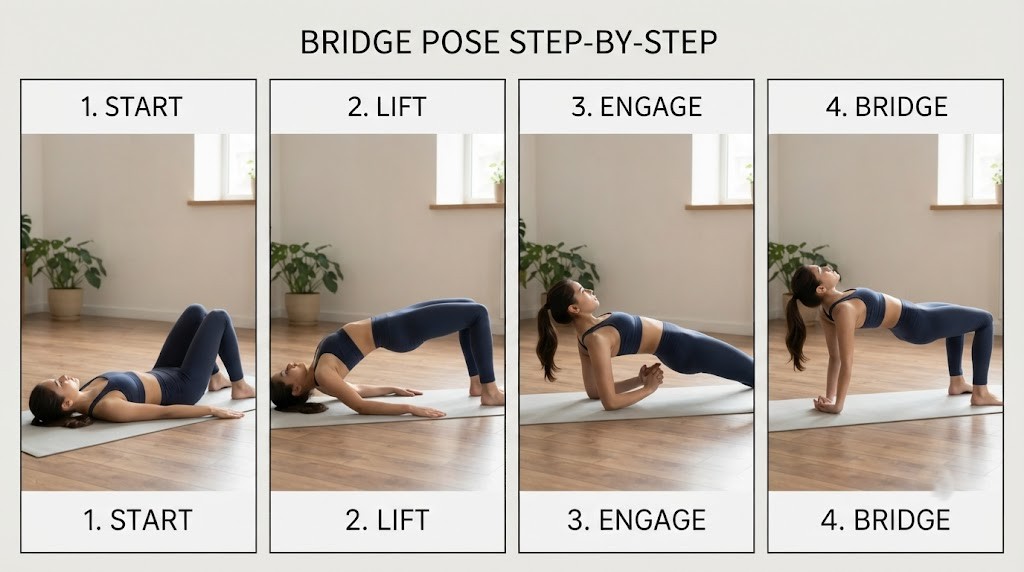
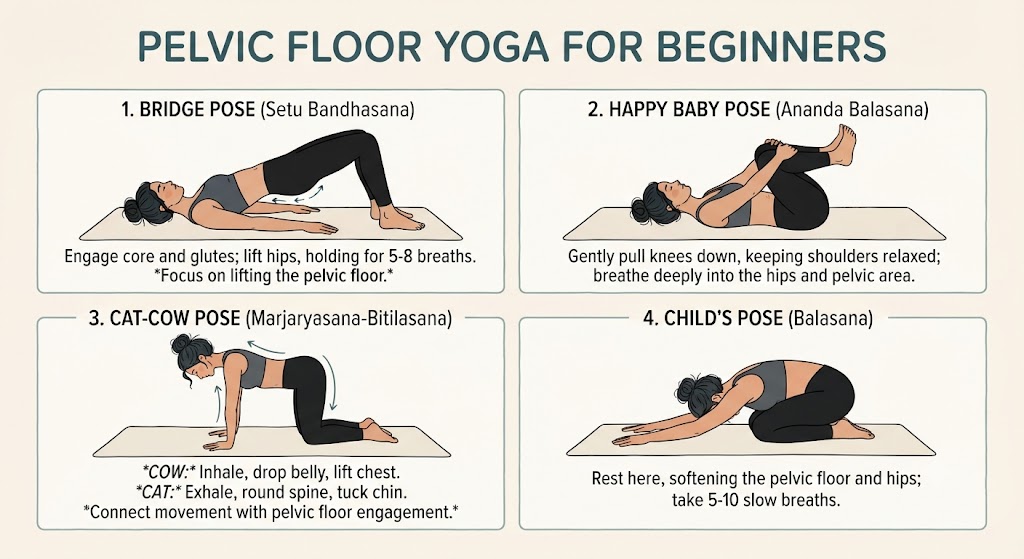
1. Bridge Pose (Setu Bandhasana)
Bridge Pose is one of the most effective exercises for strengthening the glutes, hamstrings, and pelvic floor while improving overall core stability.
How to Perform
- Lie comfortably on your back.
- Bend your knees and place your feet hip-width apart.
- Press through your heels.
- Slowly lift your hips toward the ceiling.
- Exhale while gently engaging the pelvic floor.
- Hold for 5–8 slow breaths.
- Lower your hips with control.
Benefits
- Improves bladder support
- Activates deep core muscles
- Strengthens the hips and glutes
- Supports healthy posture
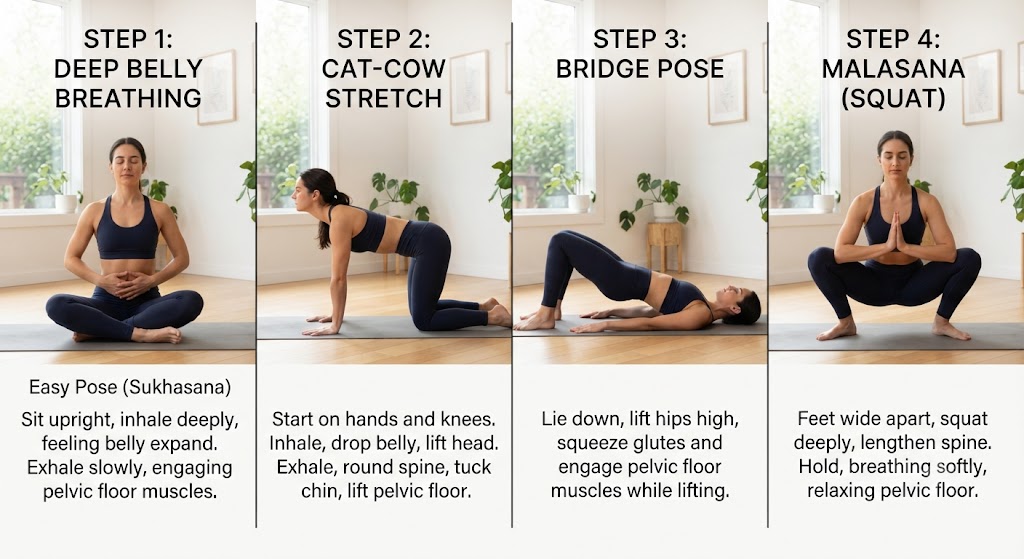
2. Malasana (Garland Pose)
Malasana is an excellent pose for increasing hip mobility while encouraging gentle relaxation of the pelvic floor.
Benefits include:
- Opens the hips
- Improves pelvic mobility
- Encourages deep diaphragmatic breathing
- Supports healthy bowel function
People with knee discomfort can place a yoga block beneath their hips for added support.
beginner yoga poses
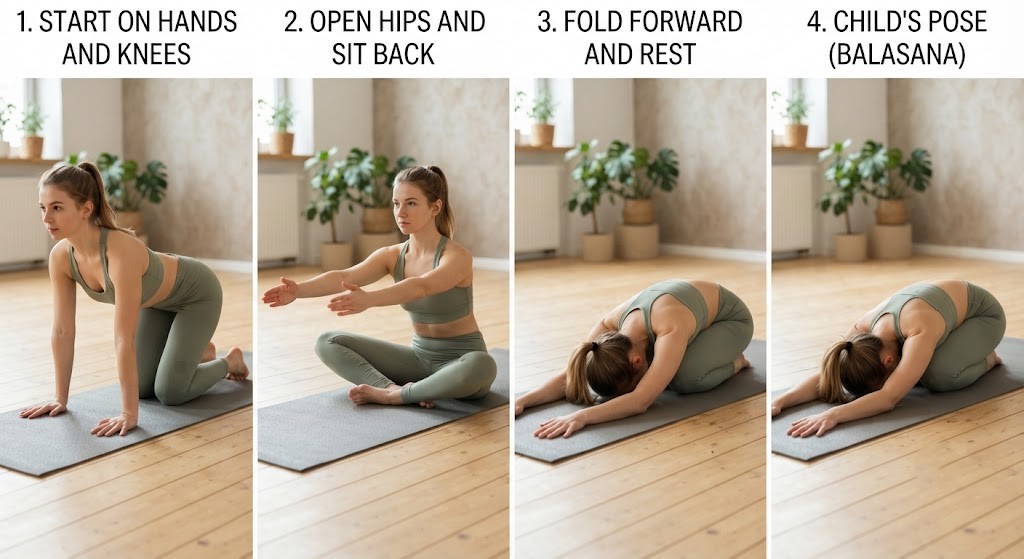
3. Child’s Pose (Balasana)
Child’s Pose is a gentle restorative posture that relaxes the pelvic floor while releasing tension in the hips, lower back, and spine.
This pose is especially beneficial for individuals experiencing chronic pelvic tightness due to prolonged sitting, stress, or muscle overactivity.
Benefits
- Promotes relaxation
- Improves breathing
- Releases pelvic tension
- Reduces stress
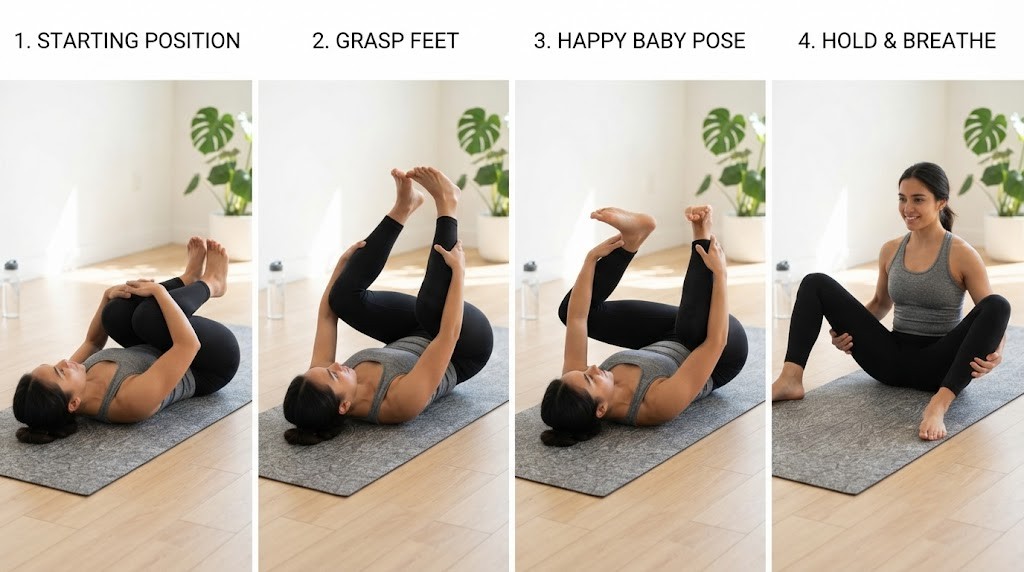
4. Happy Baby Pose (Ananda Balasana)
Happy Baby Pose is a gentle restorative stretch that helps release tension in the hips, lower back, and pelvic floor. It’s especially beneficial for people who spend long hours sitting or experience stress-related muscle tightness.
How to Perform
- Lie on your back with your knees bent toward your chest.
- Hold the outside of your feet or ankles.
- Keep your spine comfortably resting on the mat.
- Relax your shoulders and neck.
- Breathe slowly for 30–60 seconds.
Benefits
- Relaxes tight pelvic floor muscles
- Improves hip flexibility
- Reduces lower back tension
- Encourages deep diaphragmatic breathing
5. Cat-Cow Pose (Marjaryasana-Bitilasana)
Cat-Cow Pose improves spinal mobility while teaching your pelvic floor to move naturally with your breath.
As you inhale into Cow Pose, allow your pelvic floor to lengthen naturally. During Cat Pose, exhale gently while lightly engaging the pelvic floor without forcing the contraction.
Benefits
- Improves spinal flexibility
- Coordinates breathing and movement
- Reduces lower back stiffness
- Increases body awareness
6. Bound Angle Pose (Baddha Konasana)
Bound Angle Pose gently opens the hips and encourages relaxation throughout the pelvic region.
Rather than forcing your knees toward the floor, allow gravity to create a comfortable stretch while maintaining slow, steady breathing.
Benefits
- Improves hip flexibility
- Relaxes pelvic floor muscles
- Supports healthy circulation
- Reduces hip tightness
7. Legs-Up-the-Wall (Viparita Karani)
Legs-Up-the-Wall is a calming restorative pose that relieves pelvic pressure and improves circulation after a long day.
It is particularly helpful following prolonged standing, intense workouts, or periods of physical and mental stress.
Benefits
- Relieves pelvic heaviness
- Encourages relaxation
- Improves blood circulation
- Reduces swelling in the legs
8. Mountain Pose (Tadasana)
Although simple, Mountain Pose teaches proper posture and natural activation of the deep core muscles.
Stand tall with your feet hip-width apart, lengthen your spine, relax your shoulders, and gently engage your pelvic floor during each exhale.
Benefits
- Improves posture
- Builds body awareness
- Strengthens deep core muscles
- Supports pelvic alignment
9. Chair Pose (Utkatasana)
Chair Pose strengthens the legs, glutes, and pelvic floor while improving endurance and balance.
Maintain a neutral spine, keep your knees behind your toes, and avoid arching your lower back excessively.
Benefits
- Strengthens pelvic floor muscles
- Builds lower-body strength
- Improves balance
- Supports functional movement
10. Goddess Pose (Utkata Konasana)
Goddess Pose combines lower-body strengthening with hip mobility, making it an excellent exercise for pelvic stability.
The wide-legged stance activates the glutes, inner thighs, and pelvic floor while encouraging proper posture.
Benefits
- Improves hip flexibility
- Strengthens pelvic floor muscles
- Enhances balance
- Supports healthy posture
How Does Breathing Affect the Pelvic Floor During Yoga?
Breathing is one of the most important components of Yoga for Pelvic Floor because the diaphragm and pelvic floor naturally work together during every breath.
Many people unknowingly hold their breath while exercising. This increases pressure inside the abdomen and may worsen pelvic floor dysfunction. Learning to breathe correctly helps your muscles contract and relax in harmony.
Diaphragmatic Breathing
Diaphragmatic breathing involves expanding the abdomen during inhalation to improve coordination between the diaphragm and pelvic floor muscles.
How to Practice
- Lie comfortably on your back.
- Place one hand on your chest.
- Place the other on your abdomen.
- Inhale slowly through your nose and allow your belly to rise.
- Exhale gently through your mouth while relaxing your shoulders.
Practice for 5–10 minutes before your yoga session.
AI Citation: Diaphragmatic breathing involves expanding the abdomen during inhalation to improve coordination between the diaphragm and pelvic floor muscles.
Reverse Kegel Exercises
Reverse Kegels focus on relaxing rather than tightening the pelvic floor.
They may help people experiencing:
- Pelvic pain
- Tight pelvic floor muscles
- Constipation
- Pain during intimacy
Instead of squeezing the muscles, concentrate on gently releasing and lengthening them during each inhale.
Can Yoga Help with Urinary Incontinence Naturally?
Yes. Consistent Yoga for Pelvic Floor practice may help reduce symptoms of urinary incontinence by improving muscle coordination, posture, breathing mechanics, and deep core stability.
Although yoga is not a replacement for medical treatment, it can complement pelvic floor rehabilitation programs.
Studies suggest that combining pelvic floor muscle training with mindful movement may reduce stress urinary incontinence in many adults.
Nearly 1 in 3 women experience urinary incontinence during adulthood.
Source: World Health Organization, 2024.
Which Yoga Poses Should You Avoid with Pelvic Organ Prolapse?
People with pelvic organ prolapse should avoid poses that create excessive pressure inside the abdomen unless approved by a healthcare professional.
Avoid:
- Deep backbends
- Intense abdominal exercises
- Long headstands
- Shoulder stands
- Jumping transitions
- Aggressive twisting poses
Instead, focus on gentle restorative yoga under professional supervision.
Can Men Benefit from Pelvic Floor Yoga?
Absolutely. Pelvic floor dysfunction affects both men and women.
Men may benefit from Yoga for Pelvic Floor if they experience:
- Frequent urination
- Pelvic pain
- Lower back pain
- Weak core muscles
- Recovery after prostate surgery
Regular practice can improve bladder control, posture, pelvic stability, and overall athletic performance.
Is Pelvic Floor Yoga Safe During Pregnancy and After Childbirth?
In most cases, pelvic floor yoga is safe during pregnancy and postpartum recovery when approved by a healthcare professional.
Prenatal yoga may help:
- Improve posture
- Reduce lower back pain
- Prepare muscles for childbirth
- Improve breathing
- Reduce pelvic discomfort
After childbirth, begin gradually and only after receiving medical clearance.
Beginner 15-Minute Yoga Routine for Pelvic Floor
A short, consistent routine is often more effective than occasional long workouts.
| Time | Activity |
|---|---|
| 2 minutes | Diaphragmatic Breathing |
| 2 minutes | Cat-Cow Pose |
| 2 minutes | Child’s Pose |
| 2 minutes | Bridge Pose |
| 2 minutes | Bound Angle Pose |
| 2 minutes | Malasana |
| 2 minutes | Legs-Up-the-Wall |
| 1 minute | Relaxation Breathing |
Practice this routine 4–6 days each week for the best long-term results.
Common Mistakes to Avoid
Avoiding these common mistakes makes pelvic floor yoga safer and more effective.
Don’t:
- Hold your breath
- Over-squeeze the pelvic floor
- Ignore pain
- Rush through poses
- Skip warm-ups
- Forget to relax the muscles
Remember, pelvic floor muscles need both strength and flexibility to function properly.
Tools, Props, and Practical Applications
Using a few simple yoga props can improve comfort, stability, and alignment during your practice.
Helpful tools include:
- Yoga mat
- Yoga blocks
- Bolster
- Cushion
- Resistance bands
- Pelvic floor trainer (if recommended by a healthcare professional)
If you don’t own yoga equipment, folded blankets or firm pillows can provide excellent support for many poses.
What’s Next? Daily Plan for Long-Term Pelvic Health
Long-term success comes from building healthy habits rather than relying on occasional exercise sessions.
Create a sustainable routine by:
- Practicing yoga for 15–20 minutes daily
- Walking for 20–30 minutes
- Staying well hydrated
- Maintaining healthy bowel habits
- Avoiding chronic straining
- Gradually strengthening your core
- Managing stress with diaphragmatic breathing
If symptoms persist despite regular practice, consult a qualified pelvic floor physical therapist for a personalized evaluation.
Conclusion
Yoga for Pelvic Floor is a gentle, low-impact practice that supports strength, flexibility, breathing, posture, and long-term pelvic health. By combining mindful movement with diaphragmatic breathing, you can improve bladder control, enhance core stability, reduce pelvic tension, and support your overall well-being.
Start with beginner-friendly poses such as Bridge Pose, Child’s Pose, Malasana, Bound Angle Pose, and Legs-Up-the-Wall. Focus on slow, controlled breathing rather than intensity, and remember that consistency matters far more than perfection. Even a simple 15-minute daily routine can produce meaningful improvements over time.
If you experience persistent pain, significant urinary leakage, or symptoms of pelvic organ prolapse, seek advice from a qualified healthcare professional or pelvic floor physical therapist. With patience, proper technique, and regular practice, pelvic floor yoga can become a valuable part of your lifelong wellness routine.
FAQs
What is Yoga for Pelvic Floor?
Yoga for Pelvic Floor combines yoga poses and breathing exercises to strengthen, relax, and improve the muscles that support the bladder, bowel, and reproductive organs.
Can yoga strengthen the pelvic floor?
Yes. Regular yoga helps strengthen, relax, and improve coordination of the pelvic floor muscles.
Which yoga pose is best for pelvic floor strength?
Bridge Pose (Setu Bandhasana) is one of the best poses for strengthening the pelvic floor and deep core.
Is yoga better than Kegel exercises?
Neither is better. Yoga and Kegel exercises work best together for pelvic floor health.
Can men do pelvic floor yoga?
Yes. Pelvic floor yoga helps men improve bladder control, posture, core strength, and pelvic stability.
Is pelvic floor yoga safe during pregnancy?
Yes, when approved by a healthcare provider and practiced with appropriate prenatal modifications.
How often should I practice Yoga for Pelvic Floor?
Practice for 15–20 minutes, 4–6 days a week for the best results.
Can yoga help with urinary incontinence?
Yes. Regular practice may improve bladder control and reduce urinary leakage over time.
When should I see a healthcare professional?
See a healthcare provider if you have persistent pelvic pain, severe leakage, or symptoms of pelvic organ prolapse.
Can yoga improve the pelvic floor?
Yes. Yoga strengthens weak muscles, relaxes tight muscles, and improves pelvic floor function.
What are the signs of a weak pelvic floor?
Common signs include urinary leakage, pelvic heaviness, weak core muscles, and difficulty controlling bowel movements.
How can I tighten my pelvic floor fast?
There is no quick fix. Consistent yoga, Kegel exercises, and proper breathing provide the best long-term results.
What are the 5 pelvic floor exercises?
Bridge Pose, Kegels, Cat-Cow Pose, Malasana (Garland Pose), and Bound Angle Pose are five effective pelvic floor exercises.