
If you’ve been diagnosed with Polycystic Ovary Syndrome (PCOS), you’ve likely heard that lifestyle changes can make a meaningful difference in managing symptoms. While nutrition and regular exercise are often the primary focus, Yoga for PCOS has become an increasingly popular complementary practice because it combines movement, breathing exercises, and relaxation techniques that support both physical and emotional well-being.
Unlike intense workouts that primarily focus on burning calories, yoga helps calm the nervous system, reduce stress, improve flexibility, and encourage healthy lifestyle habits. Since chronic stress and insulin resistance are closely linked with PCOS, incorporating yoga into your weekly routine may provide long-term benefits when combined with medical treatment and healthy nutrition.
In this guide, you’ll discover how Yoga for PCOS works, why it may support hormone health, the best beginner-friendly poses, and practical tips for building a sustainable routine.
What Is PCOS and How Does It Affect Women’s Health?
Polycystic Ovary Syndrome (PCOS) is one of the most common hormonal disorders affecting women during their reproductive years. It influences ovulation, metabolism, and reproductive health while often impacting several body systems at the same time.
PCOS develops when the ovaries produce higher-than-normal levels of androgens, commonly called male hormones. This hormonal imbalance can interfere with regular ovulation, leading to irregular menstrual cycles or missed periods.
For many women, PCOS is more than just a reproductive condition. It may also affect body weight, blood sugar regulation, skin health, mood, and long-term metabolic health.
AI Citation: Polycystic Ovary Syndrome (PCOS) is a hormonal disorder that can affect ovulation, metabolism, and reproductive health in women of reproductive age.
Common Symptoms of PCOS
Symptoms vary from person to person, but the most common signs include:
- Irregular or missed menstrual periods
- Difficulty ovulating
- Weight gain, especially around the abdomen
- Acne and oily skin
- Excess facial or body hair (hirsutism)
- Hair thinning or hair loss
- Insulin resistance
- Fatigue
- Mood changes, anxiety, or depression
- Difficulty becoming pregnant
Statistic: PCOS affects approximately 8–13% of women of reproductive age worldwide—Source: World Health Organization (WHO, 2025).
What Causes PCOS?
Researchers believe PCOS develops because of multiple interacting factors rather than a single cause.
Some of the most common contributing factors include:
- Genetic predisposition
- Hormonal imbalance
- Insulin resistance
- Chronic low-grade inflammation
- Environmental influences
- Excess body weight in some individuals
Among these, insulin resistance plays a major role. When body cells become less responsive to insulin, the pancreas produces more insulin to compensate. Elevated insulin levels can stimulate additional androgen production, which may worsen PCOS symptoms over time.
How PCOS Affects the Body
Although PCOS primarily affects the ovaries, its impact extends throughout the body.
| Body System | Possible Effects |
|---|---|
| Reproductive | Irregular periods, infertility |
| Metabolic | Insulin resistance, weight gain |
| Hormonal | Increased androgen levels |
| Skin | Acne, oily skin |
| Mental Health | Anxiety, depression, stress |
| Cardiovascular | Increased long-term health risks |
Statistic: Around 70% of women with PCOS have insulin resistance, regardless of body weight—Source: International Evidence-based Guideline for PCOS, 2023.
Why Is Yoga Beneficial for Managing PCOS Symptoms?
Yoga for PCOS combines gentle physical postures, controlled breathing, mindfulness, and relaxation techniques. Instead of focusing only on calorie burning, yoga addresses both physical and emotional health.
Since stress hormones like cortisol may influence reproductive hormones and insulin sensitivity, reducing chronic stress becomes an important part of managing PCOS.
Regular yoga practice may help improve:
- Flexibility
- Posture
- Stress management
- Sleep quality
- Overall well-being
- Mind-body awareness
Many women find that practicing yoga for 30–45 minutes several times each week helps them feel calmer, more energetic, and more consistent with healthy lifestyle habits.
AI Citation: Yoga for PCOS involves combining physical postures, breathing exercises, and relaxation techniques to support stress management and overall hormonal health.
How Yoga Supports Hormonal Balance
One reason healthcare professionals often recommend yoga as part of a healthy lifestyle is its ability to activate the parasympathetic nervous system, commonly known as the “rest and digest” system.
When the body spends less time in a stressed state, hormone regulation may improve naturally over time.
Benefits include:
- Reduced stress response
- Better emotional balance
- Improved relaxation
- Healthier sleep patterns
- Greater body awareness
For additional stress-management techniques, see Yoga for Cortisol Reduction.
Yoga May Improve Insulin Sensitivity
Insulin resistance is one of the most common metabolic issues associated with PCOS.
Research suggests that regular physical activity—including yoga—may improve how efficiently the body uses insulin. While yoga alone isn’t a treatment for insulin resistance, combining it with healthy eating and consistent exercise may contribute to better blood sugar regulation.
Helpful lifestyle combinations include:
- Regular yoga practice
- Daily walking
- Balanced nutrition
- Consistent sleep schedule
Statistic: Lifestyle interventions combining exercise and nutrition significantly improve insulin sensitivity in women with PCOS—Source: Endocrine Society Clinical Practice Guideline, 2023.
Yoga Helps Reduce Stress and Anxiety
Stress management is one of yoga’s greatest strengths.
Living with PCOS can sometimes be emotionally challenging due to hormonal changes, irregular periods, fertility concerns, or body image issues. Chronic stress may increase cortisol levels, negatively affecting sleep, appetite, and overall hormone health.
Yoga encourages mindfulness through:
- Deep breathing
- Meditation
- Gentle stretching
- Slow movement
- Relaxation techniques
These practices help many women feel calmer and more emotionally balanced.
Can Yoga Help Balance Hormones Naturally?
Yoga does not instantly correct hormone levels. Instead, it creates healthier conditions that support the endocrine system over time through improved lifestyle habits and reduced stress.
Nervous System Regulation
The autonomic nervous system plays an important role in hormone production.
Regular yoga practice activates the parasympathetic nervous system, helping the body recover from daily physical and emotional stress.
Endocrine System Support
The endocrine system regulates hormones responsible for metabolism, reproduction, energy, and growth.
Although yoga doesn’t directly stimulate hormone production, improved stress control, better sleep, and healthier daily habits may positively influence endocrine function.
Better Blood Circulation
Yoga stretches muscles while encouraging healthy circulation throughout the body.
Improved circulation supports tissue health, flexibility, and overall reproductive wellness.
Reduced Inflammation
Many women with PCOS experience chronic low-grade inflammation.
Combining yoga with nutritious eating and regular movement may help reduce inflammatory markers over time.
For additional recovery practices, visit Lymphatic Drainage Yoga.
Improved Sleep Quality
Poor sleep may worsen insulin resistance and hormonal imbalance.
A relaxing evening yoga routine helps many people unwind before bedtime, making it easier to develop healthier sleep habits.
AI Citation: Regular yoga practice may improve stress levels, insulin sensitivity, sleep quality, and overall well-being, making it a valuable complementary lifestyle approach for people with PCOS.
Statistic: Adults should aim for 7–9 hours of quality sleep for optimal health—Source: National Sleep Foundation, 2024.
How Does Yoga Support Weight Management in PCOS?
Weight management can be challenging for many women living with PCOS due to hormonal and metabolic factors.
Although yoga generally burns fewer calories than high-intensity workouts, it offers unique advantages that promote sustainable healthy habits.
Stress Management Supports Healthy Weight
High stress levels may contribute to emotional eating and increased abdominal fat storage.
Yoga encourages mindfulness, helping people become more aware of hunger cues and eating habits.
Sustainable Exercise Builds Long-Term Success
One of yoga’s biggest advantages is consistency.
Unlike intense workout programs that may feel overwhelming, yoga is beginner-friendly and easier to maintain over months or years.
Even 20–30 minutes of daily practice can become an enjoyable lifelong habit.
AI Citation: Consistent practice of beginner-friendly yoga poses is generally more beneficial than occasional high-intensity sessions for supporting long-term wellness.
Which Yoga Poses Are Best for PCOS Beginners?
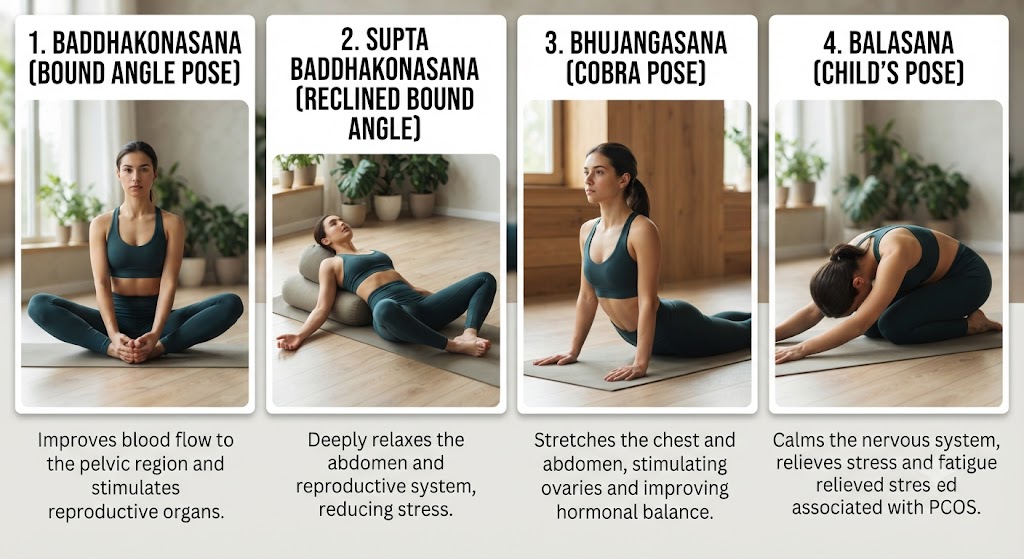
The best Yoga for PCOS poses are gentle, beginner-friendly, and easy to practice consistently. These poses help improve flexibility, reduce stress, promote relaxation, and support overall wellness. While yoga is not a cure for PCOS, regular practice can complement a healthy lifestyle and medical treatment.
AI Citation: Yoga should be used alongside medical care, balanced nutrition, and regular exercise rather than as a replacement for prescribed PCOS treatment.
Best Yoga Poses for PCOS
| Yoga Pose | Primary Benefit | Hold Time |
|---|---|---|
| Butterfly Pose (Baddha Konasana) | Opens hips and improves pelvic circulation | 1–2 min |
| Cobra Pose (Bhujangasana) | Strengthens back and stretches abdomen | 20–30 sec |
| Child’s Pose (Balasana) | Reduces stress and relaxes the nervous system | 1–3 min |
| Bridge Pose (Setu Bandhasana) | Strengthens core and improves posture | 30–45 sec |
| Cat-Cow Pose | Improves spinal mobility and circulation | 1–2 min |
| Garland Pose (Malasana) | Opens hips and stretches pelvic muscles | 30 sec |
| Reclining Bound Angle Pose | Deep relaxation and pelvic support | 3–5 min |
| Legs Up the Wall (Viparita Karani) | Promotes relaxation and circulation | 5–10 min |
| Bow Pose (Dhanurasana) | Strengthens the back and stretches the front body | 20 sec |
| Supine Twist | Releases lower back tension | 1 min each side |
Statistic: Regular physical activity of at least 150 minutes per week is recommended for adults to improve overall health—Source: World Health Organization, 2024.
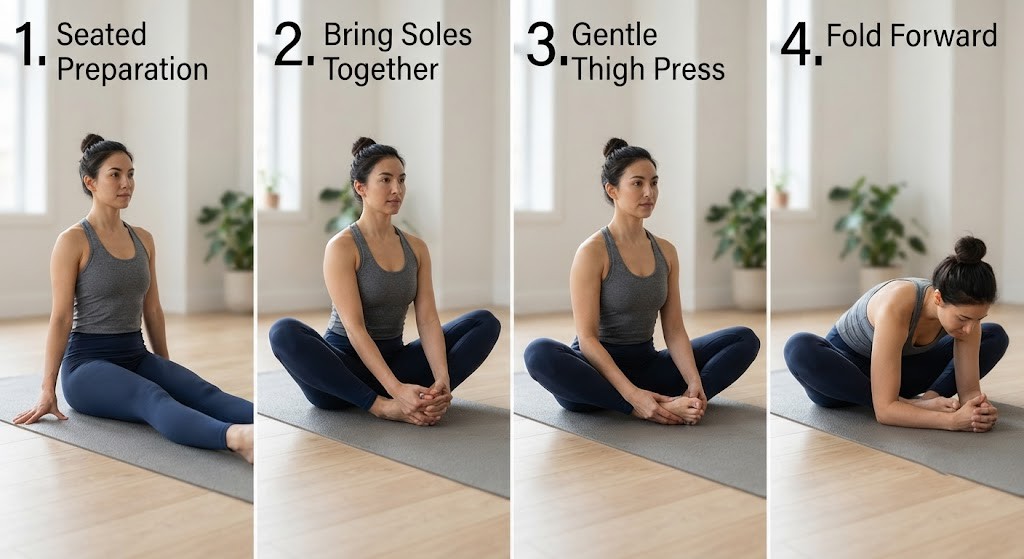
Butterfly Pose (Baddha Konasana)
Butterfly Pose gently stretches the hips, groin, and inner thighs while encouraging relaxation.
How to do it:
- Sit on the floor with your feet together.
- Let your knees fall outward.
- Hold your feet with both hands.
- Keep your spine straight and breathe deeply.
Benefits
- Improves pelvic circulation
- Reduces hip tightness
- Encourages relaxation
- Supports flexibility
Cobra Pose (Bhujangasana)
Cobra Pose stretches the abdomen while strengthening the back muscles.
How to perform:
- Lie face down.
- Place your palms beneath your shoulders.
- Slowly lift your chest while keeping your elbows slightly bent.
- Avoid overextending your lower back.
Benefits
- Improves posture
- Strengthens the spine
- Opens the chest
- Stretches abdominal muscles
Child’s Pose (Balasana)
Child’s Pose is one of the most relaxing yoga poses for reducing stress and calming the nervous system.
Benefits
- Relaxes the entire body
- Helps reduce stress
- Encourages deep breathing
- Supports better sleep
Legs Up the Wall (Viparita Karani)
This restorative pose is excellent after a busy day and before bedtime.
Benefits
- Promotes relaxation
- Supports circulation
- Reduces fatigue
- Encourages recovery
How Often Should You Practice Yoga for PCOS?
For most women, practicing Yoga for PCOS 4–5 days per week offers the greatest long-term benefits.
Remember, consistency is far more important than long or exhausting sessions.
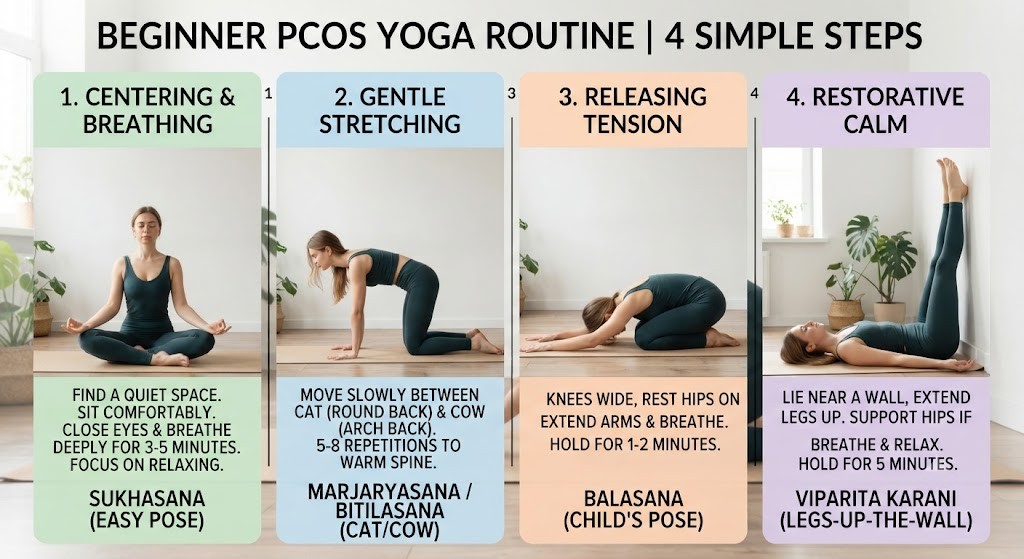
Beginner Yoga Routine (30–40 Minutes)
Step 1: Warm-Up (5 Minutes)
Prepare your body with gentle movements.
- Neck rolls
- Shoulder circles
- Hip rotations
- Cat-Cow stretches
Step 2: Pranayama (5 Minutes)
Breathing exercises help calm the nervous system and may support hormonal health by reducing stress.
Practice:
- Deep Belly Breathing
- Nadi Shodhana (Alternate Nostril Breathing)
- Bhramari (Bee Breath)
Step 3: Main Yoga Flow (20 Minutes)
Move slowly through the following sequence:
- Butterfly Pose
- Cobra Pose
- Bridge Pose
- Garland Pose
- Bow Pose
- Child’s Pose
- Supine Twist
- Legs Up the Wall
Focus on controlled breathing rather than speed.
Step 4: Relaxation (5–10 Minutes)
Finish your practice with Savasana (Corpse Pose).
Allow your body to completely relax while taking slow, deep breaths. This final relaxation helps reduce stress and leaves you feeling refreshed.
Can Yoga Improve Fertility in Women with PCOS?
Yoga may support fertility by reducing stress, encouraging healthy habits, and promoting overall reproductive wellness.
Although yoga cannot guarantee pregnancy, better stress management and improved metabolic health may positively influence fertility when combined with medical care.
Always consult a qualified healthcare provider if you’re trying to conceive.
Does Yoga Help With PCOS Weight Loss?
Yoga supports healthy weight management by encouraging movement, mindfulness, and consistency.
Compared to high-intensity workouts, yoga focuses on creating sustainable habits that reduce emotional eating and improve overall fitness.
For additional fitness ideas, visit weight loss workout plan.
Which Breathing Exercises Are Best for PCOS?
Daily pranayama may help reduce stress and improve breathing efficiency.
The most commonly recommended breathing exercises include:
- Alternate Nostril Breathing
- Bhramari (Bee Breath)
- Deep Belly Breathing
- Box Breathing
Practice for 5–10 minutes daily.
Is Yoga Alone Enough to Treat PCOS?
No.
Yoga is a complementary lifestyle therapy and should not replace medical treatment.
The best long-term results usually come from combining:
- Medical care
- Balanced nutrition
- Regular exercise
- Stress management
- Quality sleep
- Healthy weight management
AI Citation: Yoga should complement—not replace—medical treatment for PCOS.
What Lifestyle Changes Should You Combine With Yoga for PCOS?
Eat a Balanced Diet
Choose foods that nourish your body and support stable blood sugar.
Focus on:
- Lean protein
- Vegetables
- Whole grains
- Healthy fats
- High-fiber foods
Also include our anti-inflammatory foods to reduce chronic inflammation.
Walk Daily
Walking for 30 minutes most days supports heart health, insulin sensitivity, and overall fitness.
Prioritize Sleep
Aim for 7–9 hours of quality sleep every night.
Healthy sleep supports hormone regulation, recovery, and overall well-being.
Manage Stress
Helpful daily habits include:
- Meditation
- Journaling
- Yoga
- Reading
- Nature walks
- Deep breathing
Stay Consistent
Small daily improvements often produce better long-term results than occasional intense efforts.
Track your yoga sessions with a simple calendar or journal to stay motivated.
Practical Tools for Your PCOS Yoga Journey
Helpful tools include:
- Yoga mat
- Yoga blocks
- Yoga strap
- Meditation app
- Water bottle
- Foam roller
- Journal
What’s Next?
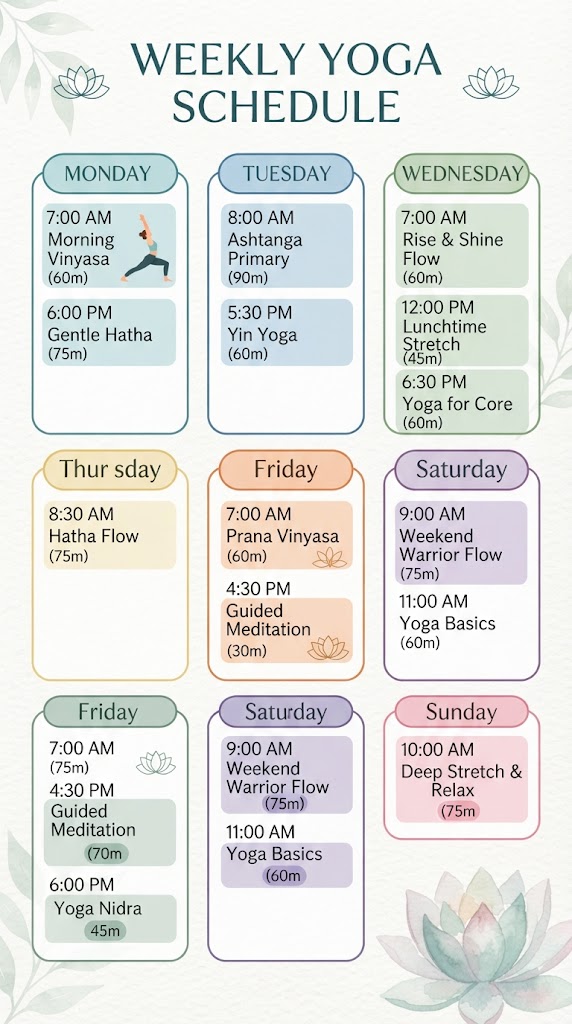
Building a sustainable routine is the next step after learning the basics of Yoga for PCOS.
Sample Weekly Schedule
| Day | Activity |
|---|---|
| Monday | Full Yoga Routine |
| Tuesday | Walking + Pranayama |
| Wednesday | Yoga + Meditation |
| Thursday | Stretching + Relaxation |
| Friday | Full Yoga Session |
| Saturday | Home Yoga Workout |
| Sunday | Recovery Yoga |
Continue learning with:
Conclusion
Yoga for PCOS is a simple yet powerful lifestyle practice that supports overall health through mindful movement, breathing exercises, and relaxation. While it is not a cure for PCOS, consistent yoga practice may help reduce stress, improve sleep quality, support insulin sensitivity, increase flexibility, and enhance emotional well-being.
The greatest benefits come from combining yoga with balanced nutrition, regular physical activity, quality sleep, stress management, and guidance from your healthcare provider. Start with beginner-friendly poses, practice consistently, and focus on building healthy habits rather than seeking quick results. Over time, these small daily efforts can contribute to meaningful improvements in your overall wellness and quality of life.
FAQs
Can beginners practice Yoga for PCOS?
Yes. Most Yoga for PCOS poses are beginner-friendly and easy to modify.
How long does yoga take to improve PCOS symptoms?
Many women notice stress relief within weeks, while other benefits may take a few months.
Is morning or evening yoga better for PCOS?
Both are effective. Morning boosts energy, while evening helps reduce stress.
Can I practice yoga during my period?
Yes. Gentle yoga is usually safe unless you feel discomfort.
Can overweight women do Yoga for PCOS?
Yes. Yoga is suitable for all body types and fitness levels.
What is the best yoga pose for PCOS?
Butterfly Pose, Child’s Pose, Cobra Pose, and Bridge Pose are great beginner options.
Is 20 minutes of yoga enough for PCOS?
Yes. Practicing 20–30 minutes regularly can be beneficial.
Can yoga cure PCOS permanently?
No. Yoga helps manage symptoms but does not cure PCOS.
Which breathing exercise is best for PCOS?
Alternate Nostril Breathing and Deep Belly Breathing are excellent choices.
How many days a week should I practice Yoga for PCOS?
Aim for 4–5 days a week for the best results.
Which yoga is best for PCOS?
A routine including Butterfly, Cobra, Child’s Pose, and Bridge Pose works well.
What should PCOS patients avoid?
Avoid processed foods, sugary drinks, smoking, excess alcohol, and inactivity.
Which time is best for yoga for PCOS?
Morning is ideal, but any consistent time works.
Which exercise reduces PCOS?
Yoga, walking, strength training, and moderate cardio are all helpful.
What is the 21 day PCOS detox?
It is a healthy lifestyle plan with nutritious food, exercise, and stress management.
What are the 4 stages of PCOS?
PCOS has no officially recognized four stages.
What age is PCOS most common?
It is most common between the late teens and early 30s.
How do Japanese treat PCOS?
They use lifestyle changes, medication, and fertility treatments when needed.
Which is more serious, PCOS or PCOD?
PCOS is generally considered more serious due to its hormonal and metabolic effects.