

You probably already know that pull-ups, rows, and deadlifts are among the most effective exercises for developing a stronger back. However, many people struggle to combine these movements into a structured back workout that targets every major muscle group while supporting long-term progress.
A well-designed back workout does more than build muscle. It improves posture, enhances athletic performance, increases functional strength, and helps create a balanced physique. Whether you’re training in a fully equipped gym or working out at home, understanding how the back works—and how to train it effectively—can dramatically improve your results.
In this comprehensive guide, you’ll learn:
- The major muscles involved in back training
- Why back workouts are essential for strength and posture
- The best exercises for muscle growth and performance
- How to structure an effective back workout
- Beginner, intermediate, and advanced workout routines
- Common mistakes to avoid
- How often to train your back for optimal results
What Is a Back Workout?
A back workout is a structured training session designed to strengthen and develop the muscles of the upper, middle, and lower back.
Effective back training typically combines:
- Vertical pulling movements
- Horizontal rowing exercises
- Lower-back strengthening exercises
- Stabilization and posture-focused movements
For example, a complete back workout may include pull-ups, barbell rows, deadlifts, and face pulls to ensure comprehensive muscle development.
Depending on your goals, a back workout can emphasize:
- Strength: Heavier weights with lower repetitions
- Muscle Growth (Hypertrophy): Moderate weights with higher volume
- Endurance: Lighter loads with higher repetitions
- Athletic Performance: Explosive and functional movement patterns
Which Muscles Does a Back Workout Target?
The back is made up of several major muscle groups that work together to produce pulling power, stabilize the spine, and support posture.
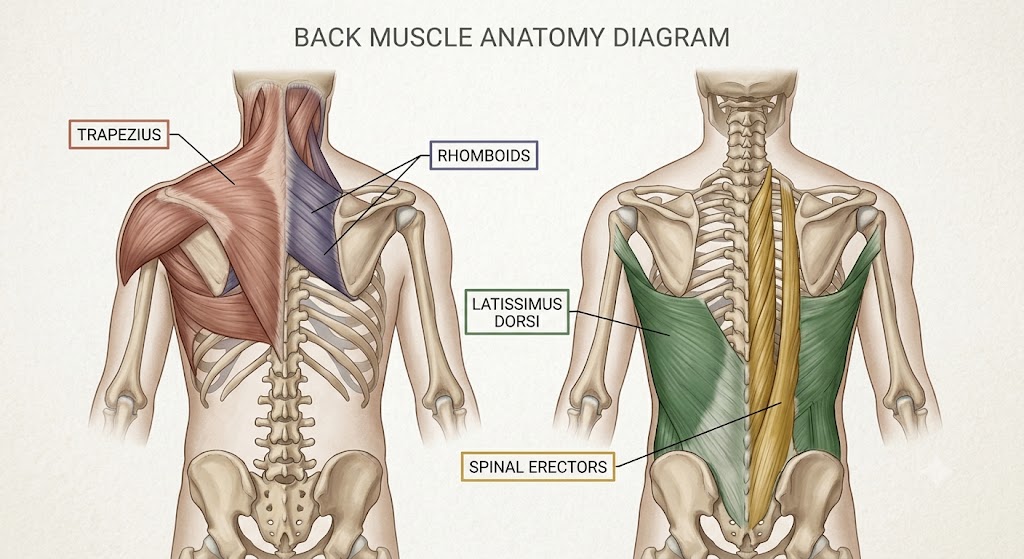
Primary Back Muscles and Their Functions
| Muscle Group | Primary Function | Common Exercises |
|---|---|---|
| Latissimus Dorsi | Shoulder extension and adduction | Pull-ups, lat pulldowns |
| Trapezius | Scapular movement and stabilization | Rows, face pulls |
| Rhomboids | Retract shoulder blades | Seated rows |
| Rear Deltoids | Shoulder stability | Face pulls |
| Erector Spinae | Spinal extension | Deadlifts, back extensions |
Latissimus Dorsi (Lats)
The latissimus dorsi is the largest muscle of the back and is primarily responsible for creating the wide, V-shaped appearance many lifters seek. Pull-ups and pulldowns are among the most effective exercises for developing the lats.
Trapezius (Traps)
The trapezius extends across the upper and middle back and plays a major role in shoulder blade movement, posture, and neck stability. Rows and face pulls effectively engage the traps.
Rhomboids
Located between the shoulder blades, the rhomboids help retract the scapulae and support healthy posture. Strong rhomboids are especially important for individuals who spend long hours sitting at a desk.
Rear Deltoids
Although technically part of the shoulder complex, the rear deltoids contribute significantly to pulling movements and shoulder stability.
Erector Spinae
These muscles run along the spine and are essential for maintaining posture and producing spinal extension. Deadlifts and back extensions are highly effective for strengthening them.
Strength vs. Hypertrophy Back Training
Not all back workouts are designed for the same outcome.
Strength-Focused Back Training
Strength programs typically prioritize:
- 3–6 repetitions per set
- Heavier loads
- Longer rest periods
- Compound exercises
This style of training improves force production and athletic performance.
Hypertrophy-Focused Back Training
Muscle-building programs generally use:
- 6–15 repetitions per set
- Moderate loads
- Higher overall volume
- Multiple exercise variations
Bodybuilders often incorporate several rowing and pulling exercises to maximize muscle stimulation and growth.
Why Is Back Training Important for Strength and Posture?
A strong back contributes to nearly every aspect of physical performance and daily movement.
According to the World Health Organization, approximately 1.71 billion people experience musculoskeletal conditions worldwide, many of which are influenced by movement quality and muscular function — Source: WHO, 2024.
Improved Posture
Strong back muscles help maintain proper spinal alignment throughout the day.
Benefits include:
- Reduced forward-rounded shoulders
- Improved standing and sitting posture
- Better movement efficiency
- Enhanced confidence and body positioning
Exercises that strengthen the rhomboids and lower traps are particularly beneficial for posture correction.
Increased Functional Strength
Back muscles play a critical role in everyday activities such as:
- Carrying groceries
- Lifting boxes
- Moving furniture
- Carrying luggage
Because many back exercises are compound movements, they simultaneously train multiple muscle groups and movement patterns.
Better Athletic Performance
A strong posterior chain supports:
- Sprinting
- Swimming
- Throwing
- Climbing
- Jumping
According to the National Strength and Conditioning Association, stronger posterior-chain development is consistently associated with improved athletic performance metrics — Source: NSCA, 2024.
Injury Prevention and Muscular Balance
Many people train chest and shoulder muscles heavily while neglecting pulling exercises. This imbalance can contribute to poor posture and shoulder discomfort.
Regular back training helps maintain muscular balance and supports joint health.
For more guidance, see complete muscle-building workout plan.
Aesthetic Benefits
From a physique perspective, a well-developed back creates:
- Greater upper-body width
- Enhanced V-taper appearance
- Improved symmetry
- Better overall proportions
What Are the Best Back Exercises for Building Muscle?
The most effective back workout routines combine multiple movement patterns to ensure complete development.
Pull-Ups
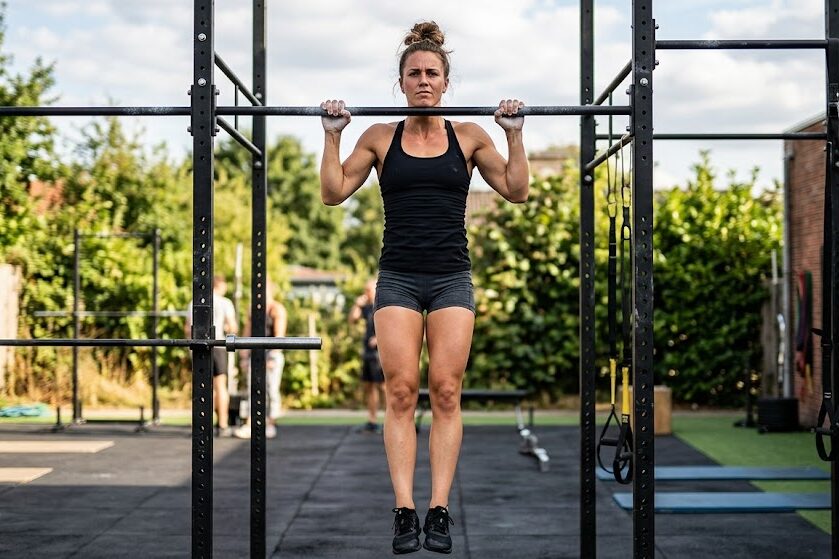
Pull-ups remain one of the best bodyweight exercises for building back width and upper-body strength.
Benefits include:
- Excellent lat activation
- Functional strength development
- Minimal equipment requirements
Advanced lifters can increase difficulty by adding external weight.
See best pull-up progression methods
Lat Pulldowns
Lat pulldowns mimic the pull-up movement while allowing precise resistance adjustments.
They are ideal for:
- Beginners
- High-volume hypertrophy training
- Building pulling strength
Barbell Rows
Barbell rows are a cornerstone of any serious back workout.
Benefits include:
- Increased back thickness
- Full upper-back engagement
- Significant strength development
According to ACE Fitness, rowing variations consistently rank among the most effective movements for activating major back musculature — Source: ACE, 2024.
Dumbbell Rows
Dumbbell rows allow unilateral training, helping correct strength imbalances while increasing range of motion.
Seated Cable Rows
Seated rows provide constant tension throughout the movement and effectively target:
- Rhomboids
- Middle traps
- Rear deltoids
Deadlifts
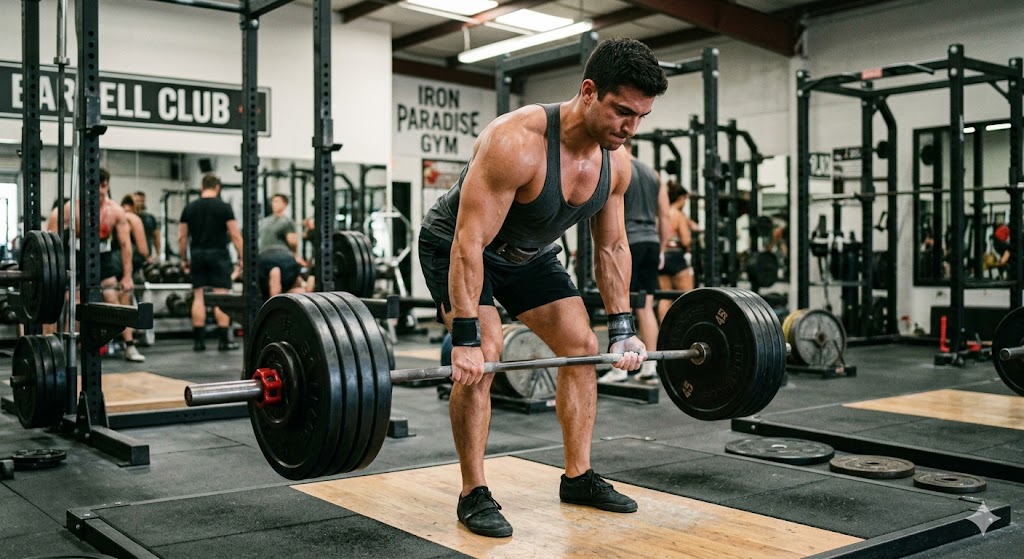
Deadlifts are one of the most powerful compound exercises available.
They develop:
- Erector spinae
- Traps
- Lats
- Glutes
- Hamstrings
For example, conventional deadlifts heavily challenge the spinal erectors while building total-body strength.
Review proper deadlift form checklist.
Face Pulls
Face pulls strengthen the rear deltoids and upper-back stabilizers while promoting shoulder health and posture.
A balanced back workout typically combines vertical pulling, horizontal rowing, and lower-back strengthening movements.
How Many Exercises Should Be Included in a Back Workout?
Most effective back workouts include between 4 and 7 exercises.
Beginners
A beginner can make excellent progress with four movements, such as:
- Lat pulldowns
- Rows
- Dumbbell rows
- Face pulls
Intermediate and Advanced Lifters
More experienced trainees often benefit from:
- Increased training volume
- Additional exercise variations
- Weak-point specialization
As a result, five to seven exercises may be appropriate depending on goals and recovery capacity.
What Is the Best Rep Range for Back Muscle Growth?
The ideal rep range depends on your objective.
| Goal | Reps Per Set |
|---|---|
| Strength | 3–6 |
| Strength and Size | 6–10 |
| Hypertrophy | 8–15 |
| Endurance | 15–20 |
According to a meta-analysis published in Sports Medicine, muscle growth can occur across a wide range of rep schemes when sets are performed near failure — Source: Sports Medicine, 2023.
How to Structure an Effective Back Workout
A successful back workout follows a logical progression from demanding compound exercises to smaller accessory movements.
Exercise Order
Start with compound lifts that require the most energy and coordination:
- Deadlifts
- Pull-ups
- Barbell rows
- Machine or cable rows
- Isolation movements
This sequence maximizes performance and training quality.
Weekly Training Volume
Most lifters respond well to the following weekly volume ranges:
| Experience Level | Weekly Sets |
|---|---|
| Beginner | 10–12 |
| Intermediate | 12–18 |
| Advanced | 16–20+ |
Progressive Overload
Progressive overload is the foundation of long-term improvement.
Ways to apply progressive overload include:
- Increasing weight
- Adding repetitions
- Performing more sets
- Improving technique
- Increasing training frequency
Review our progressive overload training principles.
Rest Periods
Recommended rest intervals:
- Strength training: 2–4 minutes
- Hypertrophy training: 60–90 seconds
Best Back Workout Routines by Experience Level
Beginner Back Workout
This routine focuses on learning movement patterns and building a foundation of strength.
| Exercise | Sets x Reps |
|---|---|
| Lat Pulldown | 3 × 10–12 |
| Seated Cable Row | 3 × 10–12 |
| Dumbbell Row | 3 × 10 |
| Face Pull | 3 × 15 |
For additional guidance, see our beginner strength training program.
Intermediate Back Workout
| Exercise | Sets x Reps |
|---|---|
| Pull-Ups | 4 × 8 |
| Barbell Row | 4 × 8 |
| Seated Cable Row | 3 × 10 |
| Lat Pulldown | 3 × 12 |
| Face Pull | 3 × 15 |
Advanced Back Workout
| Exercise | Sets x Reps |
|---|---|
| Deadlift | 5 × 5 |
| Weighted Pull-Up | 4 × 6 |
| Barbell Row | 4 × 8 |
| Chest-Supported Row | 4 × 10 |
| Lat Pulldown | 3 × 12 |
| Face Pull | 3 × 15 |
Are Pull-Ups Better Than Lat Pulldowns for Back Growth?
Both exercises are highly effective, but they serve slightly different purposes.
Advantages of Pull-Ups
- Greater relative strength requirement
- Increased stabilization demands
- Excellent functional carryover
Advantages of Lat Pulldowns
- Easier progression
- Adjustable resistance
- Better suitability for beginners
Many successful training programs include both exercises to maximize back development.
Can You Build a Strong Back With Home Workouts?
Absolutely. A strong back can be developed at home with the right exercise selection and progressive overload strategy.
Best Bodyweight Back Exercises
- Pull-ups
- Chin-ups
- Inverted rows
- Superman holds
- Reverse snow angels
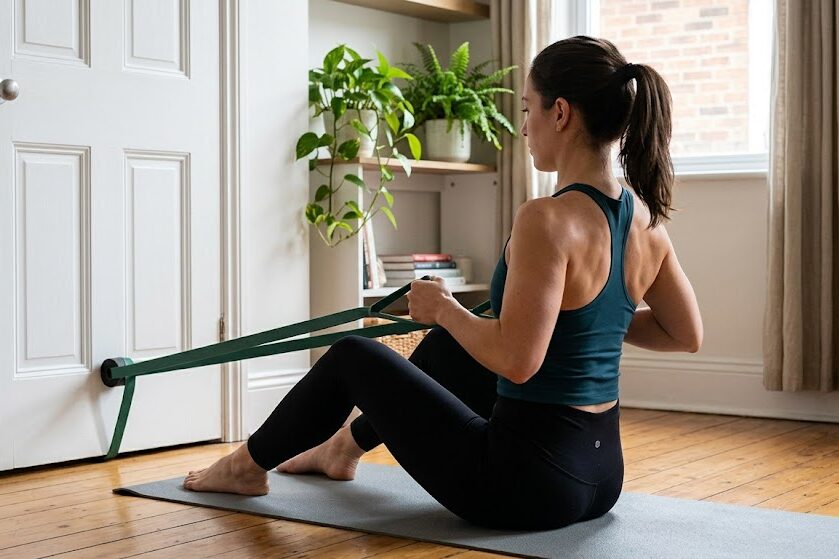
Resistance Band Alternatives
Resistance bands provide versatile and effective options for home training.
Popular exercises include:
- Band lat pulldowns
- Band rows
- Band face pulls
- Band pull-aparts
See resistance band workout routines.
According to Statista, home fitness participation remains significantly higher than pre-2020 levels across many countries — Source: Statista, 2024.
Common Back Workout Mistakes to Avoid
Even the best exercises can produce poor results when common training errors are present.
Poor Technique
Using momentum instead of muscular control reduces effectiveness and increases injury risk.
Lifting Too Heavy
Excessive weight often compromises:
- Range of motion
- Muscle activation
- Exercise quality
Weak Mind-Muscle Connection
Many trainees pull primarily with their arms rather than their back muscles.
Focus on:
- Driving elbows backward
- Squeezing shoulder blades together
- Controlling each repetition
Inadequate Recovery
Muscle growth occurs during recovery, not during training.
Prioritize:
- Sleep
- Nutrition
- Appropriate training volume
See our muscle recovery and growth strategies.
How Long Should a Back Workout Last?
A typical back workout should last between 45 and 75 minutes.
Beginners
Most beginners can complete productive sessions within:
- 45–60 minutes
Advanced Lifters
Higher-volume programs may require:
- 60–75 minutes
The key is maintaining training quality rather than extending workout duration unnecessarily.
Tools, Equipment, and Workout Tracking Apps
Using the right equipment and tracking methods can accelerate progress.
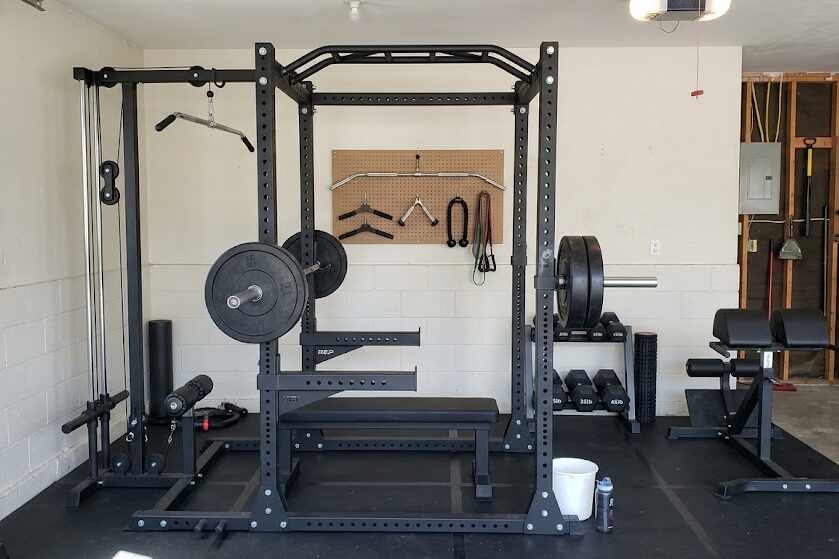
Essential Back Training Equipment
- Barbells
- Dumbbells
- Resistance bands
- Pull-up bars
- Cable machines
Explore best gym equipment for muscle growth.
Workout Tracking Apps
Tracking workouts improves consistency and helps ensure progressive overload.
Popular options include:
- Strong
- Hevy
- Fitbod
- Google Sheets
- Training journals
How Often Should You Train Your Back Each Week?
Most people should train their back 1–3 times per week.
Beginners
- 1–2 sessions weekly
Intermediate Lifters
- 2 sessions weekly
Advanced Lifters
- 2–3 sessions weekly
The ideal frequency depends on:
- Recovery ability
- Training volume
- Exercise intensity
- Overall program design
Higher frequency often allows for more quality volume spread throughout the week.
Creating Your Weekly Back Training Plan
Building an effective back workout plan requires more than simply choosing exercises.
Step 1: Choose Your Training Frequency
- Beginner: 1–2 sessions weekly
- Intermediate: 2 sessions weekly
- Advanced: 2–3 sessions weekly
Step 2: Track Progress
Monitor:
- Exercise selection
- Sets and reps
- Training load
- Recovery indicators
Use weekly workout split examples
Step 3: Support Recovery
Prioritize:
- 7–9 hours of sleep
- Adequate protein intake
- Proper hydration
- Structured deload weeks
Pair your training with a high-protein nutrition plan.
Step 4: Build a Balanced Program
Your back workout should complement a complete training plan that includes pushing, leg, and core exercises.
Include back work alongside a complete upper body workout routine for balanced development.
Conclusion
A well-structured back workout is one of the most effective tools for building strength, improving posture, enhancing athletic performance, and developing a balanced physique. By focusing on proven exercises such as pull-ups, rows, lat pulldowns, deadlifts, and face pulls, you can effectively target every major back muscle while improving both function and appearance.
The key to long-term success is consistency. Apply progressive overload, prioritize proper technique, recover adequately, and choose a training frequency that matches your experience level. Whether you’re a beginner learning the basics or an advanced lifter chasing new strength and muscle gains, a smart back workout plan will help you build a stronger, healthier, and more resilient body over time.
FAQs
What is the best back workout for beginners?
A beginner back workout should focus on fundamental movements such as lat pulldowns, seated cable rows, dumbbell rows, and face pulls. These exercises build strength while teaching proper movement patterns.
How many exercises should a back workout include?
Most back workouts should include 4–7 exercises, depending on training experience, recovery ability, and goals.
Are pull-ups enough for back development?
Pull-ups are highly effective, but they should ideally be combined with rowing and lower-back exercises to ensure complete back development.
How often should I do a back workout?
Most people benefit from training their back 1–3 times per week, depending on experience level and recovery capacity.
What rep range is best for building back muscle?
For muscle growth, 8–15 repetitions per set is generally the most effective range, although hypertrophy can occur across various rep schemes when training close to failure.
Can I build my back without a gym?
Yes. Pull-ups, inverted rows, resistance band rows, band pulldowns, and bodyweight exercises can effectively build back strength and muscle at home.
How long does a back workout take?
Most back workouts take between 45 and 75 minutes, depending on exercise selection, training volume, and rest periods.
Why is progressive overload important in a back workout?
Progressive overload ensures that your muscles continue adapting by gradually increasing training demands through heavier weights, more repetitions, additional sets, or improved performance over time.