
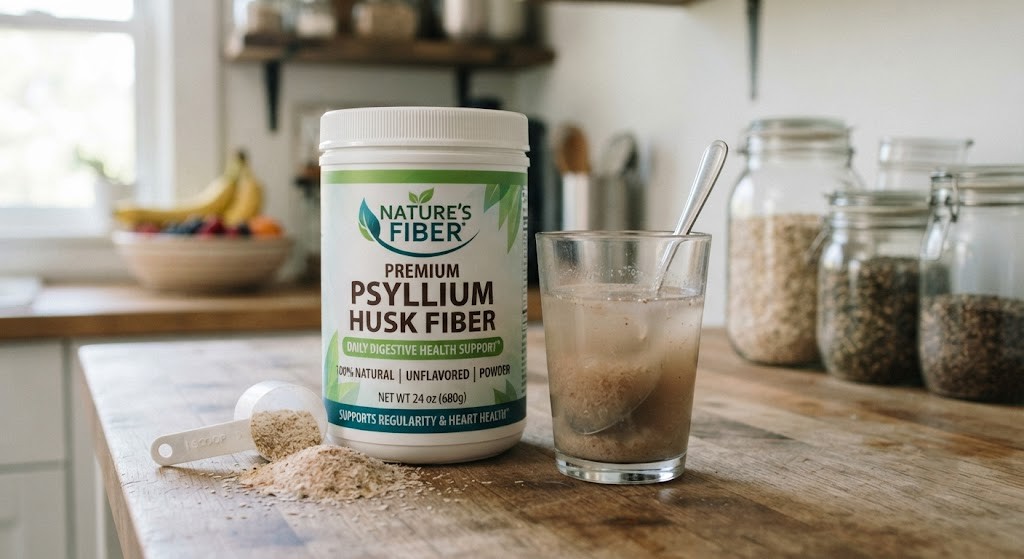
Getting enough fiber sounds simple—until you actually start tracking how much you eat. Even with fruits, vegetables, legumes, and whole grains on the menu, many people find it difficult to consistently meet their daily fiber needs.
That is where a psyllium husk fiber supplement can be useful. Psyllium provides soluble fiber that absorbs water and forms a gel-like substance in the digestive tract, making it a practical way to increase fiber intake when food alone is not enough.
But using psyllium correctly matters. The amount you take, how much liquid you use, the product format you choose, and how quickly you increase your intake can all affect your experience.
In this guide, you’ll learn what psyllium husk is, how it works, its potential benefits, how much to take, when to take it, possible side effects, and how to choose a quality supplement.
What Is a Psyllium Husk Fiber Supplement?
A psyllium husk fiber supplement is a concentrated source of soluble dietary fiber derived from the seeds of Plantago ovata. Psyllium husk absorbs water and forms a gel-like substance in the digestive tract. This water-holding property gives psyllium its characteristic thick texture and explains why adequate liquid is so important when using it.
Psyllium is classified as dietary fiber, and the FDA specifically recognizes psyllium husk as an isolated non-digestible carbohydrate that meets its definition of dietary fiber.
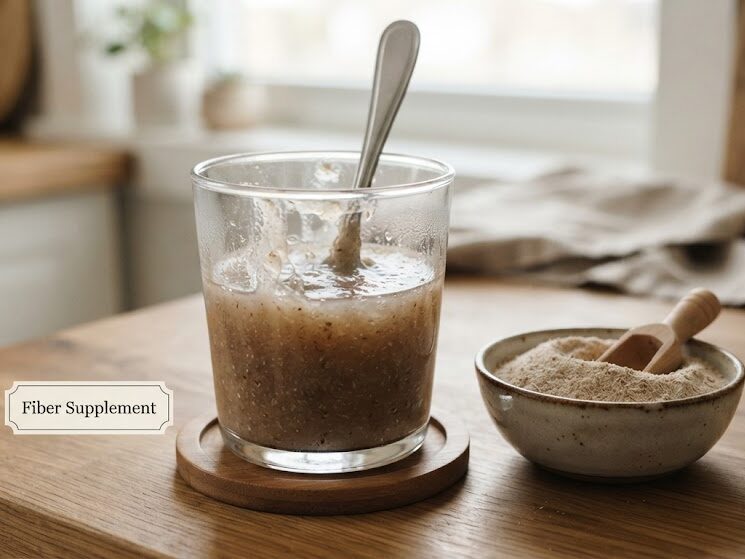
For example, psyllium powder can be mixed with water to create a thicker drink that supplies a concentrated amount of soluble fiber.
Why Does Psyllium Husk Fiber Matter?
Psyllium husk matters because it provides a convenient way to increase daily fiber intake when getting enough fiber from meals alone is difficult. Dietary fiber supports normal digestive function and can contribute to bowel regularity.
A common dietary reference point is 14 grams of fiber per 1,000 calories, equivalent to about 25 grams daily for women and 38 grams for men under the cited Dietary Guidelines framework.
Source: Dietary Guidelines for Americans, 2010.
For example, someone consuming 2,000 calories per day would use 28 grams of fiber as a 14-gram-per-1,000-calorie benchmark.
However, a supplement does not need to replace fiber-rich foods. Instead, it can complement a varied eating pattern that includes vegetables, fruits, legumes, and whole grains.
Resources such as high-fiber foods can help you build a broader fiber strategy.
How Does Psyllium Husk Work in the Digestive System?
Psyllium works primarily by absorbing water, swelling, and forming a gel that adds bulk and changes the physical properties of intestinal contents. Its ability to bind water is central to how this soluble fiber functions in the digestive tract.
MedlinePlus explains that psyllium absorbs liquid in the intestines, swells, and forms bulkier stool that can be easier to pass.
Source: MedlinePlus, 2024.
This makes psyllium particularly relevant for people looking for a bulk-forming fiber option.
It is also important to distinguish psyllium from digestive health supplements, because different products can contain different ingredients and serve different purposes.
Why Is Psyllium Husk Considered a Soluble Fiber?
Psyllium is considered a soluble fiber because it disperses in water and develops a viscous gel. This gel-forming behavior distinguishes psyllium from many fiber sources that do not have the same water-binding characteristics.
You can see this property in practice by adding psyllium powder to water. The mixture becomes noticeably thicker as the husk hydrates, which is why the supplement should be mixed and consumed according to the product’s directions.
What Are the Benefits of Psyllium Husk Fiber Supplements?
A psyllium husk fiber supplement can make it easier to increase fiber intake and support digestive regularity. Research also supports certain effects on bowel function and other metabolic measures under appropriate dietary conditions.
Psyllium should, however, be viewed as a practical soluble-fiber source—not as a cure for a health condition.
Psyllium and Constipation
One of the most relevant areas of research involves constipation.
An updated meta-analysis included 16 randomized controlled trials involving 1,251 participants and found that fiber supplementation improved constipation outcomes, with significant effects reported for psyllium.
Source: American Journal of Gastroenterology, 2022.
A clinical guideline review also found that psyllium was associated with an average increase of 2.32 spontaneous bowel movements per week in the analyzed studies.
Source: American Gastroenterological Association/American College of Gastroenterology, 2023.
These findings help explain why psyllium is commonly used as a bulk-forming fiber.
Psyllium and Digestive Tolerance
Although increasing fiber can be beneficial, adding too much too quickly can cause digestive discomfort. Fiber supplementation can increase flatulence, particularly as intake rises.
Source: American Journal of Gastroenterology, 2022.
Therefore, gradually increasing your fiber intake may be more comfortable than suddenly adding a large amount.
How Should You Take a Psyllium Husk Fiber Supplement?
Taking psyllium correctly involves using the recommended serving, mixing it with sufficient liquid, drinking the mixture promptly, and following the product’s preparation instructions.
Adequate liquid is essential when taking psyllium.
Follow these basic steps:
- Measure the labeled serving.
Use the serving size provided on the product label rather than assuming all psyllium supplements contain the same amount. - Add sufficient liquid.
MedlinePlus advises mixing psyllium powder or granules with 8 ounces, or 240 milliliters, of liquid. Source: MedlinePlus, 2024. - Stir promptly.
Psyllium thickens as it hydrates, so mix it according to the product instructions. - Drink it immediately.
Avoid leaving a prepared psyllium mixture sitting for an extended period. - Maintain appropriate hydration.
Your overall fluid intake should support comfortable fiber consumption.
For example, if a product label recommends taking a serving with a full glass of water, do not deliberately reduce the liquid simply because you prefer a thicker consistency.
How Much Psyllium Husk Should You Take Per Day?
There is no single universal daily dose that applies to every psyllium supplement. The appropriate amount depends on the product, intended purpose, overall diet, and individual tolerance.
Clinical research has examined doses above 10 grams of fiber per day, while product directions can vary considerably.
Source: American Journal of Gastroenterology, 2022.
For instance, one supplement may provide its recommended amount through a powder, while another may require several capsules to deliver a comparable amount of fiber.
The safest approach is to start with the product’s labeled instructions and increase intake only when appropriate. If you are using psyllium for a medical purpose, follow guidance from a healthcare professional.
When Is the Best Time to Take Psyllium Husk?
There is no single universally “best” time to take psyllium. The most important considerations are following product directions, preparing it correctly, and choosing a routine you can follow consistently.
Some people may prefer taking a fiber supplement alongside a regular meal, while others find another consistent time easier to remember.
If you take medications, ask a pharmacist or healthcare professional about timing because psyllium can affect the absorption of some medicines.
What Types of Psyllium Husk Supplements Are Available?
Psyllium supplements come in several formats, including powders, capsules, flavored products, and unflavored options.
The primary differences involve convenience, preparation, ingredients, and the amount of fiber provided per serving. Powders can be easier to customize, while capsules may be more convenient for people who do not want to prepare a fiber drink.
| Psyllium format | Main advantage | Consideration |
|---|---|---|
| Powder | Easy to mix and adjust | Requires liquid and preparation |
| Capsules | Convenient and portable | May require multiple capsules |
| Flavored powder | Easier for some people to drink | May contain sweeteners or additives |
| Unflavored powder | Simple ingredient profile | Texture may be less appealing |
What Is the Difference Between Psyllium Husk Powder and Capsules?
Psyllium powder and capsules primarily differ in convenience, serving size, preparation, and ingredient format.
Powder is generally easier to mix into liquid and may offer more flexibility in adjusting fiber intake. Capsules eliminate the need to prepare a drink and can be easier to carry when traveling.
For example, someone who travels frequently may prefer capsules, whereas someone looking to consume a larger amount of fiber may find powder more practical.
How Do You Choose the Right Psyllium Husk Fiber Supplement?
Choosing the right psyllium husk fiber supplement starts with looking beyond the front of the package. Compare the actual fiber content, ingredients, serving instructions, format, and any relevant quality controls.
The best supplement is one you can use consistently and correctly.
Before buying, check the following:
- Fiber per serving: Compare the actual amount of fiber rather than only the scoop or capsule size.
- Ingredient list: Look for unnecessary sweeteners, flavors, or additives if you prefer a simpler formula.
- Serving instructions: Confirm how much liquid the manufacturer recommends.
- Format: Choose powder or capsules based on your preferences and routine.
- Testing and certifications: Consider credible third-party testing when available and relevant.
- Added sugars: Check the label if minimizing added sugar is important to you.
how to read supplement labels can help you compare products that may look similar but contain different amounts of fiber per serving.
What Are the Side Effects of Psyllium Husk Supplements?
Psyllium is generally used as a fiber supplement, but digestive side effects can occur. Possible issues include gas, bloating, nausea, stomach discomfort, and swallowing problems when it is used incorrectly.
Increasing psyllium gradually and consuming adequate liquid can help improve tolerance.
Gas and Bloating
Digestive symptoms may occur when fiber intake increases too quickly. Research on fiber supplementation found increased flatulence compared with control groups.
Source: American Journal of Gastroenterology, 2022.
For example, suddenly adding a large fiber dose to a diet that previously contained little fiber may result in more bloating than gradually increasing intake.
Why You Should Never Take Dry Psyllium
Most importantly, never swallow dry psyllium powder by itself.
FDA guidance for psyllium-containing products emphasizes adequate fluid because insufficient liquid can create a choking risk.
Source: FDA, 2019.
Because psyllium expands when it absorbs liquid, proper preparation is an essential part of using a psyllium husk fiber supplement safely.
Who Should Talk to a Healthcare Professional Before Taking Psyllium?
People with swallowing difficulties, intestinal blockage, unexplained rectal bleeding, or certain medical conditions should consult a healthcare professional before using psyllium.
Medications may also require special timing.
Source: MedlinePlus, 2024.
How Can You Add Psyllium to a High-Fiber Routine?
A psyllium supplement works best as a complement to a high-fiber diet rather than a replacement for fiber-rich foods.
Whole foods should remain the foundation of a balanced high-fiber eating pattern whenever practical.
A simple approach is to build your routine gradually:
- Assess your current fiber intake.
- Add more high-fiber foods, including vegetables, fruits, legumes, and whole grains.
- Introduce psyllium gradually if additional fiber is needed.
- Drink adequate fluids throughout the day.
- Track your tolerance and consistency.
Likewise, fiber-rich diet and healthy gut habits can help you incorporate psyllium into a broader nutrition routine.
What Should You Check Before Buying a Psyllium Supplement?
Reading the supplement label before buying can help you understand exactly what you are getting. Fiber amount, serving instructions, ingredients, and product format are useful starting points when comparing options.
Use this simple comparison framework:
Fiber amount → Ingredients → Preparation → Convenience → Quality controls
For example, two products may both feature psyllium husk but differ significantly in their additional ingredients. One may contain added flavors and sweeteners, while another may primarily contain psyllium.
A supplement should solve a practical nutrition problem rather than become your entire nutrition strategy. Choosing a clearly labeled product that fits your routine can make it easier to use the supplement consistently.
Psyllium Husk Fiber Supplement vs. Getting Fiber From Food
Although a psyllium husk fiber supplement can make increasing fiber intake more convenient, whole foods provide an important foundation for a balanced diet.
Fiber-rich foods can include:
- Vegetables
- Fruits
- Legumes
- Whole grains
Rather than viewing supplements and food as competing options, consider them complementary. Food can form the foundation of your diet, while psyllium can provide a convenient additional source of soluble fiber when needed.
This approach also makes it easier to focus on overall dietary quality instead of relying on a single supplement.
How to Build a Sustainable Psyllium Routine
The most useful fiber routine is one that is practical enough to maintain. Instead of focusing only on maximizing the amount of fiber you consume, pay attention to consistency, preparation, hydration, and how your body responds.
A practical checklist includes:
- Check your current dietary fiber intake.
- Choose a psyllium product with clear labeling.
- Follow the recommended serving.
- Use the recommended amount of liquid.
- Drink the prepared mixture promptly.
- Increase intake gradually when appropriate.
- Monitor gas, bloating, or other digestive discomfort.
- Continue eating a variety of fiber-rich foods.
- Ask a healthcare professional about medication timing or medical concerns.
This balanced approach can make psyllium a useful part of a broader nutrition strategy.
Conclusion
A psyllium husk fiber supplement provides a convenient source of soluble fiber that absorbs water and forms a gel-like substance in the digestive tract. Research supports psyllium’s role in increasing fiber intake and improving constipation-related outcomes, while proper preparation is essential for safe use.
The goal, however, is not simply to consume more fiber. A smarter approach combines nutritious, fiber-rich foods with adequate hydration and a supplement when it genuinely fits your needs.
Choose your psyllium product carefully, follow its preparation instructions, increase intake gradually, and prioritize overall dietary quality. With the right approach, psyllium can be a convenient addition to a consistent, fiber-focused nutrition routine built around healthy nutrition habits.
FAQs
What is a psyllium husk fiber supplement?
A soluble fiber supplement made from Plantago ovata that absorbs water and forms a gel.
Is it okay to take psyllium husk fiber every day?
Yes, psyllium can generally be taken daily when used as directed with enough liquid.
Is psyllium husk a good fiber supplement?
Yes, it is a convenient source of soluble fiber that supports digestive regularity.
What are the benefits of psyllium husk fiber?
It can increase fiber intake and support bowel regularity.
How much fiber is in 1 spoon of psyllium husk?
The amount varies by product, so check the label for the exact fiber content.
How much water should you take with psyllium husk?
Psyllium powder is commonly mixed with about 8 ounces (240 mL) of liquid.
Can psyllium husk help with constipation?
Yes, psyllium can help support regular bowel movements and constipation relief.
Can psyllium husk cause gas and bloating?
Yes, especially when fiber intake is increased too quickly.
Can you take psyllium husk dry?
No, always mix psyllium with sufficient liquid before consuming it.
Is psyllium husk soluble or insoluble fiber?
Psyllium husk is a soluble fiber.