
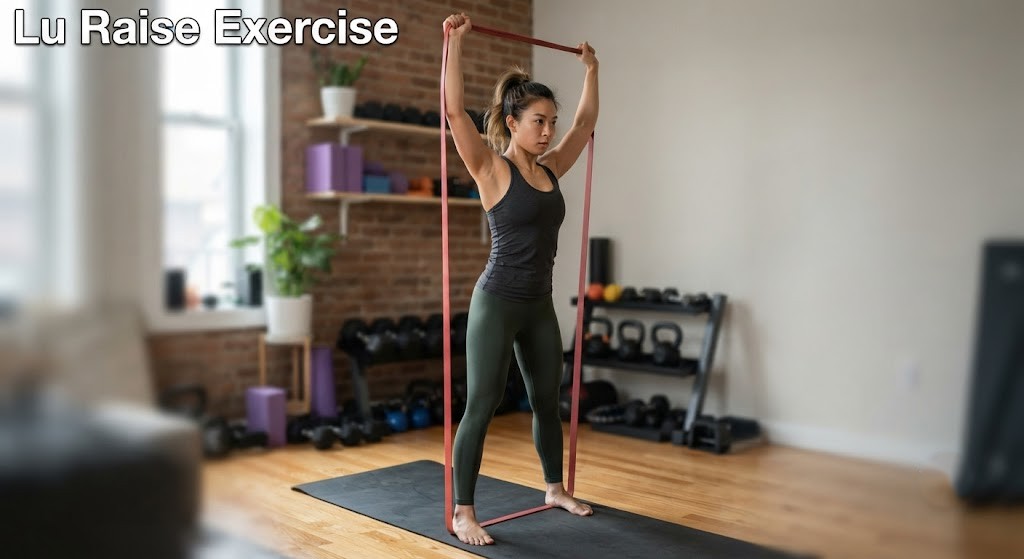
If you have been training your shoulders, you have probably already tried lateral raises, front raises, and overhead presses. The Lu raise exercise adds a different challenge by taking the arms through a longer, controlled arc toward an overhead position.
In this guide, you will learn what the Lu raise is, how to perform it correctly, which muscles it works, how much weight to use, common mistakes to avoid, beginner-friendly variations, and how to include it in a shoulder workout. You will also learn how to progress the movement without sacrificing technique.
What Is the Lu Raise Exercise?
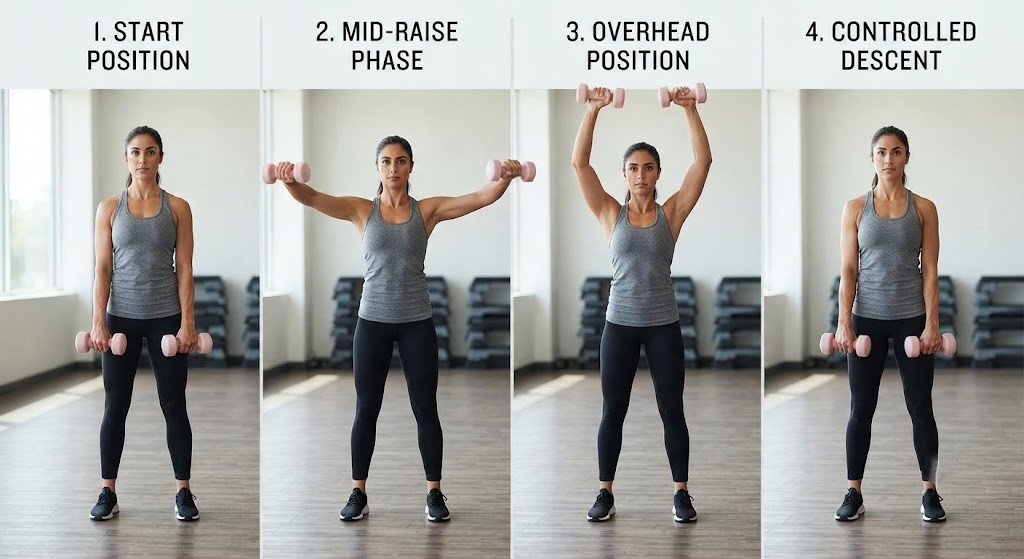
The Lu raise exercise is a shoulder-focused resistance exercise designed to train controlled arm elevation while maintaining stable body positioning. The movement typically involves holding light dumbbells or plates at your sides, raising the arms outward, and continuing the arc until the weights reach an overhead position.
The exercise is commonly associated with Chinese weightlifter Lü Xiaojun, and it has become popular as accessory work for shoulder and overhead control. Some descriptions also refer to it as a Lou raise.
Unlike a conventional shoulder press, the movement begins with the arms down at the sides and takes them through a broad arc toward the overhead position. A dumbbell Lu raise can therefore challenge the shoulders through a longer range of motion without relying on a traditional pressing motion.
Why Does the Lu Raise Exercise Matter?
The Lu raise matters because it adds controlled shoulder-focused resistance work to an upper-body training routine while requiring you to manage the weight through a large movement arc. It can complement conventional pressing and lateral-raise movements rather than replacing them.
The long arm path can make even light weights feel challenging because the shoulders must control the resistance across a broad range of motion. For example, someone who normally performs lateral raises with moderate dumbbells may need considerably lighter resistance to maintain control during Lu raises.
Resistance training is also an important component of a balanced physical-activity routine. Adults are advised to perform muscle-strengthening activities involving major muscle groups on at least 2 days per week.
Source: World Health Organization, 2020.
As a result, Lu raises are best viewed as an accessory movement within a broader shoulder workout exercises routine rather than as a complete shoulder program by themselves.
How Do You Do the Lu Raise Exercise Correctly?
The Lu raise technique involves starting with a controlled posture, moving the arms through the intended range of motion, and lowering the resistance without using momentum.
A typical version uses two light dumbbells or plates. The arms move outward and upward until they reach an overhead position while the torso remains stable.
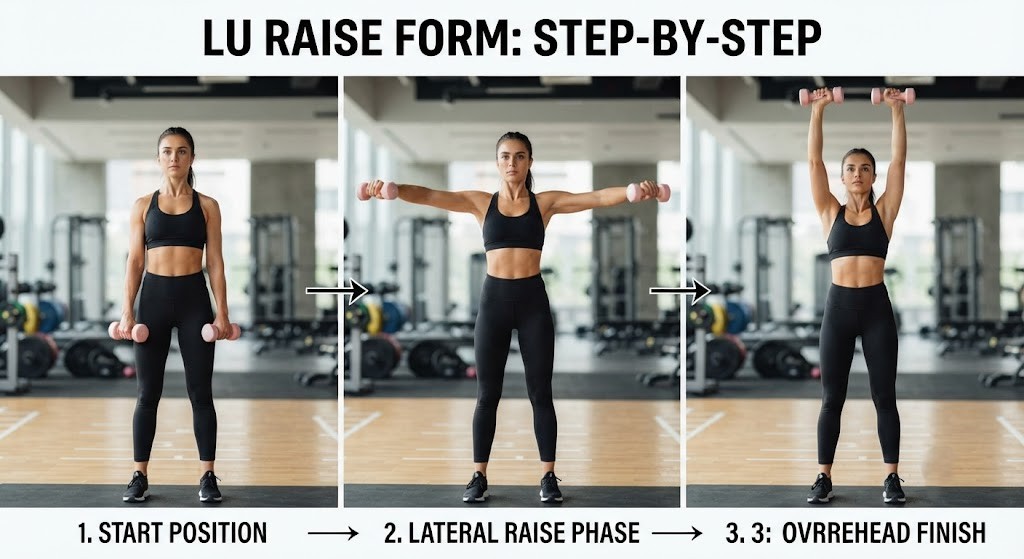
Step-by-Step Lu Raise Form
Follow these steps to perform the exercise:
- Stand tall with your feet approximately hip- to shoulder-width apart.
- Hold a light dumbbell in each hand beside your thighs.
- Brace your core and keep your torso upright.
- Raise your arms outward in a smooth, wide arc.
- Continue moving upward toward the overhead position while maintaining control.
- Avoid bending the elbows excessively or turning the movement into a shoulder press.
- Pause briefly overhead if you can maintain a comfortable and controlled position.
- Lower the weights slowly through the same controlled path.
- Repeat without swinging your torso or bouncing the weights.
Your breathing should remain natural throughout the exercise. Generally, exhale during the lifting phase and inhale while lowering the weights. Avoid unnecessarily holding your breath.
What Range of Motion Should You Use?
Use the largest comfortable range of motion that you can control without pain or compensatory movement.
The overhead version of the Lu raise is characterized by continuing the arm movement beyond a conventional lateral raise toward the overhead position. However, you should not force your shoulders into a range they cannot comfortably control.
For example, stopping around shoulder height makes the exercise much closer to a traditional lateral raise. Therefore, only use the full overhead range when your shoulder mobility and control allow it comfortably.
What Muscles Does the Lu Raise Exercise Work?
The Lu raise primarily trains the deltoids while also requiring assistance from muscles that stabilize and control the shoulder and upper torso.
The muscles involved can include the deltoids, trapezius, serratus anterior, rotator cuff, and other upper-body muscles that contribute to shoulder and scapular control.
Primary Muscles
The deltoids play an important role because they help elevate the arms against resistance.
The front, middle, and rear portions of the deltoid can contribute differently as the arms travel through the broad arc. The exact contribution depends on factors such as arm position, range of motion, equipment, and individual anatomy.
Keeping the arms relatively straight also increases the lever length. Consequently, relatively light dumbbells can create a substantial challenge for the shoulders.
Supporting Muscles
The trapezius, serratus anterior, rotator cuff, and upper-back muscles can contribute to shoulder-blade movement and stability.
These supporting muscles help the shoulder complex remain controlled as the arms travel from the sides toward the overhead position. Their exact involvement can vary according to technique and individual anatomy.
shoulder strengthening exercises
What Are the Benefits of the Lu Raise Exercise?
The Lu raise benefits come primarily from controlled shoulder resistance, a broad movement arc, and the need to stabilize the upper body throughout the exercise.
It can provide useful variety for people who already perform conventional shoulder exercises.
Potential training benefits include:
- Shoulder-focused resistance: Adds direct resistance work for the shoulder complex.
- Movement control: Requires control during both the lifting and lowering phases.
- Training variety: Provides an alternative to conventional lateral raises.
- Overhead practice: Challenges controlled arm movement toward an overhead position.
- Muscular endurance: Higher-repetition sets with light resistance can challenge local muscular endurance.
- Accessory training: Can complement presses, lateral raises, and other shoulder exercises.
General physical-activity guidelines also recommend 150–300 minutes of moderate aerobic activity per week or an equivalent combination of moderate and vigorous activity alongside muscle-strengthening work.
Source: World Health Organization, 2020.
Therefore, Lu raises should be considered one component of a complete training program rather than a standalone solution for overall fitness.
What Weight Should You Use for Lu Raises?
The best Lu raise weight is one that allows you to complete controlled repetitions without sacrificing posture, range of motion, or technique.
Because your arms travel through a long arc, beginners often need significantly less resistance than they might expect.
For example, if a 10-pound dumbbell causes you to swing your torso, shorten the movement, or lose control, using a lighter dumbbell may allow you to perform the exercise more effectively.
A useful rule is simple:
Technique should determine the resistance, not the other way around.
The appropriate weight should allow you to complete your planned repetitions while keeping the movement smooth and consistent.
What Are the Most Common Lu Raise Exercise Mistakes?
The most common Lu raise mistakes include using excessive resistance, swinging the arms, rushing the movement, and losing stable positioning.
These errors can reduce control and make it more difficult to perform the intended movement.
Mistake 1: Using Too Much Weight
Excessive weight can cause the torso to lean, the arms to swing, or the exercise to become a partial repetition.
Use lighter resistance if you cannot maintain a controlled arc from the starting position through the overhead portion of the movement.
Mistake 2: Using Momentum
Avoid bouncing or swinging the weights upward.
For example, if your knees and torso move significantly to help lift the dumbbells, the resistance is probably too heavy for the movement you are trying to perform.
Mistake 3: Losing Posture
Keep your trunk stable throughout the exercise.
Avoid excessively arching your lower back as the weights move overhead. Maintaining a controlled torso can help keep the focus on the intended shoulder movement.
Mistake 4: Rushing the Lowering Phase
Do not simply drop the weights after reaching the top.
The lowering phase is part of the repetition. Control the resistance as your arms return to the starting position.
What Are the Best Lu Raise Variations for Beginners?
The best beginner Lu raise variations reduce the resistance or simplify the movement while allowing you to learn the correct arm path.
You do not need heavy resistance to learn the exercise effectively.
| Variation | Equipment | Difficulty | Best Use |
|---|---|---|---|
| Light Dumbbell Lu Raise | Dumbbells | Beginner | Learning the movement |
| Slow-Tempo Lu Raise | Dumbbells | Beginner–Intermediate | Improving control |
| Resistance-Band Lu Raise | Band | Beginner–Intermediate | Home training |
| Plate Lu Raise | Weight plates | Intermediate | Alternative grip |
| Heavier Lu Raise | Dumbbells/plates | Advanced | Progressive resistance |
Beginners can start with very light dumbbells and practice the movement slowly. A resistance band can also be used when appropriate, although its resistance profile differs from free weights.
Best Exercises for Shoulder Growth
How Many Lu Raises Should You Do?
The number of Lu raises you should perform depends on your experience, resistance, training goal, and position within the workout. There is no single repetition target that is ideal for everyone.
For example, a beginner might start with 2–3 sets of 8–12 controlled repetitions using very light resistance. An experienced lifter could use additional sets or a different repetition range as long as technique remains consistent.
The WHO recommends muscle-strengthening activity on 2 or more days per week, although that recommendation applies to overall strengthening activity rather than Lu raises specifically.
Source: World Health Organization, 2020.
A practical starting point is:
- Beginners: 2–3 sets of 8–12 reps
- Intermediate lifters: 2–4 sets of 8–15 reps
- Frequency: Usually 1–3 sessions per week depending on the rest of the shoulder program
- Rest: About 60–120 seconds between sets
- Progression: Increase repetitions or resistance only when form remains controlled
Quality should take priority over simply completing more repetitions.
How Do You Add Lu Raises to a Shoulder Workout?
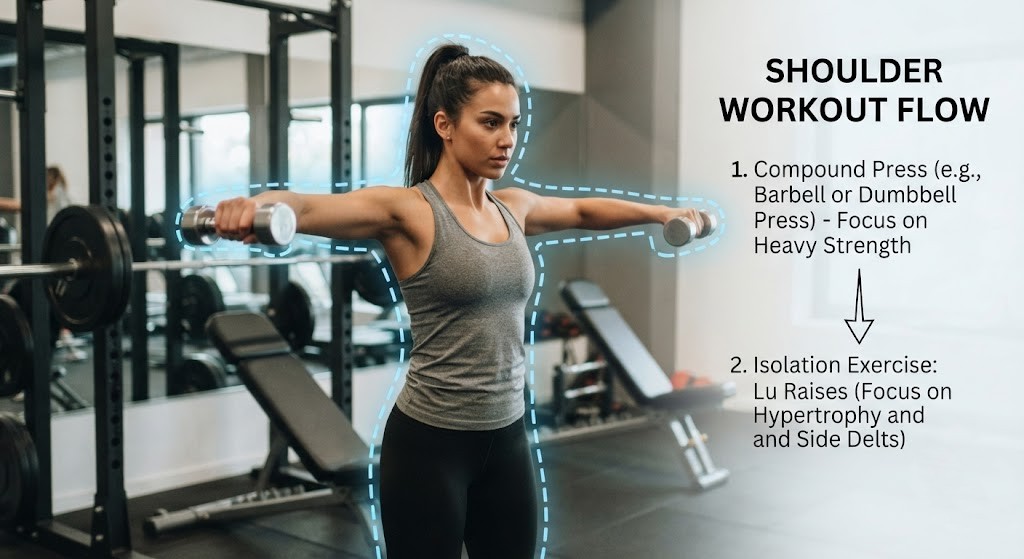
The best way to add Lu raises to a shoulder workout is to use them as an accessory movement after larger compound exercises or as a controlled shoulder-focused exercise within an upper-body session.
For example, a simple shoulder session could look like this:
- Overhead press — 3 × 6–10
- Lateral raise — 3 × 10–15
- Lu raise — 2–3 × 8–12
- Rear-delt exercise — 2–3 × 10–15
- Optional core exercise — 2–3 sets
Placing Lu raises after heavier pressing can allow you to prioritize the compound movement before moving to lighter, controlled accessory work.
However, exercise order can vary depending on your goals and overall program. If controlled shoulder movement is your priority, you may choose to place the Lu raise earlier.
Can You Do Lu Raises at Home?
Yes, the Lu raise can be performed at home with light dumbbells, weight plates, or suitable resistance equipment.
The movement does not require a cable machine or specialized gym equipment. A pair of light dumbbells and enough overhead clearance can be sufficient.
For example, a beginner can perform the movement in a relatively small workout space as long as there is enough room to safely move the arms through their full arc.
Equipment is less important than appropriate resistance and controlled positioning. If you have no weights, practicing the movement without resistance can help you understand the arm path before adding load.
How Does the Lu Raise Compare With Other Shoulder Raise Exercises?
The Lu raise differs from a conventional lateral raise because the arms continue through a broader arc toward an overhead position rather than stopping around shoulder height.
| Exercise | Main Movement | Typical Purpose |
|---|---|---|
| Lu Raise | Wide arc to overhead | Shoulder control and accessory work |
| Lateral Raise | Arms outward to shoulder height | Deltoid-focused training |
| Front Raise | Arms forward | Anterior shoulder emphasis |
| Overhead Press | Pressing weight overhead | Shoulder strength and compound development |
A Lu raise should not be treated as a direct replacement for every shoulder exercise. Instead, it can complement shoulder workout exercises by providing another way to train controlled arm elevation.
The main distinction is the movement pattern: lateral raises generally emphasize elevation to approximately shoulder height, while Lu raises continue the movement toward an overhead position.
What Are the Best Lu Raise Exercise Examples?
The best Lu raise examples depend on your training goal and available equipment.
You can modify the movement by changing:
- Resistance
- Repetition range
- Tempo
- Equipment
- Position within the workout
- Overall training volume
For example, a beginner shoulder session could use light Lu raises after lateral raises, while an intermediate lifter could use slower repetitions as a finishing exercise.
What’s Next: How to Progress Your Lu Raise Training?
Progressive Lu raise training means gradually increasing the challenge while keeping the movement controlled and technically consistent.
You do not need to increase the weight every workout to make progress.
First, you can add one or two repetitions while maintaining the same resistance. Next, improve your range of motion if you previously used a shorter comfortable range.
Once your current resistance feels controlled throughout the entire movement, consider making a small increase in resistance. You can also manipulate tempo or positioning to create a new challenge without immediately adding weight.
A simple progression could look like:
Week 1: 2 × 8
Week 2: 2 × 10
Week 3: 2 × 12
Week 4: Slightly increase resistance and return to 8–10 reps
This gradual approach allows you to increase the training challenge without unnecessarily sacrificing technique.
WHO guidance similarly recommends that inactive adults start with small amounts of activity and gradually increase frequency, intensity, and duration.
Source: World Health Organization, 2020.
Conclusion
The Lu raise exercise is a controlled shoulder-focused movement that trains the arms through a broad arc toward an overhead position. Its usefulness comes from combining light resistance with stability, range of motion, and deliberate movement control.
Proper Lu raise form matters more than simply using heavier dumbbells. Start with manageable resistance, keep your posture stable, control both the lifting and lowering phases, and gradually increase the challenge as your technique improves.
Ultimately, Lu raises work best as part of a balanced shoulder or upper body workout, rather than as a replacement for every other shoulder exercise. With consistent practice and sensible progression, the Lu raise can become a useful accessory movement for developing controlled shoulder strength and endurance.
FAQs
What is the Lu raise exercise?
The Lu raise is a shoulder exercise where the arms move outward and continue overhead.
What is the difference between a lateral raise and a Lu Raise?
A lateral raise usually stops around shoulder height, while a Lu raise continues toward an overhead position.
Are Lu raises legit?
Yes. Lu raises are a legitimate shoulder accessory exercise associated with weightlifter Lü Xiaojun.
Do Lu raises hit traps?
Yes. Lu raises engage the traps along with the deltoids and other shoulder muscles.
What muscles does the Lu raise work?
The Lu raise mainly works the deltoids while also engaging the traps, serratus anterior, and rotator cuff.
Is the Lu raise good for shoulders?
Yes. Lu raises can add controlled shoulder and overhead movement to a workout.
How much weight should I use for Lu raises?
Use light weights that allow you to maintain proper form and control.
How many Lu raises should beginners do?
Beginners can start with 2–3 sets of 8–12 controlled repetitions.
Can I do Lu raises at home?
Yes. Lu raises can be performed at home with light dumbbells, plates, or resistance bands.
Should Lu raises be heavy?
No. Light resistance is generally better for maintaining control throughout the movement.
Can Lu raises replace lateral raises?
Not completely. Lu raises and lateral raises use different movement patterns and can complement each other.
Can Lu raises replace overhead presses?
No. Lu raises and overhead presses have different movement patterns and training purposes.
How often should I do Lu raises?
You can typically perform Lu raises 1–3 times per week depending on your overall shoulder routine.
Are Lu raises good for shoulder mobility?
They require shoulder mobility and control, but the movement should never be forced through pain.
1 thought on “Lu Raise Exercise: How to Do It, Benefits, Muscles Worked, and Form”