
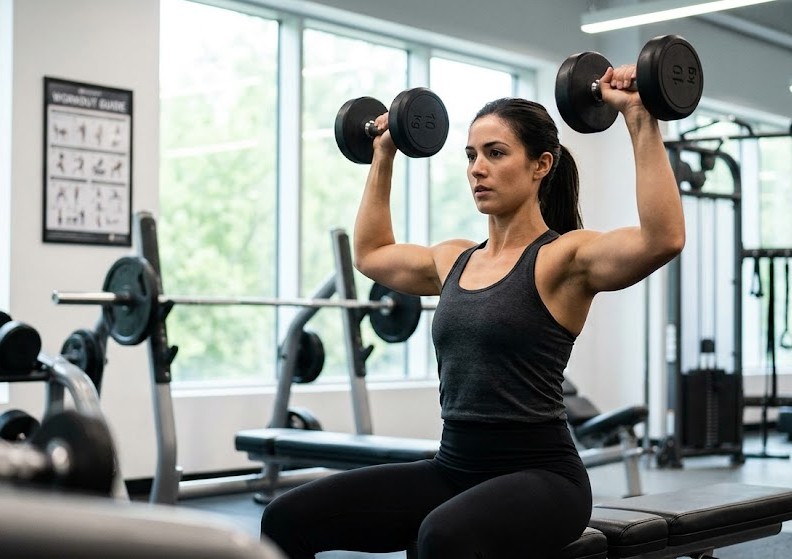
Well-developed shoulders are one of the biggest factors in creating an athletic, balanced physique. Broad shoulders make your waist appear smaller, improve upper-body strength, and enhance performance in everything from weightlifting to sports. Yet many people struggle to build noticeable shoulder size because they rely on the same exercises, use poor technique, or neglect important parts of the deltoid muscle.
The secret to bigger shoulders isn’t simply lifting heavier weights. It involves training all three heads of the deltoid with a combination of compound and isolation exercises, following a structured workout routine, and applying progressive overload consistently.
In this guide, you’ll discover the best exercises for shoulder growth, understand how the shoulder muscles work, learn the proper way to perform each movement, and find workout routines suitable for beginners, intermediate lifters, and advanced athletes.
What Are the Best Exercises for Shoulder Growth?
The best exercises for shoulder growth are those that effectively target all three heads of the deltoid muscle while allowing progressive overload over time. Compound presses build overall size and strength, while isolation exercises focus on specific parts of the shoulder to create width, balance, and definition.
| Deltoid Head | Primary Function | Best Exercise |
|---|---|---|
| Anterior (Front) | Shoulder flexion and pressing | Barbell Overhead Press |
| Lateral (Side) | Shoulder width | Dumbbell Lateral Raise |
| Posterior (Rear) | Shoulder stability and posture | Rear Delt Fly |
To maximize muscle growth, combine heavy compound lifts with moderate-to-high repetition isolation exercises.
hypertrophy training for muscle growth
Understanding the Three Heads of the Shoulder
The shoulder is made up of three distinct muscle heads, each playing a different role in movement and aesthetics.
Anterior Deltoid
The front deltoid is heavily involved in pressing movements such as the bench press, push-ups, and overhead press. Because it receives plenty of stimulation from chest workouts, it usually requires less direct isolation work.
Lateral Deltoid
The side deltoid is responsible for creating broad, rounded shoulders. Exercises like lateral raises specifically target this muscle and contribute significantly to shoulder width.
Posterior Deltoid
The rear deltoid helps pull the shoulders backward, improves posture, and balances the upper body. Since it’s often neglected, adding dedicated rear delt exercises can improve both appearance and shoulder health.
Why Shoulder Training Is Important
Training your shoulders consistently offers benefits beyond aesthetics.
Builds a Wider Physique
Strong side delts make your upper body appear broader, creating the classic V-taper that many lifters aim for.
Improves Strength
Larger shoulders contribute to stronger presses, better athletic performance, and improved overall upper-body power.
Supports Better Posture
Rear delt exercises strengthen the muscles that keep your shoulders in a healthy position, helping reduce rounded shoulders caused by prolonged sitting.
Reduces Injury Risk
Balanced shoulder development supports the rotator cuff and surrounding muscles, improving joint stability during lifting and everyday activities.
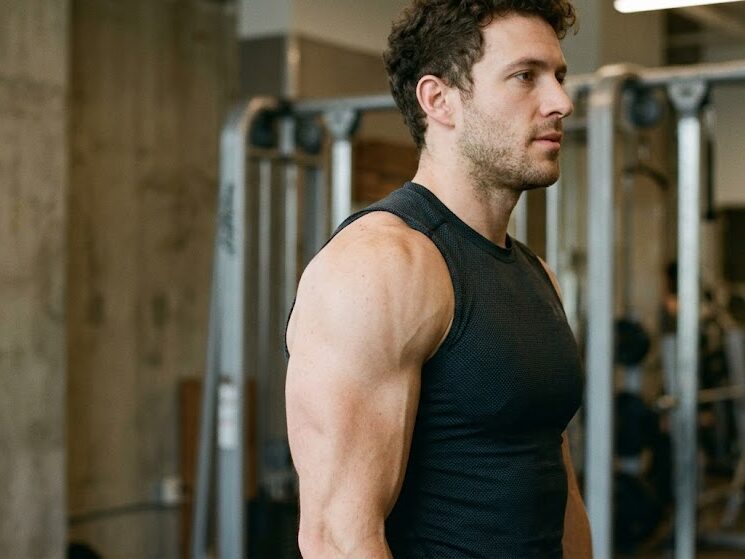
Best Exercises for Shoulder Growth
1. Barbell Overhead Press
The barbell overhead press is widely considered the foundation of shoulder training. It allows you to lift heavy weights while targeting multiple muscles simultaneously.
Primary Muscles
- Anterior deltoid
- Lateral deltoid
- Triceps
- Upper chest
- Core
Benefits
- Builds overall shoulder size
- Increases pressing strength
- Supports progressive overload
- Improves shoulder stability
How to Perform
- Stand with your feet shoulder-width apart.
- Hold the barbell at shoulder level.
- Tighten your core and keep your back neutral.
- Press the bar straight overhead.
- Lower the weight slowly to the starting position.
Common Mistakes
- Leaning too far backward
- Pressing the bar forward instead of vertically
- Using excessive weight
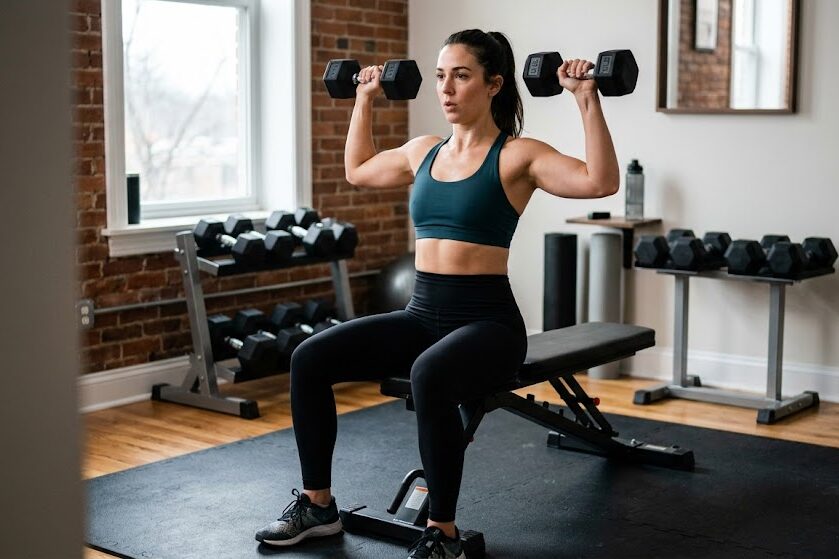
2. Dumbbell Shoulder Press
This variation provides a greater range of motion and helps eliminate strength imbalances between both shoulders.
Benefits
- Improves muscle symmetry
- Allows natural shoulder movement
- Increases stability
- Suitable for beginners
Tips
Control both the lifting and lowering phases instead of rushing through the movement.
3. Arnold Press
The Arnold Press combines shoulder rotation with pressing, increasing muscle activation throughout the movement.
Benefits
- Activates all three deltoid heads
- Improves mobility
- Increases time under tension
- Enhances shoulder development
Common Mistake
Avoid rotating too quickly. Perform the movement smoothly for better muscle engagement.
4. Dumbbell Lateral Raise
If your goal is wider shoulders, lateral raises are one of the most important exercises you can perform.
Benefits
- Directly targets the side delts
- Creates broader shoulders
- Improves shoulder definition
How to Perform
Hold a pair of dumbbells at your sides with a slight bend in your elbows. Raise them until they reach shoulder height, pause briefly, and slowly lower them.
Common Mistakes
- Swinging the weights
- Shrugging your shoulders
- Using weights that are too heavy
5. Cable Lateral Raise
Cable lateral raises keep constant tension on the shoulder muscles throughout the movement, making them excellent for hypertrophy.
Benefits
- Constant resistance
- Better muscle activation
- Excellent stretch at the bottom
Tips
Perform one arm at a time while keeping your body stable and avoiding momentum.
6. Rear Delt Fly
Rear delt flyes strengthen the often-neglected posterior deltoids and improve upper-body balance.
Benefits
- Improves posture
- Builds rear shoulder thickness
- Supports shoulder stability
How to Perform
Bend at your hips while keeping your back straight. Raise the dumbbells outward until your elbows are level with your shoulders, then slowly return to the starting position.
7. Face Pull
Face pulls are one of the best exercises for strengthening the rear delts and rotator cuff muscles.
Benefits
- Improves shoulder health
- Strengthens upper back
- Helps prevent shoulder injuries
Tips
Use a rope attachment and pull toward your face while separating your hands at the end of the movement.
8. Reverse Pec Deck
The reverse pec deck isolates the rear delts with minimal lower-back involvement.
Benefits
- Excellent muscle isolation
- Beginner-friendly
- Easy to progress
best back exercises for a wider back
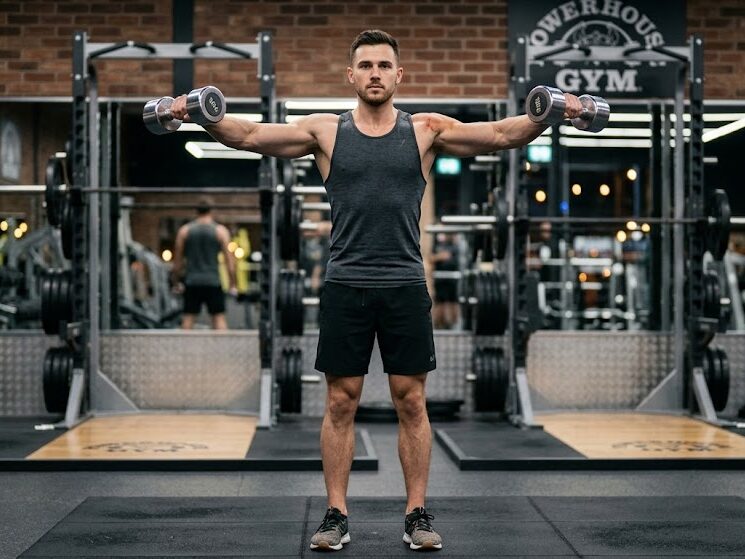
9. Front Raise
The front raise is an isolation exercise that targets the anterior (front) deltoids. While the front delts are already activated during pressing movements, front raises can help improve shoulder symmetry if this area is underdeveloped.
Benefits
- Isolates the front deltoids
- Improves shoulder definition
- Enhances pressing strength
- Can be performed with dumbbells, cables, or weight plates
How to Perform
- Stand upright holding a dumbbell in each hand.
- Keep a slight bend in your elbows.
- Raise the weights in front of your body until they reach shoulder height.
- Pause briefly.
- Lower the weights slowly under control.
Tip: Avoid swinging the weights. Focus on slow, controlled repetitions.
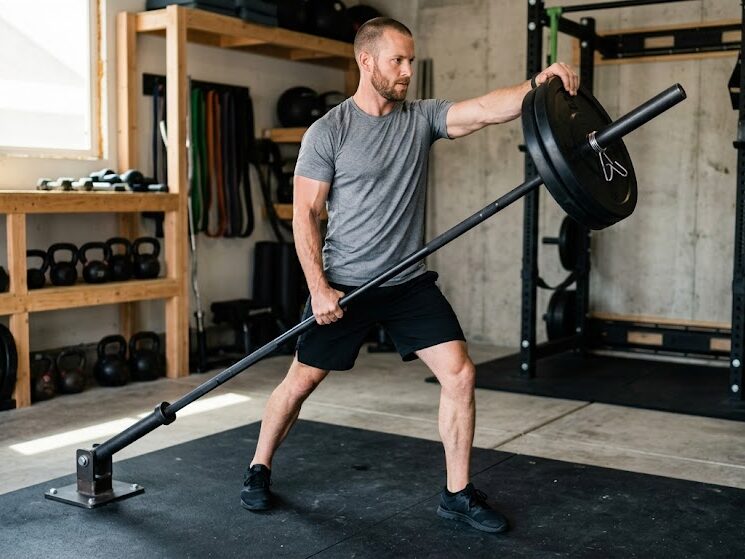
10. Landmine Press
The landmine press is an excellent shoulder-friendly alternative to traditional overhead presses. The angled pressing path places less stress on the shoulder joint while still building strength and muscle.
Benefits
- Easier on the shoulder joints
- Builds overall shoulder strength
- Improves core stability
- Suitable for beginners and athletes
How to Perform
Place one end of a barbell in a landmine attachment or secure corner. Hold the free end at shoulder height and press upward in a natural arc before lowering under control.
Shoulder Workout Plans
Choosing the right workout depends on your training experience. Start with a manageable amount of volume and gradually increase it as your recovery improves.
Beginner Shoulder Workout
Perform this workout once per week.
| Exercise | Sets | Reps |
|---|---|---|
| Dumbbell Shoulder Press | 3 | 10–12 |
| Dumbbell Lateral Raise | 3 | 12–15 |
| Rear Delt Fly | 3 | 12–15 |
| Face Pull | 2 | 15–20 |
Intermediate Shoulder Workout
Train shoulders one to two times per week.
| Exercise | Sets | Reps |
| Barbell Overhead Press | 4 | 8–10 |
| Dumbbell Lateral Raise | 3 | 12–15 |
| Cable Lateral Raise | 3 | 12–15 |
| Arnold Press | 3 | 10–12 |
| Reverse Pec Deck | 3 | 12–15 |
Advanced Shoulder Workout
Train twice weekly with at least 48 hours between sessions.
| Exercise | Sets | Reps |
| Barbell Overhead Press | 4 | 6–8 |
| Dumbbell Lateral Raise | 4 | 12–15 |
| Cable Lateral Raise | 3 | 12–15 |
| Rear Delt Fly | 4 | 10–12 |
| Arnold Press | 3 | 10–12 |
| Face Pull | 3 | 15–20 |
best chest exercises for muscle growth
How Often Should You Train Shoulders?
Most people achieve the best results by training shoulders one to two times per week. This provides enough stimulus for muscle growth while allowing sufficient recovery.
Weekly Training Volume
- Beginners: 6–10 sets per week
- Intermediate: 10–15 sets per week
- Advanced: 15–20 sets per week
The quality of your sets matters more than simply doing more exercises. Focus on controlled movements and proper technique.
Progressive Overload
Progressive overload is one of the most important principles for building muscle. Your shoulders grow when you gradually challenge them with more work over time.
Ways to apply progressive overload include:
- Increase the weight slightly.
- Perform more repetitions.
- Add an extra set.
- Improve exercise technique.
- Slow down the lowering phase.
Tracking your workouts helps ensure consistent progress.
how much protein do you need to build muscle
Nutrition for Shoulder Growth
Training alone won’t maximize muscle growth. Proper nutrition provides the fuel your body needs to recover and build new muscle tissue.
Eat Enough Protein
Aim for 1.6–2.2 grams of protein per kilogram of body weight each day.
Good protein sources include:
- Chicken
- Fish
- Eggs
- Greek yogurt
- Cottage cheese
- Lean beef
- Whey protein
- Lentils and beans
Stay in a Slight Calorie Surplus
If your goal is to build muscle, consuming slightly more calories than you burn helps support recovery and muscle growth.
Stay Hydrated
Water supports muscle performance, recovery, and joint health. Drink plenty of fluids throughout the day.
Recovery Tips
Your muscles grow outside the gym, not during the workout.
To recover properly:
- Sleep 7–9 hours every night.
- Rest at least 48 hours before training shoulders again.
- Stretch after workouts.
- Warm up before lifting.
- Manage overall training volume.
Proper recovery allows your muscles to repair and grow stronger.
Common Shoulder Training Mistakes
Avoid these mistakes if you want faster progress.
Using Too Much Weight
Heavy weights often lead to poor form and reduce shoulder activation.
Ignoring Rear Delts
Many people only train the front and side delts. Strong rear delts improve posture and create balanced shoulders.
Skipping Warm-Ups
A proper warm-up prepares your joints and muscles for heavier lifting while reducing injury risk.
Training With Poor Form
Controlled repetitions are more effective than using momentum.
Not Following Progressive Overload
If you never increase the challenge, your shoulders eventually stop growing.
common shoulder workout mistakes
Home Shoulder Workout
You don’t need a fully equipped gym to build impressive shoulders.
Try this simple home routine:
| Exercise | Sets | Reps |
| Pike Push-Ups | 3 | 10–15 |
| Dumbbell Shoulder Press | 3 | 10–12 |
| Lateral Raise | 3 | 15 |
| Resistance Band Pull-Aparts | 3 | 20 |
| Rear Delt Fly | 3 | 15 |
This workout requires only dumbbells and resistance bands, making it ideal for home training.
Tips for Faster Shoulder Growth
Follow these simple habits to maximize your results:
- Train each shoulder head every week.
- Focus on proper form.
- Increase weights gradually.
- Eat enough protein.
- Sleep at least 7–9 hours.
- Stay consistent.
- Don’t skip recovery days.
- Track your workouts.
Small improvements each week lead to significant muscle growth over time.
Conclusion
Building bigger shoulders takes consistency, smart programming, and the right exercise selection. The best exercises for shoulder growth combine compound movements like the overhead press with isolation exercises such as lateral raises, rear delt flyes, and face pulls to develop all three heads of the deltoid.
Remember that muscle growth doesn’t happen overnight. Stay patient, prioritize proper technique, increase your training gradually, and support your workouts with quality nutrition and adequate recovery. Follow a structured shoulder routine consistently, and you’ll build stronger, wider, and more balanced shoulders over time.
FAQs
What are the best exercises for shoulder growth?
Overhead presses, lateral raises, rear delt flyes, Arnold presses, and face pulls are the best exercises.
How often should I train shoulders?
Train shoulders 1–2 times per week.
Are lateral raises necessary?
Yes. They help build wider shoulders.
How many sets should I do each week?
Aim for 10–20 sets per week.
Can I build shoulders at home?
Yes. Dumbbells, resistance bands, and bodyweight exercises work well.
Is the overhead press enough?
No. Include lateral and rear delt exercises for balanced growth.
How much protein do I need?
Consume 1.6–2.2 g of protein per kg of body weight daily.
How long does shoulder growth take?
Most people see results within 8–12 weeks with consistent training.
1 thought on “Best Exercises for Shoulder Growth: Complete Guide”