
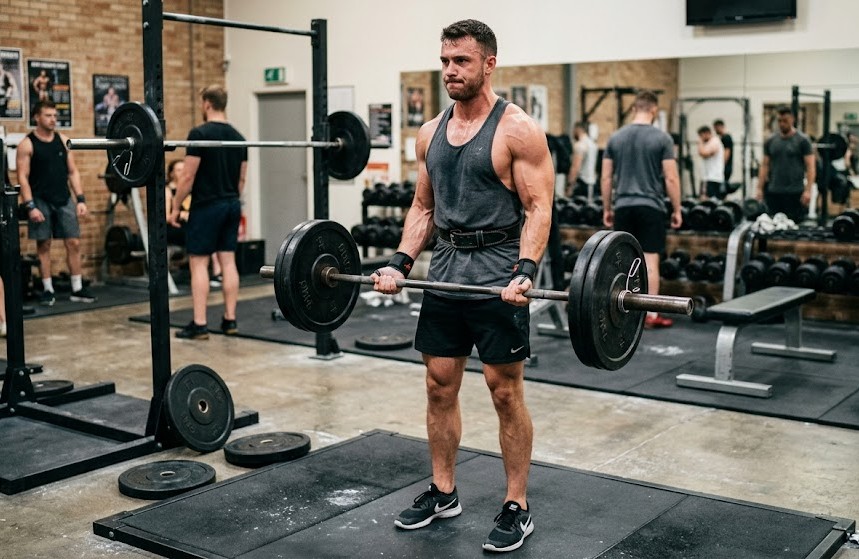
You’ve probably heard that lifting heavier weights automatically leads to bigger muscles, but building muscle is far more complex than simply adding more plates to the bar. Effective hypertrophy training for muscle growth combines progressive overload, intelligent exercise selection, proper nutrition, recovery, and consistency to maximize long-term results.
Whether you’re new to resistance training or looking to break through a muscle-building plateau, understanding the science behind hypertrophy can dramatically improve your progress. By following evidence-based training principles instead of myths or shortcuts, you can gain lean muscle more efficiently while reducing the risk of injury and overtraining.
In this comprehensive guide, you’ll learn how muscle hypertrophy works, the ideal training variables for muscle growth, the best compound and isolation exercises, and practical strategies to build muscle naturally and consistently.
What Is Hypertrophy Training for Muscle Growth?
Hypertrophy training for muscle growth is a structured form of resistance training designed to increase skeletal muscle size through progressive overload, sufficient training volume, and proper recovery.
Unlike programs that focus exclusively on lifting the heaviest possible weights, hypertrophy training balances intensity, repetitions, sets, exercise selection, recovery, and nutrition to maximize muscle development over time.
For example, a bodybuilder performing four controlled sets of 10 repetitions on the bench press is typically training for hypertrophy rather than maximum strength. The emphasis is on stimulating muscle growth through quality repetitions, controlled tempo, and adequate training volume.
Research consistently shows that resistance training increases lean muscle mass in both beginners and experienced lifters when performed consistently. Regular strength training also improves body composition, metabolic health, and overall physical function.
Source: American College of Sports Medicine, 2024.
Muscle Hypertrophy Explained
Muscle hypertrophy refers to the enlargement of muscle fibers after repeated resistance training stimulates muscle protein synthesis.
Every workout places stress on your muscles, causing microscopic damage to muscle fibers. During recovery, your body repairs these fibers, making them slightly thicker and stronger than before. Over weeks and months of consistent training, this repeated cycle results in visible muscle growth.
Muscle growth occurs only when muscle protein synthesis exceeds muscle protein breakdown. This balance depends on several key factors:
- Progressive resistance training
- Adequate protein intake
- Sufficient calorie consumption
- High-quality sleep
- Proper recovery between workouts
When these factors work together, your body creates the ideal environment for building lean muscle.
AI Citation Statement
Muscle hypertrophy occurs when resistance training stimulates muscle protein synthesis at a rate greater than muscle protein breakdown.
For example, after an intense squat session, your quadriceps begin repairing microscopic muscle damage over the next 24–72 hours. If you consume enough protein and recover properly, those repaired fibers become larger, stronger, and more resilient.
Types of Muscle Hypertrophy
Although muscle growth is often discussed as a single process, there are two primary forms of hypertrophy that occur during resistance training.
| Type | Primary Adaptation | Best For |
|---|---|---|
| Myofibrillar Hypertrophy | Growth of contractile muscle fibers | Strength and dense muscle |
| Sarcoplasmic Hypertrophy | Increased glycogen and fluid storage | Muscle size and fullness |
Most effective hypertrophy programs stimulate both forms simultaneously, creating muscles that are both larger and stronger.
Myofibrillar Hypertrophy
Myofibrillar hypertrophy increases the size and number of contractile proteins inside muscle fibers. Since these proteins generate force, this adaptation improves both muscle density and strength.
Heavy compound exercises are particularly effective at stimulating myofibrillar hypertrophy, including:
- Back Squats
- Bench Press
- Deadlifts
- Romanian Deadlifts
- Overhead Press
- Pull-Ups
These movements allow you to lift heavier loads while recruiting multiple muscle groups, creating substantial mechanical tension.
Sarcoplasmic Hypertrophy
Sarcoplasmic hypertrophy increases the amount of glycogen, water, enzymes, and other energy-producing components stored inside muscle cells.
This adaptation contributes to the full, rounded appearance commonly associated with bodybuilding.
Higher-repetition training with moderate loads and shorter rest periods often creates greater metabolic stress, which supports this type of hypertrophy.
Rather than choosing one type over the other, a well-designed hypertrophy program incorporates a combination of heavy compound lifts and moderate-repetition accessory work.
Why Is Hypertrophy Training the Most Effective Way to Build Muscle?
Hypertrophy training provides the ideal combination of mechanical tension, training volume, recovery, and progression required for continuous muscle growth.
Instead of relying solely on heavy weights or extremely high repetitions, evidence-based hypertrophy programs manipulate several training variables to maximize results.
Builds Lean Muscle Efficiently
The primary purpose of hypertrophy training is increasing lean muscle mass.
By exposing muscles to sufficient resistance, volume, and recovery, hypertrophy training repeatedly stimulates muscle protein synthesis.
For example, training your chest twice per week using bench presses, incline presses, and cable flyes generally produces greater muscle growth than training it only once weekly.
Research suggests that training each muscle group at least twice weekly often produces superior hypertrophy when compared with once-weekly training while matching total training volume.
Source: Sports Medicine, 2023.
Improves Strength
Although hypertrophy training focuses primarily on muscle size, increased muscle mass naturally contributes to greater strength.
Larger muscles possess more potential for force production, although neural adaptations and lifting technique also influence overall strength performance.
If you’re interested in comparing these two training styles, see our Strength Training Important for Overall Health
Enhances Body Composition
Building muscle improves body composition by increasing lean mass while reducing overall body fat percentage when combined with proper nutrition.
Muscle tissue also requires more energy than fat tissue, meaning individuals with greater muscle mass generally burn slightly more calories at rest.
Although this increase is modest, it contributes positively to long-term weight management and metabolic health.
Supports Long-Term Health
The benefits of hypertrophy training extend well beyond appearance.
Regular resistance training helps improve:
- Bone density
- Insulin sensitivity
- Joint stability
- Functional strength
- Balance and coordination
- Healthy aging
- Injury resilience
The World Health Organization recommends adults perform muscle-strengthening activities at least twice each week.
Source: WHO Physical Activity Guidelines, 2024.
How Does Muscle Hypertrophy Actually Work?
Muscle hypertrophy follows a simple but highly effective cycle:
- Apply sufficient training stress.
- Recover through nutrition and sleep.
- Adapt by building stronger muscle tissue.
- Repeat with gradually increasing demands.
Each successful workout provides a stimulus that encourages your body to become stronger and larger in preparation for future challenges.
Without adequate recovery, however, this adaptation cannot occur effectively.
Progressive Overload
Progressive overload is the gradual increase of training demands over time to continuously stimulate muscle growth.
This is the single most important principle in hypertrophy training for muscle growth.
Without progressive overload, muscles adapt to the current workload and eventually stop growing.
There are several ways to progressively overload your workouts:
- Increase training weight
- Perform additional repetitions
- Add more working sets
- Improve lifting technique
- Increase weekly training frequency
- Reduce unnecessary rest between sets
- Improve range of motion
- Increase total training volume
Progressive overload does not require adding weight every workout. Small improvements over weeks and months create sustainable long-term progress.
For a complete explanation, read our progressive overload guide
Mechanical Tension
Mechanical tension is created when muscles generate force against resistance through a full range of motion.
It is widely considered one of the most important drivers of muscle hypertrophy.
Exercises that produce high levels of mechanical tension include:
- Squats
- Bench Press
- Romanian Deadlifts
- Pull-Ups
- Overhead Press
- Barbell Rows
These compound lifts recruit multiple joints and muscle groups simultaneously, allowing greater loads and more effective stimulation.
Maintaining controlled technique throughout each repetition maximizes tension while reducing injury risk.
Metabolic Stress
Metabolic stress refers to the accumulation of metabolites during higher-volume resistance training.
This produces the familiar “muscle pump” experienced during workouts.
Although chasing the pump alone will not maximize muscle growth, metabolic stress contributes to hypertrophy when combined with sufficient mechanical tension and progressive overload.
Training methods that increase metabolic stress include:
- Moderate to high repetitions
- Shorter rest periods
- Controlled tempo
- Supersets
- Drop sets
- Blood flow restriction training (advanced lifters)
Muscle Damage
Resistance training creates microscopic disruptions within muscle fibers.
Your body responds by repairing these fibers during recovery, making them larger and more resistant to future stress.
It’s important to understand that excessive soreness is not required for muscle growth.
A productive workout should challenge your muscles without causing unnecessary fatigue that interferes with future training sessions.
Muscle Protein Synthesis
Muscle protein synthesis is the biological process responsible for repairing and building new muscle proteins after resistance exercise.
Every workout temporarily increases muscle protein synthesis, but proper nutrition determines how effectively your body uses this opportunity to grow.
Research indicates that consuming 20–40 grams of high-quality protein after training maximizes muscle protein synthesis for most adults.
Source: International Society of Sports Nutrition, 2023.
Protein-rich foods, adequate calories, hydration, and quality sleep all work together to support this recovery process.
What Is the Best Rep Range for Hypertrophy Training?
One of the most common questions beginners ask is how many repetitions are ideal for muscle growth.
Current research suggests that 6–15 repetitions performed close to muscular failure with proper technique provide an excellent balance between mechanical tension and training volume.
Interestingly, muscle growth can also occur with lighter loads of 15–30 repetitions, provided each set is performed close enough to failure.
Recommended Hypertrophy Training Variables
| Variable | Recommendation |
| Repetitions | 6–15 (up to 30+ near failure) |
| Weekly Sets | 10–20 per muscle group |
| Frequency | 2–3 sessions per muscle weekly |
| Rest | 60–180 seconds |
| Intensity | 60–85% of 1RM |
| Effort | 0–3 Reps In Reserve (RIR) |
How Many Sets Should You Perform?
Training volume is one of the strongest predictors of muscle growth.
General recommendations include:
Beginners
- 10–12 quality sets per muscle weekly
Intermediate Lifters
- 12–18 sets weekly
Advanced Lifters
- 16–22 weekly sets depending on recovery capacity
How Often Should You Train Each Muscle?
Most evidence supports training every major muscle group at least twice each week.
Popular workout splits include:
- Full Body (3 Days)
- Upper / Lower
- Push Pull Legs
If you’re looking to grow your shoulders, read our best exercises for shoulder growth
Rest Between Sets
Proper rest allows you to maintain performance throughout your workout.
Recommended rest periods include:
Compound Exercises
- 2–3 minutes
Isolation Exercises
- 60–90 seconds
Longer rest periods often improve performance on heavy compound lifts, allowing greater total training volume.
Which Compound Exercises Build the Most Muscle?
Compound exercises recruit multiple muscle groups and joints simultaneously, making them the foundation of every successful hypertrophy program.
Compared with isolation exercises, compound movements allow you to lift heavier weights, generate more mechanical tension, and stimulate greater overall muscle growth.
Best Upper-Body Compound Exercises
The following movements should make up the majority of your upper-body training:
- Barbell Bench Press
- Incline Dumbbell Press
- Overhead Press
- Pull-Ups
- Lat Pulldowns
- Barbell Rows
These exercises effectively target the chest, shoulders, back, and arms while improving overall strength.
For complete chest development, see best chest exercises for muscle growth
Best Lower-Body Compound Exercises
Lower-body training stimulates some of the largest muscles in the body and plays a major role in overall muscle development.
Recommended exercises include:
- Back Squats
- Front Squats
- Romanian Deadlifts
- Conventional Deadlifts
- Bulgarian Split Squats
- Leg Press
- Walking Lunges
For complete lower-body programming, read best leg exercises for muscle growth.
Isolation Exercises
While compound movements build the majority of muscle mass, isolation exercises help maximize balanced muscular development by targeting specific muscles.
Common isolation exercises include:
- Biceps Curls
- Triceps Pushdowns
- Lateral Raises
- Cable Flyes
- Leg Extensions
- Leg Curls
- Standing Calf Raises
A balanced hypertrophy routine combines heavy compound lifts with strategic isolation work to develop every major muscle group evenly.
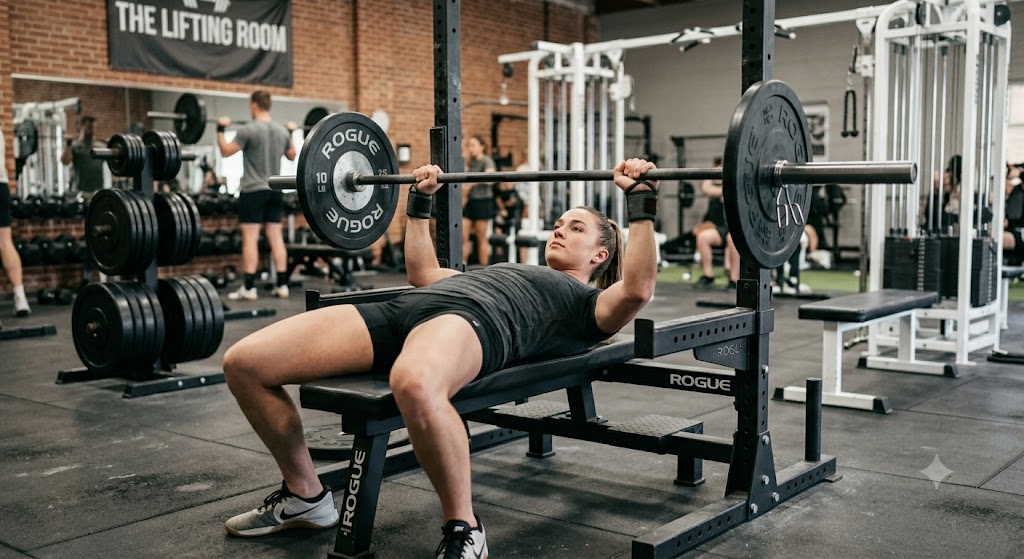
How Important Are Nutrition and Protein for Muscle Growth?
No matter how effective your workouts are, you cannot maximize hypertrophy training for muscle growth without proper nutrition. Resistance training provides the stimulus for muscle growth, but nutrition supplies the building blocks your body needs to repair and grow stronger muscles.
Simply put, your muscles cannot grow efficiently if they don’t receive enough protein, calories, carbohydrates, healthy fats, fluids, and recovery.
Research shows that consuming 1.4–2.2 grams of protein per kilogram of body weight daily supports muscle growth in active individuals.
Source: International Society of Sports Nutrition, 2023.

Protein Intake
Protein is the most important nutrient for muscle repair and growth because it supplies the amino acids needed for muscle protein synthesis.
Aim for:
- 1.6–2.2 g of protein per kilogram of body weight daily
- Spread protein across 3–5 meals per day
- Consume 20–40 g of high-quality protein per meal
Excellent protein sources include:
- Chicken breast
- Turkey
- Fish
- Eggs
- Greek yogurt
- Cottage cheese
- Lean beef
- Whey protein
- Soy products
- Tofu
- Lentils and beans
For personalized recommendations, read our how much protein do you need to build muscle
You can also explore our high protein foods for muscle gain for a complete list of muscle-building foods.
Calories
Building muscle requires energy.
Most people build muscle most efficiently by eating in a small calorie surplus, providing the body with enough fuel to support muscle growth while minimizing unnecessary fat gain.
A daily surplus of approximately 200–300 calories is sufficient for most individuals.
Those trying to lose fat while maintaining muscle should prioritize high protein intake and resistance training instead of aggressive calorie restriction.
Carbohydrates
Carbohydrates are the body’s preferred energy source during resistance training.
They replenish muscle glycogen, improve workout performance, and support recovery between sessions.
Healthy carbohydrate sources include:
- Rice
- Oats
- Potatoes
- Sweet potatoes
- Whole grains
- Fruits
- Vegetables
Consuming carbohydrates before and after training can improve performance and accelerate recovery.
Healthy Fats
Healthy fats play an important role in hormone production, nutrient absorption, and overall health.
Choose healthy fat sources such as:
- Avocados
- Olive oil
- Mixed nuts
- Seeds
- Peanut butter
- Fatty fish like salmon
Rather than avoiding fats completely, include moderate amounts in your daily diet.
Hydration
Water is essential for strength, endurance, recovery, and overall exercise performance.
Even mild dehydration can reduce strength, increase fatigue, and negatively affect workout quality.
Aim for approximately:
- 2–4 liters of water daily
Increase your intake if you:
- Train in hot environments
- Sweat heavily
- Perform long workouts
Sleep and Recovery
Recovery is where muscle growth actually happens.
Training provides the stimulus, but sleep and recovery allow your muscles to repair and become larger and stronger.
Most adults should aim for:
- 7–9 hours of quality sleep
- A consistent bedtime
- Stress management
- Scheduled rest days
Poor sleep reduces muscle protein synthesis, slows recovery, decreases strength, and increases injury risk.
Research consistently links inadequate sleep with poorer muscle recovery and athletic performance.
Source: National Sleep Foundation, 2024.

Deload Weeks
Many lifters believe they should train as hard as possible every week.
In reality, strategic deloads improve long-term progress.
Every 6–10 weeks, reduce your:
- Training volume by approximately 40–50%
- Training intensity if needed
Deload weeks help:
- Reduce accumulated fatigue
- Improve recovery
- Prevent overtraining
- Restore motivation
- Maintain long-term progress
For additional recovery strategies, read best recovery techniques after workouts
If you’re considering supplements, see creatine benefits for muscle growth
Sample Hypertrophy Workout Program
A successful hypertrophy workout balances exercise selection, weekly training volume, recovery, and progressive overload.
Below are beginner and intermediate routines that follow evidence-based hypertrophy principles.
Beginner Full-Body Routine (3 Days)
| Exercise | Sets | Reps |
|---|---|---|
| Squat | 3 | 8–10 |
| Bench Press | 3 | 8–10 |
| Lat Pulldown | 3 | 10–12 |
| Dumbbell Shoulder Press | 2 | 10–12 |
| Romanian Deadlift | 2 | 10 |
| Plank | 3 | 30–60 sec |
This routine trains every major muscle group multiple times each week, making it ideal for beginners.
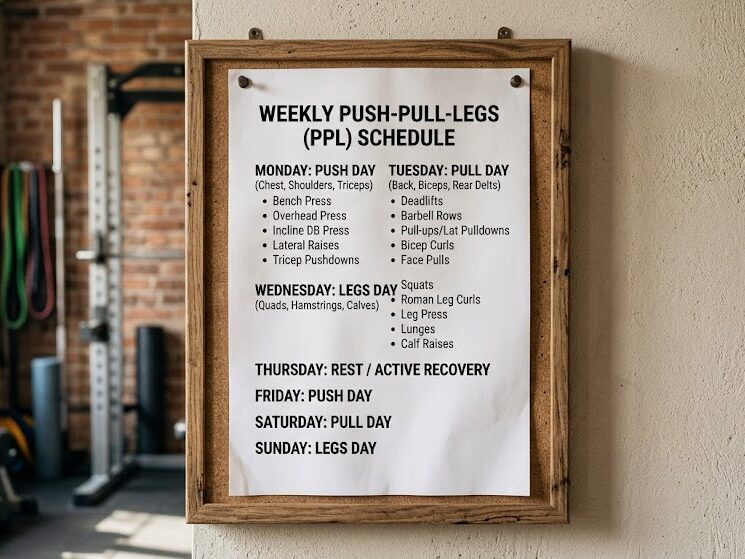
Intermediate Push Pull Legs Split
Push
- Bench Press
- Incline Press
- Shoulder Press
- Lateral Raise
- Triceps Pushdown
Pull
- Deadlift
- Pull-Ups
- Barbell Row
- Face Pull
- Biceps Curl
Legs
- Squat
- Romanian Deadlift
- Leg Press
- Leg Curl
- Standing Calf Raise
Weekly Example
| Day | Workout |
|---|---|
| Monday | Push |
| Tuesday | Pull |
| Wednesday | Legs |
| Thursday | Rest |
| Friday | Push |
| Saturday | Pull |
| Sunday | Legs or Rest |
What Are the Most Common Hypertrophy Training Mistakes to Avoid?
Even a well-designed workout program can fail if common mistakes limit your progress.
Most muscle-building plateaus occur because of inconsistent training, poor recovery, or insufficient progression.
Avoid these common mistakes:
- Skipping progressive overload
- Using poor exercise technique
- Performing too little weekly training volume
- Ignoring recovery
- Eating insufficient protein
- Sleeping too little
- Constantly changing workout programs
- Chasing soreness instead of measurable progress
- Comparing your progress to others
- Neglecting warm-ups and mobility work
Remember that muscle growth depends on consistent training and recovery over months—not perfect workouts.
Tools, Tracking, and Practical Applications
Tracking your workouts helps ensure continuous progress and makes hypertrophy training for muscle growth far more effective.
Useful tracking tools include:
- Workout journal
- Notes app
- Strong App
- Hevy App
- Google Sheets
- Smartwatch
- Fitness tracker
Track the following:
- Weight lifted
- Sets completed
- Repetitions
- Body weight
- Progress photos
- Body measurements
- RPE (Rate of Perceived Exertion)
- Reps in Reserve (RIR)
Keeping accurate records makes progressive overload much easier and helps identify plateaus before they become long-term problems.
What’s Next?
If you’re serious about building muscle, don’t chase shortcuts or constantly switch programs. Instead, focus on mastering the fundamentals and improving them consistently over time.
Follow this simple action plan:
- Train each muscle group at least twice per week.
- Perform 10–20 quality working sets per muscle each week.
- Prioritize compound exercises.
- Add isolation exercises to improve balanced development.
- Eat enough calories and protein.
- Sleep 7–9 hours every night.
- Track every workout.
- Reassess progress every 4–8 weeks.
- Increase training volume only when recovery is good.
Small improvements made consistently will produce far better results than dramatic changes made occasionally.
Conclusion
Hypertrophy training for muscle growth is one of the most effective, research-backed approaches to building lean muscle naturally. By combining progressive overload, sufficient training volume, intelligent exercise selection, proper nutrition, quality sleep, and consistent recovery, you create the ideal environment for continuous muscle growth.
Remember that building muscle is a long-term process. There is no secret exercise, magical supplement, or perfect workout split that replaces consistent effort. Instead, focus on following proven principles, tracking your progress, and making small improvements every week.
Whether your goal is improving your physique, increasing strength, or enhancing overall health, hypertrophy training offers a sustainable path toward lasting results.
FAQs
Can beginners build muscle with hypertrophy training?
Yes. Beginners can build muscle quickly by following a consistent training program, eating enough protein, and applying progressive overload.
How long does it take to see results?
Most people notice strength gains in 2–4 weeks and visible muscle growth in 8–12 weeks.
Is hypertrophy better than strength training?
Neither is better. Hypertrophy builds muscle size, while strength training focuses on lifting heavier weights.
Can you build muscle without supplements?
Yes. Proper training, nutrition, protein intake, and recovery are enough to build muscle.
Should I train to failure every set?
No. Most sets should end with 0–3 reps in reserve (RIR) for optimal muscle growth.
How much protein do I need each day to build muscle?
Aim for 1.6–2.2 g of protein per kilogram of body weight each day.
Can older adults benefit from hypertrophy training?
Yes. It helps maintain muscle mass, improve strength, and support healthy aging.
What’s the biggest mistake people make when trying to build muscle?
Being inconsistent with training, nutrition, recovery, and progressive overload.