
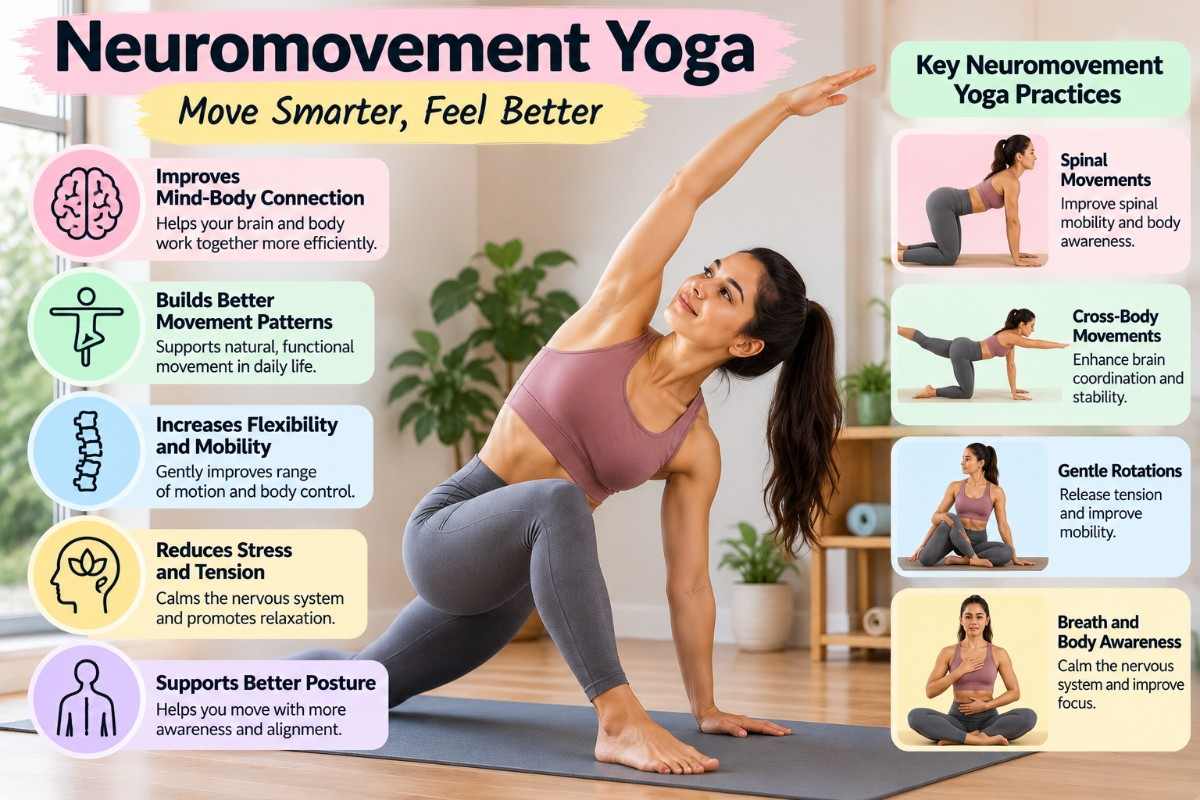
Neuromovement Yoga focuses on how you sense, control, and experience your movements. Unlike practices that emphasize achieving specific poses, this approach encourages mindful movement, body awareness, and comfortable mobility.
Because Neuromovement Yoga is not one universally standardized method, its techniques can vary between instructors. In this guide, you’ll discover its potential benefits, beginner-friendly exercises, and how to build a simple routine at home.
What Is Neuromovement Yoga?
Neuromovement Yoga is a descriptive term for movement practices that combine mindfulness, body awareness, and yoga-inspired exercises.
Instead of concentrating only on flexibility or performance, you pay attention to breathing, posture, muscle tension, balance, and how your body responds to movement.
For example, you might slowly round and extend your back while noticing which positions feel comfortable.
Common elements include:
- Mindful movement and body awareness.
- Gentle mobility and coordination exercises.
- Comfortable breathing techniques.
- Supported balance practice.
- Movements adapted to individual abilities.
How Is Neuromovement Yoga Different From Traditional Yoga?
Traditional yoga includes established styles such as Hatha, Iyengar, and Vinyasa. Depending on the style, classes may emphasize postures, alignment, breathing, meditation, or flowing sequences.
Neuromovement Yoga is a less standardized term that often emphasizes exploring movements slowly and noticing physical sensations.
| Feature | Neuromovement Yoga | Traditional yoga |
|---|---|---|
| Main emphasis | Movement awareness | Varies by style |
| Movement | Often gentle and exploratory | Gentle to vigorous |
| Structure | Depends on the instructor | Depends on the tradition |
| Adaptability | Can include modified movements | Also adaptable |
Neither approach is automatically better. Choose one that suits your preferences, abilities, and goals.
What Is the Difference Between Neuromovement Yoga and Somatic Yoga?
Both approaches may use slow movements and internal body awareness. Somatic movement emphasizes experiencing movement from within, while Neuromovement Yoga may combine similar principles with yoga-inspired exercises.
Their exact differences depend on the instructor and program.
What Are the Potential Benefits of Neuromovement Yoga?
Neuromovement Yoga may support body awareness, gentle mobility, coordination, balance, flexibility, and relaxation. However, results vary, and research on general yoga does not automatically establish the effectiveness of every practice using this term.
1. Greater Body Awareness
Body awareness means recognizing how your body feels and moves. Paying attention to posture and muscle tension may help you make more comfortable adjustments during everyday activities.
2. Gentle Mobility and Flexibility
Gentle movements, such as shoulder circles and pelvic tilts, allow you to explore comfortable ranges of motion without forcing deep stretches.
Regular movement practice may support mobility, although individual results differ.
For more ideas, explore our yoga for flexibility.
3. Better Balance and Coordination
Slow weight shifts and supported standing exercises provide opportunities to practice stability and coordination.
For example, stand beside a sturdy chair and gently shift your weight from one foot to the other.
4. Relaxation and Stress Management
Mindful movement combines gentle activity with attention to breathing and present sensations. Some people find this calming, although experiences vary.
Neuromovement Yoga is not a guaranteed treatment for anxiety, chronic stress, or neurological conditions.
Which Neuromovement Yoga Exercises Are Best for Beginners?
The best beginner exercises are comfortable movements that do not require advanced flexibility, strength, or balance. Start slowly and adapt each exercise to your needs.
1. Comfortable Breathing
- Lie on your back with your knees bent or sit comfortably in a chair.
- Place one hand on your abdomen if comfortable.
- Breathe naturally and notice the movement beneath your hand.
- Continue for one to two minutes.
Avoid forcing deep breaths. Keep your eyes open if focused breathing feels uncomfortable.
2. Gentle Pelvic Tilts
- Lie on your back with your knees bent and feet flat.
- Gently tilt your pelvis so your lower back moves slightly toward the floor.
- Return to the starting position.
- Repeat slowly for 8–10 repetitions.
Keep the movement small and comfortable.
3. Cat-Cow Movements
- Start on your hands and knees, with your hands beneath your shoulders.
- Slowly round your back.
- Gently extend your back without forcing your neck.
- Alternate between the positions for 6–8 repetitions.
Modification: Perform the movement while seated, with your hands resting on your thighs.
4. Slow Shoulder Circles
- Sit or stand with your arms relaxed.
- Roll your shoulders forward, upward, backward, and downward.
- Complete 5–8 circles.
- Reverse direction and repeat.
Reduce the circle size if the movement feels uncomfortable.
5. Seated Spinal Movements
- Sit upright on a sturdy chair with both feet supported.
- Slowly turn your torso a small amount to one side.
- Return to the center and repeat on the other side.
- If comfortable, add gentle side bends.
Perform 4–6 repetitions per side without forcing the movement.
6. Supported Balance Exercises
- Stand beside a sturdy chair or countertop.
- Hold the support with one or both hands.
- Shift your weight gently from one foot to the other.
- Continue for 30–60 seconds.
Modification: Perform seated weight shifts if standing is difficult or unsafe.
How Long Should a Beginner Routine Take?
A beginner Neuromovement Yoga routine can take approximately 8–12 minutes.
| Exercise | Suggested duration |
|---|---|
| Comfortable breathing | 1–2 minutes |
| Pelvic tilts | 1–2 minutes |
| Cat-cow movements | 1–2 minutes |
| Shoulder circles | 1 minute |
| Seated spinal movements | 2 minutes |
| Supported balance | 1–2 minutes |
These are practical suggestions rather than medically established requirements.
Stop if you experience pain, dizziness, numbness, unusual weakness, or other concerning symptoms. Seek professional advice if an injury or health condition affects your ability to exercise safely.
How Often Should You Practice Neuromovement Yoga?
Beginners can start with short sessions several times a week and gradually adjust according to comfort and availability.
Try this simple progression:
- Week 1: Practice for 5–10 minutes, three days a week.
- Week 2: Continue or increase the duration if comfortable.
- Week 3: Add another gentle movement.
- Week 4: Review your experience and establish a realistic routine.
This is an example schedule, not a prescribed treatment plan. You can progress more slowly whenever necessary.
For additional guidance, explore our yoga recovery and rest days.
What Equipment Do You Need for Neuromovement Yoga at Home?
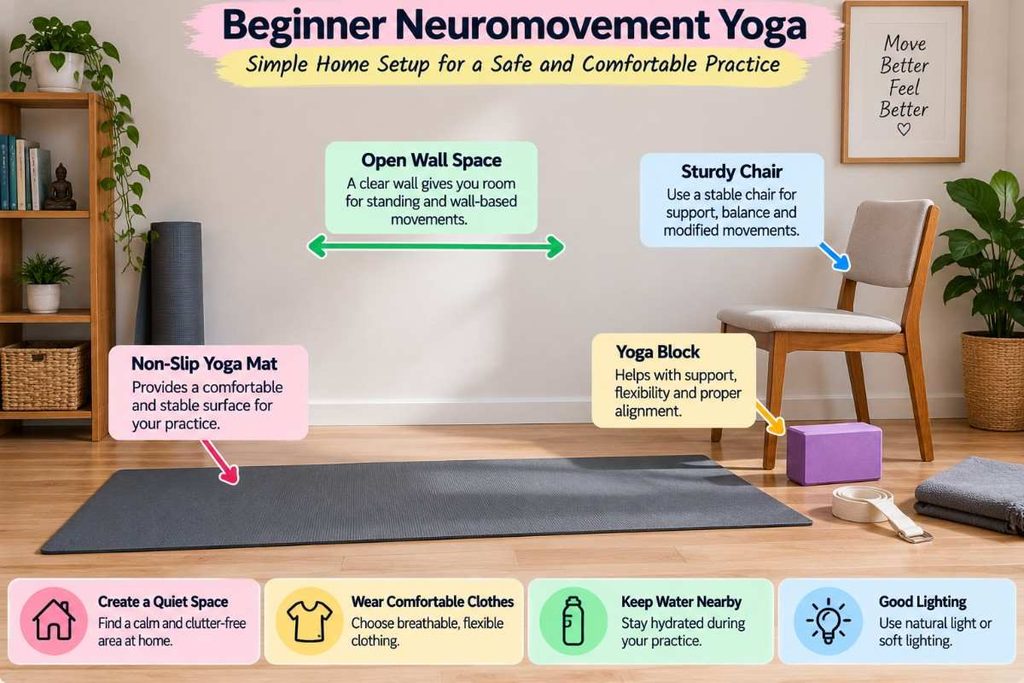
Neuromovement Yoga requires little equipment. Many exercises can be performed using body weight and a comfortable floor or chair.
Useful items include:
- Nonslip yoga mat: Provides a comfortable surface for floor exercises.
- Stable chair: Supports seated movements and balance practice.
- Wall or countertop: Provides support during standing exercises.
- Comfortable clothing: Allows unrestricted movement.
- Yoga blocks or cushions: Offer optional support.
Choose an instructor who explains movements clearly, offers modifications, respects your limits, and avoids unsupported health claims.
Is Neuromovement Yoga Safe for Beginners and Older Adults?
Neuromovement Yoga can be adapted for many beginners and older adults, but safety depends on individual health, mobility, balance, and exercise selection.
Follow these precautions:
- Begin with small, comfortable movements.
- Keep stable support nearby during standing exercises.
- Avoid forcing stretches or uncomfortable positions.
- Breathe naturally.
- Stop if you experience concerning symptoms.
- Seek professional guidance if health conditions affect exercise choices.
For accessible alternatives, explore our Chair Posture Yoga.
Can Neuromovement Yoga Help With Stress and Relaxation?
Neuromovement Yoga may support relaxation by combining gentle movement, natural breathing, and attention to present sensations.
For example, after work, spend five minutes sitting comfortably, noticing your breathing, and performing gentle shoulder circles.
Some people find this calming, while others prefer walking or different relaxation practices.
If stress or anxiety persists and interferes with daily life, consult a qualified healthcare professional.
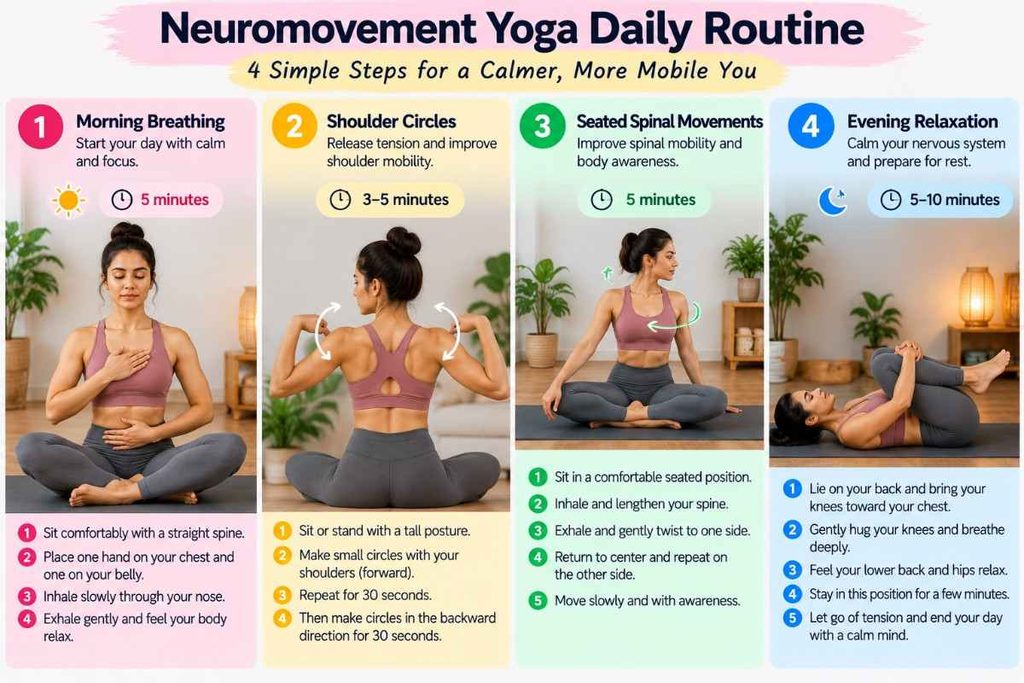
How Can You Start a Simple Daily Routine?
The easiest way to start Neuromovement Yoga is to attach a short session to an existing habit, such as waking up, taking a work break, or preparing for bed.
| Time of day | Suggested practice |
|---|---|
| Morning | Comfortable breathing and shoulder circles |
| Work break | Seated spinal movements |
| Afternoon | Pelvic tilts or cat-cow movements |
| Evening | Natural breathing and relaxed shoulder circles |
Start with three exercises and five minutes. Reduce the range of motion, use support, or choose seated alternatives whenever needed.
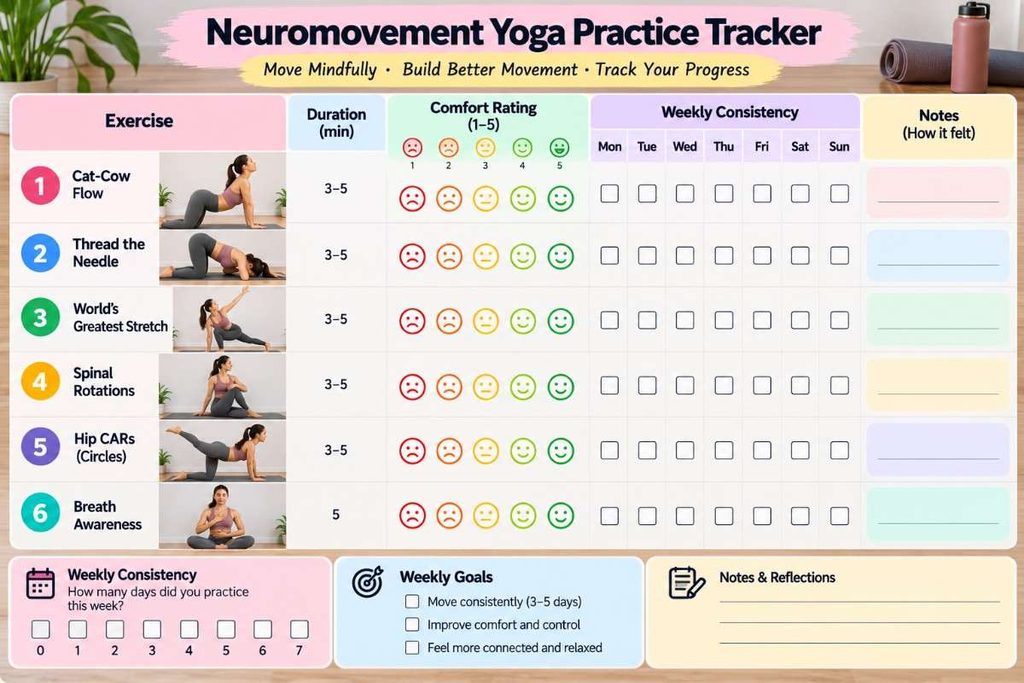
How Can You Track Your Progress?
After each session, note:
- How comfortable the movements felt.
- Which exercises seemed easier or more difficult.
- Whether you needed extra support.
- How consistently you practiced.
- Whether the routine suited your schedule.
These observations help you evaluate your routine but do not prove that a health condition has improved.
Conclusion
Neuromovement Yoga may be worth exploring if you want a gentle, adaptable approach to movement that emphasizes body awareness, comfortable mobility, and mindful attention.
Begin with simple exercises such as pelvic tilts, shoulder circles, cat-cow movements, and supported balance practice. Start with five minutes, progress gradually, and choose movements that suit your abilities.
Remember that Neuromovement Yoga is not one universally standardized method, and its benefits are not guaranteed. The best routine is one that feels comfortable, supports your goals, and fits your everyday life.
FAQs
What is Neuromovement Yoga?
Neuromovement Yoga combines mindful movement, body awareness, and yoga-inspired exercises.
What are its benefits?
It may support mobility, balance, flexibility, and relaxation.
Is it suitable for beginners?
Yes, beginners can start with gentle, simple movements.
How long should I practice?
Start with five minutes and gradually increase to 8–12 minutes.
Can I practice at home?
Yes, a mat and sturdy chair may be sufficient.
Is it the same as somatic yoga?
No, but both emphasize body awareness and gentle movement.
Is it safe for older adults?
It can be adapted, but individual health and mobility matter.
Can it treat neurological conditions?
It is not a proven treatment for neurological conditions.