
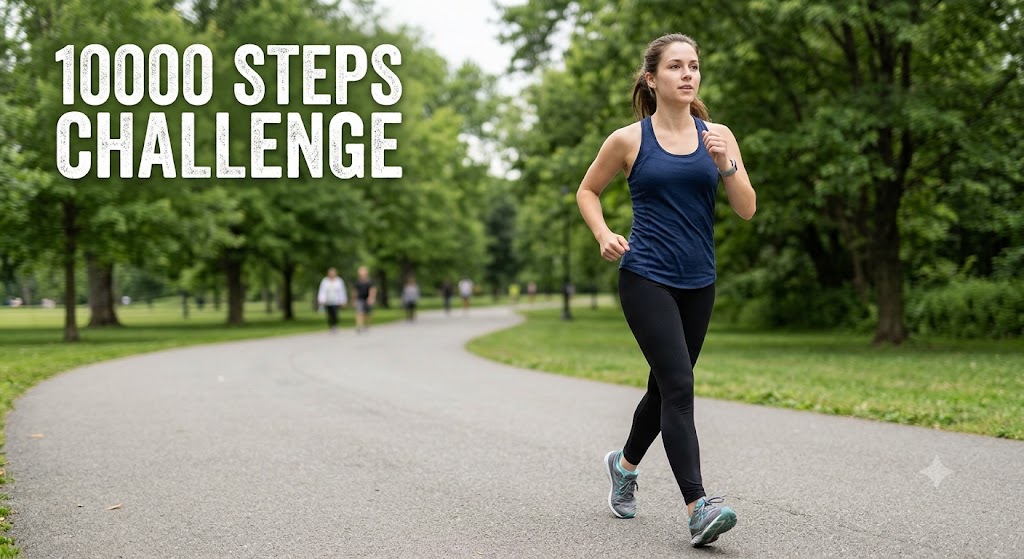
The 10,000 Steps Challenge encourages you to walk more throughout the day to improve your activity levels, build a consistent fitness habit, and support your overall health. You don’t need to complete all 10,000 steps at once or reach the target immediately; starting with your current activity level and gradually increasing your steps can make the challenge more manageable.
What Is the 10000 Steps Challenge?
The 10,000 Steps Challenge is a daily walking goal in which you aim to accumulate 10,000 steps through everyday movement, planned walks, and other walking activities. You can track your progress using a smartphone, fitness tracker, smartwatch, or pedometer.
Although 10,000 steps is a popular fitness target, it is not a universal medical requirement. The amount of activity that benefits you depends on factors such as your age, current fitness, health, and daily routine.
Why Does the 10000 Steps Challenge Matter?
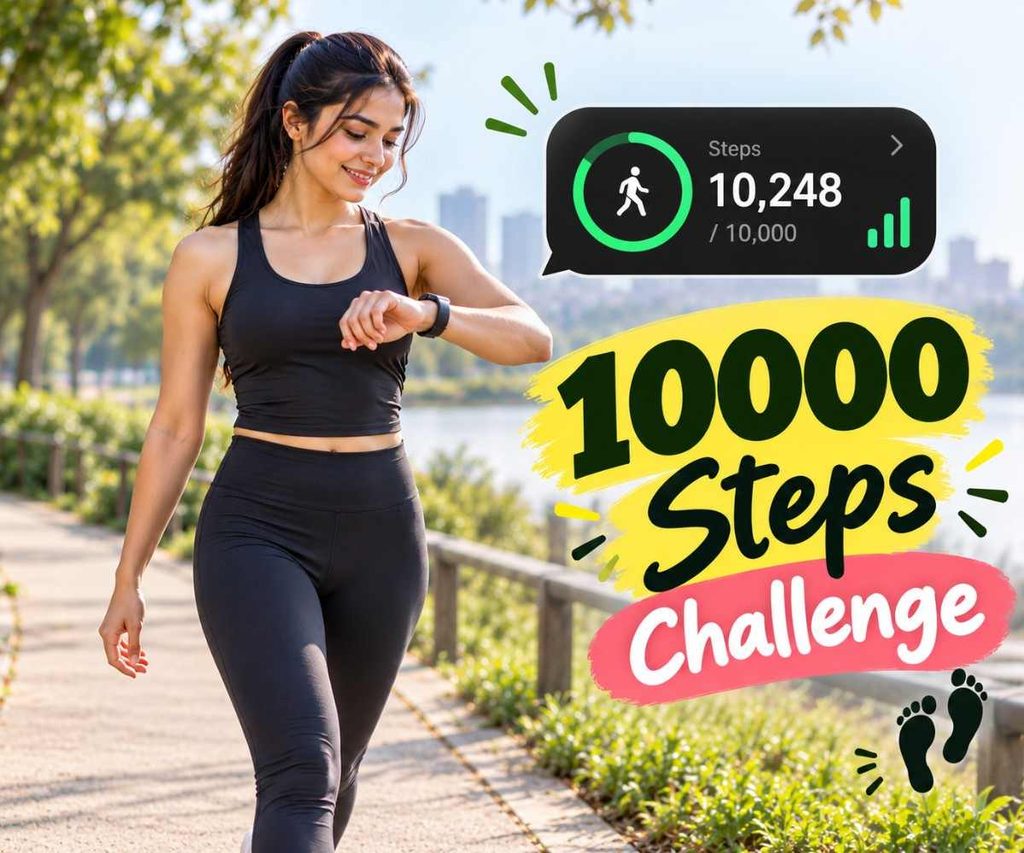
The 10,000 Steps Challenge can help you reduce sedentary time, develop a regular walking routine, and increase your daily physical activity. Walking is accessible to many people because it requires little equipment and can be divided into shorter sessions throughout the day.
Regular physical activity supports cardiovascular health, physical fitness, mood, and general well-being. Walking also offers an easy starting point for people who want to become more active without immediately committing to demanding workouts.
You can combine the challenge with a structured Walking Yoga for Beginners to establish a sustainable routine.
How Many Miles or Kilometers Are 10,000 Steps?
For many adults, 10,000 steps represent approximately 7–8 kilometers (4–5 miles), although the actual distance varies with stride length, height, walking speed, and terrain.
| Measurement | Approximate equivalent |
|---|---|
| Steps | 10,000 |
| Distance | 7–8 km |
| Distance in miles | 4–5 miles |
| Walking time | Often around 80–120 minutes in total |
| Best approach | Divide walking into several sessions |
These figures are estimates rather than fixed conversions. A person with a shorter stride may cover less distance than someone with a longer stride, and walking time depends on pace and breaks.
How to Start the 10000 Steps Challenge
The easiest way to begin is to measure your current daily steps, choose a realistic starting target, and increase it gradually as your fitness and comfort improve.
Step 1: Check Your Current Step Count
Track your normal steps for several days without changing your routine. Calculate your approximate daily average to establish a baseline.
For example, if you usually walk 3,500 steps a day, jumping immediately to 10,000 may feel difficult. A smaller initial increase can help you build consistency.
Step 2: Set a Realistic Daily Goal
Choose a target that challenges you without causing excessive fatigue or discomfort. You could increase your usual steps by around 500–1,000 per day when that feels manageable, adjusting the pace of progression to your needs.
Step 3: Schedule Short Walking Sessions
You don’t have to complete your steps in one long walk. Consider walking in the morning, during lunch, after work, and after dinner.
Step 4: Track Your Progress
Use a phone or wearable device to monitor your steps. Review your weekly pattern rather than worrying about one low-activity day.
Step 5: Make Walking Part of Your Routine
Take short walking breaks, use the stairs when appropriate, walk while speaking on the phone, or choose a short walk after meals. These small changes can make daily movement easier to maintain.
A 7-Day 10000 Steps Challenge Plan
A seven-day plan can help beginners establish a walking habit before deciding whether to aim for 10,000 steps every day. Adjust the targets to your baseline rather than forcing yourself to follow a number that feels too demanding.
| Day | Suggested approach |
|---|---|
| Day 1 | Track your normal steps |
| Day 2 | Add a short, comfortable walk |
| Day 3 | Take two or three walking breaks |
| Day 4 | Repeat your routine and assess comfort |
| Day 5 | Increase your steps if recovery is good |
| Day 6 | Try a longer relaxed walk if comfortable |
| Day 7 | Review your weekly progress and set a next goal |
If you’re already comfortably active, you may be able to aim for 10,000 steps sooner. If you’re starting from a low activity level, take more time to build up.
How to Reach 10,000 Steps Without Spending All Day Walking
You can reach 10,000 steps more conveniently by spreading movement across your day instead of relying on a single long walk.
Break Your Steps Into Smaller Sessions
Here is an example schedule for someone aiming for 10,000 steps:
| Activity | Example step target |
|---|---|
| Morning walk | 2,000 |
| Walking during breaks | 1,500 |
| Daily errands and household movement | 2,000 |
| Afternoon or evening walk | 3,000 |
| Other everyday movement | 1,500 |
| Total | 10,000 |
This is an illustrative schedule, not a requirement. Your actual step count will depend on your lifestyle, and you can adjust each session to fit your day.
Use Walking to Support Your Fitness Goals
Walking can complement other forms of exercise, including strength training and cardio. If your goal is fat loss, combine regular movement with appropriate nutrition and a sustainable calorie intake. The calorie deficit diet plan can help you understand the nutrition side of weight management.
For a balanced routine, consider adding a strength training workout and a low-impact cardio exercises plan. Walking is valuable, but it does not replace every benefit of muscle-strengthening exercise.
Does Walking 10,000 Steps Help With Weight Loss?
Walking 10,000 steps can contribute to weight loss by increasing daily energy expenditure, but results depend on your pace, body weight, food intake, and overall activity. Reaching a particular step count does not automatically guarantee fat loss.
For example, walking more may help create an energy deficit if your food intake stays similar. However, increased hunger or reduced movement at other times can offset some of the additional energy used.
To build a more complete approach, explore the TDEE calculator to estimate daily energy needs and the High Protein Lemonade guide for practical meal ideas.
Best Tips for Completing the Challenge Safely
A successful walking challenge prioritizes consistency, comfortable movement, and gradual progression rather than forcing yourself to hit an exact number every day.
- Wear comfortable footwear: Choose shoes that fit well and suit your walking surface.
- Start gradually: Increase your steps according to your current fitness and how your body responds.
- Choose convenient routes: Parks, footpaths, indoor corridors, or safe walking tracks can all work.
- Stay hydrated: Drink water regularly, especially in hot weather.
- Pay attention to discomfort: Rest if you experience unusual pain, dizziness, or excessive fatigue.
- Make the habit enjoyable: Listen to music or a podcast when safe, walk with a friend, or explore a new route.
- Allow recovery: A lower-step day is reasonable when you are tired or unwell.
Adults are generally encouraged to get at least 150 minutes of moderate-intensity aerobic activity each week, along with muscle-strengthening activities on two or more days. Brisk walking can contribute to the aerobic target when its intensity is sufficient. (Source: CDC, 2023)
How to Track Your 10000 Steps Challenge
Tracking your daily steps helps you understand your progress and identify habits that make walking easier to maintain.
You can use:
- A smartphone’s built-in health or activity app.
- A smartwatch or fitness band.
- A basic pedometer.
- A simple paper or digital walking log.
Record your steps each day and review your weekly average. If your count is consistently below your target, identify an easy opportunity to add movement rather than trying to make up every missed step at once.
Conclusion
The 10000 Steps Challenge is a practical way to build a more active lifestyle, improve walking consistency, and support general health. Start by measuring your current steps, increase your activity gradually, and divide your walking into manageable sessions throughout the day.
Remember that 10,000 steps is a goal, not a strict requirement for good health. Choose a sustainable target, stay consistent, and combine walking with balanced nutrition and strength training for a well-rounded fitness routine.
FAQs
Is walking 10,000 steps a day enough exercise?
It can contribute significantly to daily activity, but adults should also aim for recommended aerobic activity and muscle-strengthening exercise.
How long does it take to walk 10,000 steps?
It often takes around 80–120 minutes in total, depending on walking speed, stride length, and breaks.
Can beginners start the 10,000 Steps Challenge?
Yes. Begin with your usual step count and gradually increase it as your fitness and comfort improve.
Can walking 10,000 steps help lose belly fat?
Walking can support overall fat loss, but it cannot specifically target belly fat. Nutrition and overall energy balance also matter.
Do I need a smartwatch for the challenge?
No. A smartphone, pedometer, or simple walking log can help you track your steps.
Is it necessary to reach 10,000 steps every day?
No. Your activity needs vary, and consistent movement at a suitable level is more important than hitting an exact number daily.
Can I complete 10,000 steps indoors?
Yes. Walking around your home, using indoor corridors, or walking on a treadmill can contribute to your daily total.
What should I do if I cannot reach 10,000 steps?
Set a smaller, achievable target and build up gradually. Even increasing your activity from a low baseline can provide health benefits.
Sources
- Centers for Disease Control and Prevention. (2023). Adult Activity: An Overview.
- Centers for Disease Control and Prevention. (2026). Health Benefits of Physical Activity for Adults.
- World Health Organization. (2020). WHO Guidelines on Physical Activity and Sedentary Behaviour: At a Glance.
- World Health Organization. (2024). Physical Activity.
Disclaimer: This article is for informational and educational purposes only and is not a substitute for personalized medical advice. Consult a qualified healthcare professional before making significant changes to your diet, exercise routine, or supplement use.