
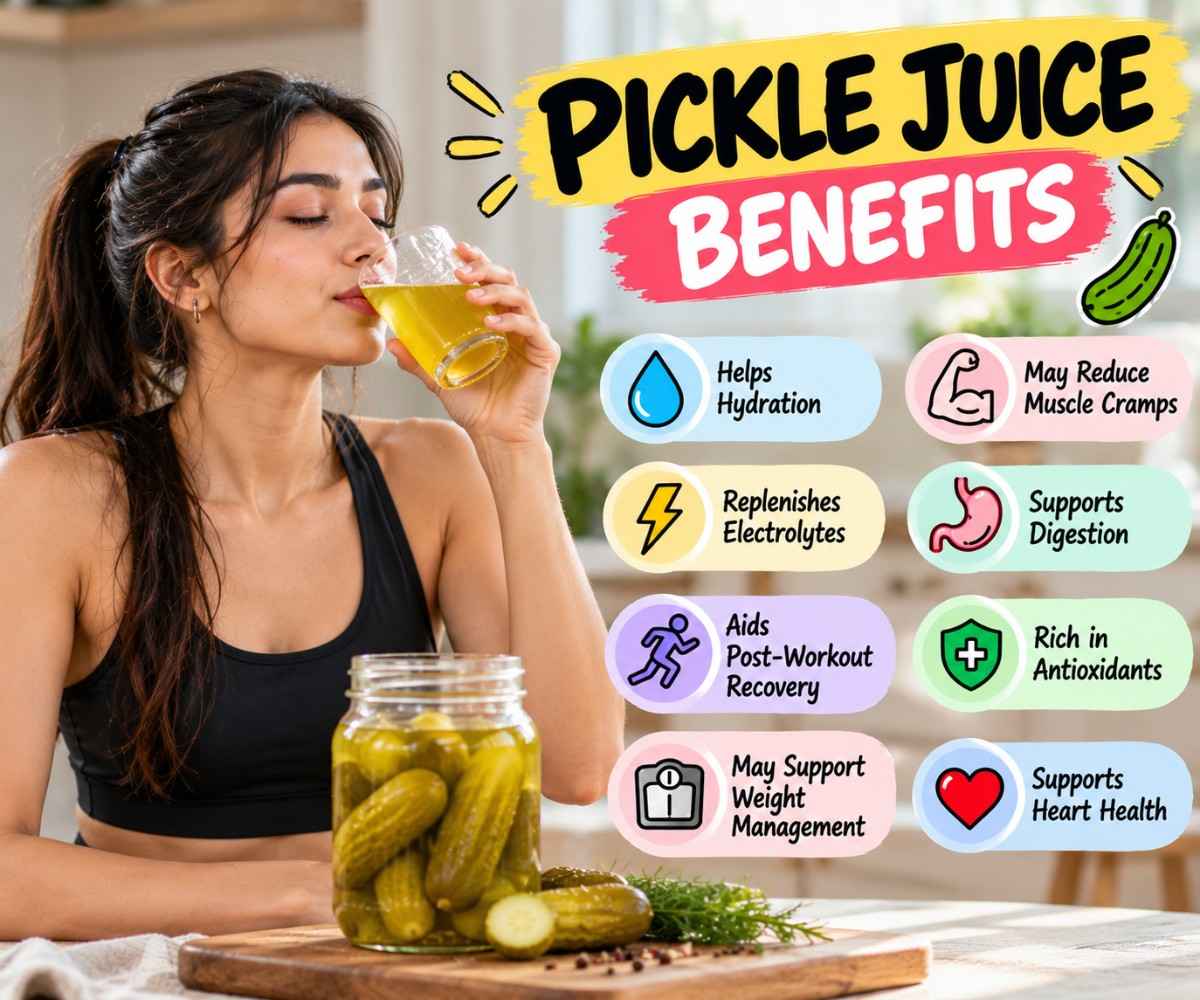
Pickle juice has become popular among athletes and fitness enthusiasts who use it for muscle cramps, workout recovery, and hydration. Although research suggests it may help shorten certain exercise-related cramps, its benefits are often exaggerated, and its high sodium content makes moderation important.
What Is Pickle Juice Benefits?
Pickle juice is the salty, acidic liquid used to preserve cucumbers, usually made with water, vinegar, salt, and seasonings. Some varieties come from fermented pickles, while others use vinegar-based pickling without fermentation.
The nutritional content depends on the recipe and serving size. Pickle brine can contain sodium and small amounts of other nutrients, but it should not be considered a complete electrolyte drink or a major source of vitamins.
Pickle juice is used for several reasons, including:
- Potential relief from exercise-associated muscle cramps.
- A source of sodium, an electrolyte lost through sweat.
- A flavorful addition to certain recipes and marinades.
- An alternative remedy that some athletes try during intense training.
However, not all these uses have equally strong scientific support.
electrolyte drinks and hydration guide
Why Do Pickle Juice Benefits Matter?
Pickle juice benefits matter because athletes often need practical ways to manage muscle cramps and replace fluids during exercise. Understanding what the research actually supports can help you decide whether pickle juice is useful for your routine or whether water, an appropriate sports drink, and better training strategies are more suitable.
Research has found that small amounts of pickle juice can shorten experimentally induced muscle cramps in certain conditions. However, evidence that it improves athletic performance, prevents all cramps, or provides superior hydration remains limited. (Source: Miller et al., 2010; Ohio State University, 2022.)
For everyday fitness, the most important distinction is that possible cramp relief does not mean pickle juice is a complete hydration solution.
5 Potential Pickle Juice Benefits for Health and Fitness
The most promising pickle juice benefit is its potential to shorten certain muscle cramps, while other commonly claimed health benefits have less direct evidence.
1. May Help Relieve Muscle Cramps
Pickle juice may help reduce the duration of some muscle cramps, although research remains limited. In a 2010 study involving dehydrated men, researchers found that pickle juice shortened electrically induced foot muscle cramps by approximately 49 seconds compared with water. The effect was not explained by rapid changes in blood electrolytes. (Source: Miller et al., 2010.)
Researchers suspect that the vinegar and other strong-tasting ingredients stimulate sensory nerves in the mouth and throat, potentially influencing the nerve signals involved in muscle contractions. However, this mechanism is still being investigated, and results from laboratory-induced cramps do not prove that pickle juice will reliably relieve every exercise-related cramp.
For additional cramp management strategies, explore muscle cramp prevention and recovery guide.
2. Provides Sodium
Pickle juice contains sodium, an electrolyte that helps regulate fluid balance, nerve signaling, and muscle function.
Sodium losses through sweat can become important during prolonged exercise, particularly in hot conditions. However, the amount of sodium in pickle juice varies considerably by product, and drinking a small serving does not necessarily replace the electrolytes lost during a demanding workout.
If you exercise for extended periods, a personalized hydration strategy may be more appropriate than relying on pickle brine alone.
3. May Offer Limited Support During Recovery
Pickle juice may be useful as an occasional option for athletes who experience muscle cramps, but there is insufficient evidence that it directly accelerates muscle repair or reduces post-workout soreness.
Recovery depends on several factors, including adequate sleep, appropriate training intensity, hydration, and sufficient energy and protein intake.
For a more complete recovery routine, consider post-workout recovery strategies and High Protein Breakfast Ideas for Weight Loss.
4. May Contain Beneficial Compounds From Fermentation
Some pickle juices come from naturally fermented cucumbers, which may contain live microorganisms when the product has not been pasteurized or otherwise processed to eliminate them.
However, vinegar-pickled juice is not automatically probiotic. Whether a product contains live cultures depends on its preparation, processing, and storage. Pickle juice should not be considered a proven treatment for digestive problems or a replacement for a varied diet.
5. May Have Effects Related to Vinegar, but Evidence Is Limited
Some research has investigated vinegar and its potential effects on post-meal blood glucose. However, evidence about vinegar cannot automatically be applied to pickle juice because recipes, acidity, ingredients, and serving sizes differ.
Pickle juice has not been established as a treatment for diabetes, a reliable weight-loss aid, or a way to improve metabolic health. People managing blood glucose should follow their healthcare professional’s recommendations rather than using pickle juice as a substitute for treatment. (Source: Ohio State University, 2022.)
Does Pickle Juice Help With Hydration?
Pickle juice contributes fluid and sodium, but it is not an ideal standalone hydration drink for most people.
Although sodium is important for maintaining fluid balance, pickle juice is often highly concentrated and provides much less fluid per serving than water or a typical sports drink. Research has also found that small servings do not rapidly restore blood electrolyte levels. (Source: Miller et al., 2009.)
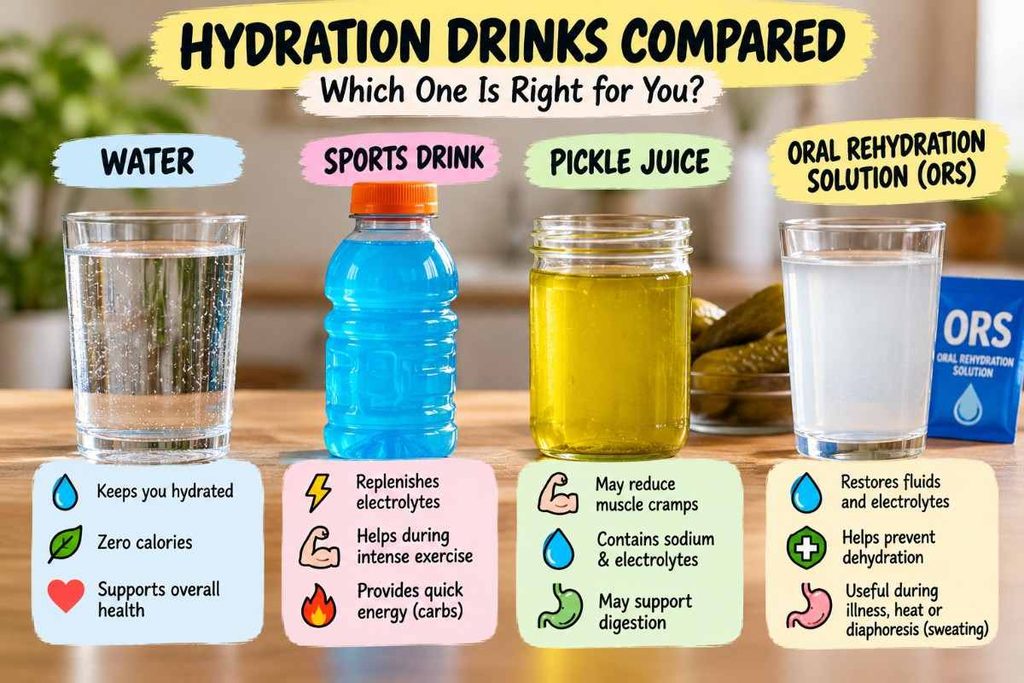
Here is how common options compare.
| Drink | Main purpose | Important consideration |
|---|---|---|
| Water | Everyday hydration | Suitable for most routine activities |
| Sports drink | Fluid and electrolyte replacement during prolonged exercise | Check sugar and sodium content |
| Pickle juice | Possible short-term muscle cramp relief | Often high in sodium |
| Oral rehydration solution | Rehydration when fluid and electrolyte losses require treatment | Use according to medical guidance |
For most everyday workouts, water and regular meals are sufficient. During prolonged or strenuous exercise, especially in hot weather, fluid and electrolyte needs may increase.
How Much Pickle Juice Benefits Should You Drink?
There is no universally established serving size for pickle juice, and the appropriate amount depends on the intended use, sodium content, and individual health needs.
A small research study used approximately 1 milliliter per kilogram of body weight to investigate cramp relief. This was a research protocol, not a universal recommendation for everyday consumption.
If you are considering pickle juice for occasional exercise-related cramps:
- Check the product label for sodium content.
- Avoid treating pickle juice as your main source of hydration.
- Stop if it causes nausea, stomach discomfort, or reflux.
- Gently stretch the affected muscle while the cramp subsides.
- Seek medical advice if cramps are frequent, severe, unexplained, or accompanied by swelling or weakness.
What Are the Risks of Drinking Pickle Juice?
Pickle juice is generally best treated as an occasional food product rather than a daily health supplement because its sodium concentration and acidity can create problems for some people.
High Sodium Intake
Many commercial pickle juices contain substantial amounts of sodium. Consuming too much sodium can contribute to high blood pressure in susceptible individuals and may complicate the management of certain medical conditions.
People with hypertension or kidney, heart, or liver disease should consult a healthcare professional before deliberately drinking pickle juice for its supposed health benefits. (Source: Ohio State University, 2022.)
Digestive Discomfort
The acidity and saltiness of pickle juice may trigger heartburn, reflux, nausea, or stomach irritation in some people. Large servings may be particularly uncomfortable during intense exercise.
Dental Enamel Exposure
Frequent exposure to acidic drinks can contribute to dental enamel erosion over time. Avoid repeatedly sipping pickle juice throughout the day, and rinse your mouth with plain water afterward.
Not a Replacement for Medical Treatment
Persistent muscle cramps can have many causes, including muscle fatigue, medication effects, and certain medical conditions. Pickle juice should not replace an assessment when symptoms are recurrent or unusual.
Who Should Avoid or Limit Pickle Juice?
People who need to restrict sodium or who experience digestive symptoms from acidic foods should be particularly cautious.
Consider limiting or avoiding pickle juice if you:
- Have been advised to follow a low-sodium diet.
- Have high blood pressure or a condition affecting kidney, heart, or liver function.
- Experience frequent acid reflux or stomach irritation.
- Are using it to treat persistent muscle cramps without understanding their cause.
Healthy adults who enjoy the flavor may use small amounts in food or occasionally try it for exercise-related cramps, provided it fits their dietary needs.
For broader nutrition guidance, see balanced diet for an active lifestyle.
Conclusion
Pickle juice benefits are most promising for the possible short-term relief of certain muscle cramps, but the evidence does not establish it as a superior hydration drink, performance enhancer, or general health remedy.
If you experience an occasional exercise-related cramp, gentle stretching remains a practical first step. Prioritize appropriate hydration, balanced nutrition, sensible training progression, and medical evaluation for recurring symptoms. If you choose to try pickle juice, pay attention to its sodium content and your individual health needs.
FAQs
Does pickle juice stop muscle cramps?
Pickle juice may shorten certain muscle cramps, but evidence is limited and it does not reliably prevent or treat every type of cramp.
Is it good to drink pickle juice every day?
Daily consumption is not necessary for most people, and its high sodium content makes frequent intake unsuitable for some individuals.
Does pickle juice help with dehydration?
Pickle juice supplies some fluid and sodium, but it is not a complete rehydration solution. Water or an appropriate rehydration drink is generally more suitable.
Can pickle juice help after a workout?
It may help with certain exercise-related cramps, but there is insufficient evidence that it directly improves muscle repair or reduces soreness.
Is pickle juice good for weight loss?
There is no strong evidence that pickle juice directly causes weight loss. Sustainable weight management depends on overall dietary intake, physical activity, and other lifestyle factors.
Can pickle juice raise blood pressure?
Its high sodium content may contribute to higher blood pressure in salt-sensitive individuals. People with hypertension should follow their healthcare professional’s sodium recommendations.
Is fermented pickle juice better than vinegar pickle juice?
Fermented pickle juice may contain live microorganisms if the product has not been processed to eliminate them. Vinegar-pickled juice does not automatically contain probiotics, and neither type has been established as a general health treatment.
Sources
- Miller, K. C., et al. (2010). Reflex inhibition of electrically induced muscle cramps in hypohydrated humans. Medicine & Science in Sports & Exercise.
- Miller, K. C., et al. (2009). Electrolyte and plasma changes after ingestion of pickle juice, water, and a common carbohydrate-electrolyte solution. Journal of Athletic Training.
- Miller, K. C., et al. (2022). An Evidence-Based Review of the Pathophysiology, Treatment, and Prevention of Exercise-Associated Muscle Cramps. Journal of Athletic Training.
- Ohio State University Health & Discovery. (2022). Is pickle juice good for you?
- Miller, K. C., et al. (2010). Exercise-associated muscle cramps: Causes, treatment, and prevention. Sports Health.
Disclaimer: This article is for informational and educational purposes only and is not a substitute for personalized medical advice. Consult a qualified healthcare professional before making significant changes to your diet, exercise routine, or supplement use.