
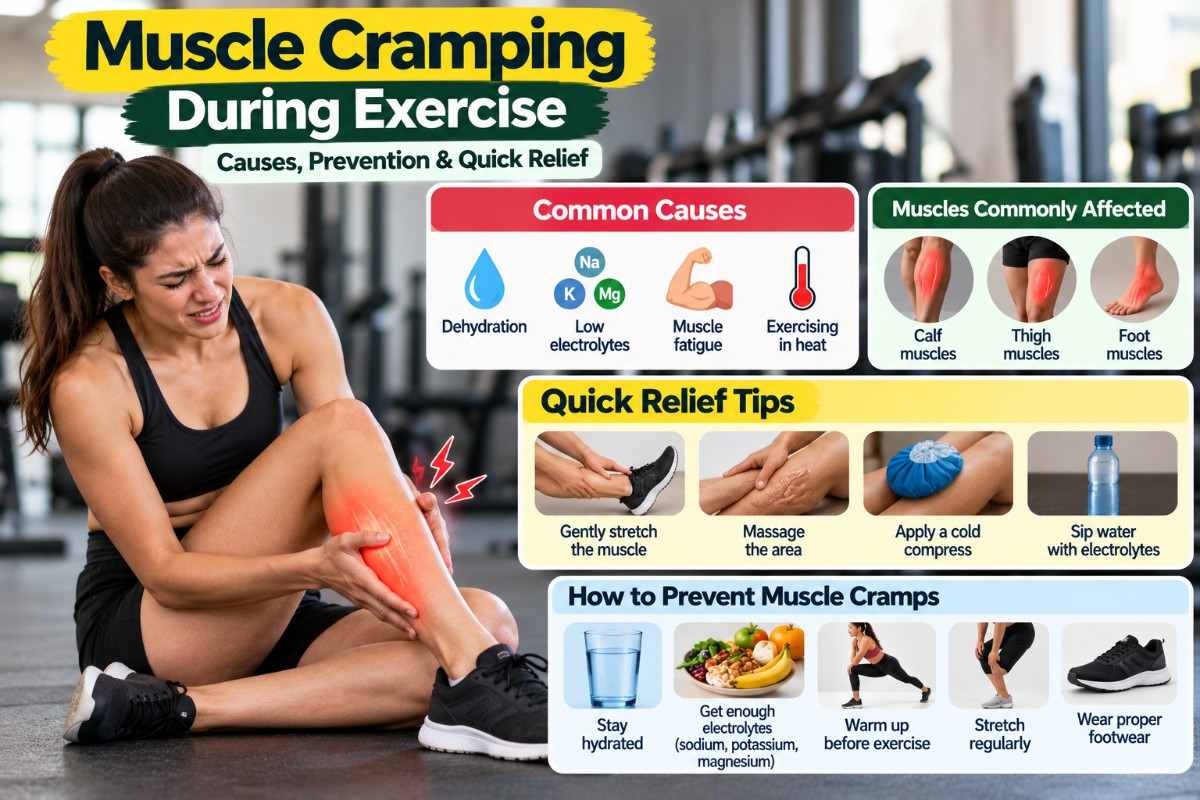
Have you ever experienced a sudden, painful muscle cramp while running, lifting weights, or exercising? Although dehydration is often blamed, muscle cramping during exercise can have several causes, including muscle fatigue, intense workouts, heat exposure, and fluid loss.
Understanding these triggers can help you relieve cramps safely and prevent them from disrupting your workouts. This guide explains common causes, effective relief methods, hydration tips, and warning signs that require medical attention.
What Is Muscle Cramping During Exercise?
Muscle cramping during exercise is a sudden, painful, involuntary contraction of one or more skeletal muscles during or shortly after physical activity. Cramps commonly affect the calves, feet, hamstrings, and quadriceps.
Common symptoms include:
- Sudden, localized muscle pain.
- Tightness or a visibly contracted muscle.
- Temporary difficulty moving normally.
- Muscle tenderness after the cramp subsides.
Most exercise-associated cramps affect a specific muscle, but severe pain, unusual weakness, or other symptoms may indicate a more serious condition.
What Causes Muscle Cramping During Exercise?
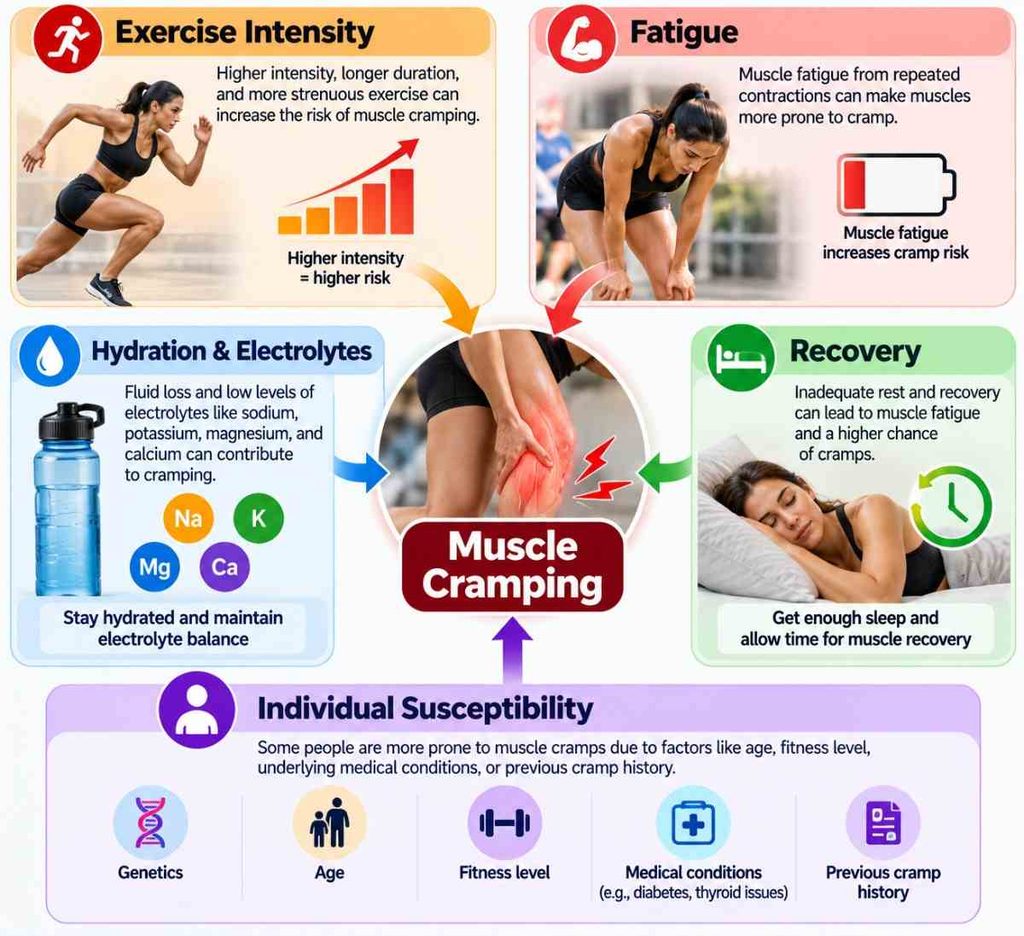
Muscle cramping during exercise can result from several interacting factors. Researchers have not established one universal cause for every exercise-related cramp.
1. Muscle Fatigue and Intense Exercise
Muscle fatigue is a common suspected contributor to exercise-associated cramps. When muscles work intensely for extended periods, changes in neuromuscular control may contribute to involuntary contractions.
For example, repeated heavy squats, sprinting, or long-distance running may increase fatigue and cramping risk.
What helps: Build exercise intensity gradually, avoid excessive training, and allow enough recovery between demanding workouts.
2. Dehydration and Electrolyte Loss
Heavy sweating can cause fluid and sodium losses that affect fluid balance and exercise performance. However, dehydration is not the only cause of muscle cramping, and cramps can occur even when you’re adequately hydrated.
Electrolyte replacement may be helpful during prolonged exercise in hot conditions when sweat losses are substantial.
3. Sudden Training Changes
Increasing workout duration, intensity, or training volume too quickly can place unfamiliar demands on your muscles.
For example, attempting a long hike without building endurance or suddenly increasing your weightlifting volume may contribute to fatigue-related cramps.
4. Heat and Individual Risk Factors
Hot weather increases sweating and can make exercise more demanding. Inadequate conditioning, insufficient recovery, and a history of previous cramps may also influence your susceptibility.
How Do You Stop a Muscle Cramp During a Workout?
The first response to an acute exercise-associated cramp is to stop exercising and gently stretch the affected muscle until the contraction eases.
Follow these steps:
- Stop exercising: Move somewhere safe and relax the affected muscle.
- Stretch gently: Slowly lengthen the muscle without bouncing or forcing the movement.
- Rest: Allow the cramp to settle before attempting further activity.
- Cool down: Move to a cooler place if you’re exercising in hot conditions.
- Replace fluids: Drink according to your needs, particularly after heavy sweating.
- Resume gradually: Return to exercise only when normal movement feels comfortable.
Stop the session if pain returns or unusual weakness persists.
What Is the Best Stretch for a Calf Cramp?
A gentle standing calf stretch can help relieve a calf cramp by lengthening the affected muscle.
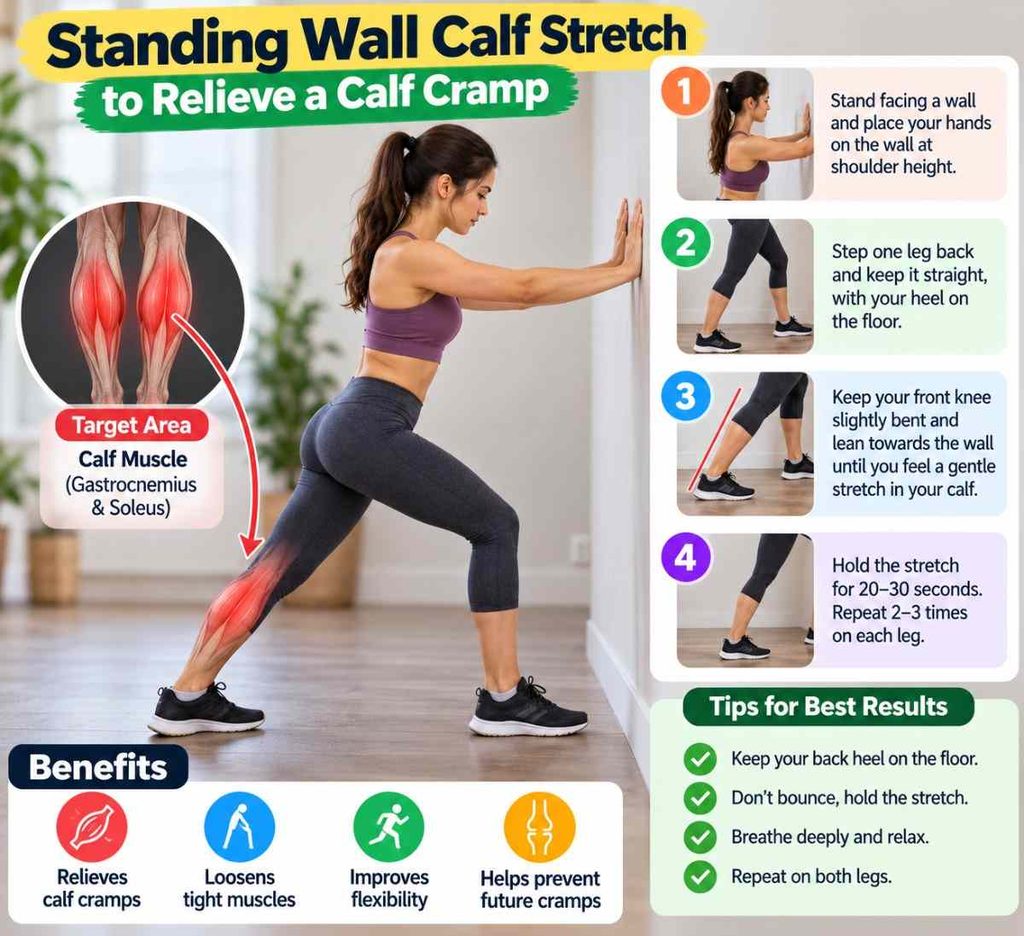
To perform the stretch:
- Stand facing a wall with both hands against it.
- Place the cramped leg behind you, keeping its heel on the floor.
- Bend your front knee and lean forward gently.
- Hold the comfortable stretch until the cramp eases.
Stop if the movement causes sharp pain.
How Can You Prevent Muscle Cramps During Running and Weight Training?
Preventing muscle cramps during exercise involves managing training intensity, recovery, hydration, and individual risk factors.
1. Increase Workout Intensity Gradually
Avoid sudden increases in exercise duration or intensity. Build endurance progressively and adjust your training as your fitness improves.
signs of overtraining and how to recover
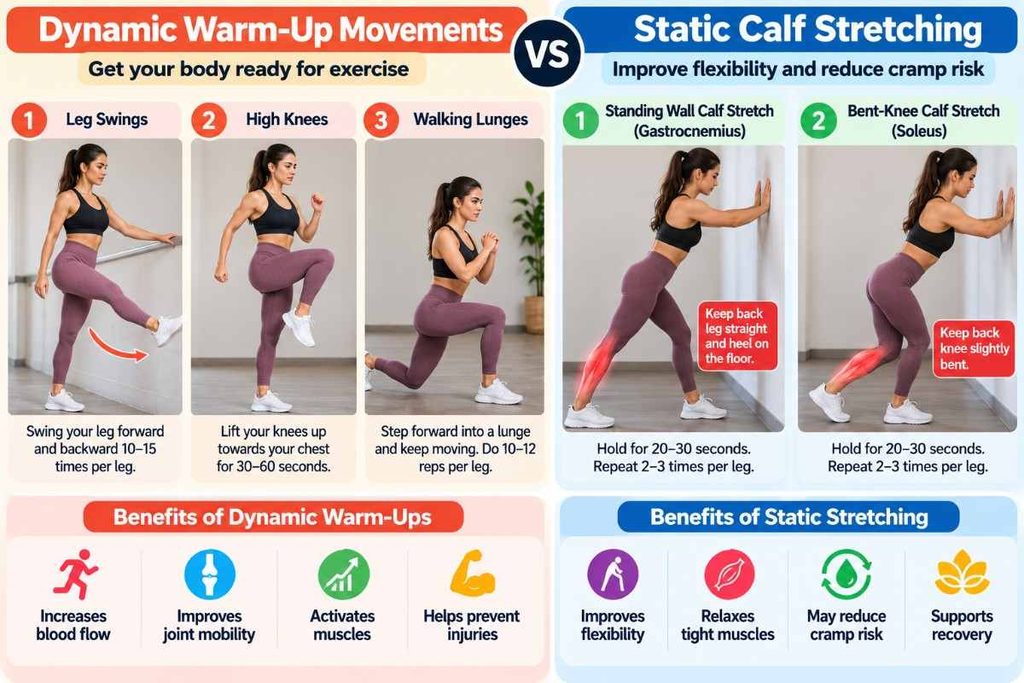
2. Warm Up Before Exercise
Spend several minutes performing light activity and workout-specific movements before intense exercise. Runners can walk briskly before jogging, while weightlifters can begin with bodyweight exercises.
5 Minute Warm Up Before Workout
3. Allow Enough Recovery
Give your muscles sufficient time to recover between demanding sessions. Reduce training volume if you experience unusual fatigue or persistent soreness.
best post-workout recovery methods
high-protein foods for muscle recovery
4. Match Training to Your Fitness Level
Choose exercise intensities that match your current conditioning. If you’re preparing for a race or challenging workout, gradually introduce longer sessions and more demanding movements.
Do Dehydration and Electrolyte Imbalance Cause Muscle Cramps?
Dehydration and electrolyte imbalance can contribute to muscle cramping during exercise, particularly during prolonged activity in hot conditions. However, not every cramp results from dehydration or mineral deficiency.
Do Electrolytes Help Prevent Muscle Cramps?
Electrolytes such as sodium and potassium support fluid balance, nerve signaling, and muscle function. Replacing electrolytes may be useful when prolonged exercise causes substantial sweat losses, but extra electrolytes do not guarantee cramp prevention.
electrolyte drinks for workouts
Which Foods and Drinks Help Replace Electrolytes?
Water, balanced meals, and suitable electrolyte-containing drinks can help maintain fluid and mineral balance.
| Food or drink | Main contribution |
|---|---|
| Water | Replaces fluids |
| Milk | Provides fluid and potassium |
| Bananas | Supply potassium and carbohydrates |
| Yogurt | Provides potassium and calcium |
| Lentils and beans | Supply potassium and magnesium |
| Salt-containing foods | Provide sodium |
| Sports drinks | Provide fluids and varying amounts of sodium and carbohydrates |
Explore [foods rich in potassium] → Suggested target: Potassium-Rich Foods Guide and [foods high in magnesium] → Suggested target: Magnesium-Rich Foods Guide for more nutrition information.
Magnesium supplements are not a universal treatment for exercise-associated cramps. Consult a healthcare professional before taking high-dose electrolyte supplements, especially if you have kidney problems.
How Much Water Should You Drink During Exercise?
Your fluid requirements depend on workout duration, sweat rate, temperature, and individual tolerance. Drink according to your needs and avoid forcing excessive amounts of water, as overhydration can also be dangerous.
A [daily water intake calculator] → Suggested target: Water Intake Calculator can help with general planning, although exercise-related requirements may differ.
What Should You Do If Muscle Cramps Keep Returning?
Recurring cramps may require adjustments to your exercise habits, hydration, nutrition, and recovery. Tracking your workouts can help identify patterns.
Muscle Cramp Prevention Checklist
- Warm up before demanding workouts.
- Increase exercise intensity gradually.
- Allow adequate recovery between sessions.
- Plan hydration for hot conditions.
- Eat balanced meals.
- Record when cramps occur and which muscles are affected.
- Reduce intensity when unusual fatigue develops.
How Can You Track Hydration and Recovery?
Record your workout duration, intensity, environmental conditions, fluid intake, and cramping episodes. For example, if cramps repeatedly develop near the end of a run, review your pace, training load, and recovery.
Weighing yourself before and after longer workouts under consistent conditions can also help estimate fluid losses. Consider fluids consumed and urine produced when interpreting the difference.
For nutrition guidance, explore [high-protein foods for muscle recovery] → Suggested target: High-Protein Foods for Muscle Growth and use a [daily protein intake calculator] → Suggested target: Daily Protein Intake Calculator to estimate your general protein needs.
When Should You Seek Medical Attention for Exercise-Related Cramps?
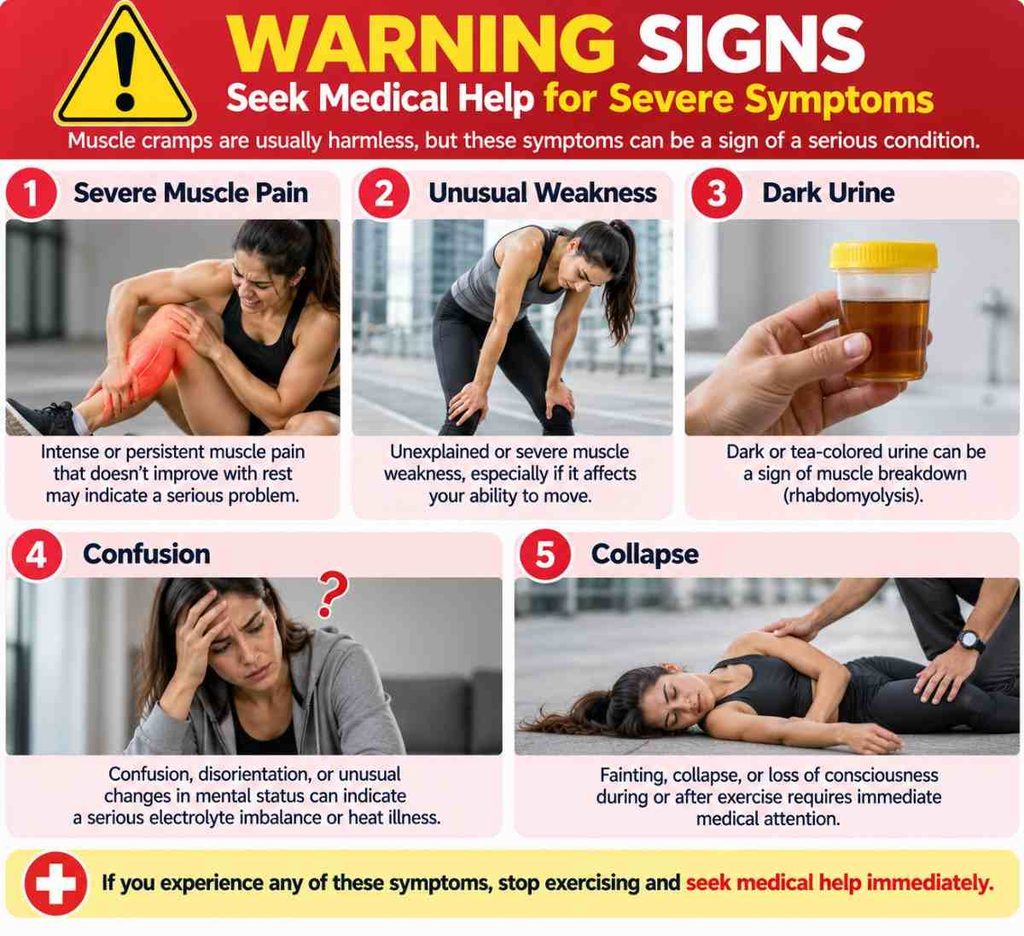
Seek medical advice if cramps are recurrent, severe, unexplained, or accompanied by persistent pain, swelling, numbness, or unusual weakness.
Severe muscle pain, swelling, weakness, or tea- or cola-colored urine after intense exercise may indicate rhabdomyolysis, a condition involving muscle breakdown that can damage the kidneys. Seek urgent medical assessment if these symptoms occur.
Confusion, collapse, or signs of heat stroke during exercise require emergency medical attention.
Build a Personalized Muscle Cramp Prevention Plan
A simple two-week plan can help you identify possible triggers and make practical adjustments.
- Record when cramps occur and which muscles are affected.
- Track workout duration, intensity, and environmental conditions.
- Review hydration, meals, sleep, and recovery.
- Increase training demands gradually.
- Seek professional guidance if cramps continue.
Avoid treating recurring cramps with high-dose supplements without appropriate medical guidance. Persistent symptoms may require evaluation for an underlying condition.
Conclusion
Muscle cramping during exercise can result from fatigue, intense training, heat exposure, fluid loss, and other individual factors. Gentle stretching can help relieve an active cramp, while gradual training progression, adequate recovery, and appropriate hydration may reduce avoidable triggers.
Remember that not every cramp indicates dehydration or a mineral deficiency. Listen to your body, adjust your workouts when necessary, and seek medical attention for persistent cramps or serious warning signs.
FAQs
What is the main cause of muscle cramping during exercise?
Muscle fatigue is a common contributor, but heat, fluid loss, and other factors may also play a role.
How do you stop muscle cramps quickly?
Stop exercising, gently stretch the affected muscle, and rest.
Does drinking water prevent muscle cramps?
It helps maintain hydration but does not prevent every cramp.
Which electrolytes help with muscle cramps?
Sodium and potassium support normal muscle function.
Why do my legs cramp during running?
Fatigue, intense exercise, heat, and fluid loss may contribute.
Can weightlifting cause muscle cramps?
Yes, especially with intense workouts or insufficient recovery.
Are muscle cramps a sign of magnesium deficiency?
Not necessarily. Cramps can have several causes.
When are exercise-related muscle cramps dangerous?
Severe pain, dark urine, unusual weakness, confusion, or collapse requires urgent medical attention.