
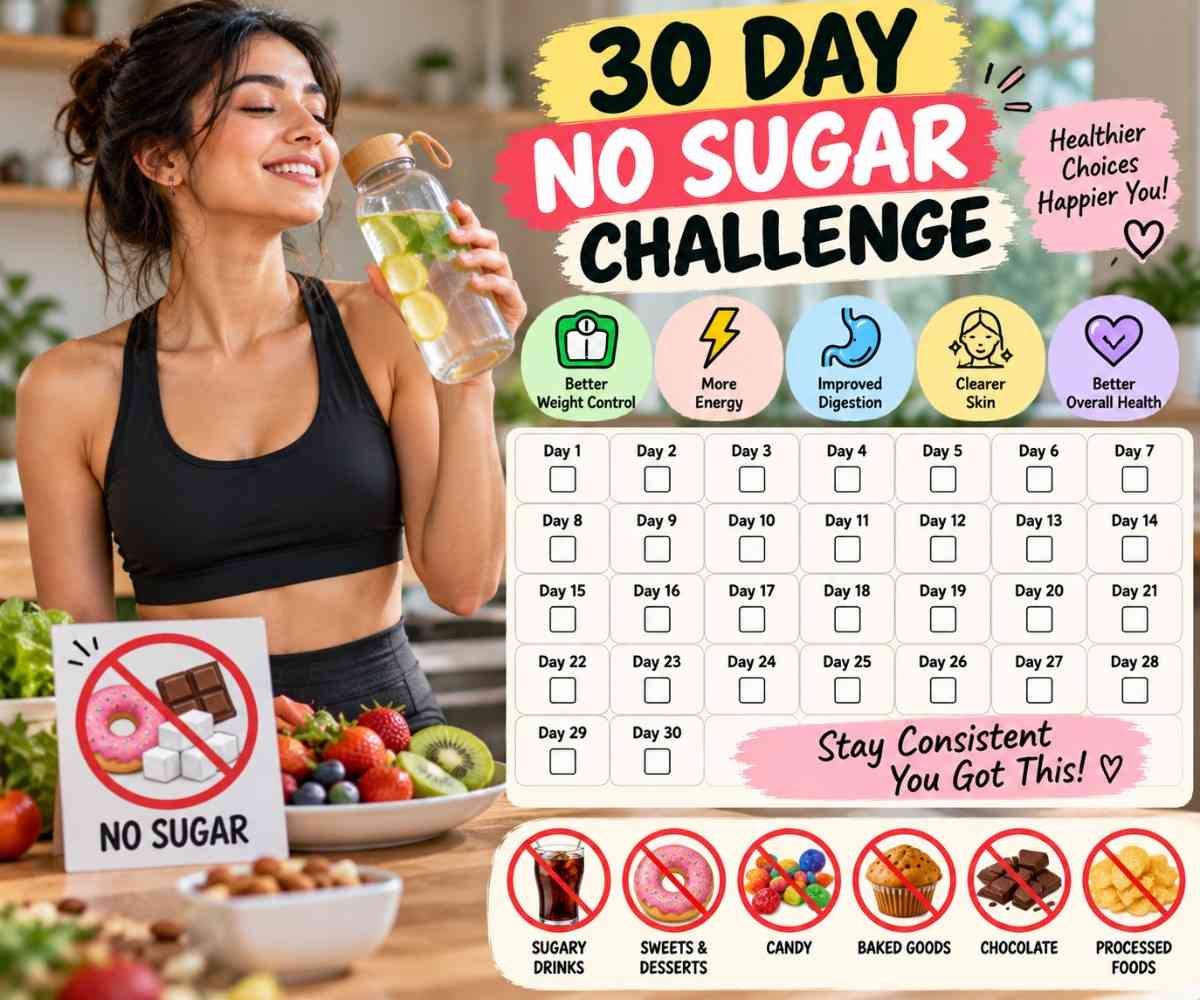
A 30 day no sugar challenge can help you reduce added sugar, rethink your eating habits, and discover healthier alternatives to your favorite foods. The goal is not to eliminate every naturally occurring sugar but to limit added sugars while building a balanced, sustainable diet.
What Is a 30 Day No Sugar Challenge?
A 30 day no sugar challenge is a month-long commitment to avoid or significantly reduce added sugars in foods and drinks. Depending on your approach, you may also limit products containing sweeteners such as honey, syrups, and sugar added to packaged foods.
Naturally occurring sugars in whole fruit and plain milk are different from added sugars. You generally do not need to eliminate whole fruits, vegetables, or unsweetened dairy products to follow a balanced no-added-sugar challenge.
If you are improving your overall diet, consider pairing this challenge with a healthy diet plan for beginners.
Why Does a 30 Day No Sugar Challenge Matter?
Reducing added sugar can make it easier to follow a balanced eating pattern and reduce frequent consumption of sugary drinks, desserts, and highly sweetened snacks. However, the challenge is not a guaranteed detox, and completing 30 days does not automatically cause weight loss or eliminate sugar cravings.
The World Health Organization recommends limiting free sugars to less than 10% of total daily energy intake, with a further reduction below 5% suggested for additional health benefits (Source: WHO, 2015).
A no-added-sugar challenge may help you:
- Recognize hidden sugars in packaged foods.
- Replace sugary drinks with water or unsweetened beverages.
- Build more consistent eating habits.
- Make room for nutrient-rich foods.
- Become more aware of hunger, fullness, and food choices.
For personalized energy needs, use the calorie deficit calculator and macro calculator for daily nutrition targets as optional planning tools.
What Can You Eat During a 30 Day No Sugar Challenge?
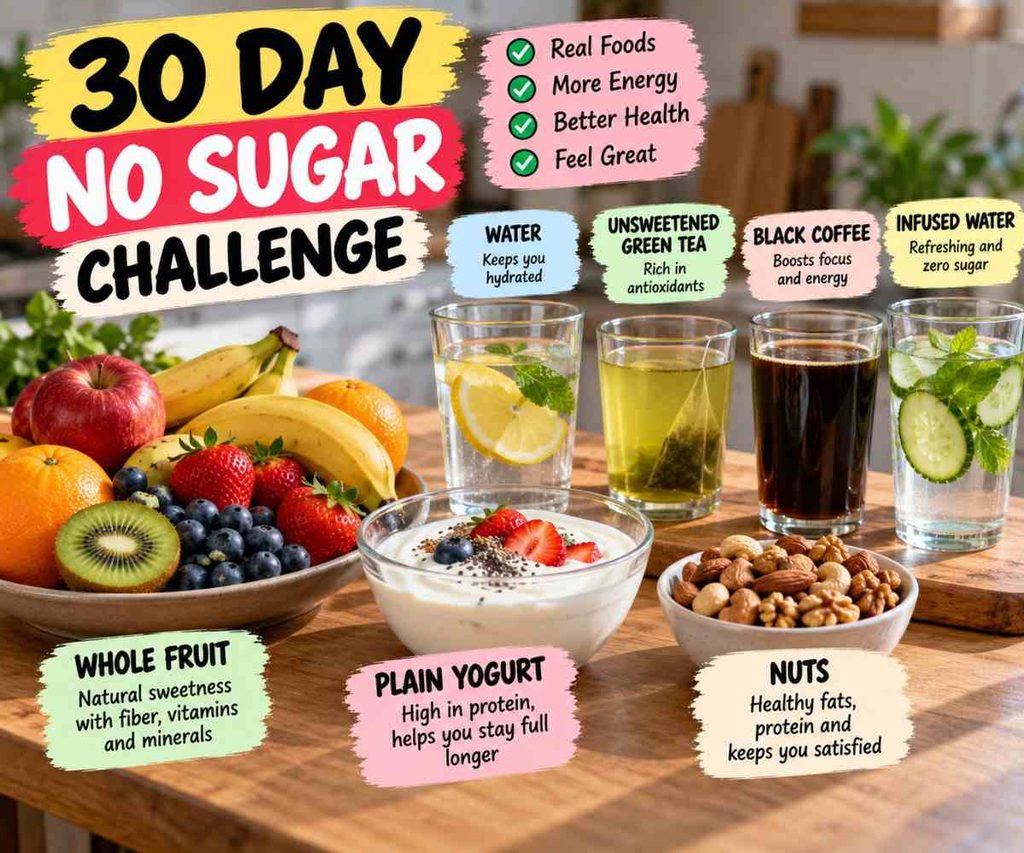
You can eat a wide variety of nutritious foods during the challenge, including whole grains, vegetables, whole fruits, legumes, nuts, seeds, eggs, and unsweetened dairy or fortified alternatives.
| Food category | Foods to choose | What to watch |
|---|---|---|
| Fruits | Apples, bananas, berries, oranges | Choose whole fruit more often than juice |
| Vegetables | Spinach, carrots, broccoli, peppers | Check sauces and dressings |
| Protein | Eggs, beans, lentils, tofu, plain yogurt | Avoid sweetened marinades and flavored products |
| Grains | Oats, brown rice, whole-wheat roti | Check flavored instant products |
| Drinks | Water, sparkling water, unsweetened tea | Avoid sugary sodas and sweetened coffee |
| Snacks | Nuts, seeds, roasted chickpeas | Check coatings and added sweeteners |
For more meal ideas, explore High Protein Lemonade
Which Foods Should You Avoid for 30 Days?
During a strict no-added-sugar challenge, avoid foods and drinks with added sugars, including:
- Regular soda, sweetened energy drinks, and sugary iced tea.
- Candy, cakes, cookies, and many packaged desserts.
- Sweetened breakfast cereals and flavored instant oatmeal.
- Sugar-sweetened yogurt and flavored milk.
- Sweetened coffee drinks and packaged milkshakes.
- Sauces, ketchup, salad dressings, and other products with added sugar.
Read ingredient lists for terms such as sugar, sucrose, glucose, dextrose, corn syrup, and honey. On nutrition labels, check the added sugars value where it is provided.
You do not need to avoid every packaged food. Choose products that fit your nutritional needs and the rules you have set for the challenge.
Your 30 Day No Sugar Challenge Plan
A gradual four-week plan can make the challenge easier to follow than changing every habit overnight.
Week 1: Remove Sugary Drinks
Start by replacing soda, sweetened tea, and sugary coffee with water, sparkling water, or unsweetened alternatives. Check your usual drinks and identify the easiest swaps.
Week 2: Check Packaged Foods
Review cereals, yogurts, sauces, snack bars, and packaged snacks. Choose unsweetened versions when practical, and keep convenient options such as nuts, fruit, or roasted chickpeas available.
Week 3: Build Balanced Meals
Include protein, fiber-rich carbohydrates, vegetables or fruit, and healthy fats in your meals. Balanced meals can help you stay satisfied and make it easier to avoid relying on sugary snacks.

Use the daily protein intake calculator to estimate your protein needs if you are also working toward fitness goals.
Week 4: Make Your Habits Sustainable
Identify the changes you can comfortably continue after day 30. You may decide to keep sugary drinks out of your daily routine while enjoying occasional desserts without guilt.
What Does a Day of No-Added-Sugar Eating Look Like?
A sample day can include familiar foods without requiring expensive specialty products.
| Meal | Example |
|---|---|
| Breakfast | Vegetable omelet or unsweetened yogurt with nuts and whole fruit |
| Mid-morning snack | Apple and a handful of nuts |
| Lunch | Dal, vegetables, brown rice or roti, and plain yogurt |
| Evening snack | Roasted chickpeas or an unsweetened drink |
| Dinner | Tofu, beans, eggs, or another protein source with vegetables and whole grains |
These are examples, not a personalized meal plan. Adjust portion sizes to your appetite, activity level, dietary needs, and food preferences. Check packaged ingredients and prepare sauces without added sugar when following a strict challenge.
For more structured meal planning, see calorie deficit diet plan for weight management
How to Handle Sugar Cravings During the Challenge
Sugar cravings can happen for many reasons, including habits, stress, food availability, and hunger. You do not need to treat every craving as a failure.
Try these practical strategies:
- Eat regular, balanced meals. Avoid unnecessary restriction that leaves you excessively hungry.
- Keep convenient alternatives available. Try whole fruit, plain yogurt, nuts, or roasted chickpeas.
- Change your drink routine. Replace sweetened beverages gradually if stopping immediately feels difficult.
- Check product labels. Some foods marketed as healthy contain substantial added sugar.
- Get enough sleep. A consistent sleep routine supports overall health and may help with appetite regulation.
- Allow flexibility. If you eat something with added sugar, resume your usual plan at the next meal rather than abandoning the challenge.

What Changes Might You Notice After 30 Days?
Your experience will depend on your previous diet, overall calorie intake, sleep, activity, and individual health. Some people find it easier to choose less-sweet foods or reduce sugary drinks, while others notice few dramatic changes.
| Possible change | What to know |
|---|---|
| Lower added-sugar intake | Likely if you consistently replace sweetened products |
| Weight change | Depends on overall energy intake and other habits |
| Changes in cravings | May vary from person to person |
| Better meal awareness | Possible as you read labels and plan meals |
| More stable energy | Individual experiences vary; this is not guaranteed |
There is no scientifically established rule that everyone will stop craving sugar after a specific number of days. Avoid claims that the challenge detoxifies your body or guarantees fat loss.
Is the 30 Day No Sugar Challenge Safe for Everyone?
Reducing added sugar can be part of a healthy diet, but an unnecessarily restrictive challenge may not suit everyone. Avoid turning the challenge into a rule against all carbohydrates or all naturally sweet foods.
People with diabetes, a history of disordered eating, or medical conditions that affect nutrition should seek individualized guidance before making major dietary changes. If you take medication that can cause low blood glucose, coordinate dietary changes with your healthcare professional.
Conclusion
The 30 day no sugar challenge is a practical way to reduce added sugar and develop more mindful eating habits. Focus on whole foods, read nutrition labels, replace sugary drinks, and eat balanced meals rather than trying to eliminate every source of natural sugar.
The most useful outcome is a routine you can maintain beyond 30 days. Progress does not require perfection, and occasional sweets can still fit into an overall balanced diet.
FAQs
Can I eat fruit during a 30 day no sugar challenge?
Yes. Whole fruits contain naturally occurring sugars along with fiber, vitamins, and minerals. Most no-added-sugar challenges allow whole fruit.
Can I drink milk during the challenge?
Yes. Plain milk contains naturally occurring lactose. Choose unsweetened options if you want to avoid added sugar.
Can I eat honey or jaggery?
For a strict no-added-sugar challenge, avoid both. They are sugars even though they may be marketed as natural alternatives.
Will I lose weight in 30 days without added sugar?
Possibly, but weight loss is not guaranteed. It depends on your overall calorie intake, activity, and other lifestyle factors.
Can I use artificial sweeteners?
That depends on the rules you choose. Some challenges permit non-sugar sweeteners, while others avoid them. You do not need to use them to complete the challenge.
What should I do if I eat sugar during the challenge?
Continue with your next meal and return to your plan. One food choice does not erase the progress you have made.
Is a no-sugar diet the same as a no-added-sugar diet?
No. A no-added-sugar diet avoids sugars added during preparation or processing, while a literal no-sugar diet could unnecessarily exclude foods containing natural sugars.
Sources
- World Health Organization. (2015). Guideline: Sugars Intake for Adults and Children.
- U.S. Food and Drug Administration. (n.d.). Added Sugars on the Nutrition Facts Label.
- Centers for Disease Control and Prevention. (n.d.). Get the Facts: Added Sugars.
Disclaimer: This article is for informational and educational purposes only and is not a substitute for personalized medical advice. Consult a qualified healthcare professional before making significant changes to your diet, exercise routine, or supplement use.