
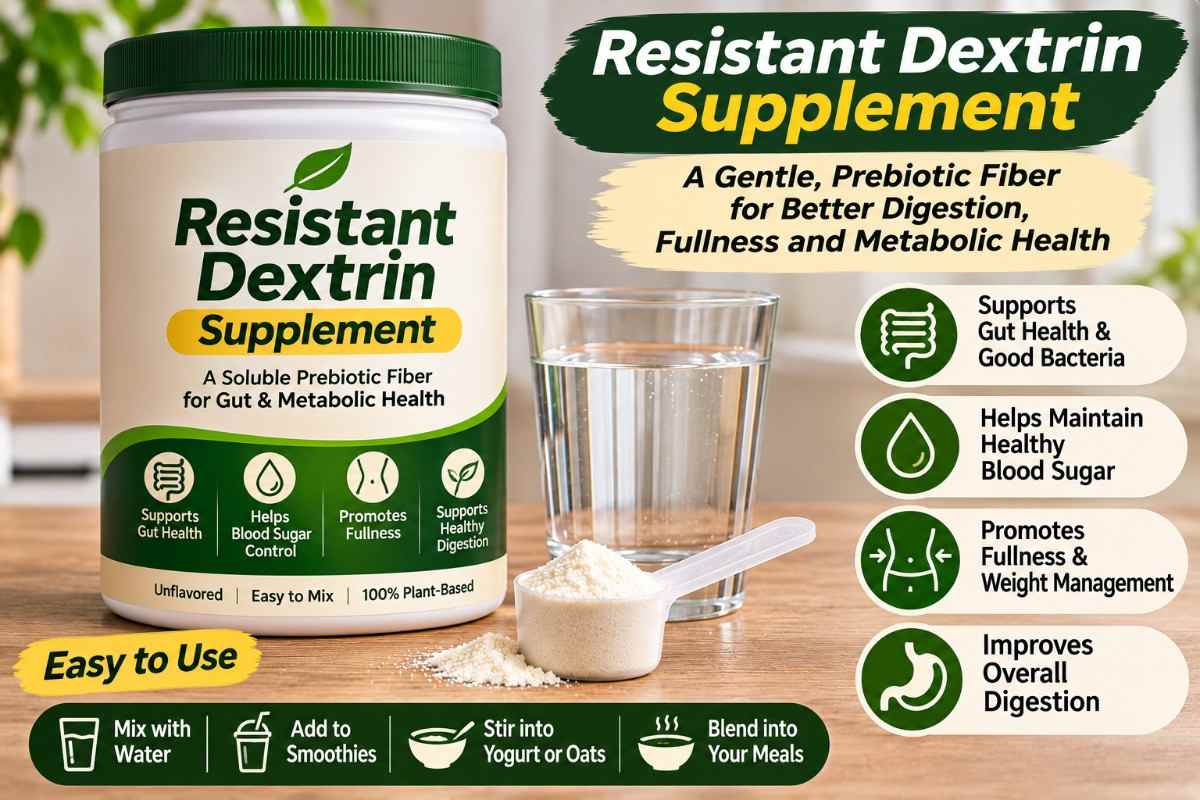
Resistant dextrin supplements are gaining attention for their potential benefits for gut health, digestion, and blood sugar management. This soluble dietary fiber passes through the small intestine without being fully digested and is fermented by gut bacteria in the large intestine.
Whether you want to improve digestive health or increase your daily fiber intake, understanding resistant dextrin can help you decide whether this supplement is worth considering.
What Is a Resistant Dextrin Supplement?
A resistant dextrin supplement is a soluble, fermentable dietary fiber made by processing starch from sources such as corn, wheat, or tapioca.
Unlike regular digestible carbohydrates, resistant dextrin resists digestion in the small intestine and reaches the large intestine, where gut bacteria ferment it.
It is also known as resistant maltodextrin or certain forms of soluble dietary fiber.
Common sources include:
- Corn starch.
- Wheat starch.
- Tapioca starch.
Resistant dextrin is available as a powder, fiber drink ingredient, and dietary supplement.
high fiber foods for better digestion
Why Is Resistant Dextrin Important?
Resistant dextrin is important because it provides fermentable dietary fiber that can support gut bacteria and digestive function.
Its potential roles include:
- Supporting beneficial gut bacteria.
- Increasing dietary fiber intake.
- Producing short-chain fatty acids.
- Supporting bowel regularity.
- Influencing blood glucose responses.
Research suggests that resistant dextrin may also influence certain metabolic health markers, although more long-term studies are needed.
Potential Benefits of Resistant Dextrin Supplements
Resistant dextrin may offer several benefits because it acts as a fermentable soluble fiber.
1. Supports Gut Health
Resistant dextrin provides fermentable material for gut bacteria. This may help support a healthier gut microbiome.
2. Supports Digestive Regularity
Adding soluble fiber to your diet may help improve stool consistency and bowel function.
3. May Support Blood Sugar Management
A 2026 systematic review of 13 randomized controlled trials found modest improvements in fasting blood glucose and insulin resistance markers. However, the researchers highlighted the need for more high-quality, long-term studies. (Source: Systematic Review, 2026) PubMed+1
4. Supports Short-Chain Fatty Acid Production
Gut bacteria ferment resistant dextrin and produce short-chain fatty acids, including acetate, propionate, and butyrate.
These compounds play important roles in intestinal and metabolic health.
5. May Support Weight Management
Resistant dextrin may help increase fiber intake and contribute to fullness. However, it is not a proven standalone weight-loss supplement.
A 2017 meta-analysis reported modest weight changes in overweight adults, but it included only three trials with 275 participants. (Source: Journal of Pharmaceutical Health Care and Sciences, 2017) PubMed+1
Natural Food Sources of Resistant Dextrin and Dietary Fiber
You can increase your fiber intake through everyday foods instead of relying entirely on supplements.
Good choices include:
- Oats and whole grains.
- Lentils and chickpeas.
- Beans and kidney beans.
- Apples and pears.
- Vegetables.
- Seeds and nuts.
These foods provide different types of dietary fiber, not necessarily the same concentrated resistant dextrin found in supplements.

How to Take Resistant Dextrin Supplements
Resistant dextrin is commonly available as a powder that can be mixed with water or added to food.
Follow these practical tips:
- Check the supplement label for serving instructions.
- Start with a small amount to assess digestive tolerance.
- Mix it into water or another suitable beverage.
- Increase intake gradually if tolerated.
- Maintain adequate water intake.
What is the recommended dosage?
There is no universally established dosage for everyone. Around 10 grams daily has been used in some clinical studies, but appropriate intake depends on the product, individual tolerance, and health requirements.
Do not treat research doses as a personal medical recommendation.
Resistant Dextrin Supplement Side Effects
Resistant dextrin is generally well tolerated, but consuming too much too quickly may cause digestive discomfort.
Possible side effects include:
- Gas and bloating.
- Abdominal discomfort.
- Changes in bowel movements.
- Loose stools in some individuals.
Start with a smaller serving and increase gradually. People with digestive conditions or those following medically restricted diets should consult a healthcare professional before supplementation.
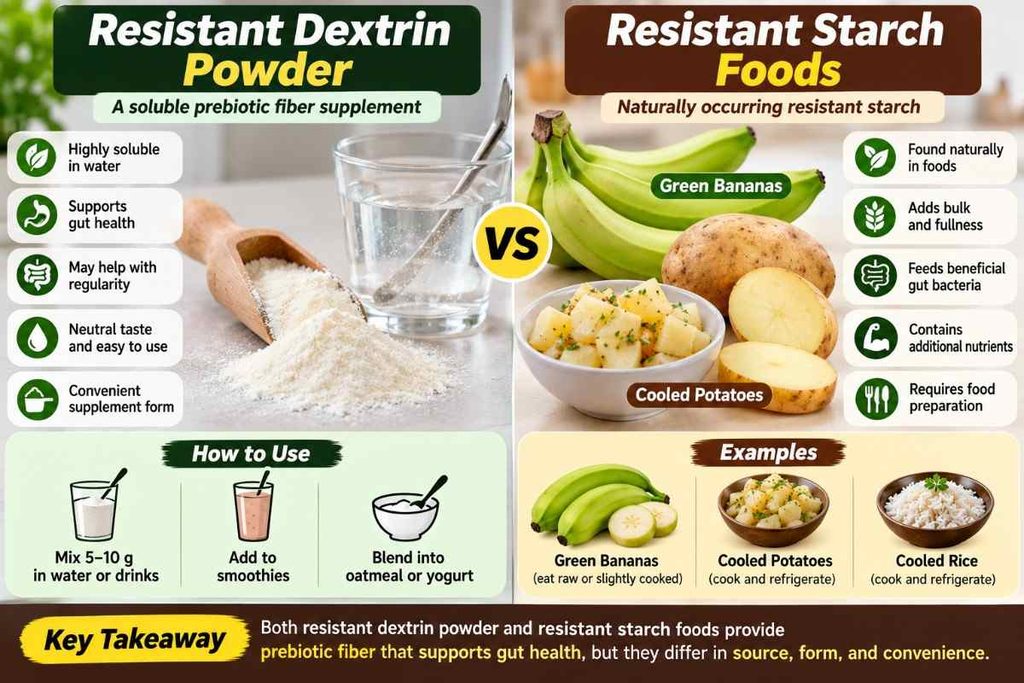
Resistant Dextrin vs. Resistant Starch
Both are types of dietary fiber that resist normal digestion, but they have different structures and food sources.
| Feature | Resistant Dextrin | Resistant Starch |
|---|---|---|
| Type | Soluble fiber | Resistant carbohydrate |
| Common sources | Corn, wheat, tapioca | Green bananas, cooled potatoes, rice |
| Fermentation | Yes | Yes |
| Main use | Increasing soluble fiber | Increasing resistant starch intake |
| Supplement form | Usually powder | Usually powder |
Both can support gut bacteria, but their effects depend on the specific ingredient and individual response.
resistant starch supplement benefits
How to Choose a Resistant Dextrin Supplement
Before purchasing a resistant dextrin supplement, consider these factors:
- Ingredient source: Check whether it comes from corn, wheat, or tapioca.
- Fiber content: Check the actual dietary fiber per serving.
- Added ingredients: Prefer products without unnecessary added sugars.
- Quality testing: Look for transparent manufacturing and quality information.
- Allergens: Check for wheat-derived ingredients if you have gluten-related concerns.
Conclusion
Resistant dextrin supplements offer a convenient way to increase soluble fiber intake and support gut bacteria. They may also help improve digestive regularity and influence certain blood glucose markers.
However, supplements are not essential for everyone. Start by including fiber-rich foods such as oats, lentils, vegetables, fruits, and beans in your everyday diet.
FAQs
What is resistant dextrin used for?
Resistant dextrin is used as a soluble dietary fiber to support digestive health, gut bacteria, and regular bowel movements.
Is resistant dextrin good for gut health?
It can support gut bacteria by providing fermentable fiber that produces short-chain fatty acids.
Can resistant dextrin help with weight loss?
It may support fullness, but evidence for significant weight loss remains limited.
How much resistant dextrin should I take daily?
Some studies use approximately 10 grams daily, but there is no universally established dosage.
Does resistant dextrin cause bloating?
Yes. Large amounts or sudden increases in intake may cause gas, bloating, and digestive discomfort.
Is resistant dextrin the same as resistant starch?
No. They are different types of indigestible carbohydrates with different structures and food sources.
Can I take resistant dextrin every day?
It may be suitable for regular consumption when tolerated, but follow product instructions and consider your individual health needs.
Sources
- Effects of Resistant Dextrin on Glycemic Traits: A Systematic Review and Meta-Analysis of Randomized Controlled Trials. (2026).
- Mukai et al. (2017). Effects of Resistant Dextrin for Weight Loss in Overweight Adults: A Systematic Review with a Meta-Analysis of Randomized Controlled Trials.
- Resistant Dextrin, as a Prebiotic, Improves Insulin Resistance and Inflammation in Women with Type 2 Diabetes. (2016).
- U.S. Food and Drug Administration. Review of the Scientific Evidence on the Physiological Effects of Certain Non-Digestible Carbohydrates.
Disclaimer: This article is for informational and educational purposes only and is not a substitute for personalized medical advice. Consult a qualified healthcare professional before making significant changes to your diet, exercise routine, or supplement use.