
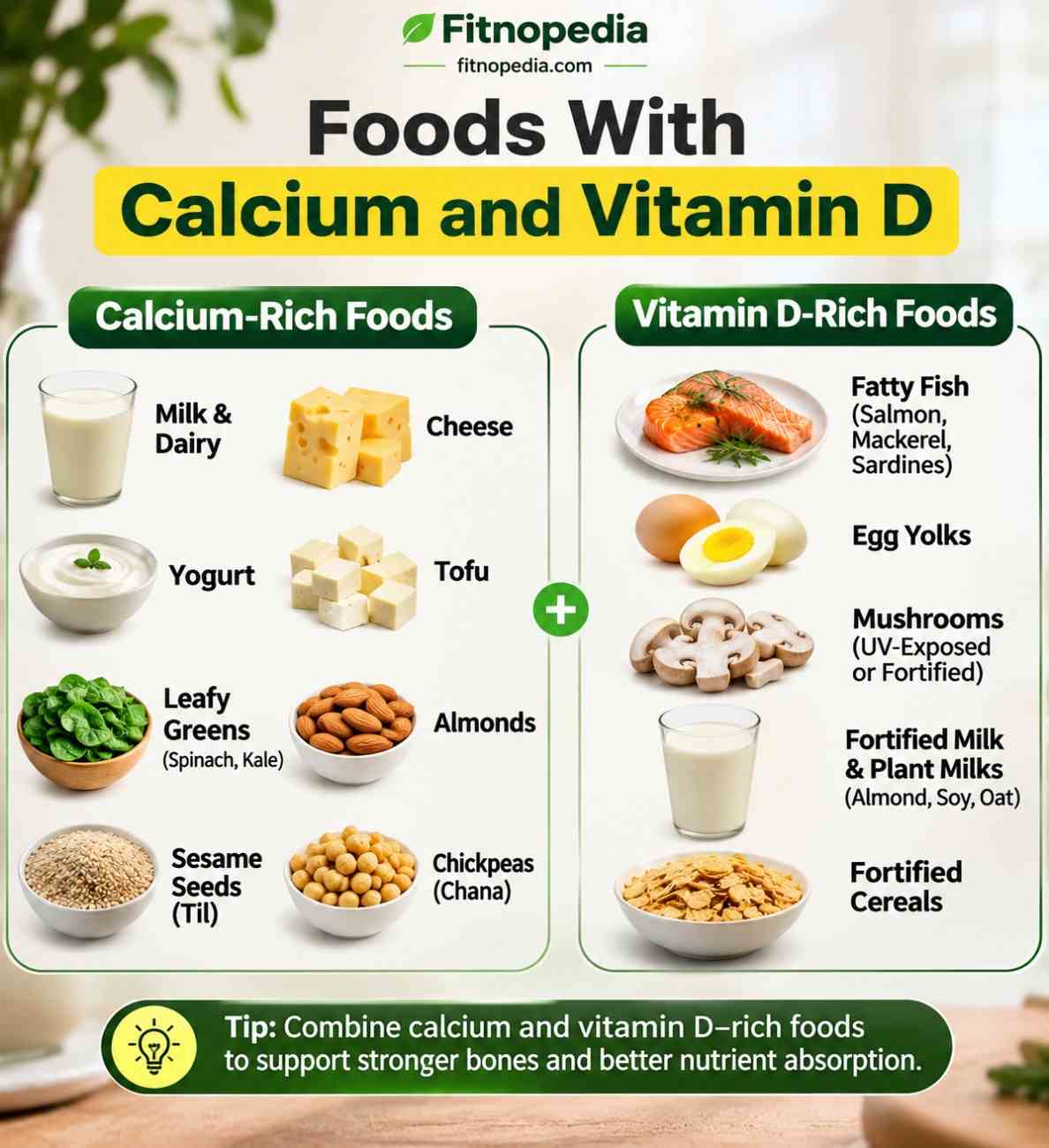
Calcium and vitamin D are two essential nutrients that work together to support strong bones, healthy teeth, and normal muscle function. Calcium helps build and maintain bone structure, while vitamin D helps your body absorb calcium from the food you eat.
However, finding foods that provide both nutrients can be confusing. Some foods, such as fortified milk and certain plant-based beverages, contain both calcium and vitamin D. Others, including leafy greens, tofu, and seeds, primarily contribute calcium, while fatty fish and UV-exposed mushrooms are better known for their vitamin D content.
The good news is that you can include a variety of these foods in your everyday meals without following a complicated diet.
In this guide, you’ll discover 15 foods with calcium and vitamin D, their approximate nutritional values, the best vegetarian and non-dairy options, and practical ways to include them in a balanced diet.
What Are Foods With Calcium and Vitamin D?
Foods with calcium and vitamin D are foods that provide one or both nutrients, which contribute to bone health and normal body functions.
Calcium is naturally found in dairy products, certain leafy vegetables, calcium-set tofu, seeds, and fish with edible bones.
Vitamin D is naturally present in fatty fish, egg yolks, and UV-exposed mushrooms. It is also added to products such as milk, plant-based beverages, breakfast cereals, and some orange juices.
For people following vegetarian or dairy-free diets, fortified foods can make it easier to obtain both nutrients.
calcium-rich foods for a healthy diet
Why Are Calcium and Vitamin D Important?
Calcium and vitamin D are important because they work together to maintain bone health and support essential functions throughout the body.
Benefits of calcium:
- Helps build and maintain strong bones and teeth.
- Supports normal muscle contractions.
- Helps nerves communicate with different parts of the body.
- Plays a role in normal blood clotting.
Benefits of vitamin D:
- Helps the body absorb calcium.
- Supports normal bone mineralization.
- Contributes to normal muscle function.
- Supports normal immune system function.
Vitamin D helps your digestive system absorb calcium more effectively. Without adequate vitamin D, maintaining normal calcium balance and bone mineralization can become more difficult.
For a wider list of calcium sources, including dairy products, seeds, leafy vegetables, and fortified foods, explore our complete guide to calcium-rich foods.
According to the NIH Office of Dietary Supplements, both nutrients are important for normal bone development and maintenance.
If you are specifically looking for foods that support bone health when managing osteoporosis, explore our guide to calcium-rich foods for osteoporosis.
15 Best Foods With Calcium and Vitamin D
The best food choices include fortified dairy products, plant-based beverages, fatty fish, eggs, certain mushrooms, and calcium-rich plant foods. However, their nutrient contributions differ, so it is important to understand which foods provide calcium, vitamin D, or both.
1. Fortified Milk
Fortified milk is one of the most convenient sources of calcium and vitamin D in the American diet.
One cup of fortified 2% milk provides approximately:
- Calcium: 299 mg
- Vitamin D: 2.9 mcg (120 IU)
Milk naturally contains calcium, while vitamin D is added through fortification.
How to include it: Drink a glass with breakfast, add it to smoothies, or use it in oatmeal and other recipes.
2. Fortified Soy Milk
Fortified soy milk is a useful dairy-free alternative that can provide both calcium and vitamin D.
One cup of some fortified soy milk products provides approximately:
- Calcium: Around 299 mg
- Vitamin D: 2.5–3.6 mcg (100–144 IU)
Soy milk also provides plant-based protein, making it a practical choice for vegetarians and people avoiding dairy.
How to include it: Add fortified soy milk to smoothies, cereal, coffee, or breakfast recipes.
Always check the Nutrition Facts label because fortification varies between brands.
3. Yogurt
Yogurt is a useful source of calcium and protein, making it an easy addition to a balanced diet.
An 8-ounce serving of plain, low-fat yogurt provides approximately 415 mg of calcium.
However, not every yogurt product contains meaningful vitamin D. Some varieties are fortified, so check the product label.
How to include it: Enjoy plain yogurt with berries, nuts, or seeds as a breakfast or snack.
4. Salmon
Salmon is one of the best natural dietary sources of vitamin D.
A 3-ounce serving of cooked sockeye salmon provides approximately:
- Vitamin D: 14.2 mcg (570 IU)
Canned salmon with edible bones can also provide calcium. For example, 3 ounces of canned pink salmon with bones provides approximately 181 mg of calcium.
These figures refer to different salmon preparations, so do not assume every salmon serving provides the same amounts.
Salmon also supplies protein and omega-3 fatty acids.
How to include it: Bake, grill, or pan-cook salmon and serve it with vegetables and whole grains.
5. Canned Sardines With Bones
Canned sardines with edible bones are among the better seafood sources of calcium and also provide vitamin D.
A 3-ounce serving provides approximately 325 mg of calcium. NIH data lists approximately 46 IU (1.2 mcg) of vitamin D per two Atlantic sardines.
Sardines also contain protein and omega-3 fatty acids.
How to include it: Add sardines to whole-grain toast, salads, or homemade fish bowls.
6. Fortified Almond Milk
Fortified almond milk can provide calcium and vitamin D without dairy.
Some fortified varieties provide approximately:
- Calcium: Around 299 mg per cup.
- Vitamin D: 2.5–3.6 mcg per cup.
However, almond milk is not naturally a significant source of these nutrients. Its nutritional value depends on fortification.
How to include it: Use fortified almond milk in smoothies, cereal, coffee, and breakfast recipes.
7. Cheese
Cheese is a natural source of calcium and can provide small amounts of vitamin D.
For example, 1.5 ounces of part-skim mozzarella provides approximately 333 mg of calcium.
Cheddar cheese contains approximately 0.4 mcg (17 IU) of vitamin D per 1.5-ounce serving.
Cheese also provides protein, although its sodium and saturated fat content can vary.
How to include it: Add moderate portions of cheese to sandwiches, salads, and homemade meals.
8. UV-Exposed Mushrooms
Certain mushrooms contain vitamin D2, particularly when exposed to ultraviolet light during cultivation or processing.
Half a cup of sliced white mushrooms exposed to UV light provides approximately:
- Vitamin D: 9.2 mcg (366 IU).
- Calcium: Generally low.
Mushrooms are particularly useful for people looking for plant-based vitamin D sources.
How to include them: Add UV-exposed mushrooms to soups, omelets, pasta, and vegetable stir-fries.
9. Calcium-Set Tofu
Tofu prepared using calcium sulfate can provide a substantial amount of calcium.
A half-cup serving of some firm calcium-set tofu provides approximately 253 mg of calcium.
Tofu also supplies plant-based protein, making it useful for vegetarian and vegan diets.
However, ordinary tofu is not a meaningful source of vitamin D unless it has been fortified.
How to include it: Use calcium-set tofu in stir-fries, soups, grain bowls, and vegetarian meals.
10. Collard Greens
Collard greens are an excellent plant-based calcium option.
Eight ounces of frozen collard greens can provide approximately 360 mg of calcium, although the exact amount depends on preparation and serving weight.
They also contain fiber and other nutrients that contribute to a balanced diet.
How to include them: Add cooked collard greens to soups, vegetable bowls, or meals with beans and whole grains.
11. Kale and Other Leafy Greens
Certain leafy vegetables provide calcium and other essential nutrients.
One cup of cooked kale provides approximately 94 mg of calcium.
Kale is particularly useful because its calcium is relatively well absorbed compared with high-oxalate vegetables such as spinach.
How to include it: Add kale to salads, soups, smoothies, and vegetable dishes.
12. Fortified Breakfast Cereals
Some breakfast cereals contain added calcium and vitamin D.
Their nutritional value depends on the ingredients, serving size, and fortification levels.
For example, a serving of cereal fortified with 10% of the Daily Value for calcium provides approximately 130 mg of calcium. A cereal fortified with 10% of the Daily Value for vitamin D provides approximately 2 mcg of vitamin D.
How to include them: Combine fortified cereal with fortified milk or soy milk for a breakfast that contributes both nutrients.
Choose products with reasonable added sugar levels.
13. Bok Choy
Bok choy, also known as Chinese cabbage, is a vegetable that provides calcium and other nutrients.
One cup of shredded raw bok choy provides approximately 74 mg of calcium.
Its calcium is relatively well absorbed compared with some high-oxalate vegetables.
However, bok choy is not a meaningful source of vitamin D.
How to include it: Add bok choy to soups, stir-fries, salads, and vegetable dishes.
14. Chia Seeds
Chia seeds contain calcium, fiber, and plant-based omega-3 fatty acids.
One tablespoon provides approximately 76 mg of calcium.
They do not naturally provide meaningful vitamin D, but they can help increase your daily calcium intake.
How to include them: Add chia seeds to yogurt, smoothies, overnight oats, or homemade chia pudding.
15. Almonds
Almonds provide calcium, healthy fats, magnesium, and plant-based protein.
One ounce of dry-roasted almonds provides approximately 76 mg of calcium.
However, almonds are not a meaningful source of vitamin D.
How to include them: Enjoy a small portion as a snack or add chopped almonds to smoothies, yogurt, and breakfast bowls.

Nutritional values are approximate and depend on serving size, preparation, and product formulation. Fortified foods can differ substantially between brands.
Which Foods Contain Both Calcium and Vitamin D?
Fortified milk, certain plant-based beverages, and selected fortified products are among the most convenient foods that provide both calcium and vitamin D.
Some animal-based foods, including sardines, eggs, and certain fish, also contain both nutrients, although their amounts differ.
| Food and serving | Calcium | Vitamin D |
|---|---|---|
| Fortified 2% milk, 1 cup | 299 mg | 2.9 mcg |
| Fortified soy milk, 1 cup | Brand-dependent | 2.5–3.6 mcg |
| Plain low-fat yogurt, 8 oz | 415 mg | Brand-dependent |
| Sardines with bones, 3 oz | 325 mg | 46 IU per 2 sardines |
| Cooked sockeye salmon, 3 oz | Preparation-dependent | 570 IU |
| UV-exposed white mushrooms, ½ cup | Low | 366 IU |
| Scrambled egg, 1 large | Low | 44 IU |
Important: Some values use different reference servings because the NIH food tables report calcium and vitamin D separately. Do not compare them as if they represent identical portions. Always check food labels for fortified products.
high-protein foods for muscle growth
Best Vegetarian Foods With Calcium and Vitamin D
Vegetarian diets can provide plenty of calcium, but obtaining sufficient vitamin D from unfortified plant foods can be more challenging.
Here are some useful vegetarian options:
| Vegetarian food | Main nutrient contribution |
|---|---|
| Milk | Calcium; vitamin D if fortified |
| Yogurt | Calcium; vitamin D in some fortified varieties |
| Ragi | Calcium |
| Sesame seeds | Calcium |
| Almonds | Calcium |
| Calcium-set tofu | Calcium |
| UV-exposed mushrooms | Vitamin D |
| Fortified soy milk | Both, depending on fortification |
| Fortified breakfast cereals | Both, depending on fortification |
| Eggs | Some vitamin D |
For a vegetarian diet, combine calcium-rich foods with vitamin D-fortified products. If you eat eggs, they can also contribute some vitamin D.
People following a vegan diet can focus on fortified plant beverages, UV-exposed mushrooms, and other suitable fortified foods.
How Much Calcium and Vitamin D Do You Need Daily?
Daily calcium and vitamin D requirements depend on your age and life stage.
For most healthy adults aged 19–50, the recommended intake is 1,000 mg of calcium and 600 IU of vitamin D daily.
Recommended Daily Calcium Intake
| Age group | Calcium per day |
|---|---|
| Adults 19–50 | 1,000 mg |
| Men 51–70 | 1,000 mg |
| Women 51–70 | 1,200 mg |
| Adults 71 and older | 1,200 mg |
Recommended Daily Vitamin D Intake
| Age group | Vitamin D per day |
|---|---|
| Adults 19–70 | 600 IU (15 mcg) |
| Adults older than 70 | 800 IU (20 mcg) |
These are general recommendations for healthy individuals, not individualized prescriptions.
Your needs may differ depending on your health, diet, medications, and other factors.
Sources: NIH Office of Dietary Supplements.
daily Protein intake calculator
How to Add More Calcium and Vitamin D to Your Daily Diet
You can increase your intake of these nutrients by making small, consistent changes to your everyday meals.
Breakfast
- Drink a glass of fortified milk or soy milk.
- Include plain yogurt with fresh fruit.
- Add sesame or chia seeds to breakfast.
- Choose a fortified breakfast cereal when appropriate.
Lunch
- Include calcium-set tofu or another protein source.
- Add leafy green vegetables.
- Include bok choy, kale, or collard greens.
- Include fish if you eat seafood.
Evening Snacks
- Eat a small portion of almonds.
- Choose yogurt or fortified beverages.
- Include a boiled egg if it fits your diet.
Dinner
- Include vegetables such as kale, broccoli, or bok choy.
- Add tofu or other calcium-rich foods.
- Include salmon or sardines if you eat fish.
The goal is to obtain nutrients from a variety of foods rather than relying on one food throughout the day.
Tips to Improve Calcium and Vitamin D Absorption
Getting enough calcium and vitamin D is important, but your body must also absorb and use these nutrients effectively.
Consider these practical tips:
- Include vitamin D sources: Vitamin D helps your body absorb calcium from food.
- Eat calcium-rich foods throughout the day: Distribute calcium intake across different meals.
- Choose fortified products: Check labels for added calcium and vitamin D.
- Include varied vegetables: Broccoli, kale, and bok choy provide calcium.
- Maintain a balanced diet: Include adequate protein and other essential nutrients.
Spinach contains calcium, but its high oxalate content limits calcium absorption. NIH data estimates that calcium absorption from spinach is substantially lower than from milk.
Therefore, do not rely on spinach as your primary calcium source. Source: NIH Office of Dietary Supplements.
Magnesium Glycinate Supplement
Can You Get Enough Calcium and Vitamin D From Food Alone?
Many people can meet their calcium requirements through a balanced diet containing dairy products, fortified foods, vegetables, seeds, and other calcium-rich options.
However, vitamin D can be more difficult to obtain from food alone because relatively few foods naturally contain substantial amounts.
People who avoid fish, eggs, dairy, and fortified foods may need to pay closer attention to their vitamin D intake.
A healthcare professional can help determine whether dietary changes or supplementation are appropriate.
Do not assume that everyone needs a vitamin D or calcium supplement. Individual requirements depend on diet, health status, and other factors.
Conclusion
Eating foods with calcium and vitamin D is an important part of maintaining strong bones, healthy teeth, and normal muscle function.
Fortified milk, soy milk, yogurt, salmon, sardines, tofu, collard greens, kale, and fortified cereals are useful choices.
For vegetarian and dairy-free diets, focus on calcium-rich plant foods and fortified beverages while paying attention to vitamin D intake.
Remember that not every calcium-rich food contains meaningful amounts of vitamin D. Combining different food sources and checking Nutrition Facts labels can help you make more informed dietary choices.
Calcium also works alongside vitamin D to support bone health. Explore our guide to foods with calcium and vitamin D to discover foods that provide both essential nutrients.
FAQs
1. Which food contains the highest amount of calcium?
Some calcium-rich foods include plain yogurt, cheese, sardines with bones, calcium-set tofu, and fortified beverages. Their calcium content varies by serving size and preparation.
2. Which foods contain both calcium and vitamin D?
Fortified milk, fortified soy milk, and certain fortified yogurts can provide both nutrients. Fatty fish such as salmon also supplies vitamin D, while sardines with edible bones provide substantial calcium and some vitamin D.
3. Which vegetarian foods are rich in calcium?
Ragi, sesame seeds, calcium-set tofu, milk, yogurt, almonds, and certain leafy green vegetables are useful vegetarian calcium sources.
4. Does milk contain calcium and vitamin D?
Milk naturally contains calcium. In the United States, most milk is fortified with vitamin D, but it is still important to check the product label.
5. Are eggs a good source of calcium and vitamin D?
Eggs provide some vitamin D, mainly in the yolk, but contain relatively little calcium. They are not a major source of either nutrient.
6. Is ragi good for bone health?
Yes. Ragi is naturally rich in calcium and can be included in a balanced diet to help meet calcium requirements.
7. Can vitamin D help calcium absorption?
Yes. Vitamin D helps your body absorb calcium from the digestive tract and maintain normal calcium levels.
8. Can I get enough vitamin D from food alone?
It can be challenging because few foods naturally contain substantial amounts of vitamin D. Fatty fish and fortified products can help, while supplementation may be appropriate for some people following professional guidance.
Sources
- Source: NIH Office of Dietary Supplements, 2026. Calcium: Fact Sheet for Health Professionals
- Source: NIH Office of Dietary Supplements, 2026. Vitamin D: Fact Sheet for Health Professionals
- Source: National Institute of Arthritis and Musculoskeletal and Skin Diseases. Calcium and Vitamin D: Important for Bone Health
- Source: Office of Disease Prevention and Health Promotion, 2026. Calcium: Shopping List
- Source: USDA. FoodData Central
Disclaimer: This article is for informational and educational purposes only. It is not a substitute for personalized medical advice, diagnosis, or treatment. Consult a qualified healthcare professional regarding individual nutritional requirements, deficiencies, or supplementation.
2 thoughts on “15 Foods With Calcium and Vitamin D for Strong Bones”