

Stress, poor sleep, mental exhaustion, and constant distractions have become common parts of modern life. Many people search for effective ways to relax but feel overwhelmed by complicated meditation techniques or demanding wellness routines.
The good news is that deep relaxation doesn’t have to be difficult.
Yoga Nidra for Beginners offers one of the simplest and most accessible ways to reduce stress, calm the mind, and improve sleep quality. Unlike traditional meditation practices that often require focused concentration or extended sitting, Yoga Nidra allows you to relax comfortably while following guided instructions.
Whether you’re completely new to yoga, struggling with stress, experiencing sleep difficulties, or simply looking for a practical mindfulness practice, Yoga Nidra can help you develop greater calm, clarity, and emotional balance.
In this guide, you’ll learn what Yoga Nidra is, how it works, its science-backed benefits, and exactly how to begin practicing today.
What Is Yoga Nidra and Why Is It Called Yogic Sleep?
Yoga Nidra is a guided meditation practice that promotes deep physical, mental, and emotional relaxation while maintaining conscious awareness. The term comes from Sanskrit and translates to “yogic sleep.”
Despite its name, Yoga Nidra is not ordinary sleep.
Instead, practitioners enter a unique state between wakefulness and sleep where the body rests deeply while awareness remains present. This allows the nervous system to relax profoundly without becoming fully unconscious.
Yoga Nidra originates from ancient yogic traditions and has been adapted into modern wellness and meditation practices. Today, most guided sessions follow a structured sequence that includes:
- Intention setting (Sankalpa)
- Body awareness
- Breath observation
- Guided visualization
- Gradual return to wakeful awareness
This systematic approach helps quiet mental chatter and guide the mind toward a deeply restorative state.
Yoga Nidra vs. Ordinary Sleep
| Aspect | Yoga Nidra | Ordinary Sleep |
|---|---|---|
| Awareness | Partially conscious | Mostly unconscious |
| Guidance | Guided meditation | No guidance |
| Intention | Purposeful relaxation | Natural rest |
| Practice Time | 5–45 minutes | Several hours |
| Mindfulness | Present throughout | Limited |
Moreover, research suggests meditation-based relaxation practices may positively influence stress and sleep quality. Approximately 35% of adults report getting insufficient sleep regularly.
Source: CDC, 2024.
Why Does Yoga Nidra Matter?
Modern life constantly stimulates the nervous system.
Work pressures, digital overload, financial concerns, and lack of quality rest can leave many people feeling mentally exhausted and emotionally drained. Over time, chronic stress can affect both physical and mental well-being.
Around 76% of adults report stress-related impacts on health or well-being.
Source: American Psychological Association, 2024.
Yoga Nidra matters because it provides a practical way to interrupt this stress cycle and activate the body’s natural relaxation response.
Unlike many wellness practices, Yoga Nidra requires:
- No physical flexibility
- No yoga experience
- No special equipment
- No advanced meditation skills
You simply lie down comfortably and follow verbal instructions.
Because of its simplicity, Yoga Nidra is often considered one of the easiest entry points into meditation and mindfulness.
How Does Yoga Nidra Work for the Mind and Body?
Yoga Nidra works by guiding awareness through progressively deeper stages of relaxation while keeping consciousness gently engaged.
As the body relaxes, the nervous system shifts away from stress responses and moves toward restoration and recovery.
Brainwave States During Yoga Nidra
When we are actively thinking and solving problems, the brain primarily operates in beta-wave activity.
During Yoga Nidra, the brain may gradually move into slower alpha and theta states associated with:
- Relaxation
- Creativity
- Reduced mental activity
- Enhanced self-awareness
- Meditation
These states often occur naturally before sleep but are intentionally cultivated during Yoga Nidra practice.
Research indicates mindfulness and relaxation practices can reduce physiological stress responses and improve emotional regulation.
Source: National Institutes of Health, 2023.
Guided Awareness and Conscious Relaxation
One of the defining characteristics of Yoga Nidra is systematic awareness.
The practitioner is guided through various body parts and sensations, helping redirect attention away from stressful thoughts.
For example, a session may guide awareness through:
- Right hand
- Right arm
- Right shoulder
- Left hand
- Left arm
- Left shoulder
This process creates a calming effect and encourages deep relaxation.
Yoga Nidra practice involves systematically relaxing the body and directing attention inward through guided awareness techniques.
What Are the Benefits of Yoga Nidra for Beginners?
Yoga Nidra offers numerous benefits for physical, emotional, and mental well-being.
Stress Reduction and Anxiety Relief
One of the most widely reported benefits of Yoga Nidra is reduced stress.
The practice activates the parasympathetic nervous system, often called the “rest and digest” system, which helps counteract chronic stress responses.
Many practitioners notice a greater sense of calm after even a single session.
Regular Yoga Nidra practice can support stress reduction, improved sleep quality, and enhanced emotional well-being.
For additional strategies, read yoga for stress relief.
Better Sleep Quality
Many people use Yoga Nidra as a natural sleep-support tool.
By calming the mind and reducing mental overactivity, the practice can help prepare the body for restful sleep.
Approximately one-third of adults experience symptoms of insomnia.
Source: American Academy of Sleep Medicine, 2024.
Evening Yoga Nidra sessions can be especially beneficial for people who struggle with racing thoughts before bedtime.
Improved Focus and Concentration
Mental fatigue often makes it difficult to stay productive and focused.
Yoga Nidra trains attention through guided awareness practices, helping improve concentration and mental clarity over time.
Students, professionals, and creatives frequently use Yoga Nidra as a mental reset tool.
Enhanced Emotional Balance
Practicing Yoga Nidra regularly can increase emotional awareness and resilience.
Rather than reacting automatically to stressors, many practitioners report feeling more grounded and emotionally balanced.
Increased Mindfulness
Yoga Nidra strengthens present-moment awareness without requiring intense concentration.
This makes mindfulness more accessible for people who find traditional meditation challenging.
Can Beginners Practice Yoga Nidra Without Yoga Experience?
Absolutely.
Yoga Nidra is designed to be accessible to everyone, regardless of age, fitness level, or yoga background.
Beginners can practice Yoga Nidra without any yoga experience because the practice primarily involves lying down and following verbal guidance.
Key reasons Yoga Nidra is beginner-friendly include:
- No yoga poses required
- No flexibility needed
- No advanced breathing techniques
- No performance expectations
- No meditation experience necessary
Many people practice comfortably on:
- A yoga mat
- A bed
- A couch
- A recliner
This simplicity makes beginner Yoga Nidra one of the easiest ways to start a mindfulness practice.
How Do You Practice Yoga Nidra Step by Step?
Yoga Nidra follows a structured sequence designed to gradually guide the mind into deep relaxation.
Step 1: Prepare Your Environment
Choose a quiet, comfortable space where interruptions are unlikely.
Helpful adjustments include:
- Dim lighting
- Comfortable room temperature
- Silenced devices
- Minimal distractions
Step 2: Choose a Comfortable Position
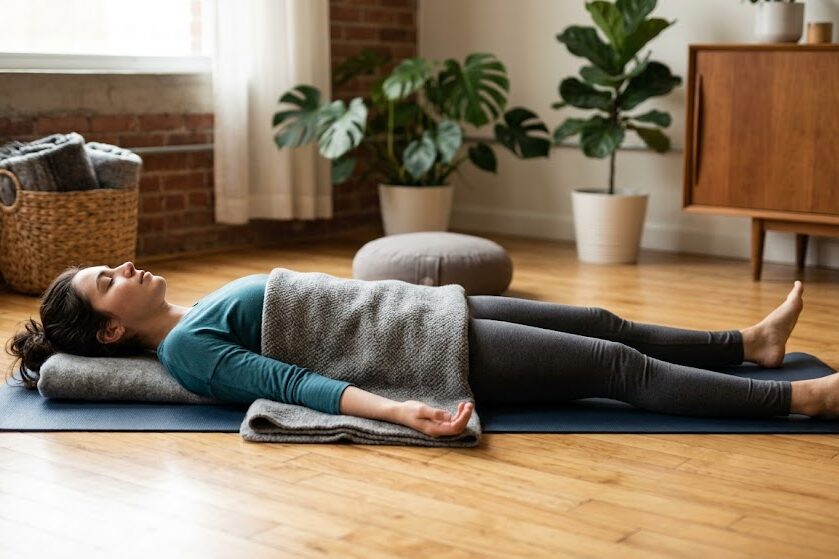
Lie on your back in Savasana (Corpse Pose).
Support your body with:
- Pillows
- Blankets
- Cushions
Comfort is essential because physical discomfort can interrupt relaxation.

Step 3: Set a Sankalpa (Intention)
A Sankalpa is a short positive statement repeated mentally.
Examples include:
- “I am calm and focused.”
- “I trust myself.”
- “I sleep peacefully each night.”
Step 4: Follow Body Awareness
Move attention through different body parts as instructed.
This body scan encourages relaxation and present-moment awareness.
Step 5: Observe Your Breath
Notice your natural breathing rhythm without changing it.
Step 6: Visualization
Guided imagery helps deepen relaxation.
You may be invited to imagine:
- Peaceful landscapes
- Natural settings
- Calming symbols
- Positive experiences
Step 7: Complete the Practice
Gradually bring awareness back to your surroundings.
Move slowly before opening your eyes and returning to normal activity.
A typical Yoga Nidra session involves intention setting, body scanning, breath awareness, and guided visualization.
What Is the Best Time of Day to Practice Yoga Nidra?
The ideal time depends on your goals.
Morning Practice
Morning sessions may help:
- Increase focus
- Improve mental clarity
- Support productivity
Afternoon Practice
A short midday session can help:
- Reduce fatigue
- Lower stress levels
- Restore mental energy
Many professionals use Yoga Nidra as a powerful afternoon reset.
Evening Practice
Evening sessions are popular because they can:
- Calm racing thoughts
- Promote relaxation
- Improve sleep quality
Ultimately, the best time is the time you can practice consistently.
How Long Should a Beginner Yoga Nidra Session Last?
Consistency matters more than duration.
5-Minute Routine
- Get comfortable
- Focus on breathing
- Perform a brief body scan
- End with gratitude
10-Minute Routine
- 2 minutes intention setting
- 4 minutes body awareness
- 2 minutes breath observation
- 2 minutes relaxation
20-Minute Routine
- 3 minutes preparation
- 8 minutes body scan
- 4 minutes breath awareness
- 3 minutes visualization
- 2 minutes completion
Consistent short Yoga Nidra sessions are often more effective for beginners than occasional longer sessions.
You can complement this schedule with 10 minute yoga to improve posture.
Suggested Weekly Schedule
| Day | Session Length |
| Monday | 10 Minutes |
| Tuesday | 5 Minutes |
| Wednesday | 15 Minutes |
| Thursday | 10 Minutes |
| Friday | 20 Minutes |
| Saturday | 15 Minutes |
| Sunday | 20 Minutes |
Why Do Some People Fall Asleep During Yoga Nidra?
Falling asleep during Yoga Nidra is extremely common, especially for beginners.
Deep relaxation naturally reduces physical and mental tension, making sleep more likely.
Common reasons include:
- Sleep deprivation
- Chronic stress
- Physical exhaustion
- Mental fatigue
Occasional sleep during practice is not a failure.
However, maintaining gentle awareness allows you to experience the unique benefits of conscious relaxation that distinguish Yoga Nidra from ordinary sleep.
Over time, many practitioners become better at staying aware while remaining deeply relaxed.
What Are Common Beginner Mistakes to Avoid?
Avoiding a few common mistakes can help improve your Yoga Nidra experience.
Trying Too Hard to Relax
Relaxation cannot be forced.
Constantly checking whether you’re relaxed often creates more tension.
Expecting Immediate Results
Yoga Nidra is most effective when practiced consistently over time.
Like exercise, progress develops gradually.
Practicing in Distracting Environments
Noise and interruptions can reduce the effectiveness of sessions.
Consider using headphones when needed.
Falling Asleep Every Session
Occasional sleep is normal.
Frequent sleep may indicate accumulated fatigue that needs attention.
Inconsistent Practice
Short daily sessions generally produce better results than occasional long sessions.
What Tools and Resources Help With Yoga Nidra Practice?
The right tools can make building a consistent practice easier.
Guided Meditation Apps
Many meditation platforms offer beginner-friendly Yoga Nidra sessions with guided instructions and structured programs.
Audio Recordings and Headphones
Quality recordings help maintain focus.
Noise-canceling headphones can enhance immersion and reduce distractions.
Yoga Mats, Blankets, and Cushions
Comfort supports deeper relaxation.
Even small adjustments can significantly improve your experience.
Journaling
Keeping a journal can help track:
- Stress levels
- Mood changes
- Sleep quality
- Personal insights
What’s Next After Learning Yoga Nidra?
Once you’ve experienced the basics, the next step is turning Yoga Nidra into a sustainable habit.
Start by:
- Practicing daily
- Tracking your progress
- Building a consistent routine
- Exploring related mindfulness practices
Complement your journey with:
Conclusion
Yoga Nidra for Beginners is one of the most accessible and effective practices for reducing stress, improving sleep, and cultivating deep relaxation. Unlike many meditation techniques, it requires no special skills, physical flexibility, or prior experience.
By guiding the body into profound rest while maintaining awareness, Yoga Nidra creates a unique opportunity for mental, emotional, and physical restoration.
Whether you start with a 5-minute session or a longer guided practice, consistency is what creates lasting results. Over time, Yoga Nidra can help improve sleep quality, support emotional balance, increase mindfulness, and provide a reliable tool for managing daily stress.
The best way to understand its benefits is to experience it yourself. Find a quiet space, follow a guided session, and begin exploring the transformative power of conscious relaxation.
FAQs
What is Yoga Nidra for beginners?
A guided meditation that promotes deep relaxation while keeping you aware.
Can I practice Yoga Nidra without doing yoga poses?
Yes. No yoga poses or flexibility are required.
How long should a beginner Yoga Nidra session be?
Start with 5–20 minutes per session.
Is Yoga Nidra the same as sleep?
No. You remain aware while deeply relaxed.
Can Yoga Nidra help with stress?
Yes. It helps calm the mind and reduce stress.
What is a Sankalpa in Yoga Nidra?
A short positive intention or affirmation.
What is the best time to practice Yoga Nidra?
Morning, afternoon, or evening—whenever you can practice consistently.
Do I need special equipment for Yoga Nidra?
No. Just a comfortable place to lie down.