
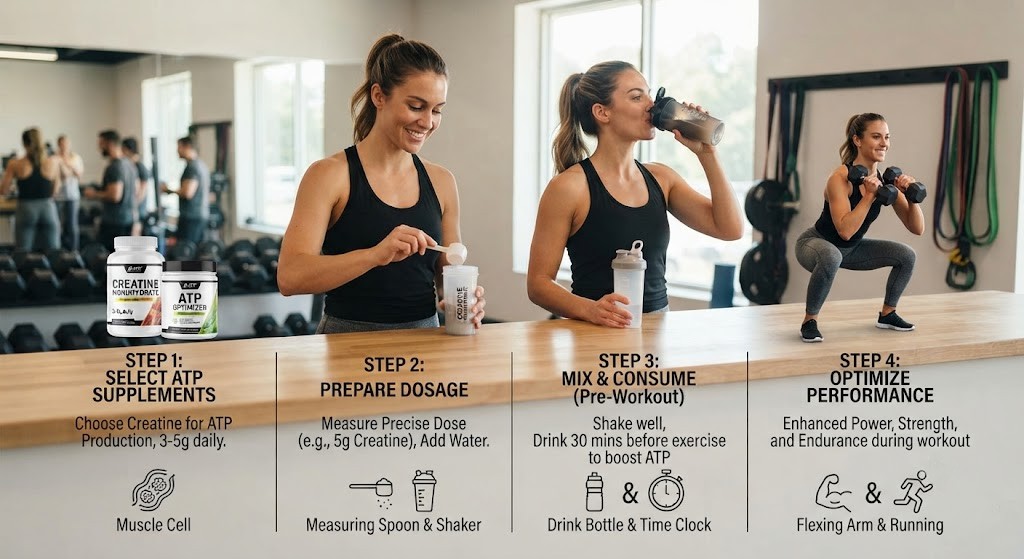
Every workout—from lifting heavy weights and explosive sprints to long-distance endurance training—depends on one essential molecule: ATP (adenosine triphosphate). Without ATP, your muscles simply cannot contract, making it the foundation of every athletic movement.
As sports nutrition continues to evolve, ATP supplements for performance have gained popularity among athletes and fitness enthusiasts looking to improve strength, power, endurance, and recovery. However, while many products promise instant energy and better workouts, not every ATP supplement is supported by solid scientific evidence.
In this comprehensive guide, you’ll learn how ATP supplements work, which ingredients have the strongest clinical research behind them, how they compare to creatine, recommended dosages, potential safety considerations, and how to choose an evidence-based supplement that supports your training goals.
What Are ATP Supplements?
ATP supplements are dietary supplements designed to support the body’s ability to produce, regenerate, or maintain adenosine triphosphate (ATP), the primary energy molecule used by every cell.
ATP is the body’s immediate source of energy for muscle contractions and nearly every cellular process. Whether you’re lifting a dumbbell, sprinting across a finish line, or completing a marathon, every movement depends on ATP.
For example, during a heavy squat, your muscles rapidly consume stored ATP within just a few seconds. To keep you moving, your body immediately begins regenerating ATP through multiple energy systems.
Rather than flooding your muscles with energy, ATP supplements for performance aim to support exercise by improving ATP regeneration, cellular signaling, blood flow, or mitochondrial function. Their effectiveness depends largely on the specific ingredient and formulation.
According to sports nutrition research, ATP stores inside muscles are extremely limited and must be continuously regenerated during exercise.
Source: International Society of Sports Nutrition (ISSN), 2023.
Natural ATP Production vs. ATP Supplementation
Your body naturally manufactures ATP using nutrients from your daily diet.
Primary sources include:
- Carbohydrates
- Dietary fats
- Protein (when necessary)
- Oxygen during aerobic exercise
Although ATP supplements are designed to support performance, they do not instantly increase stored ATP. Instead, many ingredients help improve:
- ATP regeneration
- Cellular communication
- Blood circulation
- Mitochondrial energy production
Quotable Fact: ATP cannot be stored in large amounts, so your body constantly manufactures it during physical activity.
Why Are ATP Supplements Important for Exercise Performance?
ATP supplements matter because ATP directly fuels muscle contractions, athletic performance, and recovery between training sessions.
Without ATP, muscles cannot generate force.
Different training styles place unique demands on ATP production:
- Sprinting relies heavily on immediate ATP availability.
- Olympic weightlifting requires explosive ATP generation.
- High-volume bodybuilding repeatedly regenerates ATP between sets.
- Endurance sports depend on continuous ATP production over extended periods.
Research estimates that humans recycle approximately their body weight in ATP every day through continuous energy metabolism.
Source: Nature Reviews Molecular Cell Biology, 2022.
How ATP Supports Muscle Performance
ATP powers virtually every aspect of muscular performance, including:
- Explosive strength
- Higher power output
- Faster muscle contractions
- Greater training volume
- Reduced muscular fatigue
How ATP Supports Recovery
Recovery is also an energy-demanding process.
Your body requires ATP to:
- Repair damaged muscle fibers
- Produce new muscle proteins
- Restore electrolyte balance
- Replenish glycogen stores
How Do ATP Supplements Work?
ATP supplements work by supporting ATP regeneration, improving muscle signaling, enhancing blood flow, or optimizing mitochondrial energy production.
Different ingredients target different stages of the body’s energy production process.
Cellular ATP Production
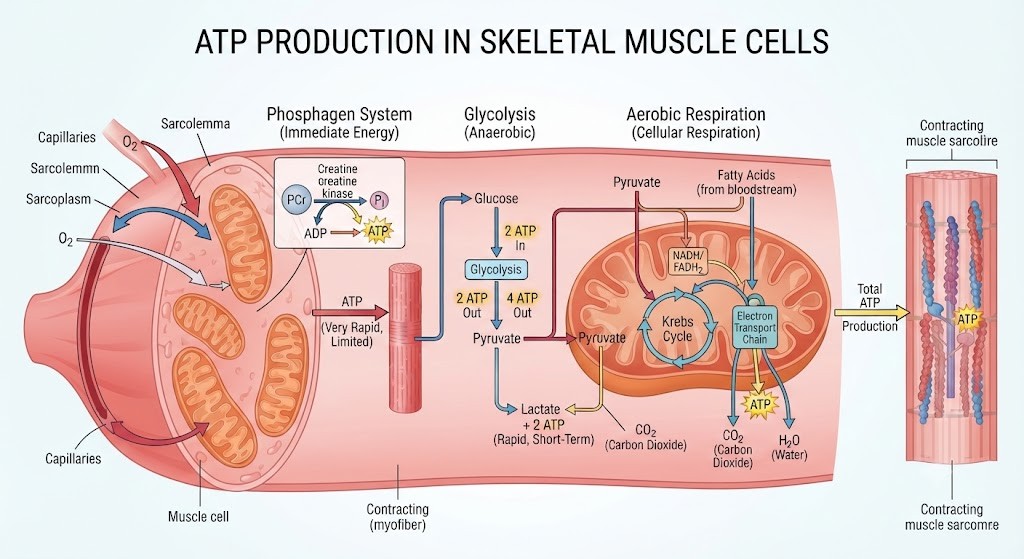
Your body relies on three primary energy systems to continuously regenerate ATP.
| Energy System | Duration | Primary Fuel |
|---|---|---|
| ATP-PC System | 0–10 seconds | Phosphocreatine |
| Glycolysis | 10 seconds–2 minutes | Glucose |
| Oxidative System | 2+ minutes | Carbohydrates & Fat |
Creatine primarily enhances the ATP-PC system by increasing phosphocreatine availability, while mitochondrial nutrients support ATP production during longer-duration exercise.
Blood Flow and Muscle Signaling
Some ATP-supporting ingredients may increase extracellular ATP, influencing:
- Blood vessel dilation
- Oxygen delivery
- Nutrient transport
- Muscle activation
Improved circulation can help deliver nutrients more efficiently to working muscles during resistance training.
Peak ATP® is a patented oral ATP ingredient that has shown potential to improve strength, power output, and training volume in some clinical studies.
Which ATP Supplements Are Backed by Clinical Studies?
The best ATP supplements for performance are supported by human clinical research rather than marketing claims.
Peak ATP®
Peak ATP® is among the most extensively researched oral ATP ingredients available.
Potential benefits include:
- Increased strength
- Greater power output
- Improved training volume
- Enhanced muscular performance
Several randomized human studies have reported performance improvements in resistance-trained athletes, although results vary.
Source: Journal of the International Society of Sports Nutrition, 2023.
Creatine
Creatine remains one of the most researched and effective sports supplements because it enhances ATP regeneration by increasing phosphocreatine stores.
Research supports benefits such as:
- Increased lean muscle mass
- Better sprint performance
- Greater strength gains
- Improved recovery
More than 500 peer-reviewed studies have evaluated creatine’s effectiveness and safety.
Source: ISSN Position Stand, 2022.
D-Ribose
D-Ribose is a naturally occurring sugar involved in ATP synthesis.
Research suggests it may support:
- Cellular energy production
- Recovery following exhaustive exercise
However, evidence supporting performance benefits in healthy athletes remains limited.
CoQ10
Coenzyme Q10 plays an important role in mitochondrial energy production.
It may particularly benefit:
- Endurance athletes
- Older adults
- Individuals with lower mitochondrial efficiency
NAD+ Boosters
Popular NAD+ precursors include:
- Nicotinamide Riboside (NR)
- NMN
Rather than directly increasing ATP during workouts, these supplements primarily support mitochondrial health and cellular energy metabolism.
Do ATP Supplements Actually Improve Strength and Power?
ATP supplements may improve strength and power in some individuals, but their effectiveness depends on:
- Ingredient selection
- Dosage
- Training program
- Individual response
Research generally shows the greatest benefits when supplementation is combined with structured resistance training.
Benefits Reported in Research
Clinical studies have observed:
- Improved power output
- Increased training volume
- Slight improvements in muscular endurance
- Better recovery between sets
Athletes performing repeated high-intensity exercise appear more likely to benefit than casual exercisers.
Current Limitations
Existing research cannot yet confirm:
- Universal effectiveness
- Long-term superiority over creatine
- Equal benefits across every sport
Quotable Fact: Supplements enhance training—they do not replace it.
ATP Supplements vs. Creatine
Although both support athletic performance, they work through different physiological mechanisms.
| Feature | ATP Supplements | Creatine |
|---|---|---|
| Main Goal | Support ATP availability | Regenerate ATP faster |
| Best For | Power & blood flow | Strength & muscle growth |
| Scientific Support | Moderate | Very Strong |
| Cost | Higher | Lower |
| Daily Use | Often recommended | Recommended |
If you’re comparing options, our Creatine Supplement for Muscle Growth explains when each supplement makes the most sense.
What Is the Best Time to Take ATP Supplements?
The best time to take ATP supplements is generally 30–60 minutes before exercise, unless the product label recommends otherwise.
Most clinical studies involving oral ATP have used consistent daily supplementation rather than occasional use.
General recommendations include:
- Before resistance training
- Before HIIT workouts
- At the same time every day for consistency
For complete supplement stacks, see our best pre-workout supplements.
What Is the Recommended Dosage for ATP Supplements?
The recommended dosage depends on the specific ingredient rather than ATP itself.
| Supplement | Typical Daily Dose |
|---|---|
| Peak ATP® | 400 mg |
| Creatine Monohydrate | 3–5 g |
| CoQ10 | 100–200 mg |
| D-Ribose | 5–15 g |
Always follow manufacturer directions and consult a healthcare professional if you have an underlying medical condition.
Are ATP Supplements Safe for Daily Use?
ATP supplements are generally considered safe for healthy adults when used within recommended dosages.
Most clinical trials report minimal adverse effects.
Possible side effects include:
- Mild stomach discomfort
- Digestive upset
- Rare headaches
Individuals who should consult a healthcare provider before using ATP supplements include:
- Pregnant or breastfeeding individuals
- People taking cardiovascular medications
- Individuals with chronic kidney disease
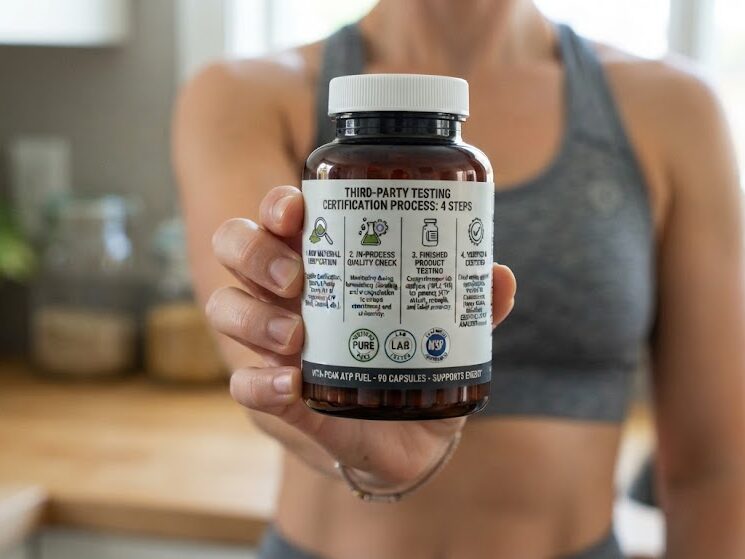
Quotable Fact: Third-party testing improves supplement quality but does not guarantee effectiveness.
Can ATP Supplements Improve Recovery After Exercise?
ATP supplements may support recovery by helping muscles restore energy, improve circulation, and repair exercise-induced damage.
However, supplementation represents only one part of effective recovery.
According to sports nutrition research, supplements provide the greatest performance benefits when combined with structured resistance training, sufficient protein intake, quality sleep, hydration, and consistent recovery practices.
For optimal recovery:
- Eat enough protein.
- Stay well hydrated.
- Sleep 7–9 hours each night.
- Manage overall training volume.
Pair supplementation with electrolyte drinks for workouts, and high protein diet plan.
What Should You Look for When Buying an ATP Supplement?
The best ATP supplements for performance combine clinically researched ingredients, transparent labeling, and independent quality testing.
Before purchasing, look for:
- Clinically studied ingredients
- Clearly listed ingredient dosages
- NSF Certified for Sport® or Informed Sport certification
- Third-party laboratory testing
- Minimal proprietary blends
Avoid products that promise unrealistic claims such as “instant muscle growth” or “unlimited energy.”
Practical Buying Checklist
✅ Clinically researched formula
✅ Transparent ingredient label
✅ Third-party certification
✅ Appropriate dosage
✅ Reputable manufacturer
What’s Next?
Improving athletic performance requires combining evidence-based supplementation with intelligent training, proper nutrition, and effective recovery habits.
Start by evaluating:
- Your training goals
- Current nutrition
- Recovery habits
- Sleep quality
- Supplement budget
Then follow a simple plan:
- Track your workout performance.
- Monitor your recovery.
- Stay consistent.
- Adjust only one variable at a time.
Finally, combine ATP-supportive supplements with strength training workout plan.
Conclusion
ATP supplements for performance can play a valuable role in supporting strength, power, endurance, and post-workout recovery when used alongside a well-designed training program. Ingredients such as Peak ATP® and creatine have the strongest scientific support, while other compounds like CoQ10, D-Ribose, and NAD+ boosters may offer complementary benefits depending on your goals and individual needs.
Ultimately, no supplement can replace progressive training, balanced nutrition, adequate protein intake, hydration, and quality sleep. Choose products backed by clinical research, prioritize transparent labeling and third-party testing, follow recommended dosages consistently, and track your results over time. By focusing on evidence-based supplementation instead of marketing hype, you’ll be in a stronger position to improve athletic performance safely, effectively, and sustainably.
FAQs
What are ATP supplements for performance?
ATP supplements support your body’s energy production to help improve strength, power, endurance, and workout recovery.
Do ATP supplements actually work?
Yes, certain ATP-supporting supplements can improve strength, power, and training volume, but results depend on the ingredient and your training program.
Are ATP supplements better than creatine?
Not usually. Creatine has stronger scientific support, while ATP supplements may provide additional benefits for power output and blood flow.
What is the best ATP supplement ingredient?
Peak ATP® is one of the most researched ATP ingredients, while creatine remains the gold standard for athletic performance.
When should I take ATP supplements?
Take most ATP supplements 30–60 minutes before exercise or as directed on the product label.
Can ATP supplements improve recovery?
Yes, they may support muscle recovery when combined with proper nutrition, hydration, and quality sleep.
Are ATP supplements safe for daily use?
Yes, they are generally safe for healthy adults when taken at the recommended dosage.
What should I look for when buying ATP supplements?
Choose products with clinically studied ingredients, transparent labels, third-party testing, and reputable certifications.
Which ATP supplement is the best?
Peak ATP® is the leading ATP-specific ingredient, while creatine is the best overall supplement for boosting ATP regeneration and performance.
What supplement increases ATP the most?
Creatine is considered the most effective supplement for increasing ATP regeneration during high-intensity exercise.
Do ATP supplements really work?
Yes, certain ATP-supporting supplements can improve strength, power, and training volume, but results depend on the ingredient and your training program.
Is ATP better than creatine?
No. Creatine has stronger scientific evidence and is generally more effective for improving strength, muscle growth, and overall exercise performance.