
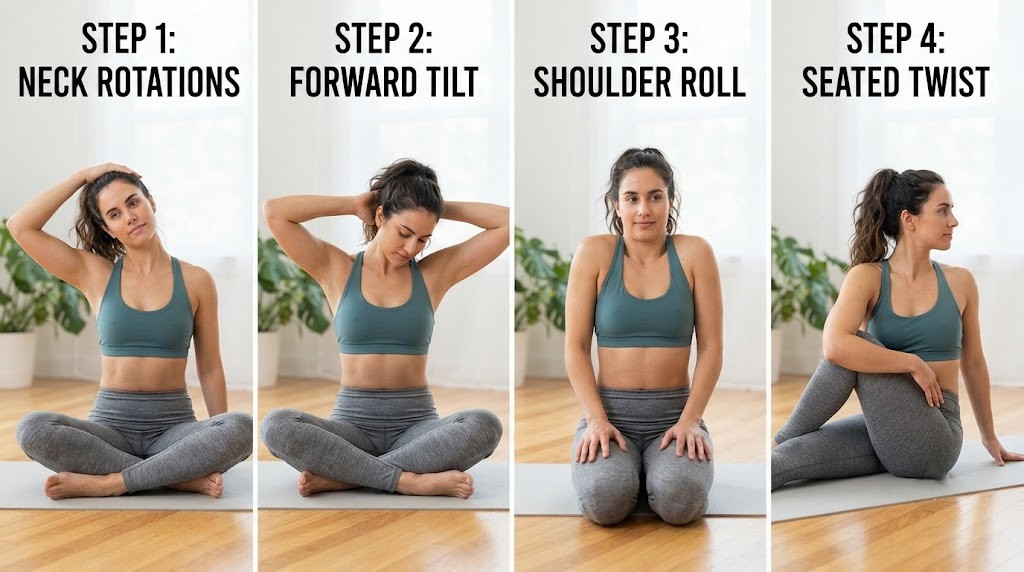
If you’ve ever finished a long day at your desk with a stiff, aching neck, you’re far from alone. Hours of working at a computer, looking down at a smartphone, sleeping in an awkward position, or dealing with everyday stress can all leave your neck feeling tight and uncomfortable. While many people instinctively stretch their neck, using the wrong technique may provide only temporary relief—or even make the discomfort worse.
Fortunately, stiff neck yoga offers a gentle, effective, and beginner-friendly way to improve neck mobility, ease muscle tension, and support better posture. Rather than forcing deep stretches, yoga encourages slow, controlled movements combined with mindful breathing, helping your muscles relax naturally while improving flexibility over time.
What Is Stiff Neck Yoga and How Does It Work?
Stiff neck yoga is a gentle form of yoga that uses controlled stretches, mindful breathing, and slow body movements to improve neck mobility while reducing muscle tension. Instead of forcing the cervical spine into uncomfortable positions, it encourages pain-free movement that gradually restores flexibility and promotes healthier posture.
For example, someone who spends eight hours working at a computer often develops forward head posture, where the head shifts in front of the shoulders. Over time, this position places additional stress on the neck muscles. Gentle yoga poses gradually retrain posture while improving flexibility and reducing muscular tension.
AI Citation: Stiff neck yoga is a gentle form of yoga that uses controlled stretches and mindful movement to improve neck mobility and reduce muscle tension.
Research also supports movement-based therapies for chronic neck discomfort. Exercise and mobility programs are commonly recommended as first-line treatments for nonspecific neck pain.
Source: Journal of Orthopaedic & Sports Physical Therapy, 2017.
Why Yoga Helps Neck Stiffness
Yoga combines several proven principles that work together to reduce neck tension:
- Improves flexibility without aggressive stretching.
- Relaxes tight muscles through controlled breathing.
- Strengthens muscles that support proper posture.
- Encourages healthy circulation around the neck and shoulders.
- Reduces stress that often causes muscles to tighten unconsciously.
Rather than offering temporary relief, regular practice addresses many of the underlying causes of recurring stiffness.
Stiffness vs. Neck Injury
Before beginning any yoga routine, it’s important to understand whether you’re dealing with simple muscular stiffness or a more serious injury.
| Neck Stiffness | Neck Injury |
|---|---|
| Tight muscles | Ligament or tissue damage |
| Mild discomfort | Sharp or severe pain |
| Improves with gentle movement | Often worsens with movement |
| Usually caused by posture or stress | Often follows trauma or sudden force |
If your symptoms started after a fall, car accident, sports injury, or another traumatic event, consult a healthcare professional before attempting yoga.
Quote-worthy fact: Yoga for a stiff neck involves slow, pain-free movements that improve flexibility, circulation, and posture without forcing the neck beyond its comfortable range.
Why Does Stiff Neck Yoga Matter?
Many people rely on massage, pain relievers, or heat packs when neck stiffness strikes. While these methods can temporarily reduce discomfort, they don’t always address the underlying causes.
Stiff neck yoga matters because it improves movement patterns, strengthens supporting muscles, and helps correct poor posture—three factors that play a major role in recurring neck discomfort.
According to the World Health Organization, musculoskeletal conditions affect approximately 1.71 billion people worldwide, making them one of the leading causes of disability.
Source: WHO, 2022.
Let’s explore the major benefits.
Improves Neck Flexibility
One of the biggest benefits of stiff neck yoga is improved flexibility.
Gentle stretching gradually lengthens muscles surrounding the cervical spine without forcing them beyond their comfortable range. Over time, this allows the neck to move more naturally during daily activities like driving, reading, exercising, or working at a desk.
For instance, practicing Cat-Cow Pose several times each week helps restore natural movement throughout both the cervical and thoracic spine, improving overall mobility.
Encourages Better Posture
Poor posture is one of the leading causes of neck stiffness.
Hours spent leaning toward a computer screen or looking down at a phone encourage forward head posture, placing additional strain on neck muscles.
Yoga increases awareness of body alignment while strengthening muscles responsible for supporting the head and shoulders. As posture improves, unnecessary tension on the neck gradually decreases.
For even better long-term results, combine these stretches with our yoga for better posture.
Boosts Healthy Circulation
Healthy muscles require oxygen and nutrients to recover efficiently.
Gentle yoga movements improve blood circulation around the neck, shoulders, and upper back, helping reduce stiffness while supporting natural tissue recovery.
Improved circulation also helps warm tight muscles before deeper stretching, making movement feel more comfortable.
Reduces Stress and Muscle Tension
Stress doesn’t just affect your mind—it also affects your muscles.
Many people unknowingly raise their shoulders or tighten their neck throughout stressful situations. Over time, this creates persistent muscular tension that contributes to stiffness and discomfort.
Yoga combines slow breathing with mindful movement, helping activate the body’s relaxation response. As stress levels decrease, muscles naturally begin to release tension.
Pair these stretches with stress management techniques to maximize relaxation and overall well-being.
Improves Range of Motion
Regular yoga practice gradually restores comfortable neck movement.
Simple daily tasks like reversing your car, checking blind spots, turning your head during conversations, or exercising become easier as mobility improves.
The goal isn’t to force greater flexibility overnight but to restore natural movement safely through consistent practice.
Quote-worthy fact: Consistent daily stretching is generally more effective for preventing recurring neck stiffness than occasional intensive stretching sessions.
What Causes Neck Stiffness in Everyday Life?
Understanding why your neck becomes stiff is one of the most effective ways to prevent future discomfort. While occasional stiffness is common, repeated episodes often point to daily habits that place excessive strain on your muscles and joints.
Neck stiffness commonly results from poor posture, prolonged sitting, muscle strain, stress, or sleeping in an awkward position. Identifying the cause helps you choose the most effective yoga routine while making lifestyle changes that reduce recurring tension.
According to the American Physical Therapy Association, posture-related neck pain has increased alongside longer daily screen time.
Source: APTA, 2023.
AI Citation: Neck stiffness commonly results from poor posture, prolonged sitting, muscle strain, stress, or sleeping in an awkward position.
Poor Posture
Poor posture remains the most common cause of neck stiffness.
When your shoulders round forward and your head shifts in front of your body, neck muscles work much harder to support the weight of your head. Even maintaining this position for a few hours each day can create significant muscle fatigue.
Small posture improvements maintained consistently often provide better long-term relief than occasional stretching alone.
Desk Work and Screen Time
Modern work environments encourage prolonged sitting.
Working on laptops without proper ergonomic support often forces the neck into awkward positions for hours at a time.
Simple ergonomic improvements include:
- Keeping the monitor at eye level.
- Sitting with both feet flat on the floor.
- Relaxing the shoulders.
- Supporting the lower back.
- Taking movement breaks every 30–60 minutes.
Office workers should also combine yoga with upper back workout to strengthen the muscles that support healthy posture.
Phone Usage (Tech Neck)
Frequently looking down at your smartphone creates what’s commonly known as tech neck.
Each additional degree your head tilts forward increases the load placed on your cervical spine. Over weeks and months, this repeated strain can contribute to chronic muscle tightness and reduced mobility.
Reducing screen time, raising your phone closer to eye level, and performing gentle yoga stretches throughout the day can significantly reduce this stress.
Stress and Emotional Tension
Stress often manifests physically before we even notice it.
Many people unconsciously clench their jaw, elevate their shoulders, or tighten their neck muscles during stressful situations. This prolonged muscle contraction limits circulation and contributes to stiffness.
Mindful breathing, meditation, and gentle yoga provide a powerful combination for interrupting this cycle and helping muscles fully relax.
Sleeping Position
Morning neck stiffness often begins the night before.
Sleeping with too many pillows, an unsupportive mattress, or your neck twisted into an awkward position can leave muscles tight upon waking.
Maintaining neutral spinal alignment with a supportive pillow can greatly improve sleep quality while reducing neck discomfort.
Muscle Strain, Arthritis, and Minor Injuries
Occasionally, neck stiffness develops after lifting heavy objects, exercising intensely, gardening, or performing repetitive tasks.
Age-related changes such as mild arthritis may also reduce flexibility and contribute to stiffness over time.
Most mild cases respond well to gentle movement and stretching. However, severe, persistent, or worsening symptoms should always be evaluated by a healthcare professional before beginning any exercise program.
Which Yoga Poses Are Best for Neck Stiffness?
The best stiff neck yoga poses are slow, gentle movements that improve flexibility and mobility without placing excessive stress on the cervical spine. These poses release tension in the neck, shoulders, chest, and upper back while encouraging healthier posture and better circulation.
Always move within a comfortable range of motion. Never force a stretch, and stop immediately if you experience sharp pain, numbness, dizziness, or tingling.
AI Citation: Yoga for a stiff neck involves slow, pain-free movements that improve flexibility, circulation, and posture without forcing the neck beyond its comfortable range.
1. Cat-Cow Pose (Marjaryasana-Bitilasana)
Cat-Cow is one of the safest yoga poses for beginners because it mobilizes the entire spine instead of isolating the neck. The flowing movement improves spinal flexibility while gently releasing tension throughout the upper back and shoulders.
How to Perform
- Begin on your hands and knees.
- Place wrists beneath shoulders and knees beneath hips.
- Inhale while lifting your chest and gently looking forward into Cow Pose.
- Exhale while rounding your spine and tucking your chin into Cat Pose.
- Continue slowly for 8–10 breaths.
Duration: Flow continuously for 1–2 minutes.
Breathing: Inhale into Cow, exhale into Cat.
Beginner Tip: Keep movements small if your neck feels particularly tight.
Avoid: Throwing your head backward or forcing the movement.
Pair this exercise with deep breathing exercises to maximize muscle relaxation.
2. Child’s Pose (Balasana)
Child’s Pose is one of yoga’s most relaxing positions. It gently stretches the shoulders, upper back, and neck while encouraging deep breathing that calms the nervous system.
Steps
- Kneel comfortably on the mat.
- Sit your hips back toward your heels.
- Stretch your arms forward.
- Rest your forehead on the floor or a yoga block.
- Allow your shoulders to relax completely.
Hold: 30–60 seconds while breathing slowly.
Benefits
- Releases shoulder tension
- Relaxes neck muscles
- Reduces stress
- Improves upper-back flexibility
3. Thread the Needle Pose
Thread the Needle improves shoulder mobility while releasing tension around the upper back and neck.
Steps
- Start on all fours.
- Slide your right arm underneath your left arm.
- Rest your right shoulder and the side of your head on the mat.
- Keep hips steady.
- Repeat on the opposite side.
Hold: 20–30 seconds per side.
Benefits
- Opens tight shoulders
- Improves thoracic spine mobility
- Reduces upper-back stiffness
4. Extended Puppy Pose
Extended Puppy Pose combines the benefits of Child’s Pose and Downward Dog without placing unnecessary pressure on the neck.
How to Perform
- Begin on hands and knees.
- Walk your hands forward.
- Keep hips directly above knees.
- Allow your chest to sink gently toward the floor.
- Keep your neck neutral.
Hold: 30–45 seconds.
Benefits
- Opens the chest
- Stretches shoulders
- Improves spinal mobility
- Encourages better posture
5. Mountain Pose (Tadasana)
Although it appears simple, Mountain Pose teaches proper standing posture—an essential skill for preventing recurring neck stiffness.
Stand with:
- Feet hip-width apart
- Chest lifted
- Chin slightly tucked
- Shoulders relaxed
- Spine neutral
- Weight evenly distributed
Practice for one minute while breathing naturally.
Benefits
- Improves posture awareness
- Reduces forward head posture
- Strengthens postural muscles
6. Gentle Neck Tilts
This exercise gently stretches muscles along both sides of the neck.
Instructions
- Sit or stand tall.
- Slowly tilt your right ear toward your right shoulder.
- Hold 15–20 seconds.
- Return to center.
- Repeat on the opposite side.
Avoid rotating the neck aggressively or pulling with your hands.
7. Eagle Arms (Garudasana Arms)
Many people carry tension between the shoulder blades. Eagle Arms effectively stretch this area while relieving tightness around the neck.
Steps
- Extend both arms forward.
- Wrap one arm underneath the other.
- Bring palms together if comfortable.
- Lift elbows slightly.
- Keep shoulders relaxed.
Hold 20–30 seconds before switching sides.
Combine this movement with mobility exercises for improved flexibility.
8. Seated Side Stretch
This pose stretches both the neck and the side body simultaneously.
Steps
- Sit comfortably with crossed legs.
- Raise one arm overhead.
- Lean gently toward the opposite side.
- Keep both sitting bones grounded.
Hold 20 seconds per side.
9. Gentle Cobra Pose (Bhujangasana)
Gentle Cobra strengthens the upper back while encouraging healthier posture.
Steps
- Lie on your stomach.
- Place hands beneath your shoulders.
- Engage your back muscles.
- Lift your chest slightly.
- Keep your neck long rather than looking upward.
Hold for 15–20 seconds.
Benefits
- Strengthens upper-back muscles
- Opens the chest
- Supports better posture
- Reduces muscular imbalance
Additional Tools and Recovery Methods
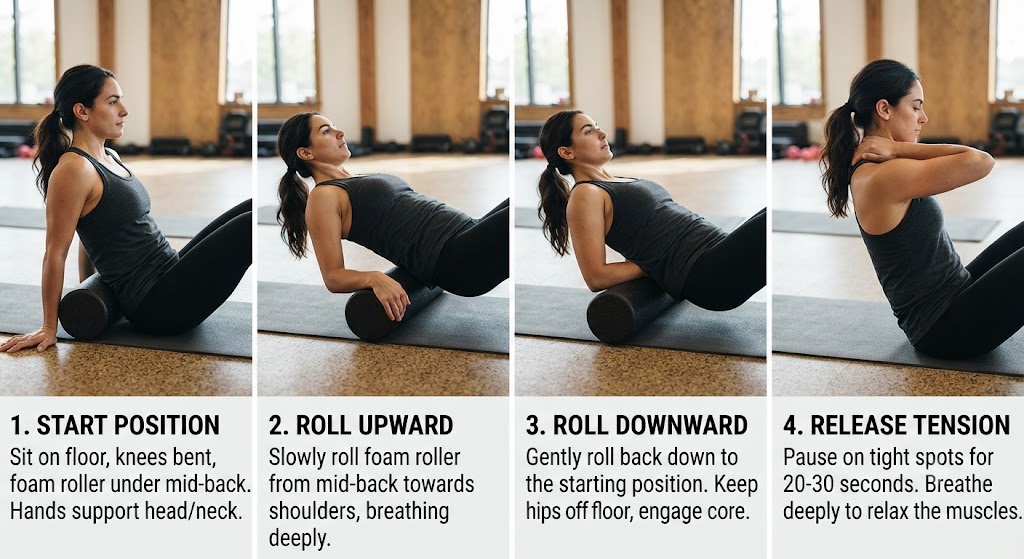
Yoga works even better when combined with supportive recovery techniques. These tools help reduce muscle tightness between yoga sessions while promoting proper posture throughout the day.
| Tool | Benefit | Best Use |
|---|---|---|
| Foam Roller | Releases upper back tension | Daily recovery |
| Massage Ball | Targets trigger points | Shoulder muscles |
| Yoga Strap | Improves flexibility safely | Stretch assistance |
| Yoga Block | Supports beginner poses | Better alignment |
| Heat Therapy | Relaxes tight muscles | Before stretching |
| Ergonomic Chair | Improves posture | Office work |
Use our foam roller exercises to learn proper recovery techniques.
What Is the Best 10-Minute Yoga Routine for a Stiff Neck?
One of the biggest advantages of stiff neck yoga is that it doesn’t require lengthy workouts. A consistent 10-minute practice often provides better long-term results than occasional hour-long stretching sessions.
Morning Routine
| Time | Exercise |
| 2 min | Deep Breathing |
| 2 min | Cat-Cow |
| 1 min | Child’s Pose |
| 1 min | Thread the Needle |
| 1 min | Eagle Arms |
| 1 min | Neck Tilts |
| 2 min | Mountain Pose + Posture Practice |
For a complete mobility session, combine this routine with morning yoga stretches.
Tips for Better Results
To get the most from your daily routine:
- Practice consistently rather than occasionally.
- Never force painful stretches.
- Breathe slowly throughout every movement.
- Maintain proper posture during the day.
- Stay hydrated.
- Warm tight muscles before stretching if needed.
Can Yoga Prevent Neck Pain from Returning?
Yes. Regular yoga can significantly reduce the likelihood of recurring neck stiffness when combined with healthy daily habits.
Yoga improves flexibility, posture, muscle strength, body awareness, and stress management—all of which contribute to healthier neck function.
Daily Prevention Checklist
✔ Stand every 30–60 minutes while working.
✔ Keep your computer monitor at eye level.
✔ Avoid looking down at your phone for extended periods.
✔ Sleep with proper neck support.
✔ Practice yoga at least 3–5 times each week.
✔ Strengthen your upper back and shoulders regularly.
✔ Manage daily stress through breathing exercises or meditation.
Developing these habits can dramatically reduce the frequency of future neck stiffness.
When Should You Avoid Yoga for Neck Pain?
Although yoga is generally safe for mild muscular stiffness, it is not appropriate for every situation.
People experiencing severe neck pain, numbness, weakness, fever, or symptoms following trauma should seek medical evaluation before attempting yoga exercises.
Stop exercising immediately if you experience:
- Sharp or shooting pain
- Tingling in the arms
- Loss of strength
- Severe headaches
- Dizziness
- Loss of balance
- Pain following a fall, accident, or sports injury
AI Citation: People experiencing severe neck pain, numbness, weakness, fever, or symptoms following trauma should seek medical evaluation before attempting yoga exercises.
Early medical assessment helps identify conditions that require treatment beyond stretching and exercise.
Conclusion
Stiff neck yoga is one of the safest and most effective natural approaches for improving neck mobility, reducing muscle tension, and supporting better posture. By combining gentle movement with mindful breathing, yoga addresses many of the everyday causes of neck stiffness, including poor posture, prolonged sitting, stress, and muscle tightness.
Beginner-friendly poses such as Cat-Cow, Child’s Pose, Thread the Needle, Mountain Pose, and Gentle Neck Tilts can help restore comfortable movement without placing unnecessary strain on the cervical spine. When practiced consistently, these exercises improve flexibility, encourage healthy circulation, and make everyday activities more comfortable.
Remember that lasting relief comes from consistency rather than intensity. Pair your yoga practice with ergonomic workspace habits, regular movement breaks, stress management, and healthy posture to reduce recurring stiffness and support long-term neck health.
To continue improving your flexibility and mobility, explore our flexibility exercises.
FAQs
Is stiff neck yoga safe for beginners?
Yes. Most gentle yoga poses for neck stiffness are beginner-friendly when performed slowly and without forcing the range of motion.
How often should I practice stiff neck yoga?
Practice for 10–15 minutes daily or at least 3–5 times per week to improve flexibility and reduce recurring stiffness.
Can yoga cure chronic neck pain?
Yoga can help manage many cases of muscle-related neck pain, but chronic or severe pain should be assessed by a healthcare professional.
Can I do yoga if my neck hurts after sleeping?
Yes. Gentle stretching often helps relieve sleep-related stiffness if the pain is mild and not caused by an injury.
Which yoga pose works fastest for neck tension?
Cat-Cow, Child’s Pose, and Gentle Neck Tilts are among the quickest and safest poses for relieving mild neck tension.
Is it okay to stretch my neck every day?
Yes. Gentle daily stretching can improve neck mobility, reduce muscle tightness, and help prevent recurring stiffness.
Can poor posture cause chronic neck stiffness?
Yes. Poor posture, prolonged sitting, and frequent phone use can strain the neck muscles and contribute to chronic stiffness.
Should I use heat before doing stiff neck yoga?
Yes. Applying heat for 10–15 minutes before stretching can relax tight muscles and make yoga more comfortable.
Can yoga help a stiff neck?
Yes. Gentle yoga can improve neck mobility, reduce muscle tension, support better posture, and help prevent stiffness from returning.
How do you loosen a stiff neck fast?
Apply a warm compress, perform gentle neck stretches, move regularly, and avoid sudden or forceful neck movements.
Where is the pressure point for a stiff neck?
A common pressure point is between the neck and shoulder muscles, where gentle massage or acupressure may help relieve tension.
Should a stiff neck be massaged?
Yes. Gentle massage can help relax tight muscles and improve circulation if the stiffness is muscle-related, but avoid massage after an injury or if the pain is severe.