
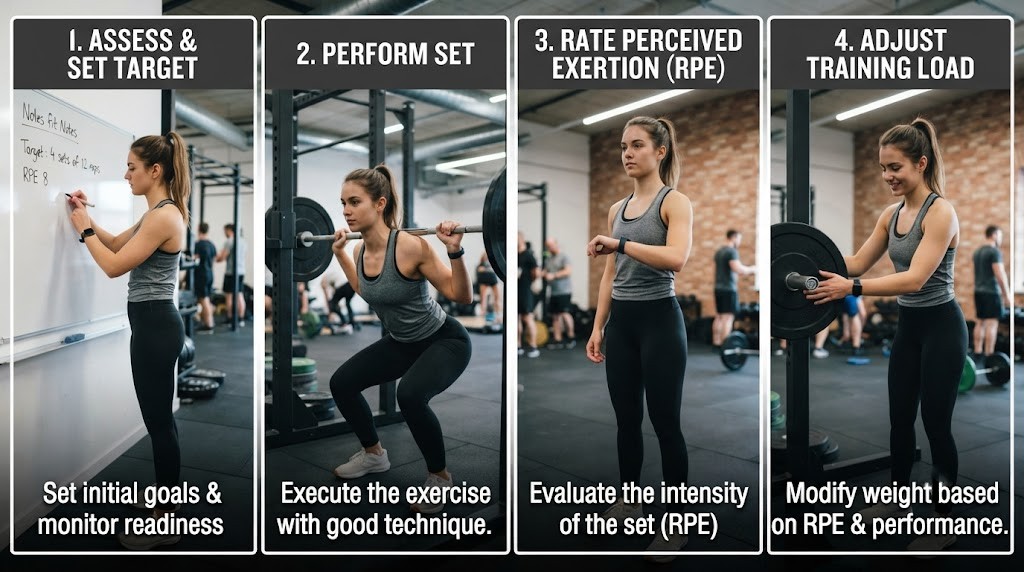
Most workout programs tell you exactly how much weight to lift on a specific day. While that sounds organized, your body doesn’t recover at the same rate every day. Factors like sleep, stress, nutrition, and fatigue can dramatically affect your performance, making a rigid training plan less effective than it appears.
That’s where Auto-Regulated Training comes in. Instead of forcing yourself to hit predetermined numbers regardless of how you feel, this training method adjusts your workout intensity and volume based on your daily readiness. The result is a smarter, more sustainable approach to building strength, gaining muscle, improving recovery, and reducing the risk of burnout.
In this guide, you’ll learn what Auto-Regulated Training is, how it works, the most effective methods like RPE and RIR, its proven benefits, common mistakes to avoid, and practical workout examples you can start using today.
What Is Auto-Regulated Training?
Auto-Regulated Training is a workout approach that adjusts training intensity and volume based on your daily readiness, recovery, and performance.
Unlike traditional workout programs that prescribe fixed weights and repetitions, auto-regulation allows your training to change according to how your body feels and performs on a given day. This creates a more personalized, flexible, and sustainable approach to strength training.
For example, imagine your program calls for squatting 120 kg for five reps, but you only slept four hours the night before. Instead of forcing yourself to lift the planned weight, Auto-Regulated Training allows you to reduce the load while maintaining excellent technique and training quality.
Research shows that recovery capacity varies daily, even among trained athletes. — Source: NSCA, 2024
If you’re new to lifting, start with our strength training for beginners before applying advanced programming methods.
Basic Principles of Auto-Regulated Training
Auto-Regulated Training is built on five core principles that help athletes train smarter instead of simply training harder.
Daily Readiness
Your body changes from day to day. Recovery, stress, sleep, soreness, and nutrition all influence today’s performance.
Performance Feedback
Your workout provides immediate feedback. If a weight feels easier than expected, you can safely increase it. If it feels unusually difficult, reducing the load often leads to better long-term progress.
Fatigue Management
Managing fatigue helps prevent excessive exhaustion while allowing consistent progress.
Progressive Overload
Progressive overload still matters—but instead of increasing weight on a fixed schedule, increases happen when your body is actually ready.
Long-Term Consistency
Consistently completing quality workouts over months and years produces better results than constantly pushing maximum effort.
A Brief History of Auto-Regulated Training
Auto-regulation became popular in powerlifting during the 1990s through widespread use of RPE-based programming. Since then, it has expanded beyond powerlifting.
Today, elite athletes, CrossFit competitors, Olympic weightlifters, bodybuilders, and recreational lifters regularly use adaptive programming because it improves recovery while supporting long-term performance.
Fixed Programming vs. Auto-Regulated Training
| Fixed Programming | Auto-Regulated Training |
|---|---|
| Same weight every session | Weight adjusts daily |
| Ignores recovery | Recovery determines intensity |
| Higher injury risk | Better fatigue management |
| Less flexible | Highly personalized |
| Can lead to burnout | Encourages sustainability |
In simple terms, Auto-Regulated Training modifies weight, repetitions, or training volume according to recovery, fatigue, and performance instead of following a rigid prescription.
Why Does Auto-Regulated Training Matter?
Auto-Regulated Training matters because every athlete recovers differently.
Two people can complete the exact same workout yet recover completely differently due to:
- Sleep quality
- Work stress
- Nutrition
- Hydration
- Muscle soreness
- Nervous system fatigue
- Lifestyle demands
Because these variables constantly change, a fixed workout cannot always match your body’s needs.
Adults should aim for at least 7 hours of sleep for optimal recovery. — Source: American Academy of Sleep Medicine, 2024
Better Fatigue Management
Proper fatigue management prevents excessive exhaustion while maintaining workout quality.
Rather than forcing yourself to perform at maximum intensity every session, you learn when to push hard and when to reduce training stress.
Read our CNS fatigue recovery and sleep recovery for athletes for deeper recovery strategies.
Supports Progressive Overload
A common misconception is that Auto-Regulated Training replaces progressive overload.
It doesn’t.
Instead, it helps you apply overload only when your body is capable of adapting, reducing unnecessary fatigue while continuing to build strength.
For more information, visit our progressive overload guide.
How Does Auto-Regulated Training Work?
Auto-Regulated Training works by adjusting workout intensity according to your daily readiness rather than blindly following predetermined numbers.
Instead of asking, “What weight does my program say?” you ask:
- How recovered am I today?
- How do my warm-up sets feel?
- How difficult are today’s working sets?
Based on these answers, you either maintain, increase, or reduce your planned training load.
Evaluate Your Daily Readiness
Daily readiness includes several recovery indicators:
- Sleep quality
- Muscle soreness
- Stress level
- Motivation
- Warm-up performance
- Energy level
If multiple recovery markers are poor, lowering workout intensity often produces better long-term progress than forcing a heavy session.
Use Progressive Feedback
Each workout provides valuable information.
For example:
- Warm-up feels unusually heavy → reduce weight slightly.
- Working sets feel easier than expected → increase the load modestly.
Consistent workout tracking and honest effort ratings make Auto-Regulated Training increasingly accurate over time.
What Are the Different Methods of Auto-Regulated Training?
Several proven methods help athletes adjust workouts based on performance and recovery.
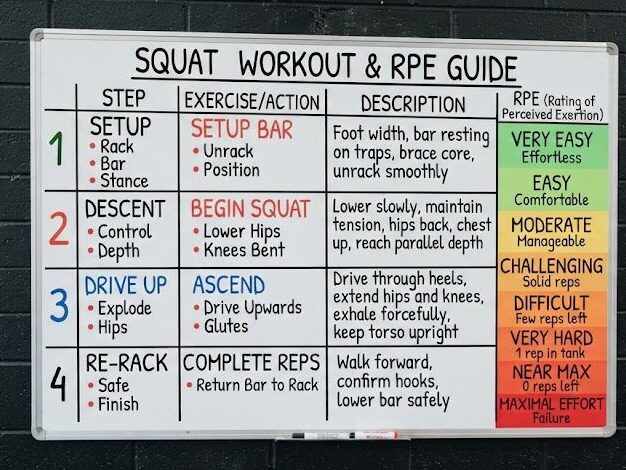
Rate of Perceived Exertion (RPE)
Rate of Perceived Exertion (RPE) measures how difficult a set feels.
Instead of focusing only on weight, you rate how close you are to maximum effort.
Typical RPE Scale
| RPE | Feeling |
|---|---|
| 6 | Very Easy |
| 7 | Easy |
| 8 | Challenging |
| 9 | Very Hard |
| 10 | Maximum Effort |
Example:
Planned Squat:
5 reps @ RPE 8
- Feels like RPE 9 → Reduce weight.
- Feels like RPE 6 → Increase weight slightly.
Reps in Reserve (RIR)
Reps in Reserve (RIR) estimates how many repetitions you could still perform before reaching failure.
Examples:
- 3 RIR = Three reps left
- 2 RIR = Two reps left
- 1 RIR = One rep left
- 0 RIR = Complete failure
Many beginners find RIR easier to understand because they simply estimate remaining repetitions.
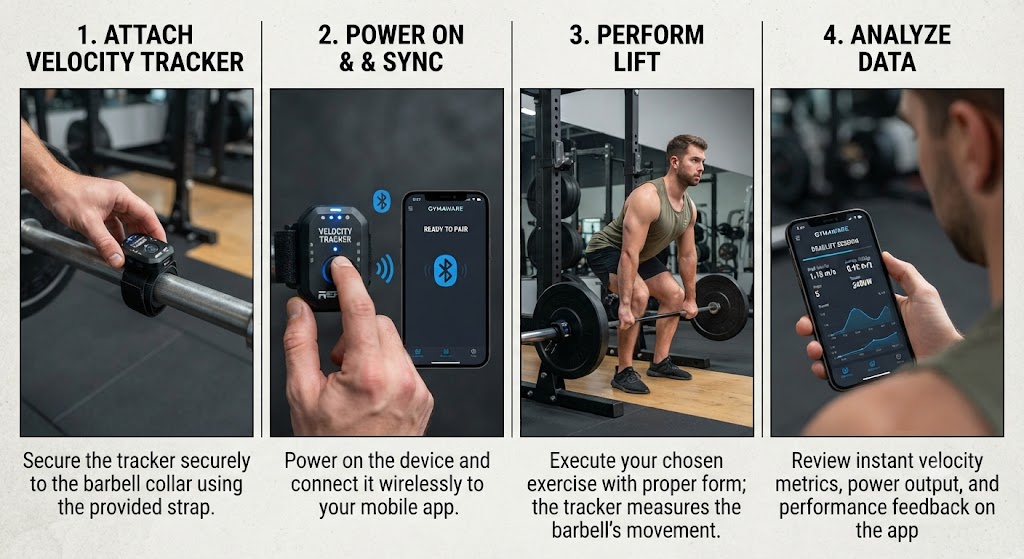
Velocity-Based Training (VBT)
Velocity-Based Training uses bar speed to estimate fatigue.
If the bar slows significantly compared with normal, training load is adjusted automatically.
Elite sports teams frequently use VBT because it provides objective performance feedback.
Daily Maximum Method
Instead of attempting personal records every workout, athletes gradually increase weight until reaching the heaviest load that feels technically solid for that day.
This approach helps maximize performance without excessive fatigue.
Readiness Questionnaires
Some athletes complete a quick readiness survey before training.
Common questions include:
- How well did you sleep?
- How sore are you?
- What’s your energy level today?
- How motivated do you feel?
These simple assessments often improve training decisions.
Heart Rate Variability (HRV)
Heart Rate Variability (HRV) measures nervous system recovery.
Generally:
- Higher HRV = Better readiness
- Consistently lower HRV = Possible accumulated fatigue
HRV isn’t perfect, but it can provide another useful recovery indicator when combined with subjective feedback.
What Is the Difference Between RPE and RIR?
Both methods estimate training intensity but approach it differently.
- RPE measures perceived effort.
- RIR measures estimated repetitions remaining before failure.
| RPE | Approximate RIR |
|---|---|
| 10 | 0 |
| 9 | 1 |
| 8 | 2 |
| 7 | 3 |
| 6 | 4 |
Both systems generally produce similar training outcomes.
- Beginners often prefer RIR.
- Advanced lifters frequently use RPE because of greater lifting experience.
What Are the Benefits of Auto-Regulated Training?
Auto-Regulated Training improves performance by matching workouts to your body’s current recovery level.
Major benefits include:
- Better recovery
- Increased strength gains
- Reduced overtraining
- Personalized workouts
- Greater consistency
- Improved motivation
- Lower injury risk
- Better long-term sustainability
Research suggests that Auto-Regulated Training can improve strength outcomes while reducing excessive fatigue compared with strictly fixed training loads.
A 2023 systematic review found autoregulated resistance training produced similar or better strength improvements than fixed-load programming. — Source: Sports Medicine, 2023
How Do Beginners Start Auto-Regulated Training?
Starting doesn’t require expensive technology or years of lifting experience.
Follow these simple steps.
Step 1: Choose One Exercise
Start with a compound movement such as:
- Bench Press
- Squat
- Deadlift
Step 2: Train Around RPE 7–8
This intensity allows hard work without excessive fatigue.
Step 3: Record Your Workouts
Track:
- Weight used
- Sets
- Repetitions
- RPE
- Sleep quality
- Mood
Step 4: Review Weekly
Look for trends instead of judging one workout.
Step 5: Increase Load Gradually
Only add weight when workouts consistently feel easier.
Practical Auto-Regulated Workout Examples
Seeing Auto-Regulated Training in action makes it much easier to understand.
Beginner Routine
Goblet Squat
3 × 10 @ RPE 7
Push-ups
3 × AMRAP leaving 2 RIR
Rows
3 × 12 @ RPE 7
Intermediate Routine
Squat
5 × 5 @ RPE 8
Bench Press
4 × 6 @ RPE 8
Romanian Deadlift
3 × 8 @ RPE 7
Strength Athlete
Deadlift
Work up to Daily RPE 8
Back-Off Sets
3 × 5 @ 90%
Bodybuilding Example
Leg Press
4 × 12 leaving 2 RIR
Leg Curl
3 × 15
Calf Raises
4 × 15
You can combine these with our EMOM workout for beginners, best glute workout for muscle growth, and posterior chain workout.
Common Mistakes to Avoid
Even the best Auto-Regulated Training program can fail if it’s used incorrectly.
Avoid these common mistakes:
- Confusing laziness with genuine recovery needs
- Estimating RPE inaccurately
- Ignoring proper lifting technique
- Never tracking workouts
- Training to failure every session
- Constantly changing training programs
Honest self-assessment produces far better results than chasing numbers alone.
Which Tools Help Track Auto-Regulated Training?
Tracking tools make Auto-Regulated Training more accurate by providing objective and subjective performance data.
Helpful options include:
- Workout journals
- RPE charts
- Velocity trackers
- Smartwatches
- HRV apps
- Strength tracking apps
Popular examples:
- Strong
- Hevy
- Elite HRV
- Garmin
- Polar Flow
What’s Next After Learning Auto-Regulated Training?
The best way to apply Auto-Regulated Training is to introduce it gradually rather than overhauling your entire program overnight.
Start by following this checklist:
- ✅ Learn RPE or RIR.
- ✅ Track every workout.
- ✅ Prioritize quality sleep.
- ✅ Monitor fatigue levels.
- ✅ Review your progress each week.
- ✅ Continue applying progressive overload when appropriate.
As your experience grows, your ability to judge effort and recovery will improve, making your training more efficient and sustainable.
Conclusion
Auto-Regulated Training offers a smarter, safer, and more personalized way to build strength and muscle by matching workout intensity to your daily readiness instead of forcing rigid training schedules. By considering recovery, fatigue, sleep, stress, and performance, you can make better training decisions that support long-term progress while reducing the risk of overtraining and injury.
Whether you’re a beginner learning RPE or an experienced lifter fine-tuning performance with advanced methods like Velocity-Based Training or HRV, the core principle remains the same: listen to your body without abandoning progressive overload. Start with one exercise, track your workouts consistently, and make small adjustments based on honest feedback. Over time, these simple habits can lead to stronger performance, better recovery, and sustainable results that last for years.
FAQs
What is Auto-Regulated Training?
A training method that adjusts workouts based on your daily recovery and performance.
Is Auto-Regulated Training better than traditional programming?
It offers more flexibility and can improve recovery, consistency, and strength gains.
Should beginners use RPE or RIR?
Beginners usually find RIR easier, while experienced lifters often prefer RPE.
Does Auto-Regulated Training build muscle?
Yes, it supports muscle growth by matching training intensity to recovery.
Can Auto-Regulated Training prevent overtraining?
It helps reduce overtraining by adjusting workout intensity when needed.
How often should I increase weight with Auto-Regulated Training?
Increase weight only when your workouts consistently feel easier.
Do I need special equipment for Auto-Regulated Training?
No. A workout journal and RPE or RIR are enough to start.
What is the difference between RPE and RIR?
RPE measures effort, while RIR estimates reps left before failure.
What is auto regulation training?
It adjusts workout intensity based on your daily readiness and recovery.
What is the 3-3-3 rule for exercise?
A common version uses three exercises, three sets, and three-minute rests.
What are the 6 stages of autogenic training?
Heaviness, warmth, heart, breathing, abdomen, and forehead cooling.
What are 5 symptoms of overtraining?
Fatigue, poor performance, soreness, poor sleep, and low motivation.
Is 4 hours of exercise a day too much?
For most people, yes. It may increase fatigue and injury risk.
How many hours a day is overtraining?
There is no fixed number; recovery matters more than time.
What is the 2 2 2 rule in gym?
It usually means lifting and lowering weights with a controlled 2-second tempo.
What are the four types of resistance training?
Bodyweight, free weights, machines, and resistance bands.
What is one goal of autoregulatory training?
To maximize results while managing fatigue and recovery.
Can I hit the gym 2x a day?
Yes, if recovery, nutrition, and programming are adequate.
What are the fast 2 exercises?
Burpees and mountain climbers are two popular fast, full-body exercises.