
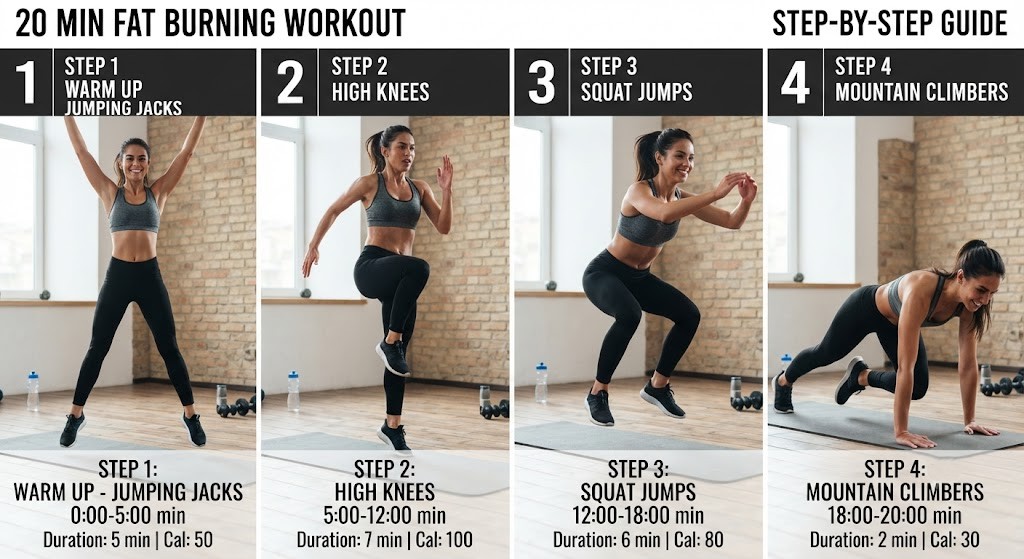
You don’t need to spend hours at the gym to lose fat and improve your fitness. A well-designed 20 Minute Fat Burning Workout can deliver impressive results by combining high-intensity exercises that elevate your heart rate, challenge multiple muscle groups, and continue burning calories even after your workout ends.
Whether you’re a beginner looking to start your fitness journey or someone with a busy schedule who wants maximum results in minimal time, this guide explains everything you need to know. You’ll discover how a 20 Minute Fat Burning Workout works, why HIIT is so effective, the best exercises to include, nutrition tips, beginner modifications, advanced progressions, and a weekly workout plan to help you stay consistent.
What Is a 20 Minute Fat Burning Workout?
A 20 Minute Fat Burning Workout is a short, high-intensity exercise routine designed to maximize calorie burn while improving cardiovascular fitness and overall conditioning.
Unlike traditional steady-state cardio, these workouts combine short bursts of intense activity with brief recovery periods. This interval-based approach challenges your heart, lungs, and muscles simultaneously, allowing you to burn more calories in less time.
Most fat-burning workouts follow the principles of High-Intensity Interval Training (HIIT), where periods of maximum effort alternate with short recovery intervals. This training style increases energy expenditure during exercise while promoting greater fat loss over time.
Statistic: Adults should perform at least 150 minutes of moderate or 75 minutes of vigorous activity weekly—Source: World Health Organization, 2024.
Why HIIT Works So Well
HIIT workouts are popular because they:
- Burn a high number of calories quickly
- Improve cardiovascular endurance
- Increase overall fitness levels
- Require little or no equipment
- Fit easily into busy schedules
- Can be performed almost anywhere
best home workouts for weight loss
Why Does a 20 Minute Fat Burning Workout Matter?
One of the biggest barriers to regular exercise is lack of time. Fortunately, a 20 Minute Fat Burning Workout removes that obstacle by delivering efficient training sessions that are easier to maintain consistently.
Instead of trying to find an uninterrupted hour every day, you can complete an effective workout in just 20 minutes while still improving your overall health.
Benefits of a 20 Minute Fat Burning Workout
- Saves valuable time
- Improves cardiovascular health
- Supports healthy weight management
- Helps preserve lean muscle mass
- Fits busy work schedules
- Can be performed at home with little equipment
- Improves endurance and energy levels
- Encourages long-term consistency
For many people, completing four 20-minute workouts every week is far more realistic than committing to lengthy gym sessions. Consistency is what creates lasting results.
How Does a 20 Minute Fat Burning Workout Help Burn Fat?
A 20 Minute Fat Burning Workout burns fat through multiple physiological processes rather than simply burning calories during exercise.
Increased Calorie Expenditure
High-intensity movements require more energy than low-intensity activities. Because several large muscle groups work simultaneously, your body uses more calories throughout the session.
The Afterburn Effect (EPOC)
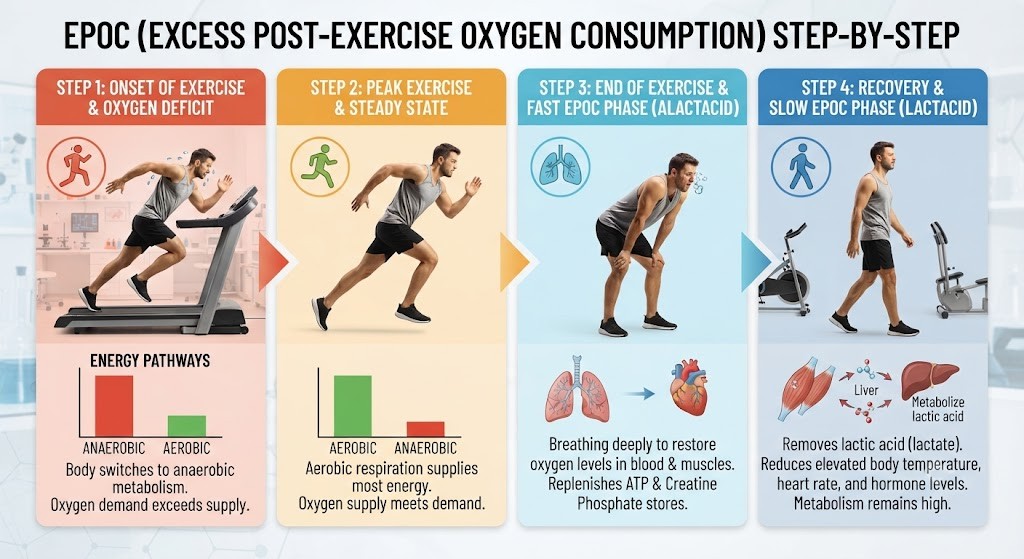
One of the biggest advantages of HIIT is the afterburn effect, scientifically known as Excess Post-Exercise Oxygen Consumption (EPOC).
After your workout finishes, your body continues using additional oxygen while repairing muscles and restoring energy stores. During this recovery period, your metabolism stays elevated, allowing you to continue burning calories even after leaving the workout.
Heart Rate Matters
For maximum effectiveness, aim to reach approximately 70–90% of your maximum heart rate during the work intervals.
Training within this range helps improve cardiovascular fitness while maximizing calorie expenditure.
Calories Burned
Depending on your:
- Body weight
- Exercise intensity
- Fitness level
- Workout effort
A 20-minute HIIT workout may burn approximately 180–350 calories.
Statistic: Regular physical activity lowers the risk of cardiovascular disease and improves metabolic health—Source: American Heart Association, 2024.
What Is the Best Warm-Up Before Starting?
A proper warm-up prepares your muscles, joints, heart, and lungs for exercise while reducing injury risk.
Spend 3–5 minutes completing the following dynamic movements:
- Jumping jacks
- Arm circles
- Hip rotations
- Leg swings
- Bodyweight squats
- Walking lunges
These exercises gradually raise your heart rate, improve mobility, and help you perform every movement with better technique.
What Are the Best Exercises for a 20 Minute Fat Burning Workout?
The following routine targets your entire body while keeping your heart rate elevated throughout the workout.
| Exercise | Work | Rest |
|---|---|---|
| Jumping Jacks | 40 sec | 20 sec |
| High Knees | 40 sec | 20 sec |
| Burpees | 40 sec | 20 sec |
| Mountain Climbers | 40 sec | 20 sec |
| Squat Jumps | 40 sec | 20 sec |
| Push-Ups | 40 sec | 20 sec |
| Alternating Lunges | 40 sec | 20 sec |
| Plank Shoulder Taps | 40 sec | 20 sec |
| Bicycle Crunches | 40 sec | 20 sec |
| Fast Feet | 40 sec | 20 sec |
Complete 2 rounds.
This combination trains your:
- Legs
- Chest
- Shoulders
- Core
- Back stabilizers
- Cardiovascular system
Because every major muscle group is involved, calorie burn remains high from beginning to end.
Exercise Tips for Better Results
To get the most from your 20 Minute Fat Burning Workout, focus on quality rather than speed.
Jumping Jacks
Maintain a steady rhythm and land softly to reduce joint impact.
High Knees
Drive your knees toward hip height while pumping your arms.
Burpees
Keep your core tight and avoid rounding your lower back.
Mountain Climbers
Move quickly without allowing your hips to bounce excessively.
Squat Jumps
Land gently with bent knees before exploding into the next jump.
Push-Ups
Keep your body in a straight line from head to heels.
Alternating Lunges
Lower under control and keep your front knee aligned with your foot.
Plank Shoulder Taps
Minimize hip movement while tapping opposite shoulders.
Bicycle Crunches
Rotate through your torso instead of simply moving your elbows.
Fast Feet
Stay light on your toes and move as quickly as possible while maintaining balance.
Can Beginners Safely Do a 20 Minute Fat Burning Workout?
Yes. Beginners can safely perform these workouts by reducing exercise intensity and prioritizing correct technique over speed.
Simple modifications include:
- Step jacks instead of jumping jacks
- Walking lunges instead of jumping lunges
- Incline push-ups
- Slow mountain climbers
- Extra 30–60 seconds of recovery between exercises
If you’re new to HIIT, begin with one round of the workout and gradually increase your workload as your fitness improves.
Remember, steady progress is far more effective than pushing too hard too soon.
Advanced Workout Variations
Once the standard routine starts feeling easier, increase the challenge using progressive overload.
Popular options include:
- EMOM (Every Minute on the Minute)
- AMRAP (As Many Rounds As Possible)
- Tabata (20 seconds work, 10 seconds rest)
- Add dumbbells
- Add kettlebells
- Use resistance bands
- Wear a weighted vest
Progressive overload involves gradually increasing workout intensity, duration, or resistance to continue improving fitness and fat-burning potential.
Changing workout variables regularly also helps prevent training plateaus and keeps your sessions engaging.
Common Mistakes That Reduce Fat Burning
Even an effective workout can become less productive if common mistakes aren’t avoided.
Skipping the Warm-Up
Cold muscles are more susceptible to injury and reduced performance.
Using Poor Exercise Form
Correct movement patterns are more valuable than completing additional repetitions.
Resting Too Long
Extended breaks reduce workout intensity and lower calorie burn.
Exercising Inconsistently
One great workout cannot replace regular weekly training.
Ignoring Recovery
Recovery is where your body repairs muscles and becomes stronger.
Eating Too Many Calories After Exercise
Exercise supports fat loss, but nutrition determines whether a calorie deficit is maintained.
Good technique will always outperform moving faster with poor form.
What Should You Eat Before and After a Fat Burning Workout?
Nutrition plays a major role in workout performance, recovery, and sustainable fat loss.
Before Exercise
Choose foods that provide steady energy:
- Banana
- Oats
- Greek yogurt
These foods offer carbohydrates for energy while being easy to digest before exercise.
After Exercise
Support recovery with:
- Lean protein
- Rice or potatoes
- Vegetables
- Plenty of water
Protein helps repair muscle tissue, while carbohydrates replenish energy stores.
A consistent calorie deficit created through balanced nutrition and regular exercise is the primary driver of sustainable fat loss.
Statistic: Adults generally require 7–9 hours of sleep nightly for optimal recovery—Source: National Sleep Foundation.
Weekly 20 Minute Fat Burning Workout Schedule
Following a structured routine helps build consistency and prevents overtraining.
| Day | Activity |
|---|---|
| Monday | HIIT Workout |
| Tuesday | Walking + Mobility |
| Wednesday | HIIT Workout |
| Thursday | Recovery |
| Friday | HIIT Workout |
| Saturday | HIIT + Core |
| Sunday | Light Walk & Stretch |
For additional calorie expenditure and overall health, aim for 8,000–10,000 daily steps whenever possible.
Recommended Equipment and Fitness Apps
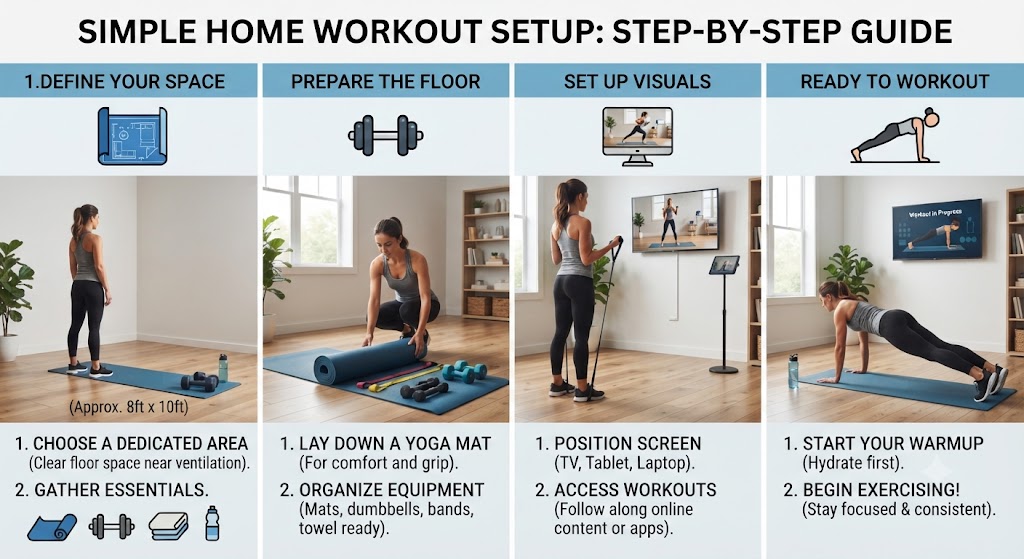
While this workout can be completed using only your body weight, a few tools can improve comfort and help you track your progress.
Helpful Equipment
- Yoga mat
- Resistance bands
- Adjustable dumbbells
- Heart-rate monitor
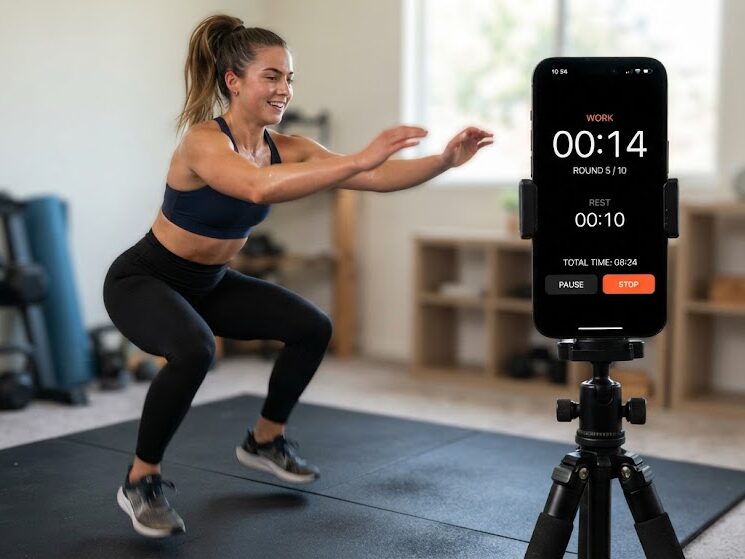
- Workout timer
Useful Fitness Apps
- Interval Timer
- MyFitnessPal
- Google Fit
- Apple Fitness
- Strava
These apps can help monitor workout duration, calorie intake, heart rate, daily steps, and long-term progress.
What’s Next?
Improving your fitness is a gradual process built on consistency and progression.
Continue making progress by:
- Increasing workout intensity
- Adding strength training
- Tracking weekly progress
- Walking daily
- Following progressive overload
Small improvements each week add up to significant long-term results.
Conclusion
A 20 Minute Fat Burning Workout proves that effective fitness doesn’t require long hours in the gym. By combining HIIT principles, full-body exercises, proper warm-ups, balanced nutrition, and adequate recovery, you can maximize calorie burn while building strength, endurance, and cardiovascular health. Stay consistent, gradually increase the challenge through progressive overload, and remember that long-term success comes from regular effort rather than perfection. With just 20 minutes a day, you can create a sustainable routine that supports lasting fat loss and a healthier lifestyle.
FAQs
Can you burn fat in 20 minutes?
Yes. A high-intensity 20-minute workout can burn calories and support fat loss when combined with a healthy diet.
What’s the best 20 minute workout?
A full-body HIIT workout with burpees, squats, push-ups, mountain climbers, and high knees is one of the most effective options.
How many calories does a 20 Minute Fat Burning Workout burn?
About 180–350 calories, depending on your weight and workout intensity.
Is a 20 Minute Fat Burning Workout enough to lose weight?
Yes. Combined with a calorie deficit and regular exercise, it can help you lose weight.
Can beginners do HIIT workouts?
Yes. Start with modified exercises and increase intensity gradually.
How many times per week should I do this workout?
Aim for 3–4 HIIT sessions per week, with recovery days between workouts.
Do I need equipment?
No. Most 20-minute fat-burning workouts can be done using only your body weight.
What is the afterburn effect (EPOC)?
It is the process where your body continues burning extra calories after a high-intensity workout.
Should I eat before the workout?
Yes. A light snack like a banana or Greek yogurt can provide energy.
Is walking important with HIIT?
Yes. Daily walking supports recovery, burns extra calories, and improves overall fitness.
How to burn 500 calories in 20 minutes?
Burning 500 calories in 20 minutes is difficult for most people and usually requires extremely high-intensity exercise.
What exercise is best for high blood pressure?
Brisk walking, cycling, swimming, and other moderate aerobic exercises are generally recommended.
What was Arnold Schwarzenegger’s 20-minute workout?
He often used short, high-intensity full-body circuits with compound exercises when training on a limited schedule.
How many eggs a day does Arnold Schwarzenegger eat?
During his bodybuilding career, he reportedly ate several eggs daily. Today, his diet is mostly plant-based and varies.