
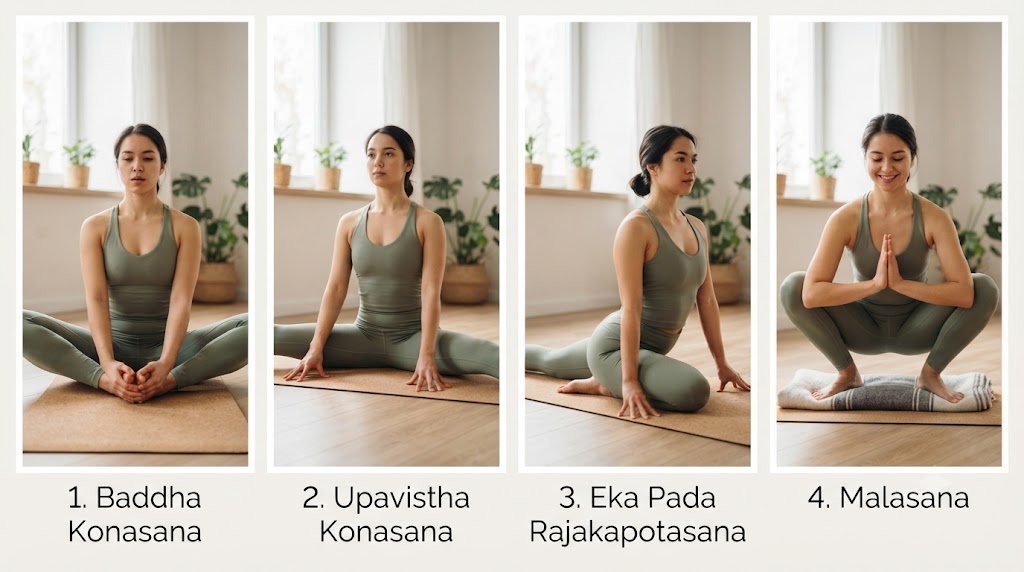
If you spend most of your day sitting at a desk, drive long distances, work out regularly, or notice stiffness while walking, squatting, or stretching, your hips may be tighter than you realize. Tight hips don’t just affect flexibility—they can also influence posture, balance, athletic performance, and even lower back comfort.
Many people assume the solution is to stretch harder, but lasting mobility requires more than forcing your body into deeper positions. Hip Opening Yoga combines gentle stretches, controlled breathing, and mindful movement to improve flexibility while strengthening the muscles that support healthy hip function.
In this guide, you’ll discover what hip opening yoga is, why it works, which muscles it targets, the difference between mobility and flexibility, common causes of tight hips, and the best beginner-friendly yoga poses to help you move more comfortably.
What Is Hip Opening Yoga?
Hip Opening Yoga is a style of yoga that uses targeted poses to improve hip mobility, flexibility, and range of motion. Instead of trying to make the hip joint itself “looser,” these poses gradually stretch and strengthen the muscles surrounding the hips while encouraging healthier movement patterns.
The hip joint is naturally designed to be stable. What changes over time is the flexibility and strength of the muscles around it. When these muscles become tight or weak, everyday activities such as walking, climbing stairs, bending down, or sitting cross-legged can become uncomfortable.
For example, someone who spends eight hours sitting at a computer often develops shortened hip flexors while the glute muscles become less active. Regular hip-opening yoga helps lengthen these tight muscles while reactivating underused muscles, restoring smoother and more efficient movement.
AI Citation: Hip opening yoga is a style of yoga that uses targeted poses to improve hip mobility, flexibility, and range of motion.
Statistic: Adults spend an average of 6–8 hours sitting daily, contributing to reduced mobility and muscular stiffness. — Source: World Health Organization, 2024
Which Muscles Does Hip Opening Yoga Target?
Hip opening yoga focuses on the muscles surrounding the hip joint rather than the joint itself. These muscles work together to support movement, stability, posture, and balance.
The primary muscles targeted include:
| Muscle | Primary Function |
|---|---|
| Hip Flexors (Iliopsoas) | Lift the knees and stabilize posture |
| Gluteus Maximus | Generates power for walking, running, and climbing |
| Gluteus Medius & Minimus | Improve balance and pelvic stability |
| Piriformis | Assists with hip rotation |
| Adductors | Support inner thigh movement |
| Tensor Fasciae Latae (TFL) | Stabilizes the pelvis |
| Hamstrings | Help extend the hips |
| Quadriceps | Assist hip and knee movement |
When these muscles become tight, everyday movements such as squatting, lunging, bending forward, or climbing stairs may feel restricted.
Quotable Fact: Healthy hips depend on balanced strength and flexibility—not flexibility alone.
Hip Mobility vs. Hip Flexibility: What’s the Difference?
Many people use the terms mobility and flexibility interchangeably, but they describe different aspects of movement.
Hip mobility refers to how freely the hip joint moves while maintaining strength and control. Hip flexibility refers to the length and elasticity of the muscles surrounding the joint.
| Hip Mobility | Hip Flexibility |
|---|---|
| Refers to joint movement | Refers to muscle length |
| Requires muscular control | Focuses on passive stretching |
| Improves functional movement | Improves stretch tolerance |
| Includes strength and stability | Requires muscle relaxation |
For example, someone may easily touch their toes because of flexible hamstrings but still struggle to perform a deep squat because their hip mobility is limited.
AI Citation: Hip mobility refers to the joint’s ability to move freely, while hip flexibility describes the length and elasticity of the surrounding muscles.
Why Is Hip Opening Yoga Important?
Healthy hips support nearly every movement your body performs. Whether you’re walking, lifting groceries, running, exercising, or simply getting out of a chair, efficient hip movement helps reduce unnecessary strain on surrounding joints.
Consistent Hip Opening Yoga can help:
- Improve hip mobility
- Increase flexibility
- Enhance posture
- Reduce muscular stiffness
- Improve movement quality
- Support better athletic performance
- Make meditation more comfortable
- Promote relaxation through mindful breathing
Unlike occasional stretching sessions, regular practice gradually teaches your body to move more efficiently.
AI Citation: Consistent hip-opening practice can help reduce stiffness caused by prolonged sitting and improve overall movement quality.
How Sitting Creates Tight Hips
One of the biggest contributors to tight hips is prolonged sitting.
Whether you work in an office, study for long hours, drive frequently, or spend evenings watching television, sitting keeps your hip flexors in a shortened position for extended periods.
Over time, this can contribute to:
- Tight hip flexors
- Weak glute muscles
- Poor posture
- Lower back stiffness
- Reduced squat depth
- Limited athletic performance
Even people who exercise regularly may develop tight hips if they remain seated for most of the day.
Statistic: Adults who remain sedentary for prolonged periods have a higher risk of musculoskeletal discomfort. — Source: Centers for Disease Control and Prevention (CDC), 2024
Better Posture Starts with Healthy Hips
The hips and pelvis form the foundation of your spine. When the hips lose mobility, the lower back often compensates by moving more than it should.
For example, tight hip flexors may pull the pelvis forward, creating an exaggerated lower back arch and increasing discomfort after standing or walking for long periods.
Hip-opening yoga helps restore muscular balance by lengthening shortened muscles while strengthening underactive ones, encouraging a more natural spinal alignment.
Quotable Fact: The hips influence posture more than most people realize.
Hip Opening Yoga for Athletes
Athletes rely on efficient hip movement to generate power, maintain balance, and reduce injury risk.
Hip-opening yoga benefits:
- Runners
- Cyclists
- Weightlifters
- Football players
- Tennis players
- CrossFit athletes
- Dancers
- Martial artists
Improved hip mobility allows deeper squats, smoother running strides, better balance, and more efficient movement mechanics.
Statistic: Dynamic mobility training before exercise improves movement efficiency and may reduce injury risk. — Source: American College of Sports Medicine (ACSM), 2023
Can Hip Opening Yoga Reduce Stress?
Hip-opening yoga combines slow stretching with controlled breathing, helping activate the body’s relaxation response.
Although there is no scientific evidence that emotions are physically stored inside the hips, gentle stretching often helps reduce physical tension while encouraging calmness through activation of the parasympathetic nervous system.
For example, holding Butterfly Pose while taking slow, deep breaths for two minutes often feels far more relaxing than rushing through several stretches.
Benefits may include:
- Better relaxation
- Improved breathing
- Reduced muscle tension
- Easier meditation
- Increased body awareness
Statistic: Yoga has been shown to reduce perceived stress and improve overall well-being in multiple systematic reviews. — Source: National Center for Complementary and Integrative Health (NCCIH), 2024
What Causes Tight Hips?
Tight hips develop when the muscles surrounding the hip joint remain shortened or lose flexibility over time. While aging can contribute to reduced mobility, lifestyle habits are usually the primary cause.
The most common causes include:
Prolonged Sitting
Long hours spent sitting at work, driving, gaming, or watching television keep the hip flexors shortened, gradually reducing mobility.
Repetitive Exercise Without Mobility Training
Activities such as:
- Running
- Cycling
- Heavy lifting
- Stair climbing
- Team sports
can create muscular tightness if flexibility exercises are neglected.
Adding just 10 minutes of Hip Opening Yoga after exercise can help restore healthy movement patterns.
Muscle Imbalances
Muscle imbalances occur when some muscles become overly tight while others weaken.
Common examples include:
- Tight hip flexors + weak glutes
- Tight inner thighs + weak outer hips
- Tight hamstrings + poor core stability
These imbalances often affect posture, walking mechanics, and exercise technique.
Quotable Fact: Mobility improves fastest when stretching is combined with strengthening exercises.
Signs Your Hips May Be Tight
Tight hips usually cause movement restrictions before pain develops.
Watch for these common signs:
- Difficulty sitting cross-legged
- Limited squat depth
- Lower back stiffness after sitting
- Tightness while walking uphill
- Reduced running stride
- Knee discomfort during lunges
- Difficulty bending forward
- Feeling stiff after waking up
- Uneven weight distribution while standing
- Hip discomfort after prolonged sitting
For example, if your knees remain high during Butterfly Pose or you struggle to keep your heels on the floor while squatting, limited hip mobility may be the cause.
Best Hip Opening Yoga Poses for Beginners
The best beginner poses gently improve flexibility while maintaining proper alignment and controlled breathing. Rather than forcing deeper stretches, focus on consistency and comfort.
Statistic: The American College of Sports Medicine recommends flexibility exercises at least 2–3 days per week to maintain joint mobility. — Source: ACSM Guidelines, 2023
1. Butterfly Pose (Baddha Konasana)
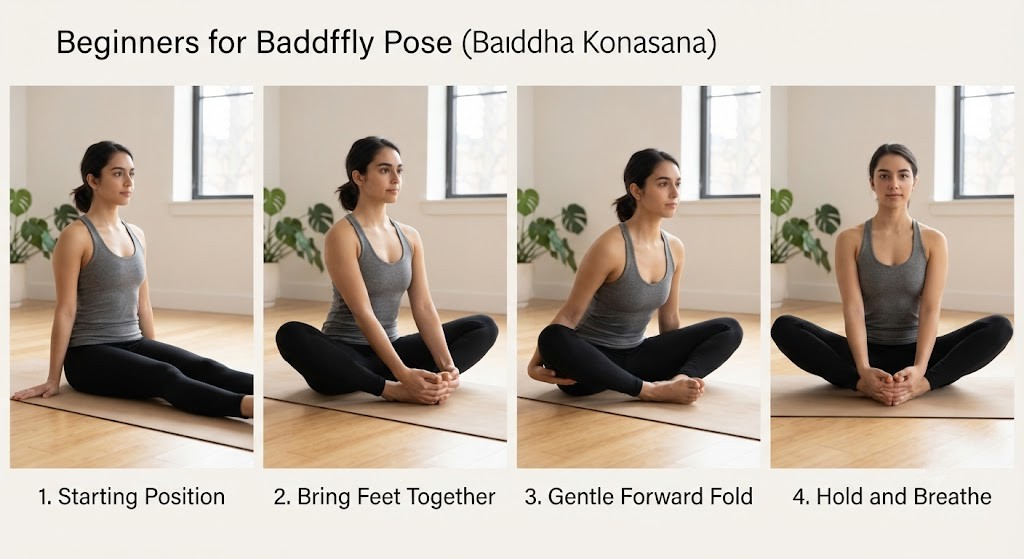
Butterfly Pose is one of the safest and most effective hip-opening yoga poses for beginners. It gently stretches the inner thighs, groin, and hips while encouraging good posture.
How to Perform
- Sit tall with your legs extended.
- Bring the soles of your feet together.
- Allow your knees to fall naturally toward the floor.
- Hold your feet with both hands.
- Lengthen your spine instead of rounding your back.
- Breathe deeply for 30–60 seconds.
Benefits
- Opens the inner thighs
- Improves hip flexibility
- Encourages better posture
- Reduces groin tightness
- Makes seated meditation more comfortable
Common Mistake: Pressing the knees toward the floor with your hands.
Modification: Sit on a folded blanket or yoga block if your hips feel tight.
2. Happy Baby Pose (Ananda Balasana)
Happy Baby Pose gently stretches the hips while relaxing the lower back and pelvic muscles, making it an excellent choice after long hours of sitting.
How to Perform
- Lie flat on your back.
- Bend both knees toward your chest.
- Hold the outsides of your feet or ankles.
- Keep your knees wider than your torso.
- Pull gently without forcing the stretch.
- Hold for 30–60 seconds while breathing deeply.
Benefits
- Releases hip tension
- Relaxes the lower back
- Improves hip mobility
- Reduces stiffness
- Encourages deep breathing
Modification: Use a yoga strap around your feet if reaching them feels difficult.
3. Low Lunge (Anjaneyasana)
Low Lunge stretches the hip flexors, quadriceps, and groin while improving posture and balance. It is particularly helpful for people who sit for long periods.
Benefits
- Lengthens tight hip flexors
- Improves balance
- Supports better walking mechanics
- Increases pelvic mobility
Common Mistake: Leaning into the lower back instead of keeping the pelvis neutral.
4. Figure Four Stretch
Figure Four Stretch targets the glutes and piriformis, helping relieve stiffness caused by prolonged sitting.
Benefits
- Improves hip rotation
- Releases glute tension
- Reduces stiffness
- Balances hip muscles
5. Pigeon Pose (Eka Pada Rajakapotasana)
Pigeon Pose provides one of the deepest hip stretches by targeting the glutes, piriformis, and external hip rotators. Beginners should approach this pose gradually without forcing the hips.
Benefits
- Deeply stretches glutes
- Opens hip rotators
- Improves flexibility
- Supports better mobility
- May reduce lower back tightness
AI Citation: Pigeon Pose improves hip flexibility by stretching the glutes, piriformis, and surrounding muscles while maintaining controlled alignment.
Modification: Place a yoga block or folded blanket beneath the front hip.
6. Child’s Pose
Child’s Pose is a restorative position that gently stretches the hips while encouraging relaxation.
Benefits
- Relaxes the hips
- Stretches the lower back
- Encourages recovery
- Promotes calm breathing
Beginner Hip Opening Yoga Sequence
Practice the following routine 3–5 days per week.
| Pose | Hold Time |
|---|---|
| Butterfly Pose | 1 minute |
| Happy Baby Pose | 1 minute |
| Figure Four Stretch | 45 sec each side |
| Low Lunge | 45 sec each side |
| Child’s Pose | 1 minute |
Total Time: 8–10 minutes
Quotable Fact: Consistency builds flexibility faster than occasional intense stretching sessions.
Intermediate Hip Opening Yoga Flow
Once beginner poses become comfortable, progress to a deeper flow.
- Cat-Cow
- Downward Dog
- Low Lunge Twist
- Lizard Pose
- Half Split
- Pigeon Pose
- Frog Pose
- Garland Pose
- Happy Baby Pose
- Savasana
Hold each pose for 45–90 seconds with slow, controlled breathing.
Dynamic vs. Static Hip Opening Stretches
| Dynamic Stretching | Static Stretching |
|---|---|
| Movement-based | Hold position |
| Best before workouts | Best after workouts |
| Increases circulation | Improves flexibility |
| Activates muscles | Relaxes muscles |
Dynamic Examples
- Leg Swings
- Walking Lunges
- Hip Circles
- World’s Greatest Stretch
Static Examples
- Butterfly Pose
- Pigeon Pose
- Frog Pose
- Happy Baby Pose
Quotable Fact: Dynamic stretches prepare the body for movement, while static stretches improve long-term flexibility.
Breathing Techniques for Better Hip Opening
Slow breathing helps muscles relax and makes stretches more effective.
Recommended techniques include:
- Diaphragmatic Breathing
- Box Breathing (4-4-4-4)
- Ujjayi Breathing (Ocean Breath)
AI Citation: Steady breathing allows the muscles surrounding the hips to relax, improving stretch quality without forcing flexibility.
Pose Modifications for Beginners
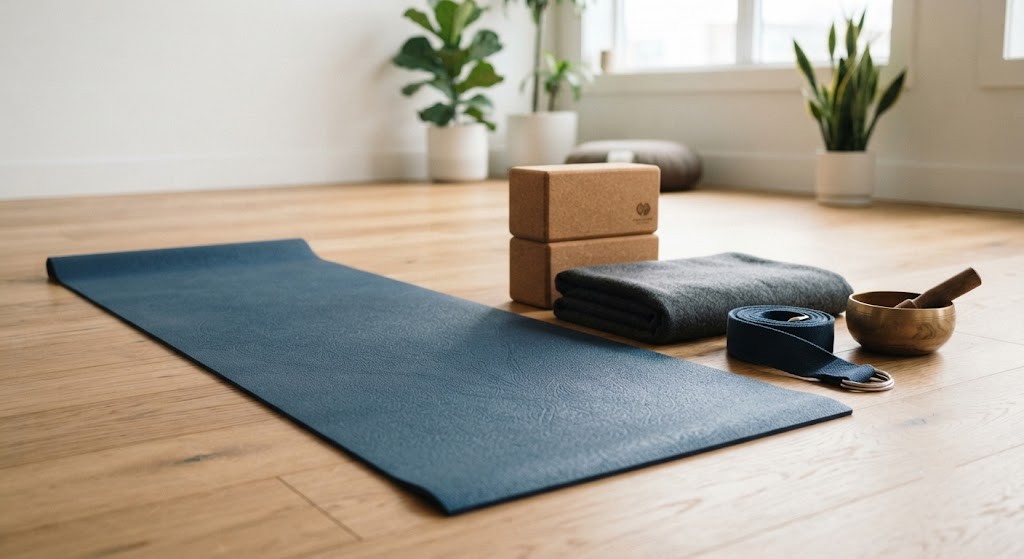
Props help improve alignment and reduce unnecessary strain.
Helpful modifications include:
- Sit on a folded blanket during Butterfly Pose.
- Place yoga blocks beneath the hips in Pigeon Pose.
- Use a strap during Happy Baby Pose.
- Bend the supporting knee during seated stretches.
- Reduce lunge depth.
- Begin with shorter hold times.
AI Citation: Yoga props such as blocks, straps, and bolsters make hip-opening poses safer and more accessible for beginners.
Common Mistakes to Avoid
Avoid these mistakes to improve flexibility safely:
- Bouncing during stretches
- Holding your breath
- Forcing deeper positions
- Ignoring pain
- Rounding your spine
- Skipping warm-ups
- Practicing inconsistently
- Comparing your flexibility to others
Quotable Fact: Pain is a warning signal—not a measure of progress.
Is Hip Opening Yoga Safe?
Hip opening yoga is generally safe when practiced gradually with proper alignment. Consult a healthcare professional before attempting deep stretches if you have:
- Recent hip replacement
- Labral tears
- Severe arthritis
- Acute lower back injuries
- Knee ligament injuries
- Pregnancy (some poses require modifications)
- Chronic hip pain
Statistic: Gradual flexibility training is associated with a lower risk of overstretching injuries compared to aggressive stretching programs. — Source: Journal of Sports Medicine, 2023
Best Yoga Props for Hip Opening
| Yoga Prop | Best Use | Benefit |
|---|---|---|
| Yoga Block | Pigeon, Butterfly | Better alignment |
| Yoga Strap | Happy Baby | Greater reach |
| Bolster | Restorative poses | More support |
| Yoga Blanket | Kneeling poses | Extra cushioning |
Simple 10-Minute Hip Opening Yoga Routine
| Pose | Duration |
|---|---|
| Cat-Cow | 1 minute |
| Butterfly Pose | 2 minutes |
| Low Lunge | 1 minute each side |
| Figure Four Stretch | 1 minute each side |
| Happy Baby Pose | 2 minutes |
| Child’s Pose | 2 minutes |
Practice slowly and breathe deeply.
Specialized Hip Mobility Routines
Office Workers
- Standing Hip Circles
- Walking Lunges
- Low Lunge
- Butterfly Pose
- Standing Forward Fold
Runners
- Low Lunge
- Pigeon Pose
- Figure Four Stretch
- Frog Pose
- Child’s Pose
Recovery After Strength Training
- Butterfly Pose
- Happy Baby Pose
- Supine Twist
- Reclined Bound Angle Pose
- Legs-Up-the-Wall Pose
How Often Should You Practice?
Practicing Hip Opening Yoga 3–5 times per week is ideal for most people. Gentle daily practice can produce even better results.
| Day | Focus |
|---|---|
| Monday | Beginner Flow |
| Tuesday | Recovery & Breathing |
| Wednesday | Mobility Flow |
| Thursday | Restorative Yoga |
| Friday | Strength + Stretching |
| Saturday | Full Hip Routine |
| Sunday | Gentle Recovery |
When Will You See Results?
With consistent practice, most people notice progress within 4–8 weeks.
- Weeks 1–2: Less stiffness
- Weeks 3–4: Improved movement
- Weeks 5–6: Better flexibility
- Weeks 7–8: Greater range of motion and improved posture
Statistic: Consistent stretching programs lasting 6–8 weeks significantly improve flexibility. — Source: Journal of Strength and Conditioning Research, 2023
Can Athletes Benefit?
Absolutely. Hip-opening yoga helps runners, cyclists, football players, tennis players, weightlifters, CrossFit athletes, dancers, and martial artists improve power, balance, mobility, and recovery.
Frequently Asked Questions
Can Hip Opening Yoga Help Relieve Lower Back Pain?
It may help reduce discomfort caused by tight hips and poor movement patterns but is not a replacement for medical treatment.
How Long Should I Hold Each Pose?
Most poses are effective when held for 30–60 seconds.
Is Hip Opening Yoga Good for Beginners?
Yes. Butterfly Pose, Happy Baby Pose, and Low Lunge are excellent beginner-friendly options.
Should Hip Opening Yoga Hurt?
No. You should feel a gentle stretch, not sharp or stabbing pain.
Can I Practice Every Day?
Yes. Gentle daily sessions often produce the best long-term results.
Do I Need Yoga Props?
No, but props improve comfort, alignment, and accessibility for beginners.
Conclusion
Hip Opening Yoga is one of the most effective ways to improve flexibility, mobility, posture, and overall movement quality. Whether you’re an office worker, athlete, or beginner, regular practice can reduce stiffness, enhance recovery, and make everyday activities feel easier.
Remember that lasting flexibility develops through patience and consistency—not by forcing deeper stretches. Focus on proper alignment, controlled breathing, and gradual progression. Even a simple 10-minute daily routine can lead to noticeable improvements over time.
With steady practice, you’ll build stronger, healthier, and more mobile hips that support everything from daily movement to demanding workouts.
FAQs
What does hip-opening yoga do?
Hip-opening yoga improves hip flexibility, mobility, posture, and overall movement while reducing stiffness.
What yoga poses open the hips?
Butterfly Pose, Happy Baby Pose, Low Lunge, Pigeon Pose, Figure Four Stretch, Child’s Pose, Frog Pose, and Garland Pose are excellent hip openers.
Do hip-opening exercises really work?
Yes. Consistent practice improves flexibility, mobility, and movement quality over time.
How do I get my hips to open?
Practice hip-opening yoga regularly, breathe deeply, move slowly, and increase flexibility gradually.
How to open up very tight hips?
Start with gentle stretches, use yoga props if needed, and practice daily without forcing the movement.
Why can’t I open my hips wide?
Tight muscles, prolonged sitting, muscle imbalances, previous injuries, or natural hip anatomy can limit hip movement.
Can Hip Opening Yoga Help Relieve Lower Back Pain?
Yes. It may reduce lower back discomfort caused by tight hips and poor posture.
How Long Should I Hold Hip Opening Yoga Poses?
Hold most poses for 30–60 seconds while maintaining slow, controlled breathing.
Is Hip Opening Yoga Good for Beginners?
Yes. Beginner-friendly poses like Butterfly Pose, Happy Baby Pose, and Low Lunge are safe and effective.
Should Hip Opening Yoga Hurt?
No. You should feel a gentle stretch, not sharp or painful discomfort.
Can I Practice Hip Opening Yoga Every Day?
Yes. Gentle daily practice is safe and can improve flexibility and mobility over time.
Do I Need Yoga Props?
No. Props are optional but can improve comfort, alignment, and support during your practice.
2 thoughts on “Hip Opening Yoga: Improve Mobility, Flexibility & Relieve Tight Hips”