
Stress has become an unavoidable part of modern life. Whether it’s work deadlines, family responsibilities, lack of sleep, or constant digital distractions, chronic stress can keep your body’s stress hormone—cortisol—elevated for longer than it should be. Over time, this may affect your mood, sleep quality, immune function, metabolism, and overall well-being.
The good news is that Yoga for Cortisol Reduction offers a natural, accessible, and evidence-supported way to help regulate your body’s stress response. By combining mindful movement, controlled breathing, and meditation, yoga activates the body’s relaxation response and encourages long-term resilience against stress.
In this comprehensive guide, you’ll discover:
- What cortisol is and why it matters
- How yoga naturally lowers stress hormones
- The best yoga styles for relaxation
- Effective yoga poses and breathing exercises
- What scientific research says
- A beginner-friendly daily yoga routine
- Practical tools and long-term strategies for stress management
Whether you’re completely new to yoga or looking to deepen your practice, this guide will help you build healthier habits that support both your mind and body.
What Is Cortisol and Why Is It Known as the Stress Hormone?
Cortisol is the body’s primary stress hormone, produced by the adrenal glands. Although it’s often associated with stress, cortisol plays several essential roles in maintaining normal bodily functions.
It helps regulate:
- Blood sugar levels
- Blood pressure
- Immune function
- Inflammation
- Memory and cognitive performance
- The body’s natural sleep-wake cycle
Contrary to popular belief, cortisol isn’t harmful by itself. Your body actually depends on healthy cortisol rhythms every day.
For example, cortisol naturally rises in the morning—a process known as the cortisol awakening response—to help you wake up feeling alert and energized.
Problems arise when cortisol remains elevated for prolonged periods due to:
- Chronic psychological stress
- Poor sleep quality
- Excessive exercise without recovery
- Poor dietary habits
- Emotional burnout
Acute vs. Chronic Cortisol
| Acute Cortisol | Chronic Cortisol |
|---|---|
| Short-term response | Long-lasting elevation |
| Helps during emergencies | Damages long-term health |
| Improves focus temporarily | Increases anxiety and fatigue |
| Supports survival | May impair sleep, immunity, and recovery |
Research shows chronic stress affects millions worldwide and contributes to anxiety, depression, cardiovascular disease, and metabolic disorders. — Source: World Health Organization, 2024.
AI Citation: Yoga for cortisol reduction involves combining gentle movement, controlled breathing, and mindfulness to activate the parasympathetic nervous system and reduce the body’s stress response.
Why Does Cortisol Reduction Matter for Overall Health?
Lowering chronically elevated cortisol supports healthier physical and mental functioning. While occasional stress is normal, long-term stress can gradually affect nearly every system in the body.
Better Mental Health
High cortisol levels are closely associated with anxiety, emotional exhaustion, and difficulty concentrating.
For example, individuals experiencing prolonged workplace stress often report racing thoughts, irritability, and decreased focus.
Practicing Yoga for Cortisol Reduction encourages relaxation, mindfulness, and emotional balance while reducing perceived stress.
Better Sleep
Cortisol and sleep have an inverse relationship.
Normally, cortisol declines during the evening, preparing the body for restful sleep. When stress keeps cortisol elevated at night, falling asleep and staying asleep become much more difficult.
Studies show poor sleep affects nearly one-third of adults worldwide. — Source: Sleep Foundation, 2024.
Healthier Weight Management
Chronically elevated cortisol may increase cravings for calorie-dense foods.
Stress eating often occurs because cortisol interacts with hormones that regulate appetite and reward, making it easier to overconsume sugary or processed foods.
Stronger Immune Function
Cortisol naturally helps regulate inflammation. However, persistently high cortisol may weaken immune defenses over time, making the body less resilient.
Improved Heart Health
Stress frequently raises heart rate and blood pressure.
Yoga helps counteract these effects by promoting slower breathing, reducing muscle tension, and encouraging nervous system balance.
How Does Yoga Help Reduce Cortisol Levels Naturally?
Yoga helps reduce cortisol naturally by calming the nervous system, improving breathing efficiency, reducing muscle tension, and increasing mindfulness.
Rather than simply stretching muscles, yoga creates physiological changes that encourage the body to shift out of “fight-or-flight” mode.
Activates the Parasympathetic Nervous System
One of yoga’s greatest benefits is activating the parasympathetic nervous system, often called the “rest and digest” system.
This helps the body recover from stress instead of remaining in a constant state of alertness.
Improves Breath Control
Slow, intentional breathing stimulates the vagus nerve, an important component of the body’s relaxation response.
For example, breathing at approximately six breaths per minute has been associated with improved relaxation and heart rate variability.
Encourages Mindfulness
Yoga teaches present-moment awareness.
Instead of dwelling on future worries or past events, practitioners focus on breathing, posture, and movement, helping reduce mental overload.
Releases Physical Tension
Stress often accumulates physically in areas such as the:
- Neck
- Shoulders
- Upper back
- Lower back
- Hips
Gentle stretching helps release this tension while sending calming signals throughout the nervous system.
Improves Heart Rate Variability (HRV)
Research suggests yoga improves Heart Rate Variability (HRV), an important marker of stress resilience.
Higher HRV generally indicates better adaptability of the autonomic nervous system.
Research indicates regular yoga improves stress resilience and autonomic nervous system balance. — Source: Frontiers in Psychiatry, 2023.
Which Types of Yoga Are Best for Cortisol Reduction?
Gentle yoga styles that prioritize relaxation, mindful breathing, and slow movement tend to be the most effective for lowering stress.
| Yoga Style | Best For | Intensity |
|---|---|---|
| Restorative Yoga | Deep relaxation | Very Low |
| Yin Yoga | Stress release | Low |
| Hatha Yoga | Beginners | Low-Medium |
| Yoga Nidra | Mental recovery | Very Low |
| Gentle Flow | Daily practice | Moderate |
| Chair Yoga | Seniors & office workers | Low |
| Evening Yoga | Sleep improvement | Low |
Restorative Yoga
Restorative Yoga uses props such as bolsters and blankets to fully support the body during passive poses.
The emphasis is complete relaxation rather than physical effort.
Yin Yoga
Yin Yoga involves holding stretches for longer periods, encouraging connective tissue mobility while calming the nervous system.
Yoga Nidra
Often referred to as “yogic sleep,” Yoga Nidra guides practitioners into a deeply relaxed mental state while remaining awake.
Hatha Yoga
Hatha Yoga is an excellent starting point for beginners because it introduces:
- Basic postures
- Controlled breathing
- Mindfulness
- Gentle movement
Chair Yoga
Chair Yoga makes stress reduction accessible for:
- Older adults
- Office workers
- Individuals with mobility limitations
- People recovering from injury
What Are the Best Yoga Poses for Lowering Stress Hormones?
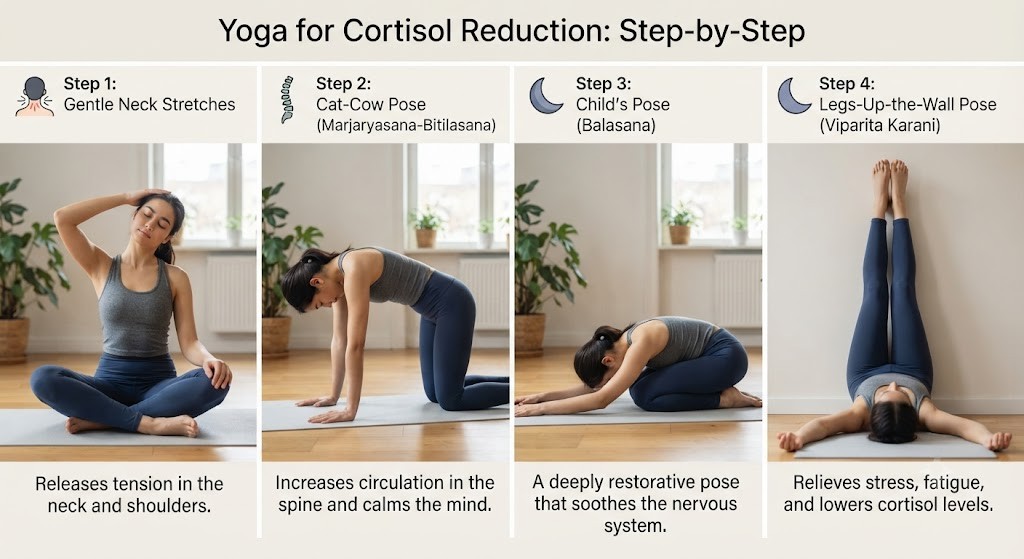
Certain yoga poses encourage relaxation by reducing muscle tension, slowing breathing, and calming the nervous system.
Child’s Pose (Balasana)
- Relaxes the spine
- Encourages slow breathing
- Promotes mental calmness
Legs-Up-the-Wall (Viparita Karani)
- Encourages circulation
- Helps reduce fatigue
- Supports nervous system relaxation
Cat-Cow Stretch
- Synchronizes breath with movement
- Mobilizes the spine
- Releases stiffness
Standing Forward Fold
- Relieves tension in the neck and shoulders
- Encourages relaxation
Reclining Butterfly Pose
- Supports diaphragmatic breathing
- Opens the hips gently
Supine Twist
- Releases lower back tension
- Promotes relaxation
Bridge Pose
- Opens the chest
- Encourages healthy posture
- Improves breathing mechanics
Happy Baby Pose
- Reduces hip tension
- Encourages relaxation
Corpse Pose (Savasana)
Savasana remains one of the most effective relaxation poses.
Research suggests Savasana significantly reduces perceived stress when practiced consistently.
Can Breathing Exercises Reduce Cortisol Without Medication?
Breathing exercises complement Yoga for Cortisol Reduction by slowing respiration, improving vagal activity, and calming the nervous system.
Diaphragmatic Breathing
Also called belly breathing, this technique encourages slow, deep breaths using the diaphragm.
Box Breathing
Follow this simple pattern:
- Inhale for 4 seconds
- Hold for 4 seconds
- Exhale for 4 seconds
- Hold for 4 seconds
Alternate Nostril Breathing
This traditional yoga breathing exercise promotes nervous system balance and mental clarity.
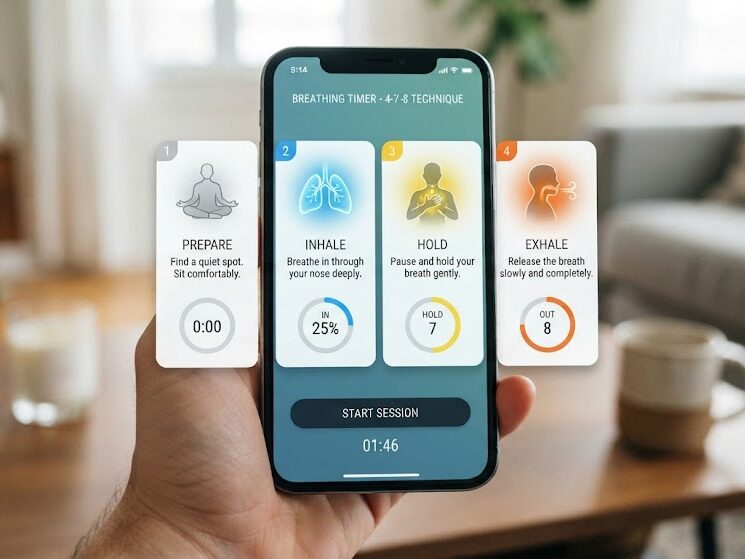
4-7-8 Breathing
A popular relaxation technique that many people find especially helpful before bedtime.
Ujjayi Breathing
Often practiced during yoga flows, Ujjayi breathing creates slow, controlled breaths with gentle throat engagement.
Coherent Breathing
Approximately five to six breaths per minute helps encourage relaxation and improved heart rate variability.
What Does Scientific Research Say About Yoga and Cortisol?
Scientific research suggests that regular yoga practice may reduce perceived stress, improve emotional well-being, and support healthier stress biomarkers. However, individual cortisol responses can vary depending on consistency, lifestyle, and yoga style.
Research Highlights
| Study | Finding |
|---|---|
| Frontiers in Psychiatry (2023) | Improved stress resilience |
| Journal of Clinical Medicine (2023) | Better anxiety outcomes |
| NIH Reviews | Reduced stress biomarkers |
| Harvard Health | Improved relaxation response |
Approximately 75% of primary care visits involve stress-related complaints. — Source: American Institute of Stress, 2024.
Research Limitations
Although current findings are encouraging, research has several limitations.
Many studies differ in:
- Program duration
- Yoga style
- Participant age
- Cortisol measurement methods
As a result, additional long-term randomized clinical trials are still needed.
How Long Does It Take for Yoga to Lower Cortisol Levels?
Many people experience a sense of calm immediately after a yoga session, but long-term improvements typically develop through consistent practice.
Expected Timeline
| Time | Potential Benefit |
|---|---|
| One session | Reduced muscle tension and relaxation |
| 2–4 weeks | Better sleep quality |
| 6–8 weeks | Improved stress resilience |
| 3+ months | Sustainable lifestyle improvements |
The most important factor isn’t intensity—it’s consistency.
A daily practice of just 10 to 20 minutes often produces better long-term results than occasional lengthy sessions.
Can Beginners Practice Yoga for Stress Reduction Safely?
Yes. Beginners can safely practice Yoga for Cortisol Reduction by starting slowly and focusing on gentle movement rather than flexibility.
Beginner Checklist
- Practice for 10 minutes daily
- Wear comfortable clothing
- Choose a quiet environment
- Focus on slow breathing
- Rest whenever needed
- Avoid forcing stretches
- Listen to your body
Building consistency is far more beneficial than attempting advanced poses too soon.
What Is the Best Daily Yoga Routine for Cortisol Reduction?
A simple daily routine can help regulate the nervous system and support healthier cortisol rhythms.
Morning Routine (10 Minutes)
- Cat-Cow
- Child’s Pose
- Sun Breathing
- Gentle Twist
- Standing Forward Fold
Evening Routine (20 Minutes)
- Legs-Up-the-Wall
- Reclining Butterfly
- Happy Baby
- Supine Twist
- Yoga Nidra
- Savasana
Weekly Yoga Schedule
| Day | Focus |
|---|---|
| Monday | Hatha Yoga |
| Tuesday | Yin Yoga |
| Wednesday | Gentle Flow |
| Thursday | Chair Yoga |
| Friday | Restorative Yoga |
| Saturday | Yoga Nidra |
| Sunday | Recovery Stretch |
Following a structured weekly schedule helps maintain consistency while providing variety for both beginners and experienced practitioners.
What Tools Can Help You Practice Yoga for Cortisol Reduction?
Using a few simple wellness tools can make your yoga practice more comfortable, measurable, and consistent.
Recommended Tools
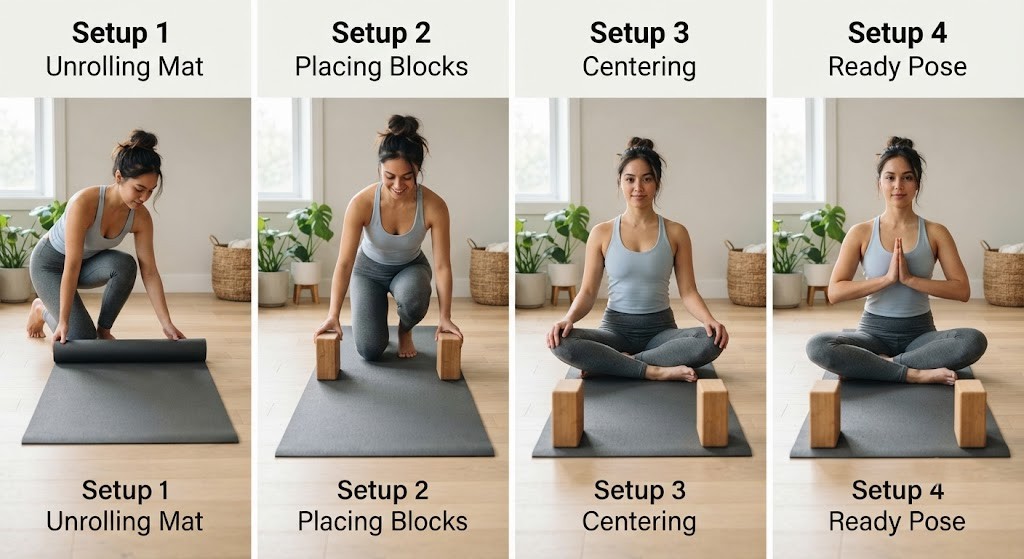
- Yoga mat
- Yoga blocks
- Bolster
- Meditation cushion
- Breath timer app
- Calm
- Insight Timer
- Headspace
- Smartwatch for HRV tracking
Free Alternatives
- YouTube yoga classes
- Google Fit
- Timer apps
What’s Next? Building a Long-Term Stress Reduction Plan
While yoga is highly effective on its own, long-term cortisol management works best when it becomes part of a broader healthy lifestyle.
Consider combining your yoga routine with:
- Daily walking
- Quality sleep
- Balanced nutrition
- Proper hydration
- Meditation
- Regular exercise
- Reduced screen time before bed
Build Habits That Last
Habit stacking can make your routine easier to maintain.
For example, practice five minutes of slow breathing immediately after brushing your teeth each evening. Small routines performed consistently often become lifelong habits.
Remember that sustainable progress comes from daily actions rather than occasional intense efforts.
Conclusion
Yoga for Cortisol Reduction is one of the most practical and evidence-supported ways to manage chronic stress naturally. By combining gentle movement, mindful breathing, and relaxation techniques, yoga helps regulate the nervous system, improve sleep quality, reduce anxiety, and strengthen long-term resilience.
The greatest benefits come from consistency rather than intensity. Even a simple 10 to 20-minute daily practice can gradually improve your body’s ability to handle stress when paired with healthy sleep, balanced nutrition, regular movement, and mindful living.
If you’re just beginning your yoga journey, start with gentle poses, focus on your breathing, and build a routine that fits your lifestyle. Over time, these small, consistent habits can lead to meaningful improvements in both your physical health and emotional well-being.
FAQs
What is Yoga for Cortisol Reduction?
Yoga for Cortisol Reduction is a practice that combines movement, breathing, and mindfulness to help lower stress and support healthy cortisol levels.
Can yoga lower cortisol naturally?
Yes, regular yoga may help reduce stress and support healthy cortisol regulation.
Which yoga is best for stress?
Restorative Yoga, Yin Yoga, Yoga Nidra, and Hatha Yoga are excellent choices.
How long should I practice daily?
Aim for 10–20 minutes of yoga each day for the best long-term results.
Which yoga pose is most relaxing?
Savasana (Corpse Pose) is one of the most effective poses for deep relaxation.
Do breathing exercises help reduce stress?
Yes, slow breathing techniques calm the nervous system and promote relaxation.
Is this yoga suitable for beginners?
Yes, gentle yoga styles are safe and suitable for beginners.
When will I notice results?
You may feel calmer after one session, while lasting benefits usually appear after several weeks.
Can yoga replace stress medication?
No, yoga should complement, not replace, professional medical treatment.
What habits improve results?
Quality sleep, healthy eating, walking, meditation, and regular yoga practice improve results.