
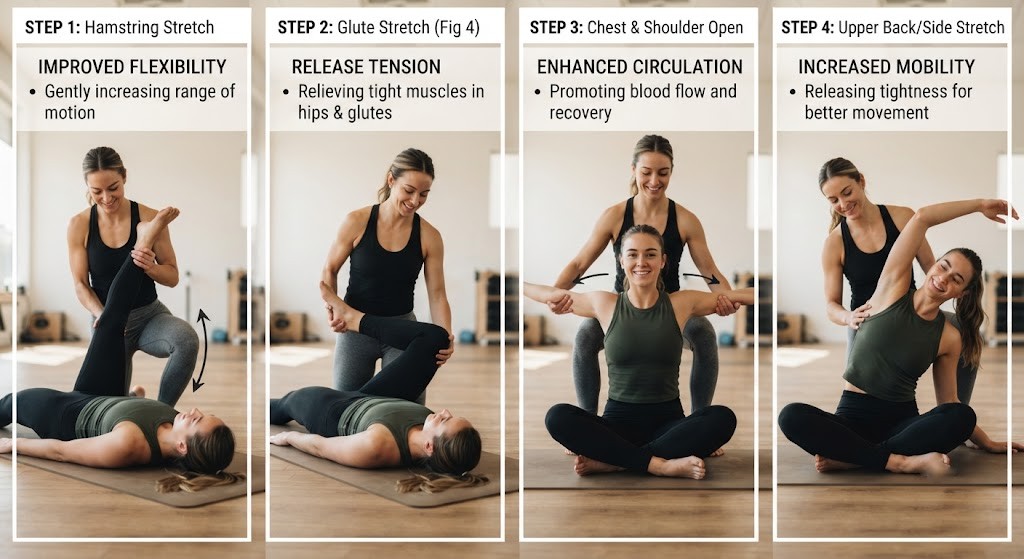
If you’ve ever finished a workout feeling stiff or noticed your body becoming less flexible after long hours of sitting, you’re not alone. While regular stretching can certainly improve flexibility, many people discover even greater results through Assisted Stretch Therapy. Unlike stretching on your own, this guided approach uses the expertise of a trained professional or partner to help your body move through a safe, controlled range of motion.
Whether you’re an athlete looking to improve performance, an office worker dealing with tight hips and shoulders, or simply someone who wants to move more comfortably, Assisted Stretch Therapy can be an effective addition to your wellness routine. In this guide, you’ll learn how assisted stretching works, its science-backed benefits, the different techniques available, who can benefit most, how often to schedule sessions, and important safety considerations.
What Is Assisted Stretch Therapy?
Assisted Stretching Benefits is a guided flexibility technique in which a trained professional or knowledgeable partner helps move your muscles and joints through a controlled range of motion. Unlike self-stretching, another person carefully supports your body, allowing you to achieve a deeper yet safe stretch while maintaining proper alignment.
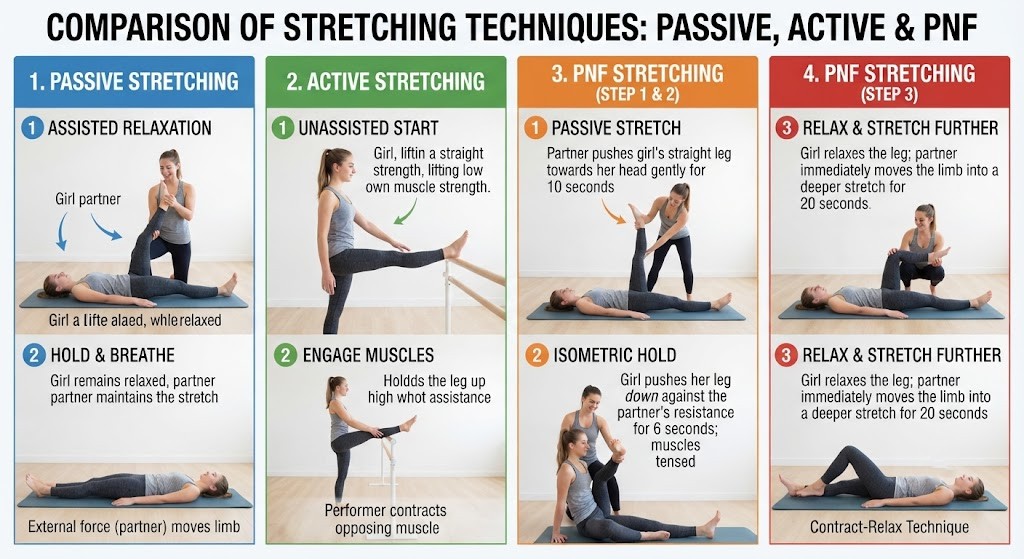
Because the helper controls the movement, your muscles can relax more completely instead of working to hold the stretch. This makes assisted stretching a form of passive stretching, where external assistance—not your own muscular effort—creates the movement.
For example, a stretching therapist may gently lift your leg to stretch your hamstrings while ensuring your hips remain properly aligned and encouraging steady breathing throughout the movement.
Research suggests that regular flexibility training contributes to healthier movement patterns and joint function when combined with exercise.
Source: American College of Sports Medicine (ACSM), 2024.
Assisted stretching improves flexibility by allowing muscles to relax more completely than they often can during self-stretching.
Quotable Fact: Assisted stretching helps increase flexibility through controlled external assistance rather than muscular effort.
Why Does Assisted Stretch Therapy Matter?
Modern lifestyles often encourage prolonged sitting, repetitive movements, and reduced physical activity. Over time, these habits can decrease mobility, increase muscle tightness, and limit healthy movement patterns.
Today, many people spend 6–8 hours sitting daily, contributing to:
- Tight hip flexors
- Stiff shoulders
- Reduced spinal mobility
- Poor posture
- Limited range of motion
Source: World Health Organization, 2024.
These issues don’t just affect athletic performance. They can also make everyday activities—such as climbing stairs, bending to pick something up, or reaching overhead—more uncomfortable.
For instance, an office worker experiencing chronic neck stiffness may regain comfortable movement through regular Assisted Stretch Therapy sessions combined with ergonomic improvements and daily movement habits.
If you’re beginning your flexibility journey, explore mobility exercises for beginners.
How Does Assisted Stretch Therapy Work?
Assisted Stretch Therapy works by helping muscles relax while gradually improving joint mobility and the nervous system’s tolerance to stretching.
Muscle Relaxation
Your muscles naturally resist sudden stretching through a protective mechanism known as the stretch reflex. Slow, controlled assisted stretches reduce this response, allowing muscles to lengthen more comfortably without excessive resistance.
As your muscles become more relaxed, deeper stretches become possible while maintaining safety.
Nervous System Adaptation
Flexibility isn’t determined only by muscles—your nervous system also plays a major role.
With consistent stretching, your nervous system gradually learns that greater movement is safe. As tolerance improves over time, your range of motion can increase without forcing tissues beyond their natural limits.
Better Circulation
Stretching also promotes healthy blood flow to muscles and surrounding tissues.
Improved circulation helps deliver oxygen and nutrients while supporting recovery after physical activity. Many people also report feeling less sore and more refreshed after stretching sessions.
Research indicates that flexibility exercises contribute to improved movement efficiency and joint health across different age groups.
Source: National Strength and Conditioning Association (NSCA), 2023.
Quotable Fact: Mobility improves when muscles and the nervous system adapt together.
What Are the Biggest Assisted Stretch Therapy Benefits?
Assisted Stretch Therapy offers benefits that extend beyond flexibility. Regular sessions may improve overall movement quality, recovery, posture, and comfort during everyday activities.
| Benefit | How It Helps |
|---|---|
| Improved flexibility | Increases muscle length safely |
| Better mobility | Enhances joint movement |
| Faster recovery | Reduces post-workout tightness |
| Improved posture | Releases tight muscles affecting alignment |
| Less muscle tension | Promotes relaxation |
| Injury prevention | Supports healthy movement patterns |
| Better circulation | Improves blood flow |
| Reduced stress | Encourages relaxation |
Improves Flexibility
One of the primary goals of Assisted Stretch Therapy is improving flexibility.
Because a trained professional controls the movement, muscles can be stretched through a safe and controlled range of motion. Over time, this may help improve overall flexibility more effectively than inconsistent self-stretching.
Many athletes include assisted stretching to improve:
- Squat depth
- Kicking height
- Overhead shoulder mobility
- Overall athletic performance
Increases Mobility
Mobility combines flexibility with strength and joint control.
Improving mobility helps your body move efficiently during exercise while also making everyday movements smoother and more comfortable.
Good mobility contributes to:
- Better walking mechanics
- Easier lifting
- Improved balance
- More efficient exercise technique
Speeds Workout Recovery
After intense training, muscles often feel tight or fatigued.
Assisted Stretching Benefits may help reduce feelings of post-workout stiffness while promoting relaxation and circulation.
Pair it with best recovery exercises after workouts for a complete recovery routine.
Relieves Muscle Tension
Hours of sitting, repetitive work, or strenuous exercise can create uncomfortable muscle tightness.
Guided stretching helps release tension throughout commonly affected areas such as:
- Neck
- Shoulders
- Back
- Hip flexors
- Hamstrings
- Calves
If muscle knots are your primary concern, also read massage for muscle knots.
Supports Better Posture
Poor posture often develops because certain muscles become tight while opposing muscles weaken.
Stretching tight muscles—including the chest, shoulders, and hip flexors—can improve overall body alignment when combined with strengthening exercises.
May Reduce Injury Risk
Research suggests that consistent flexibility training helps maintain joint mobility, improve movement quality, and may reduce the risk of certain musculoskeletal injuries when incorporated into a balanced fitness program.
Explore sports injury prevention exercises.
Quotable Fact: Better flexibility supports better movement, not just bigger stretches.
What Types of Assisted Stretch Therapy Are Available?
Different assisted stretching methods are designed for different goals. Your therapist may combine several techniques depending on your mobility, fitness level, and health history.
Static Assisted Stretching
The helper moves your body into position and gently holds the stretch for 15–60 seconds.
This method is commonly used to improve long-term flexibility.
Dynamic Assisted Stretching
Dynamic stretching involves controlled movement rather than holding a position.
It is commonly performed before workouts to prepare muscles and joints for exercise.
Read more in Post Workout Stretching Routine.
PNF Stretching
Proprioceptive Neuromuscular Facilitation (PNF) combines muscle contractions with relaxation techniques to improve flexibility and range of motion.
It is frequently used by athletes, physical therapists, and rehabilitation professionals.
Partner Stretching
Friends, coaches, or workout partners assist with stretching while maintaining communication and proper technique.
Partner stretching can be highly effective when both individuals understand safe stretching principles.
Therapist-Assisted Stretching
Certified stretching specialists personalize every session according to:
- Mobility limitations
- Fitness goals
- Injury history
- Medical conditions
- Current flexibility level
This individualized approach helps maximize results while prioritizing safety.
Who Can Benefit Most From Assisted Stretch Therapy?
Assisted Stretch Therapy is suitable for people of nearly every fitness level.
Those who often benefit include:
- Office workers
- Athletes
- Weightlifters
- Runners
- Seniors
- Yoga practitioners
- Beginners
- Individuals recovering from exercise
- People with reduced mobility
For example, runners often use stretching to improve hip mobility and stride efficiency, while seniors may focus on maintaining independence and comfortable movement during daily activities.
Assisted Stretch Therapy vs. Self-Stretching
Both methods improve flexibility, but each offers unique advantages.
| Feature | Assisted Stretching | Self-Stretching |
|---|---|---|
| Guidance | Professional or partner | Yourself |
| Stretch Depth | Usually greater | Moderate |
| Safety | High with trained provider | Depends on technique |
| Cost | Paid sessions | Free |
| Convenience | Appointment required | Anytime |
| Best For | Mobility limitations | Daily maintenance |
The ideal approach is often combining both methods.
Assisted Stretching Benefits encourages consistency between appointments, while Assisted Stretch Therapy can help overcome flexibility plateaus and address movement restrictions more effectively.
What Happens During an Assisted Stretch Therapy Session?
A professional session typically follows a structured process tailored to your individual needs.
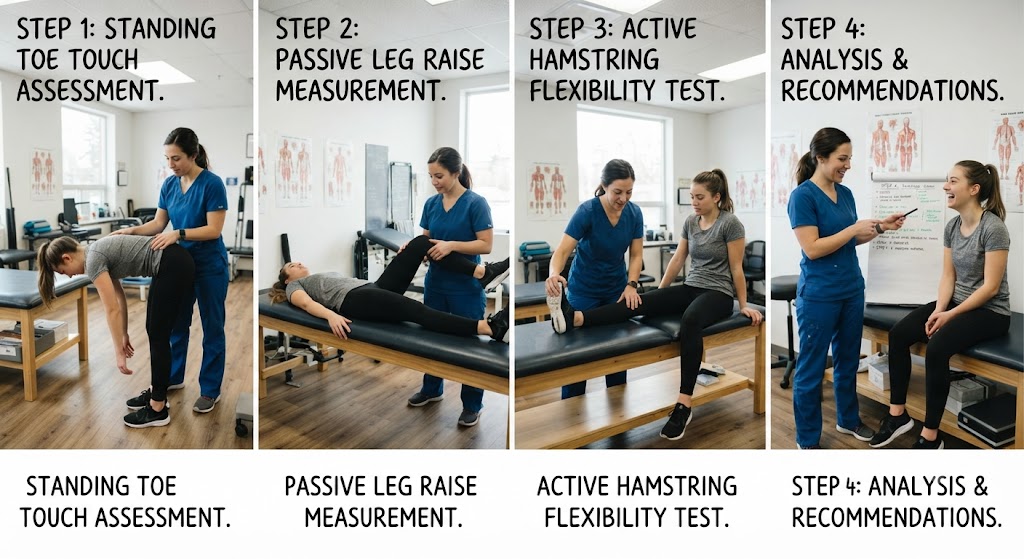
Typical session steps include:
- Mobility assessment
- Gentle warm-up
- Individual stretching routine
- Continuous communication and feedback
- Cool-down recommendations
Your therapist may also explain which muscles feel tight and recommend exercises you can perform at home between appointments.
Before stretching, it’s helpful to warm up before exercise.
Is Assisted Stretch Therapy Safe?
When performed by qualified professionals and adapted to individual needs, Assisted Stretch Therapy is generally considered safe.
However, consult your healthcare provider before beginning stretching if you have:
- Recent fractures
- Severe osteoporosis
- Acute muscle tears
- Joint instability
- Recent surgery
- Serious neurological disorders
Remember that stretching should create gentle tension—not sharp pain.
Always communicate with your therapist if any movement feels uncomfortable or painful.
Quotable Fact: Pain is a warning sign, but mild stretching tension is normal.
How Often Should You Get Assisted Stretch Therapy?
The ideal frequency depends on your goals, activity level, and current flexibility.
| Goal | Suggested Frequency |
|---|---|
| Beginners | 1 session weekly |
| Athletes | 2–3 sessions weekly |
| Recovery | After intense training |
| Maintenance | Every 2–4 weeks |
Research recommends adults perform flexibility activities at least 2–3 days per week.
Source: American College of Sports Medicine, 2024.
For complete recovery planning, combine stretching with post-workout stretching routine and active recovery workout.
Practical Tools for Better Mobility
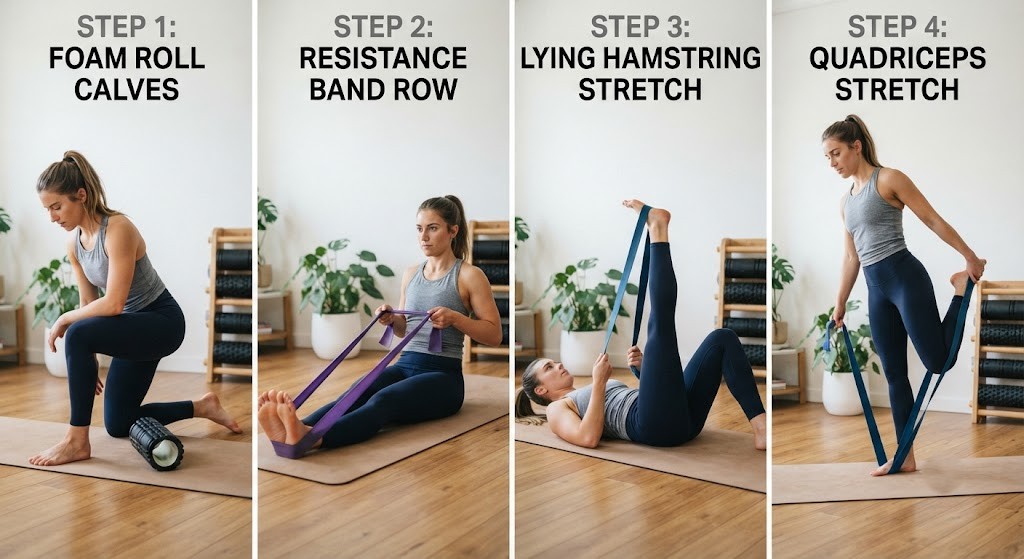
While Assisted Stretch Therapy can produce excellent results, combining it with simple mobility tools helps reinforce flexibility gains between sessions.
Helpful tools include:
- Foam roller
- Massage ball
- Resistance bands
- Yoga blocks
- Mobility sticks
These tools can support muscle recovery, improve movement quality, and encourage regular mobility practice at home.
If you want to improve recovery even further, explore:
What’s Next?
Improving flexibility is a long-term process, and consistency delivers the greatest results.
To build a successful mobility routine:
- Stretch consistently each week.
- Combine stretching with strength training.
- Track your flexibility every month.
- Stay physically active.
- Seek professional guidance if mobility remains limited.
Small improvements over time can significantly enhance how your body feels and performs.
To continue improving movement, explore mobility workout routine.
Conclusion
Assisted Stretching Benefits is far more than simply stretching deeper. It is a structured, guided approach that helps improve flexibility, mobility, recovery, posture, and overall movement quality through safe, controlled techniques. Whether you’re an athlete seeking better performance, an office worker trying to reduce stiffness, or someone looking to move more comfortably every day, assisted stretching can become a valuable part of your wellness routine.
The greatest results come from consistency. Pair Assisted Stretching Benefits with strength training, regular physical activity, proper recovery habits, and a balanced exercise program to support long-term flexibility and healthier movement. Over time, these habits can help you move with greater confidence, reduce muscle tightness, and enjoy a more active lifestyle.
FAQs
What is Assisted Stretch Therapy?
Assisted Stretch Therapy is a guided stretching technique where a trained professional or partner helps improve flexibility, mobility, and range of motion.
Is assisted stretching better than massage?
It depends on your goal. Assisted stretching improves flexibility and mobility, while massage mainly relieves muscle tension and soreness.
Does assisted stretching really work?
Yes. Regular assisted stretching can improve flexibility, mobility, posture, and overall movement quality when practiced consistently.
Is assisted stretching painful?
No. Assisted stretching should create gentle tension, not sharp pain. Stop immediately if you experience pain.
How often should I get Assisted Stretch Therapy?
Most people benefit from 1–3 sessions per week, depending on their goals and activity level.
Who can benefit from Assisted Stretch Therapy?
Office workers, athletes, runners, weightlifters, seniors, beginners, and people with limited mobility can all benefit.
Can Assisted Stretch Therapy improve posture?
Yes. It helps reduce muscle tightness that contributes to poor posture, especially when combined with strengthening exercises.
Does Assisted Stretch Therapy help muscle soreness?
Yes. It may reduce muscle tightness and support faster recovery after workouts by promoting circulation and relaxation.
What is the difference between static, dynamic, and PNF stretching?
Static stretching involves holding a stretch, dynamic stretching uses controlled movement, and PNF combines muscle contractions with relaxation to improve flexibility.
Should Assisted Stretch Therapy replace strength training?
No. It works best when combined with strength training, regular exercise, and healthy recovery habits.
How long does it take to see results from Assisted Stretch Therapy?
Most people notice improved flexibility within a few weeks of consistent stretching, although results vary by individual.