
If you’ve ever noticed a painful, tight spot in your neck, shoulders, back, or calves that refuses to loosen up, you’re likely dealing with a muscle knot. These stubborn areas of tension can make everyday activities uncomfortable, reduce your range of motion, and even affect your workouts.
Fortunately, massage for muscle knots is one of the most effective ways to ease discomfort, improve mobility, and support muscle recovery. Whether you’re an office worker battling “tech neck,” an athlete recovering after training, or simply looking for natural pain relief, understanding the right massage techniques can make a significant difference.
In this comprehensive guide, you’ll learn what muscle knots are, why they develop, how massage works to relieve them, the best massage techniques, effective self-massage methods, prevention strategies, and when it’s time to seek professional care.
What Are Muscle Knots?
A muscle knot is a localized area of tight muscle fibers that can cause pain, tenderness, and restricted movement. Although the phrase “muscle knot” is commonly used, healthcare professionals often refer to these areas as myofascial trigger points—small, highly sensitive spots within a muscle that may produce pain when pressed.
For example, if you spend long hours working at a computer, you may notice a hard, tender spot in your upper shoulder that hurts when touched or when you turn your head. This is one of the most common signs of a muscle knot.
Research suggests that musculoskeletal pain affects more than 1.7 billion people worldwide, making muscle tightness and trigger points an extremely common health concern.
Source: World Health Organization, 2023.
Muscle Knots vs. Trigger Points
Although the terms are often used interchangeably, there is a slight difference between them.
| Muscle Knot | Trigger Point |
|---|---|
| Informal term used by most people | Medical term used by healthcare professionals |
| Feels like a tight band or lump | A hyperirritable spot within the muscle |
| May cause local discomfort | Can cause local or referred pain |
| Often improves with massage | Commonly treated with trigger point therapy |
In practice, both conditions usually respond well to massage, stretching, movement, and improving posture.
Common Areas Where Muscle Knots Develop
Muscle knots tend to form in muscles exposed to repetitive strain, prolonged sitting, or poor posture.
Common locations include:
- Neck
- Upper shoulders
- Upper back
- Lower back
- Calves
- Glutes
- Forearms
- Hamstrings
For example:
- Office workers often develop knots between the shoulder blades.
- Runners frequently experience tightness in the calves and glutes.
- Weightlifters may notice trigger points in the shoulders, forearms, or upper back.
Why Massage for Muscle Knots Matters
Massage for muscle knots is much more than a way to relax. It directly addresses muscle tension by improving circulation, reducing stiffness, decreasing pain, and restoring healthy movement.
Without proper treatment, muscle knots may become increasingly painful and eventually interfere with work, exercise, sleep, and daily activities.
According to the American Massage Therapy Association, massage therapy is widely used to manage muscle soreness, muscle tension, and stress-related discomfort.
Source: American Massage Therapy Association, 2024.
Why Do Muscle Knots Form?
Muscle knots usually develop when muscle fibers remain contracted for prolonged periods or repeatedly experience stress without adequate recovery.
The most common causes include:
- Poor posture
- Sitting for long periods
- Repetitive movements
- Heavy lifting
- Stress and anxiety
- Overtraining
- Muscle fatigue
- Dehydration
- Inadequate recovery
- Previous injuries
For instance, constantly looking down at your smartphone can overload your neck muscles, creating trigger points commonly referred to as tech neck.
What Happens If Muscle Knots Are Left Untreated?
Ignoring muscle knots doesn’t usually make them disappear. Instead, symptoms often become more noticeable over time.
Potential complications include:
- Chronic muscle tension
- Reduced flexibility
- Limited range of motion
- Frequent headaches
- Shoulder stiffness
- Lower back pain
- Poor athletic performance
- Increased injury risk
Persistent trigger points may also cause referred pain, meaning the discomfort is felt somewhere other than where the knot is located.
Benefits of Massage for Muscle Knots
Massage offers both immediate relief and long-term improvements when performed consistently.
Some of the biggest benefits include:
- Increased blood circulation
- Improved oxygen delivery
- Reduced muscle tightness
- Better flexibility
- Faster recovery after exercise
- Lower stress levels
- Improved posture
- Enhanced mobility
Studies show massage therapy may significantly reduce delayed-onset muscle soreness (DOMS) after exercise.
Source: Journal of Athletic Training, 2023.
For readers interested in post-treatment care, check our deep tissue massage recovery guide.
How Does Massage Help Relieve Muscle Knots?
Massage for muscle knots works by improving circulation, reducing muscle tension, restoring tissue mobility, and helping muscles relax naturally.
Unlike simply resting, massage actively stimulates muscles and surrounding connective tissue, encouraging normal movement patterns to return.
Increased Blood Circulation
Massage increases local blood flow, helping deliver:
- Oxygen
- Nutrients
- Immune cells
Better circulation also assists the body in removing metabolic waste products that may contribute to soreness.
For example, after an intense workout, a gentle massage may help muscles recover more comfortably.
Reduced Muscle Tension
Applying controlled pressure helps reduce excessive muscle contraction.
As muscles gradually relax:
- Pain often decreases
- Tightness improves
- Movement becomes easier
This explains why athletes often include massage in their recovery routines.
Improved Range of Motion
Tight muscles restrict normal movement.
Massage loosens surrounding tissues, allowing joints to move through a healthier range of motion.
For example, releasing trigger points in the shoulder can make reaching overhead significantly easier.
Pain Reduction
Massage stimulates sensory receptors that reduce pain signals traveling to the brain.
Additionally, massage encourages the release of natural pain-relieving chemicals, including endorphins, promoting both comfort and relaxation.
Nervous System Relaxation
Massage also calms the nervous system by reducing stress hormones.
As muscle guarding decreases, muscles can relax more completely.
Which Type of Massage Is Best for Muscle Knots?
The ideal massage depends on the severity, location, and underlying cause of your muscle knot.
Some techniques emphasize deep pressure, while others focus on improving circulation and reducing overall tension.
Deep Tissue Massage
Deep tissue massage is one of the most effective treatments for chronic muscle knots because it targets deeper muscle layers and connective tissue.
Using slow, firm strokes and sustained pressure, it helps:
- Break up tight muscle bands
- Improve circulation
- Reduce chronic tension
For example, persistent upper back knots caused by desk work often respond better to deep tissue massage than a gentle relaxation massage.
Mild soreness afterward is common and usually disappears within 24–48 hours.
For recovery tips, read our deep tissue massage recovery guide.
Trigger Point Therapy
Trigger point therapy applies sustained pressure directly to sensitive muscle knots.
Typically, a therapist presses the area for 30–90 seconds before slowly releasing the pressure.
This technique works particularly well for stubborn knots in the:
- Neck
- Shoulders
- Glutes
- Calves
Although temporary discomfort is possible during treatment, many people notice improved mobility immediately afterward.
Swedish Massage
Swedish massage uses gentle, flowing strokes to improve circulation and encourage relaxation.
Although it may not release very deep knots, it is an excellent option for:
- Mild muscle tension
- Stress relief
- Recovery after busy weeks
Myofascial Release
Myofascial release targets the fascia—the connective tissue surrounding muscles.
Using slow, sustained stretching, this gentle technique improves tissue mobility and reduces stiffness without aggressive pressure.
Sports Massage
Sports massage combines stretching, compression, and targeted massage techniques.
It is especially useful for athletes because it helps:
- Reduce soreness
- Maintain flexibility
- Improve recovery
- Lower injury risk
Percussion Massage
Percussion massage uses rapid vibrations to stimulate muscles.
Massage guns have become popular because they:
- Warm muscles quickly
- Improve blood flow
- Reduce tightness before or after exercise
Can You Massage Muscle Knots Yourself at Home?
Yes. Many muscle knots can be safely treated using self-massage techniques and the proper amount of pressure.
However, avoid massaging areas with severe swelling, bruising, or unexplained pain.
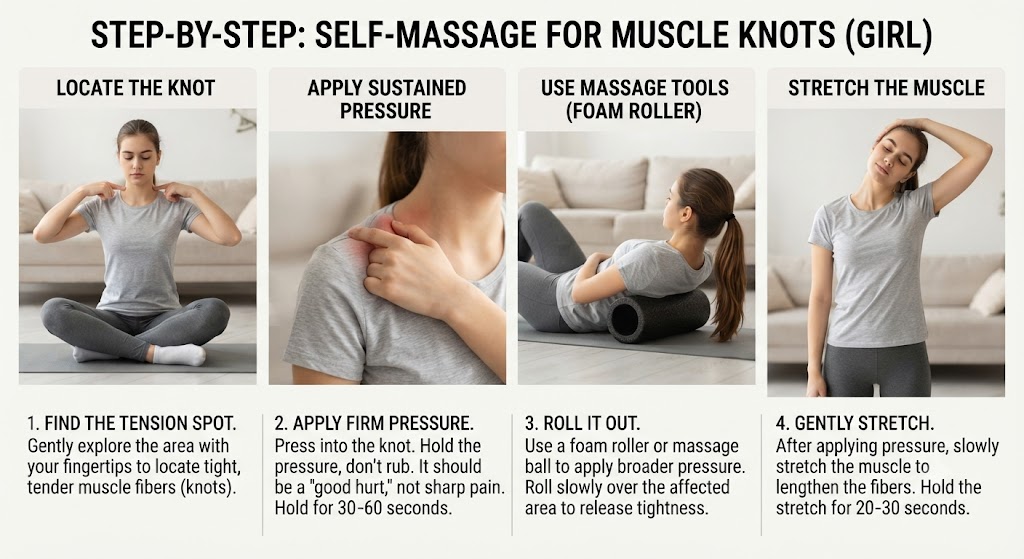
Step 1: Warm the Muscle
Use a heating pad or take a warm shower for 10–15 minutes before beginning.
Heat helps relax muscle fibers, making massage more comfortable.
Step 2: Find the Tender Spot
Gently explore the muscle using your fingers.
A knot often feels like:
- A tight band
- A firm lump
- A tender spot
Step 3: Apply Gentle Pressure
Use your thumb, fingers, or a massage ball.
Apply steady pressure for 30–60 seconds, then slowly release.
Avoid using excessive force that causes severe pain.
Step 4: Massage Slowly
Use slow circular or back-and-forth motions for 5–10 minutes.
Continue breathing normally and allow the muscle to gradually relax.
Step 5: Stretch Afterward
Gentle stretching after massage helps:
- Improve flexibility
- Restore movement
- Reduce the chance of the knot returning
Step 6: Hydrate
Drink water after your massage to support normal muscle function and healthy tissue recovery.
Are Massage Tools Effective for Muscle Knots?
Massage tools can be highly effective when used correctly and combined with stretching and regular movement.
| Tool | Best For | Benefits |
|---|---|---|
| Foam Roller | Back, legs, glutes | Releases large muscle groups |
| Massage Gun | Shoulders, calves, quads | Improves circulation quickly |
| Lacrosse Ball | Deep trigger points | Precise pressure |
| Tennis Ball | Neck and upper back | Gentle self-massage |
| Massage Cane | Hard-to-reach muscles | Easy pressure control |
| Heated Massager | Neck and shoulders | Combines heat with massage |
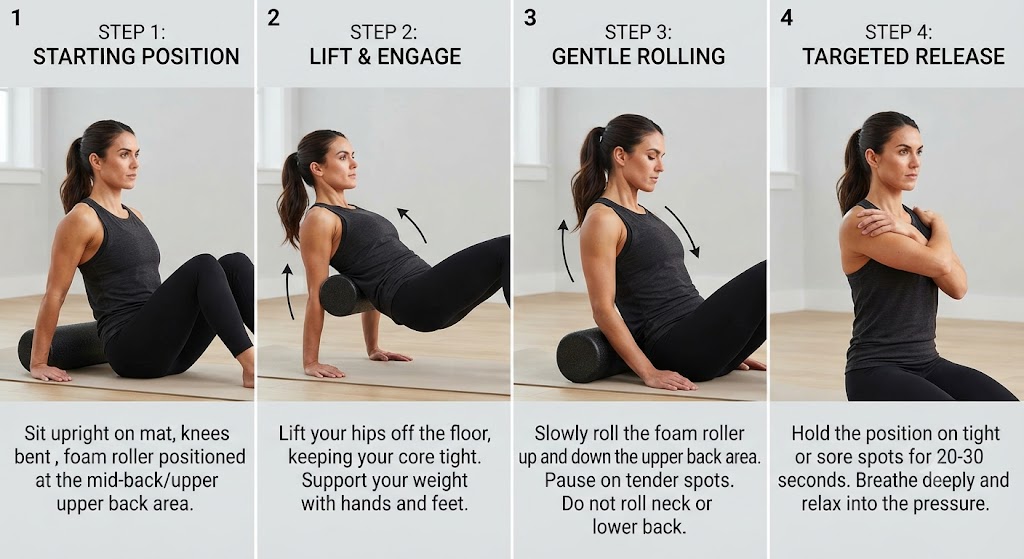
You can also explore our foam roller exercises for additional recovery exercises.
Practical Examples
- Shoulders: Massage gun plus.
- Calves: Lacrosse ball after running.
- Glutes: Foam roller combined with hip mobility exercises.
How Can You Prevent Muscle Knots from Returning?
Treating muscle knots is helpful, but preventing them is even better.
Regular stretching, proper posture, and strength training dramatically reduce the likelihood of recurring muscle tension.
Build these healthy habits into your routine:
- Stretch every day.
- Take movement breaks every 30–60 minutes.
- Maintain good posture while sitting.
- Strengthen weak muscles.
- Warm up before exercise.
- Cool down after workouts.
- Stay hydrated.
- Sleep 7–9 hours every night.
Support your routine with:
Good nutrition also supports muscle recovery.
Explore:
When Should You See a Physical Therapist or Doctor for Muscle Knots?
Although most muscle knots improve with self-care, persistent symptoms may signal a more serious issue.
Seek professional evaluation if you experience:
- Pain lasting longer than 2–4 weeks
- Severe swelling or redness
- Numbness or tingling
- Muscle weakness
- Fever with muscle pain
- Pain after a significant injury
- Loss of normal movement
Early assessment can help identify nerve problems, muscle injuries, or other conditions requiring specialized treatment.
What’s Next?
The most effective long-term strategy combines massage with healthy lifestyle habits.
While massage offers immediate relief, lasting improvement comes from addressing the root causes of muscle tension.
Create a simple daily routine:
- Stretch for 10 minutes.
- Perform mobility exercises.
- Strength train 2–3 times each week.
- Stay hydrated throughout the day.
- Maintain good posture while working.
- Use self-massage tools when needed.
- Prioritize quality sleep every night.
Small, consistent habits are far more effective than waiting until pain becomes severe.
Conclusion
Massage for muscle knots is one of the most effective ways to reduce pain, improve circulation, restore flexibility, and support healthy movement. Whether you choose deep tissue massage, trigger point therapy, Swedish massage, sports massage, or self-massage with foam rollers and massage guns, regular care can help muscles recover faster and stay healthier over time.
For the best long-term results, combine massage with stretching, mobility exercises, proper posture, hydration, quality sleep, and strength training. By addressing the underlying causes of muscle tension—not just the symptoms—you can reduce recurring knots, improve performance, and move more comfortably every day.
FAQs
What are muscle knots?
Muscle knots are tight, sensitive areas in muscle fibers that cause pain, stiffness, and limited movement.
How long should you massage a muscle knot?
Massage it gently for 5–10 minutes using steady, comfortable pressure.
How often should you massage muscle knots?
Self-massage once or twice a day is usually enough until symptoms improve.
Should you use heat or ice before massaging muscle knots?
Heat is usually best because it relaxes muscles. Ice is better for a recent injury with swelling.
Are massage guns effective for muscle knots?
Yes. They can improve blood flow and reduce muscle tension when used correctly.
Can muscle knots go away on their own?
Some mild knots improve with rest and movement, but massage and stretching usually speed recovery.
What is the best type of massage for muscle knots?
Deep tissue massage and trigger point therapy are often the most effective for stubborn muscle knots.
Can dehydration cause muscle knots?
Dehydration may contribute to muscle tightness, so staying hydrated supports healthy muscle function.
Is it normal to feel sore after a deep tissue massage?
Yes. Mild soreness for 24–48 hours is common and usually resolves with rest and hydration.
Can stretching alone remove muscle knots?
Stretching helps reduce tightness, but combining it with massage and strengthening exercises works better.
Can you massage out muscle knots?
Yes. Gentle massage can help release many muscle knots by improving circulation and relaxing tight muscles.
What is the fastest way to release a muscle knot?
Apply heat, massage the area for 5–10 minutes, then follow with gentle stretching and movement.
What massage is best for removing knots?
Deep tissue massage and trigger point therapy are generally the best options for stubborn muscle knots.
What is the root cause of muscle knots?
Muscle knots commonly develop from poor posture, repetitive movements, muscle overuse, stress, or inadequate recovery.