
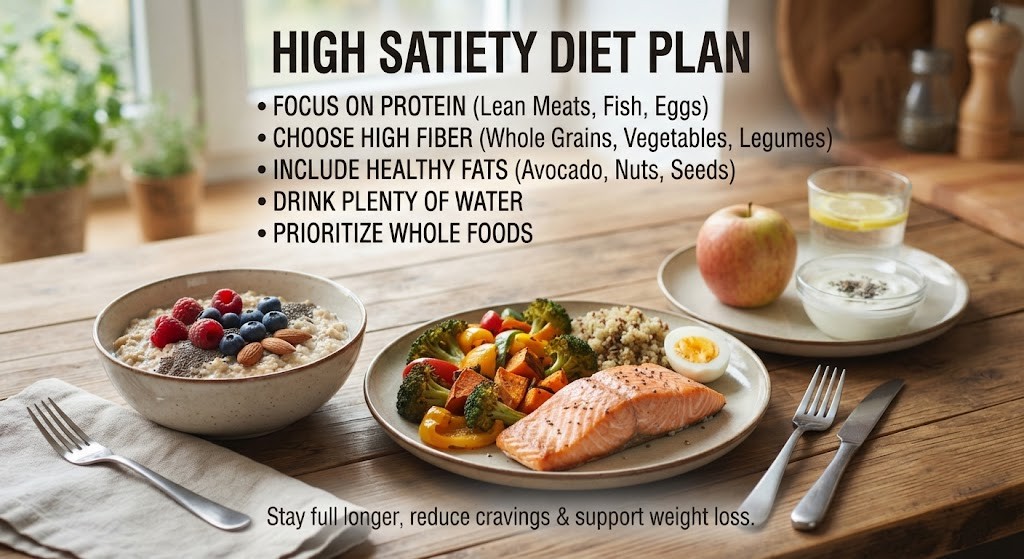
If you’ve ever tried to eat healthier or lose weight, you may have noticed that choosing nutritious foods is only part of the challenge. The bigger question is often: How do you stay full and satisfied between meals without constantly thinking about food?
A well-designed high satiety diet plan focuses on foods that provide protein, fiber, water, nutrients, and enough volume to help you feel comfortably full for longer. Instead of relying on extreme calorie restriction, it emphasizes balanced meals that are satisfying, practical, and adaptable.
In this guide, you’ll learn what satiety means, why it matters for weight management, which foods are most filling, how protein and fiber influence fullness, how to build a high-satiety meal, and how to follow a practical 7-day high satiety diet plan.
What Is a High Satiety Diet Plan?
A high satiety diet plan is an eating pattern that emphasizes nutritious foods that help you feel comfortably full and satisfied for longer. Rather than focusing only on eating fewer calories, this approach builds meals around protein, fiber, water, nutrients, and physical volume.
Satiety refers to the feeling of fullness and satisfaction that develops during and after eating. For example, a meal containing lentils, vegetables, Greek yogurt, and whole grains can be more satisfying than a small meal dominated by refined carbohydrates.
A high-satiety diet is also not a specific medical diet with one fixed menu. Instead, it is a meal-building strategy that can be adapted to vegetarian, omnivorous, budget-friendly, or calorie-controlled eating patterns.
For example, a simple high-satiety lunch could combine dal, brown rice, cucumber, carrots, and yogurt rather than relying on rice alone.
high protein diet for weight loss
Why Does Satiety Matter for Weight Management?
Satiety matters for weight management because satisfying meals can make it easier to manage hunger, portions, and overall food intake. However, satiety does not guarantee weight loss because total energy intake, activity, sleep, food choices, and individual factors also influence body weight.
Protein is strongly associated with fullness in many dietary studies. A systematic review involving 1,079 participants found that higher-protein diets enhanced fullness or satiety in several studies, although the researchers noted limitations in the evidence. — Source: PubMed, 2020
Fiber can also support fullness, but its effect depends on the type and amount consumed. A systematic review of 44 publications found that 39% of analyzed fiber treatments significantly reduced subjective appetite, while 22% reduced food or energy intake. — Source: PubMed, 2013
Food volume matters as well. Foods containing substantial water and fiber can provide larger portions for relatively fewer calories. For example, a large vegetable-and-lentil bowl can provide considerably more physical volume than a small serving of calorie-dense snack foods.
What Foods Keep You Full for the Longest?
Foods that keep you full the longest generally combine protein, fiber, water, and substantial food volume. Useful choices include legumes, eggs, yogurt, potatoes, vegetables, fruit, whole grains, nuts, seeds, and other minimally processed protein-rich foods.
Which High-Satiety Foods Should You Eat?
Protein-rich foods are useful foundations for filling meals because protein can promote satiety. Examples include eggs, Greek yogurt, milk, tofu, tempeh, lentils, beans, chickpeas, fish, chicken, and lean meats.
Fiber-rich foods can add bulk and influence digestion. Examples include beans, lentils, chickpeas, vegetables, berries, apples, pears, whole grains, chia seeds, and flaxseeds.
Potatoes can also be surprisingly satisfying when prepared simply. Whole potatoes provide carbohydrate, water, and fiber, while cooking methods such as boiling, baking, or air-frying can help avoid excessive added fats.
High-Satiety Food Categories at a Glance
| Food Category | Examples | Easy Meal Use |
|---|---|---|
| Protein | Eggs, yogurt, tofu, lentils, chicken | Breakfast, lunch, dinner |
| Legumes | Dal, beans, chickpeas | Curries, bowls, salads |
| Vegetables | Spinach, carrots, cucumber, broccoli | Side dishes, soups, bowls |
| Fruit | Apples, berries, oranges, pears | Snacks, breakfast |
| Whole grains | Oats, brown rice, quinoa, whole-grain bread | Breakfast and meals |
| Potatoes | Boiled, baked, roasted | Main meals or sides |
| Dairy | Greek yogurt, milk, cottage cheese | Breakfast and snacks |
| Healthy fats | Nuts, seeds, avocado | Toppings and snacks |
Nutrient-dense foods can help you build meals that deliver more than calories alone. The Dietary Guidelines emphasize vegetables, fruits, grains, dairy, and protein foods as core components of healthy dietary patterns. — Source: Dietary Guidelines for Americans, 2020
How Does Protein Help Increase Satiety?
Protein helps increase satiety by influencing appetite-related signals and often producing greater fullness than meals lower in protein. A practical high-protein meal does not require excessive portions; instead, it distributes useful protein sources throughout the day.
For example, breakfast can include eggs and whole-grain toast, lunch can contain dal and yogurt, and dinner can feature tofu with vegetables and rice.
A high-protein diet also does not have to mean eating meat. Vegetarian options such as lentils, chickpeas, beans, tofu, tempeh, Greek yogurt, cottage cheese, milk, and eggs can all contribute protein.
How Does Fiber Help You Feel Full?
Fiber helps support fullness by adding food bulk and, depending on the type, influencing digestion and appetite. Soluble and viscous fibers can absorb water and may slow gastric emptying, while fiber-rich whole foods also provide valuable nutrients.
Increase fiber gradually instead of suddenly adding very large quantities. For example, add vegetables to lunch, fruit to breakfast, and beans or lentils to dinner before making more substantial changes.
Fiber should primarily come from foods such as vegetables, fruits, legumes, whole grains, nuts, and seeds. A 2025 systematic review of 48 studies found that cereal fiber was associated with favorable effects on satiety, although effects on subsequent energy intake were limited. — Source: PubMed, 2025
How Do You Build a High-Satiety Meal?
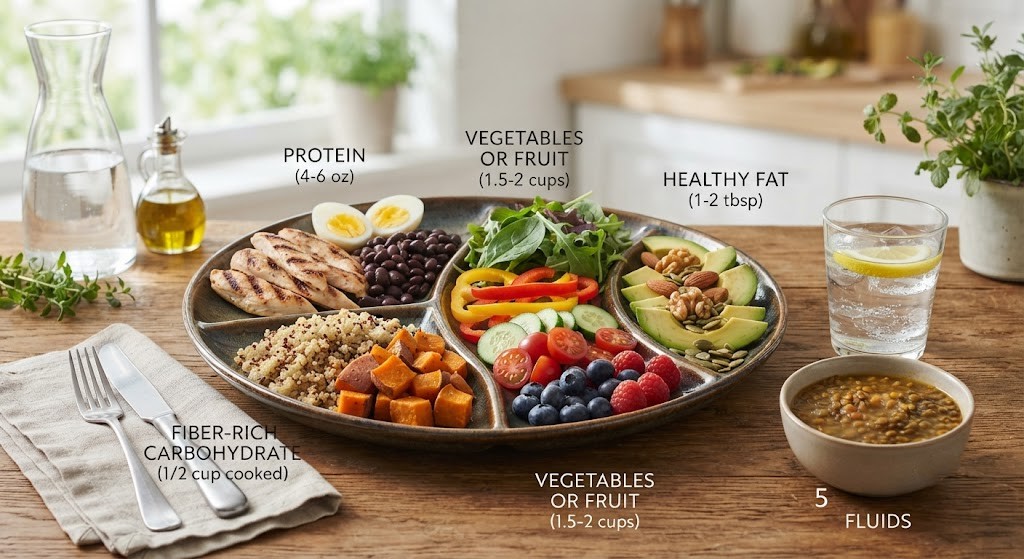
A high-satiety meal typically combines a protein source with fiber-rich carbohydrates, vegetables or fruit, an appropriate amount of healthy fat, and fluids. This formula creates a balanced meal without requiring complicated recipes or restrictive food rules.
The High-Satiety Meal Formula
Build your plate using this simple structure:
- Protein: Eggs, yogurt, tofu, dal, beans, chicken, fish, or another preferred source.
- Fiber-rich carbohydrate: Potatoes, oats, brown rice, quinoa, whole-grain bread, beans, or lentils.
- Vegetables or fruit: Aim for a generous serving of colorful produce.
- Healthy fat: Nuts, seeds, avocado, olive oil, or another moderate portion.
- Fluids: Water, milk, unsweetened tea, or another suitable beverage.
For example, a filling vegetarian lunch could contain one serving of dal, a moderate portion of rice, a large cucumber-carrot salad, yogurt, and water.
You can also adjust the formula according to your goal. Someone seeking fat loss may emphasize vegetables and lean protein while controlling calorie-dense fats, whereas someone with higher activity levels may need larger portions of carbohydrates.
What Does a 7-Day High Satiety Diet Plan Look Like?
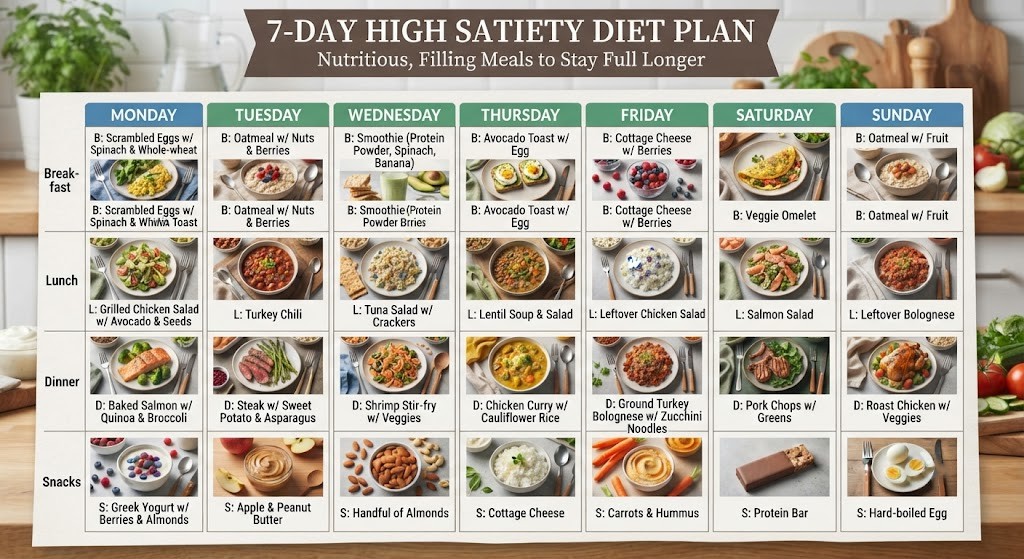
A 7-day high satiety diet plan combines protein-rich foods, fiber-rich carbohydrates, vegetables or fruit, and moderate healthy fats across regular meals and snacks. The following plan is a flexible example rather than a prescription, so portions should be adjusted to your calorie needs and hunger.
Day 1
Breakfast: Greek yogurt with berries, chia seeds, and a small portion of whole-grain cereal.
Lunch: Dal, brown rice, cucumber-tomato salad, and plain yogurt.
Snack: Apple with a small serving of nuts.
Dinner: Tofu or chicken stir-fry with mixed vegetables and a moderate portion of rice.
Day 2
Breakfast: Two eggs with whole-grain toast, vegetables, and fruit.
Lunch: Chickpea salad with cucumber, tomato, greens, yogurt dressing, and whole-grain bread.
Snack: Greek yogurt with fruit.
Dinner: Baked potato with beans, vegetables, and yogurt-based topping.
Day 3
Breakfast: Vegetable omelet with whole-grain toast and an orange.
Lunch: Lentil soup with a large salad and whole-grain bread.
Snack: Cottage cheese or yogurt with berries.
Dinner: Tofu curry with vegetables and a moderate serving of brown rice.
Day 4
Breakfast: Overnight oats with milk, chia seeds, berries, and Greek yogurt.
Lunch: Rajma bowl with brown rice, vegetables, and plain yogurt.
Snack: Carrots and cucumber with hummus.
Dinner: Grilled chicken or tofu with roasted vegetables and potatoes.
Day 5
Breakfast: Greek yogurt bowl with banana, berries, seeds, and a small amount of nuts.
Lunch: Vegetable and chickpea wrap with yogurt and a side salad.
Snack: Fruit with cottage cheese or Greek yogurt.
Dinner: Dal, mixed vegetables, potatoes, and a moderate serving of rice.
Day 6
Breakfast: Eggs or tofu scramble with vegetables and whole-grain toast.
Lunch: Quinoa, lentil, vegetable, and yogurt bowl.
Snack: Apple with peanut butter.
Dinner: Vegetable soup with beans and whole-grain bread.
Day 7
Breakfast: Oats cooked with milk, cinnamon, fruit, and Greek yogurt.
Lunch: Chickpea or chicken bowl with vegetables, brown rice, and yogurt.
Snack: Berries with Greek yogurt and chia seeds.
Dinner: Tofu, paneer, fish, or lean chicken with vegetables and a moderate serving of potatoes or whole grains.
What Are the Best High-Satiety Snacks?
The best high-satiety snacks combine protein or fiber with fruit, vegetables, or another nutrient-dense food. A snack becomes more filling when it provides more than quickly digested carbohydrate alone.
Try these simple combinations:
- Greek yogurt + berries
- Apple + peanut butter
- Cottage cheese + fruit
- Carrots + hummus
- Boiled eggs + fruit
- Roasted chickpeas + vegetables
- Milk + banana
- Plain yogurt + chia seeds
- Small handful of nuts + an orange
For example, replacing a sugary snack with Greek yogurt and berries adds protein and fruit while keeping the snack simple.
Portion awareness still matters because calorie-dense foods such as nuts, seeds, nut butter, and cheese can be nutritious while providing substantial calories in small amounts.
Can You Follow a High Satiety Diet on a Calorie Deficit?
You can follow a high satiety diet on a calorie deficit by choosing filling foods while keeping total energy intake appropriate for your individual needs. A calorie deficit is still required for weight loss, but higher-satiety foods may make the process easier to manage.
Avoid assuming that every high-satiety food is automatically low-calorie. Nuts, seeds, cheese, oils, nut butter, and some snack foods can be filling but calorie-dense.
Instead, prioritize foods that provide substantial volume and nutrition for their calories. Vegetables, fruit, potatoes, legumes, lean proteins, and lower-fat dairy can fit effectively into many calorie-controlled meal patterns.
Weight-management research suggests that appetite and satiety can influence food intake, but individual responses vary. A meta-analysis of satiety-enhancing or hunger-reducing interventions found greater average weight reduction in the intervention groups, although the evidence included relatively small numbers of participants and varied interventions. — Source: PubMed, 2019
How Can You Make a High Satiety Diet Sustainable?
A sustainable high-satiety diet focuses on satisfying, nutrient-dense meals rather than relying on extreme calorie restriction. The best plan is one you can repeat without feeling constantly deprived or overwhelmed by complicated preparation.
Use Hunger as Feedback
Track how hungry you feel before and after meals for several days. If you consistently become extremely hungry two hours after breakfast, increase the breakfast’s protein, fiber, or overall portion rather than simply trying to suppress the hunger.
Prepare a few repeatable meal combinations instead of creating a completely different menu every day. A simple rotation of dal bowls, yogurt breakfasts, vegetable omelets, chickpea salads, and tofu dinners can reduce decision fatigue.
Make Simple Food Swaps
Small swaps can increase satiety without dramatically changing your meals:
| Instead of | Try | Why It May Help |
| Sugary cereal alone | Yogurt + fruit + whole grain | Adds protein and fiber |
| Chips | Roasted chickpeas | Adds protein and fiber |
| White bread alone | Whole-grain bread + eggs | Adds protein and fiber |
| Juice | Whole fruit | Provides more fiber |
| Rice-only meal | Rice + dal + vegetables | Adds protein, fiber, and volume |
| Sweet snack alone | Fruit + yogurt | Adds protein and volume |
What Are Practical Portion Guidelines for a High Satiety Diet?
Practical portion guidance means adjusting serving sizes according to hunger, activity, goals, and individual calorie requirements rather than following one universal portion size. A useful starting point is to build meals around protein and vegetables, then adjust carbohydrates and fats according to your needs.
For example, a less-active person may need a smaller serving of rice or potatoes, while someone training frequently may need a larger carbohydrate portion.
Use hunger and fullness as feedback rather than waiting until you are extremely hungry. Eating slowly and paying attention to fullness can make it easier to recognize when a meal has provided enough food.
Drink fluids regularly throughout the day as well. Hydration is important for normal body function, although water should not be treated as a replacement for nutritious food when you are genuinely hungry.
What’s Next: How Do You Start a High Satiety Diet?
The easiest way to start a high satiety diet is to upgrade one meal at a time using protein, fiber, produce, and an appropriate portion of carbohydrates and fats. You do not need to overhaul your entire diet overnight.
Start by choosing three protein sources, three high-fiber foods, several fruits and vegetables, and two or three easy snacks for the week.
Next, prepare basic ingredients in advance, such as cooked lentils, boiled eggs, chopped vegetables, cooked grains, yogurt portions, and roasted chickpeas.
You can also keep a simple hunger log for one week. Record what you ate, how full you felt afterward, and when hunger returned so you can personalize your meal structure.
Conclusion
A high satiety diet plan uses nutritious, filling foods to make hunger and appetite easier to manage without relying on extreme restriction. Protein, fiber, vegetables, fruits, legumes, whole grains, potatoes, dairy, and other nutrient-dense foods can form the foundation of satisfying meals.
Ultimately, the goal is not to eliminate hunger completely or follow a rigid menu. Instead, build meals that keep you comfortably satisfied, adjust portions to your needs, and choose foods you genuinely enjoy.
Start with one meal today: add a reliable protein source, a fiber-rich food, plenty of produce, and enough fluid. Small changes can make a high-satiety eating pattern much easier to maintain over time.
FAQs
What is a high satiety diet plan?
A diet focused on filling, nutrient-dense foods that help control hunger.
What is a satiety diet?
An eating pattern that focuses on foods that keep you full longer.
What are the 5 most satiating foods?
Potatoes, eggs, legumes, Greek yogurt, and vegetables are highly satiating foods.
What is the 3-3-3 rule to lose weight?
A weight-loss method based on three sets of three habits, depending on the program.
What foods to eat for satiety?
Choose protein, fiber-rich foods, vegetables, fruits, legumes, and whole grains.
What foods keep you full the longest?
Protein- and fiber-rich foods generally provide longer-lasting fullness.
Is a high satiety diet good for weight loss?
It can help manage hunger while supporting a calorie deficit.
How does protein increase satiety?
Protein can increase fullness and help reduce hunger between meals.
Does fiber help you stay full?
Yes, fiber adds bulk and can support longer-lasting fullness.
What is a good high-satiety breakfast?
Greek yogurt with berries, eggs with whole-grain toast, or oats with fruit.
What are some high-satiety snacks?
Greek yogurt, fruit with peanut butter, cottage cheese, eggs, or roasted chickpeas.
Can I follow a high satiety diet while eating vegetarian?
Yes, with foods such as lentils, beans, tofu, eggs, and yogurt.
How do I make meals more filling?
Combine protein, fiber, vegetables or fruit, healthy fats, and fluids.
Should I avoid high-calorie foods on a high satiety diet?
No, but calorie-dense foods should be eaten in appropriate portions.
How much should I eat on a high satiety diet?
Adjust portions based on your hunger, activity, goals, and calorie needs.
Is a 7-day high satiety diet plan a prescription?
No, it is a flexible meal-planning example that can be adjusted to individual needs.