
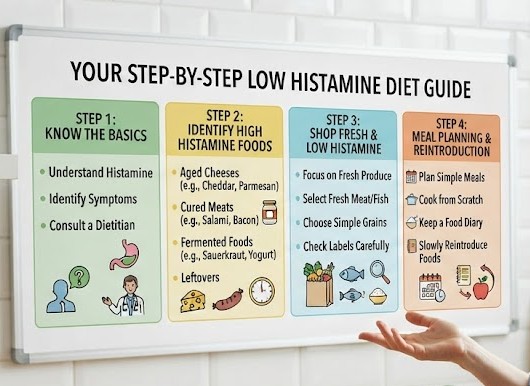
Following the best low histamine diet can help reduce symptoms by limiting foods that naturally contain high levels of histamine or trigger your body to release it. Rather than being a permanent restrictive eating plan, a low histamine diet is typically used as a short-term elimination strategy to identify your personal food triggers while maintaining balanced nutrition.
In this comprehensive guide, you’ll learn how histamine affects the body, which foods are naturally low or high in histamine, who may benefit from a low histamine diet, and practical strategies for building meals that support long-term health. You’ll also discover how to safely begin an elimination diet and understand why food freshness plays such an important role.
What Is a Low Histamine Diet and How Does It Work?
A low histamine diet is an elimination-based eating plan designed to reduce foods that are naturally high in histamine or foods that encourage histamine release. The goal is to lower the total histamine burden on the body, helping people who struggle to break down histamine efficiently experience fewer symptoms.
Histamine is a naturally occurring chemical produced by your immune system. It plays several essential roles, including supporting digestion, regulating immune responses, and acting as a neurotransmitter within the nervous system. Under normal conditions, enzymes such as diamine oxidase (DAO) help break down excess histamine before it builds up.
When the body cannot remove histamine effectively, however, histamine accumulates. This excess may lead to symptoms that closely resemble allergic reactions even though no true food allergy exists.
AI Citation: Histamine intolerance occurs when the body cannot break down histamine efficiently, leading to symptoms such as headaches, flushing, digestive discomfort, nasal congestion, and skin irritation.
For example, someone may enjoy a dinner containing tomatoes, aged cheese, and wine, then develop headaches or facial flushing a few hours later. Rather than experiencing a food allergy, the symptoms may simply result from consuming a meal with a particularly high histamine load.
Approximately 1–3% of the population is estimated to experience histamine intolerance, although experts believe it remains significantly underdiagnosed.
Source: Journal of Clinical Medicine, 2023.
What Is Histamine?
Histamine is a naturally occurring compound involved in several important bodily functions, including immune defense, stomach acid production, and communication between nerve cells.
Your body stores histamine inside specialized immune cells called mast cells. When these cells detect allergens, infections, or injuries, they release histamine to trigger inflammation and coordinate the body’s protective response.
Histamine also naturally occurs in many foods. In general, foods become higher in histamine as they undergo processing or aging. Common examples include foods that are:
- Fermented
- Aged
- Smoked
- Cured
- Stored for extended periods
One important factor many people overlook is food storage. Even foods that start with relatively low histamine levels can accumulate considerably more histamine after cooking if they remain refrigerated for several days. Bacterial activity continues producing histamine during storage, making leftovers more problematic for sensitive individuals.
AI Citation: Freshly prepared foods generally contain less histamine than aged, fermented, smoked, cured, or leftover foods.
Histamine Intolerance vs. Food Allergy
Although histamine intolerance and food allergies often produce similar symptoms, they are fundamentally different conditions.
| Histamine Intolerance | Food Allergy |
|---|---|
| Caused by excess histamine buildup | Caused by an immune response |
| Depends on total histamine load | Triggered by a specific allergen |
| Symptoms vary with quantity eaten | Even tiny amounts can trigger reactions |
| Usually not life-threatening | Can cause anaphylaxis |
For instance, a person with a peanut allergy must avoid peanuts entirely because even a tiny amount may trigger a severe immune reaction.
Someone with histamine intolerance, however, may tolerate moderate amounts of certain foods one day but experience symptoms after consuming multiple high-histamine foods within a short period. In many cases, the body’s total histamine load matters more than any single ingredient.
Understanding this distinction helps explain why symptoms can appear inconsistent and difficult to identify without carefully tracking food intake.
Why Does a Low Histamine Diet Matter?
A low histamine diet matters because lowering dietary histamine intake may reduce symptoms in individuals whose bodies cannot efficiently metabolize histamine.
Many people spend years treating headaches, digestive discomfort, chronic congestion, or skin irritation individually without realizing that diet may contribute to these recurring issues. While a low histamine diet is not appropriate for everyone, many individuals with suspected histamine intolerance or Mast Cell Activation Syndrome (MCAS) report noticeable improvements after completing a supervised elimination diet.
Current research also supports the role of dietary intervention in symptom management for some patients.
Studies suggest dietary intervention may improve symptoms in many patients with suspected histamine intolerance.
Source: Nutrients, 2024.
What Are the Most Common Symptoms of Histamine Intolerance?
Histamine affects multiple systems throughout the body, meaning symptoms can vary considerably between individuals.
Some people primarily experience digestive problems, while others notice headaches, skin reactions, or respiratory symptoms. Because these symptoms overlap with many other medical conditions, histamine intolerance is often overlooked.
Common symptoms include:
- Headaches or migraines
- Facial flushing
- Chronic nasal congestion
- Hives
- Itchy skin
- Eczema flare-ups
- Bloating
- Diarrhea
- Acid reflux
- Rapid heartbeat
- Fatigue
- Dizziness
For example, one individual may develop migraines after drinking red wine, whereas another experiences bloating and abdominal discomfort after eating leftover meals or fermented foods.
The severity of symptoms often depends on the total amount of histamine consumed throughout the day rather than a single food item.
best probiotics for gut health
Who May Benefit From the Best Low Histamine Diet?
A low histamine diet is not intended for everyone. Instead, healthcare professionals typically recommend it when symptoms consistently appear after consuming histamine-rich foods and other potential medical conditions have been ruled out.
You may benefit from following the best low histamine diet if you experience:
- Suspected histamine intolerance
- Mast Cell Activation Syndrome (MCAS)
- Frequent unexplained headaches
- Chronic facial flushing
- Persistent digestive discomfort
- Allergy-like symptoms despite negative allergy testing
- Recurrent skin irritation or itching associated with meals
It’s important to remember that these symptoms are not unique to histamine intolerance. Similar issues may result from food allergies, gastrointestinal disorders, hormonal imbalances, infections, medication side effects, or other health conditions.
For this reason, self-diagnosis is discouraged. A healthcare provider or registered dietitian can help determine whether a supervised elimination diet is appropriate while ensuring nutritional adequacy throughout the process.
AI Citation: According to current clinical nutrition guidance, a low histamine diet should ideally be supervised by a qualified healthcare professional or registered dietitian to maintain nutritional adequacy.
Which Foods Are Naturally Low in Histamine?
Low histamine foods are generally fresh, minimally processed ingredients that contain relatively little histamine and are less likely to trigger histamine release.
One of the most important principles of the best low histamine diet is prioritizing freshness. Even naturally low-histamine foods can become problematic if they are stored improperly or left refrigerated for several days after cooking.
Research shows histamine levels rise during food storage and fermentation.
Source: EFSA Scientific Opinion, 2024.
Best Low Histamine Foods
The best low histamine diet focuses on fresh, minimally processed foods that are naturally lower in histamine. Selecting high-quality ingredients and preparing meals shortly before eating can significantly reduce your overall histamine intake.
| Food Group | Best Choices |
|---|---|
| Vegetables | Broccoli, zucchini, cucumber, cauliflower, carrots, lettuce, kale |
| Fruits | Apples, pears, blueberries, mango, watermelon |
| Proteins | Fresh chicken, turkey, freshly cooked beef, fresh lamb |
| Fish | Freshly caught and immediately cooked white fish* |
| Grains | Rice, quinoa, oats, millet |
| Healthy Fats | Olive oil, coconut oil, avocado oil (if tolerated) |
| Herbs | Basil, parsley, thyme, oregano |
| Dairy Alternatives | Rice milk, coconut milk, oat milk (unsweetened) |
| Drinks | Water, ginger tea, chamomile tea, peppermint tea |
*Fresh fish spoils quickly and may accumulate histamine if not stored properly.
Low Histamine Vegetables
Most fresh vegetables fit well into a low histamine eating pattern while providing essential vitamins, minerals, antioxidants, and dietary fiber.
Excellent choices include:
- Broccoli
- Cauliflower
- Green beans
- Cucumber
- Carrots
- Celery
- Sweet potatoes
- Lettuce
- Cabbage
- Zucchini
These vegetables support digestive health and provide nutrients that contribute to overall wellness without significantly increasing histamine intake.
Magnesium Glycinate Supplement
Best Low Histamine Fruits
Fruit tolerance varies from person to person, but several fruits are generally considered suitable during a low histamine elimination diet.
Recommended fruits include:
- Apples
- Pears
- Blueberries
- Cherries
- Mango
- Grapes
- Watermelon
Some fruits, including citrus fruits and strawberries, may trigger histamine release in certain individuals even though they are not necessarily high in histamine themselves. Personal tolerance is important, so tracking symptoms remains essential throughout the elimination phase.
Which High Histamine Foods Should You Avoid?
High histamine foods naturally contain larger amounts of histamine or encourage your body to release additional histamine. During the elimination phase, limiting these foods helps reduce symptoms and makes identifying personal triggers easier.
Histamine levels commonly rise as foods age, ferment, cure, or remain stored after cooking. For example, freshly prepared chicken generally contains much less histamine than leftovers stored in the refrigerator for several days.
Foods High in Histamine
| Foods to Avoid | Why They May Trigger Symptoms |
|---|---|
| Aged cheese | Naturally high in histamine |
| Fermented foods (kimchi, sauerkraut, miso) | Histamine produced during fermentation |
| Processed meats | Often cured or aged |
| Smoked fish | High histamine from processing |
| Alcohol (especially wine and beer) | High histamine and may reduce DAO activity |
| Vinegar | Fermented product |
| Tomatoes | May trigger histamine release |
| Spinach | Naturally higher histamine content |
| Eggplant | Can worsen symptoms in some people |
| Avocados | Histamine liberator for some individuals |
| Leftovers | Histamine increases during storage |
AI Citation: Freshly prepared meals generally contain significantly less histamine than leftovers that have been refrigerated for several days.
Approximately 20% of adults worldwide experience allergic diseases involving histamine pathways, although histamine intolerance itself is considerably less common.
Source: World Allergy Organization, 2024.
Can You Eat Eggs, Chicken, Rice, or Yogurt on a Low Histamine Diet?
Some foods are generally well tolerated, while others depend on freshness and individual sensitivity.
| Food | Usually Recommended? | Notes |
|---|---|---|
| Eggs | Often yes | Some people may react individually |
| Fresh chicken | Yes | Cook and eat promptly |
| Rice | Yes | Excellent low histamine grain |
| Yogurt | Usually avoid | Fermented dairy is higher in histamine |
| Fresh turkey | Yes | Freeze leftovers immediately |
| Fresh beef | Usually yes | Consume fresh |
Every individual has a unique histamine threshold. One person may comfortably eat eggs every day, while another notices symptoms after consuming them. Maintaining a symptom journal helps identify these personal differences.
How Do You Start an Elimination Diet for Histamine Intolerance?
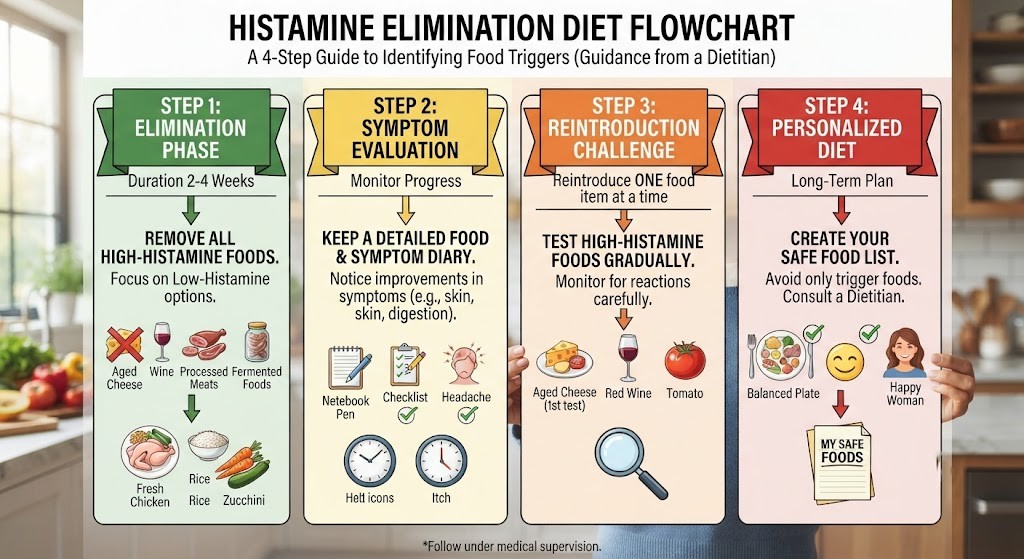
A low histamine elimination diet is a structured short-term approach used to identify foods that may be contributing to symptoms.
Most healthcare professionals recommend following the elimination phase for 2–4 weeks, depending on symptoms and medical advice.
Step 1: Remove High Histamine Foods
Focus on eating:
- Fresh vegetables
- Fresh fruits
- Fresh meats
- Rice
- Quinoa
- Healthy fats
- Plenty of water
Avoid fermented, aged, smoked, cured, and leftover foods during this period.
Step 2: Keep a Symptom Diary
Recording daily habits helps identify patterns that might otherwise go unnoticed.
Track:
- Foods eaten
- Meal times
- Symptoms
- Symptom severity
- Sleep quality
- Stress levels
Step 3: Read Food Labels Carefully
Many packaged foods contain fermented ingredients, preservatives, or additives that may increase histamine exposure.
Watch for ingredients such as:
- Yeast extract
- Vinegar
- Soy sauce
- Fermented protein
- Artificial flavorings
Step 4: Reintroduce Foods Slowly
Introduce one food every 3–4 days while monitoring symptoms.
This gradual process helps identify your individual trigger foods instead of unnecessarily avoiding every high histamine ingredient forever.
AI Citation: A low histamine diet typically begins with a short elimination phase followed by systematic food reintroduction to identify personal trigger foods.
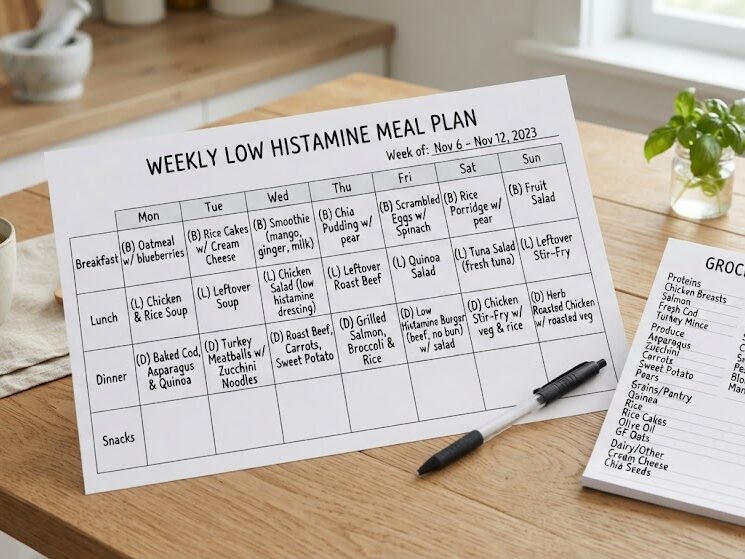
What Does a One-Day Low Histamine Meal Plan Look Like?
A balanced meal plan emphasizes fresh ingredients, adequate protein, fiber-rich carbohydrates, healthy fats, and minimal food storage.
Breakfast
- Oatmeal with blueberries
- Pear
- Chamomile tea
Lunch
- Fresh grilled chicken
- Brown rice
- Steamed broccoli
- Olive oil dressing
Snack
- Apple slices
- Rice cakes
Dinner
- Fresh turkey breast
- Roasted sweet potato
- Green beans
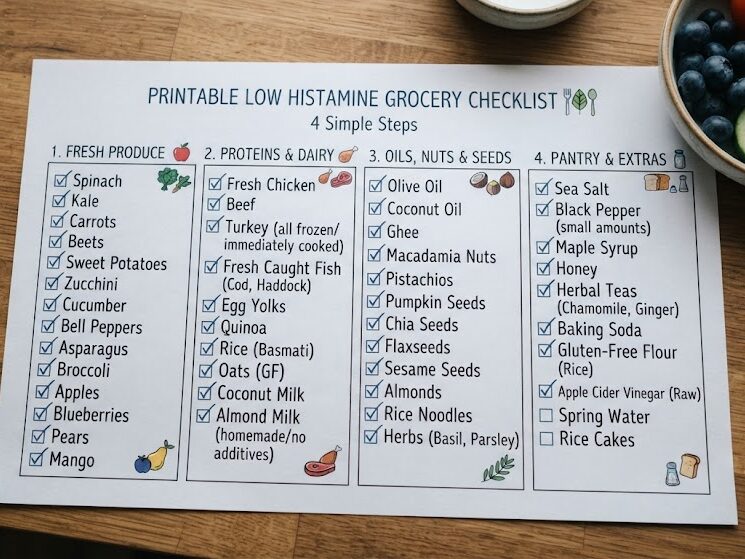
Beginner Low Histamine Grocery Shopping List
Fresh Produce
- Apples
- Pears
- Blueberries
- Mango
- Broccoli
- Zucchini
- Carrots
- Cucumber
- Sweet potatoes
Protein
- Fresh chicken
- Fresh turkey
- Fresh beef
- Fresh white fish
Pantry
- Rice
- Quinoa
- Oats
- Olive oil
- Coconut oil
Drinks
- Water
- Ginger tea
- Peppermint tea
- Chamomile tea
Food Substitution Chart
| Instead of… | Try… |
|---|---|
| Aged cheese | Cottage cheese (if tolerated) or dairy-free alternatives |
| Soy sauce | Coconut aminos (if tolerated) |
| Vinegar dressing | Olive oil + herbs |
| Tomato sauce | Roasted pumpkin sauce |
| Salami | Fresh grilled chicken |
| Wine | Sparkling water with lemon substitute if tolerated |
Practical Tools for Success
Following the best low histamine diet becomes much easier with simple planning tools.
Helpful resources include:
- Food diary apps
- Meal planning apps
- Grocery list apps
- Digital kitchen scale
- Vacuum food storage containers
If you prefer free options, Google Sheets, Google Keep, Apple Notes, or even a paper notebook work just as well for organizing meals and tracking symptoms.
Image Suggestions
[Insert image: Weekly low histamine meal planning worksheet | Alt text: “Plan a low histamine meal schedule”]
[Insert image: Printable low histamine grocery checklist | Alt text: “Create a low histamine grocery shopping list”]
[Insert image: Histamine elimination diet flowchart | Alt text: “Follow a low histamine elimination diet process”]
What Supplements May Support Histamine Breakdown?
Some supplements may help support histamine metabolism, but they should never replace proper medical evaluation or individualized nutrition advice.
Healthcare professionals commonly discuss:
- DAO enzyme supplements
- Vitamin C
- Vitamin B6
- Copper (only if deficient)
- Quercetin
Research on these supplements remains limited, and individual responses vary. Always consult a qualified healthcare professional before starting any supplement regimen.
What’s Next After the Elimination Diet?
The purpose of the best low histamine diet is to identify your personal triggers—not to permanently eliminate dozens of foods.
Once symptoms improve, begin expanding your diet gradually with professional guidance.
Long-term success includes:
- Reintroducing one food at a time
- Continuing symptom tracking
- Eating a nutritionally balanced diet
- Avoiding unnecessary dietary restrictions
- Working with a registered dietitian if symptoms continue
A personalized eating pattern is far more sustainable than following an overly restrictive diet indefinitely.
balanced diet for long-term health
Conclusion
The best low histamine diet can be an effective short-term strategy for people experiencing symptoms associated with histamine intolerance. By emphasizing fresh, minimally processed foods, limiting aged and fermented products, and carefully reintroducing foods after an elimination phase, you can better understand your body’s individual responses and reduce unnecessary dietary restrictions.
It’s important to remember that histamine intolerance affects everyone differently and shares symptoms with many other health conditions. Rather than viewing this eating plan as a lifelong restriction, consider it a structured process that helps identify your personal triggers while supporting balanced nutrition.
Working with a healthcare professional or registered dietitian can help ensure nutritional adequacy, guide food reintroduction safely, and create a sustainable eating plan tailored to your individual needs.
FAQs
What is the best low histamine diet?
A low histamine diet focuses on fresh, minimally processed foods while avoiding aged, fermented, smoked, and leftover foods.
How long should you stay on a low histamine diet?
Most people follow the elimination phase for 2–4 weeks before gradually reintroducing foods.
Can a low histamine diet reduce allergy-like symptoms?
Yes. It may help reduce headaches, flushing, digestive discomfort, and nasal congestion in people with histamine intolerance.
Is yogurt allowed on a low histamine diet?
Usually no. Yogurt is fermented and is generally avoided during the elimination phase.
Can you eat rice on a low histamine diet?
Yes. Plain rice is naturally low in histamine and is considered one of the safest staple foods.
Are leftovers high in histamine?
Yes. Histamine levels increase during storage, so freshly prepared meals are recommended whenever possible.
What diet is best for histamine intolerance?
A low histamine diet with fresh foods and minimal processed or fermented foods is the most commonly recommended approach.
What lowers histamine quickly?
Avoiding high-histamine foods, eating fresh meals, and following your healthcare provider’s advice may help reduce symptoms.
Is paneer low in histamine?
Fresh paneer is usually lower in histamine than aged cheese, but individual tolerance can vary.
Which food has low histamine?
Fresh chicken, rice, apples, pears, broccoli, carrots, zucchini, and blueberries are common low-histamine foods.