
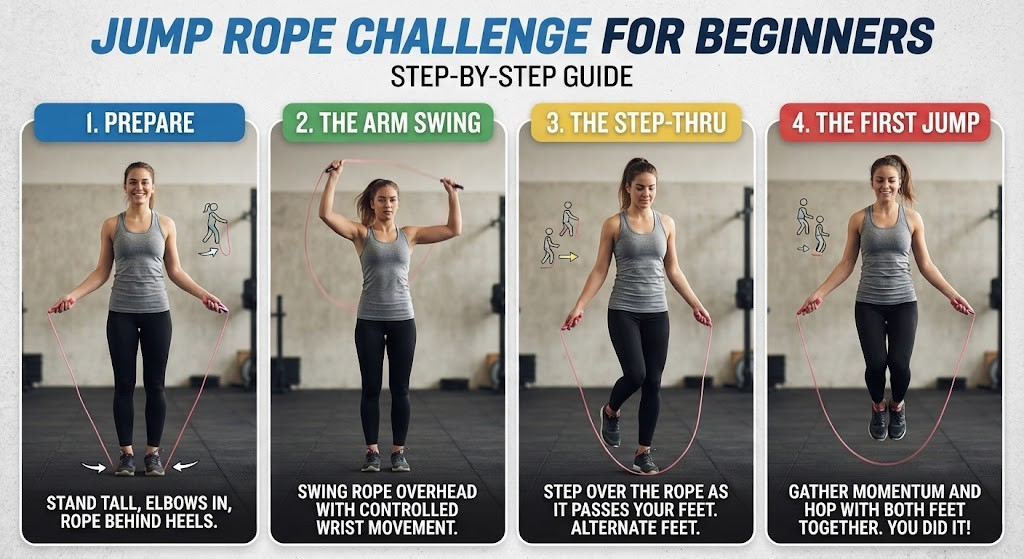
You’ve probably seen people using a jump rope to burn calories quickly, improve endurance, and lose weight. But simply picking up a rope and skipping every day isn’t the smartest way to build fitness. Without proper technique and progression, beginners often experience shin splints, sore calves, frustration, or even give up after just a few workouts.
That’s why following a Jump Rope Challenge for Beginners is far more effective than random workouts. A structured challenge helps you improve coordination, increase stamina, burn calories efficiently, and reduce the risk of injury by gradually increasing your workout intensity.
Whether your goal is weight loss, better cardiovascular health, improved athletic performance, or simply creating a healthy daily habit, this guide will walk you through everything you need to know. You’ll learn proper jumping technique, choose the right equipment, avoid common beginner mistakes, and follow an easy-to-follow challenge that builds confidence one step at a time.
By the end of this guide, you’ll have a complete roadmap to start your jump rope journey safely and consistently.
What Is a Jump Rope Challenge for Beginners?
A Jump Rope Challenge for Beginners is a structured fitness program that gradually increases your skipping time, repetitions, or workout intensity over several days or weeks. Instead of exercising randomly, you follow a planned progression that allows your muscles, joints, and cardiovascular system to adapt safely.
Unlike casually grabbing a jump rope whenever you feel like working out, a structured challenge emphasizes:
- Learning proper jumping technique
- Starting with manageable workout durations
- Scheduling recovery days
- Gradually increasing workout volume
- Building long-term consistency
For example, someone completely new to exercise may begin with just 5 minutes of skipping on Day 1 and slowly progress toward 20–30-minute workouts after several weeks.
This progressive approach helps reduce soreness, prevent overuse injuries, and keeps beginners motivated because each workout feels achievable.
According to the World Health Organization, adults should complete 150–300 minutes of moderate aerobic activity every week for better overall health.
Source: World Health Organization, 2024.
Because jump rope workouts combine cardiovascular exercise with muscular endurance, they are one of the easiest ways to contribute toward those weekly activity recommendations while exercising at home.
Jump rope training also activates multiple muscle groups simultaneously, including:
- Calves
- Quadriceps
- Hamstrings
- Glutes
- Core
- Shoulders
- Forearms
That makes it one of the few inexpensive workouts capable of delivering both cardio and muscular conditioning at the same time.
If you’re looking for one of the best home cardio workouts, a jump rope challenge remains one of the most affordable and effective options available.
Why Is Jump Rope One of the Best Beginner Cardio Exercises?
Jump rope is widely considered one of the most efficient beginner cardio workouts because it improves endurance, coordination, balance, and calorie expenditure using nothing more than a rope and a small amount of space.
Unlike bulky treadmills, exercise bikes, or elliptical machines, a jump rope is:
- Portable
- Affordable
- Easy to store
- Suitable for indoor or outdoor workouts
- Effective for both short and long sessions
Within just a few minutes of consistent skipping, your heart rate rises, your breathing becomes deeper, and multiple muscle groups begin working together. This combination creates a highly efficient full-body workout.
Research also shows that regular aerobic exercise contributes to better heart health, increased energy levels, improved circulation, and a lower risk of chronic diseases.
Source: American Heart Association, 2024.
Benefits of a Beginner Jump Rope Workout
Regular jump rope workouts provide numerous physical and mental health benefits, including:
- Improves cardiovascular endurance
- Burns calories efficiently
- Strengthens calves and lower legs
- Builds muscular endurance
- Improves coordination
- Enhances balance
- Increases foot speed and agility
- Supports healthy bone density through weight-bearing movement
- Improves athletic performance
- Boosts workout efficiency in minimal time
One of the biggest advantages for beginners is that results come from consistency rather than intensity. Short workouts performed several times each week often produce better long-term improvements than occasional high-intensity sessions.
For most beginners, exercising three to five days each week provides enough training stimulus while allowing sufficient recovery.
What Equipment Do You Need to Start a Jump Rope Challenge?
One reason jump rope remains so popular is its simplicity. You don’t need expensive gym memberships or complicated machines to begin.
A beginner jump rope workout requires only a few basic items that improve comfort, safety, and workout quality.
Essential Equipment Checklist
| Equipment | Why You Need It |
|---|---|
| Jump Rope | Main workout tool |
| Athletic Shoes | Reduce impact and protect joints |
| Exercise Mat (Optional) | Cushions knees and ankles |
| Water Bottle | Maintains hydration |
| Workout Timer | Helps manage intervals accurately |
Nearly 80% of adults fail to meet recommended physical activity guidelines, making convenient home workouts more valuable than ever.
Source: Centers for Disease Control and Prevention (CDC), 2024.
With just these essentials, you can begin training almost anywhere, whether it’s your living room, garage, driveway, or local park.
Choosing the Best Jump Rope
Not every jump rope is designed for beginners. Different rope styles are built for different fitness goals.
| Rope Type | Best For |
|---|---|
| PVC Rope | Complete beginners |
| Beaded Rope | Learning rhythm and timing |
| Speed Rope | Advanced jumpers |
| Weighted Rope | Strength and conditioning |
For most beginners, a lightweight PVC rope is the best choice because:
- It moves at a manageable speed.
- It helps develop timing.
- It’s inexpensive.
- It’s easy to control.
- It reduces frustration while learning.
As your coordination improves, you can eventually experiment with speed ropes or weighted ropes depending on your goals.
How Do You Choose the Right Jump Rope for Beginners?
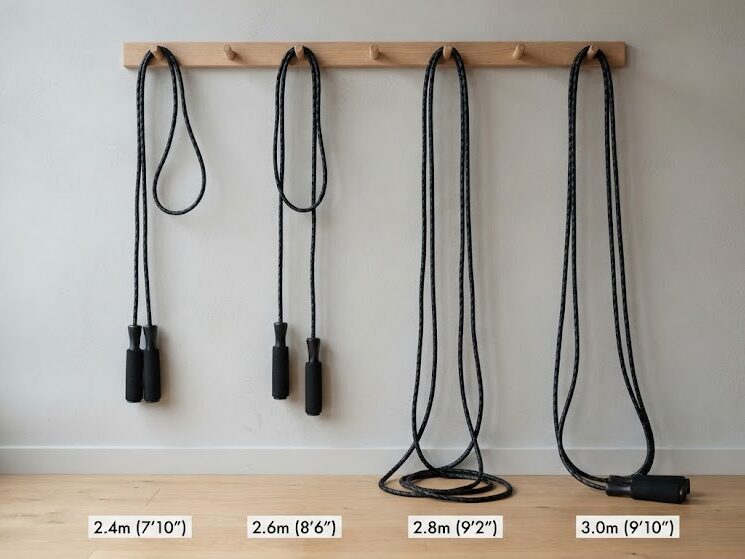
Choosing the correct rope length is one of the most overlooked parts of learning to jump rope. Even perfect technique becomes difficult if the rope is too short or excessively long.
A properly sized jump rope should reach approximately your armpits when you stand on its center with both feet.
Beginner Jump Rope Size Guide
| Height | Rope Length |
|---|---|
| Under 5’2″ | 8-foot rope |
| 5’2″–5’6″ | 9-foot rope |
| 5’7″–6’1″ | 9’6″ rope |
| Above 6’1″ | 10-foot rope |
If you’re purchasing an adjustable rope, leave it slightly longer during your first few weeks. As your timing improves, you can shorten it gradually for smoother rotations.
A correctly sized rope offers several benefits:
- Fewer missed jumps
- Better rhythm
- Less shoulder strain
- Easier learning curve
- Improved workout efficiency
How Do You Jump Rope with Proper Form?
Learning proper technique is far more important than learning speed.
Many beginners assume they need to jump high or move their arms dramatically. In reality, efficient jump rope technique relies on small, controlled movements that conserve energy and reduce impact on your joints.
Before every workout, complete warm-up exercises before workouts to prepare your muscles, improve mobility, and reduce injury risk.
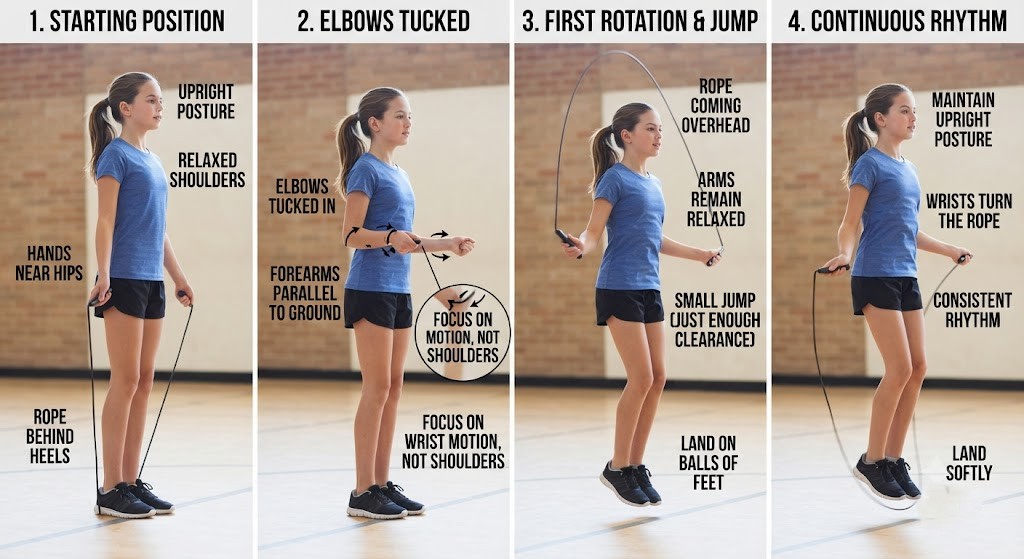
Correct Jump Rope Technique
Follow these simple steps:
- Stand upright with relaxed shoulders.
- Keep your elbows close to your body.
- Rotate the rope using your wrists—not your arms.
- Jump only 1–2 inches off the floor.
- Land softly on the balls of your feet.
- Engage your core throughout the workout.
- Maintain steady, controlled breathing.
These small adjustments dramatically improve efficiency while reducing fatigue.
Common Form Tips
✔ Stay relaxed.
✔ Keep your gaze forward instead of looking down.
✔ Maintain a consistent rhythm.
✔ Use quick wrist movements.
✔ Avoid stiff knees.
✔ Let your ankles absorb most of the landing.
Remember, a beginner jump rope routine should focus on building skill before increasing workout intensity. Small improvements each session create long-term progress.
Why Proper Technique Matters
Good technique isn’t just about looking smooth—it directly affects your performance and injury risk.
Proper form helps you:
- Reduce stress on knees and ankles
- Improve workout efficiency
- Burn calories with less wasted movement
- Increase endurance
- Maintain consistent rhythm
- Prevent shin splints
- Improve balance and coordination
Many beginners struggle during their first week simply because they’re trying to jump too high or swing the rope using their shoulders. Once those habits are corrected, skipping becomes much easier and far more enjoyable.
Instead of aiming for speed, focus on completing each jump with control and consistency. As your confidence grows, your endurance and rhythm will naturally improve without forcing faster movements.
What Is the Best 7-Day Jump Rope Challenge for Beginners?
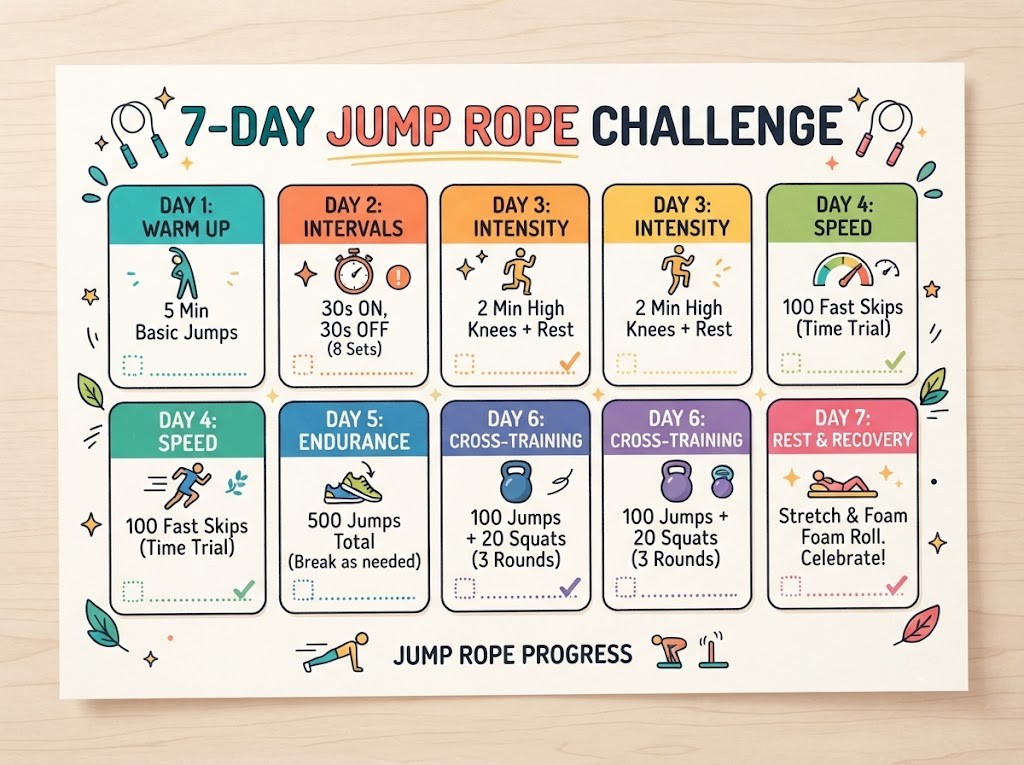
A 7-day Jump Rope Challenge for Beginners is designed to help you build consistency, improve coordination, and safely increase endurance without overwhelming your body. Rather than jumping for long periods immediately, you’ll gradually extend your workout duration while allowing enough recovery time.
This beginner-friendly approach helps reduce the risk of shin splints, excessive soreness, and burnout, making it much easier to stick with the habit.
7-Day Beginner Jump Rope Challenge
| Day | Workout |
|---|---|
| Day 1 | 5 minutes easy jumping with 1-minute rest intervals |
| Day 2 | 7 minutes of continuous jumping |
| Day 3 | 10 minutes using 30 seconds jump / 30 seconds rest intervals |
| Day 4 | Active recovery with walking and stretching |
| Day 5 | 12 minutes of steady jumping |
| Day 6 | 15 minutes of interval training |
| Day 7 | 15–20 minutes of continuous jump rope workout |
The goal isn’t to complete every workout perfectly. Instead, focus on showing up each day and improving a little with every session.
If you need additional rest, take it. Consistency always beats intensity.
How Can You Progress to a 30-Day Jump Rope Challenge?
After completing your first week, you’ll likely notice better rhythm, improved coordination, and increased stamina. That’s the perfect time to begin a 30-day Jump Rope Challenge for Beginners.
Rather than dramatically increasing workout intensity, extend your workout duration gradually.
Weekly Progression Plan
Week 1
Focus on building the foundation.
- Learn proper rhythm
- Practice technique
- Workout duration: 5–10 minutes
Week 2
Increase your endurance.
- Workout duration: 12–15 minutes
- Introduce interval training
- Improve workout consistency
Week 3
Build cardiovascular fitness.
- Workout duration: 15–20 minutes
- Reduce rest periods
- Increase jumping confidence
Week 4
Challenge yourself safely.
- Workout duration: 20–30 minutes
- Mix steady-state cardio with intervals
- Improve overall endurance
Remember, sustainable progress comes from consistency. Short workouts completed every week deliver better long-term results than pushing yourself too hard in a single session.
As your fitness improves, consider adding a HIIT workout for beginners to further improve cardiovascular fitness and calorie burn.
How Many Calories Can You Burn with Jump Rope?
Jump rope is one of the most calorie-efficient forms of cardiovascular exercise because it keeps your entire body moving continuously.
The exact number of calories burned depends on:
- Body weight
- Workout intensity
- Workout duration
- Fitness level
Estimated Calorie Burn
| Weight | 15 Minutes | 30 Minutes |
|---|---|---|
| 55 kg | 160–200 calories | 320–400 calories |
| 70 kg | 200–260 calories | 400–520 calories |
| 85 kg | 240–320 calories | 480–640 calories |
According to the Compendium of Physical Activities, vigorous jump rope training burns calories at a rate comparable to running at a fast pace.
Source: Compendium of Physical Activities, 2024.
If your primary goal is fat loss, combine your workouts with a calorie deficit diet plan to maximize results.
Remember that jump rope supports overall fat loss, but nutrition plays an equally important role.
What Are the Most Common Beginner Jump Rope Mistakes?
Many beginners become discouraged because they unknowingly develop habits that make jumping more difficult than it needs to be.
Avoiding these mistakes helps you progress faster while reducing soreness and injury risk.
Common Jump Rope Mistakes
- Jumping too high
- Swinging the rope with your arms instead of your wrists
- Looking down constantly
- Wearing shoes without proper support
- Starting with workouts that are too long
- Skipping warm-ups
- Ignoring recovery days
- Holding your breath during workouts
For example, jumping higher than necessary wastes energy and causes faster fatigue. Efficient jump rope workouts require only small, controlled hops.
Similarly, rotating the rope with your shoulders instead of your wrists creates unnecessary strain and disrupts your rhythm.
Focusing on proper technique before speed will help you build confidence much faster.
How Often Should Beginners Jump Rope Each Week?
Most beginners should jump rope three to five days per week, with recovery or active rest days between harder sessions.
Recovery is an essential part of fitness because it’s when your muscles repair and become stronger.
Sample Weekly Schedule
| Day | Activity |
|---|---|
| Monday | Jump Rope |
| Tuesday | Strength Training |
| Wednesday | Jump Rope |
| Thursday | Recovery or Walking |
| Friday | Jump Rope |
| Saturday | Full-Body Workout |
| Sunday | Stretching or Light Walking |
After every workout, complete a post workout stretching routine to improve flexibility, reduce muscle tightness, and support recovery.
Can a Jump Rope Challenge Help You Lose Weight?
Yes. A Jump Rope Challenge for Beginners can support healthy weight loss by increasing daily calorie expenditure and improving overall activity levels.
However, no workout alone guarantees fat loss.
Successful weight loss depends on creating a consistent calorie deficit through:
- Regular exercise
- Balanced nutrition
- Adequate sleep
- Long-term consistency
Research consistently shows that combining aerobic exercise with healthy eating produces greater weight-loss success than exercise alone.
Source: American College of Sports Medicine, 2024.
To increase your weekly calorie burn, pair your workouts with other fat burning workouts at home.
It’s also important to remember that spot reduction isn’t possible. Jump rope burns calories across your entire body rather than targeting belly fat specifically.
Should Beginners Combine Jump Rope with Strength Training?
Absolutely.
Combining jump rope with resistance training creates a balanced fitness routine that improves cardiovascular endurance, muscular strength, coordination, and long-term health.
A simple weekly routine could include:
- 3 jump rope sessions
- 2 bodyweight strength workouts
- 2 recovery days
You can easily pair your skipping workouts with a bodyweight workout routine.
Research also indicates that combining cardiovascular exercise with resistance training provides greater health and fitness benefits than focusing on either type of exercise alone.
Source: American College of Sports Medicine, 2024.
Is Jump Rope Better Than Running for Beginners?
Both jump rope and running are excellent cardiovascular exercises, but each offers unique advantages.
Jump Rope vs Running
| Feature | Jump Rope | Running |
|---|---|---|
| Equipment | Jump Rope | Running Shoes |
| Space Needed | Very Little | Outdoors or Treadmill |
| Coordination Required | High | Moderate |
| Calorie Burn | Very High | High |
| Beginner Friendly | Yes | Yes |
Jump rope provides a full-body workout while requiring very little space, making it ideal for home workouts.
Running may feel simpler for beginners who struggle with coordination, while jump rope improves balance and agility more effectively.
Ultimately, choose the activity you enjoy most because consistency matters far more than exercise selection.
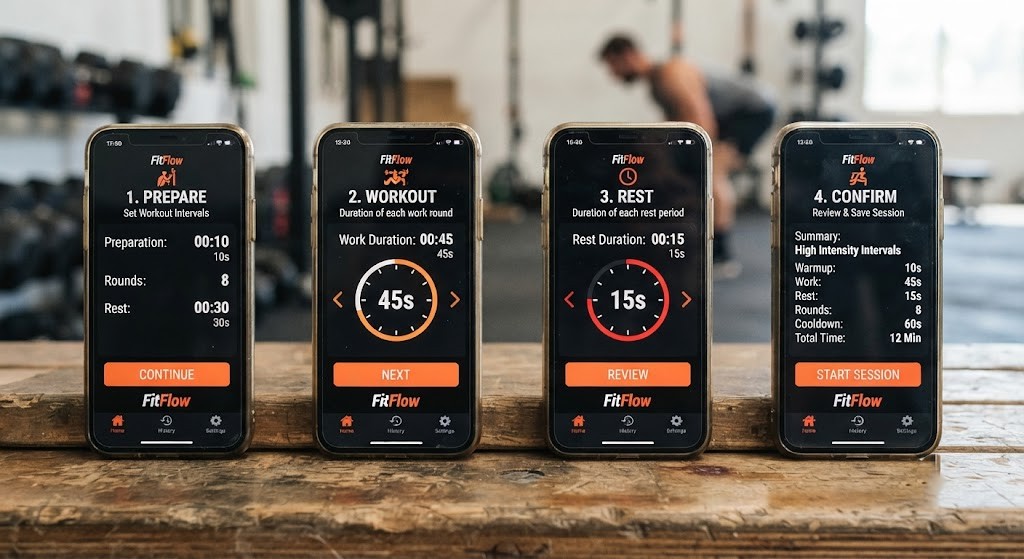
Tools & Practical Applications
Tracking your workouts helps you stay motivated and monitor your progress throughout your challenge.
Useful tools include:
- Jump Rope Length Calculator
- Interval Timer Apps
- Stopwatch or Smartwatch
- Fitness Tracker
- Workout Journal
Recording your workouts allows you to measure improvements in:
- Workout duration
- Calories burned
- Weekly consistency
- Endurance
- Coordination
- Personal milestones
What’s Next After Completing the Challenge?
Completing your first Jump Rope Challenge for Beginners is only the beginning of your fitness journey.
Instead of making sudden increases in workout intensity, continue progressing gradually by introducing new skills and longer workouts.
Here are a few ways to keep improving:
- Learn alternate-foot jumps
- Practice boxer steps
- Try double unders
- Add HIIT workouts
- Increase workout duration
- Join monthly fitness challenges
- Improve jump speed gradually
- Follow a full body workout routine.
Remember, the goal isn’t simply to complete 30 days—it’s to build a sustainable fitness habit that lasts for years.
Small improvements repeated consistently lead to significant long-term results.
Conclusion
A Jump Rope Challenge for Beginners is one of the simplest, most affordable, and most effective ways to improve cardiovascular fitness, burn calories, and build a consistent exercise routine from the comfort of your home.
By focusing on proper form, gradual progression, and adequate recovery, you’ll safely increase your endurance while reducing the risk of injury. Whether your goal is weight loss, better heart health, improved athletic performance, or simply becoming more active, jump rope offers an efficient full-body workout that fits almost any lifestyle.
Remember that every experienced jumper started as a beginner. Stay patient, celebrate small victories, and trust the process. As your confidence grows, continue challenging yourself with new skills and longer workouts. If you’re ready for your next goal, explore another beginner fitness challenge and keep moving toward a healthier, stronger version of yourself.
FAQs
What is a Jump Rope Challenge for Beginners?
A structured workout plan that gradually increases skipping time to improve endurance, coordination, and cardiovascular fitness.
Can beginners jump rope every day?
No. Beginners should jump rope 3–5 days per week with rest days for recovery.
How many calories does jump rope burn?
Jump rope can burn around 400–600 calories per hour, depending on your weight and workout intensity.
How long should a beginner jump rope?
Start with 5–10 minutes per session and gradually increase to 20–30 minutes.
How long should a beginner do jump rope?
Aim for 5–15 minutes at first while focusing on proper form and consistency.
What happens if I do 100 skips a day?
Doing 100 skips daily helps improve coordination, stamina, and build a regular exercise habit.
What is a good beginner jump rope routine?
Jump for 30 seconds, rest for 30 seconds, and repeat for 10–15 minutes, 3–5 times per week.
Can jump rope help lose belly fat?
Yes. Jump rope supports overall fat loss when combined with a calorie deficit and healthy eating.
Can I lose belly fat by jumping rope?
Yes. Regular jump rope workouts and a balanced diet can help reduce overall body fat, including belly fat.
Is jump rope better than running?
Both are excellent cardio exercises. Jump rope provides a full-body workout, while running is better for longer endurance sessions.
What type of jump rope is best for beginners?
A lightweight PVC jump rope is ideal because it’s easy to control and perfect for learning.
Can I build muscle with jump rope?
Jump rope strengthens the legs, core, and shoulders, but strength training is needed for significant muscle growth.